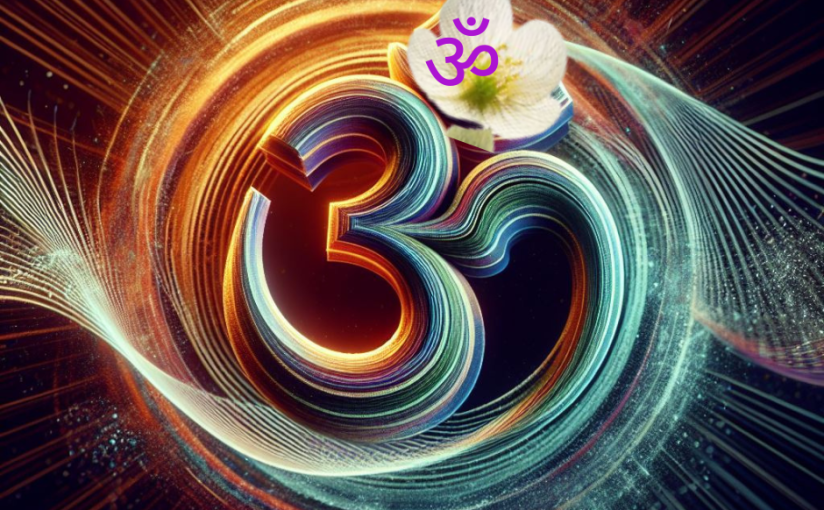
Friends, there is a seed mantra associated with each chakra. Om is associated with Sahasrara Chakra, Om or Sham with Ajna Chakra, Haam with Vishuddhi Chakra, Yam with Anahata Chakra, Ram with Manipura Chakra, Vam with Swadhisthana Chakra, and Lam with Muladhara Chakra. In this article we will try to understand the science related to them. The dot above the Beej Mantra is in the form of a Chakra. This makes the attention more pinpoint, meaning more focused and effective. By meditating on the Chakra in the visual form of the Beej Mantra and reciting its sound in the mind, the upper Prana and the lower Apana reach that Beej Mantra and get together. This is a good scientific technique to concentrate the power of the entire body at one point. Many people find it difficult to concentrate directly on the chakra. This is a good option for them. Due to this, the meditation picture on the chakra also becomes more clear. I did not need that kind of Bija Mantra, because I already had a clear experience of meditation image on the Chakras. It seems that I tworked as a seed mantra for me. With that I was able to give power to the chakras. Only now have I understood the usefulness of Beej Mantras. Earlier I used to take them lightly. For those who have not yet developed their meditation image, Beeja Mantras are very important, because these develop their meditation. Attach the point aka bindu at the top of the Bija Mantra to the most sensitive place of the Chakra, and add the remaining part of the Bija Mantra to it as per your wish, diagonally, straight, upside down, even rotating around the point and let the complete Bija Mantra be formed. If you chant it in your mind, you will immediately feel the benefits. For example, make the navel hole the point of Ram Beeja Mantra. Ham is associated with the throat chakra because perhaps it is a symbol of ego, and the sound of ‘Main Main’ means ‘Aham, Aham’ or I, I in English comes from the throat itself. The letter Om has been given to Sahasrara and Ajna Chakra because there is a sense of non-duality in all three. The Sham शं Bija Mantra is given to the Ajna Chakra because it means peace in Sanskrit, and distraction, fatigue or restlessness of the mind has a greater impact on the Ajna Chakra, as it is associated with the intellect and worldly functions of the mind. Sahasrara is already a transcendental chakra, hence there is no sense of disturbance in it. These are the two main chakras of the brain. Yam is given to the Heart Chakra because the feeling of compassion resides in the heart, and both have the letter Ya. रं or ram may have been given to the navel because food burns in the stomach, and burning is also called radna in Hindi. The mantra of Ba Bam Bam Bam Bam Lahari is the main mantra to please Shiva. Perhaps this is the seed mantra of Swadhisthana Chakra that’s vam. Lam might have been given to Muladhar because the letter La has sexual connotation. The point located above the Bijamantra has two benefits. Firstly, it gives a non-dual sound like Om, and secondly it helps in concentrating of energy on the sensational acupoints or chakra points. Actually, lotuses of different colors and petals are also associated with different chakras. Colors increase the resolution i.e. clarity of the picture. The petals reveal the connection of the chakras to the body. Due to this, sufficient life force reaches the chakras from the body. For example, the two petals on the Ajna Chakra mean two nadis from both the eyebrows. It is Ida and Pingala that bring power to the Ajna Chakra. Similarly, the hexagon of the heart chakra brings power from all sides here. Sky blue color has been given to the throat chakra because sound travels only in the sky. Green color has been given to the heart chakra because it symbolizes peace, kindness, greenery, growth and development. Yellow color has been given to the navel chakra because the food gets burnt in the stomach and turns yellow, just as the leaves of a tree turn yellow due to excess sunlight. Turmeric is yellow and so are the laddus. Swadhisthana Chakra gets more attention with orange color. Sexual desire is associated with sour taste and orange is also sour and sweet. Muladhar Chakra has been given red color because red blood is associated with violence etc. in the darkness of ignorance etc. Purple color helps in meditation on Sahasrara Chakra. Similarly, dark blue or black color gives good attention to Ajna Chakra. Although the practice of colors and lotus flower is a bit difficult, but it seems that the benefits are equally great. Only colors or colored circles can also be meditated upon. The point on top of Vam bijamantra in Sanskrit can be considered an orange. Similarly, the sensory point of the Muladhara Chakra, i.e. the point of Lam bijamantra can be considered as a red tomato. The navel hole can be considered the point of ram bijamantra and a yellow colour laddu. The green hexagon on the heart chakra can be considered as the point of Yam. The central dense sphere of Sahasrara of lotus flower or any other flower can be considered as the point of Om. It has petals all around. Lotus flower has been taken because the lotus leaf remains detached from water even when it is in it, and perhaps by meditating on it man too will learn to remain detached from the world. The shape of the circle from petal to petal through the central knot is also similar, like there is an oblique bracket above Om. The point can be considered as the seed of that flower inside that sphere. There are no set rules. You can meditate in any way that seems easy and effective. Similarly, the flowers of Ajna Chakra and Vishuddhi Chakra can also be considered a part of the syllables Om and Ham respectively. Whatever seed mantra comes to your mind, you should keep meditating on it, it automatically settles in its place. All chakras are interconnected. If only ‘Ham’ is being concentrated on the throat, then it does not matter, when it will draw energy, then the middle chakras like Anahata, Manipura etc. will themselves receive energy because they lie in the middle path. Due to this, the seed mantras of those chakras like Yam, Ram etc. automatically come to mind. When the chain of energy rotates, all the chakras are automatically massaged. By strengthening one chakra, all the chakras themselves get strengthened. It is like pushing one box seat of Chandol i.e. Merry Go Round gives motion to all the box seats. With practice, their seed mantras can be meditated on all the chakras from head to toe like beads of a rosary. Perhaps this is the real rosary and the physical rosary also makes it active.
-
Subscribe
Subscribed
Already have a WordPress.com account? Log in now.
 Demystifying Kundalini