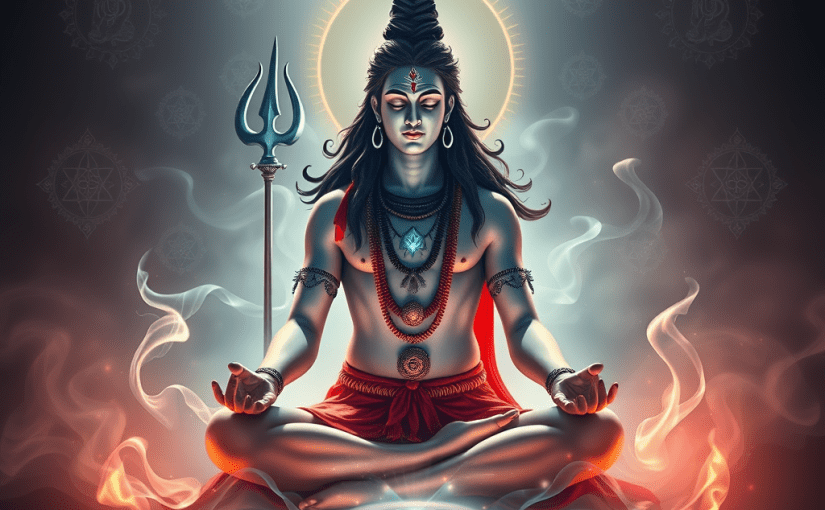
One of the most unique and profound features of Sanatana Dharma, commonly known as Hinduism, is that it doesn’t just teach us to worship a person—it encourages us to recognize and revere divine qualities through symbolic forms. This concept may seem confusing at first, especially to those who are used to linear religious systems where a specific person is followed and worshipped. But in Sanatana Dharma, the idea is much broader and deeper. The idols we worship, the gods and goddesses we name—Shiva, Vishnu, Lakshmi, Durga—are not just individuals; they are living representations of divine attributes, cosmic principles, and inner energies.
Take the example of Lord Shiva. He is often seen as the destroyer of ignorance, the master of Tantra, the one who meditates in silence yet dances the cosmic dance of creation and dissolution. When someone worships Shiva, they are not simply bowing to a historical or mythological figure. They are connecting to the energy of inner stillness, deep meditation, dispassion, transformation, and spiritual awakening. So if a person in real life lives a life similar to Shiva’s qualities—say, through a Tantric lifestyle, inner renunciation, spiritual intensity, and attainment of samadhi—then that person is also reflecting the divine principle of Shiva. In a way, worshipping Shiva means honoring the divine qualities wherever they appear—even within such a realized being.
This is why Sanatana Dharma is so inclusive and timeless. It doesn’t bind God to a name or a face. Instead, it offers countless symbols and forms that point to the same formless Truth. The deities are not egoistic beings wanting attention—they are mirrors through which the devotee sees the Divine both outside and inside. If worship was limited only to a particular person or historical incarnation, then anyone who reached the same level of realization or expressed the same divine traits would be ignored. But that’s not the case here. In Sanatana Dharma, realization is respected. The divine essence in everyone is acknowledged.
This is also the reason we see saints, sages, yogis, and gurus being deeply respected across centuries—not because they were born in a divine family, but because they became divine through sadhana (spiritual practice), self-realization, and embodiment of higher qualities. They lived the principles that the deities represent. So when people worship Krishna, for example, they are worshipping divine love, wisdom, playfulness, and guidance. And when those same traits shine through a modern-day saint, the saint too is loved and respected.
In this way, Sanatana Dharma teaches us to rise above blind idol worship and see the divine principle (Tatva) behind the form. It doesn’t matter who you are or where you were born. If you embody truth, love, stillness, and divine consciousness, then you are living proof of the same reality that the gods represent. This is the true spiritual democracy of Sanatana Dharma.
So yes—if you live like Shiva, awaken like Shiva, and dissolve your ego like Shiva, then you are no different from Shiva. And those who understand this truth will never ignore you, because they will see the same light in you that they bow to in the temple.
 Demystifying Kundalini