In today’s hurried world, extended meditation for many hours or days is simply not practical for most people. Life is full of responsibilities, work, family, and unavoidable mental engagement. Because of this, the idea that only long retreats or extreme practices can lead to Samādhi often feels unrealistic. What I have gradually understood through my own experience is that one hour of Dhyāna twice a day, done daily and sincerely, is a powerful and sufficient alternative.
This understanding did not come from theory alone, but from observing how my body, breath, attention, and awareness actually behave over time.
Morning Dhyāna and the Role of Preparation
In the morning, I do not jump directly into sitting. Before one hour of Dhyāna, I spend about one hour in prerequisite practices—yoga āsanas, prāṇāyāma, and spinal breathing. The purpose of this is not to chase energy experiences or force breath retention. It is simply to remove resistance.
Normally, there is some natural resistance in the system for blissful awareness or prāṇa to flow freely from bottom to top. Daily life, posture, emotions, and habitual tension all contribute to this friction. When I do āsanas and breathing practices, there is a mild, structured effort that loosens this resistance. It is not violent forcing, but it does gently push the system out of inertia.
Once this movement happens, the system seems to learn the pathway. For some hours afterward, awareness flows more easily on its own. During Dhyāna, breath often becomes extremely subtle or even halts naturally, without any intentional breath holding. This makes breathless Dhyāna happen effortlessly.
However, I have also observed that this “habit” of easy flow does not last forever. After daily activities or after about 24 hours, resistance slowly returns. This is not failure or regression—it is simply natural entropy. That is why refreshing the system every morning with yoga and prāṇāyāma is helpful. Just like bathing or brushing teeth, it is daily hygiene for awareness.
Over time, as practice matures, dependence on preparation may reduce by itself, but there is no need to force that conclusion.
Empty Stomach vs Light Food
I also noticed something subtle but important. Sometimes, when I meditate after eating fruit or a light meal, Dhyāna does not deepen as much. Other times, surprisingly, a light meal actually matures Dhyāna.
The reason became clear: digestion pulls attention and energy downward. On days when awareness is already very sharp or over-concentrated in the head, a light meal helps redistribute energy and soften excess intensity. On other days, especially when clarity is needed, an empty stomach allows awareness to gather more cleanly.
So food is not an enemy or a rule—it is a fine adjustment knob. The important thing is that I still sit for the full one hour regardless of depth or outcome.
Fixed One-Hour Sitting: The Real Training
Sitting for one full hour whether Dhyāna matures or not turned out to be crucial. This habit trains something deeper than concentration—it trains non-dependence on experience.
Some days Dhyāna deepens quickly. Some days it feels flat, dull, or neutral. Still, I sit. This teaches the system to stay without bargaining, without checking results. That kind of staying is what allows deeper states to appear naturally later.
Not every sitting is meant to be deep. Some sittings are meant to remove the need for depth.
Evening Dhyāna Before Sleep
In the evening, I again sit for one hour just before bed. This sitting has a different role. It is not for sharp clarity or effortful depth. It is for dissolution.
If sleep comes during evening sitting, that is not failure. It means the nervous system feels safe enough to let go. Awareness hovers at the edge of sleep, effort drops, and many subtle shifts happen below memory. Sometimes Dhyāna matures quietly; sometimes sleep takes over. Both outcomes are correct.
Morning practice gathers.
Evening practice dissolves.
Together, they bracket the entire day so that nothing accumulates.
Chakra Contemplation Without Forcing Breath
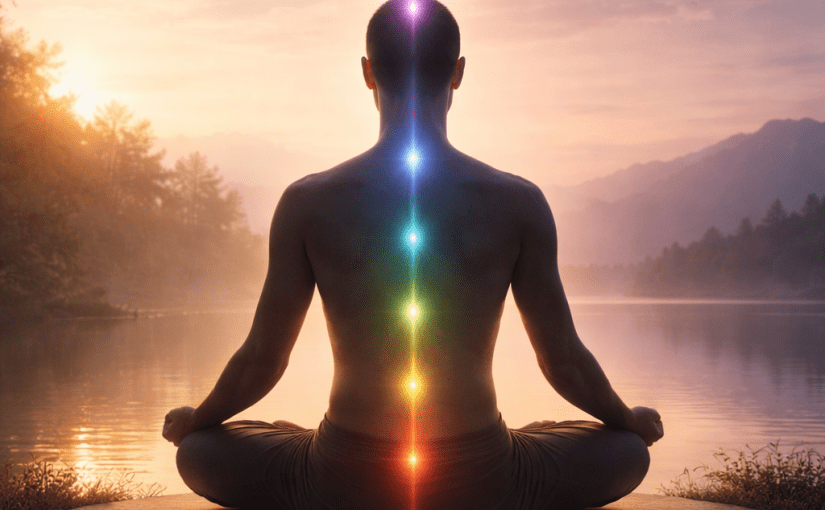
In Dhyāna itself, I found that chakra contemplation from top to bottom works best for me. This is not intense visualization and not breath control. It is simple contemplation—allowing awareness to rest at each level.
Because there is no forced breath retention, respiration sometimes halts on its own. This happens not by intention but because attention becomes continuous and relaxed. Breathlessness appears as a by-product, not a goal. This spontaneous breath-hold is transient and accompanied with blissful constriction on contemplated chakr.
Over time, the sense of moving through individual chakras sometimes disappears. Instead, all chakras feel connected like a single vertical string, with awareness resting on the whole axis at once rather than on a single point. This is a sign of integration, not a new technique.
Inclusion of Ajñā Chakra
When Ajñā is gently included—eyes closed, gaze naturally upward without strain—along with awareness of the whole vertical axis, or any specific activated chakra, Dhyāna often becomes thoughtless, breathless, and quietly blissful. Ajñā here is not a peak or target, but a stabilizer. Agya chakra is the real site of these spiritual qualities.
Nothing is forced. There is no staring, no tightening, no effort to hold the state. That is why it feels safe and complete.
Throat (Neck) Area Prominence
Recently, I noticed that prāṇa sometimes seems to rest more around the neck or throat area, with a blissful and breathless quality. This is not something I try to create. It appears naturally as tension releases at that junction between head, chest, and breath.
The important thing is not to cling to this sensation or localize attention there. It should be included but not emphasized. Over-attention can subtly stall integration.
Why This Practice Can Ripen into Samādhi
Through all of this, one understanding became clear:
Samādhi does not come from chasing depth or extending duration. It comes from familiarity and non-preference.
By sitting twice daily:
- whether deep or shallow
- whether alert or sleepy
- whether blissful or neutral
awareness slowly learns to rest without conditions.
Extended hours of meditation may force surrender, but daily repetition teaches surrender. Teaching lasts longer.
In a modern life, one hour in the morning (with preparation) and one hour in the evening (with surrender) is not a compromise. It is a realistic, intelligent, and complete path.
Final Understanding
- Preparation removes resistance; it does not push prāṇa.
- Breathlessness in Dhyāna is natural when effort drops.
- States come and go; the habit of sitting remains.
- Integration matters more than intensity.
- Samādhi will not announce itself—it will be recognized later, quietly.
The most important thing I have learned is this:
Use effort where effort belongs, and stop effort where it must end.
From there, practice ripens on its own.
 Demystifying Kundalini