Friends, Kundalini energy is mysterious. It can take you to the highest bliss, or it can scatter in all directions. When I first started practicing, I didn’t care about complicated techniques or traditions—I just wanted results. And through trial and error, I found that pure Kriya energy alone leads to nowhere unless it is anchored in something deeper.
Why Kriya Alone is Not Enough
Kriya Yoga is often said to be a direct path, but I’ve realized that without a meditation object, energy remains worldly. It feels powerful, but it doesn’t hold in a transcendental way. The moment I combined Kriya with a single-pointed meditation object, everything changed. The bliss lasted longer, the mind became still, and energy naturally moved upwards instead of just spreading.
What About Patanjali’s Ashtanga Yoga?
I’ve thought a lot about why Kriya Yoga is different from Patanjali’s traditional path of Dharana (concentration), Dhyana (meditation), and Samadhi (absorption). In Patanjali’s system, these happen one after another—step by step. But in Kriya, they happen together, effortlessly. The moment breath is controlled, Dharana arises. The moment energy moves, Dhyana starts. And as it deepens, Samadhi follows on its own. There’s no waiting, no struggle.
Patanjali probably designed his system for people who needed structure. But I’ve seen that when energy moves properly, the mind doesn’t need to be forced into concentration—it just happens.
Why Tantra is Even Faster
If Kriya is fast, Tantra is like a lightning bolt. The first time I experimented with Tantra, I was shocked. It doesn’t take days or months—it snatches you out of the world immediately. The energy becomes completely obedient, like a pet that listens to every command. Even instant enlightenment or liberation is possible with Tantra.
But there’s a catch—Tantric practice can’t be done daily. It’s intense, overwhelming, and too powerful to sustain continuously. That’s where Kriya comes in. Kriya helps to hold and extend the experience for days, keeping the energy steady and preventing the mind from crashing back into ordinary life too quickly.
Tantra is like a rocket, and Kriya is what keeps it in orbit.
My Own Kriya Kundalini Yoga Practice
Over time, I’ve built my own system. I practice:
✔ Anulom Vilom, Kapalbhati, and both-nostril Pranayama
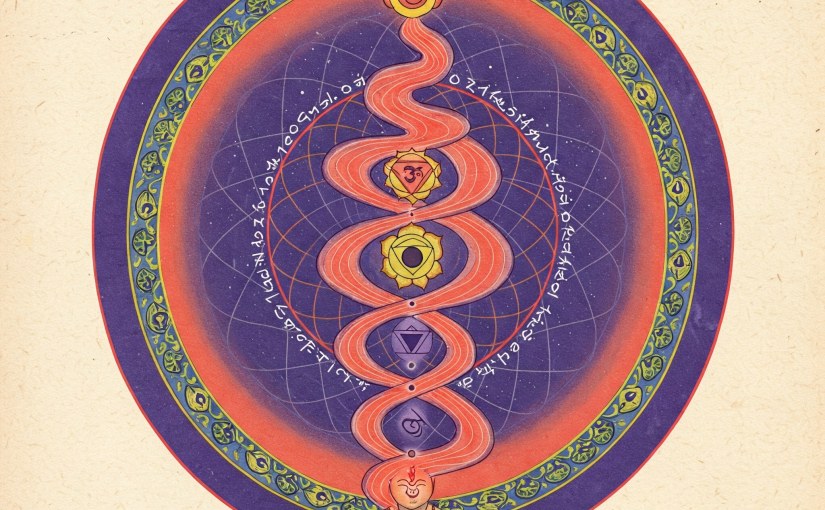
✔ Asanas and meditation on each chakra
✔ Chanting their Bija mantras and visualizing their colors
✔ A single meditation object to hold energy in the highest state
✔ Maha Bandh for energy stabilization
✔ Chakra meditation with breath retention in Bahya and Antar Kumbhaka
I don’t bother with Thokar, Yoni Mudra, Tribhangmurari, or Mahamudra. Although, now I start doing Thokar Kriya. It is not necessary to chant a complex mantra like Om Namo Bhagwate Vasudevay while doing it. You can also chant Om in your mind. Tribhangamurari means three natural bends of the spine through which the energy passes. That is why the back is not kept straight like a plank but is kept in its natural shape.
By the way, Thokar and Mahamudra itself happen in a mild form at the time of Mahabandh. If you do Sadhana at four o’clock in the morning, then Yoni Mudra also happens in a mild form automatically. In Yoni Mudra, the eyes, ears, nose and mouth are closed with the fingers. At four in the morning, there is neither any sound nor any sight. During Kumbhak Pranayam, the nose remains closed automatically. The time between three and four o’clock is the best for Sadhana. There is no shortage of time during that time. Due to this, the attention is not drawn towards time. Therefore, a person does Sadhana without any worry. During this time, the possibility of getting into Samadhi with Keval Kumbhak is also quite high. It is a unique experience. Breathing becomes so slow that many times it is not known whether breathing is going on or not. The Asana itself seems stable. Of course, set it again after a while. Breathing will go on for a while and then it will stop. The meditation picture on the Ajna Chakra feels uniform and clear. It seems that from where is the oxygen coming to maintain this picture continuously. It is said that at that time the internal breath is going on in the spinal cord. But where does the oxygen come from in the spinal cord? Even gross science has not been able to understand this yet. Perhaps this is the life force, which does not require oxygen in its original form. It may be that the purpose of breathing is not to give oxygen but to give momentum to the life force directly. Oxygen may have additional role in this. It may be that although the breath is not felt, subtle breath is going on. It may be that due to lack of physical work, the demand for oxygen becomes almost zero. But while sleeping, there is good breathing. All these are speculations and need deep research on them. That state is a wonderful mixture of life and death. There is breath and there is no breath. It is felt only after 20 or 30 long, deep, slow and pull-push type breaths of Kumbhak of Kriya Yoga. After these deep breaths, again concentrate on your breathing with the So~Ham mantra. Chant So while inhaling and Hum while exhaling in your mind. Let the breath continue as it is; do not interfere with it. In some time the breath will slow down and become almost zero. Keep chanting So~Ham even if there is only a hint or sign of breathing. Keep your attention on the meditation picture on the Ajna Chakra. This is only Kumbhak. Only about two or three of above said deep breaths are taken in a minute. Due to this, the energy of the Mooladhara is felt to rise upwards with bliss. Perhaps this is what starts the breath or life force in the Sushumna. Only by the intense practice of Keval Kumbhak, Yogis remain alive for many days in places with lack of air, such as in a closed basement, etc. However, this is also not the final siddhi. The final siddhi is self-knowledge. Of course, Keval Kumbhak helps in keeping the mind stable, focused and knowledgeable even in the midst of worldly affairs. It is called Keval Kumbhak because in this the breath is not stopped forcefully. The breath stops automatically without any pain and that too for a long time.
What I’ve found is that pure Kriya arouses energy, but without a meditation image, it leads nowhere. With a meditation object, energy becomes transcendental and stays for many days. The state attracts me back again and again, effortlessly. Of course, meditation support /object/image is necessary even in Tantra, only then its energy will be able to connect with the spiritual dimension, otherwise it will get scattered in worldly matters, which can also cause harm.
Conclusion
Kundalini is not just about energy rising—it’s about where the energy is directed. Tantra pushes you out of the world instantly, Kriya sustains it, and a meditation object makes it deeply spiritual.
Patanjali’s system is slow and structured. Kriya is fast and natural. Tantra is instant and overpowering. But when you mix Tantra and Kriya wisely, you get both speed and stability—awakening and absorption, freedom and grounding.
Would you say that Tantra gives the breakthrough and Kriya helps hold it forever?
 Demystifying Kundalini