Does Breathing Have a Double Role? A Yogic Reflection on Prana, Oxygen, and the Hidden Purpose of Breath

A Question That Arose During Meditation

For many years I accepted the common explanation that breathing exists mainly to supply oxygen to the body and remove carbon dioxide. This explanation is obviously true and is supported by modern science. Yet repeated observations during meditation, daily life, intellectual work, emotional disturbances, and states of deep calm gradually led me to wonder whether breathing might be performing a second function as well.

This is not an attempt to reject science. Nor is it an attempt to prove ancient yogic theories through speculation. It is simply a reflection born from observation. My intention is not to offer proof but to present a clue that may inspire further thought.

An Observation About Oxygen

One observation repeatedly attracted my attention. The human body does not absorb all the oxygen present in inhaled air. A significant portion of oxygen still remains in exhaled air.

This naturally raised a question in my mind.

If oxygen delivery were the sole purpose of breathing, why did evolution not push the respiratory system toward extracting a much larger percentage of available oxygen from every breath?

The body certainly had millions of years to improve efficiency.

Instead, nature seems to have created a system in which large amounts of air continuously move in and out while only a portion of the available oxygen is actually utilized.

Of course, there are well-known scientific explanations involving safety margins, carbon dioxide regulation, diffusion processes, changing metabolic demands, and many other physiological factors. Yet the observation itself remains interesting.

The body appears designed not merely to absorb oxygen but also to maintain continuous movement of air.

A Simple Thought Experiment

This observation led me to a simple thought experiment.

Suppose the body extracted nearly all available oxygen from every breath.

In such a case, very little airflow might be required under many circumstances. Rapid breathing could potentially create excessive oxygen loading and other imbalances.

Instead, nature appears to prefer a design in which substantial airflow continues even though only part of the oxygen is utilized.

This does not prove anything about prana.

However, it raises an interesting possibility.

What if breathing serves purposes beyond oxygen exchange alone?

The Yogic View of Breath

According to Yoga, breath is closely connected with prana.

Prana is not exactly the same thing as oxygen. A person may breathe oxygen yet still feel exhausted, emotionally disturbed, mentally scattered, or energetically depleted. Yogic traditions therefore distinguish between the physical air and the subtle life force associated with it.

From this perspective, breathing performs two functions simultaneously.

The first function is physical. It supplies oxygen, removes carbon dioxide, and sustains biological life.

The second function is energetic. It helps distribute and regulate prana throughout the system according to changing needs.

Whether one accepts this view or not, it provides an interesting framework for interpreting many common experiences.

Breathing Changes With Every Mental State

One fact is difficult to deny.

Breathing changes continuously according to mental and emotional conditions.

When a person becomes angry, breathing changes.

When fear appears, breathing changes.

When desire becomes intense, breathing changes.

When anxiety increases, breathing changes.

When love arises, breathing changes.

When concentration deepens, breathing changes.

When meditation becomes profound, breathing changes.

When deep sleep arrives, breathing changes.

When intellectual work becomes intense, breathing changes.

Breath appears to participate in every major shift of consciousness.

If breathing existed only to supply oxygen, this extraordinary sensitivity to mental and emotional conditions seems worthy of reflection.

My Own Observations

Repeated observation led me to notice that fast and agitated breathing was often accompanied by increased mental chatter.

Thoughts became more active.

Emotions became more reactive.

Old tendencies such as attachment, anger, greed, desire, jealousy, ego, impatience, and restlessness seemed to find greater expression.

The mind became scattered.

In contrast, when breathing became slow, calm, and consciously directed, something different occurred.

Old impressions still surfaced, but they surfaced in a more orderly way.

Instead of becoming trapped in them, I could witness them.

The witnessing itself seemed to weaken their influence.

As this process continued, qualities such as patience, compassion, love, understanding, contentment, and inner balance appeared to grow naturally.

This observation does not prove a theory, but it strongly suggests that breath participates in processes far deeper than oxygen exchange alone.

Prana Regulation and Nervous System Regulation

Modern science explains many of these effects through the nervous system.

Breathing influences heart rate.

Breathing influences stress responses.

Breathing influences attention.

Breathing influences emotional regulation.

Breathing influences brain activity.

Breathing influences states of calmness and arousal.

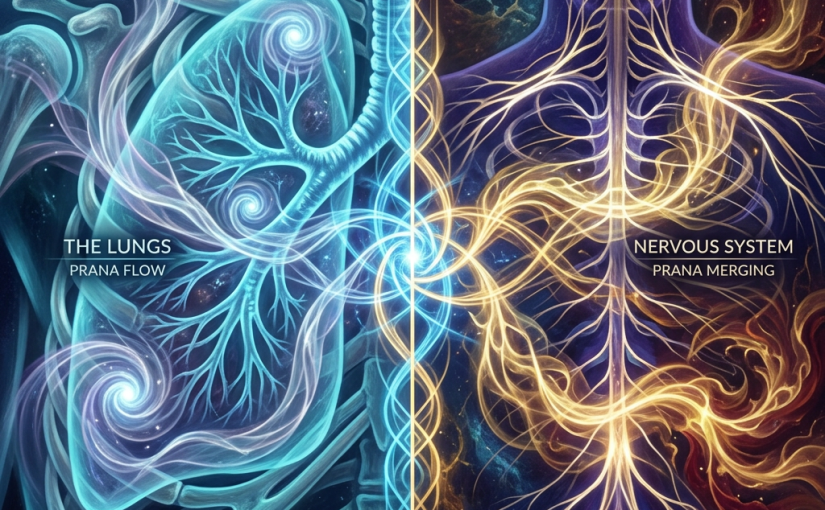
Yoga explains similar observations through the language of prana, nadis, and chakras.

Science speaks of nervous system regulation.

Yoga speaks of prana regulation.

The words are different.

The practical observations often appear remarkably similar.

This raises an interesting possibility.

Perhaps these are not necessarily competing explanations.

Perhaps they are different ways of describing different aspects of the same living reality.

A Clue Rather Than a Conclusion

I do not claim that unused oxygen scientifically proves the existence of prana.

Nor do I claim that modern neuroscience has already validated ancient yogic descriptions of chakras and nadis.

My purpose is much simpler.

I am merely presenting a clue.

The clue is that breathing appears far too intimately connected with thought, emotion, attention, awareness, and consciousness to be viewed as nothing more than an oxygen pump.

Science explains part of this mystery.

Yoga explains another part.

Perhaps both perspectives still have more to learn.

Final Reflection

The deeper I observe breathing, the more difficult it becomes to separate body, mind, emotion, attention, and energy into independent categories.

A disturbed breath often accompanies a disturbed mind.

A calm breath often accompanies a calm mind.

A scattered breath often accompanies scattered attention.

A balanced breath often accompanies balanced awareness.

Whether one prefers the language of neuroscience or the language of Yoga, one fact remains undeniable: breath occupies a unique position between the physical and psychological dimensions of human life.

For this reason, I increasingly view breathing not merely as a mechanism for survival but as a bridge between body and consciousness.

The idea that breath may simultaneously support oxygen exchange and the redistribution of prana remains only a hypothesis. Yet it is a hypothesis born from repeated observation, and perhaps that is how many worthwhile investigations begin—not with certainty, but with a simple clue that invites deeper exploration.
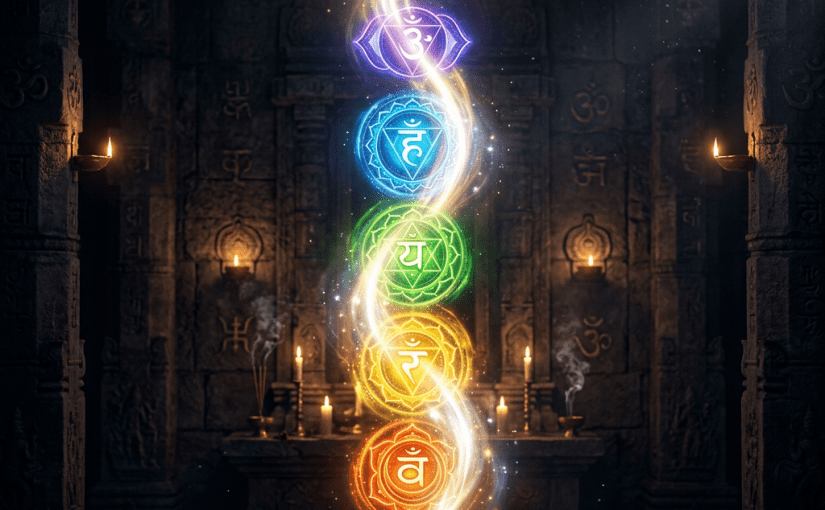
When Awareness Takes Over the Work of Breath: Ajna Chakra, Prana Flow, Yoga Nidra, and Recovery from Mental Exhaustion

A Surprising Noon Meditation After Intense Intellectual Work

Today at noon again, after a long period of intellectual work, I decided to rest for a while. The work had been mentally demanding and I could clearly feel its effects. My breathing was faster than normal, yet it felt unsatisfying. Although the breath was moving rapidly, it did not seem to be providing the sense of refreshment or replenishment that I expected. Something felt incomplete.

Instead of trying to force relaxation, I returned to a method that has been proving useful recently. I brought my awareness back to the spinal column. Almost immediately, I noticed something interesting. The rear Ajna Chakra seemed hungry for prana. The sensation was clear enough that it felt as though the region was demanding nourishment.

I placed my attention there and remained with it.

Discovering That Awareness Can Draw Prana Independently of Breath

As I continued observing, prana appeared to start collecting around the rear Ajna region. What surprised me most was that breathing was still continuing in its usual way. It had become slightly calmer than before, but it was still functioning normally. Yet the process of prana gathering at Ajna did not seem dependent on the breath. However, breath was following awareness and adjusting itself lttle or more to help pouring prana at awareness site.

This was an important observation.

The transfer of prana toward Ajna appeared to continue because awareness remained fixed there. The breath was not interfering with the process. The breath was not directing the process. Awareness itself seemed to be drawing prana toward the location that required it.

This felt very different from my previous understanding.

Earlier, I often experienced breath as the main mover of prana. Inhalation seemed to push energy upward and exhalation seemed to encourage downward movement. But today another possibility revealed itself. Awareness itself appeared capable of directing the flow.

It seemed that as long as awareness remained steadily established in a particular location, prana naturally began gathering there regardless of the ordinary movements of breathing.

Why Ordinary Breathing Sometimes Struggles to Nourish a Chakra

As I continued reflecting during the session, another understanding emerged.

In normal breathing, prana appears to swing continuously upward and downward. The movement is constantly changing. Because of this oscillation, prana does not always remain focused long enough on a demanding chakra.

When a chakra requires replenishment, the continuous swinging of prana with the breath may not be the most efficient method of supplying it.

This seemed particularly relevant to the condition I was experiencing after prolonged intellectual work.

My breathing had become fast and somewhat agitated. Looking closely, it seemed as though the breath was trying to collect and deliver prana but was not fully succeeding. Because the replenishment remained incomplete, the breathing continued becoming faster in an attempt to avoid a reversal or loss of available prana.

Some benefit was certainly occurring. The breath was helping to a degree. However, it appeared that the effort being expended by the body was greater than the amount of replenishment being achieved.

In other words, the cost-benefit ratio appeared negative.

Eventually the breathing method would probably have worked if enough time were allowed, but it seemed inefficient. The body was spending a great deal of energy in the process.

Fast Breathing, Thoughts, and Emotional Disturbance

Another aspect became obvious during this observation.

Rapid breathing was not acting alone.

With the rapid oscillation of breath, thoughts became more active, emotions became more restless, and mental chatter increased. Along with this, deeper mental tendencies and defects such as attachment, anger, greed, excessive desire, illusion, ego, jealousy, impatience, and various forms of inner agitation began surfacing more strongly. The mind appeared scattered and reactive. In contrast, when the breath became slow, calm, and consciously directed toward a particular needy chakra, old impressions and stored mental patterns surfaced in a more orderly manner. Because they arose in the presence of awareness and witnessing, they could be observed without being immediately acted upon. This gradual process seemed to help purify the mind. As mental agitation decreased, qualities such as patience, love, compassion, understanding, contentment, and inner balance naturally found more room to develop and express themselves.

Everything seemed interconnected.

As the breath accelerated, thoughts and emotions appeared to receive additional momentum. As thoughts and emotions became active, they further disturbed the process of gathering prana where it was needed. It is because they spend energy in useless body actions and reactions. It is all energy trade.

The entire mechanism appeared circular.

Fast breathing contributed to mental movement.

Mental movement contributed to energetic scattering.

Energetic scattering encouraged further breathing activity.

The cycle continued until awareness intervened.

Once awareness became firmly established at the demanding location, the cycle began slowing naturally.

Subtle Hunger at Vishuddha and Anahata Chakra

While most of the demand was clearly centered around the rear Ajna Chakra, I also noticed a small amount of energetic hunger at Vishuddha Chakra.

The demand there was much weaker.

Once attention was directed appropriately, it seemed to replenish quickly. Only a few subtle pumps of prana appeared sufficient to satisfy the requirement.

A similar process occurred around Anahata Chakra.

There was a slight demand there as well, but nothing compared to the intensity that had been present around Ajna. Once awareness and prana reached the area, the deficiency appeared to resolve fairly quickly.

This created the impression that different regions of the subtle system may require different amounts of replenishment depending upon the activities that have recently been performed.

After prolonged intellectual work, Ajna seemed to be the primary consumer.

The other centers required only minor balancing.

The Heart Suffocation Sensation and the Central Channel

One observation that has appeared repeatedly in recent experiences emerged once again.

A slight suffocation sensation around the heart region was present.

However, it did not feel like an isolated phenomenon.

The sensation appeared related to the Ida channel.

As awareness rested in the central spinal column and energy seemed to flow through the central pathway, the heart discomfort gradually calmed.

The impression was that the central channel supplies balance to both Ida and Pingala. When the central flow becomes stable, both side channels receive support.

As this balancing occurred, the suffocation sensation eased naturally without requiring direct attention to the heart itself.

This reinforced my growing sense that the system operates as an interconnected network rather than as isolated energetic locations.

When Awareness Takes Over the Work of Breath

Perhaps the most important insight of the entire session was the realization that awareness appeared capable of taking over a function that breathing had previously been performing.

Earlier in my practice, breath often seemed responsible for directing prana.

Today the process felt different.

Awareness located the demanding region.

Awareness remained there.

Prana gathered there.

Breathing gradually relaxed because it no longer needed to perform the task itself.

This did not happen through force.

There was no attempt to suppress breathing.

There was no attempt to hold the breath.

There was no attempt to create artificial stillness.

Instead, awareness quietly assumed responsibility for the process.

The breath seemed free to calm down because the required work was already being accomplished.

The Natural Arrival of Breath Stillness

As the replenishment continued, the breathing gradually became calmer.

There was no struggle.

There was no manipulation.

The calming seemed to occur by itself.

Eventually a point arrived where considerable breath stillness appeared.

This stillness felt natural rather than imposed.

The body no longer seemed to require the earlier rapid breathing pattern.

The energetic demand had diminished.

The agitation had diminished.

The need for excessive breathing had diminished.

Everything appeared to settle simultaneously.

Yoga Nidra While Sitting Upright

As peace and calmness increased, another development occurred.

Yoga Nidra appeared naturally.

What made this interesting was that it happened while sitting with a straight back.

I often sleep during the daytime while sitting upright because lying down frequently aggravates GERD symptoms. Experience has taught me that remaining upright is usually more comfortable.

Therefore, even the Yoga Nidra unfolded in a seated position.

The transition felt smooth.

Awareness gradually moved into a deeply restful state while the body remained sitting upright.

There was no deliberate attempt to enter Yoga Nidra.

It simply emerged as a consequence of the calmness that had developed.

Emerging from Yoga Nidra and the Breathless Condition

After some time, the Yoga Nidra naturally ended.

When it broke, another interesting phase followed.

For a period, I remained in what can only be described as a breathless-type condition.

The body appeared extremely quiet.

Breathing was minimal.

Everything felt peaceful and still.

There was no urgency.

There was no agitation.

The earlier fast breathing had completely disappeared.

After remaining in that condition for some time, I eventually stood up and went for lunch.

The entire session lasted approximately forty-five minutes.

During the evening session of about 20–30 minutes, there was no noticeable hunger for prana from any particular chakra. Manipura, Anahata, and Vishuddha appeared to draw breath-energy naturally and almost equally, alternating among themselves. Ajna showed no demand for additional prana, so there was no attempt to force energy upward. The experience felt less like an ascent and more like a spontaneous redistribution of energy throughout the system. This suggested that a natural grounding and balancing process was taking place rather than a concentration of energy in the head.

Reflections on the Session

Looking back, the most important discovery was not merely that prana collected around Ajna Chakra. The most important discovery was that awareness itself appeared capable of directing and organizing the process.

The session began with mental exhaustion, rapid breathing, and energetic dissatisfaction.

It progressed through spinal awareness, recognition of Ajna’s demand for prana, replenishment of Vishuddha and Anahata, balancing of the heart-related discomfort, calming of breath, emergence of breath stillness, spontaneous Yoga Nidra, and finally a peaceful breathless-type condition.

Most significantly, it revealed a possible distinction between two modes of practice.

In one mode, breath attempts to direct prana.

In the other mode, awareness directs prana and breath gradually follows.

Today’s experience belonged unmistakably to the second category.

Rather than breath leading awareness, awareness appeared to lead breath.

The result was not force, struggle, or effort, but increasing calmness, increasing stillness, and a natural movement toward rest and peace.

Kundalini at Vishuddha and Ajna Chakra: Breath, Void Awareness, and Meditation in a Busy World

A New Development in My Meditation Practice

Today a new development took place in my meditation practice. Yesterday, while sitting in a temple, the strongest sensation seemed to be centered around Vishuddha Chakra. The feeling of breathing, pressure, and what I can only describe as a subtle suffocation point appeared predominantly in the throat region. Today, however, the center of activity felt different. The dominant sensation was around Ajna Chakra, especially around the rear side of Ajna.

Many people say that breath should never be forcibly withheld. I generally agree with this. However, practical life does not always allow unlimited time for meditation. Sometimes a person is surrounded by responsibilities, noise, family interactions, and worldly duties. In such situations, waiting indefinitely for the breath to calm down naturally may not always be possible. I noticed that certain subtle adjustments helped the process move toward breath suspension much more quickly.

During meditation, I simply placed attention on the spinal column while maintaining normal breathing. After some time, a knot-like sensation appeared around the rear Ajna region. It felt as though something had moved upward from the neck area toward Ajna Chakra. Whether this was Kundalini itself or simply the movement of awareness, I cannot say with certainty, but the experience was unmistakable.

The Connection Between Ajna Chakra and Anahata Chakra

An interesting observation emerged during the sitting. At times I felt a suffocation-like sensation near the left side of Anahata Chakra close to the heart. Surprisingly, this sensation seemed connected to the rear Ajna region. Whenever the pressure or blockage around the rear Ajna eased, the suffocation near the heart eased as well.

The effect was not limited to the front of the chest. Sometimes it seemed to radiate toward the rear Anahata region and sometimes toward the front. This created the impression that the subtle system operates more like an interconnected network than as isolated centers functioning independently. It felt like an intricate web of channels where activity in one location immediately influenced activity elsewhere.

This observation reinforced the feeling that the chakras may not always function as separate compartments. Instead, they often appear as parts of a living and interconnected energetic field.

Upward Gaze, Ekarnava Meditation, and Rapid Breath Suspension

One of the most striking aspects of today’s sitting was that the upward gaze toward Ajna Chakra seemed to work much more effectively than before. Ekarnava meditation was also functioning with unusual ease and depth.

By combining awareness of the spinal column with natural breathing, breath suspension appeared within approximately fifteen minutes despite being in a chaotic joint-family environment. This surprised me because such conditions are usually not considered ideal for deep meditation.

Rather than forcing the breath, it seemed as though concentration itself gradually reduced the need for breathing. The breath became subtler and subtler until suspension emerged naturally.

An interesting insight arose from this. It seemed that a small inhalation while awareness rested around Vishuddha Chakra pushed the energy or awareness upward toward Ajna Chakra. This observation repeated itself enough times that it began to appear as a consistent pattern.

Breath as an Upward and Downward Force

Another realization emerged from observing the breath carefully. It appeared that inhalation functioned as an upward push while exhalation functioned as a downward push.

When awareness rested on a chakra, inhalation seemed to encourage an upward movement toward higher centers. Exhalation appeared to have the opposite effect, encouraging a downward movement or settling process.

From direct observation, Kundalini appeared to shift according to the state of the breath. Sometimes the dominant sensation was at Vishuddha. At other times it was at Ajna. The position did not seem fixed. Instead, it seemed responsive to the rhythm and quality of breathing.

This led to a broader insight. Perhaps breath, thoughts, emotions, and subtle energetic sensations are not separate processes at all. Perhaps they are different expressions of the same underlying movement.

Why Breath, Emotions, and Thoughts Are Related

The relationship between breath, emotions, thoughts, and awareness became increasingly obvious.

A change in attention influenced breathing.

A change in breathing influenced subtle sensations.

As breathing became subtler, thoughts became weaker.

As thoughts weakened, a deeper calm emerged.

This observation supports the ancient yogic understanding that breath and mind are deeply connected. When emotions become disturbed, breathing changes. When breathing changes, mental activity changes. When breathing becomes calm, thoughts naturally begin losing momentum.

Instead of viewing thoughts, emotions, breath, and energy as separate departments of human experience, it may be more accurate to view them as parts of one interconnected process.

The Emergence of Void Awareness

Perhaps the most important part of the meditation occurred much later.

The breath suspension itself appeared within roughly fifteen minutes. However, the deeper experience emerged approximately thirty to forty minutes after the beginning of the session. The total sitting lasted around seventy to eighty minutes.

What emerged was not bliss, ecstasy, visions, revelations, or grand spiritual conclusions.

There was no sense of “I.”

There was no sense of “we.”

There was no sense of “that.”

There was simply a calm void-like feeling.

It was difficult to describe because there was almost nothing present to describe. There was only a quiet and spacious absence of ordinary mental activity.

This state felt very different from energetic movements, chakra sensations, breathing patterns, or meditative techniques. Those processes seemed to belong to an earlier phase of the session. The calm void felt like something beyond them.

Doubt and the Decision to End the Session

At a certain point, I chose to end the meditation voluntarily.

The reason was not discomfort but doubt. The void-like state seemed to deepen, and I became uncertain about remaining in it for longer.

To return to ordinary functioning, I deliberately began taking deeper breaths. After a few intentional breaths, spontaneous Kapalbhati-like breathing appeared.

Gradually, thoughts started returning.

However, they returned in a weakened form.

Thoughts were sparse.

Thoughts lacked their usual force.

The body felt somewhat weak.

There was mild pressure in the head.

The entire experience felt like a gradual re-entry into ordinary consciousness after spending time in a much quieter state.

The Challenge of Deep Meditation in a Busy World

One practical challenge became obvious through this experience.

It is difficult to sit for long periods in a busy worldly environment.

A householder does not live in a monastery. There are conversations, responsibilities, family members, duties, and endless interactions. Deep meditation naturally moves toward silence, stillness, and inwardness, whereas ordinary life constantly demands engagement.

This contrast creates a challenge.

Sometimes the meditation deepens just when practical life demands attention elsewhere.

Yet today’s experience demonstrated something important. Even within a noisy and busy environment, a deep meditative state can still emerge. External conditions may not be as decisive as they initially appear.

The Role of Speech and Conservation of Energy

Another insight became increasingly clear.

Talking appears to consume a significant amount of energy.

Not all speech is unnecessary, of course. Practical communication is part of life. However, excessive talking seems to scatter attention and dissipate inner stability.

Limiting unnecessary speech may be one of the simplest yogic disciplines available.

Animals provide an interesting contrast. They do not engage in endless conceptual discussions, arguments, explanations, and self-commentary. Whether this gives them a form of heightened sensitivity is difficult to say with certainty, but it does highlight how much energy human beings devote to continuous mental and verbal activity.

Perhaps silence conserves energy not because speech is bad, but because silence allows awareness to remain gathered rather than dispersed.

From Vishuddha to Ajna and Beyond

Looking back at the entire experience, a clear sequence emerges.

Yesterday, the dominant point of breathing-related tension appeared at Vishuddha Chakra.

Today, the dominant point shifted toward Ajna Chakra.

A small inhalation seemed to encourage upward movement.

Awareness gathered around the rear Ajna region.

The upward gaze became effortless.

Breath became subtle.

Natural suspension emerged.

Thoughts weakened.

The sense of ordinary identity faded into the background.

A calm void appeared.

Eventually, doubt arose and the session was voluntarily ended.

Whether these events are interpreted as Kundalini movement, energetic shifts, attentional changes, or meditative stages is less important than the direct experience itself.

What remains most significant is the discovery that breath, attention, emotions, thoughts, and subtle sensations appear deeply interconnected. As one becomes quiet, the others naturally follow. Beyond all these movements, there sometimes appears a simple and silent void that asks for nothing, explains nothing, and merely remains present in its own stillness.

Breathing Yet Not Breathing: Integrating Dhyāna in Daily Life Amid Chaos

A lived inquiry, written as it unfolded

When the body begins to ask for khecarī

I began to feel that khecarī mudrā was needed not as a yogic achievement but as a practical necessity. Without it, daily worldly chaos made entry into dhyāna difficult. With it, prāṇa rotated effortlessly, and breath retention no longer felt suffocating. It was not breath holding; it was breath resting.

Earlier, during a seven-day Śrīmad Bhāgavatam recitation at home, I entered deep dhyāna without khecarī. The spiritual environment itself carried continuity. That showed me something important: my system already knew dhyāna. What was missing in daily life was not knowledge, but sealing.

Many people gave advice. Some insisted a guru was mandatory. Some said other techniques must be learned first. None of that explained what my body was actually asking for.

The question was not ideological. It was physiological.

Khecarī as a seal, not a ladder

Khecarī revealed itself not as a tool for ascent, but as an internal valve. It reduced sensory leakage, redirected vagal tone, and completed a closed prāṇic circuit. Breath retention stopped being suppression and became circulation. Suffocation disappeared.

This clarified something crucial: khecarī was not something to be held. It was something that appeared at the threshold and dropped away once dhyāna stabilized. Treating it as permanent or as an achievement only invited effort and distortion.

Used correctly, khecarī was permission, not command.

I find rolling the tongue back and touching the soft palate beneficial for initiating dhyāna. It causes the lower jaw to drop, creating a wide gap between the upper and lower teeth, and increases the hollow space at the back of the mouth where swallowing occurs. After dhyāna stabilizes—usually after about 10–15 minutes—this tongue position feels unnecessary and the tongue naturally returns to its normal position. However, the lowered jaw, the gap between the teeth, and the increased hollowness at the back of the mouth continue to remain sustained. Probably, this is a form of body language that prevents energy from being directed toward talking, swallowing, or eating. As a result, the energy tends to be used for dhyāna. It is an amazing trick.

Why rules and warnings didn’t apply cleanly

Warnings about gurus and prerequisites exist for practices that force energy upward or chase power experiences. My experience was the opposite. Energy already moved to ajñā naturally. Khecarī stabilized rather than provoked. There was no chasing, only response.

Practices arise when the system is ready. They are not chosen by ideology. The body was not asking what was allowed. It was asking whether it could continue naturally.

The non-tongue internal seal

A crucial shift happened when the function of khecarī appeared without tongue positioning.

By resting attention gently in the inner throat hollow—behind the face, where swallowing ends—the jaw dropped naturally, the mouth widened inwardly, and breath lost importance. Retention appeared without decision. Dhyāna opened by itself.

This showed clearly: form is optional; function is essential.

When breath becomes “breathing yet not breathing”

At a certain point, something hidden began circulating. Breath was present, yet imperceptible. The body breathed, but I was not breathing. There was no suppression, no control, no danger. Only coherence.

This was not something to observe closely. The moment attention tried to watch it, it collapsed. The correct attitude was friendly ignorance. Letting it happen behind me, not in front of me.

I think this type of spontaneous breathing is called breathlessness because it doesn’t move awareness up and down like normal breathing, only supply oxygen to the body. Breath continues its subtle and deeper up-and-down movement, fully alive and functional, yet the mind no longer rides it as it does with gross and superficial breathing in ordinary life. What stops is not breath, but the mind’s dependence on breath for rhythm, movement, and direction. Movement remains, life flows on, but awareness stands still in itself—this is not suppression or breath stoppage, but the quiet freedom of the mind when it no longer needs breath as its vehicle. At times breathing can become so subtle almost looking like nonbreathing.

Why Watching the Breath Dissolves Thought Only at the Subtle Prāṇic Level

What is called looking at the breath dissolves thought does not refer to ordinary gross breathing, because in gross breathing the breath is heavy, mechanical, and tightly coupled with thought, so the mind rides it up and down and watching it only refines attention without producing thoughtlessness. Thought dissolves only when breathing has already shifted into a subtle, yogic, almost breathless movement of prāṇa, where movement continues but is no longer a physical pumping of air. In this subtle movement the mind no longer rides the breath, the coupling between respiration and thought breaks, and awareness can rest without being carried. When prāṇa moves freely up and down in this way, there is no deliberate focusing at all; awareness is naturally drawn because the movement itself is blissful. It is not attention in the ordinary sense but ānanda recognizing itself in motion.No effort is needed, because effort would disturb the state. Nothing is being suppressed. Thoughts fade away on their own because the sense of bliss is complete and leaves nothing unfinished for the mind to work on. The mind actually hovers in order to complete a task, and bliss is dependent on that completion. The main goal of the mind is to experience complete bliss; work is only an intermediary tool. When full bliss is felt directly, there is no need for any mediating tool. What remains is a natural, self-sustaining state of awareness that continues by itself, experiencing itself without thought.

Fasting, light meals, and hollowness

Light eating or fasting during the week-long Bhāgavatam produced the same effects as khecarī: reduced saliva and mucus, teeth no longer clenching as if ready to bite something, jaws no longer tense as if prepared to grab food, teeth and jaws not aimed at talking vulgarly like ordinary days but to listen and contemplate gods stories, and an increased sense of inner hollowness. The teeth and jaws were no longer oriented toward vulgar or ordinary speech, as on usual days, but instead toward listening to and contemplating the stories of God. Digestion became quiet, speech reflexes softened, and dhyāna came easily because energy, spared from other bodily functions, became available to it.

This was not asceticism. It was chemistry. Comfortably light—not empty—was the key, especially with GERD sensitivity.

The throat hollow and its limits

The throat hollow revealed itself as an amazing junction. But it did not work when prāṇa was highly disturbed. This was not failure; it was correct physiology. No doubt, techniques are invaluable in yoga, but they too have their own limits.

Subtle tools cannot override gross turbulence. Tricking body has its own limits. When disturbance was high, grounding had to come first: feeling body weight, letting breath be ordinary, allowing settling before any inward turn. However, sometimes direct entry into nirvikalp can also happen from high disturbance, this is just try and watch. There’s no fixed ruling, exception is at every step. The following rule is generalised or averaged.

This clarified a hierarchy:

  • High disturbance → grounding
  • Medium disturbance → throat hollow
  • Low disturbance → dhyāna without entry
  • No disturbance → nirvikalpa, no tools

Jaw drop and posterior awareness clarified

Jaw drop meant teeth not meeting, jaw unengaged, tongue unimportant. The tongue might touch the palate naturally or not—it didn’t matter. Jaw led; tongue followed.

Posterior awareness did not mean visualizing channels or tracing chakras. It meant awareness withdrawing from facial activity and resting behind expression. Facial activity like manipulating and maintaining facial expressions, expressing emotional impressions etc. draws lot of energy. Attention focusing on backside of throat in hollow shift the focus of energy from front to backside. This is backside where energy is conserved and transmitted to higher centres through back channel called sushumna without being wasted in front body focused bodily functions.

When described anatomically, it felt like a blissful, light pressure on the posterior surface of the head—not force, but density without effort. It’s like rear agya chakra activation. It acts like a valve in back channel. When it feels unpleasant pressure, valve is closed type. When it feels blissful mild pressure the valve is like open.

This posterior fullness spread gently, supported breath irrelevance, and felt safe and stable.

Why posterior awareness feels safer than forehead focus

Forehead focus engages control and vigilance. Posterior awareness supports integration and regulation. The front decides; the back stabilizes.

Posterior awareness does not ask what should happen. It allows nothing to need to happen.

Daily-life micro-adjustments

Integration showed itself through tiny permissions:

  • Jaw unengaged
  • Teeth slightly apart
  • Tongue irrelevant
  • Breath unmanaged checked

During stress spikes, grounding came first, then jaw softening, then posterior awareness returning quietly.

Dhyāna was no longer entered. It was allowed.

Emotional reactions transform quietly

Emotions still arose, but ownership dissolved. There was delay without effort, movement without hooking, and body-led regulation.

I was not handling emotion. I was outlasting it.

Reactions completed faster and left less trace. This was real integration.

Speech returns without breaking coherence

Silence and speech stopped opposing each other. Speech arose from silence instead of against it. Words slowed. Jaw moved without tension. Awareness stayed behind expression.

Silence remained even while speaking. This is all about integration of yoga in daily life.

The closing understanding

Nothing here was about gaining something new. Everything was about not disturbing what was already stable.

Progress was no longer depth, but recovery time. If one enters dhyana rapidly from chaotic worldliness then even dhyana of short duration may be better than prolonged continuous dhyana that is hard to launch again. Then chaos mattered less. Techniques fell away. Life and dhyāna stopped competing.

Nothing needs to be held. What is real stays.

This is not a conclusion. It is a way of living.

Why extreme khecarī stories still attract sincere practitioners

Later in the inquiry, an old memory surfaced from a book written by a Western practitioner who had lived in India and learned yoga deeply. He described cutting the lingual frenulum hair-thin each day with a surgical blade, applying antiseptic, and eventually achieving a tongue that could enter the throat tunnel perfectly, without visible wounds.

This account was not raised as a desire to imitate, but as a remembered narrative that still carried psychological weight. Such stories attract sincere seekers for specific reasons: they promise finality, convert mystery into mechanics, and appeal to sincerity through sacrifice. They suggest that one decisive physical act can complete the path.

But integration has no mechanical closure. It refines how life is lived, not how anatomy is altered.

Why such accounts are not guidance

Those historical accounts belong to a different era of medicine, psychology, and understanding of the nervous system. Cutting the frenulum, even gradually, is physical self-injury with real risks: bleeding, infection, nerve damage, scarring, loss of fine tongue control, and psychological fixation on technique.

More importantly, such actions are unnecessary when the functional effect of khecarī is already present. Neuro-energetic coherence cannot be stabilized by anatomical violence.

If the effect is present, the form has already served its purpose.

Why yogic language itself causes confusion

At the deepest level, the confusion was never about practice. It was about language.

Classical yogic texts were written without modern neuroscience or physiology. Yogis used metaphor and experiential shorthand. When they spoke of the tongue entering the throat, nectar dripping, prāṇa piercing, or breath stopping, they were describing felt states, not surgical instructions.

Over time, experiential language hardened into literal method. Metaphor was mistaken for mechanics.

The same misunderstanding applies across yoga:

  • “Breath stops” means breath loses centrality, not suppression.
  • “Prāṇa rises” means regulation shifts from survival circuits to integrative circuits.
  • “Ajñā opens” means vigilance and control relax, not pressure generation.

Reading yogic texts from lived experience

Western minds, trained to optimize and proceduralize, are especially vulnerable to literalizing yogic poetry. The unconscious question becomes: “What exactly do I do?”

But yoga was never about doing more. It was about interfering less.

A simple rule clarifies everything: if a description sounds violent, effortful, or irreversible, it is metaphor, not instruction. Real yogic transformations are gentle, reversible, sanity-preserving, and embodied.

Khecarī Mudrā, Physical Catalysts, and Awakening: Why Techniques Open the Door but Meditation Sustains Realization

Khecarī is not “nothing physical,” but neither is it a guaranteed path to awakening. Physical interventions—khecarī, sexual yoga, even circumcision—can act as catalysts by reorganizing the body–nervous system and opening access to peak nondual states, as lived experience shows. Yet awakening is not produced by anatomy; it is stabilized only through regular meditation and clarity. Khecarī is rarely reported as the cause of awakening because it works silently as a support, not as an insight, and when realization stabilizes it often becomes unnecessary or drops away. Sexual yoga gets reported more as it produces hype and peak of physical experience that’s charming for general public, not silent nirvikalp. Overuse or forcing of tongue—especially in people with GERD or airway sensitivity—can create side effects, as seen with sleep apnea, while simpler factors like feeding style and digestion may play a larger corrective role. The honest conclusion for the general public is proportion: physical techniques may open doors for some, carry real risks for others, and should be optional, gentle, time-limited, and always secondary to sustained meditation and bodily integration.

The final integration

What unfolded across all these conversations was not the acquisition of a new practice, but the removal of unnecessary interference.

Khecarī revealed itself as a seal, not a ladder. The throat hollow emerged as a junction, not a switch. Posterior awareness proved safer than frontal control. Breath became breathing yet not breathing. Emotions completed without residue. Speech returned without breaking silence. Extreme practices lost their attraction.

Progress revealed itself not as depth, but as reduced recovery time. Life and dhyāna stopped competing.

Yoga, seen clearly, was never a user manual. It was poetry pointing toward non-interference.

Anything that requires injury to sustain silence is not silence.

This is not a conclusion. It is integration.

Bhramari, Ujjayi, Chandra Anuloma: Gentle Breath Practices That Shift Energy and Soothe the Nervous System

Lately, I’ve been exploring simple but powerful breathing practices—mainly Bhramari (humming breath), Ujjayi (ocean breath), and Chandra Anuloma (left-nostril calming breath). My goal wasn’t just to “do pranayama” but to understand how each one affects energy movement, especially when the breath is combined with vibration, sound, or intention. I was also curious—can we do these practices after meals, and what happens to nervous energy or kundalini when we do them gently?


Does Bhramari Bring Energy Down?

One of the first things I noticed during regular Bhramari practice is that it helps calm the brain and bring energy downward. Not in a heavy or sleepy way—but in a grounded, peaceful way. The humming sound naturally draws attention inward. I felt that it settles head pressure, balances thoughts, and even reduces excess upward pranic movement, which I’ve sometimes experienced during deep meditation or after intense spiritual highs. Bhramari seems to settle all that beautifully.


Exhalation and Parasympathetic Response

I learned that exhalation naturally activates the parasympathetic nervous system, which is the “rest and digest” branch of our nervous system. In contrast, inhalation activates the sympathetic system, the “fight or flight” mode. So it made perfect sense—Bhramari, being done during a long exhalation, encourages the body to shift into relaxation. The longer and softer the exhalation, the deeper the calm. But more interestingly, vibration itself—even apart from breath—also soothes the nervous system.


Can Vibration Alone Be Calming?

Yes, it turns out that even vibratory sounds like humming, chanting Om, or throat-based sounds can activate the vagus nerve, which is the main nerve of the parasympathetic system. That’s why people in grief often release a throaty sound during exhalation. In the local Pahari language, this is called “kanana”—a spontaneous, heartfelt, vocal sigh. It’s not taught; it’s a natural way the body relieves inner pressure through breath and vibration. It’s actually the same principle that Bhramari uses—but made intentional and healing in a yogic way.


Bhramari vs Ujjayi – Which One When?

I started comparing Bhramari with Ujjayi, and the differences became clear. Bhramari is all about vibration on exhalation. You take a silent inhale, and then hum like a bee as you exhale slowly through the nose. The sound soothes the brain, calms the Ajna chakra (between the eyebrows), and settles any upward-rushing thoughts or spiritual overload. Ujjayi, on the other hand, is a subtle constriction of the throat that produces a whispery ocean sound during both inhalation and exhalation. It doesn’t have the same intense calming vibration as Bhramari, but it’s perfect for balancing and extending the breath during yoga, meditation, or even walking. Bhramari is great for winding down, while Ujjayi is great for staying present and anchored.


Why Use Chandra Anuloma if Bhramari Is Enough?

A very natural question arose—if Bhramari calms so well, why would anyone also use Chandra Anuloma (left-nostril-only breathing)? The answer lies in directional energy work. While Bhramari is all about settling and softening the nervous system generally, Chandra Anuloma specifically activates the Ida Nadi, the cooling, feminine energy channel on the left side of the body. If energy is getting too fiery, too agitated, or is rising too sharply without grounding, inhaling through the left nostril only can redirect it into calm, downward channels. So I now see them as complementary tools. Bhramari calms broadly, while Chandra Anuloma steers energy gently into the lunar, restful channel.


Can These Be Done After Meals?

I had another big concern—can these practices be safely done after eating? Since I sometimes deal with mild acidity or GERD, I didn’t want to mess with digestion. The good news is: Bhramari, Ujjayi (in a light form), and Chandra Anuloma are all safe to practice after meals, if done gently.

Bhramari is perfectly fine after eating because you’re not engaging your stomach muscles or doing any breath-holding. You just sit upright and hum softly during exhalation. Ujjayi is also okay if you don’t add any Kumbhaka (breath-holding) or abdominal pressure—just a gentle throat breath is enough. Chandra Anuloma, especially the gentler version (inhaling through left nostril and exhaling softly through either both or just left), is not only safe but can be digestive-friendly. It helps balance heat, settle emotional restlessness, and supports parasympathetic dominance after food.

What you should avoid after meals are forceful techniques like Kapalabhati, Bhastrika, or breath retention with bandhas, which put pressure on the belly and can disturb digestion.


Chandra Anuloma or Chandra Bhedana?

At this point, I wanted to clarify terminology. Some people refer to inhaling through the left nostril and exhaling through the right nostril as Chandra Anuloma, but actually, that’s better known as Chandra Bhedana. It has a more activating effect and may not be ideal after meals. The softer version of Chandra Anuloma—inhale left, exhale left or both—is safer and more calming. That’s the one I’ve started using in post-meal relaxation.


Final Summary in My Words

After trying all three practices repeatedly in real-life situations—after meals, before sleep, during restlessness, and post-meditation—I realized that:

  • Bhramari is best when you feel mentally overactive, have head pressure, or want a complete energetic winding-down.
  • Ujjayi is best for quiet presence, especially during meditation or movement, when you want to stay internally steady without pulling energy up or down.
  • Chandra Anuloma is best when energy is overheated, emotionally disturbed, or digestion feels sensitive, especially after meals or in the evening.

All three are non-intense, beginner-friendly, safe, and deeply effective when practiced with awareness. I’m currently working on putting together a mini retreat experiment where we’ll explore these three across different parts of the day—before meals, after meals, during meditation, and before sleep—to see how energy patterns shift across people. The goal is to create a customized breath map for calming, centering, or grounding at will.


If you’ve ever felt overwhelmed, overstimulated, or simply too stuck in your head, try any of these practices. Just a few rounds of Bhramari or Chandra Anuloma, or gentle Ujjayi, can restore an inner silence that’s always been there beneath the noise.

Would you like to join this retreat experiment or receive the daily routine I’m developing? Drop me a message or comment. We’ll breathe together, from wherever we are.

Why Breath Became My Teacher in Chakra Meditation: A Simple Truth Hidden in the Head Pressure

I used to notice a peculiar thing during my meditation. Whenever I felt pressure in the head — that dense fullness or tingling stillness — I found it easier to either breathe normally or hold the breath after exhaling, rather than after inhaling. Not really “holding” it in a formal sense, but more like a spontaneous pause that came gently during or after exhale.
In contrast, whenever I tried to hold the breath after inhalation, it seemed to make the pressure in the head rise. It was like a build-up I couldn’t quite integrate comfortably. And this wasn’t an isolated event. It kept happening, again and again — so naturally that it started to feel like a message from within. Something deeper than theory.
I wondered, “Is this just happening with me?” But then I came to understand that it’s not just me. What I was going through had both scientific grounding and a subtle yogic significance.
易 The Science Behind the Breath and Head Pressure
Breath retention after inhaling increases pressure inside the chest and the brain. This is known in physiology as the Valsalva effect, where blood returning to the heart slows down and cranial pressure rises. That’s why holding breath after inhalation can create a sense of heaviness or tightness in the head — exactly what I was experiencing.
But when I paused after exhaling, everything felt lighter. My system felt relaxed. The breath had left, the lungs were neutral, and there was no pressure build-up. That gave me a natural stillness, a blankness where the awareness could rest on the chakra points with ease.
And interestingly, this matched perfectly with yogic insights too.
律‍♂️ The Yogic Perspective I Grew Into
In classical yoga, the goal of breath practices is to enter a state called Kevala Kumbhaka — a moment when breath stops on its own without any force. And that’s exactly what seemed to be happening in micro-moments: short, effortless pauses that came only after exhaling, never imposed by willpower.
This natural way of breathing — interspersed with gentle pauses after exhale — started becoming my method of chakra meditation. Not because I planned it, but because my body, my mind, my prana preferred it. It felt smoother. It didn’t distract me from the chakras. In fact, it helped me stay more subtly aware of them.
In this way, I realized that chakra meditation can be done with normal breathing, as long as the breath is not mechanical or forceful. And when spontaneous short breath holds occur during or after an exhale, they actually deepen attention and quiet the mind.
 A Shift from Force to Flow
It became clear to me: forced inspiratory holds or even prolonged expiratory holds often invite tension — either in the chest or the head. They shift the focus away from inner awareness toward breath control itself.
But in my case, the non-forced, natural rhythm — breathing gently, allowing pauses to come and go — kept my attention inside, where it needed to be.
Over time, I saw this wasn’t some special ability, nor something exclusive to me. It was simply a sign that the body knows how to meditate when we stop interrupting it with effort.
杖 What This Taught Me
I’ve not yet achieved the final states like Nirvikalpa Samadhi, nor do I pretend to sit constantly in thoughtless bliss. But these small, revealing moments — like the head pressure easing through natural breath, or spontaneous stillness arising without effort — tell me I’m on a path that is unfolding in its own time.
From this experience, one clear realization arose in me:
“Yes, my natural breath with gentle pauses is better than forced breath holds during chakra meditation. It helps me go deeper without strain. Yoga is about ease, awareness, and flow — not pressure or tension.”
This understanding didn’t come from a book or guru — it came from within, supported and clarified when I asked and listened. It came from experience, from staying with what is real in the moment. And that has made all the difference.
✨ Final Insight for Fellow Practitioners
If you’re practicing chakra meditation and notice that head pressure rises during breath control, don’t be afraid to let go of control. Let the breath be normal, let it pause when it wants to, especially after an exhale. These spontaneous breath holds may feel subtle, but they carry the seed of deep inner stillness.
Your body is intelligent. It remembers how to meditate.

The Path from Savikalpa to Nirvikalpa: Balancing Transcendence and the World

Twice, I touched the supreme through ten-second glimpse awakenings—once in a dream-state as an adolescent, later through Tantric-Kundalini sadhana. Both times, the sense of ‘I’ dissolved, and as per the classical definition of samadhi, meditator, meditation object, and meditation all united as one. Charming natural sceneries fleeting before my eyes, limitless self-consciousness as the background—this can be called Savikalpa Samadhi.

In Keval Kumbhak, it felt like death, although not fearsome—no observer, no memory afterward, just an occasional emergence of fleeting thoughts that were immediately replaced by the meditation object. That experience was not unconscious because it was the experience of my own existence. The unconscious or inert does not even have the experience of its own existence. If it does, it is full of darkness, like when intoxicated by alcohol. I didn’t feel light like a supernova explosion in that void. But at the same time, there was even no darkness of unconsciousness in it. Of course, there was no experience like physical light in it, but there was happiness or bliss, tensionlessness and peace in it. It is possible that these qualities were shown as light, otherwise how can these non-physical qualities be presented to the innocent public. Memory in the sense that it did not reveal anything material that could be remembered. Instead, it only revealed void or zero. But it’s amazing how void can be the origin of a world full of charm.

Probably, the world developed from the void so that God’s own soul-form called jiva could fully experience it. Then, after reaching the peak of experience through Savikalpa Samadhi, culminating in enlightenment or awakening, it returns back to the void through Nirvikalpa Samadhi, leading to final salvation. Through its soul-form, the void itself gets recognition of having experienced creation—though without actually experiencing it.

My experience means that Savikalpa Samadhi was gradually dissolving into Nirvikalpa Samadhi. Nirvikalpa literally means “no thinking”, meaning there is not even the thought of the meditation object, unlike Savikalpa, where it still remains.

Yet, if nothing remains remembered after Nirvikalpa Samadhi, how does its effect carry forward? Like deep sleep, it leaves an imprint—something shifts, refining perception without conscious effort. But Nirvikalpa alone doesn’t sustain life; complete detachment risks making one disconnected from world, even dull.

Balancing Transcendence and the World

Keval Kumbhak seems like the only direct gateway to Nirvikalpa. It is the most scientific method, effortlessly inducing thoughtlessness. But using it at will is still a challenge. Sometimes, it happens naturally, but I seek stability in activating it whenever needed. Many Rajyoga favouring people try achieving nirvikalp samadhi directly through mind but I think it’s difficult. However on achieving it, keval Kumbhak itself sets up because mind and breathing both are connected. If keval Kumbhak through directly stopping breathing induces nirvikalp samadhi through stopping mind then inducing mindless nirvikalp samadhi directly also sets up keval Kumbhak through stopping breathing. However keval Kumbhak serms like a wonderful switch putting on which immediately shut off the mind thus cutting the power supply to it. But relying too much on keval Kumbhak without putting efforts to control mind also seems too much mechanical and less effective. That’s why putting both types of efforts together seem most effective and efficient. The same was done by me that’s keeping mind in snare through sharirvigyan darshan and trying for keval Kumbhak directly through yoga.

Currently, my practice involves deep spinal breathing, aided by Shambhavi mudra, while remaining over-busy in the world during the daytime. This makes me feel the breath or prana moving up the back to the Ajna and Sahasrar Chakras, with bliss. Along with this, despite being very busy in the world, I still got plenty of energy to practice as before. This means that Kundalini Yoga should continue as it is. Many say that one should stop trying to do deep sadhana and let it happen on its own to get nirvikalp. I do not agree with this. Nothing is achieved without effort. Even I was firmly and humanely opposing the resistance coming in the way of my sadhana and continuing my sadhana. However, I was avoiding complications, otherwise if I got stuck in them, how would I have energy left for sadhana. Still, one must be aware of one’s available power and should not exceed it. One should not desire respect or recognition because recognition pulls the consciousness outwards, while renunciation allows it to turn inwards. The right belief is what seems right to oneself. We can have more knowledge about ourselves than others. Yes, we should take advice or information from everyone but the final decision should be in our own hands. Many say that for Nirvikalp Samadhi, we should leave Dhyanchitra. I do not agree with this either. Because if we do not get Nirvikalp, then at least we will remain in Savikalp Samadhi with it. Without it, we will fall even from Savikalp and get trapped in the clutches of worldly illusion. That is why we should always take shelter of Dhyanchitra. Although it is also false like the world, but it is much more true than the world. Kevali Kumbhak feels like a switch, though also needs to be supported by the right conditions to be put on.

The final trigger seems to be deep contemplation of my meditation image at Kootastha, to the extent that I even ignore breath completely, letting it move at will. As fleeting thoughts reappear, they are instantly replaced by the meditation image. Ignoring breath means prana has freedom to move independently of breath to provide energy to the stressful body. Yes I was in extreme worldly, social and working stress and extremely tired even to the extent of surrender to the meditation image at time of setting up of my keval kumbhak. Although I had kept myself balanced and avoided myself becoming lost in worldly duality through intermittent contemplation of sharirvigyan darshan during the whole day. That’s why my that stress was not ordinary but a blissful and nondual stress.

It also seems that to fully stabilize the nirvikalp samadhi, even the meditation image must dissolve. Right now, I feel helplessly supporting it, using it as an anchor to prevent getting lost in fleeting thoughts. This is an ongoing refinement, unfolding naturally. I do not rush it; I let awareness deepen on its own.

Key Realizations

Savikalpa Samadhi is the precursor to Nirvikalpa and the controller and inspirer of all creation—only after experiencing it does one’s world dissolve into Nirvikalpa.

Void can be directly experienced, but it is fully comprehended only after Savikalpa Samadhi. I think without savikalp samadhi and associated awakening one has feeling of having left something to experience or enjoy in the world. That’s why void is not respected well by him and he is drawn outward by worldly pull. In that way void doesn’t stabilise well to the extent of liberation.

Keval Kumbhak is the most scientific gateway to Nirvikalpa, inducing it effortlessly.

Balance is crucial—excessive detachment can lead to disconnection. Yes, sudden and too much indulgence in nirvikalp samadhi can make one out of the world. Therefore steady and stable approach with sharirvigyan darshan is crucial.

Sharir Vigyan Darshan bridges transcendence and practical life, preventing extreme withdrawal.

Nirvikalpa dissolves memory, yet it leaves an imprint that refines perception naturally.

This journey is not about chasing higher states but about living freely—rooted in awareness, engaged in life, yet untouched by its storms.

Effortless Awakening: The Natural Unfolding of Awareness, Chakras, and Enlightenment

From the beginning, I never saw my efforts as struggle. Everything happened naturally, flowing like a river, shaping itself without force. The idea of renouncing the world never attracted me; rather, I observed how life itself seemed like renunciation at many moments.

Understanding Growth Beyond Effort

With time, the distinction between effort and non-effort faded. Spiritual progress was never about pushing; it was about allowing. Meditation wasn’t separate from life; life itself became meditation. When energy was in the higher chakras, everything felt effortless, but when it shifted, engagement with the world increased. Instead of controlling this, I rotated my awareness through all chakras, allowing balance to happen on its own. Meaning  every chakra drew its share of energy as per its requirement.

Philosophical rather than mechanical way of balancing and nourishing all chakras 

Here it’s main point to note that I rotated my awareness through all chakras to balance and nourish these through an unique and improvised method. It was not by mechanical means as done through kundalini yoga. Let me little eleborate it for sake of even my own understanding. Ordinarily in kundalini yoga what happens that forceful concentration is applied on a particular chakra required to be strengthened. It is helped by contemplation of meditation image or bija mantra or colour or grain or all together on that chakra. While doing this a particular type of breath flows that helps to focus the flow of prana on that chakra. If it’s done with kumbhka then pure prana flows to that chakra without the help of breath. The drawback of this method is that it can only be applied properly during sitting meditation, not during worldly working hours. I used to contemplate on holographic sharirvigyan darshan during working and worldly hours when I used to feel the entry of any emotional imbalance. That used to create a peculiar gasp of breath followed by its peculiar and regular flow. It means that peculiar breath used to direct prana to my chakra related to that peculiar emotion. For example if I saw a cute dog pressed on road by any traffic, I got overwhelming emotion of pity. To control that, if I saw my whole body once, sharirvigyan darshan was applied itself due to its presence in my subconscious. Sometimes a little deeper thinking was required. That resulted in subduing of my exaggerated emotion and also started a peculiar and regular breathing that directed flow of prana to my heart or anahata chakra. This prevented emotion leaving a scar on my consciousness. Means it was acting at two levels together, one at psychological level controlling my emotion and second on physical level by providing prana energy to that chakra that’s the origin of that emotion. I see at maximum times the gasp and subsequent breathing is through chest. It focuses prana on chest. It’s so because heart is integral part of every deep emotion that tends to bind. That’s why knot of heart is considered the biggest knot and its opening is considered equal to enlightenment. Heart is heart or centre of body. Win the heart, win the whole. Actually, to handle emotions, breathing needs to be slowed down as much as possible. This helps prana to properly regulate its flow to the needy chakra. In ordinary worldly life full of tension, stress, multitasking etc. breathing is fast and heavy only to distribute prana up and down rapidly in the body to nourish all chakras together. Means prana remains tied to the breath movement. But in special circumstances when a specific chakra is overloaded with its specific emotion, then breathing needs to be halted or slowed down so that freed prana becomes available to be directed in abundance to the needy chakra. It means slowing the breath can also handle these emotional exigencies.

Sharirvigyan Darshan: The Key to Natural Flow

A vital realization came through hologram based Sharirvigyan Darshan—understanding the body’s role in spiritual growth. This knowledge helped me recognize how energy, awareness, and the body align naturally. Means as told in above paragraph how awareness of the body helped in freeing the pranas from the breath and helped it to focus better on the needy chakra. By refining bodily awareness, deeper tensions dissolved effortlessly. Refining means loosing attachment or cravings. Ordinary awareness on body is full of duality and attachment. But it changes to full of nonduality and detachment when accompanied with spiritual philosophy like sharirvigyan darshan. Worldly entanglements lost their grip, not through resistance, but through clear perception. Means it didn’t direct to avoid the world but improved its perception that helped in remaining detached from it.

I noticed that worldly clinging tied to any chakra could dissolve simply by meditating on that chakra. However this can be better done during sitting meditation session. This understanding removed the need to force detachment—it happened on its own. Means I was in freestyle mode to join any worldly charm full of attachment because I was sure it will loose grip during my sitting meditation hours. Forcing detachment can derail the worldly life. Consistency was the only requirement. Yes, natural detachment demands time, consistency and patience. Sharirvigyan darshan takes time but in respect of stability and practicality no other method or philosophy can beat it.

When Liberation is Not the Goal

I once thought liberation would be as blissful as the peak of enlightenment glimpses. But through Keval Kumbhak, I observed that liberation alone doesn’t carry the same attraction as the bliss of enlightenment. This shifted my perspective. Creation exists because enlightenment is the ultimate experience whether physical means sensory or mental, not liberation itself. If enlightenment was not the ultimate worldly goal then everybody would sit in meditation with closed eyes witnessing thoughts to get direct liberation instead of worldly charms. Then there this world wouldn’t be existing with varying lifestyles, people and charms.

I don’t claim to have achieved everything. I still move forward, refining my grounding techniques, ensuring balance between higher and lower chakras. While the world is an unbelievable magician capable of trapping anyone, I remain watchful. I don’t resist it—I simply don’t trust it.

No Final Destination, Only Unfolding

There is no end goal, no achievement to hold onto. I stay positively engaged with life as situations demand, without clinging. Sometimes, when energy is high, efforts seem like non-efforts. Feeling of detachment or sharirvigyan darshan also consumes energy. There is no feeling without energy. Other times, adjustments are needed. Means applying meditation technique according to the energy available for its execution. It’s all part of the natural rhythm. If energy is low then why not to allow meditation happen itself on lower chakras rather than pushing it to higher chakras.

Key insights I’ve gathered:

True detachment comes naturally through proper awareness, not forced renunciation. Proper awareness neans awareness with witnessing or detachment or nonduality.

Rotating awareness across chakras dissolves worldly knots effortlessly.

Sharirvigyan Darshan is crucial—it aligns physical and spiritual balance seamlessly.

Liberation alone is not the ultimate peak—enlightenment is the real attraction of creation.

Nothing is to be attained—just witnessed.

I continue forward, refining, learning, and staying open. There’s no struggle, only a natural unfolding of awareness.

The Natural Path of Meditation: From Image to Ultimate Awakening

In my meditation journey, I have always felt that prana and breath regulate themselves when meditation is deep enough. I have noticed moments during worldly activities where a slight attention to Sharirvigyan Darshan (body-science observation through holographic principle) triggers a spontaneous shift—first a gasp of breath, followed by slower, deeper, and more regular breaths. When this happens, prana seems to move naturally to the brain chakras, where a stable meditation image emerges, accompanied by relaxation and bliss.

However, when I applied the same method during more intense, struggling work, the breath still became regular, but this time faster and shallower. Instead of reaching the highest chakras, it seemed to pour prana somewhere between Vishuddhi and Anahata chakras. This is also because I was working with my arms and the arms get prana from this location. The meditation image was still present but less blissful and positioned at a lower level, while relaxation was also lesser.

From this experience, I realized that prana flows naturally to the chakras most engaged in a given moment. Breath and prana are self-controlling when meditation is the guide. This meditation-led prana regulation is much more satisfying than the reverse approach, where forced breath is used to induce meditation. Forceful breath control feels like filling a vessel from the outside, giving temporary energy but not necessarily leading to deep, inner pranic movement.

I have always preferred the meditation-to-prana approach over the prana-to-meditation approach. However, I have explored various styles, understanding that every technique can serve a purpose. Meditation itself is independent, just like human beings—it does not like to be forced. The meditation image, when allowed to arise naturally, thrives and stabilizes over time. Forcing it too soon is like forcing a plant to grow faster—it may not take deep roots.

This realization led me to believe that in the beginning, meditation should be allowed to stabilize naturally through worldly meditation like Sharirvigyan Darshan. After years of nurturing this process, a time may come when the meditation image can be forcefully awakened through deep and structured Tantric meditation. The foundation must be firm before intensifying the practice.

I have also wondered whether everyone develops a single meditation image. Some may, but they might hesitate to share it. Others may not yet have a fixed image due to an unstable pranic flow, intellectual doubts, or lack of deep absorption. Even those with a stable image may sometimes wander unguided, unable to hold on to it in daily life. This wandering can happen due to weak fixation, scattered prana, overanalysis, or inconsistency in sadhana.

To stabilize the meditation image, one must develop deep trust, allow effortless absorption, and maintain consistent practice. Over time, as prana refines itself, the image becomes clearer, stronger, and more magnetic.

I firmly believe that the road to the ultimate goal always passes through a single meditation image. Regardless of the spiritual path—whether Bhakti, Jnana, Tantra, or mindfulness—a single-pointed focus is necessary to dissolve into deeper states. Without it, the mind scatters and struggles to enter deep meditation.

While I have not yet achieved the ultimate realization, I have observed these natural movements in my practice. My belief is not based on theory but on direct experience. I am still exploring and refining my approach, ensuring that my meditation becomes self-sustaining and deeper over time.

In the end, meditation is not something to be forced; it is something to be nurtured. When we let it unfold naturally, it leads the way—breath and prana follow effortlessly, and the journey becomes self-directed, blissful, and deeply fulfilling.

Kundalini, Bliss, Breath, and Non-Duality: A Natural Unfolding

I have observed something interesting in my practice—when I meditate on Sharirvigyan Darshan, a sense of non-duality arises. As soon as this happens, my breath becomes long and stable. It feels as if the breath is flowing to nourish this non-dual awareness. It seems rapid external and irregular breath happen only to sustain duality to keep one bound in the world.

During Kevala Kumbhaka, my breath became rapid yet internal, with only about 5% felt externally. It wasn’t stressful. It seemed to move through the backbone, though not entirely clear.

One day, I maintained non-dual awareness the whole day while fully engaged in a stressful work environment. In the evening, while waiting for a bus in the rain shelter, I lightly meditated on Kutastha. Something remarkable happened, probably Keval kumbhak—the state remained unbroken for two hours during the journey. I had to intentionally step out of it to walk home. Yet, this experience hasn’t repeated in the same way. Yes, the same thing happened again after a day or two in the same situation. The same thing happened third time again after a day or two when I was at home and my family members, out of fear, forcibly woke me up after a short time. This means that in those days, my special nature was formed which was conducive to this. I became surrendered to the unknown, perhaps after facing the worldly blows. Meaning, surrender is very important. Along with it, knowledgeable life behavior is also necessary.

Still, a subtle transformation is happening. My practice isn’t about chasing peak states anymore. Instead, there’s a natural continuation of previous insights, leading to a deeper understanding of Pranayama and how non-duality shifts between active and passive modes. Means, first nonduality practiced willingly, now it’s something becoming second habit.

At times, even subtle attention is needed to sustain this, and in the competitive world, I sometimes feel a perceptual mismatch. Earlier, I lived in full worldliness and full non-duality together, but it was little stressful. We can’t call it stress actually as it was providing relief. Yes, we can call it more energy demanding. Now, with age and medical factors, my energy is different, and I let things flow naturally rather than force balance.

Breath and Prana: What’s Really Happening?

During Kriya breathing, when my belly moves forward, it feels as if Prana is being sucked up from Muladhara, and breath follows passively. It seems the main role of breath is to flow Prana, not the other way around. Instead of controlling breath, Prana is naturally leading the process. The proof is, how the body lives during keval kumbhak when the breath goes to stop. Earlier I used to think if breathing control prana. I used to simply breath, ignoring prana movement through spine. Now kriya yoga showed me other way round means prana breathing that seems more fulfilling. Although my natural instinct had made me get prana breathing through sexual yoga itself since beginning in the name of raising kundalini shakti up from muladhar that probably helped in my glimpse awakening. Say prana breathing or raising up kundalini or raising up prana, it’s the same thing and there’s similar pull and push of body, breath, bandhas or whatever. It’s Web of words on which we have to walk home means purpose safely without falling instead getting support of it. When I see upward through kutastha in Shambhavi mudra during in breathing, the satisfying in breath deepens and become more fulfilling and filling my body vessel up to crown. It’s other proof that breath follow prana. Attention upward means prana upward. Attention or meditation and prana coexist together.

During worldly actions full of duality our awareness or prana rapidly goes swinging between upper and lower chakra areas. Upper chakras are full of light and lower chakras are dark. Also different chakras deal with different worldly feelings. Duality is also made up of mixture of light and dark and their different shades as per situation. Rapidly Up -down moving prana force breathing up down rapidly to take assistance from it in its rapid shifting. At this swinging moment a little meditation on sharirvigyan darshan brings immediate nonduality amazingly and there’s instant long, satisfying and blissful gasp of a breath, subsequently it becoming regular, slow and little deeper. This all proves interconnected nature of breath and prana. You yourself can also feel it. That’s why I think pranayam was designed thinking if nonduality can stabilise breathing then stabilizing breath can also produce nonduality.

This prana breathing brings a blissful, satisfying, and fulfilling experience. The bliss isn’t just abstract—it has a sexual quality, rising from the lower centers and converging into the meditation image in the brain, agya chakra and sahasraar chakra. Instead of dissipating outward, it fuels meditation, confirming that Prana-Shakti is sublimating naturally.

Beyond meditation, I’ve noticed that bliss spreads through my whole being after:

Physical asanas

Traveling to beautiful places, especially with family

Engaging in the world with non-dual awareness

From Effort to Flow

Earlier, bliss was localized in the spine and brain, but now, as non-duality removes resistance, bliss flows through the whole body. Stability has increased. I no longer need to hold onto bliss—it flows effortlessly.

Still, I recognize there’s more to refine. I haven’t reached an irreversible state like Sahaja Samadhi, and I remain aware that stability in daily life is an ongoing process. But the path is clearer now—non-duality isn’t something to force always, although seems to be must do in starting learning days, but something that naturally unfolds when resistance dissolves.