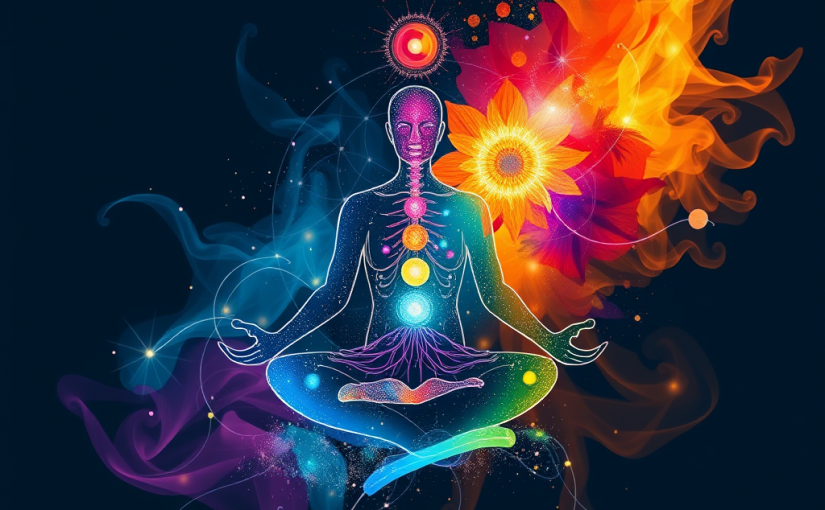
Breath is often seen as just a means of oxygen supply, but in reality, it plays a much deeper role—it moves energy (prana) throughout the body. The mind, breath, and energy are intertwined. When the mind wavers, the breath follows, and energy moves accordingly.
Restless thoughts → Fast, shallow, irregular breath → Scattered energy.
Calm thoughts → Deep, slow, rhythmic breath → Energy flows smoothly upward.
Emotional thoughts → Heavy or erratic breath → Energy concentrates in the heart.
This constant fluctuation also affects metabolism. When prana is unstable, metabolism becomes agitated, increasing oxygen consumption. A restless mind speeds up breathing, activates the nervous system, and demands more oxygen. When the breath steadies, prana stabilizes, metabolism slows, and oxygen needs decrease.
In deep meditation, where thoughts subside, breath naturally slows or even stops. How does the body survive? Because the need for oxygen drops. The heart rate slows, cellular function minimizes, and prana sustains life beyond physical respiration. Yogis in deep states of stillness can remain breathless because they are nourished by prana, not just oxygen.
Pranayama is not just breath control—it is energy mastery. By consciously regulating breath, we stabilize prana, balance metabolism, and calm the mind. When prana flows smoothly, life functions effortlessly. Understanding this unlocks the secret of inner stillness and vitality.
One more secret. When practical meditation of Sharirvigyan Darshan is done, then the stray breath starts coming in balance. This is Rajayoga, this is Sahaja Yoga, this is Gyanyoga. It means that we are going towards yoga with the thought power of the brain. In the end all the paths of yoga meet each other, whether it is the path of thought or the path of breath.
Most Yogirajs write about their experience of Pranayam in such a way that the breath started flowing inside. This means that the life or prana started flowing inside on its own. Now it is not dependent on the movement of breath for its circulation. Now they are breathing only to get oxygen. Very less breath is required for this. This means that in the breath taken to give movement to the life, we have to take oxygen without need. Then it has to be used without need. This increases the metabolism. Due to this, we remain restless and stressed and also tired, due to which we do not get proper rest. Meaning, if you breathe in less oxygen space, you will suffocate because the prana produced by breathing and metabolism are interconnected. They cannot be separated. But the inner prana or inner breath allows metabolism to happen at its own pace or at the basic level, it does not increase or decrease it.
The prana increased by breathing will always demand more oxygen, because it speeds up metabolism. If an attempt is made to increase prana by breathing deeply in less oxygen space, then due to not getting enough oxygen to maintain prana energy, you will experience suffocation. That is why yogis in the mountains breathe slowly and naturally, not deeply in yogic way, so that there is a balance between the demand for prana and oxygen. Until prana is independent of breath, the need for oxygen will remain, so it is necessary to balance breath and prana. In Kevali Kumbhaka, breath starts getting separated from prana.
 Demystifying Kundalini