A Journey That Was Not Just Travel
This was a family trip to coastal areas. We went by aeroplane, stayed near the sea, walked among coconut trees, and spent time watching waves. Outwardly, it looked like a normal vacation. Inwardly, something subtle unfolded. Nonduality became more visible — not through meditation, not through effort, but through motion.
I noticed that when the world moved fast, the sense of separation weakened. The faster and more total the movement, the more clearly nonduality revealed itself.
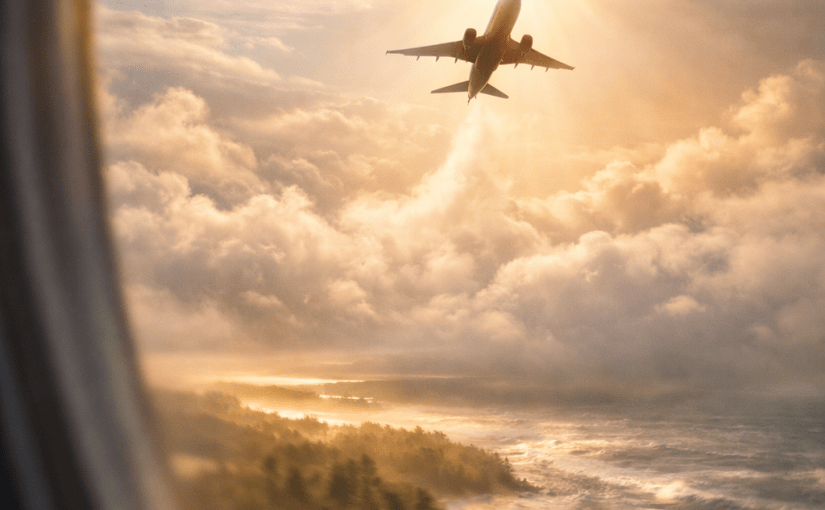
Aeroplane: Nonduality at High Speed
The aeroplane felt special. Not just because it was high, but because it was top in motion. When you sit inside a flying machine, your body is moving but you are not acting. Motion happens through you, not by you. The ground, clouds, distance, time — all flow together. Motionless non-living joins with the in motion living producing nonduality. Human considers motion as sign of life instinctively.
In this state, fixed reference points disappear. The mind cannot hold divisions. Living and non-living begin to mix. Metal, engine, sky, body, breath — everything moves as one system. This mixing itself produced nonduality.
I realized something important: motion is the primary quality of the living world. When non-living objects join a living motion-field, separation collapses. The aeroplane became a form of moving samadhi — a dynamic samadhi. It was not stillness, but total flow.
When I added quantum darshan to this perception — the understanding that at the deepest level there is no real separation between matter and life — nonduality reached near its peak.
Not the absolute peak, because motion still remains. But the highest possible nonduality within movement.
The second amazing movement of the plane is its upward rise, which feels like rising kundalini energy toward sahasrar. Sahasrar symbolically represents nonduality, bliss, and awakening, so this upward motion naturally evokes the same sense of expansion and release.
Coconut Trees: When Matter Looks Back at You
At the coast, coconut trees appeared intensely beautiful. But not because they had some special beauty different from other objects. Their beauty came from recognition.
Their shape is human-like:
- the crown of leaves like a head
- the long naked trunk like a body
- the swaying like dancing
- the rhythm like laughter and enjoyment
When wind moved them, they looked like they were communicating with each other. A group of coconut trees looked like a group of people talking, laughing, living.
This again was the same mixing of living and non-living worlds. Motion blurred the boundary.
When the thought arose that even at the quantum level they are not different from us, bliss amplified. Perception and understanding aligned. Separation dropped not only visually but ontologically.
It was not that trees became human. It was that human and tree revealed the same pattern of life.
Animal Perception: Entering the Forest Mind
At that moment I understood something else: animals perceive forests differently from humans.
Humans see objects.
Animals see patterns.
Animals read:
- movement
- rhythm
- density
- silence
- vibration
To them, a forest is not a collection of things. It is a single living field. Wind, branches, birds, ground — all are messages. Animals are not in the forest. They are the forest sensing itself. Animals do not divide experience into “me” and “forest” just like human do. For them, there is no separate observer standing inside nature. Sensing simply happens as one continuous field of movement, smell, sound, and vibration. When something changes, the whole field responds together. That is why it feels as if the forest itself is sensing — because perception is not localized in a self, but distributed across the living field.
Animals have no benefit of objectify the world. They don’t work blindly nor they need to work so. Lack of hands and brain limits their working ability. So draining energy in objectifying world has no use for them instead it can divert energy from basic need of food and survival. So instinctively they follow sensational patterns to act and react quickly. Together, what’ll they loose natural bliss of nonduality when duality has no major worldly role to play for them. However, little duality is adopted even them as petty worldly roles also demand it but not extreme duality like human.
When I saw trees communicating, I briefly entered this animal mode of perception. But with a difference.
Animals live in nonduality, but they do not attain samadhi.
Why? Because samadhi requires awareness knowing itself. Animals are in the flow, but they do not reflect on the flow. Animals remain continuously in the flow of perception, because their attention is always responding outwardly to the environment. They cannot voluntarily slow the nervous system, pause the breath, or rest awareness in itself. They need to be always alert for survival. Humans, through calm sitting, slow pranayama, or natural stillness like keval kumbhak, can create a pause in the flow. In that pause, awareness reflects on itself. That reflection is samadhi — something animals live but cannot consciously realize. They live unity, but they do not know unity. That’s why it’s described everywhere in scriptures that animals act every way like a human act except only yoga and achieving brahman through it, so one must not waste his life in petty things without practicing yoga.
A constantly active karmayogi lives close to the natural flow of life, somewhat like animals do, where action happens without much inner division. This creates presence, grounding, and a weak sense of separation, but awareness remains outward-moving. However, unlike animals he does it with super intelligence that’s why he gets many benefits in worldly functioning. They realise they are doing karmayoga and instead of continuously being in nonduality flow helplessly like animals, they adopted it intentionally intermittently at will so they realise its real benefits and harness those for their worldly and spiritual development. I think what’s depicted each god and goddess with a companion animal is a metaphor for their nondual lifestyle. For awakening and samadhi to arise, such a person must intentionally rest, slow down, and allow attention to turn back on itself. Without this pause, even pure action cannot become realization. Yet this very life of flowing action becomes a great advantage later, because when the karmayogi finally sits in stillness, reflection happens easily and samadhi comes with less struggle.
Animals live in unity naturally, without thinking about it. Humans lose that unity, but can stop, look, and come back to it consciously. When a human returns to unity with awareness, that is samadhi.
I was perceiving like an animal and knowing it like a human — that knowing turned perception into darshan and amplified bliss.
Ocean: The Living Rhythm of Existence
The ocean felt alive. Not as a belief, but as an experience of resonance.
Waves came forward like a hug.
They went back like stepping away after a kiss — not to increase intimacy, but to prevent too much of it.
The continuous coming and going felt like human life itself:
- approach and withdrawal
- effort and rest
- work and pause
- earning and returning
The ocean was pure motion. No fixed form, no stable edge, no permanent boundary. My body, breath, and the waves moved together. Again, nonduality appeared through motion.
It was clear that the ocean was not literally hugging me, and trees were not literally dancing. This was not imagination or projection in a pathological sense. It was field perception — where meaning arises from rhythm and unity arises from shared movement.
Bliss did not come from the ocean. It came from dropping the burden of separation.
Motion as the Secret Teacher of Nonduality
Stillness is one door to nonduality. Motion is another — and often a more accessible one for worldly life.
When motion becomes total, separation cannot survive.
When matter moves like life, and life recognizes itself in matter, the world becomes a single body.
This is why:
- travel opens awareness
- forests heal
- oceans calm
- flight feels liberating
The nervous system relaxes because it stops dividing reality into inside and outside.
A Grounded Darshan for Daily Life
What happened on this journey was not escapism. I did not lose my body. I did not lose my family. I did not leave the world. The experience came, stayed, and left naturally.
This is important.
It shows that nonduality does not require renunciation. It can arise in movement, in travel, in family life, in nature, in ordinary moments.
This is a mature nonduality — one that lives with life, not against it.
Closing Note: A Simple Truth
When motion becomes shared, the boundary between human and world softens, and existence feels like one continuous activity.
This is not philosophy.
This is travel.
This is perception.
This is lived darshan.
And this is how nonduality quietly reveals itself — not in caves, but between waves, trees, clouds, and family laughter.

 Demystifying Kundalini
So well described! When we fly people suffer from jet lags and I understand now why? relax separation!
LikeLiked by 1 person
Also, request you to write on perception of time as an illusion. We are going nowhere when we sit on an aircraft and fly to another city or country. our minds are creating time, giving us the perception of time of reaching our destination. But the fact is we haven’t moved and this is also an illusion. How to experience going beyond time or timeless while in motion? Thank you.
LikeLiked by 2 people
Yes, I’ll do it as soon as possible. It’s interesting and well aligned with yoga.
LikeLike