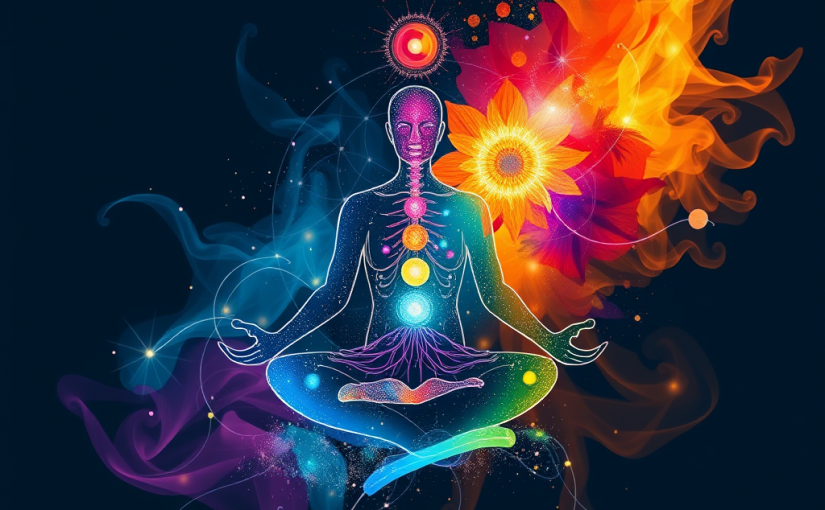
The Subtle Balance Between Meditation and Real-Time Awareness

For years, my spiritual journey has been shaped by deep contemplation, structured meditation, and the real-time application of awareness in daily life. The most profound experiences, however, have not come from withdrawing from the world but from integrating awareness within the flow of worldly responsibilities.

One of the key insights I’ve gained is that Sharir Vigyan Darshan (contemplation of the body) can act as a direct entry point into a state of relaxation and clarity, even amidst chaos. A single, instant gaze on the body is enough to trigger a gasp followed by slow breathing, bringing momentary relief. While this is not Kevala Kumbhaka (breathless state), it is a spontaneous shift in breath and energy, offering a glimpse of balance in the middle of life’s rush.

The Role of Lifestyle in Sustaining Awareness

I have realized that a sattvik, slow-paced lifestyle naturally supports Sharir Vigyan Darshan—allowing contemplation to remain effortless and continuous. On the other hand, a fast-paced, rajasic, or tamasic lifestyle makes it harder to sustain awareness, requiring deliberate effort to return to real-time contemplation.

However, rather than waiting for ideal conditions, I prefer to put in the effort at every moment, regardless of the chaos, while ensuring that worldly responsibilities remain undisturbed. But this isn’t always so. Many times as much worldly chaos is there that much easy and uplifting and blissful the sitting meditation session becomes. However one prerequisite is that the sharirvigyan darshan contemplation should fit properly and deeply inside the worldly chaos. Means it should look if one is doing blissful and pleasurable meditation while deeply indulged in the worldly chaos. It seems best possible only with the sharirvigyan darshan. This approach is not about withdrawing but about integrating awareness within action itself.

The Evolution from Structured Meditation to Spontaneous Awareness

In the past, I maintained structured meditation practices to cultivate stability. Over time, this meditation practice naturally extended into real-time awareness, where contemplation is not separate from daily life.

This shift taught me that:

Structured meditation provides the foundation, deepening clarity and stillness.

Real-time awareness ensures that these meditative insights do not remain confined to practice sessions but become a way of being.

Over time, structured meditation and real-time contemplation start complementing each other, creating a seamless cycle where neither is forced.

Even though my practice has evolved, I have not yet reached the stage where real-time awareness is completely effortless. There are still moments where conscious engagement is required to sustain it. However, the effort needed has gradually decreased with time, making contemplation more natural. However this effort is like a blissful play, not like a boring burden. Yes, one should have atleast minimum threshold of energy in body to properly sustain it.

A Journey Still Unfolding

Despite glimpsing higher states, including Savikalpa Samadhi, I have not yet experienced Nirvikalpa Samadhi—the state of complete dissolution. I also recognize that Kevala Kumbhaka, though experienced for hours, still requires deeper refinement. To invite it more naturally, I now emphasize deep spinal breathing in my Kriya practice, ensuring that energy work continues as before but with more attention to breath.

At this point, I seek a grounded normalcy with nondual awareness, where the balance between worldly life and deeper states of realization is not an ongoing struggle but a natural rhythm. The goal is not to escape into transcendence but to sustain a stable, awakened presence while fully engaged with life.

The Takeaway

From my experience, one truth has become clear:

Spiritual growth is not about isolating meditation from life but allowing both to complement each other.

Real-time awareness can be developed, even amidst chaos, but requires consistent practice.

A sattvik lifestyle naturally supports awareness, but effort is still required in rajasic or tamasic conditions.

Structured meditation provides depth, while real-time contemplation ensures integration.

Even momentary glimpses of awareness accumulate over time, leading to constant level type awareness and subsequently more permanent inner transformation.

I am still exploring, refining, and learning. My practice is not yet perfect, but the path is clear: Balance between structured meditation and real-time awareness is the key to sustaining both spiritual depth and worldly engagement.
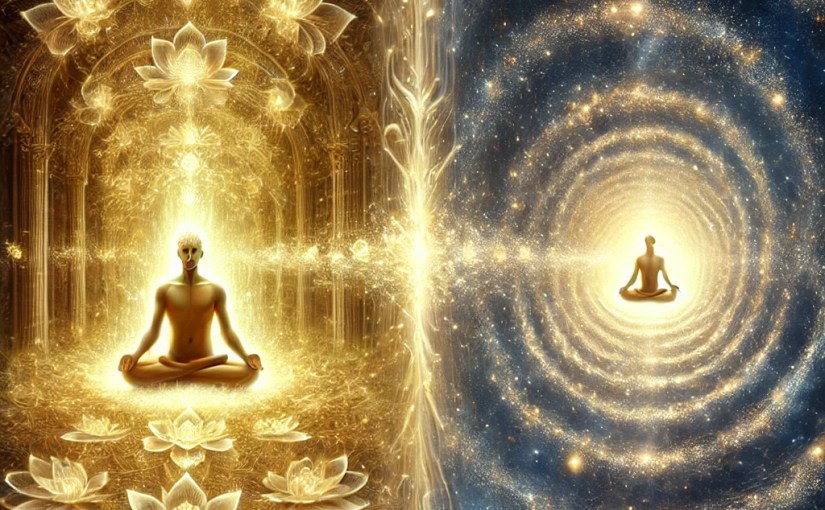
From Savikalpa to Nirvikalpa: The Path Beyond Bliss to Ultimate Liberation

Nirvikalpa Samadhi can arise directly, bypassing Savikalpa in rare cases like Keval Kumbhak, deep sleep-like states, or sudden grace. While traditional paths emphasize gradual absorption, some awakenings skip this stage entirely, plunging straight into the formless. My experience with Keval Kumbhak confirms this possibility, where no structured transition was needed. However, stabilization remains key, whether one follows a gradual or direct path.

But why is there no such infinite bliss and light as that was in my Savikalpa Samadhi and included awakening glimpse?

In my awakening glimpse, there was overwhelming bliss mainly a sexual type of bliss comparable to the infinite or ultimate or super sex, light that’s experiential and different from physical one, and unity—a divine experience beyond words. It felt like the peak of existence, a complete merging with the infinite. Yet something was there to achieve as I felt. Probably it was a subtle yerning to achieve nirvikalp samadhi. In contrast, in Keval Kumbhak csused transient Nirvikalpa Samadhi, there was neither light nor darkness, neither ecstasy nor emptiness. It was something beyond words itself. It was as if I was in deep sleep with intermittent fleeting thoughts like dream. But one thing special was I was aware of this state. It was just pure awareness of myself. If there was awareness then it’s itself obvious that there was bliss in it. Because with awareness or existence, there is always happiness or bliss. And where there is existence and happiness, there is also knowledge. Even in today’s information age, it is seen that by acquiring knowledge, a person gets existential power i.e. achievement as well as happiness. That is why God is also called Sachchidananda. But I didn’t find any experience full of light and bliss or appearing as peak of worldly physical or mental experiences as felt in savikalp samadhi. However there was satisfaction in it. Satisfaction itself means there’s everything contained in it. It means that was nirvikalp samadhi slowly developing. In deep sleep, there doesn’t even remain self awareness. 

I now see the reason. In Savikalpa, there is still a subtle observer, a refined perception that allows bliss and radiance to manifest. Also there’s a refined neurochemistry that may release bliss forming chemicals. Means it may not be entirely the bliss of pure self but a play of neurochemicals. In Nirvikalpa, even that dissolves. In pranaless state of keval Kumbhak even ecstatic thoughts with accompanying bliss chemicals can’t form in the brain. Then there’s left only the soul and its natural self awareness and bliss. There is no one left to witness, no duality, only pure existence. Only mental formation or ego acts as witness. Pure self is void that can’t witness anything other than itself means directly knowing itself. And also it can’t be witnessed by anyone. It can only be directly felt as one’s own self. It is not an absence, nor is it something that can be described—it simply is.

Yet, strangely, its after-effect is deeper. The bliss of Savikalpa fades, but Nirvikalpa leaves a silent presence that does not come or go, just remains. A strange feeling always remains for many births or until one attain perfection in it. There is some kind of a peaceful void which is helping me in every way and pulling me towards it. I had this feeling since birth. It can also mean that I may have got a glimpse of Nirvikalp Samadhi in some previous birth but I have not attained it completely. The beauty of the soul is not something to be seen; it is to be lived.

What is said by many that after attaining Savikalpa, there is no need to make efforts to attain Nirvikalpa, is not to say that effort is secondary. Rather, it means that after Savikalpa Samadhi, a person progresses towards Nirvikalpa Samadhi on his own, because after attaining everything or touching the pinnacle of the world, the desire or attachment towards the world starts to end on its own. But this can take a lot of time, it can even take many births. Therefore, to speed up this natural process, efforts have to be made for Nirvikalpa as well. The more efforts you make in the form of sadhana, the sooner you will attain it. Even after nirvikalp efforts need to be put to achieve sahaj samadhi that’s last doorway to liberation. The importance of effort does not decrease in any field and in any situation.

The Path from Savikalpa to Nirvikalpa: Balancing Transcendence and the World

Twice, I touched the supreme through ten-second glimpse awakenings—once in a dream-state as an adolescent, later through Tantric-Kundalini sadhana. Both times, the sense of ‘I’ dissolved, and as per the classical definition of samadhi, meditator, meditation object, and meditation all united as one. Charming natural sceneries fleeting before my eyes, limitless self-consciousness as the background—this can be called Savikalpa Samadhi.

In Keval Kumbhak, it felt like death, although not fearsome—no observer, no memory afterward, just an occasional emergence of fleeting thoughts that were immediately replaced by the meditation object. That experience was not unconscious because it was the experience of my own existence. The unconscious or inert does not even have the experience of its own existence. If it does, it is full of darkness, like when intoxicated by alcohol. I didn’t feel light like a supernova explosion in that void. But at the same time, there was even no darkness of unconsciousness in it. Of course, there was no experience like physical light in it, but there was happiness or bliss, tensionlessness and peace in it. It is possible that these qualities were shown as light, otherwise how can these non-physical qualities be presented to the innocent public. Memory in the sense that it did not reveal anything material that could be remembered. Instead, it only revealed void or zero. But it’s amazing how void can be the origin of a world full of charm.

Probably, the world developed from the void so that God’s own soul-form called jiva could fully experience it. Then, after reaching the peak of experience through Savikalpa Samadhi, culminating in enlightenment or awakening, it returns back to the void through Nirvikalpa Samadhi, leading to final salvation. Through its soul-form, the void itself gets recognition of having experienced creation—though without actually experiencing it.

My experience means that Savikalpa Samadhi was gradually dissolving into Nirvikalpa Samadhi. Nirvikalpa literally means “no thinking”, meaning there is not even the thought of the meditation object, unlike Savikalpa, where it still remains.

Yet, if nothing remains remembered after Nirvikalpa Samadhi, how does its effect carry forward? Like deep sleep, it leaves an imprint—something shifts, refining perception without conscious effort. But Nirvikalpa alone doesn’t sustain life; complete detachment risks making one disconnected from world, even dull.

Balancing Transcendence and the World

Keval Kumbhak seems like the only direct gateway to Nirvikalpa. It is the most scientific method, effortlessly inducing thoughtlessness. But using it at will is still a challenge. Sometimes, it happens naturally, but I seek stability in activating it whenever needed. Many Rajyoga favouring people try achieving nirvikalp samadhi directly through mind but I think it’s difficult. However on achieving it, keval Kumbhak itself sets up because mind and breathing both are connected. If keval Kumbhak through directly stopping breathing induces nirvikalp samadhi through stopping mind then inducing mindless nirvikalp samadhi directly also sets up keval Kumbhak through stopping breathing. However keval Kumbhak serms like a wonderful switch putting on which immediately shut off the mind thus cutting the power supply to it. But relying too much on keval Kumbhak without putting efforts to control mind also seems too much mechanical and less effective. That’s why putting both types of efforts together seem most effective and efficient. The same was done by me that’s keeping mind in snare through sharirvigyan darshan and trying for keval Kumbhak directly through yoga.

Currently, my practice involves deep spinal breathing, aided by Shambhavi mudra, while remaining over-busy in the world during the daytime. This makes me feel the breath or prana moving up the back to the Ajna and Sahasrar Chakras, with bliss. Along with this, despite being very busy in the world, I still got plenty of energy to practice as before. This means that Kundalini Yoga should continue as it is. Many say that one should stop trying to do deep sadhana and let it happen on its own to get nirvikalp. I do not agree with this. Nothing is achieved without effort. Even I was firmly and humanely opposing the resistance coming in the way of my sadhana and continuing my sadhana. However, I was avoiding complications, otherwise if I got stuck in them, how would I have energy left for sadhana. Still, one must be aware of one’s available power and should not exceed it. One should not desire respect or recognition because recognition pulls the consciousness outwards, while renunciation allows it to turn inwards. The right belief is what seems right to oneself. We can have more knowledge about ourselves than others. Yes, we should take advice or information from everyone but the final decision should be in our own hands. Many say that for Nirvikalp Samadhi, we should leave Dhyanchitra. I do not agree with this either. Because if we do not get Nirvikalp, then at least we will remain in Savikalp Samadhi with it. Without it, we will fall even from Savikalp and get trapped in the clutches of worldly illusion. That is why we should always take shelter of Dhyanchitra. Although it is also false like the world, but it is much more true than the world. Kevali Kumbhak feels like a switch, though also needs to be supported by the right conditions to be put on.

The final trigger seems to be deep contemplation of my meditation image at Kootastha, to the extent that I even ignore breath completely, letting it move at will. As fleeting thoughts reappear, they are instantly replaced by the meditation image. Ignoring breath means prana has freedom to move independently of breath to provide energy to the stressful body. Yes I was in extreme worldly, social and working stress and extremely tired even to the extent of surrender to the meditation image at time of setting up of my keval kumbhak. Although I had kept myself balanced and avoided myself becoming lost in worldly duality through intermittent contemplation of sharirvigyan darshan during the whole day. That’s why my that stress was not ordinary but a blissful and nondual stress.

It also seems that to fully stabilize the nirvikalp samadhi, even the meditation image must dissolve. Right now, I feel helplessly supporting it, using it as an anchor to prevent getting lost in fleeting thoughts. This is an ongoing refinement, unfolding naturally. I do not rush it; I let awareness deepen on its own.

Key Realizations

Savikalpa Samadhi is the precursor to Nirvikalpa and the controller and inspirer of all creation—only after experiencing it does one’s world dissolve into Nirvikalpa.

Void can be directly experienced, but it is fully comprehended only after Savikalpa Samadhi. I think without savikalp samadhi and associated awakening one has feeling of having left something to experience or enjoy in the world. That’s why void is not respected well by him and he is drawn outward by worldly pull. In that way void doesn’t stabilise well to the extent of liberation.

Keval Kumbhak is the most scientific gateway to Nirvikalpa, inducing it effortlessly.

Balance is crucial—excessive detachment can lead to disconnection. Yes, sudden and too much indulgence in nirvikalp samadhi can make one out of the world. Therefore steady and stable approach with sharirvigyan darshan is crucial.

Sharir Vigyan Darshan bridges transcendence and practical life, preventing extreme withdrawal.

Nirvikalpa dissolves memory, yet it leaves an imprint that refines perception naturally.

This journey is not about chasing higher states but about living freely—rooted in awareness, engaged in life, yet untouched by its storms.

Breath: The Bridge Between Mind, Energy, and Metabolism

Breath is often seen as just a means of oxygen supply, but in reality, it plays a much deeper role—it moves energy (prana) throughout the body. The mind, breath, and energy are intertwined. When the mind wavers, the breath follows, and energy moves accordingly.

Restless thoughts → Fast, shallow, irregular breath → Scattered energy.

Calm thoughts → Deep, slow, rhythmic breath → Energy flows smoothly upward.

Emotional thoughts → Heavy or erratic breath → Energy concentrates in the heart.

This constant fluctuation also affects metabolism. When prana is unstable, metabolism becomes agitated, increasing oxygen consumption. A restless mind speeds up breathing, activates the nervous system, and demands more oxygen. When the breath steadies, prana stabilizes, metabolism slows, and oxygen needs decrease.

In deep meditation, where thoughts subside, breath naturally slows or even stops. How does the body survive? Because the need for oxygen drops. The heart rate slows, cellular function minimizes, and prana sustains life beyond physical respiration. Yogis in deep states of stillness can remain breathless because they are nourished by prana, not just oxygen.

Pranayama is not just breath control—it is energy mastery. By consciously regulating breath, we stabilize prana, balance metabolism, and calm the mind. When prana flows smoothly, life functions effortlessly. Understanding this unlocks the secret of inner stillness and vitality.

One more secret. When practical meditation of Sharirvigyan Darshan is done, then the stray breath starts coming in balance. This is Rajayoga, this is Sahaja Yoga, this is Gyanyoga. It means that we are going towards yoga with the thought power of the brain. In the end all the paths of yoga meet each other, whether it is the path of thought or the path of breath.

Most Yogirajs write about their experience of Pranayam in such a way that the breath started flowing inside. This means that the life or prana started flowing inside on its own. Now it is not dependent on the movement of breath for its circulation. Now they are breathing only to get oxygen. Very less breath is required for this. This means that in the breath taken to give movement to the life, we have to take oxygen without need. Then it has to be used without need. This increases the metabolism. Due to this, we remain restless and stressed and also tired, due to which we do not get proper rest. Meaning, if you breathe in less oxygen space, you will suffocate because the prana produced by breathing and metabolism are interconnected. They cannot be separated. But the inner prana or inner breath allows metabolism to happen at its own pace or at the basic level, it does not increase or decrease it.

The prana increased by breathing will always demand more oxygen, because it speeds up metabolism. If an attempt is made to increase prana by breathing deeply in less oxygen space, then due to not getting enough oxygen to maintain prana energy, you will experience suffocation. That is why yogis in the mountains breathe slowly and naturally, not deeply in yogic way, so that there is a balance between the demand for prana and oxygen. Until prana is independent of breath, the need for oxygen will remain, so it is necessary to balance breath and prana. In Kevali Kumbhaka, breath starts getting separated from prana.