The First Question: Can Life Be Sustained on the Simplest Form of Nature?
The inquiry began with a very fundamental and almost ascetic curiosity—whether a human being could survive entirely on grass, especially soft, succulent green grass with the least fiber, and even whether cooking it could make it suitable for human consumption. This was not merely a nutritional question but a deeper exploration into minimal living, purity of intake, and the possibility of aligning the body with the most basic form of nature. However, it soon became clear that regardless of tenderness or cooking, grass remains primarily composed of cellulose, which the human digestive system cannot process. Unlike ruminants, humans lack the necessary enzymes and microbial systems to break down cellulose into usable energy. Cooking may soften grass, but it does not transform its fundamental nature into digestible nutrition.
From Grass to Vegetables: Understanding What the Body Accepts
This led naturally to the question: if grass is also a plant, then how do vegetables nourish us? The answer revealed a fundamental distinction. Not all plants are equal in their nutritional design. Grass is structural, meant for survival and resilience, whereas vegetables are specific plant parts—leaves, roots, and flowers—that are softer, water-rich, and contain accessible nutrients. Over time, humans have also cultivated vegetables to enhance digestibility and nutritional value. Thus, while both grass and vegetables belong to the plant kingdom, their usability for human nutrition differs profoundly.
Grains and Seeds: Nature’s Stored Energy for Life
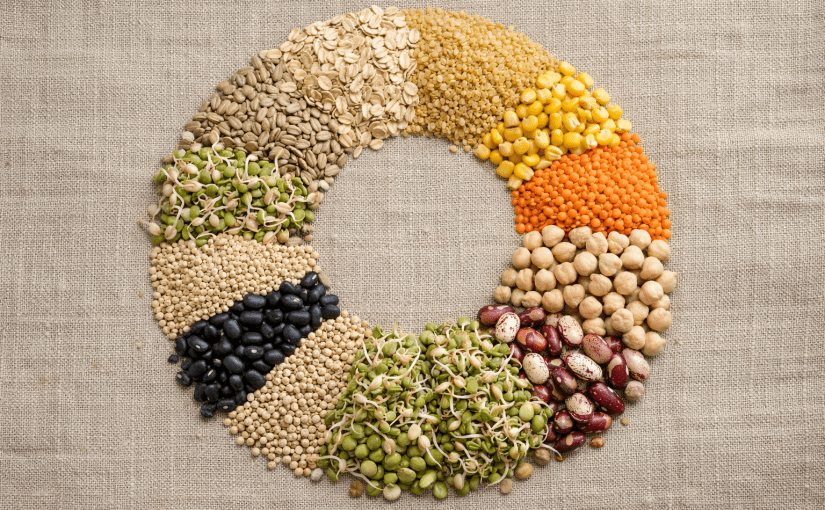
The exploration then moved toward grains, which are also plant-derived. The key realization here was that grains are seeds, designed by nature to store energy for the growth of a new plant. Unlike grass, grains are rich in starch, which the human body can easily convert into glucose. Cooking further enhances this process by breaking down the structure of the grain, making nutrients readily accessible. Thus, grains serve as a primary energy source for humans, unlike grass, which remains indigestible.
Legumes, Cooking, and the Hidden Barriers to Nutrition
The discussion deepened into legumes such as dal, chana, and rajma. These too are seeds but contain protective compounds like phytates, lectins, and enzyme inhibitors. These anti-nutrients make raw legumes difficult and sometimes harmful to consume. Cooking becomes essential, as it breaks down these compounds and unlocks the protein and nutrients within. This introduced the important concept that nature often protects its nutritional reserves, and human intervention through cooking is necessary to make them usable.
Soaking and Sprouting: Awakening the Seed
Further insight emerged through the processes of soaking and sprouting. Soaking activates enzymes within the seed, reduces anti-nutrients, and prepares it for digestion. Sprouting takes this transformation further, breaking down complex nutrients into simpler forms and increasing vitamin content. This stage represents a transition from dormant seed to living plant, making the food lighter and more bioavailable.
Vegetarian Diet: Possibility and Limitations
The conversation then shifted toward whether a person can live entirely on vegetables, especially in cooked or uncooked forms. It became evident that while a plant-based diet can sustain life, it must be properly structured. Merely consuming leafy vegetables is insufficient. A complete vegetarian diet requires a balance of grains for energy, legumes for protein, vegetables for micronutrients, and some fats for overall function. Without this balance, deficiencies and weakness can arise.
The Question of B12 and the Nature of Vegetarianism
A deeper philosophical question emerged regarding vitamin B12. Since B12 is not naturally present in plant foods, does dependence on it imply that humans are not truly vegetarian? The understanding clarified that B12 is produced by bacteria, not plants or animals. Historically, humans likely obtained B12 from soil, water, and less sanitized food sources. Modern hygiene has removed these natural pathways, making supplementation necessary. This does not negate vegetarianism but highlights a shift in environmental conditions.
The Veterinarian’s Inner Conflict: Profession and Personal Choice
As a veterinarian, the presence of animal farming systems raises an internal question. If animals are being raised for consumption, why not participate personally? This is not merely a dietary question but a matter of alignment. The clarity that emerged was that working within a system and making a personal ethical choice are not contradictory. A veterinarian’s role is to care for and reduce the suffering of animals, while choosing vegetarianism is a personal stance of non-participation in consumption. These two roles can coexist harmoniously.
Occasional Non-Veg: Experience of Energy and Satisfaction
The discussion then returned to lived experience. Occasional non-vegetarian food, even in small weekly amounts, seems to provide a unique sense of energy, satisfaction, and completeness. This experience was acknowledged as real. The explanation lies in the dense nutritional profile of animal foods—complete proteins, B12, iron, and certain compounds that are easily absorbed. If a vegetarian diet is slightly lacking, non-veg can act as a quick correction, producing a noticeable boost.
Meditation and Diet: The Shift from Activity to Stillness
The most refined insight arose in relation to meditation. Non-veg food, while energizing, introduces a certain heaviness that can reduce clarity in advanced meditative states. It may support dynamic or active phases of practice but becomes less suitable as one moves toward deeper stillness. Lighter, vegetarian food supports subtle awareness and sustained attention. This is not a moral judgment but a functional observation based on experience.
Toward a Balanced Understanding
The journey leads to a simple yet profound conclusion. There is no absolute dietary rule that applies universally. Instead, diet evolves with one’s stage of life and inner practice. Non-veg may serve a purpose in earlier stages, while a well-balanced vegetarian diet becomes more aligned with advanced meditative states. Supplementation, particularly for B12, ensures that nutritional completeness is maintained.
Ultimately, the path is not about rigid categories but about awareness. The body provides feedback, and the mind interprets it. When both are understood clearly, diet becomes not a source of conflict but a tool for alignment with one’s deeper pursuit of clarity and stillness.