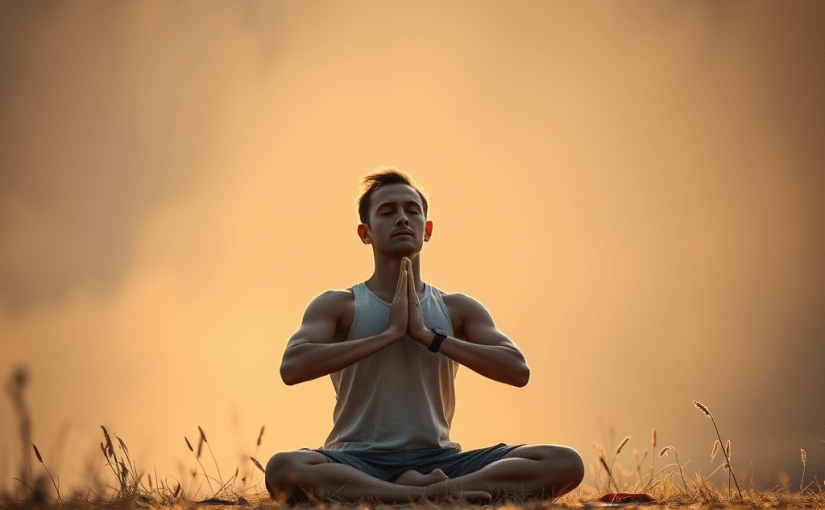
After a few days of worldly indulgence—caught up in the sense of heightened ambition for a minor physical property, working tirelessly for it—I noticed my yoga routine faltered. The rhythm that once carried me into calm depth grew shaky. My sittings reduced, and the familiar breathless stillness in dhyana did not appear.
When the worldly deal finally finished, I spent two or three days trying to regain the lost acceleration. As soon as I opened my eyes in the morning—whatever the time—I would rise from bed and first sit for dhyana, then yoga, alternating both. Today I rose around three-thirty in the morning. I went through everything including both types of neti and also dhouti, yet the breathless dhyana eluded me.
Later, after lunch, while sitting in vajrasana, I caught a small glimpse of that breathless state. In the evening I sat long—from four-thirty to five-thirty. The breathing was like a rocket, fast and fierce, and it wouldn’t calm down despite simple watching and the mental recitation of Soham. Then a kind of drowsiness appeared, an urge to lie down. I resisted it, and soon the body grew tired enough that it couldn’t keep pace with the breath. The breathing itself began to subside and finally became breathless, although not fully as earlier. I couldn’t hold it beyond an hour, but something new dawned on me: perhaps deep dhyana is like sleep—but with awareness.
It felt like a discovery. If I keep trying while sitting, and tiredness and sleepiness develop, deep dhyana comes of its own accord. There seems to be a lot of similarity between sleep and yoga, so much so that many people say I’m just sitting and pretending to do yoga while actually sleeping.
That realization opened an inner understanding. What I had stumbled upon matched what the old yogic insights describe. After intense worldly activity, the rajas in the system—the restless energy of ambition—agitated the prana and made the mind outward-bent. That’s why my yoga was disturbed. Yoga thrives on sattva, on balance. The disturbance wasn’t a fall; it was simply the pendulum of prana swinging outward before returning inward.
When I sat again, the period of “rocket-speed” breathing was the body’s way of clearing that outward energy. The prana was neutralizing the residue of worldly intensity. Such rapid breathing often comes when sadhana resumes after heavy worldly engagement.
Then the fatigue came. The body wanted rest. I understood that this sleepiness wasn’t an obstacle—it was a doorway. When the body tires, egoic control relaxes. Effort softens. The automatic patterns of breath and thought lose momentum. If awareness remains present, if I do not slip into ordinary sleep, what unfolds is wakeful stillness—a state like sleep, yet suffused with consciousness.
In yogic terms, this is the threshold where the transition from waking (jagrat) toward turiya begins, passing through a “sleep-like” quiet where only awareness remains and the body and breath rest deeply. Breathless samadhi doesn’t come through effort but through the total exhaustion of effort.
It became clear that when striving ends and awareness simply watches, the body may fall into sleep-like repose, breath may stop, and consciousness alone remains. That is the path leading into Yoga Nidra, Dhyana, and Turiya alike.
Yoga Nidra, Breathless Dhyana, and Turiya—One Thread
I saw that all three—Yoga Nidra, Turiya, and breathless Dhyana—are reached through the very process I experienced. The difference lies only in depth and continuity.
Yoga Nidra happens when body and senses withdraw, mind slows, thoughts fade, and a gentle sleepiness comes while awareness stays faintly awake. Breath grows light or pauses briefly. I realized that the tiredness and sleepiness bringing deep dhyana are the same threshold where Yoga Nidra begins.
Deep Dhyana or Kevala Kumbhaka unfolds when mind and effort both stop. Awareness is steady and bright. Because the mind’s vibration ceases, breath naturally ceases too. The breathless state comes not from control but from silence itself. Here time and body vanish; only luminous stillness remains.
And Turiya—the “fourth state”—is that awareness of awareness itself. It’s the substratum beneath waking, dream, and sleep. When I stay aware through the Yoga-Nidra-like stillness, without slipping into sleep, consciousness recognizes itself. Breathlessness is incidental; the real mark is unbroken awareness through all states.
Yoga Nidra quiets the mind; Dhyana stills both mind and breath; Turiya shines as the background of all. They don’t come strictly one after another in time but unfold in depth. Breathless dhyana uncovers Turiya; Turiya is what remains when even the sense of meditating dissolves.
So, the relationship is simple:
Yoga Nidra is mental slowing with calm breath,
Breathless Dhyana is total stillness of mind and breath,
Turiya is the foundation discovered when stillness itself is seen to be one’s own nature. Means it is like samadhi. Actually turiya is background state and samadhi is process of achieving it. When with repeated practice of samadhi the background awareness starts remaining always then this is turiya.
When Turiya Is Seen
Once Turiya is truly seen, something irreversible happens. It is not a passing state but the ever-present background consciousness of every state—waking, dream, or deep sleep. The first recognition feels like an experience, yet soon it’s clear it was never gained or lost—only revealed.
Even when worldly activity resumes, a quiet background of awareness remains beneath all movement. At first it flickers—noticed at times, forgotten at others—but it never disappears completely, because the illusion of separateness has been pierced.
Then the role of meditation changes. Before this recognition, meditation is a practice, an effort to reach stillness. Afterward, meditation becomes resting in what already is. Earlier, one did dhyana; now dhyana happens. Effort stops; awareness pervades everything—thoughts, actions, and breath.
This is why saints describe Sahaja Samadhi—the spontaneous abiding in Turiya during all activities. Meditation doesn’t end; it becomes continuous. Some still sit each day, not to attain, but because the body finds harmony in that posture and prana refines itself further. It’s simply joy—like a musician who still plays, not to learn but because sound itself is blissful.
The essence is this:
Meditation ends as effort, not as awareness.
Turiya is not practiced; it is noticed.
The only “practice” afterward is non-forgetfulness—remembering that all movements of life rise and fall within the same unmoving awareness.
When Turiya is clearly recognized, peace no longer depends on meditation. One may sit in silence simply because it is natural. Awareness rests in its own delight, unaffected by whether the breath is still or moving.
The Understanding Now
Looking back, I can see the full sequence in my own journey:
- The worldly ambition disturbed the balance of prana.
- Sitting again, the high-speed breathing purified that outward rush.
- Fatigue drew the ego into surrender.
- Sleepiness appeared, but staying aware within it opened the gate to stillness.
- The breath stopped, revealing a silence beyond effort.
- From that silence, the recognition dawned—this unmoving awareness was there before, during, and after every experience. Although it remains a fleeting and unstable experience, that is why the effort to achieve it continues.
And that awareness, once seen, never completely leaves.
 Demystifying Kundalini