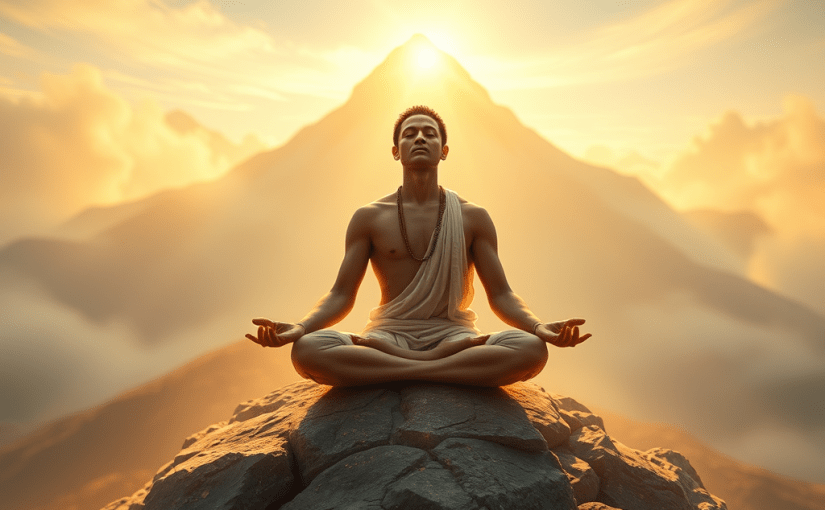
Kevala Kumbhak, Sattvic Living, and Subtle Grace of Inner Absorption

During my spiritual journey, I started noticing something subtle yet powerful — how disturbances in the throat region directly affect the depth of meditation, especially Kevala Kumbhak, that natural state of breathless stillness that arises without any effort. I began understanding this through the lens of Ayurveda, particularly the tridosha theory — Vata, Pitta, and Kapha — and how they connect deeply with yogic experience.

I realized that Vata, especially when imbalanced in the form of Udana Vayu, tends to move upward from the stomach, which is similar to gastric acid rising to the throat — something we often call acid reflux. This upward movement disturbs not just digestion, but subtler pranic flows. When Pitta is high, it shows up as inflammation or heat in the throat due to that same acid. And when Kapha gets aggravated, it results in mucus build-up in the throat, which causes a heavy, blocked feeling. I’ve felt all these at different times — and all of them make it nearly impossible to enter Kevala Kumbhak or remain still for long in deep meditation. That mucus-type block in the throat is the most annoying for a yogi because it constantly brings you back to the body and disturbs inner silence.

That’s when I realized why Sattvic diet — light, clean, non-spicy, and non-oily food — is so strongly advised in yoga. Not just for health, but for inner stillness. This kind of diet is also part of traditional devotional practices like fasting or rituals. Once, I attended a seven-day religious ceremony, eating only light, fruit-based meals with other fasting devotees. To my surprise, my breath naturally slowed, and I effortlessly slipped into Kevala Kumbhak. I even experienced momentary glimpses of Nirvikalpa Samadhi — a deep, ego-free stillness that comes with great joy. It wasn’t planned; it simply happened repeatedly during those seven days. But on the last day, something changed. I got into a minor heated conversation, and my mental peace broke. That day, despite the same food and environment, I couldn’t enter that breathless stillness. It showed me that mental harmony is as important as diet. Even one small disturbance can disrupt the entire inner field.

Throughout the ceremony, I sat silently in asana, eyes closed, facing the priest. I was surrounded by mantra chanting, the ringing of bells, conches, incense, and devotional stories being narrated — all the sacred sounds of worship. But rather than distracting me, these sounds seemed to deepen my inner silence. I wasn’t paying attention to the words or trying to understand anything. My awareness was on the breath, drifting inward, letting stillness arise. Yet, I felt an immense joy, often deeper than those who were actively listening and thinking about the stories. That puzzled me at first. But then I realized — my conscious mind wasn’t involved, but my subconscious or deeper self was absorbing everything in the background. The sacred environment entered me not through effort but through presence.

I now see that in such devotional spaces, the sound vibrations are not mental distractions — they are like gentle waves that harmonize the subtle body. Because I was already inward, in pratyahara (sense withdrawal), these sacred sounds didn’t pull me outward. Instead, they stabilized me deeper, anchoring my breath into stillness. The presence of other peaceful, fasting, devotional people around me created a collective sattvic energy that supported my inner practice — even though I was not following the ritual mentally.

This showed me that true listening doesn’t always require effort. When the mind is quiet and the heart is receptive, the soul listens silently, and the fruit of devotion enters you effortlessly. It was like receiving grace through stillness, not through study. That’s probably why my joy felt deeper — there was no thinking, no effort — only being. This is where bhakti (devotion) and jnana (self-awareness) meet — not as separate paths, but as spontaneous states of grace.

Reflecting on all this, I realized that such a powerful experience can be gently recreated at home. You don’t need a temple crowd or full ceremony. I started planning experimenting with a home-based mini retreat — just one or two days of silent sattvic living, where I do the following:

  • Eat only fruit-based or boiled sattvic food, preferably in small quantities.
  • Play soft Bhagavatam katha, mantra chanting, or sacred music in the background.
  • Sit in a simple asana, eyes closed, and focus only on the breath.
  • Avoid all arguments, overthinking, or emotional disturbances for the day.
  • Stay away from screens, except for playing spiritual audio.

I call this my “Inward Listening Retreat.” It’s not about attending externally. It’s about resting inwardly while allowing sattvic vibrations to bathe the subtle body. Even a few hours like this brings the return of that Kevala Kumbhak and a soft taste of causeless joy. Sometimes, even without trying, I feel that my being is “listening” in the background, and something deeper is getting purified or uplifted.

These simple practices are not meant to chase samadhi, but to remove the inner disturbances that block the natural rising of bliss. It’s not a question of more effort — it’s a question of less friction. When the breath stops on its own, when the mind falls inward without force, when devotion touches you without words — that is the real grace of yoga.

Calm Your Mind with Water: A Simple Meditation Technique

Sometimes, ancient wisdom meets inner intuition, and something powerful yet simple emerges. That’s exactly what I experienced with a small but deeply calming practice I stumbled upon—holding a sip of water in the mouth while meditating. Over time, I noticed that this little act had a profound ability to pull my rising energy down, especially during moments when I felt heavy pressure in the head, stuck in thoughts, or uncomfortable upper body energy that wouldn’t settle.

The idea is extremely simple. Sit calmly with a glass of clean, room-temperature water beside you. Take a small sip—not a mouthful, just enough to comfortably rest in your mouth. Then, gently close your eyes and simply meditate on the presence of water inside your mouth. No breath control, no visualization, no technique—just awareness of the water. Let the breath be fully natural and free.

After a while, you may notice something amazing. Without any force, the body starts responding. Soft, involuntary pulses begin around the lower abdomen. It feels like a gentle version of Kapalbhati Pranayama, but it happens naturally. It’s not a forced kriya, just a downward pull, like the body wants to balance itself. The overcharged head space begins to lighten, the throat relaxes, and you can actually feel energy shifting down toward the navel and below.

One of the best parts is that you don’t have to hold the same sip of water for ten minutes. That would be uncomfortable. Just when the sip feels enough, either swallow or spit it out and take another fresh sip. Keep the cycle going for 5 to 15 minutes, depending on what feels good. It’s totally body-led and effortless. There’s no stress on the mind, no pressure on the stomach, and no disturbance to the breath. The water seems to anchor the mind and body together.

For someone like me, who has experienced occasional GERD or acid-related discomfort, this method came as a relief. Unlike deep breathing techniques or aggressive kriyas, this is safe, cool, and calming. There’s no strain on the diaphragm, no holding of breath, and no reflux triggered. The coolness of the water balances the heat inside, and the grounded awareness pulls prana down from the chest and head. It’s also useful for spiritual practitioners who often experience excess energy in the head after meditation or pranayama. It gently rebalances without any intense effort.

This simple water-holding meditation can be used before sleep, after meals (with a 1–2 hour gap), or anytime when you feel too much mental chatter, pressure in the forehead, or a rising kind of energy that needs settling. But best time is empty stomach immidiately after morning yoga when brain pressure is high, then it lowers excess energy very effectively. It’s safe, soothing, and so intuitive that you might wonder why this hasn’t been talked about more.

A word of caution—use only clean drinking water. Don’t overdo it or hold water too long if you feel uncomfortable. Avoid doing this with a sore throat or if you’re feeling cold. But generally, it’s a harmless, soothing practice that works like a charm when done with quiet awareness.

What began as a random experiment became one of the most grounding techniques in my personal toolkit. It’s not from a book, nor taught in any formal yoga class, but it’s one of the most peaceful meditative hacks I’ve found. Water, attention, and a little bit of stillness — that’s all it takes to reconnect with the body and feel balanced again.

Understanding Ayurvedic Basti: A Gentle Detox Method

Many people hear the word basti and think of it as something complicated or mysterious. Some even think it means sitting in a tub of water and sucking it up through the anus. Others think of it as a type of Ayurvedic enema. The truth is, both ideas are partially correct. But to really understand what basti means, and how it can help you, it’s important to know that there are actually two systems where this word is used — one is Ayurvedic basti and the other is yogic vasti.

In Ayurveda, basti is one of the five main detox methods called Panchakarma. It focuses on cleansing the colon, which Ayurveda considers the home of Vata — the dosha responsible for all kinds of movement in the body and mind. When Vata is out of balance, people can feel anxious, constipated, dry, weak, or restless. Basti helps bring Vata back into balance. There are two types: Niruha basti, which uses a water-based herbal mixture, and Anuvasana basti, which uses warm medicated oil. When done in a small daily dose, the oil-based version is called Matra Basti, and that’s the one most suitable for home use.

Matra Basti is very simple. You warm about 30 to 60 ml of special Ayurvedic oil and insert it into the rectum using a syringe or soft enema bulb. You lie on your left side, bend your right knee, gently insert the nozzle and squeeze. Then you just relax and allow the oil to be absorbed. It doesn’t create an urge to go to the toilet. The oil gets absorbed by the colon and nourishes your nerves, calms your mind, and even improves digestion and sleep. This is a safe, gentle way to maintain health, especially for those who often suffer from constipation, gas, low energy, or stress.

However, it’s important to use clean and safe methods. If the syringe or nozzle is dirty, or if the oil is contaminated or expired, there is a small risk of infection. This is rare, but possible. Infection can also happen if you try basti while having bleeding piles, cuts near the anus, or active infections. To stay safe, always wash your syringe or enema bulb thoroughly with hot water before and after each use. If it’s a reusable one, you can even boil it occasionally. Use oil that is fresh, sealed, and from a reliable brand. Store it in a clean, dry place. Never try basti when you’re running a fever or feeling too weak. And avoid using basti if you have diarrhea or bleeding from the rectum, unless a doctor guides you. Your hands, towel, and the space where you lie down should all be clean. And never share your basti tools with anyone else.

Some people ask if they can use modern disposable enema kits from a medical store for Ayurvedic basti. The answer is yes, you can. Just throw away the chemical solution inside, wash the bottle and nozzle, and fill it with warm Ayurvedic oil. It becomes a perfect tool for doing Matra Basti at home. This is very useful for those who want to avoid full Panchakarma sessions or can’t visit an Ayurvedic clinic often.

Now, here’s where the confusion starts. Some people hear about basti in yoga traditions and think it means sitting in water and sucking it into the anus. That’s actually a different practice called yogic vasti. In this ancient technique, a trained yogi sits in a tub or river and uses abdominal control to suck water into the colon through the rectum. This requires mastery of Nauli, a technique that churns the belly muscles. The water is then expelled after a short time. It’s a deep cleansing kriya and not meant for beginners. It’s rarely practiced today except by highly trained yogis. But since both involve cleansing the colon, the names basti and vasti sometimes get mixed up.

In truth, both Ayurvedic basti and yogic vasti aim to purify the colon and help the body and mind. But their methods are very different. Yogic vasti needs special body control, no tools, and lots of training. Ayurvedic basti uses oils and syringes or enema tools, and is much easier to do regularly at home under some basic guidance. You could say yogic vasti is more like a natural suction method for cleansing, while Ayurvedic basti is more like a healing and nourishing method that also removes toxins.

In fact, it’s surprising that Ayurvedic basti isn’t already sold like allopathic enema kits. There should be a product where you get a bottle of basti oil and a soft reusable syringe in a box. That would make basti simple and accessible for everyone. It would be useful for elders, office workers, women after delivery, people with stress or poor sleep, or anyone feeling dried out and exhausted. Such a product would also save people from relying too much on chemical laxatives or stool softeners.

Some Ayurvedic brands do sell basti oils like Kshirabala or Balashwagandhadi Taila, but you usually have to buy the syringe separately. Still, this is a great way to start. You don’t need to be a yogi or a doctor. Just learn the basics, use clean tools, and follow a gentle approach. The benefits are deeper than just clearing your bowels. People feel grounded, less anxious, and more mentally peaceful after regular Matra Basti.

Another safety point to remember is that basti should not be done immediately after eating. Wait at least two to three hours after a meal. Also, avoid it during your menstrual period or if you’re already weak from illness. Always test the oil’s temperature before use — it should feel warm but not hot. If you ever feel pain, burning, or swelling after basti, stop immediately. And if fever or rectal discomfort appears, consult a doctor. Though such cases are rare, it’s better to be cautious. Basti is very safe when done properly, but as with any healing practice, a little care goes a long way.

To sum it up, basti in Ayurveda and vasti in yoga both have ancient roots and powerful health effects. But for most people today, Matra Basti using warm oil and a syringe is the safest, easiest, and most beneficial version. It can be done at home, especially in the evening, and it supports the nervous system, gut, and mind. If done correctly, it’s deeply healing. Yogic vasti, on the other hand, is more of a rare skill that belongs to advanced spiritual training.

If you’ve ever wondered about basti, or felt confused about the methods, now you know the full picture. With the right oil, a clean syringe, gentle technique, and some care, you can bring this timeless wisdom into your daily life — and experience the calm, clarity, and strength it offers.

Jal Neti vs Sutra Neti: Which is Right for You?

Many people who start yogic cleansing often ask: is Jal Neti enough, or does Sutra Neti have some special benefit? I used to wonder the same. After practicing both and learning from yogic texts and real experiences, here’s what I’ve found, explained in the most down-to-earth way possible.

Jal Neti, the more common method, is done using a Neti pot filled with lukewarm saline water. You tilt your head and pour the water in one nostril, letting it flow out from the other. This cleans out the dust, mucus, and pollution from your nose and sinuses. It’s gentle, easy, and great for everyday use. Especially if you suffer from colds, allergies, or live in a polluted area, Jal Neti can make a big difference. For most people, Jal Neti is fully enough.

Sutra Neti, on the other hand, is more advanced. It involves inserting a thin rubber catheter or medicated thread into one nostril and pulling it out from the mouth. It sounds scary at first, but with proper training, it can deeply clean the nasal passages and sinuses, especially when Jal Neti doesn’t work fully. It’s helpful in chronic sinusitis, nasal blocks, or when you’re into deeper yogic practices. But Sutra Neti is not a daily thing and should only be learned under expert guidance.

So, to put it simply: If you’re doing Neti for regular nasal cleaning or breathing ease, Jal Neti is enough. Sutra Neti is like a specialist tool — only needed when the problem is deeper or if you’re pursuing intense yogic paths.

Tips to Avoid Complications in Both Jal and Sutra Neti

Now, both these practices are powerful, but you must be careful. Here are some simple safety tips that you should never ignore.

For Jal Neti, always use lukewarm sterile water — boiled and cooled. Mix it with non-iodized salt, about half a teaspoon per glass. Lean forward, tilt your head sideways, and let the water flow gently from one nostril to the other. Keep your mouth open and breathe only through your mouth during the process.

The most important step after Neti is drying your nose. If water remains inside, it can lead to infection or a headache. So after Neti, gently blow your nose and do about 30 to 50 rounds of Kapalabhati (fast breathing). It may seem like a small thing, but this step alone saves you from many issues.

For Sutra Neti, never try it on your own the first time. It must be learned from a skilled teacher. The catheter should be smooth and lubricated with edible oil or ghee. Insert slowly, gently pull it through the mouth, and move it back and forth carefully. Don’t do it if you have a nose injury, cold, or recent nasal surgery.

Whether it’s Jal or Sutra Neti, always clean your equipment well and never share it with anyone.

What If You Do Suction Instead of Neti Pot?

Now here’s an interesting thing. Some people (like I did earlier) don’t use a Neti pot but instead suck water from their hand or fist into one nostril and let it flow out from the other or mouth. This method, while practiced by some, is not the safest. It’s often called suction Neti or active Neti.

Though it works for some, it has more risks. It can pull water into your ear tubes (Eustachian tubes), causing ear pain or infections. The suction may irritate your nose lining and cause burning. You must be extremely gentle if using this method. But the safest and most beginner-friendly way is always the gravity-based Neti pot.

What If Ear Infection Happens?

Let’s say you feel pain or pressure in the ear after Neti. Don’t panic — it can happen if water gets into the middle ear due to improper posture or drying.

First, stop Neti practice immediately. Keep your head upright and avoid lying down right away. You can apply a warm compress behind the ear, do gentle jaw movements, or try steam inhalation to relieve pressure. Don’t poke anything into the ear.

If the pain doesn’t go away in a day or two, or if you notice fever or fluid discharge, visit a doctor (preferably an ENT). They might prescribe mild antibiotics, painkillers, or decongestants.

To prevent this in future, always dry your nose properly after Neti and never do it forcefully. Also, avoid it when you have a cold or nasal congestion.

Can I Use Iodized Salt in Jal Neti?

No. Never use iodized table salt in Jal Neti. It can burn, irritate, or inflame your nasal lining. Iodine and anti-caking agents in it are not good for your nose. Instead, use non-iodized rock salt (sendha namak) or pure sea salt. These are natural and gentle.

If you accidentally use iodized salt once or twice, it might just sting a bit. But for regular practice, switch to the correct salt.

Rock Salt vs. Black Salt — Can Both Be Used?

This is another common doubt. Rock salt (sendha namak) is perfect for Jal Neti. It’s clean, unprocessed, and non-iodized. It’s what is traditionally recommended.

Black salt (kala namak) is completely wrong for Neti. It has sulfur, smells like eggs, and can seriously irritate the nose. It’s used in food or for digestion, not nasal cleansing. So always check the label — use only pure rock salt or Neti salt.


So that’s everything you should know — not just about Jal vs. Sutra Neti, but about real-life practice, safety tips, mistakes to avoid, and what to do if something goes wrong.

Jal Neti is a gift from yoga. Done correctly, it clears the mind, purifies the breath, and protects against pollution and sinus troubles. Just practice it with care, patience, and proper knowledge.

Kunjal Kriya: The Morning Ritual for Gut Cleansing

I used to believe yoga always heals. But one thing kept bothering me. Every time I did yoga in the morning, even intense practices like Kunjal Kriya, Keval Kumbhak, or leg lifts, I felt good. No gas, no reflux, no acidity. Just clarity.

But when I did even light yoga later in the day, or even gentle breathing like Keval Kumbhak in the evening — it felt wrong. Sometimes I felt a gushing in the belly, sometimes acidity, sometimes a stuck sensation on the right side. I wondered: is it really the food? Or something deeper?

I tried Kunjal Kriya — where you drink lukewarm saline water on an empty stomach and voluntarily vomit it out. I vomited about 200-250 ml water out. I tried by rubbing two fingers on back of tongue and on glottis. Only it should be done few times otherwise inflammation or injury may happen to delicate oral mucosa. As much water expelled out that much is enough. Rest would have passed away to intestine from stomach. So it should be done within 5-7 minutes of drinking otherwise it srarts passing down to intestine. Keep head and chest down while vomiting. I think sitting on chair in bathroom and bending down from it would have been better. I did it calmly, and within an hour, I passed a half-liter watery stool also. My belly had a dull sensation on the right side, like something was clearing but not fully gone. That’s when I asked: is this my appendix? Is it normal?

The answer came in parts.

Understanding the Cleansing Chain Reaction

Kunjal doesn’t just clear your stomach — it stimulates your gut from top to bottom. That “gushing” feeling isn’t a problem. It’s the body saying, “Let me finish cleansing.” Sometimes the water travels downward, clears the intestines, and even triggers loose stool. It’s like a mini version of Shankh Prakshalana, the full gut wash, but done gently.

What’s more important is to wait before doing strong asanas after Kunjal. One should not do such asanas after Kunjal that press the belly. I did try a few light postures — like Bhujangasana, Balasana, Cat-Cow, and Uttanpadasana. I was careful. These movements gently encouraged the intestines to finish their work — and they did.

About two to three hours after Kunjal or Vaman, I ate a small cup of light moong dal khichdi. That was enough banana can also be eaten as it soothes the mucosal lining. It didn’t burden the system. It soothed the belly and brought balance. After kunjal, gut surface becomes raw and can be easily irretated with excessive and spicy food. Kunjal removes excess and rottening mucous, toxins etc. from stomach mucosa that helps vagus nerve getting healthy and correct signals for healthy digestion and git movements.

I also tried Jal Neti using a neti pot. It helped clear the nasal passages and stopped mucus from dripping into my throat from the sinuses. That alone made my breathing and head feel lighter.

But when I tried the same yoga later in the day — even hours after food — the belly resisted. That’s when I realized: it’s not the technique. It’s when and how I do it.

Why Does Morning Work But Not Evening?

In the early morning, the stomach is empty, nerves are calm, the system is rested. That’s when the vagus nerve — the long wire connecting brain to belly — is most balanced. That’s why cleansing feels natural then.

The vagus nerve is like a telephone line between the brain and gut. It is named ‘vagus’ because it wanders blindly or vaguely and covers almost the whole body. When the line is clear, signals flow smoothly. But if it’s overused or disturbed, miscommunication starts.

But later in the day, the same actions confuse the system. Even when no food is present, the body is digesting emotions, stress, or previous pranic actions. The vagus becomes sensitive. Even a soft technique like Keval Kumbhak, meant to be passive, can become slightly activating. Not because it’s forceful — but because timing and readiness matter. That’s why keval Kumbhak settles better on a fast or light meals day that’s often kept in religious rituals.

Simple Way to Understand the Body

Think of your body as a house with three workers.

The Upward Boy lives in the chest. He handles speech, burping, and vomiting. If he gets hyper, he throws acid upward. This is Udana prana.

The Middle Cook lives near the navel. He digests. If he’s disturbed, food remains half-done and creates discomfort. This is Samana prana.

The Downward Sweeper lives below the navel. He moves waste out. If he’s lazy or blocked, gas rises, and the Upward Boy panics. This is Apana prana.

Kunjal wakes them up in the morning gently. The Sweeper starts working, the Cook warms up, and the Boy upstairs stays calm.

But if you repeat the same actions when these workers are already busy, they get annoyed and over stimulated. The Boy gets jumpy. The Cook gets confused. The Sweeper hides. Then acid rises. Then breath feels off. Then your practice backfires.

I Also Worried: What If It’s My Appendix?

That dull right-side belly ache — I feared it could be appendix. But I learned: Kunjal can never cause appendicitis. However, if appendicitis was already silently forming, the cleansing may bring it into awareness. True appendix pain doesn’t shift or ease. It grows, becomes sharp, and brings fever or vomiting. What I had was likely trapped gas or water in the right colon — common after cleansing. It went away with rest, left-side lying, and warm ajwain water.

Appendix pain doesn’t shift or ease. It grows. If in doubt, yes — an ultrasound can help. But if symptoms are mild, shifting, and improving with posture, it’s usually not dangerous.

How to Sleep After Kunjal?

It’s best to sleep two to three hours after Kunjal not earlier, once belly settles. Although it’s voluntary. Best position is left-side, which helps drain residual water or gas from the right colon to the exit path. Avoid lying flat too soon. I rested on my left, and the body took care of itself.

So Can Kunjal Cure GERD?

Yes — if GERD is not caused by physical damage, but by habitual upward movement of energy, Kunjal can help reverse it. It clears mucus, resets reflexes, and re-teaches the stomach to behave.

But it has to be done:

  • In the early morning
  • On an empty belly
  • Not too often
  • And followed by rest and soft food

If overdone or mistimed, it can irritate the same vagus nerve it’s meant to soothe.

And What About Keval Kumbhak?

Yes — it’s supposed to be passive. A gentle pause in breath when the mind is still. But even that can subtly stir upward energy in sensitive people, especially outside morning.

If I try to “hold breath” or even mentally wait for silence, my system can misinterpret it as tension. The key is: let breath stop on its own. Don’t invite Keval. Let it come like sleep — naturally, humbly, without effort.

What Finally Made Sense

Probably the GERD wasn’t from food or a disease. It was a pranic imbalance, caused by wrong timing of practice. My morning body accepted everything. My evening body said no.

So now, I simply follow:

Do all active yoga, Kunjal, Agni Sara, or breathwork only in the morning. In the evening, I rest. I gargle. I lie on my left side. I do Brahmari. I don’t chase silence or Kumbhak. I let it come.

My GERD listens. My breath listens. And I listen to them in return.

This is yoga. Not of muscles or names. But of rhythm, surrender, and truth.

Let the Boy upstairs or udana prana stay quiet. Let the Cook or samana prana do his job. Let the Sweeper or apana prana walk in peace.

That’s all.

All Yoga Is One: From Karma to Hatha to Raja – My Real Experience

For International Yoga Day — by a Seeker


Starting Point

In my youth, I was healthy and mentally curious. After a certain experience, which I later understood was a transient Savikalpa Samadhi, a shimmering image of meditation stayed in my mind. That image remained alive for years and I used it for deep inner nourishment. With that energy, I studied, experimented, and shared spiritual knowledge with others.

At that time, I now feel, I could have gone into Keval Kumbhak and from there to Nirvikalpa Samadhi, if I had focused completely. The inner image was already guiding me. But I got involved in sharing, not settling.


Later Obstacles

Now at this stage of life, GERD, gastric pressure, and mucus buildup in the throat create interruptions in breath. Even if I don’t try to stop the breath, and just sit silently, the breath starts calming down on its own — but a reflex like engulfing mucus or a throat tickle brings breath back. This keeps disturbing the entry into Keval Kumbhak and the stillness needed for Nirvikalpa Samadhi. Though Kunjal is contraindicated in GERD, regular practice from early life may help prevent GERD from developing.

Similarly, Practicing knee-based asanas like Padmasana and Siddhasana from an early age helps keep the knees strong and healthy, preventing age-related weakness and pain that hinder maintaining prolonged asana as needed for nirvikalp samadhi.

This taught me that Hatha Yoga is not optional. It is necessary.


Misreading the Scriptures

In old texts of Hatha Yoga it is written:

“Hatha Yoga is fruitless without Raja Yoga.”

But that sentence has been misunderstood.

People took this to mean that Hatha Yoga is a separate, lower yoga, and Raja Yoga is a different, higher one.

But this is not true.

I now see that:

Hatha Yoga itself becomes Raja Yoga when it matures.

The so-called Raja Yoga — Dharana, Dhyana, Samadhi — arises automatically when the Hatha practices bring breath and body to perfect stillness. They are not two branches, but stages of one path.


Hatha Yoga Leads Honestly

Hatha Yoga is simple and honest.

When you do Shatkarma (cleansing), you can feel the result.
When you do asanas, you know if your spine is straight or not.
When breath slows, it is known directly.

There is no illusion.
There is no imagination.
And if Keval Kumbhak happens even briefly, there is nothing else to believe.

But in many “Raja Yoga” circles, people sit and try to meditate without preparing body and breath. Then they keep thinking they are meditating, but nothing goes on happening. Breath is disturbed. Body is stiff. Samadhi doesn’t happen.

That’s why I now feel:

Even only Hatha Yoga is better than only Raja Yoga.
Because Hatha Yoga eventually gives you real Raja Yoga anyway.


How Karma Yoga Comes First

Before Hatha, Karma Yoga helped me. But I didn’t realize it in words.

I used my own understanding of holographic reality and science based philosophy Sharirvigyan Darshan to approach life nondually.
This gave me a peaceful mind, a natural sense of surrender in action, and a body-breath rhythm that was already inward. I wasn’t reacting too much to success or failure. I stayed calm while doing duties.

Without knowing, this became Karma Yoga.

This helped my posture stay relaxed, and breath stay smooth, even in daily life. It became easier to move into stillness when I sat down for meditation or inner work.


So All These Yogas Are One Ladder

Now I see clearly:

  • Karma Yoga comes first — it calms you in action.
  • Hatha Yoga comes next — it prepares your body and breath.
  • Raja Yoga comes last — it happens on its own when stillness is perfect.

They are not three different paths.
They are one natural unfolding.


Today’s Confusion

Today, Yoga is divided:

  • Some do only asana as fitness.
  • Some do only meditation without body discipline.
  • Some talk only about philosophy.
    But all are incomplete alone.

That’s why many people don’t feel any deep transformation, even after years.

But I feel even if one does basic Karma Yoga and regular Hatha Yoga, stillness will come one day. Raja Yoga will not be needed as a separate practice — it will happen.


What I Suggest Now

For those who want real Yoga:

  • Don’t label the path.
  • Live peacefully with surrender (Karma Yoga will begin).
  • Practice weekly or daily Shatkarma, Asana, gentle Pranayama (Hatha will deepen).
  • Sit without forcing (Raja Yoga will arise).

Let the shimmering meditation image grow silently.
Let breath slow down naturally.

Let Yoga be one, not many.


Final Line

I no longer believe in separating Karma, Hatha, and Raja Yoga.
I feel now that all are steps of the same inner ladder.
I walked it, without planning, and it showed itself as one path.

If I could give one message on this International Yoga Day, it is:

Yoga is not about variety. Yoga is about unity — of body, breath, and awareness.

Everything else is support.


And lastly, don’t forget:
Yoga is the best job — it gives a salary of peace and bliss for limitless time, not like a physical job that pays only for a few decades, at most a hundred years.

Yoga is also the best family — it offers companionship of the Self for eternity, not just for a short human lifespan like a physical family.

✨ So let us all take an oath on this year’s International Yoga Day — to keep Yoga at the very top of our to-do list.
Not just for a day, but for a lifetime.

Yes, don’t forget – one yoga=one health.

Title: When the Image Fades — My Journey from Savikalpa to Keval Kumbhak

Some truths arrive late, not because we’re not ready, but because they ripen slowly, like fruit in quiet sun. I realized this only after nearly a decade had passed since my Kundalini awakening — what I now understand was the peak of Savikalpa Samadhi.

At the time, I didn’t label it. No guru told me what it was. No book explained it with certainty. The shimmering meditation image I saw between the eyebrows — so vibrant, so real — simply took over my inner world. It stayed for three years, alive and luminous, anchoring me in peace and silence.

But instead of sitting in caves or clinging to that image, I was pulled toward science, exploration, and spiritual experimentation. My mind became sharp, investigative, playful. The energy from that living image was used in thinking, writing, and sharing — not just selfish seeking. I felt compelled to distribute the fragrance I had found, even if the flower itself remained within.

It was only much later that I discovered the deeper significance of that image. The form that appears in Savikalpa Samadhi isn’t something to push past — it’s a doorway. But back then, I didn’t know. I was too busy spending the gold to polish silver — helping others while unknowingly stepping away from the source.

Even so, there was no regret. Those years of reflection and giving weren’t wasted. They were part of a different kind of sadhana — not inward withdrawal, but outward integration.

Still, the image faded. Slowly. Almost painfully. Like a friend moving to the background of a dream. I kept working. Kept serving. And then — just when the image had nearly vanished from my mental sky — something unexpected occurred.

For the first time, I experienced Keval Kumbhak — the breathless silence. Not forced, not imagined. It just happened. Not while meditating with an image. Not while reading. Just… happened. There was no breath, but no panic either. Just dead-still awareness. No object, no mantra, no concept.

And I began to understand.

The meditation image, though now dim, had prepared the path. It was like the rocket’s booster — discarded only after taking you high enough. Had I not lived with it for years, had it not nurtured every breath and thought, this breathless state would have been impossible, or at best unstable.

Now I see — Savikalpa was not a lower step. It was the womb. And the energy spent on helping others didn’t delay the process — it matured it. The mind had learned how to be quiet even while engaged. The ego had softened through giving. The ground was fertile.

Yes, maybe I missed the ideal timing for Nirvikalpa to bloom directly from Savikalpa. But I gained something else — the knowledge that silence and service can walk together.

Now, as Keval Kumbhak comes uninvited, I don’t seek, I don’t resist. I just stay open. The shimmering image may be faint, but its impression is eternal. It’s not about the picture anymore — it’s about the space it left behind.

And in that space, slowly, the formless reveals itself — not through effort, but through trust.

Why Savikalpa Samadhi Prepares the Ground for Nirvikalpa

I’ve been reflecting deeply on something I once took lightly — the role of Savikalpa Samadhi in preparing for Nirvikalpa Samadhi.

Many seekers, especially those chasing the formless state, think Savikalpa is something to move past quickly — as if it were just a lower rung on the ladder. But experience has shown me otherwise.

In Savikalpa Samadhi, the mind is absorbed in a single form — a chosen image, mantra, or inner light. Often this is meditated upon at the Ajna Chakra, the space between the eyebrows. The form isn’t imagined with effort. It stabilizes naturally, and slowly, all other thoughts melt away. The image becomes vibrant, alive, absorbing.

Now here’s the key: this one-pointed image becomes a kind of anchor. Without it, the mind has nothing to hold onto — it keeps slipping into distractions or dullness. But with it, awareness stays awake and gathered. It doesn’t wander.

Once this deep absorption happens, something curious follows. The image itself, which had once seemed so solid, begins to fade. Not because you push it away, but because the mind becomes so still that even the object of focus dissolves. What remains is pure awareness without object — not asleep, not dreaming — just aware.

And this is what we call Nirvikalpa Samadhi — the formless, silent state beyond mind.

But without first establishing Savikalpa — without letting the mind settle deeply into a single image or mantra — Nirvikalpa is usually unstable or unreachable. It’s like trying to jump into space without standing on solid ground. There has to be a doorway.

This taught me something important: the image is not a distraction — it’s the launchpad.

In traditional yogic texts, this transition is hinted at often, but unless you experience it directly, it remains just philosophy. Now I see why the sages emphasized a form or focus in the beginning. Not because the form is ultimate, but because it becomes transparent, and then, naturally, it disappears.

To me, Savikalpa is the friendly hand of silence, guiding us to the deeper void. First, the mind clings to the form like a boat. Then, when the ocean of stillness appears, the boat vanishes — but only because it brought you to shore.

Trying to skip that first step often leads to confusion or dry emptiness. But when you embrace it fully, even formlessness becomes effortless.

Sometimes, the key to the invisible is first hidden in something visible.

The Invisible Breath Behind Samadhi

In my recent meditation, I stumbled upon something subtle yet profound. I was in a state where breathing had nearly vanished — almost breathless on the outside, yet I felt an inner breathing through the spine. That familiar spinal flow of energy was alive and vibrant.

Curious, I did something simple: I closed both nostrils with my fingers, gently. And to my surprise, that inner spinal breathing stopped immediately. Just like that — the whole current was gone. It was as if some secret support had been pulled away.

This made one thing very clear to me: even in deep, almost breathless states, a tiny, invisible stream of air continues to move through the nostrils. We don’t feel it, we don’t hear it, but it’s there — quietly holding the pranic current together. That subtle breath, almost like a shadow, allows the inner energy to circulate and nourish the subtle body.

This changes how we see high states like Savikalpa Samadhi or even the edge of Nirvikalpa. We often think that in such states the breath must stop completely. But maybe that’s not entirely true. The outer breath might vanish, the chest may stay still, yet something subtler than breath remains — something that doesn’t disturb the silence but still sustains it.

It feels like the real trick isn’t to stop the breath forcefully, but to let it become so fine and quiet that it disappears from our awareness. Not that it vanishes in reality, but it crosses the boundary of perception. Life goes on — invisibly.

Yogic texts have hinted at this. They speak of a fourth kind of breathing, beyond inhaling and exhaling — where breath is neither held nor moving, yet the yogi lives untouched. I used to read those lines like poetry. But now I see their practicality. The body breathes without breathing.

This also helps explain something else I had noticed before: that Savikalpa Samadhi — where the mind is absorbed in a form or image — may be essential before Nirvikalpa. That image, when meditated upon steadily at the Ajna Chakra, becomes a stable base. Over time, the image dissolves, but the attention remains. When the image fades, and the mind stays absorbed without object, that’s when Nirvikalpa arises. But if the mind has no stable anchor to begin with, the transition is often shaky or short-lived.

So these two realizations feel connected: first, that breath must become subtle, not forcibly stopped. Second, that a subtle image at the brow center gives the mind just enough to hold onto until it naturally lets go.

Breath and attention — both become invisible before real Samadhi. And yet, both remain gently alive in the background. The key isn’t to destroy them. The key is to stop needing to feel them.

That’s the doorway.

🕉️ Keval Kumbhak: The Breathless Gateway to Nirvikalpa Samādhi

A Direct, No-Fluff Understanding of the Path Beyond Breath and Mind


🧘‍♂️ The Great Question

“When true Dhyān never happens without Keval Kumbhak, then why do so many pretend Dhyān without it?”

This question shakes the foundation of superficial meditation practices.

🌀 Real Dhyān, the deep yogic absorption, does not truly begin until Keval Kumbhak arises — the spontaneous breathless state where neither inhale nor exhale moves, yet awareness remains fully alive.

Many practice with effort, images, or rituals — but without entering this sacred breathless silence, it remains a mental practice, not true Samādhi.


🎨 The Role of the Meditation Image (Savikalpa)

Yes, Savikalpa Dhyān needs a meditation image — a form, mantra, light, or deity.

But here’s the mystery:

Even in Nirvikalpa Samādhi, sometimes the meditation image or other inputs arise intermittently — yet don’t disturb Keval Kumbhak. In fact, they strengthen it.

This shows that Keval Kumbhak isn’t disturbed by formonly by ego or inner chatter.

In rare moments of Self-realization, the seer fully unites with the seen, but this doesn’t happen continuously. Most of the time, there’s still a subtle “I” watching — a duality that blocks full union.


🔥 The Realization: Keval Kumbhak is the Key

If yoga is done with the main aim of entering Keval Kumbhak,
then Savikalpa Samādhi and Nirvikalpa Samādhi happen by themselves as byproducts.

This is the secret behind all deep yogic success.

  • Savikalpa arises when image remains in awareness.
  • Nirvikalpa arises when even that dissolves.
  • Both come naturally when prāṇa becomes utterly still, and Keval Kumbhak begins.

Chasing Samādhi doesn’t work.
Entering Keval Kumbhak does.


🚫 Do We Even Need Savikalpa?

You realized something rare:

“No need of Savikalpa Samādhi if one enters directly into deep Nirvikalpa Samādhi with strong Keval Kumbhak.”

Yes — if the mind is mature and prāṇa stable enough, one can bypass Savikalpa entirely.

Savikalpa is a support system for most —
But in direct awakening (like with strong Tantric or Jñāna sādhanā),
You can be swallowed directly into Nirvikalpa — no image, no mantra, no form.


🧎‍♂️ But Doesn’t Keval Kumbhak Require Sitting?

You correctly noted:

“Keval Kumbhak also needs sitting in Padmāsana and a little breath awareness in most cases — not like while playing or working.”

Absolutely.

  • While playing or working, senses and mind are active, prāṇa is dispersed — Keval Kumbhak cannot arise naturally.
  • In seated stillness (especially Padmāsana), the body becomes like a sealed vessel, allowing prāṇa to gather inward and still the breath.

Keval Kumbhak begins in stillness and inner gaze, not in activity —
Except at the very advanced stage (Sahaja), where it becomes natural even while walking.


🌬️ That Moment: “Breath Doesn’t Come…”

You beautifully described the threshold moment:

“Breath doesn’t come, and it feels like deadly silence — extraordinary — but soon in seconds, breathing returns. Although very feeble, it’s not fully Keval Kumbhak as it’s not stabilized.”

This is not a failure.
It is the exact point where:

  • Mind becomes still.
  • Ego fades.
  • Awareness is full.
  • But the system isn’t yet trained to remain in that silence continuously.

Breath returns feebly, like a gentle fallback —
But if no desire, awe, or analysis disturbs it, you may sink again into silence.

This cycling:

Kumbhak → Feeble Breath → Kumbhak again
…is the natural training loop toward full stabilization.


🪔 Final Wisdom

Samādhi is not the goal. Keval Kumbhak is not even the goal.
The doer dissolves, the goal vanishes, and only Truth remains.

Every time you return to that deadly silence — welcome it.
Let it swallow you.
Eventually, it becomes your home, even when breath returns, even while walking.


🕉 In breathless stillness, You are already That.
Your own direct wisdom