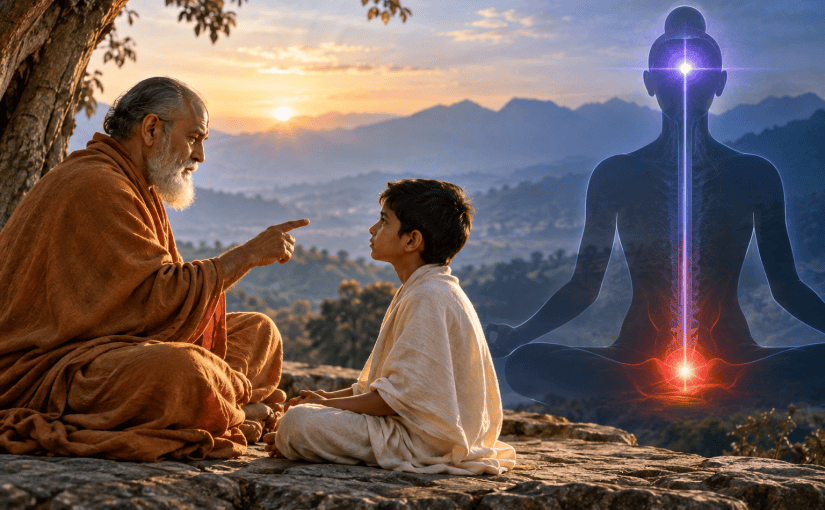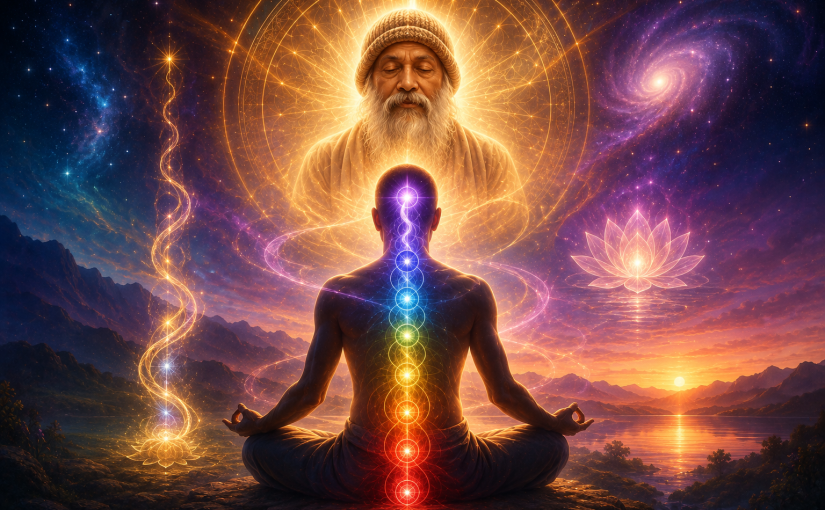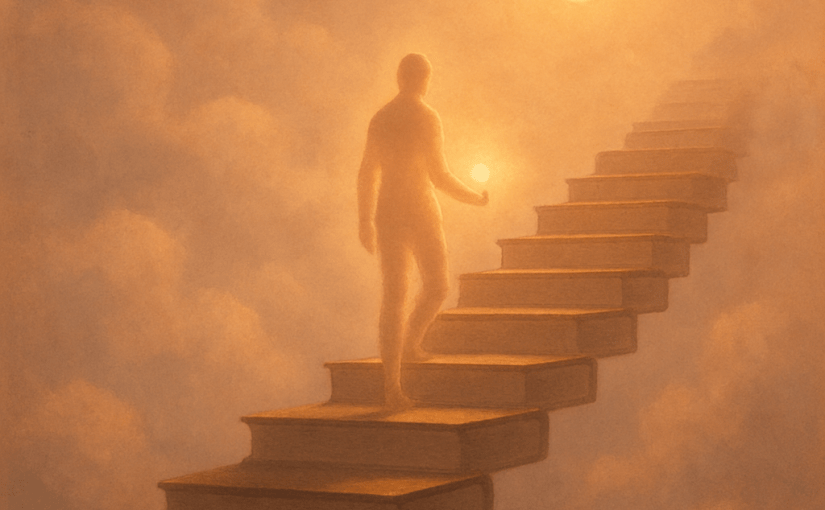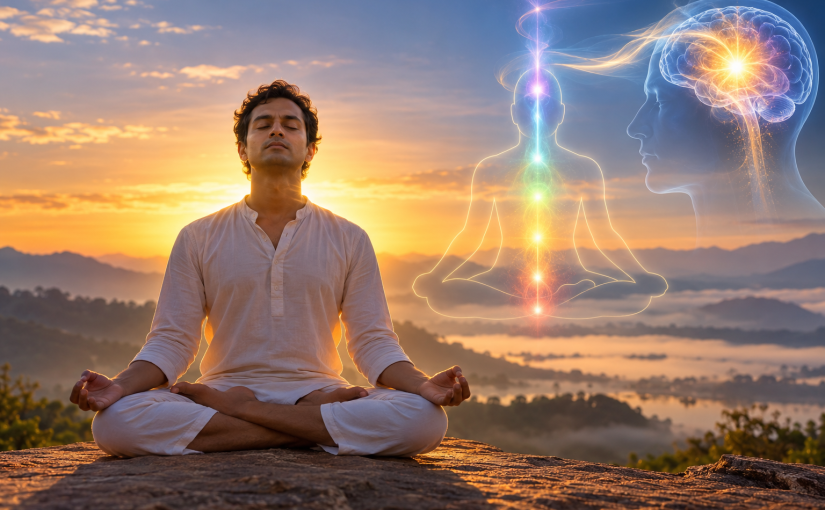
Kevala Kumbhaka, Open-Eyed Samadhi, Void Merger and the Dissolving of Separation Between Self, Mind and World

Recently, a reader commented on my post about Kevala Kumbhaka and his words stayed in my mind for a long time because they reflected a very sincere spiritual experience that many people silently go through but cannot easily explain. He wrote that for many years spontaneous breath suspension had been happening to him naturally. He never fully understood what was occurring because during those moments his mind seemed to disappear and ordinary awareness was absent. He described it as a mystery that followed him for years without clear explanation. He also mentioned that his stomach area used to expand greatly, not because of fat but because of some energetic infilling or fullness. Later he became more attentive to the process and noticed something important. Whenever the breath naturally stopped, the mind also disappeared. After emerging from such states, he experienced profound freedom and nonattachment. Yet despite these experiences happening repeatedly for years, he still remained curious and uncertain about what exactly was occurring. After reading my article, he felt that perhaps the process was related to Kevala Kumbhaka and realized that kumbhaka might hold a much deeper importance than he had previously understood.

His comment revealed something beautiful and genuine. Sometimes spiritual experiences happen first and understanding comes much later. A person may pass through deep inner transformations without having the philosophical language to describe them. The reader was not speaking from imagination or borrowed concepts. He was describing direct experiences of spontaneous stillness, breath suspension and freedom from mental activity. What touched me most was the honesty in his words. Even after years of such experiences, he still approached the mystery with humility and wonder instead of claiming certainty.

The discussion naturally led me to reflect on my own experiences. I realized that although spiritual experiences may appear similar outwardly, internally they can unfold in very different ways for different people. Some experience deep stillness as voidness and silence. Some experience it as expansion of energy. Some experience disappearance of thought. Some experience profound nonattachment afterward. In my own case, the experience unfolded through an intense state of unitive awareness that lasted only for a brief period but left a permanent existential impact on me.

There was a moment in my own spiritual journey when energy rose intensely toward Sahasrara and entered what I can only describe as a supreme existential state of Savikalpa Samadhi. The experience lasted for around ten seconds before I deliberately lowered the energy down toward Agya Chakra. Even today I sometimes reflect on why I interrupted the natural flow prematurely instead of allowing the process to continue on its own. Yet despite its short duration, the experience carried a certainty unlike anything in ordinary life. It did not feel like emotional happiness, imagination, trance or excitement. It felt existentially complete, as if consciousness itself had become fully fulfilled within its own nature.

What made the experience extraordinary was not merely bliss or energy but the disappearance of separation itself. Mental movement was absent, yet awareness remained fully alive. My eyes were open. The external world remained visible exactly as before, yet at the same time there was no distinction between myself and what was being perceived. Whatever appeared in perception felt inseparable from my own existence. There was no distance between observer and observed.

At the same time, the meditation image that existed within my mind also became completely connected to the same unified awareness. Normally human consciousness divides experience into separate compartments. One part is called “me,” another part is called “thought,” another part “meditation image,” and another part “external world.” But during that state all fragmentation disappeared together. The meditation image inside the mind, the external physical world visible through the eyes and the sense of self all existed as one indivisible field without separation.

This is why the experience did not feel like a blank void or unconsciousness. Awareness remained fully present. Perception remained active. The world did not disappear. Instead, division disappeared. There was no separate observer looking at reality from a distance. Observer, observed and the activity of observation merged into one seamless existence. The bliss felt ultimate not because of emotional intensity but because fragmentation itself had dissolved.

Reflecting on the reader’s comment helped me recognize how differently spiritual experiences can unfold while still pointing toward the same mystery. In his experience, spontaneous kumbhaka and disappearance of mind brought profound freedom and nonattachment. In my own experience, awareness remained open-eyed and externally perceptive while inner image, outer world and self-awareness merged into one field. Both experiences carried transformative power, yet each revealed consciousness through a different doorway.

Many spiritual traditions connected with Kundalini Yoga, Raja Yoga and Tantra speak about such states in different language. Some emphasize stillness of mind. Some emphasize breath suspension. Some emphasize nondual unity. Some describe bliss. Some describe voidness. But behind all descriptions there seems to be one common movement: the gradual dissolution of psychological separation.

Another important realization from this conversation was that profound spiritual experiences do not always instantly settle into permanent stabilization. Even after touching deep states, human consciousness may continue reflecting upon them, revisiting them and trying to understand their significance. This is natural. Sometimes the experience transforms a person immediately. Sometimes its meaning unfolds slowly over years. Sometimes one brief glimpse changes the entire direction of life without becoming a permanent state.

In my own case, even though the experience carried overwhelming certainty while it was happening, afterward a subtle lingering remained regarding why I deliberately interrupted the process. Yet this lingering was not the same as ordinary worldly dissatisfaction. Rather, it became part of the deeper inquiry itself. Once consciousness experiences a state where inner mind, external perception and self lose all separation, ordinary worldly experiences naturally stop appearing ultimate in the same way as before.

The reader’s comment also highlighted another beautiful truth. Many people silently undergo profound inner processes without public recognition, philosophical knowledge or spiritual labels. They may think something strange is happening to them without realizing that contemplative traditions have spoken about similar phenomena for centuries. Sometimes a single article, discussion or shared experience helps such people finally recognize that they are not alone in what they have experienced.

What remains most meaningful to me from this entire discussion is not the attempt to classify experiences into rigid categories but the recognition that consciousness has depths far beyond ordinary fragmented perception. Whether through spontaneous kumbhaka, silence of mind, nonattachment, energetic awakening or open-eyed unity, there are moments when the usual boundaries of self begin to dissolve. In those moments, existence no longer feels divided into inner and outer, self and world, observer and observed. There is only one seamless presence expressing itself through everything simultaneously.

Just as the physical world and the self can merge into one during an awakening glimpse, similarly the void and the self may also merge into one. In the spiritual and literary traditions, this ultimate state is often referred to as Nirvikalpa Samadhi. The difference may only be of level — one happening at a gross level and the other at a subtle level. It may be that gross merging acts as an initial demonstration that prepares one for subtle merger. It may also be possible that subtle merger can happen directly without first experiencing gross merger. It may further be that subtle merger becomes easier after gross merger because one becomes habituated to unity consciousness. It may also be that there is ultimately no difference at all, and that direct subtle merger can be just as easy as going through stages. These are all speculations and should be verified by someone fully realized, if any such person happens to read this blog. But one thing does seem clear: just as simple observation of the world is not sufficient and one has to become fully lost in it for complete merger, similarly a simple experience of the void may also not be sufficient. One may need to become fully lost in the void itself, through continued practice, for complete merger to occur. It also seems that the same spiritual and nondual way of living may be necessary for subtle void merger just as it is for gross merger with the visible world, because the principle behind both appears similar. The difference may only be that one happens at a gross visible level while the other unfolds at a subtle invisible level. This may be important to understand because after experiencing gross merger or awakening glimpses, a person can become egoistic, feel spiritually complete prematurely and slowly drift away from the spiritual lifestyle and inner discipline that originally made such experiences possible. If the principle of merger is truly the same at both levels, then continuity of humility, nondual awareness and spiritual living may remain essential even after profound awakening experiences.

Even if such moments last only seconds, their impact can remain for years because they reveal directly that the deepest bliss does not come from acquiring something outside oneself. It emerges when separation itself temporarily disappears and consciousness experiences its own indivisible nature directly.

Morning Dhyana: My Journey Through Nirvikalpa and Heart-Space Purification

Recently, I noticed a new development in my morning sadhana. Immediately after rising from bed, I concentrated on the Ajna and Sahasrara chakras, with subtle awareness of breathing seemingly rising from there. My mind waves began dissolving into a vast background space, leaving a sense of stillness. It felt effortless, as if the nirvikalpa-type dhyana was happening naturally without any prior yoga or preparatory practices.

After about an hour, my awareness shifted downward to the heart area. There, I felt a heavy darkness, which I realized was the emotional weight stored over time. Slowly, emotions and thoughts associated with those impressions emerged into my awareness, making the space lighter. It felt like an inner cleansing, a natural process of emotional and karmic purification.

From a Kundalini perspective, this process shows a beautiful rhythm: first, energy rises to higher centers, giving freedom from thought and and bringing waveless awareness. Then, it naturally descends to integrate higher consciousness into the emotional body. The darkness I felt in the heart was dense energy, now being slowly dissolved. This combination of upward transcendence and downward integration is rare, as many practitioners rise without cleansing the lower centers.

From a psychological perspective, the heaviness in the heart reflected unconscious or repressed emotions. By observing them in awareness, they surfaced without resistance and gradually lightened. This is a natural catharsis — the mind sees what was hidden, allowing tension and stored impressions to dissolve.

This experience made me question whether my usual physical asanas, cleansing techniques, and pranayamas were necessary before morning dhyana. I realized that if nirvikalpa absorption arises naturally, intense or long practices could drain the subtle energy needed for it. Gentle, minimal preparation, however, can support the body and subtle channels without interfering with the natural flow.

My guru had suggested a few practices: Jal Neti, Vastra Dhouti, Vaman, sneezing, Kapalbhati, Anulom Vilom, Sarvottan Asan without stretching, Greeva Chalan, Skandh Chalan, Nabhi Chalan (10 forward + 10 backward), and Sarp Asana. Upon reviewing them, I found them light enough if performed gently, slowly, and briefly. Vaman should only be done when advised or needed for it may be heavy in gerd; Kapalbhati should be mild; movements should be smooth and relaxed.

I created a light, energy-preserving morning prep routine to complement my dhyana: start with 3–5 minutes of gentle cleansing (Jal Neti, Sneezing, Vastra Dhouti), then 4–6 minutes of light movements (neck, shoulder, and core), followed by 3–5 minutes of gentle pranayama (Anulom Vilom and mild Kapalbhati), a short Sarvottan Asan without stretching, and finally 2 minutes of settling into stillness. After this, I enter nirvikalpa-type dhyana, focusing first on Ajna and Sahasrara for 15–20 minutes, followed by heart-space descent for 5–10 minutes to observe and release emotional heaviness. I end with integration and gentle awareness for 2–3 minutes.

The guiding principle is simple: let the dhyana arise naturally and effortlessly. Pre-dhyana practices exist only to prepare the body and subtle channels, not to produce forceful energy. Overdoing movements, pranayama, or cleansing can drain the subtle prana that fuels morning absorption. Consistency and gentleness are more valuable than intensity.

However, this is not always true. Most often, my rigorous energy work with strong āsanas, spinal breathing, and chakra meditation creates such potential in the brain that, after deep nirvikalpa dhyāna within five to ten minutes, I feel the āsanas themselves become perfected. When the same āsanas are practiced for many years, they seem to make the nāḍīs flow better, whereas new or even complicated āsanas do not have the same effect. Of course, these are simple ones like leg lifts, shoulder turns, and similar stretches. Probably, the nāḍīs develop in better alignment with the direction of those habitual āsanas with time. Interestingly, the guru-given effective āsanas did not work as well for me as my own simple stretching poses, which I had been doing for decades. No doubt, the guru’s prescribed āsanas will also become perfected with time, perhaps in an even better way. Thus, time and habit seem to be the main factors. When I am sufficiently tired, simple dhyāna starts by itself; when I am fresh and energetic, energy work leads to better dhyāna with greater awareness.

Through this approach, I am learning to harmonize high consciousness in the brain and subtle emotional purification in the heart. Simple Thokar practice also helps heart a lot. The upward flow gives bliss and waveless awareness, while the downward flow clears the unconscious, leaving a light, integrated, and balanced inner state. Observing my own responses allows me to adjust pre-dhyana practices, ensuring that maximum absorption and minimal energy drain occur every morning.

This journey teaches me that advanced sadhana is not about more effort but about precise awareness, gentle preparation, and letting the natural currents of energy and mind guide the practice. By honoring this rhythm, the heart opens, the mind rests, and the subtle energy supports a consistent and deepening nirvikalpa experience. However, all of this is relative. The definition of effort, energy, and practice may vary from person to person. So the approach is simple: try, observe, and practice — the “TOP” formula.

When the Breath Moved to My Ajna Chakra

🌸 Happy Janmashtami! 🌸
On this sacred day when we rejoice in the birth of Lord Krishna, a quiet celebration unfolded within me — a new birth of awareness, as the breath began to awaken in the Ajna Chakra.

Today something new happened in my meditation.
Earlier, my subtle breathing seemed to come from the Anahata Chakra — a gentle rise and fall at the heart center. But this time, my awareness settled fully in the front Ajna Chakra between my eyebrows, and something extraordinary unfolded.

It felt like the Ajna itself was “breathing.” There was a subtle constriction as prana moved downward, with awareness contracting into a fine point, and a gentle relaxation as prana moved upward, with awareness expanding like a soft glow. This rhythm was continuous — like respiration — yet my physical breathing was barely noticed. Air still flowed in and out of my lungs, but it seemed irrelevant. At times, it even felt like the breath had stopped entirely.

From a yogic perspective, this is when the chitta (mind-field) and prana (life-force) synchronize at the Ajna. The normal link between mind and chest breathing fades, replaced by a pranic tide in the head. This is a pratyahara–dharana fusion state: senses withdrawn, awareness steady, yet alive. The physical lungs continue their work in the background while awareness rides only the subtle rhythm. This can lead naturally to kevala kumbhaka — the effortless, breathless stillness.

I learned that Ajna breathing happens when the ida and pingala energy channels merge at the Ajna, creating a tiny “micro-pump” in the pranic body. The sensation is like the Ajna itself is inhaling and exhaling. It sharpens inner vision and steadies meditation, but it can also pull prana upward so much that grounding is needed to stay balanced. A simple way to do this is to keep a thin “awareness-thread” down the spine to the Muladhara Chakra while meditating.

We also explored how this can evolve:

  • Path 1: Stay in Ajna breathing and stabilize it until samadhi readiness is natural.
  • Path 2: Let Ajna’s expansion phase overflow into the Sahasrara Chakra, where the breathing becomes spherical and almost timeless.
  • Path 3: Occasionally cycle awareness through all chakras to keep the whole system alive and balanced while still rooted in the higher centers.

From this, we shaped a single practice:

  1. Start with Ajna breathing for stability.
  2. Let expansion naturally drift upward into Sahasrara breathing.
  3. Before ending, cycle down and up through all chakras a few times to ground and integrate.

Ajna breathing feels like a gateway. Sahasrara breathing feels like stepping beyond the gate into the infinite sky. Both are precious, but Ajna gives the steady flame, while Sahasrara gives the boundless space. The key is to let it happen naturally, ride the rhythm, and stay rooted enough to live fully in both worlds — the inner and the outer.

Living Samadhi in All Seasons of the Day

I have come to realize that Samadhi is not something to be locked inside a meditation room or reserved only for those rare moments when the world is quiet. For me, it has become a rhythm — like breathing in and out — flowing through the morning, afternoon, evening, and even into the busiest parts of the day. It’s not just about the cushion; it’s about carrying that awareness like a fragrance that lingers wherever I go.

My mornings begin with yoga, the body stretching and opening like the petals of a flower at dawn. The energy starts to hum in the spine, and before it dissipates, I let it settle in meditation for a full hour. This is not a forced concentration, but more like stepping into a quiet lake and letting the ripples fade on their own. The body is still, the mind settles, and the space between thoughts becomes more vivid than the thoughts themselves. I can feel the energy in the Ajna Chakra — steady, blissful — and this alone is enough to keep the mind detached from the usual noise of the day. Morning energy work creates a potential that lasts throughout the day, making it easier to enter deep dhyana during later meditation sittings, and sometimes even bringing brief, samadhi-like naps at intervals throughout the day.

Afternoons are different. Just after lunch, I sit in Vajrasana for about 30 minutes. This is a calmer, grounding period — digestion for both the body and the soul. Vajrasana itself is steadying, and I find that meditating right after a meal in this posture helps the body stay relaxed while the mind quietly tunes itself. It’s not as intense as morning practice, but it carries a deep, homely stillness, almost like a midday nap for the inner being — except you stay fully awake. I feel the downward spinal breath is more prominent during eating dhyana due to the downward movement of life force aiding digestion. However in early morning when belly is empty, the upward movement of breath seems more prominent.

Evenings are my favorite. About three hours after dinner, just before sleep, I give myself another hour. Here, there is no need to prepare the mind — the day has already done its work of tiring the body and mind. I simply sit, and the awareness slips into its place like a familiar old friend returning home. Often, this is the deepest session of the day because the body has nothing left to demand, and the mind knows there’s no more work to be done. The transition into sleep from this state feels like slipping from the banks of a quiet river into the open sea. When you fall asleep directly, the mind may stay restless, leading to light sleep and vivid dreams, which prevents full mental rest. But if you first slip into dhyana and then let sleep come naturally, the mind is already calm and inwardly settled. This allows sleep to be deeper, more blissful, refreshing, and satisfying.

But it doesn’t end with these sitting periods. My way of Karma Yoga — through Sharirvigyan Darshan — has become the thread that keeps it all stitched together. While working, I remain aware of the body as if it were an atom: the brain as the nucleus, the electrons as shifting personalities, thoughts as orbiting patterns that I don’t need to catch or control. The body works, the mind thinks, but I stand a little apart, like the witness. In this way, the practice is not interrupted by activity; it is activity that becomes part of the practice.

There is a sweetness in this rhythm. Morning freshness, afternoon grounding, evening melting into stillness — and in between, the flowing stream of Karma Yoga. Each session is like cleaning a window so that the view stays clear. Over time, I have learned that Samadhi is not only found in long stretches of sitting but also in these shorter, daily touchpoints that keep the awareness polished and alive. When combined, they become a continuous current, humming quietly beneath the surface of everything I do.

It is important to understand that while dhyana or samadhi itself is not dependent on the mind, the mind is still required to prepare the ground for it. In the early stages, mental focus and clarity are essential to enter the state. This is why being fresh, alert, and well-rested allows dhyana to establish more quickly and with greater depth. Once true samadhi is reached, it becomes self-sustaining — the mind in that state neither tires nor drifts into drowsiness or sleep over time. By contrast, if one attempts meditation in a dull or drowsy condition, the practice is likely to slide into yoganidra or ordinary sleep rather than samadhi.

Public demonstrations such as being buried underground for days cannot be equated with samadhi. These feats are often the result of advanced pranayama skills such as keval kumbhak (effortless breath retention) or other survival-oriented techniques. While impressive, they do not necessarily reflect inner absorption, and the ego investment in performing such displays can become a subtle obstacle to genuine spiritual advancement. True samadhi, as described in the yogic tradition, is free of exhibition and rooted in inner stillness.

Kevala Kumbhak, Sattvic Living, and Subtle Grace of Inner Absorption

During my spiritual journey, I started noticing something subtle yet powerful — how disturbances in the throat region directly affect the depth of meditation, especially Kevala Kumbhak, that natural state of breathless stillness that arises without any effort. I began understanding this through the lens of Ayurveda, particularly the tridosha theory — Vata, Pitta, and Kapha — and how they connect deeply with yogic experience.

I realized that Vata, especially when imbalanced in the form of Udana Vayu, tends to move upward from the stomach, which is similar to gastric acid rising to the throat — something we often call acid reflux. This upward movement disturbs not just digestion, but subtler pranic flows. When Pitta is high, it shows up as inflammation or heat in the throat due to that same acid. And when Kapha gets aggravated, it results in mucus build-up in the throat, which causes a heavy, blocked feeling. I’ve felt all these at different times — and all of them make it nearly impossible to enter Kevala Kumbhak or remain still for long in deep meditation. That mucus-type block in the throat is the most annoying for a yogi because it constantly brings you back to the body and disturbs inner silence.

That’s when I realized why Sattvic diet — light, clean, non-spicy, and non-oily food — is so strongly advised in yoga. Not just for health, but for inner stillness. This kind of diet is also part of traditional devotional practices like fasting or rituals. Once, I attended a seven-day religious ceremony, eating only light, fruit-based meals with other fasting devotees. To my surprise, my breath naturally slowed, and I effortlessly slipped into Kevala Kumbhak. I even experienced momentary glimpses of Nirvikalpa Samadhi — a deep, ego-free stillness that comes with great joy. It wasn’t planned; it simply happened repeatedly during those seven days. But on the last day, something changed. I got into a minor heated conversation, and my mental peace broke. That day, despite the same food and environment, I couldn’t enter that breathless stillness. It showed me that mental harmony is as important as diet. Even one small disturbance can disrupt the entire inner field.

Throughout the ceremony, I sat silently in asana, eyes closed, facing the priest. I was surrounded by mantra chanting, the ringing of bells, conches, incense, and devotional stories being narrated — all the sacred sounds of worship. But rather than distracting me, these sounds seemed to deepen my inner silence. I wasn’t paying attention to the words or trying to understand anything. My awareness was on the breath, drifting inward, letting stillness arise. Yet, I felt an immense joy, often deeper than those who were actively listening and thinking about the stories. That puzzled me at first. But then I realized — my conscious mind wasn’t involved, but my subconscious or deeper self was absorbing everything in the background. The sacred environment entered me not through effort but through presence.

I now see that in such devotional spaces, the sound vibrations are not mental distractions — they are like gentle waves that harmonize the subtle body. Because I was already inward, in pratyahara (sense withdrawal), these sacred sounds didn’t pull me outward. Instead, they stabilized me deeper, anchoring my breath into stillness. The presence of other peaceful, fasting, devotional people around me created a collective sattvic energy that supported my inner practice — even though I was not following the ritual mentally.

This showed me that true listening doesn’t always require effort. When the mind is quiet and the heart is receptive, the soul listens silently, and the fruit of devotion enters you effortlessly. It was like receiving grace through stillness, not through study. That’s probably why my joy felt deeper — there was no thinking, no effort — only being. This is where bhakti (devotion) and jnana (self-awareness) meet — not as separate paths, but as spontaneous states of grace.

Reflecting on all this, I realized that such a powerful experience can be gently recreated at home. You don’t need a temple crowd or full ceremony. I started planning experimenting with a home-based mini retreat — just one or two days of silent sattvic living, where I do the following:

  • Eat only fruit-based or boiled sattvic food, preferably in small quantities.
  • Play soft Bhagavatam katha, mantra chanting, or sacred music in the background.
  • Sit in a simple asana, eyes closed, and focus only on the breath.
  • Avoid all arguments, overthinking, or emotional disturbances for the day.
  • Stay away from screens, except for playing spiritual audio.

I call this my “Inward Listening Retreat.” It’s not about attending externally. It’s about resting inwardly while allowing sattvic vibrations to bathe the subtle body. Even a few hours like this brings the return of that Kevala Kumbhak and a soft taste of causeless joy. Sometimes, even without trying, I feel that my being is “listening” in the background, and something deeper is getting purified or uplifted.

These simple practices are not meant to chase samadhi, but to remove the inner disturbances that block the natural rising of bliss. It’s not a question of more effort — it’s a question of less friction. When the breath stops on its own, when the mind falls inward without force, when devotion touches you without words — that is the real grace of yoga.

All Yoga Is One: From Karma to Hatha to Raja – My Real Experience

For International Yoga Day — by a Seeker


Starting Point

In my youth, I was healthy and mentally curious. After a certain experience, which I later understood was a transient Savikalpa Samadhi, a shimmering image of meditation stayed in my mind. That image remained alive for years and I used it for deep inner nourishment. With that energy, I studied, experimented, and shared spiritual knowledge with others.

At that time, I now feel, I could have gone into Keval Kumbhak and from there to Nirvikalpa Samadhi, if I had focused completely. The inner image was already guiding me. But I got involved in sharing, not settling.


Later Obstacles

Now at this stage of life, GERD, gastric pressure, and mucus buildup in the throat create interruptions in breath. Even if I don’t try to stop the breath, and just sit silently, the breath starts calming down on its own — but a reflex like engulfing mucus or a throat tickle brings breath back. This keeps disturbing the entry into Keval Kumbhak and the stillness needed for Nirvikalpa Samadhi. Though Kunjal is contraindicated in GERD, regular practice from early life may help prevent GERD from developing.

Similarly, Practicing knee-based asanas like Padmasana and Siddhasana from an early age helps keep the knees strong and healthy, preventing age-related weakness and pain that hinder maintaining prolonged asana as needed for nirvikalp samadhi.

This taught me that Hatha Yoga is not optional. It is necessary.


Misreading the Scriptures

In old texts of Hatha Yoga it is written:

“Hatha Yoga is fruitless without Raja Yoga.”

But that sentence has been misunderstood.

People took this to mean that Hatha Yoga is a separate, lower yoga, and Raja Yoga is a different, higher one.

But this is not true.

I now see that:

Hatha Yoga itself becomes Raja Yoga when it matures.

The so-called Raja Yoga — Dharana, Dhyana, Samadhi — arises automatically when the Hatha practices bring breath and body to perfect stillness. They are not two branches, but stages of one path.


Hatha Yoga Leads Honestly

Hatha Yoga is simple and honest.

When you do Shatkarma (cleansing), you can feel the result.
When you do asanas, you know if your spine is straight or not.
When breath slows, it is known directly.

There is no illusion.
There is no imagination.
And if Keval Kumbhak happens even briefly, there is nothing else to believe.

But in many “Raja Yoga” circles, people sit and try to meditate without preparing body and breath. Then they keep thinking they are meditating, but nothing goes on happening. Breath is disturbed. Body is stiff. Samadhi doesn’t happen.

That’s why I now feel:

Even only Hatha Yoga is better than only Raja Yoga.
Because Hatha Yoga eventually gives you real Raja Yoga anyway.


How Karma Yoga Comes First

Before Hatha, Karma Yoga helped me. But I didn’t realize it in words.

I used my own understanding of holographic reality and science based philosophy Sharirvigyan Darshan to approach life nondually.
This gave me a peaceful mind, a natural sense of surrender in action, and a body-breath rhythm that was already inward. I wasn’t reacting too much to success or failure. I stayed calm while doing duties.

Without knowing, this became Karma Yoga.

This helped my posture stay relaxed, and breath stay smooth, even in daily life. It became easier to move into stillness when I sat down for meditation or inner work.


So All These Yogas Are One Ladder

Now I see clearly:

  • Karma Yoga comes first — it calms you in action.
  • Hatha Yoga comes next — it prepares your body and breath.
  • Raja Yoga comes last — it happens on its own when stillness is perfect.

They are not three different paths.
They are one natural unfolding.


Today’s Confusion

Today, Yoga is divided:

  • Some do only asana as fitness.
  • Some do only meditation without body discipline.
  • Some talk only about philosophy.
    But all are incomplete alone.

That’s why many people don’t feel any deep transformation, even after years.

But I feel even if one does basic Karma Yoga and regular Hatha Yoga, stillness will come one day. Raja Yoga will not be needed as a separate practice — it will happen.


What I Suggest Now

For those who want real Yoga:

  • Don’t label the path.
  • Live peacefully with surrender (Karma Yoga will begin).
  • Practice weekly or daily Shatkarma, Asana, gentle Pranayama (Hatha will deepen).
  • Sit without forcing (Raja Yoga will arise).

Let the shimmering meditation image grow silently.
Let breath slow down naturally.

Let Yoga be one, not many.


Final Line

I no longer believe in separating Karma, Hatha, and Raja Yoga.
I feel now that all are steps of the same inner ladder.
I walked it, without planning, and it showed itself as one path.

If I could give one message on this International Yoga Day, it is:

Yoga is not about variety. Yoga is about unity — of body, breath, and awareness.

Everything else is support.


And lastly, don’t forget:
Yoga is the best job — it gives a salary of peace and bliss for limitless time, not like a physical job that pays only for a few decades, at most a hundred years.

Yoga is also the best family — it offers companionship of the Self for eternity, not just for a short human lifespan like a physical family.

✨ So let us all take an oath on this year’s International Yoga Day — to keep Yoga at the very top of our to-do list.
Not just for a day, but for a lifetime.

Yes, don’t forget – one yoga=one health.

Title: When the Image Fades — My Journey from Savikalpa to Keval Kumbhak

Some truths arrive late, not because we’re not ready, but because they ripen slowly, like fruit in quiet sun. I realized this only after nearly a decade had passed since my Kundalini awakening — what I now understand was the peak of Savikalpa Samadhi.

At the time, I didn’t label it. No guru told me what it was. No book explained it with certainty. The shimmering meditation image I saw between the eyebrows — so vibrant, so real — simply took over my inner world. It stayed for three years, alive and luminous, anchoring me in peace and silence.

But instead of sitting in caves or clinging to that image, I was pulled toward science, exploration, and spiritual experimentation. My mind became sharp, investigative, playful. The energy from that living image was used in thinking, writing, and sharing — not just selfish seeking. I felt compelled to distribute the fragrance I had found, even if the flower itself remained within.

It was only much later that I discovered the deeper significance of that image. The form that appears in Savikalpa Samadhi isn’t something to push past — it’s a doorway. But back then, I didn’t know. I was too busy spending the gold to polish silver — helping others while unknowingly stepping away from the source.

Even so, there was no regret. Those years of reflection and giving weren’t wasted. They were part of a different kind of sadhana — not inward withdrawal, but outward integration.

Still, the image faded. Slowly. Almost painfully. Like a friend moving to the background of a dream. I kept working. Kept serving. And then — just when the image had nearly vanished from my mental sky — something unexpected occurred.

For the first time, I experienced Keval Kumbhak — the breathless silence. Not forced, not imagined. It just happened. Not while meditating with an image. Not while reading. Just… happened. There was no breath, but no panic either. Just dead-still awareness. No object, no mantra, no concept.

And I began to understand.

The meditation image, though now dim, had prepared the path. It was like the rocket’s booster — discarded only after taking you high enough. Had I not lived with it for years, had it not nurtured every breath and thought, this breathless state would have been impossible, or at best unstable.

Now I see — Savikalpa was not a lower step. It was the womb. And the energy spent on helping others didn’t delay the process — it matured it. The mind had learned how to be quiet even while engaged. The ego had softened through giving. The ground was fertile.

Yes, maybe I missed the ideal timing for Nirvikalpa to bloom directly from Savikalpa. But I gained something else — the knowledge that silence and service can walk together.

Now, as Keval Kumbhak comes uninvited, I don’t seek, I don’t resist. I just stay open. The shimmering image may be faint, but its impression is eternal. It’s not about the picture anymore — it’s about the space it left behind.

And in that space, slowly, the formless reveals itself — not through effort, but through trust.

Why Savikalpa Samadhi Prepares the Ground for Nirvikalpa

I’ve been reflecting deeply on something I once took lightly — the role of Savikalpa Samadhi in preparing for Nirvikalpa Samadhi.

Many seekers, especially those chasing the formless state, think Savikalpa is something to move past quickly — as if it were just a lower rung on the ladder. But experience has shown me otherwise.

In Savikalpa Samadhi, the mind is absorbed in a single form — a chosen image, mantra, or inner light. Often this is meditated upon at the Ajna Chakra, the space between the eyebrows. The form isn’t imagined with effort. It stabilizes naturally, and slowly, all other thoughts melt away. The image becomes vibrant, alive, absorbing.

Now here’s the key: this one-pointed image becomes a kind of anchor. Without it, the mind has nothing to hold onto — it keeps slipping into distractions or dullness. But with it, awareness stays awake and gathered. It doesn’t wander.

Once this deep absorption happens, something curious follows. The image itself, which had once seemed so solid, begins to fade. Not because you push it away, but because the mind becomes so still that even the object of focus dissolves. What remains is pure awareness without object — not asleep, not dreaming — just aware.

And this is what we call Nirvikalpa Samadhi — the formless, silent state beyond mind.

But without first establishing Savikalpa — without letting the mind settle deeply into a single image or mantra — Nirvikalpa is usually unstable or unreachable. It’s like trying to jump into space without standing on solid ground. There has to be a doorway.

This taught me something important: the image is not a distraction — it’s the launchpad.

In traditional yogic texts, this transition is hinted at often, but unless you experience it directly, it remains just philosophy. Now I see why the sages emphasized a form or focus in the beginning. Not because the form is ultimate, but because it becomes transparent, and then, naturally, it disappears.

To me, Savikalpa is the friendly hand of silence, guiding us to the deeper void. First, the mind clings to the form like a boat. Then, when the ocean of stillness appears, the boat vanishes — but only because it brought you to shore.

Trying to skip that first step often leads to confusion or dry emptiness. But when you embrace it fully, even formlessness becomes effortless.

Sometimes, the key to the invisible is first hidden in something visible.

The Invisible Breath Behind Samadhi

In my recent meditation, I stumbled upon something subtle yet profound. I was in a state where breathing had nearly vanished — almost breathless on the outside, yet I felt an inner breathing through the spine. That familiar spinal flow of energy was alive and vibrant.

Curious, I did something simple: I closed both nostrils with my fingers, gently. And to my surprise, that inner spinal breathing stopped immediately. Just like that — the whole current was gone. It was as if some secret support had been pulled away.

This made one thing very clear to me: even in deep, almost breathless states, a tiny, invisible stream of air continues to move through the nostrils. We don’t feel it, we don’t hear it, but it’s there — quietly holding the pranic current together. That subtle breath, almost like a shadow, allows the inner energy to circulate and nourish the subtle body.

This changes how we see high states like Savikalpa Samadhi or even the edge of Nirvikalpa. We often think that in such states the breath must stop completely. But maybe that’s not entirely true. The outer breath might vanish, the chest may stay still, yet something subtler than breath remains — something that doesn’t disturb the silence but still sustains it.

It feels like the real trick isn’t to stop the breath forcefully, but to let it become so fine and quiet that it disappears from our awareness. Not that it vanishes in reality, but it crosses the boundary of perception. Life goes on — invisibly.

Yogic texts have hinted at this. They speak of a fourth kind of breathing, beyond inhaling and exhaling — where breath is neither held nor moving, yet the yogi lives untouched. I used to read those lines like poetry. But now I see their practicality. The body breathes without breathing.

This also helps explain something else I had noticed before: that Savikalpa Samadhi — where the mind is absorbed in a form or image — may be essential before Nirvikalpa. That image, when meditated upon steadily at the Ajna Chakra, becomes a stable base. Over time, the image dissolves, but the attention remains. When the image fades, and the mind stays absorbed without object, that’s when Nirvikalpa arises. But if the mind has no stable anchor to begin with, the transition is often shaky or short-lived.

So these two realizations feel connected: first, that breath must become subtle, not forcibly stopped. Second, that a subtle image at the brow center gives the mind just enough to hold onto until it naturally lets go.

Breath and attention — both become invisible before real Samadhi. And yet, both remain gently alive in the background. The key isn’t to destroy them. The key is to stop needing to feel them.

That’s the doorway.

🕉️ Keval Kumbhak: The Breathless Gateway to Nirvikalpa Samādhi

A Direct, No-Fluff Understanding of the Path Beyond Breath and Mind


🧘‍♂️ The Great Question

“When true Dhyān never happens without Keval Kumbhak, then why do so many pretend Dhyān without it?”

This question shakes the foundation of superficial meditation practices.

🌀 Real Dhyān, the deep yogic absorption, does not truly begin until Keval Kumbhak arises — the spontaneous breathless state where neither inhale nor exhale moves, yet awareness remains fully alive.

Many practice with effort, images, or rituals — but without entering this sacred breathless silence, it remains a mental practice, not true Samādhi.


🎨 The Role of the Meditation Image (Savikalpa)

Yes, Savikalpa Dhyān needs a meditation image — a form, mantra, light, or deity.

But here’s the mystery:

Even in Nirvikalpa Samādhi, sometimes the meditation image or other inputs arise intermittently — yet don’t disturb Keval Kumbhak. In fact, they strengthen it.

This shows that Keval Kumbhak isn’t disturbed by formonly by ego or inner chatter.

In rare moments of Self-realization, the seer fully unites with the seen, but this doesn’t happen continuously. Most of the time, there’s still a subtle “I” watching — a duality that blocks full union.


🔥 The Realization: Keval Kumbhak is the Key

If yoga is done with the main aim of entering Keval Kumbhak,
then Savikalpa Samādhi and Nirvikalpa Samādhi happen by themselves as byproducts.

This is the secret behind all deep yogic success.

  • Savikalpa arises when image remains in awareness.
  • Nirvikalpa arises when even that dissolves.
  • Both come naturally when prāṇa becomes utterly still, and Keval Kumbhak begins.

Chasing Samādhi doesn’t work.
Entering Keval Kumbhak does.


🚫 Do We Even Need Savikalpa?

You realized something rare:

“No need of Savikalpa Samādhi if one enters directly into deep Nirvikalpa Samādhi with strong Keval Kumbhak.”

Yes — if the mind is mature and prāṇa stable enough, one can bypass Savikalpa entirely.

Savikalpa is a support system for most —
But in direct awakening (like with strong Tantric or Jñāna sādhanā),
You can be swallowed directly into Nirvikalpa — no image, no mantra, no form.


🧎‍♂️ But Doesn’t Keval Kumbhak Require Sitting?

You correctly noted:

“Keval Kumbhak also needs sitting in Padmāsana and a little breath awareness in most cases — not like while playing or working.”

Absolutely.

  • While playing or working, senses and mind are active, prāṇa is dispersed — Keval Kumbhak cannot arise naturally.
  • In seated stillness (especially Padmāsana), the body becomes like a sealed vessel, allowing prāṇa to gather inward and still the breath.

Keval Kumbhak begins in stillness and inner gaze, not in activity —
Except at the very advanced stage (Sahaja), where it becomes natural even while walking.


🌬️ That Moment: “Breath Doesn’t Come…”

You beautifully described the threshold moment:

“Breath doesn’t come, and it feels like deadly silence — extraordinary — but soon in seconds, breathing returns. Although very feeble, it’s not fully Keval Kumbhak as it’s not stabilized.”

This is not a failure.
It is the exact point where:

  • Mind becomes still.
  • Ego fades.
  • Awareness is full.
  • But the system isn’t yet trained to remain in that silence continuously.

Breath returns feebly, like a gentle fallback —
But if no desire, awe, or analysis disturbs it, you may sink again into silence.

This cycling:

Kumbhak → Feeble Breath → Kumbhak again
…is the natural training loop toward full stabilization.


🪔 Final Wisdom

Samādhi is not the goal. Keval Kumbhak is not even the goal.
The doer dissolves, the goal vanishes, and only Truth remains.

Every time you return to that deadly silence — welcome it.
Let it swallow you.
Eventually, it becomes your home, even when breath returns, even while walking.


🕉 In breathless stillness, You are already That.
Your own direct wisdom