Kaliya Naag, Kundalini and Krishna: A Yogic Interpretation of the Poisoned Yamuna

There are some Puranic stories that appear simple in childhood, devotional in adulthood, and deeply psychological only after inner experience begins to unfold. The story of Kaliya Naag from the life of Krishna is one such mysterious episode. Traditionally it is narrated as the story of a poisonous serpent living in the Yamuna river whose venom made the waters deadly for humans and animals. But when viewed through the lens of Kundalini, yoga, consciousness, vasanas, and awakening, the entire story starts appearing like a coded map of inner transformation.

The story begins with Kaliya Naag living inside Kaliya Hrada, a deep pit-like region of the Yamuna river. The serpent constantly spit poison into the waters. People, cows, birds, and animals who drank the water either became unconscious or died. One day the ball of the gwalas or cowheards fell into the poisonous waters. Krishna jumped into the river to retrieve it. Kaliya attacked him violently. Krishna subdued the serpent by dancing upon its thousand heads and crushing them beneath his feet. The wives of Kaliya then prayed to Krishna for mercy. Krishna spared the serpent on one condition: Kaliya must leave Yamuna and go to Ramanaka Island, where it would no longer remain hidden from Garuda.

When this story is viewed symbolically, the serpent immediately starts resembling Kundalini energy. A serpent naturally symbolizes coiled life-force. Kaliya living in dark poisonous waters resembles dormant life-energy trapped in unconscious lower tendencies. The serpent living in fluid is also important because the lower chakras are connected with bodily fluids, instincts, desires, and reproductive energies. The poison entering the Yamuna resembles life-force flowing downward and outward into ignorance instead of upward toward awakening.

In this interpretation, Yamuna is not merely a river. It resembles the subtle channel through which energy flows. The downward poisoned flow represents energy wasted through uncontrolled desires, compulsions, emotional intoxication, scattered thoughts, and outward attachment. The people and animals becoming unconscious after drinking the water symbolize ordinary worldly consciousness becoming trapped in illusion, ignorance, sleep-like existence, and mortality. The poison here is not merely physical death but spiritual unconsciousness.

The thousand heads of Kaliya are especially meaningful. A serpent with one head would represent a single instinct. But a serpent with a thousand heads resembles countless vasanas, desires, cravings, emotional impulses, and thought-streams constantly arising in the human mind. These heads continuously spit poison into consciousness. The poison is not only lust or attachment but every scattered tendency that pulls awareness outward and downward. These many heads also symbolize immense potential power. Kundalini energy, if mastered, can transform consciousness completely. Left uncontrolled, the same force becomes toxic.

The ball of the gwalas falling into the Yamuna also becomes deeply symbolic. The ball can be understood as desire itself, or the lost center of consciousness. Ordinary beings cannot retrieve it because once consciousness falls into unconscious instinctive depths, it becomes difficult to recover through ordinary effort. Only Krishna enters the poisonous waters fearlessly. In yogic symbolism, Krishna represents divine consciousness, awakened intelligence, or the yogi capable of entering the unconscious depths without becoming consumed by them.

Kaliya first attacks Krishna because the egoic life-force resists transformation. The serpent does not want its poisonous dominance to end. Krishna dancing upon the thousand heads symbolizes mastery over mental modifications and vasanas. It is important that Krishna does not kill the serpent immediately. Instead he subdues it. This reflects an important yogic principle. Kundalini itself is not evil. Life-energy is not destroyed in yoga. It is purified, redirected, elevated, and transformed.

One of the deepest insights in this symbolism is the role of Garuda. In the story Kaliya hides in Yamuna because there it remains safe from Garuda. Symbolically, Garuda resembles transcendence, divine ascent, higher intelligence, or the force that carries consciousness toward the infinite cosmos. The serpent fears Garuda because egoic energy fears dissolution into infinity. As long as Kundalini remains trapped in lower unconscious regions, awakening cannot fully occur. The energy remains safe from transcendence there.

Ramanaka Island then becomes symbolic of Sahasrara or higher awakened consciousness. Krishna does not destroy Kaliya but orders it to relocate there. This is profound. The same energy that was poisonous below becomes harmless and spiritually transformed above. Kundalini rises through the inner channel like a serpent swimming through the Yamuna toward higher consciousness. In Sahasrara awakening no longer appears dangerous. There transcendence feels natural, effortless, and divine.

Another subtle but meaningful part of the story is the role of Kaliya’s wives. They beg Krishna to spare their husband. Symbolically these wives can be understood as subsidiary energies, thoughts, emotional currents, and expressions dependent upon the main life-force. If the root energy were completely annihilated, all associated movements would also collapse. Therefore Krishna chooses transformation instead of destruction. The energies are not killed but spiritualized. The thoughts that were previously chaotic, instinctive, and worldly become refined into spiritual tendencies once the serpent ascends to higher consciousness.

This interpretation also reveals why many yogic traditions do not advocate suppression of life-energy. Suppression alone creates inner conflict. Transformation creates awakening. The same energy that creates bondage can create liberation when redirected upward. This is why serpents appear throughout yogic and tantric symbolism. Sheshnag, Kundalini, Vasuki, and many serpent forms represent hidden cosmic power.

In this framework, Krishna’s dance on Kaliya’s heads becomes an image of consciousness gaining mastery over fragmented mental impulses. The crushing of the heads does not mean violent destruction of life but the ending of poisonous dominance. The poison-spitting tendencies lose their control. The energy becomes available for awakening rather than outward dissipation.

There is also psychological depth in the symbolism of unconsciousness and death caused by the poisoned waters. Ignorance itself is a form of unconscious living. Most human beings live mechanically through habit, desire, fear, attraction, and emotional conditioning. In yogic language this is spiritual sleep. The poisoned Yamuna therefore symbolizes a consciousness polluted by lower tendencies where true awareness cannot easily survive.

The interpretation further aligns with many esoteric methods of reading the Puranas. In several yogic and tantric traditions rivers symbolize nadis, mountains symbolize states of consciousness, demons symbolize egoic forces, gods symbolize awakened principles, and cosmic battles symbolize inner transformation. Stories that appear mythological outwardly become maps of consciousness inwardly.

Krishna lifting Govardhan, Shiva drinking poison, Samudra Manthan, Devi slaying Mahishasura, Vishnu resting on Sheshnag — all these stories can be understood not only historically or devotionally but psychologically and spiritually. The ancient sages often encoded subtle truths in symbolic narratives so that different levels of people could derive different meanings from the same story.

The Kaliya episode especially captures the yogic truth that the greatest danger is not energy itself but unconscious direction of energy. Downward-moving life-force becomes poison. Upward-moving life-force becomes awakening. The serpent remains the same. Only its direction changes.

This is why Krishna does not destroy Kaliya. He transforms its destiny.

The story therefore becomes not merely a childhood miracle tale but a profound inner map of Kundalini, vasanas, consciousness, egoic resistance, spiritual ascent, and the transformation of poison into awakening. When read this way, the ancient Puranic world suddenly feels less like mythology and more like encoded inner science preserved in symbolic language for generations of seekers.

Destruction, Creativity, Sexual Energy, and the Possibility of a Spiritual Explosion

Human life appears to move continuously between destruction and creation. Whenever energy is spent through violence, aggression, domination, excessive consumption, or any activity that destroys life or harmony, a subtle imbalance is created within consciousness. Nature seems unwilling to leave this imbalance incomplete. Deep within the human psyche arises an unconscious urge to compensate for what has been destroyed. This compensation generally takes the form of creativity. The mind begins searching for some way to recreate, rebuild, nourish, or regenerate life. If refined forms of creativity are available, the same energy may flow into art, music, invention, social service, philosophy, spirituality, or constructive work. However, if higher creative channels are absent or underdeveloped, the balancing movement often takes the form of sexuality, because sexuality itself is deeply connected with biological creation and regeneration.

This may explain why many human beings unconsciously move toward sexual activity after periods of aggression, emotional disturbance, intoxication, stress, conflict, or intense sensory indulgence. Something within seeks balance. When life has been consumed, harmed, or psychologically disturbed, nature silently pushes the individual toward creation again. In ordinary people this creative balancing frequently manifests through reproduction, because reproduction is the most direct and instinctive method by which nature restores life. In this way population growth is not always the result of conscious intention alone. Much of it may emerge from unconscious energetic compensation taking place continuously within humanity.

Sexuality therefore cannot be understood merely as physical desire. Hidden within sexual energy is the same creative force that can generate life itself. The energy capable of producing a child is also capable of producing poetry, philosophy, scientific innovation, artistic depth, emotional sensitivity, compassion, meditation, and spiritual transformation. Ancient yogic and tantric traditions often viewed sexual energy not as something sinful but as one of the densest and most powerful forms of life-force within the human system. According to these perspectives, the problem is not energy itself but unconsciousness regarding its direction and use. When this energy is discharged mechanically and repeatedly without awareness, it remains confined to biological reproduction and temporary pleasure. However, when the same energy is consciously observed, retained, refined, and redirected, it can begin transforming the mind and expanding consciousness.

This is where the deeper principle behind Tantric sexual yoga emerges. In ordinary sexuality the creative force moves outward toward physical reproduction, whereas in Tantric transformation the same force gradually begins moving inward and upward toward psychological, intellectual, and spiritual development. The creative pressure that would otherwise express itself through population growth starts expressing itself through heightened awareness, meditation, subtle perception, artistic creativity, emotional refinement, and inner bliss. Instead of creating bodies alone, the individual begins creating consciousness within himself. The energy that once sought release through instinct slowly becomes fuel for awakening.

As this transformation deepens, a person may naturally become more intuitive, contemplative, creative, and socially aware. The mind becomes less compulsive because the energy is no longer escaping unconsciously. Instead, it begins nourishing higher centers of intelligence and perception. Many spiritual seekers throughout history may have unknowingly experienced this shift when they discovered that desire itself could become a doorway to awareness if approached consciously rather than mechanically. The same force that binds a person to instinct can also liberate him when transformed through observation and meditation.

Modern civilization possesses enormous energy but very little understanding regarding its refinement. Humanity today lives under continuous stimulation, consumption, aggression, emotional tension, and sensory overload. Because constructive channels for transforming these energies are often weak, much of the accumulated force repeatedly falls back into unconscious biological patterns. This contributes not only to psychological unrest but also to endless cycles of craving, exhaustion, and imbalance. Suppression does not solve the problem because suppressed energy eventually returns in distorted forms. Blind indulgence also fails because indulgence temporarily releases pressure without transforming consciousness. True transformation requires awareness. It requires understanding how destructive and sexual energies can be refined into creativity, intelligence, compassion, and spiritual depth.

If humanity ever learns this art collectively, society could witness a completely different kind of explosion. Instead of merely a population explosion driven by unconscious compensation, there could emerge a creative and spiritual explosion driven by transformed consciousness. The same energies that presently fuel violence, obsession, addiction, and endless craving could begin expressing themselves through science, philosophy, healing, ecological restoration, meditation, artistic excellence, and deeper human understanding. Such a civilization would not reject human instincts, nor would it worship them blindly. It would refine them. The aim would not be suppression of energy but elevation of energy.

Perhaps this is one of the hidden evolutionary possibilities within human existence. Destructive energy and sexual energy may not ultimately be enemies of spirituality. They may simply be raw forms of life-force waiting to be understood. When unconscious, the same energy becomes violence, compulsion, and restless desire. When partially conscious, it becomes creativity, romance, and emotional expression. When fully conscious, it becomes meditation, illumination, and awakening. The fire remains the same, but its direction changes. One direction burns life in unconscious repetition, while the other illuminates consciousness and transforms human existence itself.

Destructive and creative energies enrich each other through a feedback loop. If destructive energy is violent and without awareness, the creative energy that forms in response will also be blind. Then, in turn, the next phase of destructive energy becomes blind again, and the cycle continues as a self-sustaining loop. However, if at any point—whether in the destructive phase or the creative phase—awareness combined with humanity is introduced, the loop reverses direction, and both phases begin to infuse awareness into each other. The so-called destructive phase may itself be misunderstood in many human situations. What appears outwardly as destruction is often not absolute destruction in the deeper sense, because humane qualities, empathy, social conditioning, emotional intelligence, fear, morality, and subtle compassion continuously dilute the raw destructive impulse. In most civilized individuals the destructive tendency rarely reaches its pure form. It remains moderated, symbolic, theatrical, or psychological rather than totally annihilative. The person may outwardly display aggression, domination, harshness, competitiveness, hunting instinct, consumption, or power assertion, yet internally a hidden layer of humanity keeps softening the impulse before it becomes fully destructive.

In that sense much of human aggression is not complete destruction but a drama of power expression. The individual unconsciously wishes to feel strength, expansion, intensity, importance, or energetic release rather than actual annihilation of life. The destructive appearance therefore becomes partially symbolic. One may engage in arguments, competition, dominance, excessive consumption, risky behavior, violent entertainment, or even non-vegetarian food habits not necessarily from deep cruelty but from an unconscious need to experience vitality, power, grounding, excitement, or energetic expansion. The humane core within most people prevents the impulse from becoming fully demonic or purely destructive.

Because the destructive element remains incomplete and diluted by human sensitivity, the balancing movement toward creativity also becomes subtler. The person may not feel overwhelming guilt or violent compensation, but rather a gentle movement toward affection, sexuality, bonding, creativity, emotional intimacy, or spiritual seeking. Nature appears to continuously maintain equilibrium even within these softened human dramas. The apparent destruction and the subsequent creativity together become part of a larger energetic rhythm rather than a battle between absolute good and evil.

This also explains why many people who outwardly appear aggressive, dominating, or intensely worldly may simultaneously possess deep emotional softness, artistic sensitivity, protectiveness toward family, compassion toward children, attraction toward spirituality, or longing for peace. The same person may participate in harsh worldly activities yet seek meditation, love, devotion, beauty, or transcendence afterward. Human consciousness is rarely one-dimensional. The humane element continuously interferes with pure destruction and slowly redirects energy toward preservation and creation.

Thus the so-called destructive phase in ordinary human life may often be more accurately understood as compressed life-force seeking expression through intensity rather than true destruction. It is frequently an energetic performance of power rather than an authentic desire to eliminate existence. Since the underlying life-force itself is creative by nature, even its distorted or aggressive expressions eventually bend back toward creation, bonding, sexuality, art, spirituality, or consciousness expansion. The movement toward creativity therefore is not merely compensation for destruction but the natural tendency of life-force to return toward harmony after temporary imbalance or energetic dramatization.

From this perspective, even human violence in its milder civilized forms may secretly contain an incomplete search for vitality, grounding, and self-expansion. When awareness grows, the individual gradually realizes that genuine power does not arise from domination or symbolic destruction but from conscious transformation of energy itself. Then the drama of power slowly dissolves, and creativity becomes direct, effortless, and conscious rather than compensatory.

In this understanding, creativity becomes the true balancing principle of nature. Whenever destruction increases, pressure for creation also increases. Whenever awareness enters this creative process, evolution accelerates beyond biology. Humanity then begins producing not only more bodies, but also more consciousness.

Chakra Growth Through Human Life, Nondual Awareness, Tantra and Ashrama: A Deep Inner Journey from Muladhara to Liberation

Introduction: Understanding Life as a Natural Spiritual Unfolding

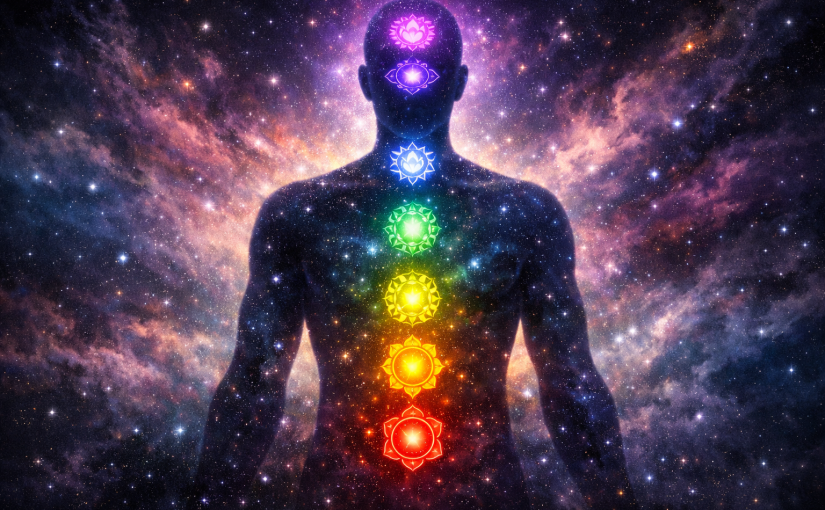
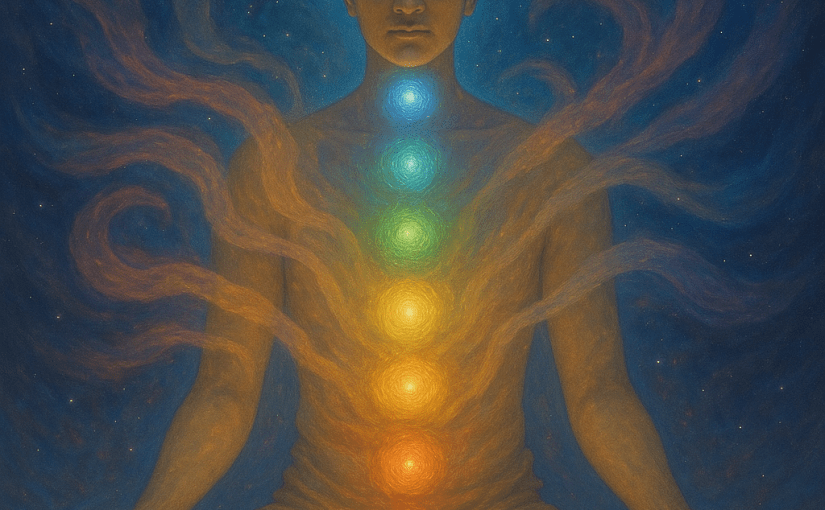
Sometimes the deepest truths of life are not found in scriptures first, but in direct observation of how human life naturally moves from one phase to another. This conversation explored a powerful idea: that the chakra system may not only belong to meditation halls or yogic diagrams, but may also reflect the natural progression of ordinary human life itself. From survival struggles to love, from family nourishment to sweet speech, from thoughtful wisdom to formless awakening, life may itself be a spiritual ladder. Alongside this, nondual awareness can silently help every phase, gently lifting consciousness upward while one still lives fully in the world.

Muladhara Phase of Life: The Foundation of Survival, Duty and Hard Work

The journey begins with Muladhara Chakra, the root center of life. This phase is deeply connected with survival, body, livelihood, discipline, family responsibility, earning, home-making and building stability. For many people, the early and middle parts of life are dominated by Muladhara themes. A person works hard, carries burdens, secures food, house, children’s future and social standing. Even without spiritual knowledge or nondual awareness, such sincere worldly functioning can strengthen Muladhara.

Yet there are two ways root life can be lived. One is ordinary struggle filled with fear and tension. The second is conscious living, where the same duties are performed with steadiness, presence and awareness. In that case, the root not only grows stronger, but becomes less trapped in anxiety. Nondual awareness helps here by reducing fear and making the base stable while subtly encouraging upward movement of energy.

How Nondual Awareness Quietly Helps Every Stage

One key insight from this dialogue was that Nondual Awareness is useful in every life stage. Even while one is working, earning, raising family or engaging in worldly life, awareness can continue its subtle ascent. It allows a person to participate without being fully imprisoned by each stage. Fear becomes lighter, craving becomes softer, ego becomes less rigid, and consciousness slowly becomes more spacious. Because of this continuous mild ascent, later spiritual awakening may become easier and smoother.

Swadhishthan Awakens: Love, Relationship and Emotional Blooming

Once enough grounding and security are built, life often moves naturally toward Svadhisthana Chakra. This phase is linked with attraction, romance, intimacy, emotional exchange, sensuality, pleasure and family life. Marriage often belongs here, but not always. Some people receive Swadhishthan growth much earlier during adolescence through silent, distant or contactless love affairs. Even without touching or speaking much, a deep one-sided or hidden love can awaken tenderness, longing, imagination, beauty and emotional sensitivity. Such experiences can shape the heart deeply.

Others, however, do not get the chance for Swadhishthan flowering in the early years of marriage. Family chaos, job insecurity, financial stress, responsibilities and extreme hard work may keep them locked in Muladhara survival mode for many years. Though married outwardly, inward emotional blossoming remains delayed. Then around the 40s, when finances improve, duties reduce and maturity deepens, emotional life may awaken freshly. Love, softness, companionship and desire for connection may arise more strongly than in youth.

Tantric Fulfillment and the Shift to Navel Power

The conversation then explored how once Swadhishthan becomes sufficiently strengthened, especially through intense relational or tantric sexual fulfillment, another shift may happen. Hunger begins to grow dramatically—not in the sense of overeating, but in wanting fully satisfying nourishment, taste, bliss and subtle fulfillment through food. This points toward Manipura Chakra, the navel center of vitality, digestion, power and life-force.

When emotional and sensual cravings settle, ordinary acts like eating can become richer. Food is not merely consumed; it is experienced with awareness, taste, satisfaction and subtle nourishment. This can symbolize life-energy moving into the core of being, bringing warmth, confidence and embodied strength.

Family Meals, Belly Joy and the Opening of the Heart

Another beautiful insight emerged: eating together joyfully as a family creates love. The old saying that the way to the heart is through the belly contains profound truth. Nourishment at the level of the belly often opens Anahata Chakra, the center of affection, care and belonging.

When family members share meals peacefully, hunger is satisfied, the nervous system relaxes, warmth grows, conversation opens, laughter returns, and trust deepens. Food becomes more than calories—it becomes love, hospitality, memory and emotional reassurance. Thus Manipura nourishment naturally flowers into heart connection.

Sweet Speech and the Vishuddhi Phase of Life

Once the heart softens, expression also changes. Loving feelings begin to emerge through the throat as sweet words. Tongue becomes gentle, affectionate and kind. This was understood as the flowering of Vishuddha Chakra, the center of speech, truthful expression, resonance and refined communication.

When earlier fears are healed and the heart opens, speech often becomes naturally sweet. Gratitude is easier, anger becomes less harsh, and words carry healing instead of bitterness. Sweetness of tongue here means that inner bitterness has reduced. Communication becomes a channel for love.

Social Security, Relaxation and Rise to Ajna

The discussion then moved into a subtle psychological truth. Sweet and skillful speech creates smoother relationships and social harmony. This gives a person a sense of social security. When conflict reduces and belonging increases, the mind relaxes. With that relaxed state, energy can rise toward Ajna Chakra.

Ajna was described as producing blissful and nondual thinking deep enough for purposeful spiritual reading, writing, blogging and discussion. When survival stress and social anxiety reduce, mental bandwidth becomes available for contemplation. Thought becomes clearer, more insightful and less reactive. One becomes drawn toward meaningful study, synthesis and wisdom sharing. In this sense, refined worldly life itself can prepare the ground for spiritual intellect.

Sahasrara Awakening: The Crown of Inner Fulfillment

From Ajna, a further upward push may lead to Sahasrara awakening. This was understood as a movement into unity, stillness, transcendence and the dropping of narrow ego identity. Sometimes this comes dramatically, but often it appears quietly as spaciousness, silence behind thoughts, peace beyond object-based pleasure and a sacred sense of existence.

Awakening here was described as something that may arise after life has been fully lived and all stages sufficiently experienced. Once worldly lessons are digested, fascination with repetition fades, and formless absorption begins to attract the mind naturally.

Ashrama System as Inner Stages of Consciousness

The conversation beautifully connected this chakra journey with the traditional Ashrama System. After Grihastha, where worldly duties related to chakras below sahasrara are fulfilled, one may naturally enter Vanaprastha of formless absorption. This means a gradual inward turn, less obsession with outer life, more reflection, wisdom and formless meditation.

If nondual living continues further, then an inner Sannyasa may arise. This does not necessarily mean physically abandoning family or wearing robes. It means no longer needing external support to remain inwardly fulfilled. Love may remain, responsibilities may remain, but dependency fades. One can remain immersed in the formless whether alone, with family or among people.

Must Ashramas Be Lived by Body or Mind?

The final conclusion was profound: perhaps these ashramas need not always be followed externally by the body, but their inner essence must often mature in the mind. A person may live with family yet inwardly embody renunciation. Another may wear robes yet remain full of attachment. Therefore outer roles are secondary; inner transformation is primary.

Discipline reflects Brahmacharya, responsibility reflects Grihastha, detachment reflects Vanaprastha, and freedom reflects Sannyasa. Liberation, or Moksha, may come when these inner lessons are integrated.

Final Reflection

Life itself may be the hidden scripture. First we struggle to stand, then we learn to nourish, then we long to love, then we speak sweetly, then we think deeply, then we awaken, then we dissolve. Whether one uses chakra language, varna-ashrama system, psychology or spirituality, the essence remains the same: if lived consciously, every ordinary stage of life can become a sacred staircase toward freedom.

How Inner Throat Awareness Changed My Dhyana: A Lived Discovery of Dharana, Sushumna, and Ajna Balance

When Head Pressure Became the Teacher, Not the Problem

For a long time, my yoga and meditation practices were accompanied by a familiar companion—pressure in the head. It was not painful, but it was unmistakable, dense, and demanding. The more sincerely I practiced asanas and dhyana, the more this pressure intensified. Initially, I accepted it as a byproduct of progress, perhaps even a sign of spiritual ascent. But over time, it became clear that something in the internal mechanics of my practice was misaligned. The pressure was not expanding into clarity; it was accumulating. That accumulation itself became the inquiry.

During this phase, I performed sutra neti, initially with the understanding that it was only a cleansing practice. On my first attempts, I could not pass the sutra through the nostrils. After a few days and multiple attempts, I was able to penetrate the right nostril on the third try. Something unexpected happened. Internally, the right nasal passage felt as if it had widened, not just physically but spatially. Subsequent attempts became easier. The left nostril, however, remained untouched, almost untouched territory, what I instinctively called “virgin.” Along with this, I felt a mild scratchy irritation at the opening inside the throat, near the back of the mouth. This sensation was not alarming, but noticeable.

What followed surprised me more than the physical changes. My awareness, which previously stabilized in the brain region during yoga and meditation, spontaneously began settling at the throat. Bliss arose there, not in the head. The head pressure reduced immediately and dramatically, regardless of how intensely I practiced. Pressure was now felt subtly inside the mouth, at the back where the throat begins. With this shift, dhyana became easier, quicker, and more stable. It became clear to me that sutra neti had not only cleansed a passage; it had prepared a center of awareness. For the first time, I understood it as a preparatory practice not just for hygiene, but for regulation. It is just amazing.

Discovering the Hissing Breath and the Throat as a Regulator

As awareness stabilized in the throat, I noticed that breath naturally began moving through the mouth with a hissing quality. This hissing was not forced. It arose spontaneously. It was like a serpent hissing—yes, the Kundalini serpent. Now it became clear why Kundalini Shakti is called a serpent. One more thing became evident: as it progresses upward in the Sushumna, it alternates left and right through Ida and Pingala respectively. It is the movement of a snake—going left, then going right, and with each alternation progressing forward, not straight ahead. This can be seen clearly: first on the left side of the face, then on the right, and finally along the midline at the back of the head.

What was striking was its effect. The sound and subtle pressure maintained dominance of the throat point and prevented awareness from rushing back into the head. The hissing applied a gentle pressure to the scratchy point, keeping it awake. With this, prana no longer felt like it was trying to go upward to the head. Instead, it circulated through the body and returned from the throat. The topmost functioning point no longer felt like Sahasrara but distinctly Vishuddhi.

This realization corrected an earlier assumption. I had thought that higher experiences must always culminate at the crown. But here, stability, bliss, and ease were arising without any demand to move upward. The throat was not a stopping point; it was a turning point.

Humming, Ujjayi, and the Ocean Undercurrent of Breath

When I applied gentle pressure to this scratchy inner throat point using a humming breath, similar to ujjayi pranayama, or even during simple inhalation when breath felt like an undercurrent rather than airflow, the point activated further. The sensation was like the deep currents of the ocean—movement without turbulence. This further sharpened regulation. The more the throat point activated, the less head pressure was possible.

The insight became clear: vibration, pressure, and subtle breath were not techniques here but regulators. The throat was acting as a valve. Bliss was no longer explosive or sharp; it was circulatory and breathable. Over time, the scratchy sensation softened, becoming a stable sensory anchor rather than irritation. However, it dulls with time, so it needs to be reawakened with Sutra Neti at intervals.

From Sound to Silence Without Losing Stability

As humming and hissing softened naturally, the throat did not fall asleep. Instead, silence itself seemed to vibrate there. Breath became subtle, almost invisible, yet the throat remained alive. Awareness rested without fixation. The head remained light. Bliss remained present without pressure. This was not loss of practice; it was practice absorbing itself. The system had shifted from technique to function.

This configuration resolved a long-standing fear—the fear of going too far, of irreversibility, of renunciate drift. Earlier, intense upward movement had always carried a sense of danger. Now, ascent completed a loop. Nothing terminated at the head. Nothing demanded escape from life. The architecture had changed.

Rethinking the Location of the Throat Chakra

Earlier, I believed the throat chakra was located at the middle front of the neck. Now, lived experience showed me that the operative center was inside, at the back of the mouth where the throat begins. This raised a question: was my earlier understanding wrong, or was this another sub-chakra?

The clarity that emerged was subtle but firm. The earlier understanding was not wrong; it was incomplete. The front of the neck corresponds to expression, voice, emotion, and outward communication. The inner throat is the regulatory core where breath, sound, prana, and awareness converge. These are not two chakras but two functional layers of the same Vishuddhi field. One expresses. The other governs flow.

This understanding was further confirmed when I noticed that strong emotions still created sensations in the mid-neck region. These effects were moderate and transient, linked to emotional expression. In contrast, the inner throat effects were stabilizing, structural, and long-lasting. Emotion moved through the front; regulation lived inside.

Early Sushumna Flow Through Inner Vishuddhi

Another critical discovery followed. Activating the inner throat chakra stimulated Sushumna flow earlier and more smoothly during the very beginning of dhyana. Previously, meditation had an entry phase filled with effort. Now, the system seemed aligned before meditation even began. Ida and Pingala quieted naturally. The central channel did not need to be forced open. It simply conducted.

This was not premature Sushumna dominance. It was regulated access. The throat acted as a gatekeeper, ensuring balance before ascent. As a result, bliss circulated, thoughts loosened, and awareness stabilized without dissociation or fear.

Why Ajna Became Easy Only After Alignment

A crucial realization followed. Immediately placing focus on Ajna was demanding and challenging. It created effort, pressure, and disturbance in pranic flow. But when Sushumna was first stabilized through the throat or even lower chakras, Ajna became effortless later. Ajna no longer functioned independently. It became linked to the lower centers through common awareness.

Trying to isolate Ajna created head pressure and disturbed circulation. Allowing Ajna to arise within a unified axis created clarity without strain. Ajna revealed itself not as a ruler but as a relay.

Dharana Reunderstood Through Experience

This brought clarity to the meaning of dharana. Dharana was not holding attention at a point. Dharana was establishing an internal architecture where attention no longer needed to be held. When effort was present, dharana was incomplete. When pressure arose, dharana was incomplete.

For me, dharana occurred when awareness stabilized at the inner throat, Sushumna conducted naturally, lateral pulls quieted, and circulation established itself. At that point, dhyana emerged automatically. Meditation no longer began; it continued. Ajna participated without dominating. Thoughts lost traction without suppression.

Dharana, in lived reality, was not concentration. It was removal of everything that prevented the system from holding itself.

The Final Integration

What changed through this journey was not technique but orientation. The system moved from vertical ambition to circulatory intelligence. Bliss became nourishing instead of demanding. Head pressure became impossible, not managed. Fear dissolved not through reassurance but through structural balance. Practice became livable.

The throat did not replace the head. It taught the head how to belong to the whole. Ajna did not disappear. It learned to function within the axis rather than above it. Dharana ceased to be effort. Dhyana ceased to be a goal. Awareness ceased to chase peaks and began to circulate as life.

This discovery was not accidental. It was the body’s correction of an incomplete architecture. Once seen, it does not reverse. One does not go back to diagram-based spirituality after touching functional truth. The chakra was not relocated. It was entered.

And with that, meditation stopped demanding attention and began returning it.

Dancing Serpent: How Inner Energy Learns Direction and Transforms Life

The Forgotten Intelligence of Inner Energy

Every human being carries a living force inside, ancient, intelligent, and sensitive to every thought and emotion. It rises when the mind becomes clear, and it falls when the mind becomes restless. This force is not separate from life; it is life itself moving through the body and mind. Yet modern living has forgotten how to listen to it. We either suppress this energy out of fear or spill it unconsciously through exhaustion, desire, and distraction. The result is a life that feels busy but empty, active but unfulfilled.

Indian tradition symbolized this energy as the serpent, not because it is dangerous, but because it moves in waves, not lines. A serpent does not climb a ladder; it dances. It rises, pauses, coils, and rises again. In the same way, inner energy is not meant to move in one direction forever. It is meant to learn rhythm, balance, and direction. When this rhythm is lost, life feels like struggle. When it is restored, life becomes a flow.

Why Energy Needs Direction, Not Suppression

The greatest misunderstanding about inner energy is the belief that it must either be released or controlled. Both approaches fail. Suppression creates pressure, anxiety, and illness. Unconscious release creates weakness, dissatisfaction, and lack of purpose. Direction is the missing key. Energy that is guided does not need to be forced, and energy that is guided does not need to escape.

When energy moves downward without awareness, it becomes raw desire, endless activity, mental noise, and emotional instability. When energy moves upward without grounding, it becomes detachment, dryness, and disconnection from life. But when energy is allowed to move down and up in conscious rhythm, it nourishes the entire system. This is the true meaning of the Nagin Dance — not sexuality, not mysticism, but intelligent movement.

How Thought Controls the Rise and Fall of Energy

Energy follows thought more closely than breath. Lower thinking pulls energy downward. Higher thinking lifts it upward. When the mind is trapped in fear, anger, or desire, energy sinks into the lower centers of the body, fueling survival and reaction. When the mind touches clarity, meaning, or nonduality, energy rises naturally toward the brain and heart, creating peace and insight.

This does not mean lower energy is bad or higher energy is good. Both are necessary. Worldly life requires energy in the lower centers to work, digest, build, and act. Inner life requires energy in the upper centers to reflect, understand, and rest. Growth happens only when these two worlds communicate. Energy that never descends becomes stagnant. Energy that never rises becomes blind. Movement is life.

The Dance Between Worldliness and Awakening

Many people believe spirituality means leaving the world, but this is a misunderstanding. True awakening happens within the world, not away from it. The world feeds the serpent with raw experience, and awakening refines that experience into wisdom. The dance between action and silence is what creates maturity.

When energy is handled well, work becomes lighter, relationships become smoother, and creativity becomes effortless. The mind stops fighting life and starts cooperating with it. This is why the sages never taught escape. They taught right living. They knew that energy must be educated, not rejected.

Relationships as Energy Laboratories

Energy is most clearly seen in relationships. When two people interact without awareness, energy leaks through conflict, expectation, control, and emotional hunger. When awareness is present, energy circulates instead of spilling. The body relaxes, the breath slows, and connection becomes nourishing rather than draining.

This is why ethics, consent, and mutual growth are essential. Energy work without respect becomes manipulation. Energy work without freedom becomes harm. The serpent magnifies whatever is hidden, so if fear or dominance is present, it grows. If patience, clarity, and equality are present, the dance becomes healing.

Why Awakening Is Not a Dramatic Event

Many seekers chase mystical experiences, believing them to be awakening. But awakening is much simpler and much quieter. It is the moment energy learns direction. Bliss, visions, silence, and merging are aftereffects, not the goal. They come and go. What remains is stability, clarity, and balance.

A truly awakened person does not look special. They work better, listen better, love better, and suffer less. Their mind is steady, their body is responsive, and their relationships are cleaner. Awakening is not escape from humanity; it is perfection of humanity.

The Role of Daily Life in Sustaining Ascent

Energy cannot be held by meditation alone. It must be supported by daily habits. Sleep, food, movement, breath, work, and silence all shape its flow. When life is chaotic, energy becomes chaotic. When life is simple, energy becomes clear.

Integration is the difference between temporary experience and lasting transformation. When energy work becomes part of routine, the serpent no longer needs effort to rise. It rises by habit. The body remembers. The breath remembers. Life itself remembers.

From Serpent to Nectar: When Energy Becomes Nourishment

In the beginning, energy feels like a force to be controlled. Later, it feels like a companion. Finally, it becomes invisible. It turns into nectar. Life itself becomes nourishing. Even difficulty carries meaning. Even loss carries clarity. Even aging carries wisdom.

This is not excitement. It is steadiness. It is reliability. It is quiet joy that does not depend on conditions. The serpent has learned its dance, and the dance has become life.

Humanity Is the True Foundation of Spiritual Growth

Some people need nondual awareness to live well. Others need simple humanity without philosophy. Both are valid. What matters is direction. If energy is moving upward in intention, life grows. If energy is moving downward unconsciously, life contracts.

Humanity must never be sacrificed for awakening. Compassion, respect, patience, and kindness are not optional. They are signs of correct direction. Any path that destroys humanity is not spiritual, no matter how powerful it looks.

The Serpent Is Already Moving

You do not need to awaken energy. It is already awake. You only need to stop confusing it. When direction is learned, rhythm returns. When rhythm returns, life stops being a struggle and becomes a dance. The serpent has always been dancing inside you. This book (DANCING SERPENT: The Play of Inner Energies), and this understanding, simply teaches you how to notice it, respect it, and let it move without fear.

The Single Law of the Serpent: Always Up-Facing

The main point is simple: the serpent should always remain up-facing, no matter at which level or chakra it is present. It may rise or fall, it may move slowly or quickly, but its direction must remain upward. The level does not matter; the facing does. Even when energy descends for worldly work, digestion, action, or rest, it should still be oriented upward in intention. Only during moments of release or escape from the body does the serpent turn down-facing for a few moments, and even then it must be turned upward again as soon as possible. This timely turning is the key to balance and growth. Believe it or not, an up-facing nagin is the root of everything good and divine in human life, while a down-facing nagin becomes the root of confusion, decline, and suffering. Direction is destiny.

When energy dances consciously, life itself becomes art.

Upfacing Serpent and the Moment of Self-Realisation

The serpent that is upfacing symbolises an awakened Kundalini. Only one who is awake stands upright and faces growth, expansion, and light. A sleeping being naturally remains downfacing—inclined toward inertia, darkness, and loss. Orientation here is not physical but existential: awareness that turns upward seeks evolution; awareness that turns downward dissolves into unconsciousness. kundalini awakening is as simple as energy faing up, nothing mysterious.

The experience of full nonduality, where the sense of self merges completely with the meditation image and simultaneously expands in all directions, accompanied by overwhelming bliss and spontaneous expression for a few moments, is self-realisation. It is not imagination, trance, or emotional high. It is the direct outcome of a sustained Kundalini awakening, where energy, awareness, and identity dissolve into a single, indivisible reality—beyond observer and observed.

Kundalini Awakening: Simply Energy Facing Up

Kundalini awakening is nothing mysterious. It is simply energy facing upward. When energy turns upward, growth happens. When it turns downward, dissipation happens. There is no symbolism required beyond this basic orientation.

Upfacing energy expresses wakefulness, evolution, and integration. Downfacing energy expresses sleep, decay, and loss of awareness. Awakening is not an event, a vision, or a power—it is a directional shift of energy.

When this upward-facing energy is sustained, awareness naturally becomes steady, nondual, and self-luminous. Bliss, clarity, and self-realisation arise as consequences, not goals. Mysticism begins only when this simple fact is forgotten.

Why Kundalini and Saṁskāras Do Not Operate in Animals the Way They Do in Humans

Saṁskāras can be understood as symbolic markings impressed upon a human being through consciously designed spiritual ceremonies. These are not casual social events; they are grand, emotionally charged occasions in which relatives, friends, elders, and the wider community gather with a single individual as the focal point. The person receiving the saṁskāra becomes the center of collective attention, intention, and emotion. This focused convergence is not accidental—it is deliberately structured to imprint deep emotional and psychological tendencies that shape the individual for life.

Such ceremonies generate powerful emotions within the recipient because humans are uniquely responsive to meaning, symbolism, and shared attention. When hundreds of minds momentarily align around one person with reverence, expectation, and intention, the effect is far stronger than ordinary cooperation or social interaction. Worldly cooperation is usually task-oriented and fragmented; saṁskāras, by contrast, are designed exclusively for emotional and inner imprinting. One individual becomes the sole beneficiary of the collective emotional field, making the imprint unusually strong and persistent.

Metaphorically, this process resembles quantum entanglement—not as a literal physical mechanism, but as a structural analogy. In quantum systems, particles that interact within a coherent environment exhibit correlated behavior even after separation. Similarly, during a saṁskāra, many minds temporarily converge within a highly focused symbolic space. The emotions, values, and intentions do not merely add up linearly; they become coherent. Once imprinted, these emotional correlations persist long after the ceremony ends, influencing the individual’s inner responses independent of physical proximity. This comparison does not claim scientific equivalence; it simply highlights a parallel principle: intense interaction under conditions of focus, coherence, and meaning creates unusually stable imprints.

Across a human lifetime, there are traditionally sixteen saṁskāras, each corresponding to key transitions—birth, learning, maturity, responsibility, and death. Together, they refine emotional depth, psychological structure, and spiritual receptivity. These imprints form a subtle emotional architecture within which higher processes, including Kundalini awakening, can later unfold. Saṁskāras are not merely cultural customs; they are intentional emotional technologies.

Not every individual absorbs these imprints equally. Certain emotionally receptive people resonate more deeply than others. Their sensitivity allows emotions to adhere more strongly, creating bonds that often appear as love or devotion. This love is not merely relational or outward-facing; when it matures and turns inward, it becomes transformative. In yogic and tantric understanding, this inward-turning love can later express itself as Kundalini movement. What begins as emotional bonding gradually converts into inner energy. In this way, bhāva (emotion) evolves into bhakti (love or devotion), and bhakti further condenses into śakti (inner power).

This progression is logical within its own framework. Focused collective attention produces strong emotional imprinting; individual sensitivity determines depth of absorption; deep emotional imprinting gives rise to love; and inward-directed love becomes spiritual energy. Psychology explains the imprinting, neuroplasticity explains the durability, and spiritual traditions describe the energetic flowering.

Animals, however, do not participate in this process in the same way. They do not receive saṁskāras—not because life or awareness is absent in them, but because the necessary emotional and neurological infrastructure is undeveloped. Animals do have emotions, but these are largely immediate, survival-oriented, and unlayered. They lack the capacity to absorb, integrate, and symbolize the collective emotions of many minds simultaneously. Their brains are not designed to hold complex symbolic meaning, long-term emotional imprinting, or ritualized identity formation.

Moreover, animals are not placed at the center of intentional emotional convergence. No ceremony is designed to imprint values, identity, or transcendental orientation upon them. Without repeated, structured emotional imprinting across life stages, there is no stable inner architecture for love to refine itself inwardly and no latent reservoir from which Kundalini can later rise.

Thus, Kundalini and saṁskāras are not absent in animals due to inferiority, but due to difference in design. Human life is uniquely structured for emotional accumulation, symbolic meaning, and inward transformation. Saṁskāras provide the emotional soil, love becomes the living current, and Kundalini is the flowering that appears when conditions mature. Animals live in harmony with nature, but humans alone are given the tools to consciously transcend it.

Chapter 25: A Simple Understanding of How We Create Our Inner World

Modern physics and Vedanta both tell us that the world we experience is not exactly the world that exists outside. Quantum physics says things exist in many possible states until interaction selects one. Vedanta says the universe created by Ishvara is one, but the world each person lives in is different. This difference comes from how our own mind and energy process the same situation.

Every moment, our mind goes through three steps. First, the subconscious picks one emotional possibility out of many. A single scene can hold fear, love, disgust, calmness, or joy. Which one we feel depends on our past experiences, tendencies, guna balance, energy flow, and the dominant chakra. This selection happens instantly and quietly. Next, the mind turns that selected possibility into an actual emotion—fear becomes anxiety, anger becomes heat, love becomes warmth, and peace becomes stillness. Finally, our intellect interprets that emotion and forms meaning, stories, and opinions. This is how our personal world is created.

Chakras play a big role in this process. Lower chakras make us collapse experiences into fear, desire, or anger. Middle chakras make us collapse experiences into love, empathy, and understanding. Higher chakras make the collapse lighter, calmer, and more detached. When the energy reaches Ajna or Sahasrara, emotional reactions become very subtle, and the person begins to witness thoughts and feelings without getting pulled into them.

Kundalini movement changes the collapse even more. When energy is low, the collapse is emotional and reactive. When energy rises to the heart and throat, collapse becomes meaningful and refined. When energy reaches the higher centers, collapse becomes quiet and almost neutral. In deep meditation or samadhi, collapse becomes extremely weak or stops completely. There is no emotional or mental coloring—only pure awareness remains.

Quantum physics supports this kind of idea at a physical level. A particle stays in many possible forms until interaction fixes it. But this does not mean we create the entire universe by observing it. Ishvara creates the physical universe. We only create our personal experience of it. Things happen outside, but our inner world forms through emotional and mental collapse inside us.

As we grow spiritually or through meditation, this collapse becomes less noisy and more peaceful. The mind reacts less. Interpretation becomes minimal. Awareness becomes clearer. In the highest state, there is no collapse at all—no emotion, no story, no reaction—only pure consciousness aware of itself.

In simple words:
We do not create the outer universe, but we continuously create the inner universe we live in.
The more balanced our energy and mind become, the more peaceful and clear this inner universe becomes, until finally it dissolves into pure awareness in samadhi.

How Balanced Chakra Energy Stops Emotional Overreaction and Leads Toward Samadhi

In everyday life, we react emotionally because one part of our inner system becomes stronger than the others. If lower chakras become active, we react with fear, anger, or hurt. If middle chakras dominate, we respond with empathy or emotional softness. If upper chakras dominate, we remain calm, clear, and unaffected. But through practices like chakra meditation, pranayama, and other yogic methods, our energy gradually spreads evenly across all chakras. When this balance happens, something very interesting occurs: no single emotional pattern becomes dominant. All emotional possibilities arise together, and because they appear at the same time, they naturally cancel each other out.

When chakra energy becomes balanced, cancellation does not mean we stop feeling emotions. In fact, we feel all emotional responses more clearly, but none of them overpower us. The emotions rise naturally, but because opposite tendencies appear together, they quickly neutralize each other. This creates a healthy inner balance where we remain aware of every emotion without getting trapped in any one of them. Yoga does not make us dull or detached from life; instead, it expands our capacity to experience. We sense fear, love, anger, compassion, clarity, and calmness all at once, but they do not disturb our inner state. This expanded emotional umbrella allows us to enjoy the world more deeply while staying free from entanglement. In this sense, yoga helps us live fully, feel everything, respond intelligently, and yet remain centered and unaffected. This natural neutrality is what gradually leads toward inner peace and eventually toward samadhi.

This means the mind does not fall into one fixed reaction. It doesn’t collapse into only fear, only anger, only love, or only logic. Instead, all these tendencies stay balanced. This creates an inner state where emotional reactions lose their force, and the mind remains steady and neutral. In this balanced condition, awareness becomes spacious and calm because nothing inside pulls the mind strongly in any direction. This is why the experience begins to feel like samadhi—quiet, open, and free from emotional disturbance.

For example, if someone insults us, an unbalanced system reacts from whichever chakra is strongest at that moment. Lower chakras produce hurt or anger. Middle chakras produce understanding or softness. Upper chakras produce calm detachment. But if all chakras are balanced, the lower and middle reactions rise together and neutralize each other. What remains is the clarity and calmness of the higher centers. The result is that the person does not feel shaken, and the mind stays peaceful.

In simple terms, balanced chakra energy prevents the mind from collapsing into one emotional pattern, and when no single collapse is favored, the mind naturally becomes still. This stillness is the doorway to samadhi. When the mind does not cling to any specific reaction or outcome, inner freedom appears on its own. This is the essence of why balanced energy leads to calmness, clarity, and eventually glimpses of real samadhi.

Awareness at the Anahata Chakra – Healing Through the Goddess Within

I began my yoga practice at 5 a.m. today. The air was still, mind silent, and body ready. After spinal breathing, I moved through guru-given yoga and my own selected set, including chakra meditation from top to bottom — without holding breath. These days I avoid breath-holding to prevent excess head pressure. Yet I’ve realized there’s no real need to fear it; the head has an incredible capacity to bear and balance the force of prana.

Once, during a dream-state gastric uprising, I experienced immense head pressure, momentary choking, and a transient rise in blood pressure — but the body adjusted beautifully. It reminded me that a well-practiced body knows how to balance itself. So, my preparatory yogic routine continued for about an hour and a half — enough to create the internal yogic pressure required for launching into dhyana.

I know this yogic pressure is temporary. It gradually dissolves into the luminosity of dhyana, just like gas slowly burning out from an LPG cylinder. And when that inner fuel finishes, the practitioner naturally returns from dhyana — first through strong internal contractions from lower to upper area of body backside as to facilitate the movement of energy in the three main spinal channels, followed by the gradual deepening of breath. When the breath returns to normal, the eyes open by themselves. The same happened today.

During dhyana, Vajrasana again gave an excellent starting response. Subtle breathing began automatically at the Ajna Chakra and continued for quite long. Yet all along, I felt a kind of sexually blissful senation at the Anahata Chakra. I was including this bliss within my Ajna-to-Muladhara meditation line, so both centers — Ajna and Anahata — were simultaneously satisfied. No other centres seemed power hungry. Later, I shifted my dhyana solely to Anahata. The awareness deepened there, but the main purpose of dhyana — the realization of Shunya (void) — was not completely fulfilled there. So, I again combined both Ajna and Anahata awareness together.

I recall a Kriya Yoga expert once said that “spinal meditation alone can’t grant liberation.” He emphasized that Ajna Chakra meditation includes the whole spinal system. Today, I understood his point deeply — indeed, every chakra of the backbone is reflected within Ajna. Yet, even knowing this, my sensational awareness remained localized at the rear Anahata Chakra, unwilling to move elsewhere, although breathing awareness was on agya chakra.

Yesterday my focus was at Vishuddhi Chakra, where I had a throat infection. That infection cleared today, but the infection and along with it the energy had descended to the chest. This shows how sensitively these inner sensations mirror physical conditions — a subtle diagnostic test and often a healing mechanism. Still, medicines nowadays help more directly, supporting this inner process. In ancient times, diagnosis and healing through awareness given the form of the Goddess held prime importance, as there were not so many worldly facilities available.

As I visualized the Goddess at the Anahata, the rising sexual bliss from the Muladhara seemed to empower Her presence. I could faintly see Her fighting demons — symbolic of microorganisms — within my chest. It felt as if the Anahata Chakra itself had become a Lingam, the real blissful lingam now manifesting only there.

After about thirty minutes, when my legs cramped, I slowly shifted to Sukhasana, minimizing body movement while keeping awareness rooted at Ajna to avoid breaking dhyana. I then sat for another hour, not breaking earlier feeling that Shakti was healing my heart center and its connected tissues.

Towards the end, a magnificent experience unfolded — a clear perception of Shunya, more radiant than yesterday. It felt as though I was seeing the infinite sky directly above, though my head was hardly tilted upward.

Reflections:
The heart center feels open today — calm, luminous, and healing. The Shakti there is gentle yet profound. Awareness no longer seems confined to a point but spread like the sky itself. Every breath now feels like a hymn in the temple of the heart. Moreover, I was quite busy intellectually yesterday, so it seems that heavy intellectual work facilitates dhyana; however, it can also take a toll on the body’s health.

Healing Through Dhyana: My Journey of Heart and Throat Chakra

A few days ago, I experienced a strong emotional blow due to social reasons. I had high expectations from highly paid laborers, expecting some great work, but they delivered nothing more than child’s play. I was deeply disturbed. That evening, when I sat for dhyana, I noticed my breathing naturally suspended at my Anahata chakra. Instantly, I felt immense relief, and my heart was healed surprisingly and immediately.

The very next day, I faced a heated debate with a few fellows, which tensed and disturbed me. Being more tired that evening, I skipped my dhyana practice. However, I did receive some relief through sympathetic family interactions. On the following morning, I noticed my breathing naturally settled at my Vishuddhi chakra, and during dhyana, I experienced a smooth breath suspension and healing at the throat. This taught me that worldly conflicts are not necessarily opposing dhyana. In fact, when tactfully handled, they can sometimes favor it rather than hinder it.

This experience led me to reflect on the deeper mechanisms of chakra energy, breath, and meditation. The emotional blow activated my Anahata chakra, which is the center of love, trust, and emotional processing. Breath suspension during dhyana allowed prana, or life energy, to flow precisely where it was needed, releasing tension and producing immediate healing. This shows how meditation can catalyze self-healing by aligning breath and awareness with the chakra that has been activated by specific emotional events.

Even when I skipped dhyana during the heated debate, some relief still came through external emotional resonance, like the support and sympathy of family members. While this relief was partial and slower than meditation, it shows that external support can act as a mild substitute for dhyana in harmonizing chakras.

The shift to Vishuddhi chakra the next morning was directly related to the intellectual and verbal stress from the debate. The throat chakra governs communication, expression, clarity, and mental processing. After tension in Anahata, the energy naturally rose to Vishuddhi, allowing breath suspension there and smooth, instant energetic recalibration through dhyana. This shows that chakras respond to context-specific triggers: the heart for emotional stress, the throat for intellectual or verbal challenges.

One of the key insights from these experiences is that worldly conflicts can actually favor dhyana. When handled tactfully without being drowned in the drama, meditation can utilize activated chakras for healing and alignment. Life stress can thus become a guide, highlighting where energy is stuck or needs refinement, rather than an obstacle.

The general mechanism appears as follows:

  1. Trigger → Chakra activation → Breath aligns → Awareness directs prana → Healing.
  2. External stress does not block dhyana; instead, it creates a map of where energy is stuck, which meditation can resolve.
  3. Each chakra responds to a preferred type of stress:
    • Muladhara → survival, security
    • Svadhisthana → relationships, pleasure
    • Manipura → power, confidence
    • Anahata → love, trust, emotional hurts
    • Vishuddhi → speech, clarity, mental tension
    • Ajna → intuition, decision-making
    • Sahasrara → transcendence, cosmic awareness

Through these insights, I realized the intelligent interplay between emotional triggers, energetic responses, and meditation. Dhyana does more than quiet the mind—it serves as a precise tool for emotional and energetic recalibration. Conflicts, when approached with awareness, can become openings for inner work, and each chakra reacts to the stress that naturally pertains to it.

In essence, meditation works in harmony with life’s challenges. Emotional pain or tension doesn’t block growth—it illuminates the path for healing, showing exactly where awareness and prana should be directed. My personal journey through Anahata and Vishuddhi chakras illustrates this beautifully.

For anyone practicing meditation, this experience emphasizes that being tactful in worldly interactions and observing where stress manifests in the body can guide dhyana to the most needed areas. Emotional, intellectual, and verbal challenges can activate corresponding chakras, and dhyana can then harmonize them, turning ordinary life events into precise tools for self-healing and awakening.

Chapter 9 – Healing from the Inside Out

Human life is not just a chain of days and events. It is a flow of patterns, shaped by awareness, taking form as the body and mind we live in. In the last chapter, we saw how consciousness links experiences together and turns possibilities into reality. Now, we look deeper—into the body’s power to heal itself from the inside out.

Most of us are taught to think of illness as something that “attacks” us from outside—a virus, a germ, an injury. But seen more deeply, illness is often a disturbance in the body’s natural balance. It is like a musical note going slightly out of tune. The instrument is still there; it just needs the right vibration to return to harmony.

The human body is not just flesh and bone. On a finer level, it is a field of information. Every cell and atom follows a kind of invisible blueprint. That invisible blueprint can be understood as the subconscious mind, because the subconscious stores the deep patterns, memories, and beliefs that quietly shape how the body functions, heals, and responds to life—often without our conscious awareness—acting like the hidden master plan the body follows. When this blueprint is clear, the body is healthy. When it is disturbed—by stress, shock, or unprocessed emotions—the body’s image of health becomes blurred. Real healing happens when that inner pattern is restored. Then, the body’s physical parts follow naturally. The inner pattern or blueprint means the subconscious mind’s pattern becomes clearer through meditation and spiritual practices like dana (charity), tapa (discipline), and vrata (sacred vows), which purify hidden impressions and restore the mind-body field to its natural harmony, allowing the body to heal more easily.

Modern medicine sees disease as a chemical imbalance or physical damage. That is true, but these are often the surface effects of a deeper cause—the disturbance in the body’s energy or information field. I refer to the subconscious mind as the body’s energy or information field because it silently stores and transmits the mental-emotional patterns as information and energy that influence the body’s chemistry, cell behavior, and overall balance—acting like an invisible control network that links mind, energy, and physical form. Quantum physics tells us that many possible states exist at once. In the body, this means every cell can “choose” between states of health or illness. The choice depends on the signals it receives from the surrounding field.

From this point of view, the work of a healer is not only to fight the disease, but also to guide the body back into its natural rhythm. A certain threshold of subconscious clarity is needed for the body’s natural rhythm to hold; when clarity drops below that point, distortions build up in the mind-body field, and disease begins to appear. This is why some therapies—sound, light, gentle touch, meditation—can help. They are not magic; they are ways of sending the “right song” back into the body so it remembers how to be well.

Even the so-called placebo effect is proof of this. When someone truly believes they will heal, the belief itself changes the body’s energy blueprint. “Blueprint” is just a metaphor to make the idea visual, but it directly means the body’s energy field or subconscious pattern that belief can influence and change. It is not the pill but the mind’s certainty that triggers the body to repair itself. Far from being “just imagination,” it is one of the clearest examples of the mind’s healing power.

Deep spiritual states also create a powerful healing field. For example, Nirvikalpa Samadhi is often misunderstood as withdrawing from life and sitting in emptiness. But it is really about living and acting with the understanding that the doer, the action, and the result are one. When the sense of doer, action, and result being one is realized, stress and inner conflict drop sharply, which prevents new subconscious disturbances from forming—helping the body stay in its natural state of health. Simply saying, nirvikalp samadhi clears the subconscious mind. A person in this state naturally radiates balance and calm. Just being around them can help others’ patterns return to harmony.

In yoga, practices like Yam and Niyam are not strict rules but ways to keep the body’s field clear and steady. They prevent disturbances before they appear. A karmayogi—someone who works in the world with selfless awareness—may look fully engaged in life, but inside they are in deep alignment, already healing themselves and influencing others.

Healing and self-realization meet in the quiet space between thoughts. When we pause and rest in awareness, the mind’s noise settles, and distortions fade. This is not emptiness in the dull sense, but a full and alive silence where the body remembers its original state of balance. It means that in moments of pure awareness—when thoughts pause like in keval kumbhak—the mind becomes still, the subconscious clears, and the body naturally returns to its healthy, balanced state; this silence feels vibrant and alive, not blank or lifeless.

The brain adds another mystery. Neurons send electrical signals in two-dimensional patterns, yet we experience a rich, three-dimensional world. This shows that depth and reality are not purely in the brain’s matter, but in how consciousness shapes information. In a hologram, if the source plate is clear, the image is clear. Healing works the same way—clarify the blueprint, and the whole picture changes. It means that just as a hologram’s image depends entirely on the clarity of its original recording plate, the body’s health depends on the clarity of its inner pattern or subconscious; when that inner “source” is clear, the outer physical condition naturally improves.

Life also gives us natural phases of alignment. In youth, energy flows strongly, and engaging fully with life strengthens harmony. Later, as the body slows, deeper stillness and states like Nirvikalpa come more easily, keeping the field aligned with less outward action. It means we have a better opportunity in youth to experience energy-awakening–based Savikalpa Samadhi, while in later life, silent Savikalpa Samadhi and even Nirvikalpa Samadhi can naturally arise as a result of the earlier energetic awakening.

In physics, the wavefunction holds all possible realities. What becomes real is chosen by the conditions at the moment. Healing is about tuning the conditions so the healthiest possibility becomes the natural choice. It means that, just as physics says all outcomes exist until conditions decide which one appears, the body also holds many possible health states, and by creating the right mental, emotional, and physical conditions, the body naturally “chooses” the healthiest state to manifest.

To heal from the inside out is to remember that the body is not a machine needing only external repair, but a living hologram in constant contact with infinite intelligence. At any moment, the song of the field can change—and when it does, the atoms follow. Whether through belief, sound, selfless work, or deep silence, we can invite the body back into its natural rhythm.

True healing is not about escaping the world or clinging to it. It is about walking through life as both healer and healed, knowing that the blueprint of wholeness is always present. Every mindful step strengthens the song of health. Every breath taken in awareness is a gentle return to balance. In this way, healing becomes not a struggle, but a natural expression of living in tune with who we really are—a spark of consciousness, shaping itself into the form of a healthy, living human being.