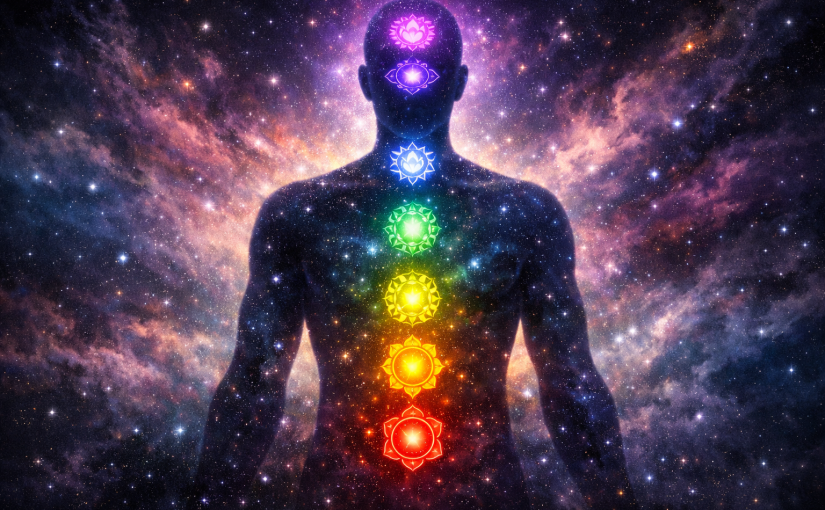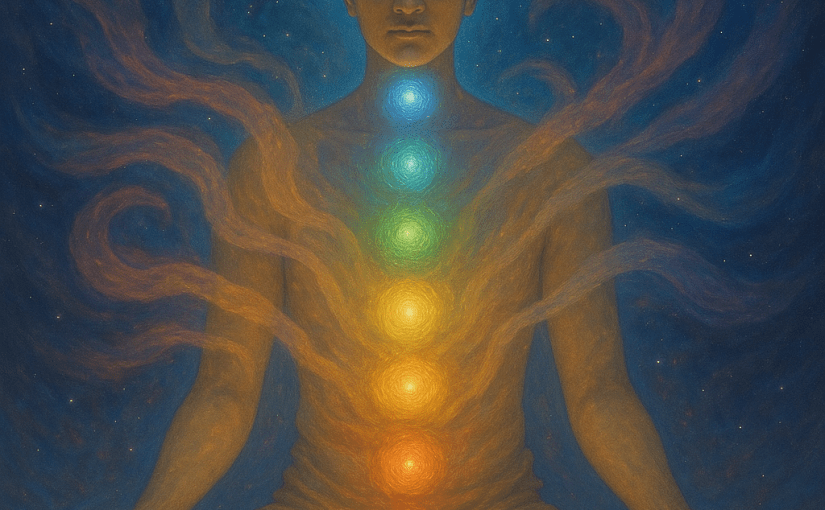
Chakra Growth Through Human Life, Nondual Awareness, Tantra and Ashrama: A Deep Inner Journey from Muladhara to Liberation

Introduction: Understanding Life as a Natural Spiritual Unfolding

Sometimes the deepest truths of life are not found in scriptures first, but in direct observation of how human life naturally moves from one phase to another. This conversation explored a powerful idea: that the chakra system may not only belong to meditation halls or yogic diagrams, but may also reflect the natural progression of ordinary human life itself. From survival struggles to love, from family nourishment to sweet speech, from thoughtful wisdom to formless awakening, life may itself be a spiritual ladder. Alongside this, nondual awareness can silently help every phase, gently lifting consciousness upward while one still lives fully in the world.

Muladhara Phase of Life: The Foundation of Survival, Duty and Hard Work

The journey begins with Muladhara Chakra, the root center of life. This phase is deeply connected with survival, body, livelihood, discipline, family responsibility, earning, home-making and building stability. For many people, the early and middle parts of life are dominated by Muladhara themes. A person works hard, carries burdens, secures food, house, children’s future and social standing. Even without spiritual knowledge or nondual awareness, such sincere worldly functioning can strengthen Muladhara.

Yet there are two ways root life can be lived. One is ordinary struggle filled with fear and tension. The second is conscious living, where the same duties are performed with steadiness, presence and awareness. In that case, the root not only grows stronger, but becomes less trapped in anxiety. Nondual awareness helps here by reducing fear and making the base stable while subtly encouraging upward movement of energy.

How Nondual Awareness Quietly Helps Every Stage

One key insight from this dialogue was that Nondual Awareness is useful in every life stage. Even while one is working, earning, raising family or engaging in worldly life, awareness can continue its subtle ascent. It allows a person to participate without being fully imprisoned by each stage. Fear becomes lighter, craving becomes softer, ego becomes less rigid, and consciousness slowly becomes more spacious. Because of this continuous mild ascent, later spiritual awakening may become easier and smoother.

Swadhishthan Awakens: Love, Relationship and Emotional Blooming

Once enough grounding and security are built, life often moves naturally toward Svadhisthana Chakra. This phase is linked with attraction, romance, intimacy, emotional exchange, sensuality, pleasure and family life. Marriage often belongs here, but not always. Some people receive Swadhishthan growth much earlier during adolescence through silent, distant or contactless love affairs. Even without touching or speaking much, a deep one-sided or hidden love can awaken tenderness, longing, imagination, beauty and emotional sensitivity. Such experiences can shape the heart deeply.

Others, however, do not get the chance for Swadhishthan flowering in the early years of marriage. Family chaos, job insecurity, financial stress, responsibilities and extreme hard work may keep them locked in Muladhara survival mode for many years. Though married outwardly, inward emotional blossoming remains delayed. Then around the 40s, when finances improve, duties reduce and maturity deepens, emotional life may awaken freshly. Love, softness, companionship and desire for connection may arise more strongly than in youth.

Tantric Fulfillment and the Shift to Navel Power

The conversation then explored how once Swadhishthan becomes sufficiently strengthened, especially through intense relational or tantric sexual fulfillment, another shift may happen. Hunger begins to grow dramatically—not in the sense of overeating, but in wanting fully satisfying nourishment, taste, bliss and subtle fulfillment through food. This points toward Manipura Chakra, the navel center of vitality, digestion, power and life-force.

When emotional and sensual cravings settle, ordinary acts like eating can become richer. Food is not merely consumed; it is experienced with awareness, taste, satisfaction and subtle nourishment. This can symbolize life-energy moving into the core of being, bringing warmth, confidence and embodied strength.

Family Meals, Belly Joy and the Opening of the Heart

Another beautiful insight emerged: eating together joyfully as a family creates love. The old saying that the way to the heart is through the belly contains profound truth. Nourishment at the level of the belly often opens Anahata Chakra, the center of affection, care and belonging.

When family members share meals peacefully, hunger is satisfied, the nervous system relaxes, warmth grows, conversation opens, laughter returns, and trust deepens. Food becomes more than calories—it becomes love, hospitality, memory and emotional reassurance. Thus Manipura nourishment naturally flowers into heart connection.

Sweet Speech and the Vishuddhi Phase of Life

Once the heart softens, expression also changes. Loving feelings begin to emerge through the throat as sweet words. Tongue becomes gentle, affectionate and kind. This was understood as the flowering of Vishuddha Chakra, the center of speech, truthful expression, resonance and refined communication.

When earlier fears are healed and the heart opens, speech often becomes naturally sweet. Gratitude is easier, anger becomes less harsh, and words carry healing instead of bitterness. Sweetness of tongue here means that inner bitterness has reduced. Communication becomes a channel for love.

Social Security, Relaxation and Rise to Ajna

The discussion then moved into a subtle psychological truth. Sweet and skillful speech creates smoother relationships and social harmony. This gives a person a sense of social security. When conflict reduces and belonging increases, the mind relaxes. With that relaxed state, energy can rise toward Ajna Chakra.

Ajna was described as producing blissful and nondual thinking deep enough for purposeful spiritual reading, writing, blogging and discussion. When survival stress and social anxiety reduce, mental bandwidth becomes available for contemplation. Thought becomes clearer, more insightful and less reactive. One becomes drawn toward meaningful study, synthesis and wisdom sharing. In this sense, refined worldly life itself can prepare the ground for spiritual intellect.

Sahasrara Awakening: The Crown of Inner Fulfillment

From Ajna, a further upward push may lead to Sahasrara awakening. This was understood as a movement into unity, stillness, transcendence and the dropping of narrow ego identity. Sometimes this comes dramatically, but often it appears quietly as spaciousness, silence behind thoughts, peace beyond object-based pleasure and a sacred sense of existence.

Awakening here was described as something that may arise after life has been fully lived and all stages sufficiently experienced. Once worldly lessons are digested, fascination with repetition fades, and formless absorption begins to attract the mind naturally.

Ashrama System as Inner Stages of Consciousness

The conversation beautifully connected this chakra journey with the traditional Ashrama System. After Grihastha, where worldly duties related to chakras below sahasrara are fulfilled, one may naturally enter Vanaprastha of formless absorption. This means a gradual inward turn, less obsession with outer life, more reflection, wisdom and formless meditation.

If nondual living continues further, then an inner Sannyasa may arise. This does not necessarily mean physically abandoning family or wearing robes. It means no longer needing external support to remain inwardly fulfilled. Love may remain, responsibilities may remain, but dependency fades. One can remain immersed in the formless whether alone, with family or among people.

Must Ashramas Be Lived by Body or Mind?

The final conclusion was profound: perhaps these ashramas need not always be followed externally by the body, but their inner essence must often mature in the mind. A person may live with family yet inwardly embody renunciation. Another may wear robes yet remain full of attachment. Therefore outer roles are secondary; inner transformation is primary.

Discipline reflects Brahmacharya, responsibility reflects Grihastha, detachment reflects Vanaprastha, and freedom reflects Sannyasa. Liberation, or Moksha, may come when these inner lessons are integrated.

Final Reflection

Life itself may be the hidden scripture. First we struggle to stand, then we learn to nourish, then we long to love, then we speak sweetly, then we think deeply, then we awaken, then we dissolve. Whether one uses chakra language, varna-ashrama system, psychology or spirituality, the essence remains the same: if lived consciously, every ordinary stage of life can become a sacred staircase toward freedom.

Chapter 25: A Simple Understanding of How We Create Our Inner World

Modern physics and Vedanta both tell us that the world we experience is not exactly the world that exists outside. Quantum physics says things exist in many possible states until interaction selects one. Vedanta says the universe created by Ishvara is one, but the world each person lives in is different. This difference comes from how our own mind and energy process the same situation.

Every moment, our mind goes through three steps. First, the subconscious picks one emotional possibility out of many. A single scene can hold fear, love, disgust, calmness, or joy. Which one we feel depends on our past experiences, tendencies, guna balance, energy flow, and the dominant chakra. This selection happens instantly and quietly. Next, the mind turns that selected possibility into an actual emotion—fear becomes anxiety, anger becomes heat, love becomes warmth, and peace becomes stillness. Finally, our intellect interprets that emotion and forms meaning, stories, and opinions. This is how our personal world is created.

Chakras play a big role in this process. Lower chakras make us collapse experiences into fear, desire, or anger. Middle chakras make us collapse experiences into love, empathy, and understanding. Higher chakras make the collapse lighter, calmer, and more detached. When the energy reaches Ajna or Sahasrara, emotional reactions become very subtle, and the person begins to witness thoughts and feelings without getting pulled into them.

Kundalini movement changes the collapse even more. When energy is low, the collapse is emotional and reactive. When energy rises to the heart and throat, collapse becomes meaningful and refined. When energy reaches the higher centers, collapse becomes quiet and almost neutral. In deep meditation or samadhi, collapse becomes extremely weak or stops completely. There is no emotional or mental coloring—only pure awareness remains.

Quantum physics supports this kind of idea at a physical level. A particle stays in many possible forms until interaction fixes it. But this does not mean we create the entire universe by observing it. Ishvara creates the physical universe. We only create our personal experience of it. Things happen outside, but our inner world forms through emotional and mental collapse inside us.

As we grow spiritually or through meditation, this collapse becomes less noisy and more peaceful. The mind reacts less. Interpretation becomes minimal. Awareness becomes clearer. In the highest state, there is no collapse at all—no emotion, no story, no reaction—only pure consciousness aware of itself.

In simple words:
We do not create the outer universe, but we continuously create the inner universe we live in.
The more balanced our energy and mind become, the more peaceful and clear this inner universe becomes, until finally it dissolves into pure awareness in samadhi.

How Balanced Chakra Energy Stops Emotional Overreaction and Leads Toward Samadhi

In everyday life, we react emotionally because one part of our inner system becomes stronger than the others. If lower chakras become active, we react with fear, anger, or hurt. If middle chakras dominate, we respond with empathy or emotional softness. If upper chakras dominate, we remain calm, clear, and unaffected. But through practices like chakra meditation, pranayama, and other yogic methods, our energy gradually spreads evenly across all chakras. When this balance happens, something very interesting occurs: no single emotional pattern becomes dominant. All emotional possibilities arise together, and because they appear at the same time, they naturally cancel each other out.

When chakra energy becomes balanced, cancellation does not mean we stop feeling emotions. In fact, we feel all emotional responses more clearly, but none of them overpower us. The emotions rise naturally, but because opposite tendencies appear together, they quickly neutralize each other. This creates a healthy inner balance where we remain aware of every emotion without getting trapped in any one of them. Yoga does not make us dull or detached from life; instead, it expands our capacity to experience. We sense fear, love, anger, compassion, clarity, and calmness all at once, but they do not disturb our inner state. This expanded emotional umbrella allows us to enjoy the world more deeply while staying free from entanglement. In this sense, yoga helps us live fully, feel everything, respond intelligently, and yet remain centered and unaffected. This natural neutrality is what gradually leads toward inner peace and eventually toward samadhi.

This means the mind does not fall into one fixed reaction. It doesn’t collapse into only fear, only anger, only love, or only logic. Instead, all these tendencies stay balanced. This creates an inner state where emotional reactions lose their force, and the mind remains steady and neutral. In this balanced condition, awareness becomes spacious and calm because nothing inside pulls the mind strongly in any direction. This is why the experience begins to feel like samadhi—quiet, open, and free from emotional disturbance.

For example, if someone insults us, an unbalanced system reacts from whichever chakra is strongest at that moment. Lower chakras produce hurt or anger. Middle chakras produce understanding or softness. Upper chakras produce calm detachment. But if all chakras are balanced, the lower and middle reactions rise together and neutralize each other. What remains is the clarity and calmness of the higher centers. The result is that the person does not feel shaken, and the mind stays peaceful.

In simple terms, balanced chakra energy prevents the mind from collapsing into one emotional pattern, and when no single collapse is favored, the mind naturally becomes still. This stillness is the doorway to samadhi. When the mind does not cling to any specific reaction or outcome, inner freedom appears on its own. This is the essence of why balanced energy leads to calmness, clarity, and eventually glimpses of real samadhi.

Awareness at the Anahata Chakra – Healing Through the Goddess Within

I began my yoga practice at 5 a.m. today. The air was still, mind silent, and body ready. After spinal breathing, I moved through guru-given yoga and my own selected set, including chakra meditation from top to bottom — without holding breath. These days I avoid breath-holding to prevent excess head pressure. Yet I’ve realized there’s no real need to fear it; the head has an incredible capacity to bear and balance the force of prana.

Once, during a dream-state gastric uprising, I experienced immense head pressure, momentary choking, and a transient rise in blood pressure — but the body adjusted beautifully. It reminded me that a well-practiced body knows how to balance itself. So, my preparatory yogic routine continued for about an hour and a half — enough to create the internal yogic pressure required for launching into dhyana.

I know this yogic pressure is temporary. It gradually dissolves into the luminosity of dhyana, just like gas slowly burning out from an LPG cylinder. And when that inner fuel finishes, the practitioner naturally returns from dhyana — first through strong internal contractions from lower to upper area of body backside as to facilitate the movement of energy in the three main spinal channels, followed by the gradual deepening of breath. When the breath returns to normal, the eyes open by themselves. The same happened today.

During dhyana, Vajrasana again gave an excellent starting response. Subtle breathing began automatically at the Ajna Chakra and continued for quite long. Yet all along, I felt a kind of sexually blissful senation at the Anahata Chakra. I was including this bliss within my Ajna-to-Muladhara meditation line, so both centers — Ajna and Anahata — were simultaneously satisfied. No other centres seemed power hungry. Later, I shifted my dhyana solely to Anahata. The awareness deepened there, but the main purpose of dhyana — the realization of Shunya (void) — was not completely fulfilled there. So, I again combined both Ajna and Anahata awareness together.

I recall a Kriya Yoga expert once said that “spinal meditation alone can’t grant liberation.” He emphasized that Ajna Chakra meditation includes the whole spinal system. Today, I understood his point deeply — indeed, every chakra of the backbone is reflected within Ajna. Yet, even knowing this, my sensational awareness remained localized at the rear Anahata Chakra, unwilling to move elsewhere, although breathing awareness was on agya chakra.

Yesterday my focus was at Vishuddhi Chakra, where I had a throat infection. That infection cleared today, but the infection and along with it the energy had descended to the chest. This shows how sensitively these inner sensations mirror physical conditions — a subtle diagnostic test and often a healing mechanism. Still, medicines nowadays help more directly, supporting this inner process. In ancient times, diagnosis and healing through awareness given the form of the Goddess held prime importance, as there were not so many worldly facilities available.

As I visualized the Goddess at the Anahata, the rising sexual bliss from the Muladhara seemed to empower Her presence. I could faintly see Her fighting demons — symbolic of microorganisms — within my chest. It felt as if the Anahata Chakra itself had become a Lingam, the real blissful lingam now manifesting only there.

After about thirty minutes, when my legs cramped, I slowly shifted to Sukhasana, minimizing body movement while keeping awareness rooted at Ajna to avoid breaking dhyana. I then sat for another hour, not breaking earlier feeling that Shakti was healing my heart center and its connected tissues.

Towards the end, a magnificent experience unfolded — a clear perception of Shunya, more radiant than yesterday. It felt as though I was seeing the infinite sky directly above, though my head was hardly tilted upward.

Reflections:
The heart center feels open today — calm, luminous, and healing. The Shakti there is gentle yet profound. Awareness no longer seems confined to a point but spread like the sky itself. Every breath now feels like a hymn in the temple of the heart. Moreover, I was quite busy intellectually yesterday, so it seems that heavy intellectual work facilitates dhyana; however, it can also take a toll on the body’s health.

Healing Through Dhyana: My Journey of Heart and Throat Chakra

A few days ago, I experienced a strong emotional blow due to social reasons. I had high expectations from highly paid laborers, expecting some great work, but they delivered nothing more than child’s play. I was deeply disturbed. That evening, when I sat for dhyana, I noticed my breathing naturally suspended at my Anahata chakra. Instantly, I felt immense relief, and my heart was healed surprisingly and immediately.

The very next day, I faced a heated debate with a few fellows, which tensed and disturbed me. Being more tired that evening, I skipped my dhyana practice. However, I did receive some relief through sympathetic family interactions. On the following morning, I noticed my breathing naturally settled at my Vishuddhi chakra, and during dhyana, I experienced a smooth breath suspension and healing at the throat. This taught me that worldly conflicts are not necessarily opposing dhyana. In fact, when tactfully handled, they can sometimes favor it rather than hinder it.

This experience led me to reflect on the deeper mechanisms of chakra energy, breath, and meditation. The emotional blow activated my Anahata chakra, which is the center of love, trust, and emotional processing. Breath suspension during dhyana allowed prana, or life energy, to flow precisely where it was needed, releasing tension and producing immediate healing. This shows how meditation can catalyze self-healing by aligning breath and awareness with the chakra that has been activated by specific emotional events.

Even when I skipped dhyana during the heated debate, some relief still came through external emotional resonance, like the support and sympathy of family members. While this relief was partial and slower than meditation, it shows that external support can act as a mild substitute for dhyana in harmonizing chakras.

The shift to Vishuddhi chakra the next morning was directly related to the intellectual and verbal stress from the debate. The throat chakra governs communication, expression, clarity, and mental processing. After tension in Anahata, the energy naturally rose to Vishuddhi, allowing breath suspension there and smooth, instant energetic recalibration through dhyana. This shows that chakras respond to context-specific triggers: the heart for emotional stress, the throat for intellectual or verbal challenges.

One of the key insights from these experiences is that worldly conflicts can actually favor dhyana. When handled tactfully without being drowned in the drama, meditation can utilize activated chakras for healing and alignment. Life stress can thus become a guide, highlighting where energy is stuck or needs refinement, rather than an obstacle.

The general mechanism appears as follows:

  1. Trigger → Chakra activation → Breath aligns → Awareness directs prana → Healing.
  2. External stress does not block dhyana; instead, it creates a map of where energy is stuck, which meditation can resolve.
  3. Each chakra responds to a preferred type of stress:
    • Muladhara → survival, security
    • Svadhisthana → relationships, pleasure
    • Manipura → power, confidence
    • Anahata → love, trust, emotional hurts
    • Vishuddhi → speech, clarity, mental tension
    • Ajna → intuition, decision-making
    • Sahasrara → transcendence, cosmic awareness

Through these insights, I realized the intelligent interplay between emotional triggers, energetic responses, and meditation. Dhyana does more than quiet the mind—it serves as a precise tool for emotional and energetic recalibration. Conflicts, when approached with awareness, can become openings for inner work, and each chakra reacts to the stress that naturally pertains to it.

In essence, meditation works in harmony with life’s challenges. Emotional pain or tension doesn’t block growth—it illuminates the path for healing, showing exactly where awareness and prana should be directed. My personal journey through Anahata and Vishuddhi chakras illustrates this beautifully.

For anyone practicing meditation, this experience emphasizes that being tactful in worldly interactions and observing where stress manifests in the body can guide dhyana to the most needed areas. Emotional, intellectual, and verbal challenges can activate corresponding chakras, and dhyana can then harmonize them, turning ordinary life events into precise tools for self-healing and awakening.

Kundalini switch

Friends, this time I will describe the simple technique of yoga. This is, to touch the lower surface of the tongue with the soft palate. Well I had written about it earlier also. But this time I will show the practical form of the technique. Just now I landed the Kundalini through the front channel through the tongue. With continuous practice of yoga, my technique is constantly improving. I am constantly learning new things about it.

The brain’s thoughts and tongue-palate touch should be meditated together

By doing this, the power of thoughts itself goes down through the front channel.

The more far inside the tongue is in contact with the palate, the better

The back part of the palate is soft, velvety, moist and slippery. There the sense of touch is also stronger and full of joy. The more the Kundalini is in the upper chakras, the faster and deeper the sensation of mutual touch of the tongue and palate. Even if the touch sensation remains for a moment, the Kundalini descends. This is similar to the way a current flows through the momentary contact of two wires. Many times this feeling is also produced by rubbing the tongue on the palate.

Breathing also works to make and erase the tongue and palate touch

That is why the contact point of the tongue-palate is also called Kundalini switch. This contact point becomes somewhat loose while breathing. Actually, awareness decreases here. This means that the Kundalini switches off, and the loop circuit of the channel breaks. This causes Kundalini energy to accumulate in the brain. This happens more thoroughly when the air is inhaled through stomach movement. Similarly, meditating on the back channel as a hood raising snake also helps Kundalini to climb up the back channel. The accumulation of Kundalini energy in the brain also makes it easier to experience the sensation of touch of the tongue and palate, as mentioned above. Also, it becomes easier while exhaling, because at that time there is downward pressure on the entire front channel. In this way, all these technical points help each other like the spares of an automatic device, and the Kundalini cycle starts running continuously. This refreshes both body and mind. Anyway, anytime the tongue touches the palate, the extra burden of the brain comes down. When the brain becomes empty, the Kundalini manifests itself in it. Nothing happens with just touch, awareness should also reach there. Deep feeling of touch sensation there causes reach of awareness there itself. As a result, there is a deep muscular sensation in the front channel, especially in the front swadhishthan chakra, and regular and deep breathing starts with a deep gasp of breath. This is the movement of Kundalini Energy.

The front channel passes through the center of the back of the tongue, intercepting all the front chakras uo to the Muladhar Chakra. This causes a sensation with cramp in the entire front channel area as Kundalini Energy passes through it.

At times, the Kundalini energy is felt on a thin and central line, sometimes without a line

One does not always have to move the tongue too far back on the palate. Many times a good feeling is found in the front bony part of the palate. In normal position of tongue, tactile sensation can also be experienced along the palate instead of inverted tongue. It should be done as it seems appropriate. At times, Kundalini feels moving in a thin line. This happens when meditation is deep, and the mind is calm. Many times the Kundalini Shakti is seen only changing place from one Chakra to another Chakra, the channel line connecting the Chakras is not visible. Feelings develop on their own with practice. Therefore, do not imitate the sensations of others, and one should be engaged in right practice. Similarly, sometimes the movement of the Kundalini causes the contraction and relaxation of the muscles of the area to be felt, of course, the Kundalini is not detected. This is done by applying the correct technique. It shows the influence of Kundalini. Sometimes it does not even feel, especially when the muscles are tired.

Relation between Kundalini and meditation on Breath

The breath is very important in Kundalini-meditation.

With the mind of the Kundalini, breathing starts improving, so the body’s metabolism improves. Similarly, by focusing mind on deep and regular breathing (with the body moving with it), the Kundalini appears on the chakras of the body (especially on the Anahata and Manipur chakras), and on the nose tip. Especially it is noticed on the nose tip, when the breath touching the nasal tip is minded. The same thing is written in the Gita (Hindu-scripture) too. There comes a topic called “meditation on nasikagra / nose tip or starting point of nose.” Many scholars consider it as a midpoint between the eyebrows, that is the Agya chakra. They call the starting part of the nose as this midpoint, because in their view the nose starts from there. Actually, the nose tip is nearest to the front lips, from which the nose starts. I can say it with evidence. When I go on a morning walk, and feel the touch at the sensitive part of the beginning of the nose with the cold breeze of the morning, then on my nose tip, on the peak of nose or slightly outside it, my kundalini appears. When I count one number with full breath (both inside and outside breath), likewise counting from one to five (most of the times foot-steps also aligned with the breath), and then breathing five times without count, and repeat such a sequence again and again for long, then the Kundalini becomes even more stable and clear.

Similarly, with the meditation of breath, you can also pronounce “So(silent a)ham” in mind

It also helps to get the godly power of “OM”. When pronouncing “so”, there is in breathing, and while pronouncing “ham”, there is out breathing. Sanskrit word “So / Sah” means “He (God)”. The Sanskrit word “ham / aham” means, I, That is, I am God / Brahma. In yoga, the importance of all types of breaths is there. If breath is shallow, then mind focusing on that at nasikagra / nose tip is easy. If there is deeper breath, then at the Vishuddha Chakra, at the Anahata Chakra with still deeper breath, with deeper than that, it is easy to meditate on those breaths at the Manipura Chakra and with the highest deepness level of breaths, it is easy to focus mind on those at Swadhishthan-Muladhar Chakra. By breathing with the stomach, meditation of breath at the navel chakra appears to be the easiest and most effective.

Non-duality and breathing

While bearing the Advaitabhaav / non-dual feel like Dehapurush, Kundalini is exposed up, and with this, breathing (along with metabolism) improves. Puffs become regular and deep. The air of the breath is felt appealing, and the feeling of satisfaction begins. Stress starts to end. The mechanisms of the body are relaxed. The working of the heart improves. The burden of the heart decreases. There is calm in the mind with joy.

Quick and double meditative benefit from breathing

Double way can also be adopted. In this, by holding the Advaita (mainly with the help of physiologic philosophy / shareervigyan darshan), the breaths are slightly deepened and regularized. Then paying attention to those breaths, more benefits are obtained. In addition to the non-dual feeling, the breath can be improved even by direct meditation of the Kundalini. Advaita and Kundalini-meditation, both of them can be run together. With the non duality, Kundalini becomes manifested anyway. Additional attention can be given to that exposed Kundalini. After concentrating on the breath for a long time, the Kundalini becomes like a stable and clear image in mind under meditation. The Kundalini then refreshes the whole body, relaxes it, and removes the disease.

Breath movement ignites meditative attention

While focusing on breath, moving parts of the body with breath itself attract the meditative attention. Almost all major body parts move with breath. In this way, the entire body gets entry into meditation. The whole body is full of Advaitic (non-dual) men. Therefore, the mind itself is filled with non-duality by indirect attention on those dehpurushas. According to “physiology philosophy,” these micro human beings exist in the form of body cells, and body biochemicals. These micro human beings behave just like living beings. Because a being having an Advaita feeling can only be a human being, not another creature. In other organisms, there is even lack of the bhaav / mental possession / feeling, so there is no question of type of feeling. Therefore, the form of a human being appears superimposed over those dehpurushas. Because a yogi has made a man (master or lover) as his own Kundalini, so the yogi is most habitual of that man’s form. From this, the form of that special man that is attributed to his Kundalini, that is superimposed over Deh-Purusha of that meditating yogi. With the practice of yogic pranayama, the breath becomes associated with the kundalini. From this also, the Kundalini manifests itself in the meditation of the breath. In this way, the Kundalini is constantly reinforced with various efforts, so that both of the mind and the body remain healthy. In this way, Kundalini can be awakened in the earliest times. In all these efforts, physiology-philosophy has a very important role to play.

If you liked this post then please click the “like” button, share it, and follow this blog while providing your e-mail address, so that all new posts of this blog could reach to you immediately via your e-mail. Do not forget to express your opinion in the comments section.

कृपया इस पोस्ट को हिंदी में पढ़ने के लिए इस लिंक पर क्लिक करें (कुण्डलिनी व साँसों पर ध्यान के बीच में संबंध)