From Tantric Bliss to Kevala Kumbhaka: My Journey from Revolving Prana to Breathless Meditation

The Early Phase: When Bliss Moved with Prana

Every spiritual journey has its own rhythm, and looking back at mine, I can clearly see that different stages unfolded naturally without any conscious planning. One of the most fascinating phases was the period of intense tantric practice. During those days, I frequently experienced a complete fullness in the head accompanied by powerful upward movement of prana. It was strange that there used to be no feeling of pressure or strain in head. Surprisingly, although I received my first glimpse of awakening during this phase, I did not immediately settle into deep breathless meditation or effortless dhyana. For a long time I wondered why this happened.

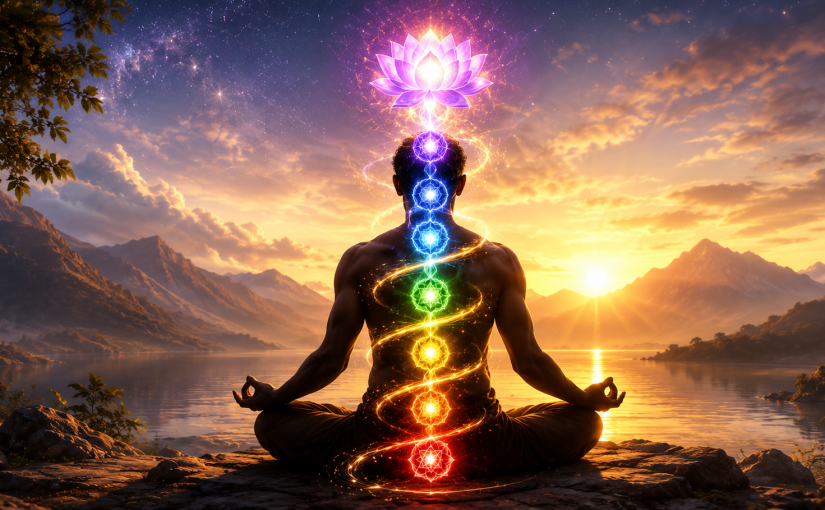
Gradually, an understanding began to emerge. It seemed that I was deeply enjoying the subtle energetic play itself. Prana continuously revolved in a loop between the muladhara and the sahasrara chakra. The movement never remained static. Instead, it flowed continuously, producing an extraordinary state of bliss. Although an ordinary observer might compare it with sexual pleasure because its energetic origin appeared to be near the muladhara, the actual experience was far more refined, subtle and spiritual. It was not ordinary sensual enjoyment but a deeply transformed form of bliss. The bliss appeared to originate in the muladhara while being experienced most profoundly in the sahasrara.

Because this circulation of prana remained continuous, the energy never completely settled. The mind remained associated with this subtle movement. Looking back, it appears that this constant motion itself prevented meditation from naturally settling into prolonged breathless absorption. Dynamic bliss and complete stillness were existing together, but the dynamic aspect remained dominant.

How the Meditation Image Changed the Nature of Bliss

Another important transformation gradually became evident. Throughout this period, the bliss became increasingly associated with my meditation image. This association slowly changed the quality of the experience itself. The meditation image was not merely an object of concentration. For me, it represented the nearest approach to pure self-awareness. As the connection between the meditation image and the bliss deepened through continuous practice, the bliss itself became more satisfying, more refined and more persistent.

It no longer appeared dependent solely upon the energetic circulation of prana. Instead, it seemed to mature into a subtler experience. However energetic circulation was responsible to make momentum that used to keep subtle bliss channels open for a day or two and thereafter needing further tantric pranic push. Since the meditation image pointed toward pure awareness, the bliss also felt progressively closer to what I perceived as the bliss of the Self. Whether one describes it as the bliss of self-awareness or simply a bliss associated with increasingly silent consciousness, the practical observation remained the same. The repeated connection made between meditation image and bliss or energy through specific advanced yoga practice transformed the character of the bliss itself.

Many contemplative traditions suggest that repeated association of attention with stillness gradually changes consciousness. Looking back, my own experience appears consistent with this understanding. The bliss became increasingly peaceful rather than merely ecstatic, increasingly satisfying rather than merely intense, and increasingly stable rather than dependent upon energetic excitement.

The Feeling of Invisible Guidance

One feature of this journey remains deeply meaningful to me. During those intense periods of practice, I repeatedly felt as though some invisible presence was inspiring me to continue allowing prana and bliss to revolve. I never consciously forced this process. Rather, it felt as if I was gently encouraged from within to continue until the energetic process naturally reached its highest point.

Eventually this period culminated in what I experienced as an awakening accompanied by a glimpse of self-realization. Whether this invisible inspiration represented divine grace, the inner Guru, the awakening of deeper intuition or simply the wisdom of the unconscious mind cannot be established objectively. Different traditions would explain it differently. What remains undeniable is the subjective experience itself—the strong feeling of being guided through an unfolding process that eventually coincided with a profound awakening glimpse.

Was My First Awakening in the Dream State Incomplete?

Looking back over the entire sequence, another possibility occasionally comes to mind. My very first awakening glimpse occurred during the dream state. Sometimes I wonder whether that experience represented only an initial opening rather than the completion of the entire process.

Perhaps the subsequent months of intense pranic circulation, refined bliss and continuous tantric practice were not separate events but a natural continuation of that original glimpse. It often feels as though the earlier awakening was gradually maturing until it became clearer and more integrated. Of course, this remains only my own interpretation. It is impossible to establish objectively whether the later experiences literally completed the earlier one. Nevertheless, the continuity between the two feels remarkably natural when viewed as one uninterrupted journey.

Why I Continued Tantric Practice Even After Awakening

An interesting aspect of my journey is that awakening itself did not bring my tantric practices to an immediate end. I simply continued because the process itself seemed unfinished. The energetic movement continued naturally, and I felt no reason to abandon it merely because an awakening glimpse had already occurred.

Only later did circumstances begin to change. Physiological difficulties gradually made it harder to continue the same intensity of tantric practice. Around the same period, another change appeared simultaneously. There arose a strong inner urgency to engage more actively with practical worldly responsibilities. It seemed that the same inner energy which had earlier expressed itself primarily through tantric practice gradually redirected itself toward ordinary work and worldly action.

Looking back, this did not feel like a loss of spirituality. Instead, it appeared as though the same energy had simply found another mode of expression. Rather than revolving continuously within the subtle body, it increasingly became available for practical activity, responsibility and service.

The Door to Kevala Kumbhaka Opened

This transition produced another remarkable change. As tantric energetic activity naturally reduced, the continuous turmoil and movement of prana also began to slow. With less energetic circulation occupying the system, a completely different quality of meditation started appearing.

For the first time, effortless breathless meditation, traditionally called kevala kumbhaka, began to establish itself naturally. Nothing was forced. Breathing simply became extraordinarily subtle and, at times, seemed to suspend by itself as meditation settled into profound stillness.

Looking back, it appears that the reduction of continuous pranic movement opened the doorway to this new phase. During the earlier tantric period, movement itself dominated the experience. During the later phase, stillness gradually became the dominant characteristic. Dynamic bliss slowly matured into silent absorption.

Although it cannot be objectively stated that the slowing of pranic movement directly caused kevala kumbhaka, the two repeatedly appeared together in my own experience. The practical relationship became increasingly obvious through repeated observation.

What I Observe Even Today

Even today I continue noticing the same relationship. Whenever worldly responsibilities increase, emotional involvement becomes stronger or pranic movement becomes highly active, effortless kevala kumbhaka becomes comparatively difficult to establish. It is as though the increased movement of energy keeps both mind and prana dynamically engaged, making complete stillness less accessible.

On the other hand, during peaceful days when emotional disturbances are minimal and worldly activity is comparatively lighter, the entire system settles much more easily. Prana naturally becomes quieter, meditation deepens effortlessly and kevala kumbhaka establishes itself without any deliberate attempt.

This repeated observation has become one of the clearest practical lessons of my own spiritual journey. Dynamic prana appears well suited for action, creativity and energetic transformation, whereas quieter prana seems to favour deep meditation, effortless stillness and spontaneous breath suspension. Rather than opposing each other, these two phases appear complementary. One represents movement; the other represents rest. One expresses energy; the other reveals silence. Both have their own place in the unfolding of practice.

A Personal Reflection on the Journey

Looking back over the entire journey, I no longer see these phases as separate events. The intense tantric circulation of prana, the refined bliss centred between muladhara and sahasrara, the gradual association of bliss with the meditation image, the mysterious feeling of inner guidance, the awakening glimpses, the possible continuation of an earlier dream-state awakening, the natural reduction of tantric practice, the redirection of energy toward worldly responsibilities and the effortless emergence of kevala kumbhaka now appear as different chapters of one continuous process.

Each phase seemed necessary for the next. The dynamic movement of prana refined the system. The meditation image transformed the quality of bliss. Worldly life unexpectedly helped reduce excessive energetic movement. That reduction allowed deeper stillness to emerge. Finally, breathless meditation became not something to be achieved but something that arose naturally when conditions became favourable.

This remains only the story of my own experience rather than a universal map for every practitioner. Yet it has taught me that spiritual development need not always proceed in a straight line. Sometimes intense movement prepares one for profound stillness. Sometimes bliss matures into peace. Sometimes the same inner energy that once expressed itself through powerful tantric experiences later expresses itself through ordinary work, quieter meditation and effortless awareness. For me, these have not been contradictory paths but successive expressions of the same unfolding spiritual journey.
From Burden to Bliss: How I Accidentally Discovered the Psychology of Turning Work into Spiritual Practice, Self-Motivation, and Inner Excellence

A Simple Hobby That Changed My Understanding of Work, Psychology, Spirituality, Leadership, Human Motivation, Consciousness, Sharirvigyan Darshan, Purpose, Productivity, Creativity, Happiness, and Professional Excellence

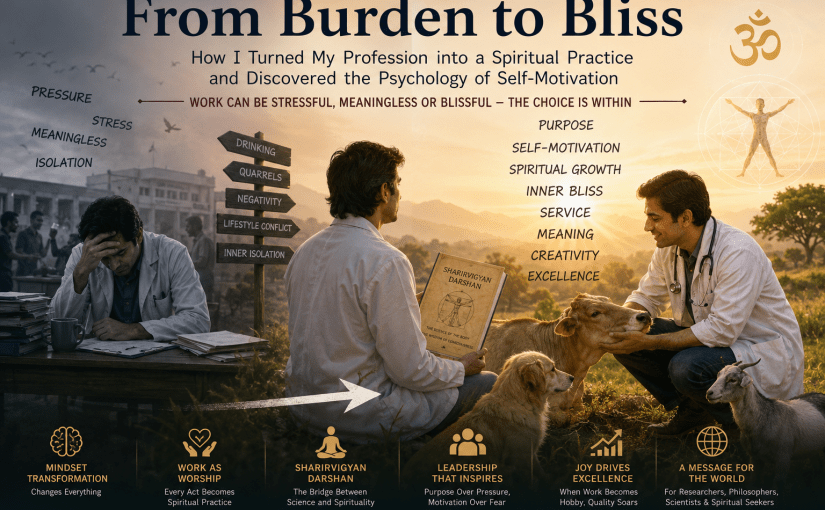
Most people separate their profession from their hobby. One is considered compulsory, the other optional. One earns money, the other gives happiness. For years I also believed that this division was natural. Today I no longer think so. My own life gradually taught me that work and hobby need not remain separate. Sometimes a simple shift in understanding transforms work into joy. The profession remains the same, the office remains the same, the responsibilities remain the same, yet the entire experience changes from inside.

I write entirely as a hobby. I never sit to write because someone orders me to write. I write because I enjoy thinking, observing, connecting ideas and understanding life. This writing is mainly for my own inner satisfaction. Because it is not forced, it rarely feels like work. Ironically, many times such effortless work produces better quality than work done only through continuous pressure and struggle.

This observation made me think deeply. Why does something done joyfully often create better results than something done under constant stress? Why does effortless work sometimes become more productive than effortful work? Gradually I realized that the answer may lie not in the work itself but in our psychological relationship with it.

Every Human Being Needs At Least One Hobby

In my opinion, every person should cultivate at least one genuine hobby alongside his routine occupation. A hobby acts like fresh air for the mind. It releases accumulated mental pressure, restores creativity and quietly improves the quality of professional work without our realizing it.

Very few fortunate people receive an occupation that perfectly matches their natural hobby. Such people often experience work as play. For the majority, however, work remains an obligation. They wake up carrying stress, spend the day fighting internal resistance and return home mentally exhausted. Much of their energy is not consumed by the work itself but by combating the feeling that they do not truly want to do it.

When so much energy is wasted in fighting one’s own mind, less energy remains for excellence, creativity, compassion and innovation.

My Own Journey Through Veterinary Science

I was also one of those people.

During my university days I did not naturally feel attracted toward the veterinary profession. At that stage I associated veterinary life with a social environment that did not resonate with my temperament. I felt surrounded by habits and lifestyles that seemed very different from my own spiritual interests. Many times I experienced an inner sense of isolation.

I wondered whether I truly belonged there.

Yet life had another plan.

Near the completion of my veterinary graduation, something changed inside me. It did not come through external advice or motivational speeches. It arose intuitively through my contemplation of Sharirvigyan Darshan.

Suddenly I no longer looked upon veterinary science merely as a profession. I began to see it as an extension of my spiritual understanding.

Healing an animal became much more than a clinical responsibility. Every patient became an opportunity to experience compassion. Every treatment became an expression of the same universal existence manifesting through different living forms. Veterinary practice slowly merged with spirituality.

The profession remained exactly the same.

The person performing it changed.

The Day Work Became My Hobby

That inner transformation completely altered my experience of work.

Earlier I had to push myself.

Now work itself started pulling me.

Responsibilities that once appeared heavy gradually became meaningful. Daily duties became opportunities for inner observation. The profession slowly became closely connected with my hobby of understanding consciousness, existence, psychology and spirituality.

I realized something extremely simple.

Perhaps making work enjoyable is itself an art.

Many people think they must change their profession in order to become happy. My own experience suggested another possibility. Sometimes we do not need to change our profession. We simply need to discover a deeper meaning within it.

The human mind responds much more strongly to meaning than to force.

If we gently persuade our own mind with understanding instead of violence, the mind gradually becomes our companion instead of our opponent.

Self-Motivation Is More Powerful Than External Pressure

This insight also changed the way I looked at leadership.

Today I often observe organizations where superiors continuously try to extract maximum work from employees through pressure, fear and constant supervision. Sometimes it appears as though a stick is always present behind the worker.

Such methods may increase immediate output.

They may even improve short-term productivity.

But they rarely increase mental satisfaction, creativity, inner growth or genuine dedication.

An employee working under fear performs because he has to.

A self-motivated employee performs because he wants to.

The difference is enormous.

Fear produces compliance.

Purpose produces commitment.

Pressure may increase quantity.

Meaning usually improves quality.

Sharirvigyan Darshan Became My Source of Motivation

My own motivation never primarily came from financial ambition.

Of course, earning a livelihood is important, but it was not the force that transformed my relationship with work.

Sharirvigyan Darshan gradually became that force.

The more deeply I experienced spiritual growth through this understanding, the greater became my enthusiasm for my professional responsibilities. Every successful treatment, every service and every challenge appeared connected with inner evolution.

The bliss arising from spiritual progress became a continuous source of energy.

Nobody had to motivate me.

Nobody had to threaten me.

Nobody had to supervise me.

The motivation was arising naturally from within.

That inner joy itself became the reward.

A Quiet Observation That May Be Worth Exploring

I do not present these reflections as universal scientific conclusions. They are observations from my own journey. Yet I believe they deserve thoughtful examination by psychologists, neuroscientists, philosophers, leadership experts, management professionals, educators, veterinarians, physicians, spiritual practitioners and researchers interested in human motivation and consciousness.

Perhaps the greatest transformation in human productivity will not come merely from better technology or stricter management.

Perhaps it will come when individuals discover a way to connect their profession with their deepest values.

When work becomes meaningful, effort becomes lighter.

When duty becomes purpose, excellence follows naturally.

When profession becomes hobby, stress begins to dissolve.

And when service becomes spiritual practice, work itself becomes a source of bliss rather than exhaustion.

This has been my own experience. Whether the same principle applies universally is a question worthy of sincere research. If it does, then one of the simplest yet most overlooked discoveries may be this: lasting motivation cannot be imposed from outside. It grows quietly from within when work becomes connected to meaning, purpose and the deeper dimensions of human consciousness.

Journey Through Savikalpa Samadhi: A Deep Glimpse into Self-Realization

In my path of self-discovery, I experienced what can be called a glimpse of Savikalpa Samadhi, a deep meditative state where you feel one with your object of focus, filled with bliss, but a subtle sense of self and form still remains. This glimpse occurred during a significant awakening, one where I felt the profound nature of self-realization, yet without completely merging into the final formless state. As I reflect on this experience, the stages of Savikalpa Samadhi seem to have unfolded in a natural progression that was far from linear but intuitively deepened as I progressed.
1. The Beginning of the Journey: Savitarka Samadhi

In the early stages, when I practiced meditation, I engaged with a tangible image — the image of my Guru. At this point, my mind was full of effort, as I contemplated the form of the image and its significance. The bliss was palpable, but it was the beginning of something. The mind was still firmly grounded in subject-object duality, where I was meditating on the image of the Guru. This stage represents Savitarka Samadhi, where gross thought and form are still present. Though bliss was present, the experience was only a hint of what would follow.
2. Subtle Progression: Savichara Samadhi

As I continued my practice, the mental chatter started to subside, and I moved deeper into subtlety. The image of the Guru became more luminous, and my connection with it improved. I could feel the essence of the image beyond its physical form. The energy began to awaken, especially through my Tantric practices. I realized that my focus was no longer just on visualizing the Guru’s image, but more on feeling its energy and presence. Let me explain it a littlebit more. At first, when I meditated, my mind was focused on the image of my Guru — like seeing a picture in your mind and concentrating on it. But later, something deeper happened. Instead of just seeing the image, I started feeling the Guru’s energy or guru’s form’s energy inside me. It felt alive — like the Guru’s presence was no longer outside or in the picture, but within me, as a silent force or warmth.
This shift means my meditation was going deeper. I moved from focusing on an outer form to feeling the inner essence — something real but invisible. This is a natural step in deep spiritual practice, where outer symbols fade, and only the inner truth remains. The boundaries of object and subject blurred, yet they still existed. This phase marked Savichara Samadhi, where subtle thoughts and impressions began to take over. It was a phase of deepening communion, but duality was still present. You can call savitark samadhi as dharana and savichar samadhi as dhyana.
3. The Blissful Experience: Sananda Samadhi

As I advanced in my practice, the focus moved from form to presence. The bliss that arose from deep concentration on the subtle presence became more intense. It felt like the energy I had previously only sensed was now integrated into my experience. This stage aligns with Sananda Samadhi, where the mind quiets down and bliss arises. However, while bliss flowed freely, there was still an awareness of the dualistic nature of the experience. I was aware that I was experiencing the bliss, but the true self-realization hadn’t yet occurred. The bliss was intense but also fleeting. It was in this phase that I felt like I was dissolving in the sheer bliss of existence. It’s actually savichar samadhi or dhyaan deepening further, nothing else. The same subtle inner image of dhyana becomes as much bright or amplified that much bliss it produces.
Let me little clarify it further.
Feeling Form (External Object Support): At the beginning stages of meditation, you often rely on an external object (like the physical image of your Guru or a symbol) to focus your mind. This external object serves as a point of concentration to bring your awareness into a more stable and focused state. Essentially, the object is a tool to anchor your mind and help it remain in one place. In this phase, you’re connecting to the form—the shape, image, or physical representation.
Feeling Energy (Self-Stable Inside): As your meditation deepens and your focus sharpens, you gradually shift from relying on the external form to directly experiencing the energy or presence within yourself. This energy isn’t dependent on the external object anymore. It becomes something you feel internally—it’s a more subtle, refined experience. The external object that initially helped you focus may now seem unnecessary, or even “rubbish,” because you’ve shifted to a state where the form is no longer needed for focus; you now connect directly to the internal spiritual energy or vibration.
In essence, as your consciousness evolves, you no longer need external support (like the form) to connect with the energy. The energy is self-stable and exists within you. You’re no longer relying on something external because you’re directly experiencing the internal essence of that form or presence.
To sum it up, initially, you take support from the external form (to stabilize your mind), but as you go deeper, you realize that the energy you’re connecting with is already within you, and the external form becomes irrelevant to your deeper experience.

4. Self-Realization: Sasmita Samadhi

Then, something shifted during a critical moment — a glimpse of self-realization. This state revealed itself in what felt like a subtle yet powerful awakening. The bliss was lower than earlier bliss samadhi, but this state was all pervading and nondual cosmic consciousness type. Let me little clarify it.  

During that moment of self-realization, the bliss I felt was not like ordinary happiness or pleasure you get from the world — like from good food, music, or success. It was something very subtle and unique.

It wasn’t loud or overwhelming. Instead, it was soft, deep, and balanced — like a calm joy quietly glowing inside me. It felt as if this bliss was made of both light and dark at the same time — not in a scary way, but like a perfect mix of stillness and depth, where everything was clear and silent.

There was also a strong sense of presence, like I had arrived at the center of my being, fully aware and peaceful. It wasn’t emotional excitement, but a kind of pure clarity and sacred peace that just was — without any reason.

This bliss was also different from the bliss felt during Samadhi. In Samadhi, bliss often comes as a flowing joy — something that can feel ecstatic, like being lifted beyond the body and mind.

But this one — during self-realization — was much deeper and quieter. It didn’t come in waves or rushes. Instead, it was like a settled, silent joy that didn’t move at all — almost like it had no reason but still felt profoundly alive.

It wasn’t emotional or dramatic. It was a balanced stillness, where even bliss wasn’t something “felt” in the usual way, but rather, it was part of the clarity and presence itself. You could say it was bliss without movement, joy without excitement, and yet undeniably real and sacred.

The realization that I was not the observer, but the very essence of the being I had been meditating on, flooded my awareness. This phase, Sasmita Samadhi, represents the realization of the pure ‘I am’ — not as the ego but as the boundless, formless being although with waves of mental formations. I no longer identified with the meditation object; I became the object itself. The experience was a deep recognition of the truth that I was the Supreme Conscious Being. However, it was not yet a complete dissolution into formlessness. The objects of perception still had some existence in my awareness offcourse in virtual form. Virtual object is still an object.
The Fine Line to Nirvikalpa

In a moment of deep insight, I recognized how close I was to the final stage — Nirvikalpa Samadhi. I realized that if I hadn’t intuitively grounded myself by lowering the energy to my Ajna chakra, I would have been completely absorbed into an endless continuity of supreme bliss, with no trace of mental or energetic residue. This awareness shows that I had reached the edge of Nirvikalpa Samadhi, where even the subtle sense of self-awareness begins to dissolve. But I chose not to fully absorb into the void at that moment. I consciously brought myself back, possibly because of an inherent fear of losing myself completely or a desire to remain grounded and able to share this understanding with the world.
The Experience of Kundalini Awakening

Looking at my experience through the lens of Savikalpa Samadhi, I recognize that the energy movements of Kundalini had brought me close to the realization of the Self, but in a very subtle way. It was a moment of profound self-awareness, but without the overwhelming ecstasy of the earlier stages of Tantric sadhana. The bliss of that moment was subdued, more stable, and grounded in peace rather than ecstatic energy. It was not the same as the energetic climax of my previous Tantric experience; instead, it was a deeper, more stable realization of pure being — I am. This made the Kundalini experience feel more genuine, as if I had touched the core of who I truly was, without the distractions of intense energetic movements.
The Nature of Savikalpa Samadhi

Savikalpa Samadhi, while deeply transformative, is still characterized by a trace of duality. There remains an awareness of self — a sense of being — but it is not yet the final dissolution into the formless, boundless state of Nirvikalpa Samadhi. During this phase, the mind is still functioning, but it is absorbed in bliss, presence, or the pure feeling of “I am.” The ultimate merging of subject and object has not yet occurred, and a subtle trace of experience still lingers. However, this state is profoundly liberating. The boundaries between subject and object dissolve to a degree, and what remains is the unshakable knowledge that the Self is both the observer and the observed.
The Unique Journey and What Lies Ahead

In my experience, it feels as though I’ve crossed several stages of Savikalpa Samadhi organically, rather than following them in a strictly defined sequence. This process has been intuitive and personal, with each phase revealing a new depth of understanding. The key insight here is that the object of meditation doesn’t necessarily change in Savikalpa Samadhi. What changes is the depth of absorption and the relationship with the object. Through my consistent meditation on the Guru image, I moved from mentally contemplating it to eventually merging with it. It became less about thinking or visualizing and more about being that presence.
As I continue my sadhana, I am aware that I am nearing the threshold of Nirvikalpa Samadhi, where even this subtle sense of presence will dissolve into formlessness. But I also know that this process is not something to force. It will unfold naturally when the time is right.
Final Thoughts

This glimpse into self-realization has been profound and humbling. I have come to understand that the road to ultimate liberation is not about seeking ecstatic experiences but about realizing the truth of who I am, beyond all thoughts and energies. While I have not yet reached the final absorption into the void, the experience has been transformative. I now see that the journey itself is the key, and the ultimate realization lies not in the search for bliss, but in the quiet awareness of being.
In sharing this journey, I hope it serves as a reminder that the path to true self-realization is not always about dramatic peaks, but about gradually and deeply dissolving into the essence of our own being. This realization is available to all, and it begins with the quiet recognition that we are not separate from the source of all existence.

Kundalini Yoga can reduce the ill-effects of the modern communication age

Friends, nowadays the mind does not have the same kind of emotions as it used to have before the advent of the modern communication age. In the old times, the mind used to have very sweet and subtle emotions. There were all kinds of emotions. There were feelings of love, kindness, friendship, happiness and many other kinds of emotions that came to mind. Those emotions were clearly reflected on the face as well. Even when in a high state, all these emotions were controlled and restrained. Nowadays, a person starts getting carried away by emotions very quickly. Now the mind does not have that power which can save it from the attachment of emotions and can stop a person from getting carried away by them. Today’s generation seems emotionless to me. That childishness is not seen in children, even teenagers seem less like teenagers and more like children, and that youth is not seen in the youth as well. We have seen the old age as well, so we are not much affected by the new age, but what will happen to that new generation which has not enjoyed the experience of the old age at all. We can transmit our experiences to them with love. If they understand, they can transmit them to the new generation. In this way, human civilization can avoid going astray from the path of nature. Moreover, if in the olden times there were feelings of hatred, anger, jealousy, enmity etc., then they too were controlled and balanced. Man had so much control that he could reduce them and prevent their impression from appearing on the face.

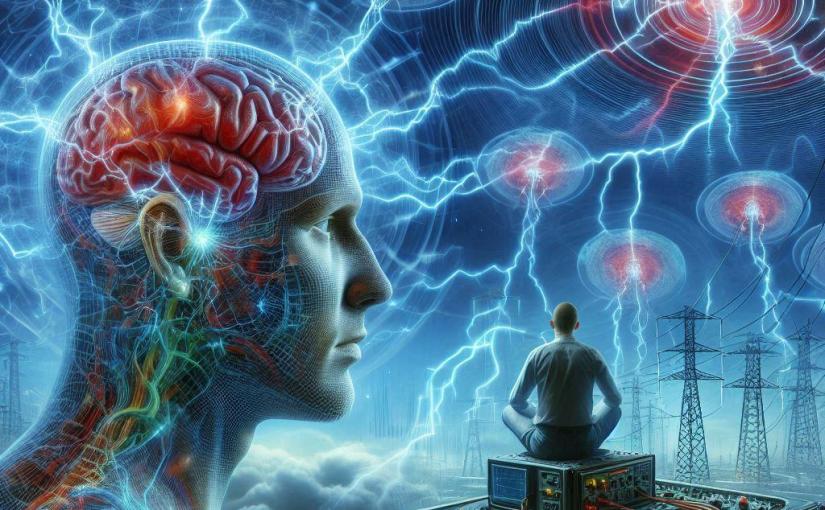
I feel that invisible waves of communication are responsible for today’s frustrated mentality. We call them electromagnetic waves in the language of science. At the physical level, they cannot cause any harm to this body, because they have very little energy. They are like the waves of sunlight. But I feel that even the waves of light have some effect on the subtle thoughts of the mind. That is why in the evening when the sunlight is very low, at that time very beautiful thoughts arise in the mind. Similarly, yogis used to like to meditate in dark caves because there was no interference of light there. Also, films full of VFX mainly those of shady graphics appear much more blissful and full of emotions than the films full of natural light. Similarly, birds are seen in greater numbers at places where the signals of phones, TV etc. are weak. A film has also been made on this. Once I had to live in a remote valley where there was no mobile network. There I felt a unique peace like the old times. The emotions of the mind were also being formed well there. This means that although normal electromagnetic waves have minimum energy, they can affect the soul and its ability to experience. Scientists say that the pulsating electric current formed in the neurons of the brain generates the pulsating and invisible electromagnetic field that is what the soul experiences in the form of thoughts. If seen, communication based electromagnetic waves also exist in the form of changing electromagnetic fields. Therefore, if both affect each other, then there should be no surprise.

It is not difficult to guess from this that electromagnetic waves of communication means affect the thoughts of the mind. But still there is no need to be afraid of them. It is rightly said that where there is a will there is a way. Kundalini yoga increases the electromagnetic power of the brain so much that external electromagnetic waves have little effect on it. This happens during yoga but if yoga is done two or three times a day then this power remains throughout the day. In today’s era, spending more time in an area free from electromagnetic waves seems like a dream. We cannot cover the entire earth with leather, but we can definitely wear leather shoes. It means that we cannot change the world immediately but we can definitely change ourselves according to the times.

Kundalini Yoga Exposes the Biggest Lie

Friends, in the previous post we were talking about the environmental side effects of cement. That’s all, but those who use it, they also don’t use properly. Most laxity is given to that curing in the form of water irrigation, especially in government and contractual works, which is most important for its strength. This wastes resources, and there is a possibility of heavy loss of life and property due to accidents. Well, we don’t want to stray from the main topic by going into these technical matters. I have another book on this, “Basic pillars of multi-tech organic farming and rainwater harvesting” in Hindi. In this post we will discuss the biggest lie.

To observe thoughts calmly means that we are accepting their existence. Their real or true nature. Their subtle nature. Their spiritual nature. Their mental nature. Accepting their independent nature. Accepting their authority based on something. Accepting their incomplete authority. We are accepting their existence with an extinguished mind. With this, when the thought disappears, we will not feel the darkness of their absence or feel-less. Along with this, indirectly it will also be proved or believed that the absence which we think of as darkness is actually light, because from there these thoughts keep popping out and merging their in. With this, the soul will gradually become clean and move towards liberation. If we get carried away in thoughts’ flow, it would mean that we are accepting their unreal existence. Accepting their physical nature. Accepting their gross authority. Accepting their physical authority. Accepting their independent nature. Accepting their absolute power. When the thought disappears with this attitude, we will feel dark. In case of third type of attitude, If we try to deny or remove them, it would mean that we are denying their existence alright. This will also indirectly mean that we are accepting the nature of darkness. Due to this, life will go towards darkness. Means witnessing is the biggest spiritual practice. This is the best middle path of the Buddhists. In witnessing, that’s why the soul gets pleasure. Harm even by chasing away thoughts and harm even by embracing them. So keep paying attention to your breath and your body, and let the thoughts come and go.
It is a matter of saying that witnessing is everything, there is no need to do yoga etc. anything else. It is like saying that the fruit is everything, there is no need for trees etc. The real practice of witnessing happens only during yoga practice. At that time thoughts are coming to the brain, and attention and vision are on the lower parts of the body or chakras like Muladhara etc.. This does two things at once. One is that yin means the lower part and yang means the brain part merge together, and the second is that the thoughts of the brain remain ignored even when they come, which leads to the best witnessing. Welcome thoughts like uninvited guests. Just as we remain neutral towards uninvited guests while welcoming them, so should we be towards thoughts. The main thing is that people prefer to watch scenes made of 4K signals, not scenes with SD signals. Consider the signal generated in the brain during yoga as 4k, and in common worldly condition as SD or at most HD. That’s why maximum witnessing feeling i.e. mute viewer feeling arises during yoga. In normal worldly condition, we can react according to mental visions, but how will we react during yoga, because apart from mental vision, nothing exists in physical form. That’s why we have to remain calm and keep watching the scene. That’s why many people call television also a good witnessing instrument, because we cannot give any reaction for that also. That’s why fictional movies give more fun than movies based on true events. Because where the sense of the truthfulness of the intellect wakes up towards such visions, there will be a disturbance in the mute viewing stance and self-bliss.

Witnessing practice means yoga practice can be done three times a day. It seems most important in the mid day. At that time the energy of the body is at its peak, due to which a lot of suppressed thoughts emerge, which are well witnessed. If there is a shortage of space etc., then at least Pranayama can be done. If there is a problem in sitting, then this can be done even on a chair. Deep Kundalini meditation by holding the breath on the chakras can cause headache etc., so light Pranayam is enough during the day. The best time for meditation is in the morning and evening at Sandhya that’s day-night union time, when the brain gets extra energy from the Muladhara. At that time, the burden of worldly works also seems to be removed. Perhaps that is why Trikal or three times Sandhya was very prevalent in the olden times. Not everyone can be self-aware all the time, because some people’s work is strange and complicated. Those who have a long practice or who have access to satsang, they can stay however. Karmayogi also remains self-aware all the time, but Karmayoga is also not easy. That’s why for the benefit of the common man there is a provision of sadhana three times a day, rest of the time keep doing any practical work, keeping sadhana on the table.

The problem arises when man does not see reality. Does not see the truth. There is no harm in seeing, there is no harm in seeing the real thing. The evil is in seeing things in their false forms. Seeing thoughts in subtle form is Satyadarshan or true viewing, but seeing them in gross and physical form is Asatyadarshan or false viewing. Seeing thoughts inside your body or mind is Satya Darshan, but seeing them outside yourself is Asatya Darshan. Seeing thoughts in one’s own form means non-dual form and self-form is true vision, but seeing them in other’s form means in dual form and non-self form is false vision. Not that these are only the philosophical things. This is scientific truth. In fact, worldliness is completely based on lies. Subtle thoughts are given a false gross form. Spiritual (Chidakasha-Atman or consciousness-sky-form soul) thoughts are given a false physical (just opposite of Atman) form. Thoughts located inside the body are falsely understood to be outside the body. If we consider thoughts in their true form, then the world has disappeared and only soul and soul is everywhere. It is a great thing that this vision is itself maintained without any special effort while doing yoga, because at that time the activity of thoughts changes rapidly according to the rapid changes in the activity of Prana in the form of body postures and breath, due to which the belief that all these are connected with each other is self-affirmed, and always remains maintained in the subconscious that manufacturers habit of an individual. I am saying body instead of mind or brain because different thoughts carry different energy levels, so they fit on different chakras of the body. The ones with more energy are towards Sahasrara and the ones with less energy are towards Muladhara. The energy of thoughts should not be tampered with, otherwise the burden on the brain will increase which can also cause headache. That is why the real form of man is not the mind or brain, as is commonly understood, but the front channel from the Sahasrara Chakra to the Muladhara Chakra and the group of chakras located on it. Understand that it is a bamboo stick with seven knots. Thoughts are not necessarily attached to the chakras, they can be felt at the height or level of the chakras over any long distance. Perhaps the thoughts of Sahasrara cover the whole distance towards the sky, and the thoughts of Muladhara the whole distance towards the lower worlds down. Wherever thoughts are felt, they should be welcomed there, but in their real subtle and spiritual form, not in their false gross and physical form. Also during yoga, by looking at the thoughts with a true eye, they do not disappear at once like in the normal worldly condition, but they disappear comfortably and slowly giving joy to the soul, because the energy level is high while doing yoga. Calmness with little clearing of Atman is felt too with dissolving thought waves. Along with this, various technical experiments like holding of breath, i.e. Pranayama during yoga also reduce the restlessness of the mind. With this the soul feels well satisfied. In the normal state, they disappear before they can provide proper bliss to the soul and get burried as darkness in subconscious leaving the soul blurred like the scar on the moon, because the energy level is low, so leaving the soul as if thirsty of cleaning water. If we accept thoughts in their false form, then the soul has disappeared and the world and the world is everywhere. It is a simple matter that thoughts become so much more clear by yoga, which is not even in the condition of common material worldliness. Due to this, their true subtle form automatically comes to the fore. Means Kundalini Yoga exposes the biggest lie in the best way. Anyway, the soul gets strength from this exposure to get exposed itself. If there is no lie, there will be no exposure either. This means that the lie and its exposure must go hand in hand. Meaning that materialism and spiritualism should go hand in hand in a balanced way. Balanced means that there should not be so much materiality that it becomes on the life of a man or the life-giving earth starts getting destroyed. There is less lie in an animal, so it has less chance to be exposed, due to which its self-development is also very low or slow. This biggest lie is called ignorance in the language of spirituality, and its exposure is knowledge. Beware of those who try to extract money by mixing worldliness with spirituality, because when they are in worldly mode with money, there is no spiritual mode at that time. Yogi and writer Shri Om Swami is right in saying that Yogi should be financially self-reliant, along with that he should also be an industrialist who can provide financial support to the society. What a yogi who goes on begging even for himself.

I think that some initial spiritual practice can better be done in a group etc. Later, probably in most of the cases higher stage spiritual practice is fruitful only in solitude, not in a crowd. Anyway, the sadhna that can be done in the crowd is Karmayog, not doing yoga by holding the nose. Come on, no problem, let’s flow with the times. There is no compulsion in this. Whatever you find good and suitable for yourself, do it. This promotion is for those who are entitled to it, but are not able to get used to it due to various reasons like hesitation etc. Promotion of a film does not mean that it should be seen by everyone, but that it should be accessible to the curious and needy person. Valentine’s Day does not mean that on this day everyone should make a couple and fall in love with each other, but that those who feel the need and scope for it, but are unable to do so due to hesitation etc., should get a chance to do so. Best wishes on World Yoga Day week to all.

Kundalini as Lord Vamana pierces Shukracharya’s duality-form eyes

Friends, continuing the previous post, that sacrificial ego that’s king Bali let Vamana come under compulsion, and he also gets apprehension that he may not survive after Kundalini awakening. By the way, the glory has been sung in such a way that King Bali was the biggest donor, who donated three steps of land to Vamana despite knowing his future destruction. Every living being is the supreme donor like King Bali. Knowing that his ego will be destroyed by Kundalini Yoga, his boundless material world will be destroyed, still he does Kundalini Sadhana at some point or the other. When a man is engaged in good deeds like King Bali, then sometimes Lord Vishnu comes to him in the form of a meditation picture to do good to him. He can be a friend, lover, guru or deity in any form. Guru is also considered as the form of God. Anyway, for everyone, their lover is God. For example, suppose a woman enters a man’s life. Men have tens of businesses, and hundreds of relationships. Because of them, innumerable images are formed in his mind. So he takes that woman for granted, and thinks that a woman is nothing in front of his vast material world. He allows her to take up space in his mind, that is, he allows the first step associated with it in the form of her Bhava or existence or Sattva Guna, the second step in the form of her motion or Rajo Guna, and the third step in the form of Darkness or Tamo Guna to fall into his mind-like kingdom. But gradually his love for her grows, and with time she occupies more and more space in his mind. In the end, she spreads throughout his empire, and then awakens and destroys man’s ego as king Bali. The same happens in Kundalini Yoga. This means that there is no difference in essence between yoga and love. King Bali was also doing a great Yagya, which means he was doing a good deed. A man knows that he will become a crazy yogi or crazy lover by falling in the circle of meditation, yet he adopts it and moves forward. Through the awakening, kundalini captured the entire heaven with one step, that is, with Sattvagun. Heaven is dominated by goodness. Because all the three gunas become infinite at the time of Kundalini awakening, that is why it has been said that Kundalini or Vamana has completely permeated all the three worlds. The second step means that the Kundalini picture spread in the whole earth with Rajoguna, because the earth is Rajogunapradhan. With the third step in the form of Tamoguna, the ego and its associated thoughts of karma go into the dark subconscious of the Mooladhara. Since tamoguna is created by killing or destroying someone, it is created by destroying the ego and the mental creation it feeds on. The position of Lord Vishnu as the gatekeeper of Patal Lok or pit abode means that Dhyanachitra keeps on purifying those demons i.e. thoughts buried in the subconscious by letting them go up, i.e. to the brain or heaven, so that everyone becomes gods. At the same time, Vishnuswarupa Dhyanchitra is focused on the Swadhishthana and Muladhara chakras by Kundalini Yoga, so that the demonic emotions that are suppressed in them are exposed and become pure when they comes in contact with it, so that they do not bind the yogi, that is, demons are not able to trouble the deities, because all the deities reside in the body itself. Anyway, Swadhishthan Chakra is called emotional baggage.
Shukra Acharya, the rakshasguru who became Bali’s priest in the yagya, first explains a lot to Bali that he should not trust Vamana because he will snatch everything from him in three steps. But when Bali does not agree, then Shukracharya enters the hole of the conch shell being used to pour out water as a mark of strong will power to donate, but Vaman enters kusha that’s a special grass stick in it and breaks his eye? One more thing, because the conch shell is also on the back of the living being, and like the spinal cord gives it protection, it becomes even more confirmed that the sushumna nadi itself has been called the conch shell. In addition, the shape of the conch is similar to that of a hooded serpent or dragon, which is equated with the spinal cord and the Sushumna located in it. An experienced patriarch never wants to let his host get lost in the wilderness of spirituality, no matter how beneficial it for the host may be. He knows that if the host comes to know the truth, then it will not be easy to cheat him and extract money from him in the name of Yagya etc. rituals. Although rituals are right at their place and are an important ladder for awakening, but who cares about the ladder when the destination is reached. Shukracharya i.e. priest or Guru by pouring out Shukra i.e. semen to block the energy flow of Sushumna is depicted as entering the conch shell. Vaman’s opening it with the Kusha stick is the raising of the Shakti from the Muladhar with the help of the Kundalini Dhyanachitra. It is the line of sensation extending from Muladhara to Sahasrara which is in the spinal cord. It is a thin light streak felt like a broom stick or the stick of kusha grass. This is Sushumna activation or awakening. If the back, especially the spine, is massaged before sexual intercourse, then this sensation line is felt easily and with pleasure. Then the semen power easily rises up, making the sexual intercourse very blissful and spiritual. The pressure of the sexual organs also ends. Man often does this inspired by the greed for Kundalini bliss, that is why the myth says that Vamana did this. Due to this, Shukracharya’s eye bursting means due to the effect of Kundalini, the dual vision of semen power or Shukracharya is destroyed. Shukra means semen in Sanskrit. When the semen power will not flow towards the world full of duality but will flow towards the soul full of non duality, then it is natural that the duality filled vision of semen power will be destroyed. Bali or ego goes to Patala, means after Kundalini awakening man cannot express ego in the form of luminous world because he has experienced the most luminous Kundalini awakening. Therefore, being detached from the gross world, he becomes unmanifested in the form of his subtle body. Moreover, he finds himself too down in front of awakening. This down feeling is depicted as patal or submerged abode. It is like darkness. This is his hellish abode. However, due to the gradual purification of the subtle body, it continues to be purified. It is said as Lord Vishnu guards it as its gatekeeper.

Kundalini based sexual Yoga prepares the brain for awakening

Friends, in the previous post we were talking about the comparative study between Kundalini meditation and psychiatry. In the same episode, it also seems that such and such psychopaths can be treated with love therapy. That’s why it’s often common saying that Love makes one helping de-addiction. Love is a supertonic. Mental illness is not always bad, as is commonly believed, but it can also be a godgift. Probably that is why mental patients are seen from a special divine perspective in Hinduism, they are seen with respect. Here they are rarely sent to a mental hospital, unless there is a serious danger. They are the main source of entertainment, and the main point of attraction in ceremonies etc. Yet for the most part they are treated with respect, and they are not hurt. They are not even considered a big burden on the society.
I feel like Muladharvasini Kundalini Shakti enables the brain to withstand the pressure. It probably increases the flexibility of the blood vessels, helping them to increase blood flow without having to bear much pressure. It used to be strange when common people used to sit holding their heads in the name of meditation, but in my mind there was dhyana samadhi all the time due to the power of sexual yoga. I was in full influence of Tantric Sexual Yoga when I had a momentary Kundalini awakening. Otherwise it would not have happened to me. The body knows when to do what with itself. It fully opened the back channel for awakening only when the brain became capable of withstanding maximum pressure by being under the influence of Kundalini Shakti of sexual yoga continuously for two to three months. I unknowingly lowered the Kundalini not because I could not bear its pressure, but because I was afraid that I might fall behind materially. Because I had the same experience in the past. Don’t know what magic this orgasmic power does. It is a blissful power.
Sexual yinyang grows out of devotion and surrender to each other. That’s why a lot of emphasis is laid on these two spiritual attributes. What happens is that only with full dedication towards each other, Yin and Yang immerse into each other completely. What can be better than sexual surrender? Yinyang is there in everything, but surrender is only or best between man and woman. The closeness and interconnectedness that is formed between a pair of a loving man and woman, is not so much formed between anyone. That’s why loving relationship and surrendered sex is the best storehouse of yinyang unity. Therefore it is natural that this is also the best basis for physical and spiritual progress. Yinyang is completeness, Kundalini awakening is completeness, Godliness is completeness. The material world also comes under this perfection, it is not different from it.

Kundalini meditation as a mental illness streamlined by sexual energy based Tantra

Continuing from the last post, only Prahlad went to persuade Hiranyakashipu, because he was not agreeing to the persuasion of any deity. This often happens after awakening. Understand it in such a way that a man who has fallen from infinite consciousness is very energetic and active. He will also try to bring other people on the path because no man can move forward without the society. Well this mostly happens when a man gets awakening at a time when he is full of healthy energy, like adolescence and puberty. How can a sick, weak and old person change the society, even if he changes himself, it is enough. Prahlad was in the energetic childhood stage when he got awakened. This will make people jealous of him, angry at him, and may even persecute him, as happened with Jesus. This can cause sin to the society, which can lead to the misery of the people living in it. Means on their part people try to pacify the awakening, because the gods in the form of different organs or parts of the people are situated in their bodies. Gods never want anyone to become like a sage, because they work to excite and expand the world. But the sage pacifies the world. That’s why people inspire him to do Kundalini Yoga. This happens even itself, when people make him a type of boycotted. Then in the boring atmosphere of loneliness, what will the awakened person do if he does not do Kundalini meditation. Others do not see the meditation picture. They guess that it is a scary ghost. That’s why the deities imagined it as the lion form Narasimha. But Prahlad knew that it is the ultimate lover and well wisher, not an imaginary ghost etc. Perhaps people also compare meditation with states of insanity or hallucination or demonic possession or depression or intoxication etc., unknowingly of course, due to centuries of confusion in their subconscious mind. And of course, a man who has been cheated in love also lives madly in the memory of his lover like a corrupt dhyana-yogi. Probably that’s why it is emphasized to get him married somewhere soon, so that he can get some support from tantric sex power. Most of the films are made on this issue. It’s strange brother. Once upon a time I accidentally consumed tobacco, once cannabis, and once an anti-anxiety medicine. In all three cases, the meditation picture was jumping in my mind. Looked clearly like a real man to the extent of hallucination. But it was accompanied by dullness and stupidity. There was less joy. It seems like depression as I was not willing to talk to anybody but to be immersed in maddening type self bliss. There was also restlessness and weakness to some extent. That’s why a great attention on health is given in Yoga. I think that the sexual sensation of Muladhara has a great contribution in the joy of meditation. By eliminating the so-called negative and depressive symptoms associated with meditation, it makes a person more properly normal ie even healthier than the normal. Perhaps it stems from yinyang, because without a sexual pair, sensation has no proper meaning. This sensation enables the brain to bear the pressure of Kundalini awakening, because the nature of both is the same i.e. the form of bliss. Where mental illness or mental fatigue or disturbance of mental chemicals or other mental irregularities or intoxication etc. are the main reasons behind the appearance of things in the form of illusion, whereas in the state of meditation or Kundalini awakening the mind is completely healthy and fresh, even more than a normal healthy person. Where a man in a state of mental illness is almost incapable of functioning, on the other hand, in a state of meditation, he is fully capable, even more so than an ordinary man. Where in the state of meditation man gets pleasure due to witnessing towards worldly works and resolutions, the mental patient does not. That’s why a mental patient looks anxious and withered. One can only bear witnessing to healthy thoughts of worldly works as usually formed in the mind of a healthy person. But often this does not happen to mental patient due to bodily and mental weaknesses and defects. The truth is that only a healthy man can do healthy meditation. When the yogi becomes engrossed in Kundalini meditation, then people get good chance to get rid of his so-called insanity and go about their business with the same enthusiasm, attachment and duality as earlier and usual so that the deities are pleased. This is why it is said that Prahlad pleased Lord Nrisimha with praise. With this, leaving anger, he became calm, due to which the gods and the world were saved from destruction.

Kundalini Yoga does not talk about rejecting the world

Friends, there is a lot to write, words are few. The riddles of spirituality are very strange, which have been written hard to understand. How everyone can believe. It is said that don’t run outside, feel inside yourself. It is like a double edged sword. If someone sits down with his eyes completely closed, he is sure to suffocate and die, but if someone pretends to keep his eyes closed even with his eyes open, he will survive. Now I have become Premyogi Vajra. I have nothing to hide about myself. I have seen countless beautiful sights of all kinds. But I kept distance from those views. I didn’t even speak a word to some, but drank them with my mind’s eye. It also happened because of my family’s spiritual environment, and there must have been many other favorable circumstances due to the influence of previous lives. But theory being theory, it applies knowingly as much as unknowingly. What happened is that by not running obsessively towards the beautiful sights, the principle felt that I was experiencing all the sights inside myself, inside my mind, inside my body or inside my soul. This is also true. The external views are just a means to reveal the inner view. As I have been trying to go to the root of the body’s blissful kosha through the last several posts. Don’t know why it feels like something is missing. The scriptures need scientific explanation. It is said that Yoga is scientific. But it doesn’t happen just by saying. Today it needs to be proved. Sexual love is at the top in worldly colors and sights. If one can remain detached from sex even with love, then what can be greater detachment than that? From that the soul will get miraculous power and it will be awakened the fastest, just within a year or two. Lord Shiva was also like that. Goddess Parvati used to shower her life on him, but he remained unattached and immersed in his meditation. He also used to love Goddess Parvati very much, but used to pretend to be neutral. Due to this, according to the above psychological principle, all his love used to be attached to his soul itself. Then why doesn’t his soul always remain awake? This shows that no one can be a greater actor than a Yogi, especially a Tantra Yogi. Contrary to Lord Shiva, if someone was a fanatic or an idealist or a scripturalist etc or mindless, then he would have rejected a girlfriend like Goddess Parvati calling her a spiritual obstacle and gone away or would have become attached to her like a bumble bee on a flower. You can understand what would have happened then. The meaning is clear that the middle path of Shiva or Buddhist is the best. Well easy to say, difficult to do. In the scriptures the term rejection has been given to non-attachment because it is closer to rejection than to adoption. The scriptures are emotional. People do not understand their feelings and start blindly following them. If a common man had seen Mahadev Shiva, he would have said that he has rejected Goddess Parvati. To say that he got married later means that it happened after the attainment of knowledge. At first he used to be meditating somewhere and Goddess Parvati searching for him somewhere else. Of course, Shiva had settled Parvati in his mind as meditation image and always remained blissful in her meditation. People must have thought that was his penance. Little do they know that the matter is something else. Who has seen by going into the mind? Actually the real detached man has adopted the whole world as his soul. He does not feel that he has rejected the world. But the people of the world feel like this. That’s why common people with little understanding start talking about rejecting the world they see. Even the lover sometimes feels that his lover is rejecting or ignoring her. That’s why when this happened, Shiva used to appear in front of Parvati for a few moments to console her, and then disappeared. Let me tell you that the power of expression reaches the soul through Kundalini i.e. meditation. You can say that with non-attachment you feel the meditation picture manifesting, no soul etc. The pure soul is like the empty sky, it cannot be felt directly in the presence of the body, it can be felt only in the form of meditation. Shiva became the biggest Rasbihari or spiritually romancing. How can anyone compete with him? It takes many years for the common man to gain ultimate knowledge through love. Till then he cannot even console his girlfriend like Shiva. If he starts giving, he gets carried away by feelings and remains deprived of attaining knowledge. Worldly honour related restrictions are also there. Everything changes after years, even the mind of the girlfriend. Some even distance themselves in the beginning by accusing them of infidelity. Haha. Wow to Lord Shiva’s luck and leela with the love of Goddess Parvati, getting complete knowledge from her, then marriage with her and romancing only with her. No one else should come in the way of love. If this happens in common worldliness, then there will be a shower of heaven and nectar. In the same way, one should keep on loving God without considering him unfaithful. They love humans a lot, that’s why they keep on showering countless facilities like air, sunlight, water etc. on man, of course they remain completely unattached and like distant. Someday or the other they will definitely adopt.

Kundalini Chitra develops Vigyanmaya Kosha

There are many descriptions in the scriptures that happiness is within, that is, it is in the soul, not outside. But I could not find any scientific explanation for this. Probably the form of the soul is like the existential void or the sky. In avidya or darkness there is one quality of the soul remaining, the void or the sky or the being. The quality of light disappears in it. That’s why the joy in it is greatly reduced, because all the qualities of the soul are related to each other more or less. In any form, the light that is experienced through the experience of the world, tries to fulfill the lack of light in the soul. What happens is that when that worldly light feeling is very fast, changing, i.e. dynamic or flamboyant or real like, then it cannot be mixed with the soul, because the soul is non undulating or changeless, like the nature of the sky, but on the contrary, the fast worldly feelings fluctuate quickly like waves of ups and downs means they are of the nature of change. One gets momentary happiness from them, as long as they remain, but as soon as they are removed, the darkness of the soul becomes more dense even from earlier. It is similar to how a person becomes blind for a while after coming out of bright light at night. When those worldly luminous experiences become dull due to non-attachment or Kundalini meditation etc., then they start matching with the empty soul. By this they give their light to the soul. Due to this, the lack of the soul is fulfilled and so bliss is felt, because according to the above scriptures, there is happiness in the soul itself, not outside. This is called satoguni avidya. Satogun is Prakash Pradhan. This is not only a matter of spiritual importance but also a matter of practical importance. Everyone likes a man who is calm and not the flamboyant one. The mental darkness of a person with a calm nature is also calm, while the mental darkness of a person with a fierce nature, ignorance of passion, is also fierce, deep and painful. This is the main difference between a gentleman and a scoundrel. The ignorance of a sage is due to being born of sattva guna, whereas that of a wicked person is due to being born of rajo guna and tamo guna.

When thoughts or mental images are changing rapidly due to passion, then their identity with the Pranamaya and Annamaya Kosha cannot be felt. Because later both are much more slow moving. Means it is difficult to consider them as one with the same combined body composition. Also the mental images related to common worldliness or livelihood are physical, because they are associated with the so-called material world, but the soul is immaterial, so they do not match. It is easy to associate mental images that are like static or slow and immaterial with this body group. In the Punjabi language and in the Sanskrit language, there is long path style or slowness, which increases the quality of goodness or sattvaguna. That’s why the use of these languages creates joy. The darkness of avidya that keeps on arising during worldliness through them, is the form of satoguni avidya. It is blissful. Similarly, keeping a beard like Sadhu Baba also makes a man’s behavior slow, contemplative, that is, satvik. This is why Baba remains intoxicated with bliss.

When a man attains a high position or object, the elders of the house keep him calm by preventing him from jumping too much. In our childhood, our mother used to bring us down from the sky to the ground immediately after some big achievement. In most of the cases, she did not let us fly in the sky of ego. She belonged to a family lineage of good and Vedic rites. If there is no contact of elders and sages in someone’s circle, then he flies far away with the achievements for a short time. Then, when the intoxication of flying breaks, he falls and starts drowning in the pit of depression, and the world starts considering him as crazy or mad, then he comes to his senses. But by then he would have lost a lot of joy and progress of the soul. That’s why it is not that this psychological principle of sattva guna avidya is applicable only in spirituality. This is equally applicable in worldly dealings too. Perhaps that’s why it comes in abundance in the scriptures that one has to suffer or do penance to attain knowledge. The scriptures believe that a person troubled by the sufferings of penance or lack of worldly goods will definitely find happiness in the soul.

When the gross body is also felt along with the thoughts, then the body gets their power and the burden of the brain is reduced. Means the force which was causing pressure in the brain gets transformed into the contraction of the muscles. Thoughts remain but fading with joy, they come to different chakras and dissolve. This happens because the chakras are not flooded with changing thoughts like the brain or mind. Infact chakra is not a dedicated organ for feelings like brain. Only one picture, mainly the Kundalini picture, remains on the chakras for a long time. This long stay of a sharp, quiet but unique mental image is a symbol of virtue. The avidya that arises from this is satoguni avidya. This is the bliss treasure. It is like a quiet and bright and non physical though unique candle flame mixed in the dark and quiet self more than other vibrant thoughts comparatively. Only the Kundalini picture that remains stable for a long time makes the best vigyanmaya kosha. It is a knowledge of immanent existence like the soul, but still a special knowledge. Meaning it is neither enlightenment or awakening, nor ordinary cosmic knowledge, but special knowledge or vigyan which is undoubtedly close to enlightenment.