Chapter 6 – Veterinarian on the Moon

Part 2: Life and Work as a Veterinarian on the Moon

Veterinarian on the Moon

As Aryan walked through the quiet corridors of the lunar habitat, his mind remained divided between two worlds—the Earth he had left behind and the Moon that now shaped his existence. The trade routes had been established, and life on the Moon was gradually settling into its rhythm. Yet, something kept gnawing at him—what was his true purpose here? Treating animals in space was undoubtedly a fascinating challenge, but the larger questions of existence, contemplation, and transformation were becoming equally important.

One thing that struck him deeply was how the Moon’s calm and undisturbed environment encouraged deep meditation. There was no daily chaos, no distractions, only the vast silence stretching endlessly beyond the domes. It was the perfect place to sink into the depths of contemplation. But then a thought arose—what would he even contemplate if he hadn’t first absorbed the images, memories, and emotions from Earth? The Moon felt like the second half of a movie, but could the second half even exist without the first? How could he ignore the role of Earth in shaping his spiritual path?

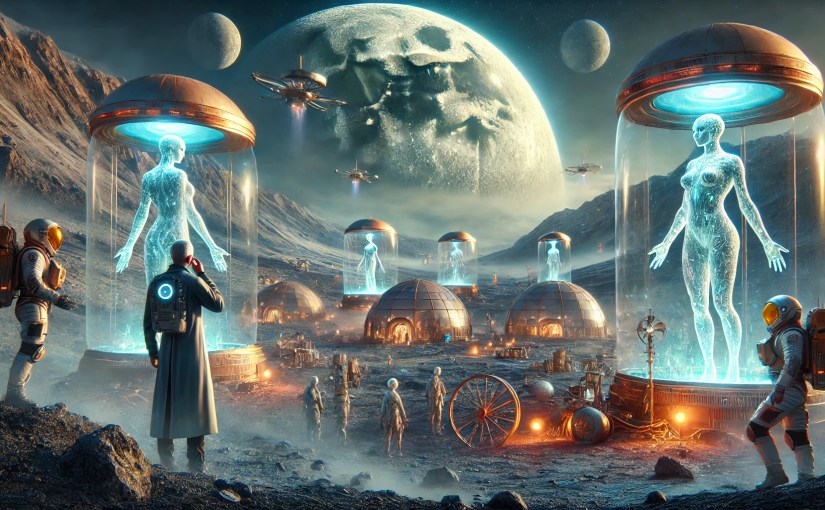
The moonites—those original inhabitants with large heads and an aura of tranquility—lived in a breathless state of pure prana. They were beyond the need for food, air, or water, existing in a state similar to Kevala Kumbhaka. Yet, something fascinating was happening. The influence of earthly colonists had started disturbing their stillness. Some of them, for the first time, were drawn to the practice of contemplating visible images—mainly of ancestors. It was as if the subtle chaos of Earth had reached even this meditative civilization, pulling them slightly away from their formless awareness into a more structured form of devotion. However, they had always contemplated their ancestors, but not out of compulsion or a need for growth. It was merely a way to receive a slight meditative stimulus, a gentle touch of form within their vast formless awareness. It means they used to oscillate between Nirvikalpa and Savikalpa Samadhi as a form of meditative play—shifting effortlessly between pure awareness and subtle form contemplation, not out of necessity but as a kind of spiritual amusement.

This shift fascinated Aryan. It made him realize that pure awareness, without any visible mark or symbol, could be directly contemplated—just as the moonites had done for eons. But when chaos arose, even the most subtle minds found comfort in visible symbols. It was as if they had momentarily forgotten their pure awareness, and contemplation of form was a way to regain that lost depth. It reminded him of the gods on Earth—silent and untouched, requiring neither food nor breath. Yet, when devotees offered prasad, water, or incense, the divine forms seemed to respond, becoming alive in their presence and bestowing blessings.

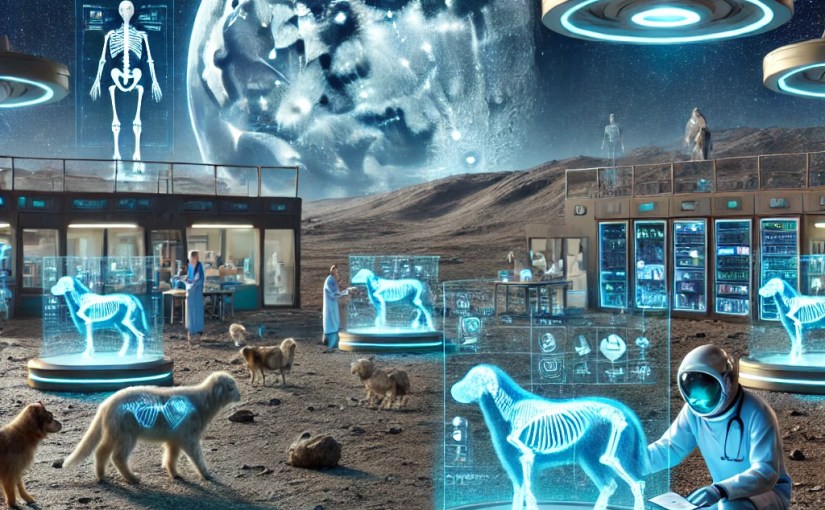
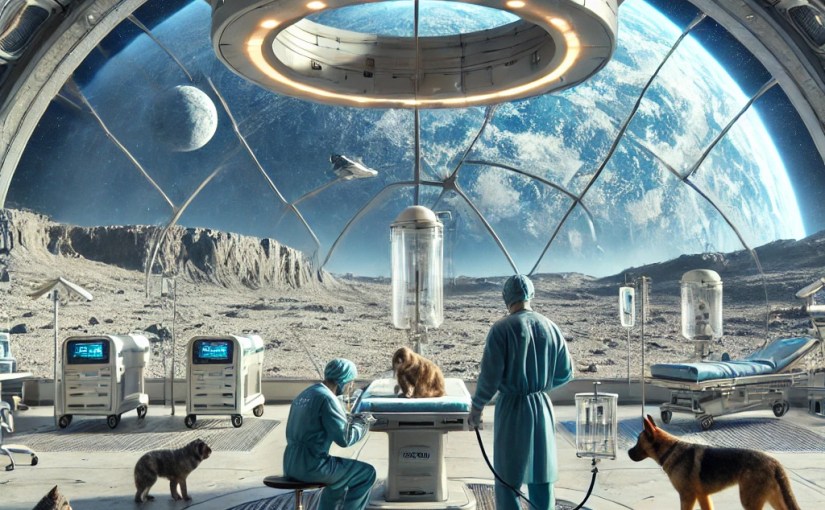
Amid these thoughts, Aryan found himself returning to his work. His task was unlike anything he had ever done on Earth. Treating animals in space came with unique challenges—gravity played tricks on their bodies, food digestion patterns changed, and even their biological clocks struggled to adapt. The livestock brought from Earth had initially faced severe difficulties. Cows produced less milk under reduced gravity, and birds struggled to fly in enclosed habitats. But Aryan, with his deep experience, adapted quickly. He experimented with customized diet plans, artificial gravity systems, and even subtle pranic healing techniques inspired by the moonites’ breath mastery.

On one day, a particular Moonite had been found weak, barely able to hold its form together. When Aryan was called in to help, he realized that it was not suffering from any disease—it was experiencing a kind of “pranic depletion,” something that had no equivalent in earthly medicine. With a carefully controlled approach, Aryan introduced a mild electromagnetic pulse, simulating Earth’s natural energy fields. The Moonite, which had been fading, slowly regained its form, pulsing gently as if breathing once more. It was a success, yet it left Aryan pondering—what did it mean to be alive? Were prana and awareness the true essence of existence?

While working among different types of peculiar and strange lunar creatures never seen and heard about on earth, one question haunted him: Why did life continue to push beings toward survival and reproduction? He had observed that when people or creatures found themselves dissatisfied with their own growth, they instinctively turned toward procreation—as if passing the baton to the next generation would ensure victory. But he knew nature had a higher demand. Instead of just multiplying endlessly, what if humanity learned to divert that energy toward inner transformation? The Moon, with its meditative aura, seemed to whisper this very lesson.

Aryan often reflected on the nature of prana itself. Prana down means death, prana up means life. But what about a state beyond both? If prana was neither up nor down, it meant neither life nor death—just pure awareness. The constant up-and-down movement of prana created the experience of life and death in cycles. When someone died, their prana did not completely vanish. It was said to exit through the lower chakras, meaning it still functioned but at an extremely low frequency—too subtle to produce conscious thoughts. That’s why the world felt dark and empty after death. But the subconscious mind, powered by this low-level prana, remained active. If it wasn’t dissolved through yogic samadhi before death, it carried forward into the next birth.

This made Aryan realize something profound. Prana is never truly absent—it only becomes unmanifested. And that’s why the Moon felt so meditative. The entire environment was pranaless—not in the sense of being dead, but in the sense of prana being undisturbed by agitated breathing beings. Whether it was the lifeless landscapes or the breathless moonites, all existed in a kind of silent equilibrium. In contrast, Earth was chaotic because prana was constantly being stirred, disturbed, and reshaped by the countless beings breathing upon it.

His thoughts deepened as he observed the subtle changes in the moonites. Many had begun interacting with the colonists and adopting their ways. The influence of earthly life had introduced new ideas—both good and bad. Was it inevitable? History had shown that civilizations untouched by outside forces remained pure but also stagnant. Could it be that a little chaos was necessary for evolution?

Aryan, though deeply introspective, did not let these thoughts interfere with his work. He had built a strong team—highly skilled and dedicated individuals who shared his holistic approach. Unlike Earth’s rigid professional culture, where only technical skills were valued, Aryan encouraged personal and spiritual growth as well. He gave his team full freedom to explore their potential, knowing that true excellence came from inner fulfillment, not just external discipline. In return, his workforce worked with full dedication, free from unnecessary resistance.

Meanwhile, lunar society functioned with an introverted and self-contained style. People rarely interfered with one another’s affairs, and unnecessary criticism was absent. Their nonviolent, silent, and contemplative culture reminded Aryan of ancient sages who withdrew from the world to seek the ultimate truth. But he also knew that withdrawal was not the complete answer. One had to experience life in order to transcend it.

Looking back at his own journey, he realized he had come to the Moon for many reasons—scientific, professional, and spiritual. But now, he saw the deeper significance. It was not just about treating animals in space or adapting to a new world. It was about learning from a civilization that had mastered stillness, while also recognizing that change was inevitable. Even the moonites, as timeless as they seemed, were beginning to shift under the influence of earthly life.

For Aryan, this meant one thing: Nothing remains untouched forever—not even the Moon.

And perhaps, in that truth, lay the greatest lesson of all.

Chapter 5: Space Economy & Trade

The Verma family had begun to settle into their new lunar home, embracing the unique rhythm of life on the Moon. The initial awe of low-gravity adventures and the serene, meditative environment had started to blend into their daily routine. Yet, amidst this adaptation, Dr. Aryan Verma found himself grappling with pangs of homesickness. The vast distance between the Moon and Earth felt insurmountable at times, and he often mused about the possibility of instantaneous teleportation, yearning for the comfort of his earthly belongings and the familiar embrace of home. The 12-hour spacecraft journey, though a marvel of modern technology, seemed too lengthy and exhausting to undertake frequently, making spontaneous visits to Earth an impractical dream.

This longing was further exacerbated by the whispers of some who viewed their relocation as a permanent exile, a one-way ticket away from the cradle of humanity. Aryan’s desire to debunk this notion, to prove that their move was not an abandonment but an expansion of horizons, weighed heavily on his mind.

In an attempt to bridge this emotional chasm, Aryan delved into understanding the intricate web of trade that connected the Moon to Earth. This exchange was not merely a transfer of goods but a lifeline that tethered the two celestial bodies in a symbiotic relationship. Earth supplied the Moon with essential commodities such as grains, vegetables, and milk—staples that were challenging to produce in the lunar environment. The Moon, in return, offered Earth’s industries a wealth of minerals, including lithium and gold, extracted from its regolith. This trade was not just about resources but a testament to human ingenuity and the relentless pursuit of progress.

Trade between Earth and the Moon felt like something out of ancient myths, where gods traveled between worlds with ease. Today, science had created its own magical ways to move goods across space. The Lunar Mass Driver worked like a giant slingshot, launching gold, lithium, and other minerals from the Moon toward Earth. It didn’t even need fuel—just magnetism and precision, much like a divine weapon hitting its target perfectly. Then came the Skyhook Stations, huge floating structures in space that caught these shipments mid-air and safely guided them down to Earth, just like Hanuman carrying the Sanjeevani herb from the mountains in mythological stories. For important goods that needed to arrive quickly, fusion-powered space shuttles—like the flying chariots of old legends—sped between the planets, reducing travel time to just a few hours. And in the most futuristic development, scientists were working on quantum teleportation, which seemed almost like the magic used by ancient sages, allowing objects to appear instantly in another place.
This new way of trading was not just about technology. It felt like a blend of science and ancient wisdom, where space travel was turning myths into reality, making life between Earth and the Moon more connected than ever. Gravity-defying transport had also started revolutionizing trade. Advanced anti-gravity carriers, inspired by ancient myths of celestial chariots, floated effortlessly between lunar domes and Earth-bound cargo ships. Using quantum levitation and electromagnetic propulsion, these silent gliders transported gold, lithium, and minerals from the Moon while returning with fresh produce, grains, and dairy from Earth. The seamless, fuel-free movement not only made trade faster but also preserved the lunar environment, proving that technology, when aligned with nature, could create a harmonious balance between worlds.

Although the Moonites had mastered the art of living purely on subtle prana, requiring nothing external for survival, they sometimes desired a slight taste of earthly chaos. Unlike the deep stillness of their lunar existence, Earth carried a different vibration—one of movement, emotion, and unpredictability. To invite a touch of this dynamic energy into their otherwise serene minds, they engaged in limited trade with Lunar Colonists. It wasn’t for survival, but for experience. A small intake of Eartherian food, scents, or artifacts was enough to stir a ripple of thought, breaking their deep mental silence just enough to interact with the colonists. This balance allowed them to maintain their wisdom while briefly tasting the restless curiosity of Earth, before dissolving once again into their vast ocean of tranquility. Thus, trade wasn’t just about material exchange—it was an exchange of energies. The Moonites offered their advanced knowledge, minerals, and rare elements, while the Lunar Colonists provided food, books, and art to stir the Moonites’ silent minds just a little—before they returned to their meditative stillness.

You can better understand their behavior through the analogy of gods. You might have heard the way divine idols functioned. Though they neither eat, drink, nor breathe, the moment prasad or food, water, and incense are offered with devotion, they seem to accept it, coming alive with divine presence and bestowing blessings upon their devotees. Similarly, the Moonites, though self-sustained on pure prana, would partake in earthly offerings—not out of necessity, but out of a willful choice. A slight exposure to Eartherian food, aromas, or artifacts stirred their deep stillness just enough to interact, much like deities responding to worship. Once their purpose was fulfilled, they effortlessly returned to their meditative silence, as if dissolving back into the cosmic vastness from which they emerged.

However, Aryan couldn’t ignore the irony that many on Earth clung to outdated practices in the name of honoring their ancestors, often at the expense of the environment and personal well-being. This resistance to change had hindered efforts to combat pressing issues like overpopulation, poverty, extremism, radicalism, war mongering, blind faith, global warming etc. Aryan reflected on how humanity’s attachment to tradition sometimes blinded them to necessary evolution, spiritual as well as material, a mindset that their move to the Moon symbolically challenged. Aryan knew well that it was more important to keep ancestors in the heart rather than attach them only to unnecessary and mortal material things.

The lunar society they had joined was markedly different. The inhabitants valued introspection and maintained a respectful distance, allowing each individual the space to explore their inner selves. This environment, devoid of unnecessary social intrusions, was a sanctuary for contemplation. The locals’ preference for solitude was not born out of disdain but a deep respect for personal boundaries and a collective understanding of the value of inner peace. This cultural trait was perhaps a defense mechanism, developed over time to protect themselves from past invasions by outsiders seeking the Moon’s rich resources, such as gold and lithium. Those attacks were mostly from neighbouring barren lands like jupiter and venus.

This societal structure suited Aryan perfectly. Freed from the constant buzz of social obligations, he found ample time to turn inward, to meditate and reflect—a practice that had always been a part of him but now found fertile ground to flourish. Contemplating on their past legendry ancestors was in the blood of people there. Along with, the Moon’s universal reputation as the abode of ancestors also called as pitru loka or chandra loka added a spiritual dimension to his contemplation. Lunar tantraic yoga was an unmatched gift given to moon by the ancestors. There were moments during his meditative practices when Aryan felt a profound connection to his lineage, as if the spirits of his forebears were present, guiding and comforting him. Call it awakening, samadhi, Guru visualization or meditative contemplation, experience doesn’t differ. This deepened his appreciation for the Moon’s cultural significance and the ancient belief that ancestors resided there.

His professional life also benefited from this tranquil environment. Leading a team of highly skilled and dedicated individuals, Aryan adopted a holistic approach to management. He encouraged his team to pursue personal and spiritual growth alongside their professional duties, understanding that a fulfilled individual contributes more meaningfully to the collective goal. This philosophy fostered a harmonious work environment where employees felt valued and motivated, resulting in exceptional productivity and innovation. This holistic approach was different from common earthly instinct where only professional growth is counted on floor neglecting the personal and spiritual growth.

The indigenous inhabitants of the Moon, a type of divine aliens, characterized by their large heads—a physical trait attributed to their advanced evolution—embodied the pinnacle of meditative practice. It seemed the lack of gravity had resulted in saving of their lot of body energy that had driven their exceptional brain growth. They had mastered spontaneous breath retention yoga, existing in a state akin to keval kumbhak or Samadhi, where breathing ceased naturally, and life was sustained by subtle prana. This profound control over their physiology contributed to their calm demeanor and deep spiritual presence. Their DNA had adapted to these practices over millennia, making such traits inherent from birth. Their tranquil and introspective nature served as a living testament to the possibilities of spiritual evolution, offering Aryan a glimpse into a state of being that transcended the physical limitations of the human form.

Immersed in this unique blend of technological advancement and spiritual depth, Aryan’s initial homesickness began to wane. He realized that their journey to the Moon was not an escape from Earth but an expansion into a new realm of possibilities—a chance to redefine their existence and contribute to a burgeoning society that harmoniously blended the material and the spiritual. The Moon had become more than a new home; it was a canvas upon which they could paint the next chapter of human evolution.

Chapter 4: First Impressions of Lunar Life

The Verma family had finally settled into their new home on the Moon. The sterile yet sophisticated lunar habitat, a stark contrast to their old Earthly home, offered a strange mix of comfort and detachment. The walls of their residence were embedded with technology that simulated Earth-like conditions—adjustable atmospheric pressure, controlled temperature, and even a subtle magnetic field to mimic gravity’s effects on the body. Yet, no matter how advanced, it could never fully replicate the deep-rooted familiarity of home.

Avni leaned against the transparent dome wall, gazing at the vast lunar landscape. The ground stretched endlessly, a dusty silver under the artificial illumination of the colony. In the distance, vehicles moved smoothly on electromagnetic highways, floating silently toward research centers, residential sectors, and hydroponic farms.

“This place is like something out of a dream,” she murmured.

Ansh, meanwhile, was completely immersed in the joy of low gravity. He had spent the last hour experimenting with jumps, each one launching him higher than before. “I can’t believe this! I feel like a superhero!” he shouted mid-air before gently landing back on the floor.

Meera sighed. “You better not break anything. We haven’t even been here a full day.”

Aryan, sitting at the dining table with a steaming cup of synthetic chai, smiled. “Let him enjoy. This is the only place where falling won’t hurt him.”

Meera shook her head, still adjusting to this bizarre new life.

A World Unlike Earth

The first thing they noticed about lunar life was the peace. Unlike the chaotic urban landscapes of Earth, filled with honking vehicles, political debates, and the ceaseless noise of civilization, the Moon colony was eerily silent. Even the busiest streets of the settlement felt meditative in their quietness. The people here moved with a deliberate grace, not out of sluggishness but as if the very environment demanded mindfulness.

Meera exhaled deeply. “I don’t hear a single unnecessary sound. No rush, no interruptions. It’s strange.”

Aryan leaned back. “Maybe this is what Earth was supposed to be like before we filled it with distractions.”

Avni nodded. “I read somewhere that astronauts who went to space often felt a ‘cognitive shift.’ They saw Earth as this tiny, fragile ball floating in the void and suddenly all the things they once worried about seemed insignificant. Maybe people here feel that all the time.”

Aryan smiled. “It makes sense. People on Earth think we’ve traveled far, but aren’t they also constantly moving? The whole planet is spinning at 1600 km/h while orbiting the Sun at 107,000 km/h. They are space travelers too, but they don’t realize it.”

Meera exhaled, thinking of the people they had left behind. Their parents, still attached to their ancestral home, had refused to come. Their farm, their animals, their life’s work—everything was tied to Earth. Meera’s father had said, “We were born with soil under our feet. We will die with it under our feet. You go if you must, but don’t ask us to leave.”

It wasn’t just the older generation. Even Avni and Ansh had struggled with the move. Leaving friends, adjusting to a different education system, adapting to a new curriculum—it had been an emotional storm for them. No more spontaneous meetups, no more Earthly festivals celebrated in open fields, no more lazy evenings watching sunsets.

“Do you think we made the right choice?” Meera asked Aryan.

He took a slow sip of chai and thought before answering. “There was no perfect choice, Meera. We had to leave some things behind, but we’ve also left behind a world that never respected inner peace. No more corporate flattery, no more nonsensical office politics, no more meaningless social rituals. And let’s not forget—no more disrespect for nondual Sharirvigyan Darshan.”

Meera nodded. It was true. Earthly life had become a competition of status, power, and mind games. Here, in this silent lunar expanse, there was room to breathe, to think, to just be.

Technology vs. Natural Living

For all its advancements, the Moon colony had one major drawback—it lacked the raw, untamed beauty of Earth. Everything here was artificial: the temperature, the air, even the food. The colony had perfected the science of extracting nutrients from raw elements and delivering them in efficient, easy-to-consume meals.

But that efficiency came at a cost.

Ansh poked at his meal, unimpressed. “It doesn’t taste like home-cooked food.”

Meera sighed. “It has all the nutrients we need, but where’s the joy of eating?”

Aryan understood. “That’s the thing with super-advanced technology. It can replicate function, but it can’t replace experience.”

Avni, always the philosopher, added, “It’s like how people on Earth still loved vintage bikes and heritage hotels. Even when technology advances, some things—like food, real gravity, and natural landscapes—remain irreplaceable.”

Aryan nodded. “That’s why in yoga, grounding to the base chakra is tied to gravity. Without natural grounding, how can one push back and jump to the highest states? Even those who mastered anti-gravity technology preferred the natural feel of weight on their feet.”

Meera sighed. “Then why did we come here?”

Aryan smiled. “Because awareness is more valuable than comfort. Earth was a place of noise, but here, we can finally hear ourselves. And that is priceless.”

The Cosmic Perspective

That night, as they sat by the transparent dome wall, looking at the vast, star-filled sky, Aryan spoke.

“Leaving Earth was difficult, but isn’t life a series of departures? We leave childhood, we leave our homes, and eventually, we even leave our bodies. Every goodbye is a preparation for the final one. So why not embrace change while we still can?”

Meera, still watching the stars, whispered, “Do you think one day even space will feel small?”

Aryan smiled. “Perhaps. Just as Earth once felt vast, but now seems like a dot in space. Maybe one day, after we explore enough, we will realize that even space is limited—compared to the infinite vastness within.”

Avni listened quietly, absorbing every word. Ansh had dozed off, curled up against Meera, unaware of the deep cosmic thoughts being exchanged around him.

For the first time since their arrival, a deep, peaceful silence filled their hearts. They had left behind a world of chaos, but they had gained something far greater—a glimpse of the infinite.

And in that moment, they knew they had made the right choice.

Chapter 3: Moon Colony – A New Home

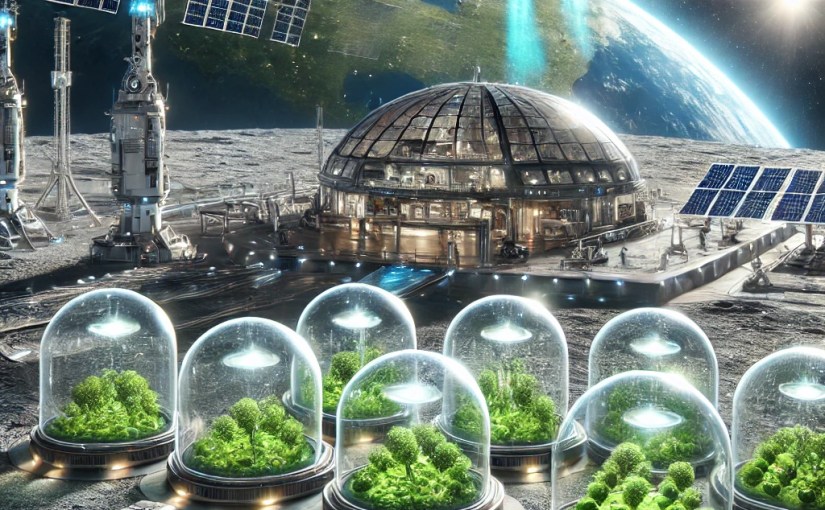
As Dr. Aryan Verma’s space car drifted past the final checkpoint of the space highway, the vast, silvery expanse of the Moon colony came into full view. The sight was breathtaking—an intricate network of interconnected domes glistening under the Sun’s distant glow, forming a self-sustaining ecosystem in the heart of the void. Unlike Earth, where the sky wrapped around life like a comforting blanket, here, there was only the endless black of space, dotted with distant stars—silent, still, and yet brimming with a strange aliveness.

The landing zone was a large circular platform, softly illuminated by embedded guiding lights. As the space car touched down with a gentle hum, Aryan took a deep breath. The air inside the colony was oxygen-rich and clean—manufactured to perfection, yet missing the raw scent of soil, trees, and life.

Settling Into Their New Home

Meera stepped out first, her eyes scanning the unfamiliar surroundings. The residential buildings were unlike anything on Earth—sleek, minimalistic, and designed to withstand the Moon’s extreme conditions. Their home was a spacious dome-shaped unit, transparent from the top to give a panoramic view of space while shielding them from harmful radiation. Inside, everything was optimized for comfort—gravity regulators ensured normal movement, temperature control systems mimicked Earth’s warmth, and artificial gardens provided a sense of greenery.

Avni and Ansh rushed in, exploring every corner with excitement. “It’s so quiet,” Avni whispered, feeling the stark contrast from Earth’s chaotic, noisy environment. Even their voices felt different in the controlled atmosphere, softer, almost floating.

“True calmness is rare,” Aryan remarked, placing a reassuring hand on Meera’s shoulder. “Back on Earth, we were always surrounded by distractions—noise, competition, the constant molding of minds. Here, there’s space… in every sense.”

Memories of Earth & The Pain of Letting Go

Despite the futuristic marvel of their new home, a sense of longing lingered in the air. Aryan’s parents had refused to come along, unwilling to leave behind the ancestral home, the farmlands, and the animals they had nurtured for decades. “We belong to Earth,” his father had said firmly before they left. “Life is not just about comfort; it is about connection. The land, the trees, the animals—they are part of us.”

Aryan had respected their decision, but the pain was undeniable. He had grown up surrounded by fields, the sound of birds at dawn, the familiar scent of rain-soaked earth. And now, all of it was a quarter-million miles away, locked in memories.

The children, too, had struggled with the transition. Avni, despite her fascination with technology, had found it hard to leave behind her friends and adapt to a new education system that was starkly different from Earth’s. “It’s like starting over,” she had sighed. But she had chosen optional veterinary subjects, a way to stay connected with her father’s work and her childhood love for animals. Ansh, being younger, adapted more easily, but he too had moments of silent sadness.

Space – Beyond Existence & Non-Existence

Sitting in their new home, gazing out at the infinite blackness beyond, Aryan spoke to Meera about a realization that had struck him deeply. “People think we are traveling in space, as if this journey is something extraordinary. But they don’t realize they, too, are constantly moving in space—whether on Earth or beyond. Mass is just an illusion; at its core, everything is energy. The only real travel is the one happening within.”

Meera nodded, absorbing his words. In a way, space itself was like the state before creation—neither existent nor non-existent, yet undeniably present. This awareness was comforting. Just as the Moon had become their new home, this journey beyond material attachment was a step closer to something deeper.

The Pluto Transfer – A Fateful Turn

Aryan had almost been transferred to Pluto before the Moon assignment. Given his ankylosing spondylitis, he had canceled the transfer at the last moment—Pluto’s extreme cold would have worsened his condition. Interestingly, without his direct involvement, his reassignment had been adjusted to the Moon instead. Perhaps fate had played its part.

“But you know,” Aryan mused, “once you cross a certain distance from your old habitat, it doesn’t matter where you go. The mind lets go of attachment equally, whether it’s the Moon or Pluto.”

Meera smiled. “Then maybe the real home isn’t a place—it’s what we carry within.”

Technology vs. Naturalness – The Balance of Evolution

Despite the incredible advancements of space civilization, Aryan had observed something curious—most people still preferred natural experiences over artificial alternatives. Technology had advanced to a point where one could extract anything from the void and dissolve anything back into it by manipulating virtual particles. Even food could be directly injected into the bloodstream, bypassing the need to eat. Yet, people still preferred eating meals the traditional way. How to get joy of food taste without eating it.

“Naturalness has a separate joy,” Aryan said, watching a nearby gravity-regulated sports field where children played under artificial moonlight. “Just like grounding in yoga is only possible due to gravity. If one levitates endlessly, one can never touch the peak—one remains floating, never truly arriving.”

Meera agreed. “It’s the same with life. Too much ease takes away the challenge that fuels growth. Maybe that’s why, despite all the chaos on Earth, it still holds a special place in people’s hearts.”

Embracing the Silence for Inner Transformation

As Aryan lay back, staring at the stars, he reflected on the past and the journey ahead. Earth had been a whirlwind—rushed schedules, mindless social games, the suffocating need to conform. But here, there was stillness. And in stillness, there was space to evolve.

The chaos of the past had not been in vain. It had taught him to value peace, to use calmness as an opportunity—not for idleness, but for inner transformation.

The Moon was no utopia, nor was it an escape. It was simply the next step—a chance to move beyond the illusions of existence and non-existence, to touch something deeper, something timeless.

And so, their new life on the Moon had begun.

Chapter 2: Leaving the Old World Behind – A Veterinarian’s Journey Through the Cosmic Highway

The Earth was shrinking behind them, a glowing blue pearl fading into the vast darkness. Dr. Aryan Verma adjusted the trajectory of his personal space car, merging onto the Interstellar Highway—a network of metallic lanes stretching between planets, guiding travelers like illuminated veins through the void. The hum of the vehicle’s propulsion system resonated through the cabin as Meera, Avni, and Ansh settled in for the long ride.

But not everyone had come along.

His parents had refused to leave Earth, firmly rooted in their ancestral home, a place where generations had lived and died, where their cattle roamed freely, and where the smell of fresh hay and wet soil was more comforting than the promise of technological advancement.

“Aryan, we belong here,” his father had said, leaning against the old wooden gate of their dairy farm, watching the family spaceship being readied for departure. “Who will care for our cows, our goats, the soil that has given us everything?”

His mother, usually quiet, had echoed the sentiment. “The Moon may have oxygen domes, but will it have the warmth of a monsoon rain? Will you ever feel the same joy watching a newborn calf take its first steps on that sterile ground?”

Aryan had no answers. The Moon’s biosphere colonies had advanced veterinary facilities, research labs, and even artificial pastures, but they would never hold the same soul as Earth’s natural ecosystems. He had spent his entire life tending to animals—not just as a profession, but as a bond, a responsibility. Leaving behind the family farm meant severing that connection.

Even the clinic he built with his own hands, where he had treated everything from injured stray dogs to prized racing horses, now stood in the past. It had been a place where he fought against the commercialized, profit-driven aspects of veterinary science, choosing instead to focus on healing with compassion. The bureaucracy, the pharmaceutical dominance, the constant pressure to conform to standardized treatments rather than holistic care—all of it had drained him. But leaving was no easy relief.

Children’s Struggles: Education, Friendships, and Loss

Avni, in her final year of college, had spent her last days on Earth researching lunar education systems. “Baba, their veterinary courses are different. The entire study structure focuses on genetically modified animals and bio-engineered species. What if I can’t adapt for. Actually she was fond of keeping these as choice subjects for her father being in the veterinary field?”

Ansh had been more emotional, clinging to his favorite rescue dog, Bruno, on the morning of departure. “Can’t we take him with us?” he had begged. The quarantine restrictions on interplanetary animal transport had made it impossible. Aryan had promised Bruno would be well cared for at the family farm, but that didn’t make it easier.

The separation from relatives, school friends, and even the rhythm of Earth’s natural seasons weighed on them. Festivals would now be celebrated in a simulated dome, where the air smelled recycled and the trees were artificial. No more running through open fields, no more cool evening breezes carrying the scent of blooming flowers.

But despite the pain of leaving, there was a strange relief.

Escaping the Chaos of Earth

As Aryan maneuvered through the orbital checkpoints, a sense of liberation washed over him. Earth had become suffocating—not because of its natural beauty, but because of the people, the systems, the mind games.

The work environment had grown more about politics than healing, where flattery mattered more than skill.

The corporate dominance over veterinary medicine had forced him into uncomfortable compromises, pushing treatments based on profit rather than genuine care.

His non-dualistic approach to Sharir Vigyan Darshan, which integrated the animal body with its spiritual existence, had been ridiculed as unscientific nonsense.

The constant pressure to conform, the invasive mind-molding culture, and the lack of respect for personal boundaries had become unbearable.

On the Moon, he hoped for solitude, focus, and a pure connection to his work—a place where he could study the deeper consciousness of animals without interference, without being forced into a commercialized framework of medicine.

Meera, watching him, sensed his unspoken thoughts. “Feeling lighter already?” she asked with a knowing smile.

“Yes,” he admitted. “At least up here, no one will try to twist my mind or question my beliefs every day.”

She squeezed his hand gently. “We’re not escaping. We’re just moving toward something better.”

The Space Highway: A New Kind of Travel

The Interstellar Highway was busier than expected.

Massive cargo freighters carried supplies to lunar colonies, while passenger ships transported workers, researchers, and families like theirs. They passed a floating restaurant-station, where holographic menus advertised everything from Earth-grown wheat pancakes to synthetic meat delicacies.

Meera chuckled as Ansh eagerly pressed his face against the window. “Even in space, humans can’t resist setting up highway diners.”

A few hours into the journey, they hit an unexpected traffic jam. A freight drone had malfunctioned, blocking one of the orbital lanes. The space cops hovered around, rerouting smaller vehicles.

“Looks like traffic jams are universal,” Aryan muttered.

As they waited, Avni scrolled through her lunar school handbook. “Baba, they have an advanced animal genetics research center in Luna Colony-5. You might find it interesting.”

Aryan nodded, intrigued. Perhaps the Moon wouldn’t be as lifeless as he feared.

Approaching the Moon: A Final Look Back

As they neared the Moon’s orbit, Aryan glanced at the rearview screen.

Earth was now a distant sphere, glowing softly in the darkness. It was beautiful yet unreachable, a place they had once called home but could never fully return to.

His father’s words echoed in his mind. “You may reach the Moon, Aryan, but my soul is rooted in this Earth.”

But his soul belonged wherever the animals were, wherever he could practice his dharma without chains, wherever he could be himself without fighting against the noise of the world.

And right now, that place was the Moon.

Their new life was about to begin.

A New Beginning: Exploring Kundalini Through Storytelling

Hi friends,

For a long time, Demystifying Kundalini has been a space for deep insights, serious reflections, and explorations into the mysteries of consciousness. Through direct experiences, analysis, and discussion, we have climbed a peak of understanding—where knowledge has sharpened like a mountain summit.

But what happens after reaching a peak? A true seeker knows that the journey doesn’t end there. The next phase is just as crucial: the slow descent, the gathering of energy, and the preparation for the next ascent.

Now, instead of only discussing Kundalini in its abstract and conceptual form, it’s time to experience it through storytelling—a medium that can convey depth, emotion, and transformation in a way pure intellectual discussion cannot.

Introducing ‘A Cosmic Transfer Order’

This is the first chapter of a new allegorical story series on Demystifying Kundalini, blending elements of science fiction with profound spiritual insights. It follows a protagonist—who is none other than myself—on an unexpected interplanetary journey. But beneath this cosmic adventure lies something deeper: the exploration of Kundalini, consciousness, and the process of awakening.

Just as Kundalini rises and falls in waves, this story mirrors the practical journey of energy management—diving down, consolidating, and preparing for the next transcendental leap.

I invite you to immerse yourself in this journey, not just as a reader, but as a participant in the unfolding of energy, awareness, and transformation.

Let’s begin.

Part 1: Departure from Earth and Settling on the Moon

A Cosmic Transfer Order

It was an ordinary morning on Earth—until the message arrived.

Dr. Aryan Verma, a veterinarian with a calm demeanor and an inquisitive mind, was sipping his usual cup of masala chai when his holo-screen blinked with an urgent notification. The government seal flashed momentarily before a deep robotic voice announced:

“Dr. Aryan Verma, your interplanetary transfer order has been approved. Report to the Lunar Immigration Terminal within 30 days. You are now assigned as the chief veterinarian of Chandravaanshi Lunar Colony.”

Aryan stared at the screen, his mind racing.

“The Moon? Why me?”

He had expected his next assignment to be in some remote biosphere on Earth, tending to genetically modified cattle or hybrid species designed for extreme climates. But the Moon? That was something else entirely.

His wife, Meera, looked up from across the dining table, sensing his hesitation.

“What is it?” she asked, placing her cup down.

Aryan turned the screen toward her. She read the notification twice before meeting his gaze. There was a flicker of worry in her eyes, but also an unspoken excitement.

Their son, Ansh, a 13-year-old obsessed with interstellar travel, practically jumped out of his chair.

“Are we seriously moving to the Moon? That’s so cool! My friends are going to be so jealous.”

His daughter, Avni, a third-year computer science student, was more skeptical.

“The Moon? But I just started working on an AI project with my team! What about my studies?”

Aryan exhaled deeply. The decision wasn’t in his hands anymore. The transfer order wasn’t a request—it was a directive. A high-paying, once-in-a-lifetime government opportunity, but also a drastic uprooting of their Earthly life.

Still, a subtle pull stirred within him—an unexplained inner knowing that this move was not just about a career shift but something much greater.

Meera saw the shift in his expression and gently asked, “Are you ready for this?”

Aryan didn’t answer immediately. He looked past the transparent walls of their apartment, where the artificial sky of the domed megacity shimmered above.

For years, he had worked on Earth, but something in him had always sought more—a deeper meaning beyond the routines of life. Could this be the universe’s way of pushing him toward it?

His heart steadied. A new world awaited.

He turned back to his family and smiled.

“Let’s go to the Moon.”

The Call to Adventure Begins

With only a month to prepare, the Verma family began the chaotic yet exhilarating process of selling assets, saying goodbye, and getting interstellar clearance. Ansh couldn’t stop talking about zero gravity, while Avni still wrestled with doubts about her future.

For Aryan, a sense of destiny loomed in the air.

Little did he know, this journey wasn’t just about relocating to another planet—it was about unlocking the mysteries of the cosmos and the vast universe within himself.

His real awakening had just begun.

Kevala Kumbhaka: Stilling Prana, Stilling Mind, and Burning Karmas to reach moksha

I’ve been contemplating Kevala Kumbhaka and its deep effects on the mind and karma. I see that stilling prana through breath cessation (Kevala Kumbhaka) stills the mind, but I wonder—how does it still the subconscious mind or the deep hidden imprints (samskaras)?

I’ve realized that normal meditation quiets only the surface mind. Even in deep Dhyana, thoughts may become weak, but the subconscious continues vibrating in the background, storing desires, fears, and past impressions. The deeper layers of the mind, where samskaras lie hidden, remain untouched. But Kevala Kumbhaka seems different—it doesn’t just calm the mind, it halts it at its very root.

How Kevala Kumbhaka Reaches the Subconscious Mind

The mind and prana are two sides of the same coin. The subconscious (chitta) holds karmic imprints, and these samskaras stay alive only because prana keeps moving. These sanskaras keep rapidly and continuously forming thoughts related to them. Only few gross thoughts come to our awareness, majority of thoughts are subtle which we even don’t feel. These all thoughts Keep these sanskaras in subconscious alive. Everything fades up with time if energy is not used to sustain it. The same happens with sanskaras. Karma and related thoughts make sanskaras and sanskaras Keep forming same karma and related thought patterns in return. Thus both keep energizing or strengthening each other. Even during few hours of keval kumbhak, when thoughts and subtle thoughts become zero, these sanskaras loose enough strength. That’s why we feel a permanent transformation. Although full erasing may need keval Kumbhak applied for days or routinely. Intentional removal of gross thoughts don’t erase sanskaras because subtle thoughts keep these alive. That’s why we don’t feel transformation with gross mind control even for a long time. May be it works but extremely long time taken by it seems too much impractical. I think permanent transformation after few seconds of awakening or glimpse is also due to this phenomenon. Means even few seconds of full mindlessness is enough to weaken all buried sanskaras.

When prana moves, thoughts and impressions keep arising—like waves in an ocean.

When prana stops completely, there is no movement left to activate samskaras.

Since samskaras get their energy from prana, they lose their charge and start dissolving.

This is why deep states of Kevala Kumbhaka feel like emptiness (shunya), stillness, or even formless awareness. It’s not just a mental silence—it is an absence of karmic momentum itself. Momentum in science means increasing speed. Prana is like a push or speed enhancer to wheeled baggage of sanskaras that otherwise has tendency to slow down and stop as seen in physical world. Push force stops, baggage stops.

This also answers why normal meditation (without breath cessation) cannot fully erase samskaras. In usual meditation, even if thoughts become still, subtle subconscious vibrations still persist. But in Kevala Kumbhaka, even these hidden layers stop vibrating, leading to deep dissolution of past conditioning.

Does Kevala Kumbhaka Deactivate Past Karmas?

Yes, Kevala Kumbhaka can deactivate past karmas, because karma is not just an idea—it is an energy pattern in the subconscious. Since prana fuels karma, when prana stops completely, karmas lose their foundation.

This is how it works:

Sanchita Karma (Accumulated Past Karmas) → Dissolves, because there is no pranic movement to sustain them.

Prarabdha Karma (Karma Already Playing Out in This Life) → Continues temporarily, like a fan that keeps spinning even after the power is cut. But without ego involvement, it is just a play—suffering disappears.

Kriyamana Karma (New Karma Being Created Now) → Completely stops, because the egoic doer (kartabhava) dissolves.

This is why Kevala Kumbhaka is one of the fastest paths to Moksha (liberation). It stops prana, which stops the mind, which stops karma. When karma is erased, the cycle of rebirth (punarjanma) is broken.

Where I Stand in This Journey

I have not yet achieved Nirvikalpa Samadhi, but I have touched Savikalpa Samadhi—where the sense of ‘I’ dissolved, leaving only unified consciousness. However, I intentionally lowered my experience back to the Ajna Chakra, fearing that I might become a renunciate (baba). This choice might have prevented me from entering the realm of Nirvikalpa Samadhi.

I now realize that awakening glimpses alone are not enough. The true challenge is sustaining liberation forever. While enlightenment experiences may happen, if karmic seeds remain, one may still fall back into egoic identification. Karma or sanskara baggage makes ego of a person because he’s deeply attached to it. The real work is in burning samskaras completely, ensuring no return to ignorance.

Right now, I believe that Kevala Kumbhaka is the missing key—it seems to be the fastest way to erase deep karmic imprints, still the subconscious, and lead to Nirvikalpa Samadhi and final Moksha.

I see that chasing Nirvikalpa Samadhi without Kevala Kumbhaka seems nearly impossible—because as long as prana moves, some mind activity remains, and as long as mind moves, some karma remains.

Final Thoughts

This journey is not about mystical experiences or temporary bliss—it’s about final, irreversible freedom. Awakening, enlightenment, glimpses of truth—they all lose meaning if the mind returns. True liberation is when nothing returns—not the ego, not karma, not even the subtlest movement of thought.

Kevala Kumbhaka appears to be the direct method to reach that state. Whether I will achieve it or not, only time and my practice will tell—but the direction is clear.

For now, I continue my sadhana, refining my understanding and methods, aiming to go beyond mere glimpses into permanent dissolution.

केवली कुंभक: मोक्ष तक पहुँचने के लिए प्राण, मन को शांत करने और कर्मों को जलाने की सर्वोत्तम विधि 

मैं केवली कुंभक और मन और कर्म पर इसके गहरे प्रभावों पर विचार कर रहा हूँ। मैं देखता हूँ कि साँस को रोककर प्राण को शांत करना (केवल कुंभक) मन को शांत करता है, लेकिन मुझे आश्चर्य होता है—यह अवचेतन मन या गहरे छिपे हुए छापों (संस्कारों) को कैसे शांत करता है?

मैंने महसूस किया है कि सामान्य ध्यान केवल सतही मन को शांत करता है। गहरे ध्यान में भी, विचार कमज़ोर हो सकते हैं, लेकिन मन अवचेतन पृष्ठभूमि में कंपन करना जारी रखता है, और इच्छाओं, भय और पिछली छापों को संग्रहीत करता है। इससे मन की गहरी परतें, जहाँ संस्कार छिपे होते हैं, वे अछूती रहती हैं। लेकिन केवला कुंभक अलग लगता है—यह न केवल मन को शांत करता है, बल्कि इसे उसकी जड़ में ही रोक देता है।

केवल कुंभक अवचेतन मन तक कैसे पहुँचता है

मन और प्राण एक ही सिक्के के दो पहलू हैं। अवचेतन (चित्त) में कर्म के निशान होते हैं और ये संस्कार केवल इसलिए जीवित रहते हैं क्योंकि प्राण गतिमान रहते हैं। ये संस्कार तेजी से और लगातार अपने से संबंधित विचारों का निर्माण करते रहते हैं। केवल कुछ स्थूल विचार ही हमारी चेतना में आते हैं, अधिकांश विचार सूक्ष्म होते हैं जिन्हें हम महसूस भी नहीं करते हैं। ये सभी विचार अवचेतन में इन संस्कारों को जीवित रखते हैं। यदि इसे बनाए रखने के लिए ऊर्जा का उपयोग नहीं किया जाता है तो समय के साथ सब कुछ फीका पड़ जाता है। संस्कारों के साथ भी ऐसा ही होता है। कर्म और उनसे संबंधित विचार उनसे जुड़े संस्कार बनाते हैं और संस्कार बदले में वही कर्म और संबंधित विचार पैटर्न बनाते रहते हैं। इस प्रकार दोनों एक-दूसरे को ऊर्जा प्रदान करते या मजबूत करते रहते हैं। केवल कुंभक के कुछ घंटों के दौरान भी, जब विचार और सूक्ष्म विचार शून्य हो जाते हैं, तो ये संस्कार काफी ताकत खो देते हैं। इसलिए हम एक स्थायी परिवर्तन महसूस करते हैं। यद्यपि पूर्ण उन्मूलन के लिए हो सकता है कि यह कारगर हो, लेकिन इसमें लगने वाला बहुत लंबा समय बहुत अव्यावहारिक लगता है। मुझे लगता है कि जागरण या झलक के कुछ सेकंड के बाद स्थायी रूपांतरण भी इसी घटना के कारण होता है। इसका मतलब है कि जागृति के पूर्ण मनहीनता के कुछ सेकंड भी सभी दबे हुए संस्कारों को कमजोर करने के लिए पर्याप्त हैं। जब प्राण गति करता है, तो अवचेतन में छोटे बड़े विचार उठते रहते हैं – जैसे समुद्र में छोटी बड़ी लहरें उठती रहती हैं। समुद्र यहां अवचेतन का पर्याय है और उसे हिलाने वाली हवा प्राण की।जब प्राण पूरी तरह से रुक जाता है, तो संस्कारों को सक्रिय करने के लिए कोई गति नहीं बचती। चूँकि संस्कार प्राण से अपनी ऊर्जा प्राप्त करते हैं, इसलिए वे अपना आवेश खो देते हैं और विलीन होने लगते हैं। यही कारण है कि केवल कुंभक की गहरी अवस्थाएँ शून्यता, स्थिरता या यहाँ तक कि निराकार जागरूकता जैसी लगती हैं। यह केवल मानसिक मौन नहीं है – यह कर्म या संस्कार के वेग़ का अभाव है। विज्ञान में वेग का अर्थ है गति बढ़ना। प्राण संस्कारों के रूप में पहिएदार बैग को धक्का देने या गति बढ़ाने वाले की तरह है। अन्यथा जैसा कि भौतिक दुनिया में भी देखा जाता है, यह बिना बल के धीमा होने और रुकने की प्रवृत्ति रखता है। धक्का बल रुक जाता है, तो सामान से भरा बैग भी रुक जाता है। यह इस बात का भी उत्तर देता है कि सामान्य ध्यान (केवल कुंभक के बिना) संस्कारों को पूरी तरह से मिटा नहीं सकता। सामान्य ध्यान में, भले ही विचार शांत हो जाएं, सूक्ष्म अवचेतन कंपन अभी भी बने रहते हैं। लेकिन केवली कुंभक में, ये छिपी हुई परतें भी कंपन करना बंद कर देती हैं, जिससे पिछली कंडीशनिंग का गहरा विघटन होता है।

क्या केवल कुंभक पिछले कर्मों को निष्क्रिय करता है?

हां, केवल कुंभक पिछले कर्मों को निष्क्रिय कर सकता है, क्योंकि कर्म केवल एक विचार नहीं है – यह अवचेतन में एक ऊर्जा पैटर्न है। चूंकि प्राण कर्म को बढ़ावा देता है, जब प्राण पूरी तरह से रुक जाता है, तो कर्म अपना आधार खो देते हैं।

यह इस तरह काम करता है:

संचित कर्म (संचित पिछले कर्म) → विलीन हो जाते हैं, क्योंकि उन्हें बनाए रखने के लिए कोई प्राणिक गति नहीं होती है।

प्रारब्ध कर्म (इस जीवन में पहले से चल रहे कर्म) → अस्थायी रूप से जारी रहता है, जैसे बिजली कट जाने के बाद भी पंखा घूमता रहता है। लेकिन अहंकार की भागीदारी के बिना, यह सिर्फ एक नाटक होता है – मतलब दुख गायब हो जाता है।

क्रियमाण कर्म (अभी बनाया जा रहा नया कर्म) → पूरी तरह से रुक जाता है, क्योंकि अहंकारी कर्ता (कर्ताभाव) विलीन हो जाता है। संस्कार से जुड़कर ही आत्मा अहंकारी कर्ता बनता है। संस्कार नहीं तो कर्ता भाव नहीं। यही कारण है कि केवल कुंभक मोक्ष (मुक्ति) के सबसे तेज़ मार्गों में से एक है। यह प्राण को रोकता है, जो मन को रोकता है, जो कर्म को रोकता है। जब कर्म मिट जाता है, तो पुनर्जन्म (पुनर्जन्म) का चक्र टूट जाता है। 

इस यात्रा में मैं कहाँ खड़ा हूँ 

मैंने अभी तक निर्विकल्प समाधि प्राप्त नहीं की है, लेकिन मैंने सविकल्प समाधि को छू लिया है – जहाँ ‘मैं’ की भावना विलीन हो जाती है, केवल एकीकृत चेतना रह जाती है। हालाँकि, मैंने जानबूझकर अपने अनुभव को वापस अजना चक्र मेंविलीन कर दिया, इस डर से कि इससे मैं एक त्यागी (बाबा) बन सकता हूँ। जागृति को नीचे उतारने से ही संभवतः मुझे निर्विकल्प समाधि के दायरे में प्रवेश करने से रोक दिया गया हो। अब मुझे एहसास हुआ है कि केवल जागृति की झलकें ही पर्याप्त नहीं हैं। असली चुनौती हमेशा के लिए मुक्ति को बनाए रखना है। यद्यपि आत्मज्ञान के अनुभव हो सकते हैं, यदि कर्म के बीज बचे रहते हैं, तो व्यक्ति फिर से अहंकारी पहचान में पड़ सकता है। कर्म या संस्कार का बोझ व्यक्ति को अहंकारी बनाता है क्योंकि वह उससे गहराई से जुड़ा होता है। असली काम संस्कारों को पूरी तरह से जलाना है, यह सुनिश्चित करना कि अज्ञानता की ओर कोई वापसी न हो। अभी, मेरा मानना ​​है कि केवल कुंभक ही वह कुंजी है जो गायब है – यह गहरे कर्म के छापों को मिटाने का सबसे तेज़ तरीका लगता है, जो अवचेतन को खत्म करके शाश्वत चेतना को जागृत करता है, तथा निर्विकल्प समाधि और अंतिम मोक्ष की ओर ले जाता है।

मैं देखता हूँ कि केवल कुम्भक के बिना निर्विकल्प समाधि का पीछा करना लगभग असंभव लगता है – क्योंकि जब तक प्राण गतिमान रहता है, तब तक कुछ न कुछ मन की गतिविधि बनी रहती है, और जब तक मन गतिमान रहता है, तब तक कुछ न कुछ कर्म बने रहते हैं।

अंतिम विचार

यह यात्रा रहस्यमय अनुभवों या अस्थायी आनंद के बारे में नहीं है – यह अंतिम, अपरिवर्तनीय स्वतंत्रता के बारे में है। जागृति, ज्ञान, सत्य की झलक – यदि मन वापस लौटता है तो वे सभी अर्थ खो देते हैं। सच्ची मुक्ति तब होती है जब कुछ भी वापस नहीं आता – न अहंकार, न कर्म, यहाँ तक कि विचार की सूक्ष्मतम गति भी नहीं।

केवल कुम्भक उस अवस्था तक पहुँचने का सीधा तरीका प्रतीत होता है। मैं इसे प्राप्त कर पाऊँगा या नहीं, यह तो केवल समय और मेरा अभ्यास ही बताएगा – लेकिन दिशा स्पष्ट है।

अभी के लिए, मैं अपनी साधना जारी रखता हूँ, अपनी समझ और विधियों को परिष्कृत करता हूँ, जिसका लक्ष्य केवल झलकों से आगे बढ़कर स्थायी विलयन तक पहुँचना है।

The Subtle Balance Between Meditation and Real-Time Awareness

For years, my spiritual journey has been shaped by deep contemplation, structured meditation, and the real-time application of awareness in daily life. The most profound experiences, however, have not come from withdrawing from the world but from integrating awareness within the flow of worldly responsibilities.

One of the key insights I’ve gained is that Sharir Vigyan Darshan (contemplation of the body) can act as a direct entry point into a state of relaxation and clarity, even amidst chaos. A single, instant gaze on the body is enough to trigger a gasp followed by slow breathing, bringing momentary relief. While this is not Kevala Kumbhaka (breathless state), it is a spontaneous shift in breath and energy, offering a glimpse of balance in the middle of life’s rush.

The Role of Lifestyle in Sustaining Awareness

I have realized that a sattvik, slow-paced lifestyle naturally supports Sharir Vigyan Darshan—allowing contemplation to remain effortless and continuous. On the other hand, a fast-paced, rajasic, or tamasic lifestyle makes it harder to sustain awareness, requiring deliberate effort to return to real-time contemplation.

However, rather than waiting for ideal conditions, I prefer to put in the effort at every moment, regardless of the chaos, while ensuring that worldly responsibilities remain undisturbed. But this isn’t always so. Many times as much worldly chaos is there that much easy and uplifting and blissful the sitting meditation session becomes. However one prerequisite is that the sharirvigyan darshan contemplation should fit properly and deeply inside the worldly chaos. Means it should look if one is doing blissful and pleasurable meditation while deeply indulged in the worldly chaos. It seems best possible only with the sharirvigyan darshan. This approach is not about withdrawing but about integrating awareness within action itself.

The Evolution from Structured Meditation to Spontaneous Awareness

In the past, I maintained structured meditation practices to cultivate stability. Over time, this meditation practice naturally extended into real-time awareness, where contemplation is not separate from daily life.

This shift taught me that:

Structured meditation provides the foundation, deepening clarity and stillness.

Real-time awareness ensures that these meditative insights do not remain confined to practice sessions but become a way of being.

Over time, structured meditation and real-time contemplation start complementing each other, creating a seamless cycle where neither is forced.

Even though my practice has evolved, I have not yet reached the stage where real-time awareness is completely effortless. There are still moments where conscious engagement is required to sustain it. However, the effort needed has gradually decreased with time, making contemplation more natural. However this effort is like a blissful play, not like a boring burden. Yes, one should have atleast minimum threshold of energy in body to properly sustain it.

A Journey Still Unfolding

Despite glimpsing higher states, including Savikalpa Samadhi, I have not yet experienced Nirvikalpa Samadhi—the state of complete dissolution. I also recognize that Kevala Kumbhaka, though experienced for hours, still requires deeper refinement. To invite it more naturally, I now emphasize deep spinal breathing in my Kriya practice, ensuring that energy work continues as before but with more attention to breath.

At this point, I seek a grounded normalcy with nondual awareness, where the balance between worldly life and deeper states of realization is not an ongoing struggle but a natural rhythm. The goal is not to escape into transcendence but to sustain a stable, awakened presence while fully engaged with life.

The Takeaway

From my experience, one truth has become clear:

Spiritual growth is not about isolating meditation from life but allowing both to complement each other.

Real-time awareness can be developed, even amidst chaos, but requires consistent practice.

A sattvik lifestyle naturally supports awareness, but effort is still required in rajasic or tamasic conditions.

Structured meditation provides depth, while real-time contemplation ensures integration.

Even momentary glimpses of awareness accumulate over time, leading to constant level type awareness and subsequently more permanent inner transformation.

I am still exploring, refining, and learning. My practice is not yet perfect, but the path is clear: Balance between structured meditation and real-time awareness is the key to sustaining both spiritual depth and worldly engagement.

ध्यान और वास्तविक समय की जागरूकता के बीच सूक्ष्म संतुलन

वर्षों से, मेरी आध्यात्मिक यात्रा गहन चिंतन, संरचित ध्यान और दैनिक जीवन में वास्तविक समय की जागरूकता के अनुप्रयोग द्वारा आकार लेती रही है। हालाँकि, सबसे गहन अनुभव दुनिया से दूर हटने से नहीं बल्कि सांसारिक जिम्मेदारियों के प्रवाह में जागरूकता को एकीकृत करने से आए हैं।

मैंने जो महत्वपूर्ण अंतर्दृष्टि प्राप्त की है, उनमें से एक यह है कि शरीर विज्ञान दर्शन (होलोग्राफिक शरीर का चिंतन) दुनियावी अराजकता के बीच भी विश्राम और स्पष्टता की स्थिति के लिए सीधे प्रवेश द्वार के रूप में कार्य कर सकता है। शरीर पर एक बार, उड़ती हुई या तुरंत नज़र डालना एक गहरी गैस्प या सांस को ट्रिगर करने के लिए पर्याप्त है, जिसके बाद धीमी गति से सांस लेना, क्षणिक राहत देता है। हालाँकि यह केवला कुंभक (सांस रहित अवस्था) नहीं है, यह सांस और ऊर्जा में एक सहज बदलाव है, जो जीवन की भागदौड़ के बीच संतुलन की एक झलक पेश करता है।

जागरूकता को बनाए रखने में जीवनशैली की भूमिका

मैंने महसूस किया है कि एक सात्विक, धीमी गति वाली जीवनशैली स्वाभाविक रूप से शरीर विज्ञान दर्शन का समर्थन करती है – चिंतन को सहज और निरंतर रहने देती है। दूसरी ओर, एक तेज़-तर्रार, राजसिक या तामसिक जीवनशैली जागरूकता को बनाए रखना कठिन बना देती है, और इसके लिए वास्तविक समय के चिंतन में लौटने के लिए जानबूझकर प्रयास करने की आवश्यकता होती है।

हालाँकि, आदर्श परिस्थितियों की प्रतीक्षा करने के बजाय, मैं अराजकता की परवाह किए बिना हर पल प्रयास करना पसंद करता हूँ, और यह सुनिश्चित करता हूँ कि सांसारिक ज़िम्मेदारियाँ अप्रभावित रहें। लेकिन ऐसा हमेशा नहीं होता। कई बार सांसारिक अराजकता जितनी अधिक होती है, बैठने का ध्यान सत्र उतना ही आसान, उत्थानशील और आनंदमय हो जाता है। हालाँकि एक शर्त यह है कि शरीरविज्ञान दर्शन का चिंतन सांसारिक अराजकता के भीतर ठीक से और गहराई से फिट होना चाहिए। इसका मतलब यह है कि ऐसा दिखना चाहिए कि कोई व्यक्ति सांसारिक अराजकता में गहराई से लिप्त रहते हुए भी आनंदमय और सुखपूर्ण ध्यान कर रहा है। ऐसा लगता है कि यह केवल शरीरविज्ञान दर्शन के साथ ही सबसे अच्छा संभव है। यह दृष्टिकोण पीछे हटने के बारे में नहीं है, बल्कि क्रिया के भीतर जागरूकता को एकीकृत करने के बारे में है।

संरचित ध्यान से सहज जागरूकता तक का विकास

अतीत में, मैंने स्थिरता विकसित करने के लिए संरचित ध्यान अभ्यास बनाए रखा। समय के साथ, यह ध्यान अभ्यास स्वाभाविक रूप से वास्तविक समय की जागरूकता में विस्तारित हो गया, जहाँ चिंतन दैनिक जीवन से अलग नहीं है।

इस बदलाव ने मुझे सिखाया कि:

संरचित ध्यान आधार प्रदान करता है, स्पष्टता और स्थिरता को गहरा करता है।

वास्तविक समय की जागरूकता सुनिश्चित करती है कि ये ध्यान संबंधी अंतर्दृष्टि अभ्यास सत्रों तक ही सीमित न रहें बल्कि जीवन जीने का एक तरीका बन जाए।

समय के साथ, संरचित ध्यान और वास्तविक समय का चिंतन एक दूसरे के पूरक बनने लगते हैं, जिससे एक सहज चक्र बनता है जहाँ किसी को भी आने के लिए मजबूर नहीं किया जाता है।

भले ही मेरा अभ्यास विकसित हो गया हो, लेकिन मैं अभी तक उस चरण तक नहीं पहुँचा हूँ जहाँ वास्तविक समय की जागरूकता पूरी तरह से सहज हो। अभी भी ऐसे क्षण हैं जहाँ इसे बनाए रखने के लिए सचेत जुड़ाव की आवश्यकता होती है। हालाँकि, समय के साथ आवश्यक प्रयास धीरे-धीरे कम हो गया है, जिससे चिंतन अधिक स्वाभाविक हो गया है। हालाँकि यह प्रयास एक आनंदमय खेल की तरह है, न कि एक उबाऊ बोझ की तरह। हाँ, इसे ठीक से बनाए रखने के लिए शरीर में जरूरी ऊर्जा की न्यूनतम मात्रा तो होनी ही चाहिए।

एक यात्रा अभी भी जारी है

सविकल्प समाधि सहित उच्चतर अवस्थाओं की झलक पाने के बावजूद, मैंने अभी तक निर्विकल्प समाधि का अनुभव नहीं किया है – जो पूर्ण विलय की अवस्था है। हालाँकि मैं यह भी मानता हूँ कि केवली कुंभक, जिसे बेशक मैने घंटों तक अनुभव किया है, फिर भी इसे और अधिक परिष्कृत करने की आवश्यकता है। इसे और अधिक स्वाभाविक रूप से आमंत्रित करने के लिए, मैं अब अपने क्रिया अभ्यास में  रीढ़ की हड्डी से गहरी सांस लेने पर जोर देता हूँ, यह सुनिश्चित करते हुए कि ऊर्जा कार्य पहले की तरह जारी रहे लेकिन सांस पर अधिक ध्यान दिया जाए।

इस बिंदु पर, मैं अद्वैत जागरूकता के साथ एक जमीनी सामान्यता (नॉर्मल ग्राउंडिंग) की तलाश करता हूँ, जहाँ सांसारिक जीवन और बोध की गहरी अवस्थाओं के बीच संतुलन एक निरंतर संघर्ष नहीं बल्कि एक प्राकृतिक लय बन जाए। लक्ष्य पारलौकिकता में भागना नहीं है, बल्कि जीवन के साथ पूरी तरह से जुड़े रहते हुए एक स्थिर, जागृत उपस्थिति को बनाए रखना है।

मेरे अनुभव से, एक सत्य स्पष्ट हो गया है:

आध्यात्मिक विकास का मतलब जीवन से ध्यान को अलग करना नहीं है, बल्कि दोनों को एक दूसरे के पूरक होने देना है।

वास्तविक समय की जागरूकता विकसित की जा सकती है, यहाँ तक कि अराजकता के बीच भी, लेकिन इसके लिए निरंतर अभ्यास की आवश्यकता होती है।

सात्विक जीवनशैली स्वाभाविक रूप से जागरूकता का समर्थन करती है, लेकिन राजसिक या तामसिक स्थितियों में अभी भी प्रयास की आवश्यकता होती है। संरचित ध्यान गहराई प्रदान करता है, जबकि वास्तविक समय का चिंतन जीवन और अध्यात्म दोनों का एकीकरण सुनिश्चित करता है। जागरूकता की क्षणिक झलक भी समय के साथ जमा होती रहती है, जिससे निरंतर स्तर की जागरूकता और बाद में अधिक स्थायी आंतरिक परिवर्तन होता है। मैं अभी भी खोज, परिशोधन कर रहा हूं और सीख रहा हूँ। मेरा अभ्यास अभी तक परिपूर्ण नहीं है, लेकिन रास्ता स्पष्ट है: संरचित ध्यान और वास्तविक समय की जागरूकता के बीच संतुलन आध्यात्मिक गहराई और सांसारिक जुड़ाव दोनों को बनाए रखने की कुंजी है।