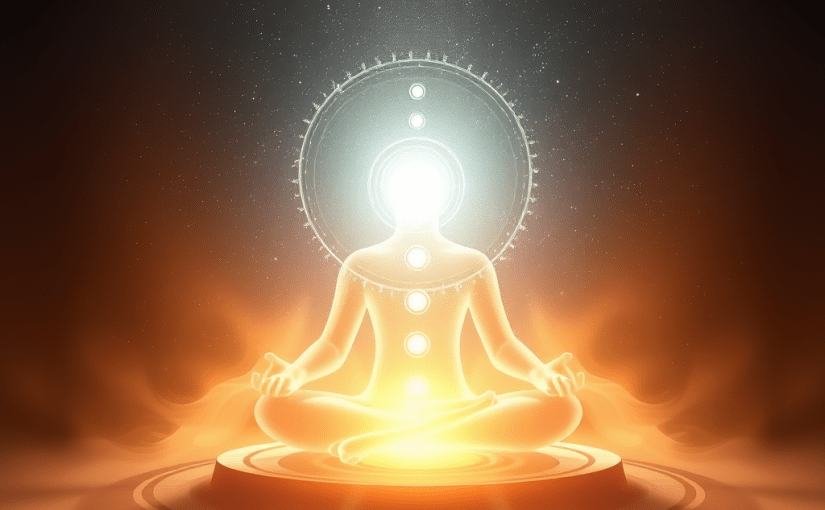
From Effort to Effortlessness: How Sadhana Evolves with Keval Kumbhak

The Tug of War: Prana and Apana

In the beginning, the breath is governed by a subtle tug of war:

  • Prana moves upward, initiating inhalation.
  • Apana moves downward, initiating exhalation.

Normally, when Prana is stronger than Apana, there’s a net upward movement that pulls the breath in. But if both are equally strong and opposite, like in a tug of war, the rope doesn’t move. No inhalation or exhalation occurs — this is the subtle groundwork of Keval Kumbhak, the state of breathless stillness.


😴 What Is Keval Kumbhak?

Keval Kumbhak is a spontaneous cessation of breath:

  • No inhalation.
  • No exhalation.
  • No deliberate breath-holding.
  • Yet total comfort and stillness prevail.

It only arises when Prana and Apana have fully merged, dissolving their duality. We can call both opposite teams in tug of war joined hand or merged when net movement of rope is nil, because that means they are friends and not fighting, similarly prana and apana are called merged when there’s no breath movement. When apana pulled up through mool bandha and prana pushed down with jalandhar bandh and both joined at heart chakra, it suspends breathing for longer period because prana and apana are merged. Similarly breath suspension means prana and apana merged along the spine.


⛳️ The Role of Sadhana Before Keval Kumbhak

Before Keval Kumbhak becomes a living experience, practices like:

  • Kriya breathing,
  • Pranayama,
  • Bandhas and Mudras,
  • Chakra visualizations,
  • Spinal breathing,

are necessary to:

  • Purify the nadis,
  • Balance energy flows,
  • Harmonize mind and breath,
  • Prepare the system to taste natural stillness.

Sadhana is the boat that helps you cross the river.


🌿 After Keval Kumbhak: Should Sadhana Stop?

No. But it transforms.

When Keval Kumbhak starts happening on its own:

  • The earlier effort-based practices drop naturally.
  • There’s no longer a feeling of “doing to achieve.”
  • Awareness enters a phase of effortless being.

But this does not mean abandoning Kriya, Pranayama, or Yogasana. Instead:

  • They now serve to tune the inner instrument.
  • Sadhana becomes a celebration, not a climb.
  • It’s like playing music you already know, to enter its mood again.

🌬️ Spinal Breathing: The Magnetic Vacuum

Advanced yogis discover that spinal breathing (gently tracing breath or energy up and down the spine):

  • Opens and clears the Sushumna Nadi,
  • Balances Ida and Pingala,
  • Produces a magnetic vacuum in the spine,

This vacuum pulls awareness inward. It becomes so potent that:

  • Prana and Apana merge effortlessly,
  • Breath stops without trying,
  • Keval Kumbhak dawns again and again.

Even visualizing this movement (without physical breath) can sometimes recreate that inner suction and lead to spontaneous stillness.


⚡ How Sadhana Helps After Keval Kumbhak

Once Keval Kumbhak has occurred, gentle sadhana:

  • Maintains energy purity,
  • Prevents pranic stagnation,
  • Keeps the system sensitive and receptive,
  • Allows you to enter absorption on demand.

It transitions from effort to joyful inner tuning. You are no longer striving to arrive; you are inviting grace.


✅ Conclusion: Effort Transforms, Not Ends

After Keval Kumbhak, don’t stop sadhana — let it evolve. Let go of strain. Continue with energy-aware joy. Your practice is no longer a ladder — it’s a resonance.

Spinal breathing becomes the silent flute. Kriya becomes the tuning fork. Pranayama becomes a prayer without words.

And Keval Kumbhak becomes the still, living temple where all this silence meets.

Eternal Keval Kumbhak vs Eternal Nirvikalpa Samadhi: Which Is Closer to God?

Perfect. Here’s a fully text-based poetic-style blog post that captures the contrast between Eternal Keval Kumbhak and Eternal Nirvikalpa Samadhi, without using any charts — entirely suitable for WordPress:


🕉️ Eternal Keval Kumbhak vs Eternal Nirvikalpa Samadhi: Which Is Closer to God?

In the deepest folds of yoga and mysticism, seekers often ask:

Is God in eternal Keval Kumbhak — breathless, still, yet vibrantly alive?
Or is He in eternal Nirvikalpa Samadhi — formless, thoughtless, pure being beyond all dualities?

Let us explore this with inner reverence and clarity.


🌬️ Keval Kumbhak – The Breathless God

Keval Kumbhak is the spontaneous, effortless retention of breath — not forced, not practiced, but arising naturally when prana and apana merge, when duality ends in the body.

In this state:

  • Breath is utterly still.
  • Yet the being is fully alive, aware, and undisturbed.
  • No inhalation, no exhalation — just an eternal pause.
  • The body is like a flame that doesn’t flicker.
  • Consciousness watches in silence, as if holding the entire universe in its womb.

When a yogi experiences Keval Kumbhak, even for moments, it feels divine — as though the body has turned to sky, and the soul floats in a still ocean of life.

To imagine God in eternal Keval Kumbhak is to see Him as the supreme yogialive, breathless, still, watching all creation without moving a single atom within Himself.


🧘‍♂️ Nirvikalpa Samadhi – The Formless God

But deeper than breath, deeper than body, deeper even than witnessing silence — is Nirvikalpa Samadhi.

In this state:

  • There is no mind, no breath, no body-awareness.
  • There is no observer or observed.
  • Thought vanishes. Even the sense of “I am” dissolves.
  • No God, no world — just pure being, limitless, indivisible.

This is not a state that comes and goes. It is the true nature of existence, of Self, of God — beyond the idea of God.

To speak of God as being in eternal Nirvikalpa Samadhi is to say:

He is not “in” a state — He is the foundationless Reality,
before the first breath, before time, before space.
He does not breathe, think, move — He simply Is.


🕊️ So Which Is Closer to the Truth?

Both images are true — from different lenses.

  • Eternal Keval Kumbhak is God as the silent, breathless, cosmic yogi, holding the universe in still awareness — beautiful, relatable, alive.
  • Eternal Nirvikalpa Samadhi is God as the absolute Self, beyond all movement, even breathlessness — infinite, silent, unknowable.

If you seek relationship, devotion, or a form of living stillness, Keval Kumbhak paints a divine picture of God.

If you seek nonduality, liberation, or truth beyond all ideas, Nirvikalpa Samadhi is the ultimate doorway — and the place beyond all doorways.


✨ A Closing Reflection

God doesn’t breathe — because He is the source of breath.
God doesn’t think — because He is the witness before thought.
God doesn’t meditate — because He is the end of meditation.

You may call Him the breathless one — or the formless one.
You may find Him in stillness — or lose yourself in His silence.

Both are true.
Both are holy.
Both lead home.

The Inner Science of Ida, Pingala, Prana, Apana, and the Path to Spiritual Awakening

Introduction

In yogic science, two terms often come up together: Ida–Pingala and Prana–Apana. Many seekers wonder:

“Are Ida and Pingala the same as Prana and Apana? Or do they represent something different?”

This post dives deep into how these energy channels and forces work together in awakening, breath stillness (Keval Kumbhak), and spiritual realization—while staying simple enough for a curious beginner or child to grasp.


🌀 The Yogic Energy System in Simple Words

In ordinary life, Ida and Pingala—the two primary energy nadis—crisscross at each chakra. This means that even in average people, there’s some momentary merging at each chakra. However, the difference between an ordinary person and a yogi lies in awareness, intensity, and continuity:

  • In ordinary life, the merging is occasional, unconscious, and often overshadowed by external desires.
  • In a yogi, the merging is conscious, prolonged, and backed by focused inner practice. Over time, the whole Sushumna Nadi (central channel) becomes activated—not just at a few points.

This is when Ida and Pingala no longer appear as distinct currents; their merging becomes a continuous inner reality, and the double-helix pattern dissolves into unified stillness.

This merging isn’t just symbolic. In the deeper yogic sense, it reflects a shift in the internal flow of prana and apana that normally act in opposite directions. In higher states, these opposing energies begin to neutralize each other, leading to the awakening of the central channel—Sushumna Nadi.


🌬️ Prana and Apana: Two Key Inner Forces

Prana Vayu:

  • Upward-moving energy
  • Governs heart, lungs, perception, thoughts
  • Related to Ida Nadi

Apana Vayu:

  • Downward-moving energy
  • Governs elimination, reproduction, grounding
  • Related to Pingala Nadi

Even though they operate across the body, their tendencies match these nadis. So:

Ida ≈ Prana Vayu (inward, mental, cooling)

Pingala ≈ Apana Vayu (outward, physical, heating)

This mapping is not rigid but offers great practical value for meditative and breath-centered practice.


⚖️ Merging: The Real Game Begins

When Prana and Apana become equal and opposite, they cancel each other energetically. This doesn’t mean nothing is happening—rather, a new dimension opens:

  • Breath stops naturally (Keval Kumbhak)
  • Energy no longer flows outward
  • Consciousness turns inward and rises
  • Kundalini begins to move up through Sushumna

This silent movement is often not dramatic. Many sincere practitioners feel:

  • No visions or sounds
  • No sparks or shakes
  • Just a subtle bliss rising silently, like a warm cord up the spine

🧘 Experiences During Keval Kumbhak

Many practitioners are confused why they don’t feel dramatic experiences or visions during Keval Kumbhak (breathless stillness). But here’s what actually happens:

  • When the breath stops, awareness becomes like a still lake.
  • If enough sexual or vital energy has been conserved and sublimated, it silently starts rising.
  • This rising is not a rush. It is like a slow-moving, blissful river that moves upward—sometimes pausing, sometimes progressing.

You may not see lights or hear celestial sounds. That’s okay. In fact, deeper stillness often lacks sensory signs. Instead, you may feel:

  • Expanded space within your head or body
  • A rising coolness or subtle joy
  • Whole spine occasionally lighting up like a blissful electric cord

These are signs of energy stabilizing into Sushumna.


👁️ The Role of Ajna Drishti (Upward Gaze)

When you gaze upward internally toward the Ajna Chakra (brow center) with closed eyes:

  • Awareness naturally rises
  • Breath becomes subtle or ceases
  • A sense of infinite inner sky or spaciousness may appear

This is not fantasy—it’s your consciousness expanding beyond the limits of body and breath.


🔁 Double Helix and Beyond

Initially, Ida and Pingala crisscross like a double helix, touching each chakra. But once Sushumna is fully active:

  • The duality dissolves.
  • Ida-Pingala disappear as identities.
  • What remains is oneness, a steady current of awareness.

That’s why in higher states:

No double helix remains. Only unified current exists.

This transition from dual energy to unity marks a yogi’s maturity. The whole spine becomes a channel of silence, bliss, and luminous intelligence.


📘 Are They the Same Thing?

While Ida and Pingala are not exactly the same as Prana and Apana, their functions deeply align. Ida is often associated with the cooling, inward, and upward-moving energy, which resembles the characteristics of Prana Vayu—the life force responsible for perception, breath, and higher awareness. Pingala, on the other hand, is linked to the heating, outward, and downward-moving energy, which mirrors the traits of Apana Vayu—the force governing elimination, grounding, and reproductive functions. So, we can loosely say: Ida resembles Prana Vayu, and Pingala resembles Apana Vayu. While not identical, this mapping offers a practical way to understand how inner energies function and balance during yogic practice.

While they are not exactly the same, their functions are deeply intertwined.


🧘 The Yogi’s Difference

In ordinary humans:

  • Ida and Pingala briefly touch and activate chakras.
  • Their merging is fragmented and short-lived.

In yogis:

  • Ida and Pingala merge fully at each chakra.
  • Eventually, their union rises through the entire Sushumna.
  • The breath stills, mind becomes centered, and awareness ascends.

That’s the true yogic milestone.


🧬 Advanced Clarification: The Five Vayus

There are five major Pranic forces:

  1. Prana Vayu – Inward, upward
  2. Apana Vayu – Downward, grounding
  3. Samana Vayu – Digestive balance
  4. Udana Vayu – Speech and spiritual rise
  5. Vyana Vayu – Circulation, coordination

Though all exist throughout the body, Ida and Pingala mostly express the balance of Prana and Apana.

When these two are balanced:

  • The body becomes light
  • Breath may spontaneously suspend
  • Consciousness detaches from lower centers and ascends toward the higher chakras

🧭 Final Takeaway:

  • Ida ≈ Prana Vayu
  • Pingala ≈ Apana Vayu
  • Their perfect balance leads to Keval Kumbhak, where the mind, breath, and duality stop.
  • Then Sushumna activates, and the path to true realization opens.

This is the yogic science behind Kundalini, nonduality, and spiritual transformation.

Breathless Yet Alive – The Secret of Keval Kumbhak Explained Like a Child’s Story

Have you ever tried to stop your breath completely — not by force, but naturally — and still feel totally alive?

Yogis call this rare state Keval Kumbhak — where breath stops automatically, and yet you’re fully conscious, alert, peaceful.

Let’s understand how this magic works using the simplest, most natural way.


🧃 Imagine Your Breath as Two Opposite Forces

In your body, two invisible energies help your breath go in and out:

  • 🟦 Prana → Moves upward (helps you breathe in)
  • 🟥 Apana → Moves downward (helps you breathe out)

Usually, they don’t pull equally. When Prana is stronger, you breathe in. When Apana is stronger, you breathe out.

But here’s the trick:

When both Prana and Apana pull equally in opposite directions, the breath doesn’t move at all. It becomes still — like magic!

This is the beginning of Keval Kumbhak.


⚖️ Let’s Use a Simple Scale to Understand This

Picture a two-pan weighing scale:

  • One pan is Prana going up.
  • The other pan is Apana going down.

If one pan is heavier, the scale tilts. Your breath moves.

But if both pans carry equal weight at the same time?

The scale stands perfectly still — just like your breath becomes still when Prana = Apana.

So even though both energies are working, they cancel each other out. That’s how your body becomes breathless, yet alive.


🌀 Now, Meet Ida and Pingala – The Two Side Channels

In your body, there are two more energy paths:

  • 🌙 Ida: The left-side channel – cool, calming, linked to the moon
  • 🔥 Pingala: The right-side channel – warm, active, linked to the sun

They spiral around your spine like two snakes dancing around a stick, crossing at each chakra point.

  • When Ida is stronger, your body feels lazy or sleepy.
  • When Pingala is stronger, your body feels hyper or restless.

But when Ida and Pingala become equal, your body becomes silent, balanced, and peaceful.

And what happens next?

Your central energy channel (called Sushumna) becomes active — and Prana and Apana get a chance to meet and balance. It’s so because prana and apana meet together only with spinal breathing, not with ordinary physical breathing. And spinal breathing is only possible when central sushumna channel is active and receptive otherwise breathing slip towards left Ida or right pingla channel that’s usual worldly breathing where prana and apna can’t meet together. This is the main relationship between ida pingla and prana apna duos.


⚖️ Think of Ida and Pingala as Two Side Pans on a Scale

Now imagine:

  • The left pan is Ida
  • The right pan is Pingala

If one side is heavier, the scale shakes. You feel imbalance.

But when both are exactly equal, the scale or sushumna or spine becomes calm. Then inside that calmness, Prana and Apana can also balance like two secret workers becoming friends.

So, Ida–Pingala (left–right) balance is needed for Prana–Apana (up–down) balance.
And that leads to breath stillness — Keval Kumbhak.


🧘‍♂️ So What Do Yogis Actually Do?

Yogis don’t reach this breathless state by thinking. They practice:

  • Yoga
  • Pranayama (controlled breathing)
  • Meditation

These make your system so trained that Ida, Pingala, Prana, and Apana slowly start balancing themselves like a habit. Like walking, cycling, or swimming — once you learn, the body remembers.

And when your breath naturally stops in balance, you feel the deepest peace and alert stillness.


🧁 In Simple Words…

  • You don’t stop breath by force.
  • You balance opposite energies so well that breath has no need to move.
  • And in that stillness, you are fully awake and alive.

This is Keval Kumbhak — the yogic miracle of living breathlessness.

Yes, in this whole journey, nonduality has the main and central pivotal role. Journey starts and ends here. That’s why advait vedanta is the ultimate thought of school. However it leads to further yogic progress itself if sustained continuously for lifelong. Sharirvigyan darshan, a hologram based scientific philosophy appears a boon for nonduality seekers in this regard.

Keval Kumbhak: The Silent Breath That Comes When Everything Else Stops

Most people think they need to hold their breath for silence. But in the deeper stages of inner practice, a strange thing happens—the breath stops on its own, and you don’t even try.

No effort.
No strain.
Just stillness.
And breath? Gone.
But you? More alive than ever.

This is Keval Kumbhak—the natural, effortless pause of breath that comes when the mind, energy, and awareness fall into one single point.


❖ My Own Realisation: It Doesn’t Come Without Yoga

At first, I thought I could get this state anytime—just by focus or desire. But no, I clearly realised:

“Keval Kumbhak is very difficult to get without Yoga. And to sustain it is almost impossible without some Yogic base.”

Why?

Because without Yoga:

  • The mind keeps wandering
  • The breath stays restless
  • The prana keeps moving out or down

Even if breath stops for a second, it comes back quickly, because there’s no inner support system to hold the silence.


❖ What Exactly Is Keval Kumbhak?

It means “pure breath-hold”, but not the kind you do.
It’s the kind that happens to you, when nothing else remains to move.

  • No thoughts.
  • No desires.
  • No emotional waves.
  • Not even any attention to the breath.

And suddenly…
Breath just halts. And you remain.

It feels like:

  • No air is moving
  • But you’re not suffocating
  • In fact, you’re more awake than ever

❖ The Breath Always Follows the Mind

One major thing I saw was:

“Even if you only visualise prana going up and apana going down alternately, the breath slows… and finally just stops.”

Why?

Because:

  • Thoughts create movement.
  • Movement needs breath.
  • But when the mind becomes still, breath doesn’t need to move anymore.

So even mental visualisation of prana flows can calm the breath enough to bring about Keval Kumbhak—especially when you’re alert, not sleepy.

That’s also why:

“Keval kumbhak works best when I’m fresh and awake—not when I’m tired or sleepy.”

Sleepiness brings tamas (dullness). It may pause breath, but not in the aware way. Real Keval Kumbhak is crystal-clear silence.


❖ The Secret Role of Energy Balance

Inside us, two major forces work all day:

  • Prana goes upward, taking awareness higher
  • Apana goes downward, anchoring us in the body

Usually, they pull in opposite directions—causing inner tension.

But during deep inner focus or Dhyana, if you can mentally or subtly guide prana upward and apana downward into balance, something magical happens:

“It feels like prana moving up and apana moving down cancel each other. And breath becomes still. Totally. Not just outer breath—but even the inner sense of movement stops.”

That’s full Keval Kumbhak. Nothing needs to breathe. Awareness alone shines.


❖ This Stillness Is Not Forced. It’s Allowed.

Here’s the biggest misunderstanding people have:

“They try to ‘do’ Keval Kumbhak—by holding the breath.”

But that’s not it.

Real Keval Kumbhak comes only when you don’t try.

  • You become deeply calm.
  • You rest in pure witnessing.
  • And then the breath stops on its own.

It’s not something to achieve.
It’s something that happens when achievement disappears.


❖ How Bells, Conchs, Mantras Help

I also noticed:

“Bells, conch sounds, incense, mantra chanting during rituals—these things lift the energy. They prevent sleep and dullness. That’s why real yogis benefit from such environments.”

These elements increase Sattva—a peaceful, light, alert energy. And sattva helps you stay awake inside, so that the mind doesn’t slip into sleep when silence begins.

This way, Keval Kumbhak comes naturally, not by pressure, but by grace supported by the right vibrations.


❖ Final Realisation: Keval Kumbhak Is the Shadow of True Inner Stillness

When:

  • Breath pauses,
  • Thoughts are gone,
  • Prana and apana are balanced,
  • And awareness shines by itself…

Then Keval Kumbhak arises like a shadow—a beautiful, silent shadow that proves you’ve entered the deeper cave of your being.

It is not sleep,
not imagination,
not effort—
but a witnessing without wind.


✨ In Short — For Anyone Seeking Keval Kumbhak:

  • Don’t try to do it—let it happen
  • Don’t chase breath—observe silence
  • Don’t force energy—feel it balancing
  • Don’t fight sleep—lift sattva through sacred sound, posture, and devotion
  • And most importantly, don’t try when tired. Do it when fresh, clear, alive.

Then even a little visualisation of prana going up and apana going down may be enough.
Suddenly, inner and outer breath vanish.
And you’re just there, without inhaling or exhaling—
blissful, complete, aware.

That… is Keval Kumbhak.

Excellent. Here is your original detailed explanation, lightly polished for clarity but fully preserved in spirit, flow, and depth. I’ve made it smoother and more readable without losing a single essence of what you conveyed.


🧘‍♂️ Understanding the Real Trick of Prana and Apana Balance in Keval Kumbhak

Prana and Apana balance means both are equal and opposite at the same time, resulting in a net zero effect, even though both are still flowing. Imagine a simple balance scale: if both pans are suspended at the same level, the scale is balanced. If one side goes up and the other goes down, the balance is disturbed. The same applies to the inner energies.

In normal breathing:

  • When Prana (the upward force) is stronger and Apana is weaker, there’s a net upward movement, which supports inhalation.
  • When Apana (the downward force) is stronger and Prana is weaker, there’s a net downward movement, which supports exhalation.

But when the upward pull of Prana equals the downward pull of Apana, both in-breath and out-breath become equal and cancel each other out. As a result:

  • There’s no need to breathe
  • Yet both pranas are still subtly active
  • Like the two suspended pans of a balance: engaged, but not moving

This is the secret trick of prana: breath and energy can seem completely still, yet life continues, because both opposing forces cancel each other.

If this balance was due to complete absence of prana, the body would be dead. But in Keval Kumbhak, it’s a paradox:

“The body becomes like dead and alive at the same time.”

A deep silence, without breath—but not unconscious. Fully awake, alive, still.

Also, nonduality (advaita) plays a vital role in this. Duality causes the prana to keep moving up and down, just like the unbalanced pans of a scale. Nonduality removes this conflict, making inner balance possible.

That’s why Pranayama and Yogabhyasa (yogic practices) are so important. They help us gradually train and refine prana, not through intellect, but through habit and inner conditioning—until it becomes a natural reflex.

Truth of Witnessing and Keval Kumbhak: A Direct Insight

In the path of sadhana, especially in the depth of meditation, I’ve come to see something that feels quietly revolutionary — not by logic, but by inner evidence. I feel that true witnessing — the kind that is free from mental effort — only arises during spontaneous keval kumbhak.

Whenever I try to “witness” while breathing normally, it somehow feels false — a layer added by the mind, a kind of spiritual posturing. It becomes just another illusion — the ego trying to wear the mask of detachment. There is a subtle “I” watching, commenting, waiting — and that watcher is still a part of the illusion.

But when spontaneous keval kumbhak arises — when the breath stops on its own, without control — the real witness wakes up. Not as something I do, but something that simply is. There is no “I am witnessing.” There’s just a wide, alive stillness. Awareness exists — self-luminous — but without an actor, without a breath, without a commentary. It is clear, clean, and complete.

This made me wonder: why have most scriptures and teachers not clarified this?

Why Witnessing Isn’t Clarified Openly

I feel the silence on this truth — the inseparable link between real witnessing and spontaneous keval kumbhak — is what misleads many seekers. Here’s what I see:

  1. Words fall short. Witnessing is beyond intellect. Describing it creates more mind-activity than stillness. Teachers fear that if they say too much, seekers will try to “do witnessing,” which defeats the very essence.
  2. Most seekers aren’t ready. In ancient times, seekers would do years of yama, niyama, and other cleansing — their sadhana would naturally ripen into states like kumbhak and sakshi bhava. So there was no need to explain the connection. But in today’s fast-paced spirituality, people jump straight to “witnessing,” and end up mentally watching their own thoughts with detachment — which is just ego doing spiritual work.
  3. Some masters knew, but didn’t speak it. Great beings like Ramana Maharshi probably understood this deeply — but rarely explained it directly. Ramana would just say, “Be still. Ask Who am I?” He wouldn’t mention keval kumbhak. And yet, in his presence, many fell into spontaneous breathlessness and awareness. The breath stopped, and the Self shone. So the effect was there, but the means weren’t pointed out. To someone like me, who experiences sadhana through the lens of pranic movement and energetic awareness, this felt somewhat incomplete.

🤍 Ramana’s Way Feels Strange — And Here’s Why

Ramana’s method of direct self-inquiry is beautiful, but I found it abstract, because mindless awareness without pranic suspension feels like a mental idea, not a real shift.

In the energy path, when prana rises, when breath stops naturally, and head pressure increases pleasantly, the mind fades, and witnessing arises by itself. It’s not created — it reveals itself.

So it feels strange to say that you can enter mindless awareness without keval kumbhak. In my experience, they arise together. That silence, that witnessing — it is keval kumbhak’s twin.


💓 Rear Anahata: The Inner Breath That Sustains Stillness

There’s something even more subtle I’ve noticed — and it’s become a deep key for me.

During spontaneous keval kumbhak, even though physical breath has stopped, a living sensation of inner breathing continues. It is not a thought or visualization — it is felt directly.

  • Prana moves upward.
  • Apana moves downward.
  • And this flow alternates gently, around the rear side of the Anahata chakra — like a soft breathless tide within the spine.

It feels like real breathing, without lungs. Just the movement of life itself. This subtle rhythm sustains witnessing, deepens it, and keeps the awareness fresh — without falling into dullness or effort.

There is no need to deliberately breathe, or even to try to witness. Just resting in this inner movement — this alternate rising and falling of energy — is enough.


💓 Rear Anahata: The Inner Visualization That Sustains Keval Kumbhak

There’s something even more subtle I’ve discovered — something that has changed how I stay effortlessly within keval kumbhak.

Even when no actual pranic movement is felt, just by mentally visualizing the alternate upward and downward flow of prana and apana — especially centered at the rear Anahata chakra — the entire system enters stillness.

  • No physical breath,
  • No felt pranic motion,
  • Only pure visualization of this gentle alternation — and yet, it sustains total breathlessness.

This shows me that:

Even visualization alone — if done silently, mentally — can anchor the entire body-mind into a full keval kumbhak state.

The visualized pranic breathing acts like a bridge, keeping awareness alive and anchored, without needing either breath or inner sensation. Eventually, even the inner pranic movement seems to pause, and only the sense of direction — up and down — continues quietly in the background, without any mental strain.

This inner seeing becomes like a quiet flame behind the heart, neither flickering nor moving, but radiantly still — and the witnessing remains completely alive.


This resolves a great paradox:

❝ How to stay alive and alert in keval kumbhak, without ego effort? ❞
❝ By silently feeling the inner pranic tide — where prana and apana kiss — behind the heart. ❞


🪶 In Conclusion

True witnessing is not something to do.
It is something that happens — when the body becomes still, the breath stops on its own, and pranic life continues silently beneath the surface.

Trying to witness while breathing normally is often just the ego watching itself.
But when keval kumbhak arises spontaneously — the doer dissolves, the mind is hushed, and witnessing appears as a natural glow.

Let the breath stop by grace, not by force.
Let awareness breathe through prana, not lungs.
And then the true sakshi will reveal itself — clear, untouchable, and ever-present.

Breathing Through the Spine: A Living Inner Discovery

In silence—not by books, but by experience—I began to see how the energy inside responds more to awareness than to fixed rules.

What follows is not a doctrine, but a direct unfolding that happened in me. One layer opened, and then another. Breath, posture, energy—everything changed its meaning.


🔹 Ajna Chakra: The Pranic Pump

One day in meditation, I found something fascinating.

By lightly constricting the Ajna Chakra, prana pushed downward through the spine. When the Ajna relaxed, it pulled prana upward.

It felt like a real, intelligent pump. Not metaphorical. A living, energetic mechanism inside me.

It became clear—maybe this is the deeper meaning of Ajna Chakra meditation. Not just focusing in between the eyebrows, but using this center to circulate breathless breath through the spine.


🔹 The Void Through Upward Gaze

Along with this pumping action, the upward gaze produced something even subtler—a kind of mindless void. A peaceful, dark space opened. Thought faded, and awareness stayed.

It wasn’t frightening. It was empty yet alive. Like standing at the edge of the universe in stillness.

Maybe this is what some texts mean by Chidakasha—the space of consciousness.


🔹 A Blissful Gate Behind the Heart

Then another miracle happened.

When Ajna pressed prana downward, a blissful activation point appeared at the back of the heart—rear Anahata.

It felt like a valve. When it lit up, something opened in the Sushumna Nadi. Prana could rise freely, as if the gate was now unlocked.

This rear Anahata acted like a blissful switch, silently confirming: the central channel is now flowing.


🔹 A Living Circuit: Rear Chakras Breathing

Soon, more centers joined this inner circuit:

  • Rear Swadhisthana
  • Rear Anahata
  • Rear Vishuddhi
  • Ajna

They aligned like points in the spine, and I could feel pulsating prana flowing through them—as if the spine itself was breathing.

There was no effort. No external breath needed. It was natural kumbhak—the breath suspended, yet I was alive with subtle breathing inside.

Sometimes, even rear Manipura joined, though less often. Maybe it still holds fire or resistance. But when it aligns, the circuit feels whole.


🔹 Breaking the Myth of Posture

At first, I tried to maintain Padmasana and a straight spine. But as the state deepened, the need for form disappeared.

Even when tired, shifting to simple Sukhasana didn’t break the flow.

Even when the back bent like a bow, the inner current increased. In fact, Kevala Kumbhak (effortless breathlessness) became stronger in the bowed posture than in the rigid one.

This was a big shift.

It meant that posture is a medium, not a master. Once prana is flowing, awareness alone sustains it.


🔹 Bent Spine Releases, Straight Spine Gathers

Another rhythm revealed itself.

  • When I bent the spine, it felt like trapped energy at the navel was freed and rose upward.
  • After some time, straightening the spine was naturally needed again—to gather energy, to become a vessel.

This flow—bow and rod—became a cycle: Posture Effect Bent back Releases stored energy Straight back Gathers and concentrates energy

This was no longer asana—it was inner breathing through awareness. My body was moving with the natural rhythm of prana.


🌟 Conclusion: From Technique to Intuition

All this showed me something very humbling:

Once pranic intelligence awakens, the body becomes its instrument. Not the other way around.

Ajna became a pump, rear Anahata a valve, rear chakras a breathing channel, posture a fluid vessel.

This is not about discipline now. It is about listening—to the silent current that already knows the way.

Climbing the Staircase of Learning: The Real Meaning of “Becoming Zero”

There’s a phrase passed around in spiritual and intellectual circles:
“To truly learn, one must become zero.”
It sounds profound—clean, empty, pure. But is that how learning really works?

Let’s test it against a simple truth.
If someone is standing on the third step of a staircase, can they reach the fourth by first stepping down to ground and then directly jumping to fourth from the ground?
No. That defies both logic and experience. Actually, they will better step up to fourth from the third step.

Learning is not a leap from nothing.
It’s a climb—step by step.
Every insight, every action, every mistake becomes a platform.
We grow because we stood somewhere before, not because we erased the past.


What Does “Becoming Zero” Really Mean?

Many interpret it as letting go of the ego—that voice inside that says, “I know,” or “I did this.”
But let’s look closer.

Ego isn’t a flaw. It’s a tool—part of our human wiring.
It drives us to act, to express, to learn, and to share.
It’s tied to knowledge, action, and even the urge to help others rise.

To dismantle ego entirely is to dismantle the very spark that makes us move.

Even traits often blamed on ego—like boasting or taking pride—can be humanely expressed.

  • A teacher may boast a little to ignite a student’s ambition.
  • A speaker may inflate a story to move hearts.
  • A creator may take pride in their craft to awaken joy in others.

What matters is intention—not suppression.

So “becoming zero” should not mean becoming empty.
It should mean becoming clear—not ego-less, but ego-aware.


The Art of the Humane Ego

The goal isn’t to discard the steps we climbed.
It’s to walk with awareness—step by step—without clinging, without arrogance, and without guilt.

The ego, when kept humanely, becomes a channel—not a chain.
It celebrates, it expresses, it even shines—but it never blinds.

So when someone says, “To learn, become zero,”
perhaps the real meaning is:

“Let your ego serve—not control. Let your pride glow—not explode. Learn not by becoming less, but by becoming more aware of what you already are.”

How Rituals Support True Keval Kumbhak: A Forgotten Yogic Secret

Many people try to meditate or attempt Keval Kumbhak (effortless breath stillness) when they’re tired — often at night or after long work. Naturally, they end up slipping into sleep. But the real secret is to do it when the body is fresh and the mind alert — so that mindlessness doesn’t become unconsciousness, but a doorway to living awareness.

This is something I’ve observed from my own experience: Keval Kumbhak is not about sleep or suppression. It’s about entering a deep stillness where thoughts dissolve, yet you remain fully aware. And for that to happen, a sattvic environment is essential — one that keeps the inner flame of awareness gently burning.

That’s when I realized something profound:
The rituals in religious ceremonies — which we often take for granted — serve this exact purpose. They are not distractions, but guardians of awareness.

Let me explain how:

🔔 Bell Sounds

The sharp ring of a temple bell cuts through the fog of the mind. In one instant, attention is brought back to the now. It jolts us out of dullness — like a spark lighting dry wood.

📯 Conch Blowing

The deep vibration of the conch doesn’t just purify the space — it resonates within the body, harmonizing breath and energy. It’s like a natural pranayama, awakening subtle prana and driving away heaviness.

🕯️ Incense

The gentle fragrance of dhoop or agarbatti soothes the senses, especially the breath and mind. The olfactory sense is linked directly to the brain’s limbic system — and the right scent can anchor awareness softly in the present.

🔁 Mantra Japa

The rhythm of mantra is a bridge between breath and thought. It draws both into harmony, making the breath quiet and mind steady. Over time, the mantra fades, and silence arises — but now, conscious and alert silence.

📖 Shloka Recitation

Shlokas carry vibrational power and invoke both devotion and awareness. They stir the intellect and heart together, helping one enter dhyana with bhava and clarity rather than sleepiness.


I then saw clearly: this is how ancient yogis lived. Not in silence alone, but in environments carefully designed to support sattva. Temples weren’t just for worship — they were energetic tools. The very air around a yogi helped keep their awareness alive even when thoughts stopped.

Even in solitude, a yogi surrounded himself with:

  • The distant echo of mantras
  • The subtle glow of a lamp or sunrise
  • Fragrant air from sandal or tulsi
  • The inner rhythm of breath and awareness

Such environments helped them stay in Keval Kumbhak naturally, without forcing breath or suppressing thought. This is why it seemed as if yogis lived in meditation — because the outer world supported their inner silence.


In today’s times, when the mind is easily distracted and the body fatigued, sattvic rituals are not outdated — they are essential. Bells, conchs, incense, chanting — these are not mere cultural leftovers. They are keys that can unlock deep meditative states — especially Keval Kumbhak with full awareness.

To sum up:

When the outer is tuned to sattva,
the inner doesn’t fall into tamas — it rises into Samadhi.

Even if you practice alone, try lighting a lamp, ringing a bell, chanting a few mantras, or simply sitting in a fragrant, pure space. You may find that awareness remains awake, even as thoughts vanish. And that’s the doorway to the real stillness yogis speak of — the living silence of Keval Kumbhak.

Why Breath Became My Teacher in Chakra Meditation: A Simple Truth Hidden in the Head Pressure

I used to notice a peculiar thing during my meditation. Whenever I felt pressure in the head — that dense fullness or tingling stillness — I found it easier to either breathe normally or hold the breath after exhaling, rather than after inhaling. Not really “holding” it in a formal sense, but more like a spontaneous pause that came gently during or after exhale.
In contrast, whenever I tried to hold the breath after inhalation, it seemed to make the pressure in the head rise. It was like a build-up I couldn’t quite integrate comfortably. And this wasn’t an isolated event. It kept happening, again and again — so naturally that it started to feel like a message from within. Something deeper than theory.
I wondered, “Is this just happening with me?” But then I came to understand that it’s not just me. What I was going through had both scientific grounding and a subtle yogic significance.
易 The Science Behind the Breath and Head Pressure
Breath retention after inhaling increases pressure inside the chest and the brain. This is known in physiology as the Valsalva effect, where blood returning to the heart slows down and cranial pressure rises. That’s why holding breath after inhalation can create a sense of heaviness or tightness in the head — exactly what I was experiencing.
But when I paused after exhaling, everything felt lighter. My system felt relaxed. The breath had left, the lungs were neutral, and there was no pressure build-up. That gave me a natural stillness, a blankness where the awareness could rest on the chakra points with ease.
And interestingly, this matched perfectly with yogic insights too.
律‍♂️ The Yogic Perspective I Grew Into
In classical yoga, the goal of breath practices is to enter a state called Kevala Kumbhaka — a moment when breath stops on its own without any force. And that’s exactly what seemed to be happening in micro-moments: short, effortless pauses that came only after exhaling, never imposed by willpower.
This natural way of breathing — interspersed with gentle pauses after exhale — started becoming my method of chakra meditation. Not because I planned it, but because my body, my mind, my prana preferred it. It felt smoother. It didn’t distract me from the chakras. In fact, it helped me stay more subtly aware of them.
In this way, I realized that chakra meditation can be done with normal breathing, as long as the breath is not mechanical or forceful. And when spontaneous short breath holds occur during or after an exhale, they actually deepen attention and quiet the mind.
 A Shift from Force to Flow
It became clear to me: forced inspiratory holds or even prolonged expiratory holds often invite tension — either in the chest or the head. They shift the focus away from inner awareness toward breath control itself.
But in my case, the non-forced, natural rhythm — breathing gently, allowing pauses to come and go — kept my attention inside, where it needed to be.
Over time, I saw this wasn’t some special ability, nor something exclusive to me. It was simply a sign that the body knows how to meditate when we stop interrupting it with effort.
杖 What This Taught Me
I’ve not yet achieved the final states like Nirvikalpa Samadhi, nor do I pretend to sit constantly in thoughtless bliss. But these small, revealing moments — like the head pressure easing through natural breath, or spontaneous stillness arising without effort — tell me I’m on a path that is unfolding in its own time.
From this experience, one clear realization arose in me:
“Yes, my natural breath with gentle pauses is better than forced breath holds during chakra meditation. It helps me go deeper without strain. Yoga is about ease, awareness, and flow — not pressure or tension.”
This understanding didn’t come from a book or guru — it came from within, supported and clarified when I asked and listened. It came from experience, from staying with what is real in the moment. And that has made all the difference.
✨ Final Insight for Fellow Practitioners
If you’re practicing chakra meditation and notice that head pressure rises during breath control, don’t be afraid to let go of control. Let the breath be normal, let it pause when it wants to, especially after an exhale. These spontaneous breath holds may feel subtle, but they carry the seed of deep inner stillness.
Your body is intelligent. It remembers how to meditate.