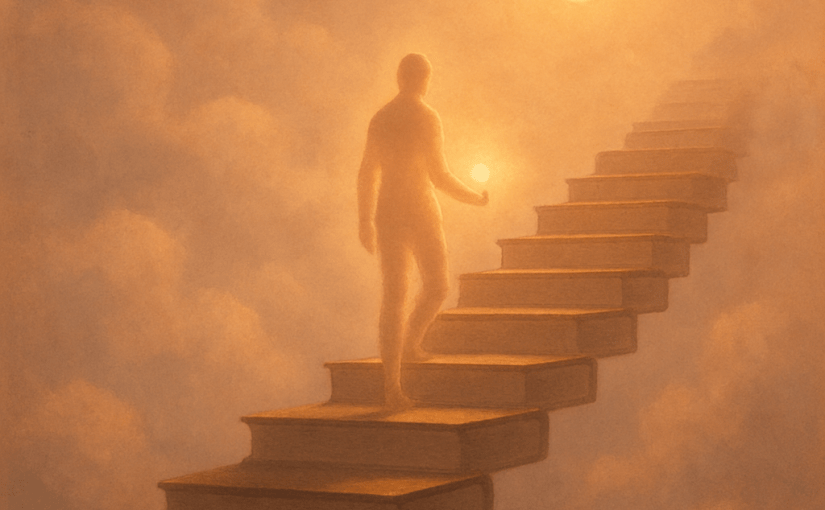
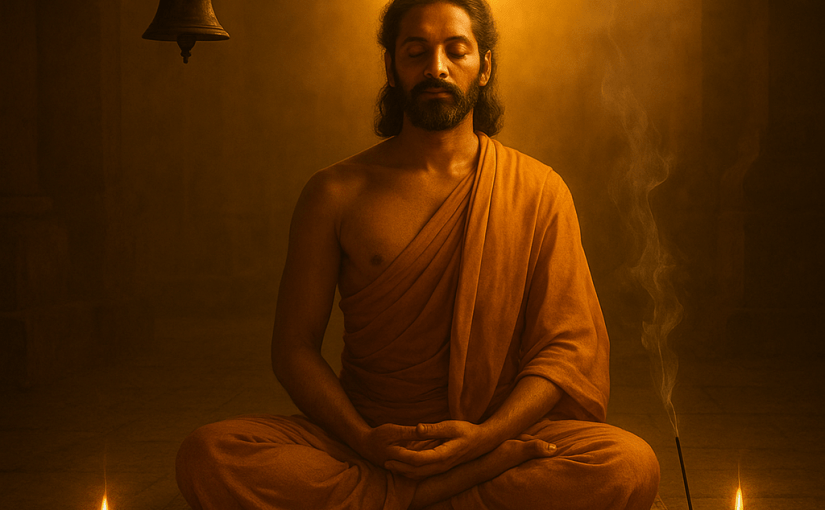
Journey Through Savikalpa Samadhi: A Deep Glimpse into Self-Realization

In my path of self-discovery, I experienced what can be called a glimpse of Savikalpa Samadhi, a deep meditative state where you feel one with your object of focus, filled with bliss, but a subtle sense of self and form still remains. This glimpse occurred during a significant awakening, one where I felt the profound nature of self-realization, yet without completely merging into the final formless state. As I reflect on this experience, the stages of Savikalpa Samadhi seem to have unfolded in a natural progression that was far from linear but intuitively deepened as I progressed.
1. The Beginning of the Journey: Savitarka Samadhi

In the early stages, when I practiced meditation, I engaged with a tangible image — the image of my Guru. At this point, my mind was full of effort, as I contemplated the form of the image and its significance. The bliss was palpable, but it was the beginning of something. The mind was still firmly grounded in subject-object duality, where I was meditating on the image of the Guru. This stage represents Savitarka Samadhi, where gross thought and form are still present. Though bliss was present, the experience was only a hint of what would follow.
2. Subtle Progression: Savichara Samadhi

As I continued my practice, the mental chatter started to subside, and I moved deeper into subtlety. The image of the Guru became more luminous, and my connection with it improved. I could feel the essence of the image beyond its physical form. The energy began to awaken, especially through my Tantric practices. I realized that my focus was no longer just on visualizing the Guru’s image, but more on feeling its energy and presence. Let me explain it a littlebit more. At first, when I meditated, my mind was focused on the image of my Guru — like seeing a picture in your mind and concentrating on it. But later, something deeper happened. Instead of just seeing the image, I started feeling the Guru’s energy or guru’s form’s energy inside me. It felt alive — like the Guru’s presence was no longer outside or in the picture, but within me, as a silent force or warmth.
This shift means my meditation was going deeper. I moved from focusing on an outer form to feeling the inner essence — something real but invisible. This is a natural step in deep spiritual practice, where outer symbols fade, and only the inner truth remains. The boundaries of object and subject blurred, yet they still existed. This phase marked Savichara Samadhi, where subtle thoughts and impressions began to take over. It was a phase of deepening communion, but duality was still present. You can call savitark samadhi as dharana and savichar samadhi as dhyana.
3. The Blissful Experience: Sananda Samadhi

As I advanced in my practice, the focus moved from form to presence. The bliss that arose from deep concentration on the subtle presence became more intense. It felt like the energy I had previously only sensed was now integrated into my experience. This stage aligns with Sananda Samadhi, where the mind quiets down and bliss arises. However, while bliss flowed freely, there was still an awareness of the dualistic nature of the experience. I was aware that I was experiencing the bliss, but the true self-realization hadn’t yet occurred. The bliss was intense but also fleeting. It was in this phase that I felt like I was dissolving in the sheer bliss of existence. It’s actually savichar samadhi or dhyaan deepening further, nothing else. The same subtle inner image of dhyana becomes as much bright or amplified that much bliss it produces.
Let me little clarify it further.
Feeling Form (External Object Support): At the beginning stages of meditation, you often rely on an external object (like the physical image of your Guru or a symbol) to focus your mind. This external object serves as a point of concentration to bring your awareness into a more stable and focused state. Essentially, the object is a tool to anchor your mind and help it remain in one place. In this phase, you’re connecting to the form—the shape, image, or physical representation.
Feeling Energy (Self-Stable Inside): As your meditation deepens and your focus sharpens, you gradually shift from relying on the external form to directly experiencing the energy or presence within yourself. This energy isn’t dependent on the external object anymore. It becomes something you feel internally—it’s a more subtle, refined experience. The external object that initially helped you focus may now seem unnecessary, or even “rubbish,” because you’ve shifted to a state where the form is no longer needed for focus; you now connect directly to the internal spiritual energy or vibration.
In essence, as your consciousness evolves, you no longer need external support (like the form) to connect with the energy. The energy is self-stable and exists within you. You’re no longer relying on something external because you’re directly experiencing the internal essence of that form or presence.
To sum it up, initially, you take support from the external form (to stabilize your mind), but as you go deeper, you realize that the energy you’re connecting with is already within you, and the external form becomes irrelevant to your deeper experience.

4. Self-Realization: Sasmita Samadhi

Then, something shifted during a critical moment — a glimpse of self-realization. This state revealed itself in what felt like a subtle yet powerful awakening. The bliss was lower than earlier bliss samadhi, but this state was all pervading and nondual cosmic consciousness type. Let me little clarify it.  

During that moment of self-realization, the bliss I felt was not like ordinary happiness or pleasure you get from the world — like from good food, music, or success. It was something very subtle and unique.

It wasn’t loud or overwhelming. Instead, it was soft, deep, and balanced — like a calm joy quietly glowing inside me. It felt as if this bliss was made of both light and dark at the same time — not in a scary way, but like a perfect mix of stillness and depth, where everything was clear and silent.

There was also a strong sense of presence, like I had arrived at the center of my being, fully aware and peaceful. It wasn’t emotional excitement, but a kind of pure clarity and sacred peace that just was — without any reason.

This bliss was also different from the bliss felt during Samadhi. In Samadhi, bliss often comes as a flowing joy — something that can feel ecstatic, like being lifted beyond the body and mind.

But this one — during self-realization — was much deeper and quieter. It didn’t come in waves or rushes. Instead, it was like a settled, silent joy that didn’t move at all — almost like it had no reason but still felt profoundly alive.

It wasn’t emotional or dramatic. It was a balanced stillness, where even bliss wasn’t something “felt” in the usual way, but rather, it was part of the clarity and presence itself. You could say it was bliss without movement, joy without excitement, and yet undeniably real and sacred.

The realization that I was not the observer, but the very essence of the being I had been meditating on, flooded my awareness. This phase, Sasmita Samadhi, represents the realization of the pure ‘I am’ — not as the ego but as the boundless, formless being although with waves of mental formations. I no longer identified with the meditation object; I became the object itself. The experience was a deep recognition of the truth that I was the Supreme Conscious Being. However, it was not yet a complete dissolution into formlessness. The objects of perception still had some existence in my awareness offcourse in virtual form. Virtual object is still an object.
The Fine Line to Nirvikalpa

In a moment of deep insight, I recognized how close I was to the final stage — Nirvikalpa Samadhi. I realized that if I hadn’t intuitively grounded myself by lowering the energy to my Ajna chakra, I would have been completely absorbed into an endless continuity of supreme bliss, with no trace of mental or energetic residue. This awareness shows that I had reached the edge of Nirvikalpa Samadhi, where even the subtle sense of self-awareness begins to dissolve. But I chose not to fully absorb into the void at that moment. I consciously brought myself back, possibly because of an inherent fear of losing myself completely or a desire to remain grounded and able to share this understanding with the world.
The Experience of Kundalini Awakening

Looking at my experience through the lens of Savikalpa Samadhi, I recognize that the energy movements of Kundalini had brought me close to the realization of the Self, but in a very subtle way. It was a moment of profound self-awareness, but without the overwhelming ecstasy of the earlier stages of Tantric sadhana. The bliss of that moment was subdued, more stable, and grounded in peace rather than ecstatic energy. It was not the same as the energetic climax of my previous Tantric experience; instead, it was a deeper, more stable realization of pure being — I am. This made the Kundalini experience feel more genuine, as if I had touched the core of who I truly was, without the distractions of intense energetic movements.
The Nature of Savikalpa Samadhi

Savikalpa Samadhi, while deeply transformative, is still characterized by a trace of duality. There remains an awareness of self — a sense of being — but it is not yet the final dissolution into the formless, boundless state of Nirvikalpa Samadhi. During this phase, the mind is still functioning, but it is absorbed in bliss, presence, or the pure feeling of “I am.” The ultimate merging of subject and object has not yet occurred, and a subtle trace of experience still lingers. However, this state is profoundly liberating. The boundaries between subject and object dissolve to a degree, and what remains is the unshakable knowledge that the Self is both the observer and the observed.
The Unique Journey and What Lies Ahead

In my experience, it feels as though I’ve crossed several stages of Savikalpa Samadhi organically, rather than following them in a strictly defined sequence. This process has been intuitive and personal, with each phase revealing a new depth of understanding. The key insight here is that the object of meditation doesn’t necessarily change in Savikalpa Samadhi. What changes is the depth of absorption and the relationship with the object. Through my consistent meditation on the Guru image, I moved from mentally contemplating it to eventually merging with it. It became less about thinking or visualizing and more about being that presence.
As I continue my sadhana, I am aware that I am nearing the threshold of Nirvikalpa Samadhi, where even this subtle sense of presence will dissolve into formlessness. But I also know that this process is not something to force. It will unfold naturally when the time is right.
Final Thoughts

This glimpse into self-realization has been profound and humbling. I have come to understand that the road to ultimate liberation is not about seeking ecstatic experiences but about realizing the truth of who I am, beyond all thoughts and energies. While I have not yet reached the final absorption into the void, the experience has been transformative. I now see that the journey itself is the key, and the ultimate realization lies not in the search for bliss, but in the quiet awareness of being.
In sharing this journey, I hope it serves as a reminder that the path to true self-realization is not always about dramatic peaks, but about gradually and deeply dissolving into the essence of our own being. This realization is available to all, and it begins with the quiet recognition that we are not separate from the source of all existence.

From Flame to Void: A Glimpse of the Infinite Within

During a glimpse of Kundalini awakening, something extraordinary happened. I felt I became one with the object of my meditation. There was no separation — it was not just union; it was as if I myself had turned into the meditation image. In that moment, the distinction between subject and object vanished. What remained was a supreme state of bliss and pure consciousness. It wasn’t imagined. It wasn’t projected. It was immediate, total, and alive.
Intuitively, I lowered this experience down to the Ajna Chakra. I didn’t analyze it then, but now I feel it was an attempt to bring it back into a shareable form. Maybe it was a deep urge to express this mystery to the world. Had I not done that, I sense the mind — fatigued by subtle energetic thoughts — would have eventually extinguished itself. Then the same bliss would have continued, but in an entirely formless, non-experiential manner. That would have been Nirvikalpa Samadhi — the void-like, seedless state of pure awareness.
But here’s the subtle insight: in that formless state, the person is so inward, so silent, that communicating the truth becomes almost impossible. Words die in that vast stillness. Perhaps, by descending it slightly, I stayed within the domain where language still functions, where even though forms are virtual and inseparable from the self, they are at least relatable.
This made me reflect: total absorption — a term often reserved for Nirvikalpa Samadhi — feels very different from what is typically described as union in Savikalpa Samadhi. In Savikalpa, forms appear, but they are virtual, inseparable from the void-self. There is still an object, still a trace of duality, yet not in a separate sense. That subtle trace is what makes it different from Nirvikalpa, where not even a ripple remains.
Then I wondered — why is this direct void, this Nirvikalpa, not an easy shortcut? Why does the journey so often pass through Savikalpa first?
The answer emerged gradually. Savikalpa Samadhi may be the great purifier. It softens and dissolves the world’s cravings. It empties the mind of subtle noise while keeping a trace of reference. It’s like the bridge that burns itself — preparing you for that final formless leap.
And yet, some ancient methods, like Kevala Kumbhaka, hint that this leap can happen abruptly. In deep suspension of breath, when the inner movements halt, the formless state can arise. No image, no mantra, no thought — only presence. So yes, Nirvikalpa can come suddenly too. But such suddenness often comes after deep ripening.
This brought me back to Patanjali. His Yoga Sutras speak of Pranayama, Pratyahara, Dharana, Dhyana, and finally Samadhi. I wondered: are these referring to Savikalpa or Nirvikalpa?
I began to see clearly. Patanjali’s stages guide the seeker toward Savikalpa Samadhi — especially in the beginning. These include forms of Sabija Samadhi — with a seed — where some object of focus remains. These are:
• Savitarka (with gross thoughts)
• Savichara (with subtle concepts)
• Sananda (with bliss)
• Sasmita (with the pure sense of ‘I am’)
Each step dissolves more, but they all carry a seed — a trace of reference.
Then, in the culminating verses, Patanjali hints at Nirbija Samadhi — seedless, supportless, formless. This is what Vedanta and nondual traditions call Nirvikalpa Samadhi. It is not something to be achieved by force. It happens when even the subtlest effort dissolves.
In that state, there is no Pranayama, yet breath is suspended (Kevala). No Dharana, yet nothing distracts. No Dhyana, yet there is unbroken Being. No Samadhi to be entered, because it IS. All supports have vanished.
I realized: these steps are not bypassed — they are transcended. They melt away naturally as the formless takes over.
But the most stunning clarity came from the very start of Patanjali’s text:
“Yogash chitta vritti nirodhah”Yoga is the cessation of the fluctuations of the mind.
This is not about reaching some object of meditation. It is not even about union. It is about cessationtotal stillness. This is not Savikalpa. This is Nirvikalpa.
The very aim, the true destination of Yoga, is not somewhere in between — it is that absolute stillness where the seer rests in his true form.
“Tada drashtuh svarupe avasthanam”Then the seer abides in his own nature.
Savikalpa Samadhi plays its role. It refines, it clears, it prepares. It gives a taste of blissful union. But in the end, that too dissolves. Only silence remains.
This silence is not empty. It is not nothing. It is everything — without content. It is not dull. It is intensely alive, yet formless. And when that settles, sometimes it returns as Sahaja — the natural state, where even activity happens without breaking that inner stillness.
I haven’t reached that final state — not yet. But the glimpse and the insights keep unfolding. The more I let go of control, the more the truth reveals itself, not as knowledge, but as being.
Now I see: even the urge to share this, even this writing, may be part of that divine play — where the Self gently returns to tell its own story through the one who once believed he was seeking it.

Keval Kumbhak, the Void, and the Secret of Real Yoga: A Journey Within

There is something quietly growing inside me —
an understanding that is not built on theory, but on what life itself has revealed in silent meditation.

During deep practice, I noticed something extraordinary:
with Keval Kumbhak — when breath naturally ceases without effort — the experience of the void becomes so intimate that it feels inseparable from myself.
It is no longer something “out there” to be observed; the void itself feels like the very core of being.
Meditation, meditator, and the object of meditation — all disappear into one seamless existence.

It became clear:
this is Nirvikalpa Samadhi
a state beyond thought, beyond division, where only pure Being shines.

As this understanding deepened, another subtle layer unfolded:
Yes, but luminosity is also a form.

Even the formless void carries a subtle light, a living presence that is not “nothingness,” but radiant, formless awareness.
Though without shape, there is a soft, gentle luminosity — suggesting that even in the deepest silence, some trace of presence remains.

But this luminosity is not the same as the light experienced in Savikalpa Samadhi or even during Kundalini awakening. That difference struck me deeply.

In moments of powerful Kundalini awakening — when the merger with the object of meditation becomes so complete that all boundaries vanish — it feels like everything has been attained. The bliss, the awe, the radiance — they arrive with overwhelming fullness. The light here is vivid, ecstatic, and divinely expressive. There is sometimes a sense of expansion, even a loving oneness with the cosmos. This light feels complete — and yet, it is not the void.

Because even here, some movement remains:
a sense of experience,
a subtle trace of someone merging with something,
a radiant Shakti still in play.

But the void of Nirvikalpa is of a different order altogether.
It is Shiva in essence — unmoving, unchanging, not blissful in the usual sense, not even light as we know it.
It is like a dark-mixed luminosity — a paradoxical radiance that doesn’t shine outward but rests quietly as itself.
There’s no experiencer. No object. Not even the feeling of having “attained.”
Just Being, vast and silent.

This void is not dull darkness nor bright light.
It is a radiant absence
a space that feels more alive than life, more real than thought, and more intimate than breath.

Another realization gently emerged:
We already know this void at a surface level.
It feels like something distant, separate.
But the true knowing is not about recognizing it from afar —
it happens only through merging completely into it.
It is not a question of knowing or unknowing — it is about the depth of merging that transforms everything.

At this point, a quiet but strong understanding settled in:
This complete merging seems impossible without Keval Kumbhak.

As long as the breath moves, some subtle movement of mind persists.
Only when breath stops naturally, mind falls completely silent — allowing pure Being to reveal itself without disturbance.

In the light of this, Patanjali’s ancient words felt newly alive:
“Yogas chitta vritti nirodhah”
Yoga is the cessation of the modifications of the mind.

It became obvious:
This cessation — this true Nirodhah — is possible only with Keval Kumbhak.

Breath and mind are like two wings of the same bird.
One moves, the other moves.
One rests, the other rests.
When both are silent, the radiance of the Self shines effortlessly.

The path became simple and clear:
Keval Kumbhak leads to natural Nirodhah,
which dissolves into Nirvikalpa Samadhi,
where the luminous void alone remains.

The journey continues —
sometimes the void feels near, sometimes a little veiled —
but the direction is certain now.
It is not about gathering more techniques, not about collecting experiences.
It is about letting go so completely that even breath surrenders,
and only the purest awareness remains.

Some further reflections naturally arise:

In deep silence, I could see why breath and mind are called inseparable twins.
One moves, the other moves.
One rests, the other rests.
Without Keval Kumbhak, even a silent mind carries a faint ripple —
like the almost invisible trembling of a mirror touched by a breeze.
Only with Keval Kumbhak, the mirror becomes perfectly still, reflecting the eternal Self.

This brought new life to the meaning of Pratyahara, Dharana, Dhyana, and Samadhi
all of them arising naturally from this effortless stillness, not as stages to climb, but as natural flowers blossoming when the roots sink deep into silence.

In simple words:
The true spiritual journey is not about doing more, but undoing everything —
until breath, mind, and sense of separateness vanish into pure being.

The luminous void waits patiently within us —
not separate, not far away —
but requiring a total merging, a surrender beyond words.

Walking this path feels less like achieving something,
and more like remembering something ancient, something always known, but now being tasted with new innocence.

And perhaps, this is how true yoga was always meant to be.

Padmasana and the Subtle Path of Rising Energy: A Heartfelt Discovery

Something subtle yet powerful happened in my practice recently — something so natural, it almost felt like it had always been waiting for me.
With Padmasana, the lotus posture, I noticed that my back becomes so straight and aligned that energy rises blissfully on its own. There’s no need to do much. Just sitting still, with the body folded in, the spine erect, I could feel an unmistakable, soft surge moving upward — gentle, joyful, and deeply peaceful.
It felt amazing.
But soon, I noticed something else.
After a few minutes of sitting, the legs — especially the knees and mainly the right knee— start to ache, and this aches pull the attention downward. Some says putting soft pillow etc. underneath the knees or putting it below the hip reduces knee aching. It seemed working to some extent. The quiet joy rising in the spine is gently interrupted by the body’s protest. Still, for those few minutes before the ache begins, Padmasana reveals a hidden grace. It’s a wonder, really.
Whenever the discomfort becomes too distracting, I shift to a simple squat or to Siddhasana. This lets the energy settle again without much strain. Even if the energy doesn’t rise as powerfully, the mind remains inward. This adaptation, I feel, is part of the journey.
I also tried a kind of mental Padmasana — visualizing myself in that pose without actually sitting in it — but that doesn’t create the same effect. The body’s real posture seems to carry something subtle that the mind alone can’t fully simulate.
Interestingly, in the early morning, I can stay in Padmasana longer and more easily. Maybe the body is lighter then, or the mind is less busy. Whatever the reason, the practice deepens naturally at that time.
Breath practices like spinal breathing, reverse breathing, and Kriya breathing seem to flow best in Padmasana. The alignment helps them settle deeper, more rhythmically, without effort. Breath slows down. Awareness becomes still.
There’s another thing I became aware of: in Padmasana, the rear side of the Swadhishthan Chakra — the space behind the sacrum — becomes more prominent and attendable. This doesn’t happen as clearly in other postures. It’s like a quiet mirror opens up there — a space that responds instantly to awareness.
And then, something quietly revealed itself: after a few minutes of blissful energy rise in Padmasana, even if I shift to a simple squat later, it continues to work. The breath becomes still. Attention stays inward. The energy doesn’t vanish — it softly continues. As if Padmasana had lit a lamp, and then I just had to sit beside its glow.
This experience got me wondering: why does Padmasana support the rising of energy so well?
Some quiet reflections followed:
• The posture naturally lifts the spine and opens the base. There’s an alignment that happens without force.
• The pelvis locks in gently, sealing the lower escape and encouraging upward flow.
• The folded legs form a strong base, which keeps the body still and the mind internalized.
• The weight distributes properly, allowing the spinal flow to rise without physical distractions.
• Even the breath settles into a rhythm almost by itself. The mind automatically moves inward, not because I try, but because the posture encourages it.
But I also know I haven’t reached any final goal. I’ve not gone beyond to some final state of bliss or enlightenment. What I’ve experienced is a subtle shift, a quiet opening, a sense of something waiting behind the everyday noise — especially in Padmasana.
The energy rise is not dramatic, but it’s real. It has life, and it teaches silently.
These aren’t achievements. They are hints, whispers, beginnings.
I continue my practice — exploring, adapting, observing — with the same curiosity that brought me to this point.
Even as the posture changes from Padmasana to a squat or Siddhasana, something now stays.
A softness. A quiet energy. A reminder of what’s possible when body, breath, and attention meet in simplicity.

The Power of Breath and Meditation: A Personal Journey

I’ve found that the simplest things, when practiced with awareness, have the potential to shift our entire experience. One such practice is yoga breathing, something that has helped me transform my daily life in ways I never anticipated. It’s not just a matter of breathing; it’s about becoming deeply aware of the breath throughout the day and learning to regulate it, creating a natural flow of calm and clarity. This realization started with a deep connection to the breath itself, something that yoga breathing nurtures effortlessly.

I began noticing that yoga breathing makes an ordinary breath feel regular and perceptible all day long. When you practice breathing with intention, it becomes something you can always be aware of, a constant thread running through your day. It’s like it’s always present, just waiting to help you center yourself in any moment. This presence and awareness of the breath naturally create a sense of inner peace and connection to the present, even amidst distractions.

One thing I’ve experienced is that, as I become more attuned to my breath, everything in life seems to become peaceful. Not just a passing sense of calm, but a deep, lasting peace. It’s as if the regular practice of being mindful of the breath is starting to shape my intellect and intelligence, making me approach everything with greater clarity. The more I breathe with awareness, the more I feel my thoughts becoming clearer and my emotions more balanced. This change is especially noticeable in my relationships, where there’s now a sense of understanding and no enmity felt for anyone, no matter what might have happened before. I’ve learned to let go of bad experiences rather than holding onto them, allowing them to slip away and fade into the background.

This doesn’t mean everything is perfect. There are still moments where that peace fades, and it becomes challenging to maintain that clarity. I’ve noticed that the peace I feel after practicing breathwork can fade if I don’t consistently dedicate time to the practice. The solution, I found, is daily practice of Kriya breathing, a technique that provides enough strength and focus to anchor that sense of inner peace for a longer period. Without it, the effects are temporary. But when I practice regularly, especially with deep commitment, I can feel the lasting effects not just for hours but through the day.

I’ve also noticed that spinal breathing is incredibly effective for me, particularly when I wake up around 3-4 AM. This time feels sacred, as if the world around me is quieter, and the energy within me is more accessible. When I engage in spinal breathing at this hour, a sense of head pressure develops after some breathins, likely from the energy rising through the sushumna nadi. It’s a familiar sensation, one that tells me something is shifting. After some time, I let myself sleep again with help of chanting soham mentally with breathings, and when I wake, the head pressure is relieved, but the effect of the breathing practice lingers, adding a sense of lightness, clarity, and peace that carries me through the day. It’s almost as if the energy becomes deeply embedded within me, and its effects continue, even without active focus.

That lingering effect—where the peaceful, grounding sensation stays with me—is perhaps the most profound aspect of this practice. Even when I’m not consciously thinking about it, I can feel a subtle undercurrent of calm and clarity throughout my day. It’s as though my entire energy field is recalibrated each time I practice. This has been especially noticeable in how I approach tasks. Things that might have once caused stress or frustration now feel lighter, and I can move through them with more ease.

But, of course, I’m still on a journey. I haven’t yet achieved everything I envision for myself. Nirvikalpa Samadhi still feels distant, and I haven’t fully arrived at that state of unchanging bliss I once glimpsed. But I’ve experienced enough glimpses to know the truth of its potential. The practices, like Kriya Yoga, continue to shape me, helping me refine my approach to both life and spiritual growth.

Every day, I find myself stepping closer to the state I aim for, and I’m learning to integrate this practice not as a goal, but as an ongoing process. It’s not about reaching some final destination but rather about allowing this energy and peace to infiltrate every moment. The more I practice, the more I experience a shift in my relationship with myself and the world around me. The breath, once an unconscious process, has become a tool for transformation—spiritually, mentally, and emotionally.

I believe that anyone can experience this transformation, no matter where they are on their journey. The practice of yoga breathing, especially when paired with spinal breathing and Kriya Yoga, creates a gateway to deeper awareness and inner peace. And even if you’re just starting, you don’t need to wait for the perfect moment to begin. Every breath is an opportunity to align yourself with the present and to let go of what no longer serves you. And through that, the world becomes a little brighter, and we become a little lighter.

In the end, it’s not about achieving a perfect state but about becoming more fully present in the unfolding of life—breathing in peace, breathing out clarity, and allowing the rhythm of the breath to carry us through each day. The journey, I believe, is just beginning.

पहलगाम नरसंहार: एक अनदेखी त्रासदी, एक हारी हुई नैरेटिव की जंग

20 अप्रैल 2025, जम्मू-कश्मीर के सुंदर और शांत शहर पहलगाम में एक दर्दनाक त्रासदी घटी, जहाँ कम से कम 27 हिन्दू पर्यटकों को निर्ममता से मार दिया गया। चश्मदीदों और प्राथमिक जांच के अनुसार, हमलावरों ने लोगों की धार्मिक पहचान की पुष्टि के बाद ही निशाना बनाया—कपड़ों, बोलचाल, ID कार्ड जैसी चीज़ों के ज़रिए। यह हमला एक स्थानीय इस्लामिक आतंकवादी समूह द्वारा किया गया था, जिसकी गहरी सांठगांठ पाकिस्तान-आधारित आतंकी संगठनों से है।

इस हमले के दौरान अमेरिका के उपराष्ट्रपति जेडी वांस भारत दौरे पर थे, और उन्होंने भारत को बिना शर्त सहयोग का भरोसा दिया। अमेरिका के पूर्व राष्ट्रपति डोनाल्ड ट्रम्प ने भी स्पष्ट समर्थन जताया। रूस, चीन, और कई अरब देशों ने शोक संदेश भेजे। लेकिन अंतरराष्ट्रीय मीडिया की प्रतिक्रिया इस हद तक फीकी रही कि यह बड़ा नरसंहार प्रमुख पन्नों तक भी नहीं पहुँच पाया

अंतरराष्ट्रीय मीडिया की चुप्पी: एक पूर्व-निर्धारित नैरेटिव?

सीएनएन, न्यू यॉर्क टाइम्स, वॉशिंगटन पोस्ट जैसे प्रतिष्ठित अंतरराष्ट्रीय मीडिया संस्थानों ने इस हत्याकांड को संक्षिप्त और सामान्य खबर की तरह पेश किया। धार्मिक आधार पर की गई हत्या को कहीं स्पष्ट रूप से स्वीकार नहीं किया गया।

वॉशिंगटन पोस्ट की दोहरी भूमिका

वॉशिंगटन पोस्ट के पहले पन्ने पर, नरसंहार की बजाय, भारतीय मूल की पत्रकार राना अय्यूब का लेख प्रकाशित हुआ, जिसमें उन्होंने अमेरिकी नेताओं की घोषणाओं को दिखावा बताया और भारत की नीतियों की आलोचना की। हैरत की बात यह है कि इस लेख में पहलगाम की घटना का एक भी जिक्र नहीं था।

दूसरी ओर, उसी अखबार के “वर्ल्ड” पेज पर एक छोटा-सा लेख छपा जिसमें बताया गया कि कश्मीरी नागरिक अब्दुल वहीद ने साहस दिखाते हुए कई लोगों की जान बचाई। यह मानवीय पक्ष सराहनीय है, परंतु इससे मुख्य बात दब गई—कि यह हमला धार्मिक नफ़रत से प्रेरित था।

क्षेत्रीय मीडिया की भूमिका और कथानक-प्रवर्तन

पाकिस्तानी अख़बार डॉन ने लिखा कि भारत ने सख़्त प्रतिक्रिया की बात कही है और पाकिस्तान को सतर्क रहना चाहिए। साथ ही, उसने यह भी कहा कि हमला इसलिए हुआ क्योंकि “पहलगाम में बाहरी लोगों को बसाया जा रहा था”—यह एक प्रकार से हमले को जायज़ ठहराने का प्रयास था।

अल जज़ीरा ने इसे एक “स्थानीय आज़ादी पसंद समूह का कृत्य” बताया और दावा किया कि मारे गए लोग सरकारी कर्मचारी थे जो किसी मिशन पर आए थे। यह हमला राजनीतिक प्रतिक्रिया की तरह पेश किया गया—जबकि हक़ीक़त इससे कहीं अलग है।

लगता है कि भारत ने नैरेटिव की पहली जंग हार दी

यह दुर्भाग्यपूर्ण है कि इतने बड़े पैमाने पर हुए धार्मिक हत्याकांड के बाद भी भारत वैश्विक नैरेटिव को अपने पक्ष में नहीं मोड़ सका है। इसका मुख्य कारण लगता है—कमज़ोर सूचना तंत्र, भावनात्मक लेकिन तथ्यविहीन प्रतिक्रिया, और प्रभावशाली वैश्विक मंचों की कमी

जब तक भारत संगठित और सशक्त सूचना युद्ध में नहीं उतरता, तब तक ऐसी घटनाओं को दुनिया ग़लत परिप्रेक्ष्य में देखती रहेगी।

यह सिर्फ आतंकवाद नहीं, धार्मिक संहार था

जो तीर्थयात्री सिर्फ इसलिए मारे गए क्योंकि वे हिन्दू थे, उसे सामान्य “आतंकी हमला” कहना सच से भागना है। यह धार्मिक घृणा से प्रेरित एक नरसंहार था, जिसे पूरी दुनिया को पहचानना और स्वीकारना होगा।

नैरेटिव युद्ध जीतने के कुछ आसान और व्यावहारिक उपाय

  1. स्वतंत्र मीडिया प्लेटफार्म विकसित करें
    भारत के दृष्टिकोण को अंतरराष्ट्रीय स्तर पर प्रस्तुत करने के लिए प्रमाणिक और बहुभाषीय मीडिया चैनल बनाएं।
  2. तथ्य आधारित माइक्रो-कॉन्टेंट बनाएं
    छोटे-छोटे वीडियो, इन्फोग्राफिक्स और ट्वीट्स के ज़रिए सच्चाई को जल्दी और प्रभावशाली ढंग से साझा करें।
  3. प्रवासी भारतीयों को जोड़ें
    विदेशों में बसे भारतीय नागरिक स्थानीय मीडिया, सांसदों और संगठनों से संपर्क कर भारत का पक्ष रखें।
  4. रीयल-टाइम फैक्ट-चेक टीमें बनाएं
    झूठी खबरों और प्रोपेगैंडा का तुरन्त खंडन करने वाली टीमों की आवश्यकता है।
  5. थिंक टैंक्स और रिसर्च संस्थानों से जुड़ाव
    भारतीय संस्थानों को अंतरराष्ट्रीय नीति-निर्माण मंचों पर सक्रिय भूमिका निभानी चाहिए।
  6. निजी ब्लॉग, सोशल मीडिया और आर्टिकल्स का भरपूर उपयोग करें
    जब मुख्यधारा मीडिया चुप रहे, तब व्यक्तिगत लेख, ब्लॉग, यूट्यूब, ट्विटर जैसे माध्यम सच्चाई को जन-जन तक पहुँचा सकते हैं।

अंत में:
भारत के पास सच है, पर उसे समय पर, प्रभावी और संगठित रूप से कहने की ताकत नहीं। पहलगाम नरसंहार एक ट्रेजडी नहीं, बल्कि एक चेतावनी है—यदि हम अपनी कहानी खुद नहीं कहेंगे, तो दुनिया उसे तोड़े-मरोड़े हुए स्वरूप में सुनेगी।

The Pahalgam Massacre: A Tragedy Ignored, A Narrative Lost

On April 20, 2025, tragedy struck the scenic town of Pahalgam in Jammu & Kashmir, where a brutal terrorist attack claimed the lives of at least 27 Hindu tourists. According to emerging reports, the victims were specifically identified as Hindus through various means—ID cards, attire, accents—before being gunned down. The perpetrators belonged to a local Islamic terror outfit with close links to Pakistani terrorist groups, suggesting a premeditated and ideologically driven assault.

This mass killing occurred while U.S. Vice President J.D. Vance was visiting India—a moment of diplomatic importance that perhaps forced some global powers to take quick note. Vice President Vance assured unconditional American support, and former U.S. President Donald Trump echoed the sentiment. Nations like Russia, China, and several Arab states sent formal condolences. Yet, despite the scale and religious nature of the attack, the international media’s response remained disproportionately subdued.

Muted International Coverage: A Tale of Narrative Bias

Leading media outlets such as CNN, The New York Times, and The Washington Post relegated the massacre to small columns or side notes, failing to place it on the front pages. The religious targeting of Hindu tourists was completely ignored in many cases, reducing the incident to just another regional terror attack.

The Washington Post’s Contradiction

Instead of highlighting the atrocity, The Washington Post gave front-page space to an op-ed by Indian-origin journalist Rana Ayyub, who dismissed the U.S. visit as a hollow gesture and criticized America’s policy towards India. Her piece failed to even mention the massacre.

A separate short article buried in the “World” section focused on a Kashmiri man named Abdul Wahid, who courageously saved lives. While his actions were noble, this human-interest angle further diluted the core issue—the religious targeting and mass murder of Hindu civilians.

Alternate Narratives from the Region

In Pakistan, the Dawn newspaper acknowledged the attack but warned its readers that India had vowed a “loud and clear” response, advising caution. It speculated that the violence was a reaction to non-Kashmiris being settled in the region, subtly justifying the attack.

Al Jazeera went a step further by calling the attackers part of a “new local liberation front”, and claimed the victims were not civilians, but government agents on an operation. It painted the incident as a political strike, rather than a religiously motivated massacre.

Such alternative framing contributes to a dangerous distortion of truth, positioning the mass killing as an act of political resistance instead of targeted, ideological violence.

India seems loosing the First Round in the Narrative War

Despite the scale and symbolism of the attack, India seems loosing the first round of the global narrative war. The lack of a coordinated communication strategy, inadequate international media reach, and an over-reliance on state channels have enabled foreign narratives to dominate.

While think tanks, NGOs, and human rights organizations are quick to issue detailed reports on even small incidents elsewhere, India’s institutional response often lags behind or lacks emotional and strategic storytelling. This weakness is amplified in crises like the Pahalgam massacre.

This Was Not Just Terror—It Was Religious Cleansing

The brutal killing of unarmed Hindu tourists, based solely on their religious identity, is not a generic case of terrorism. It is religiously motivated violence, bordering on ethnic cleansing. To call it anything less is to betray the truth and insult the victims.

It is crucial for global observers, media houses, and international agencies to recognize this for what it is—a hate crime, a massacre, and a grim reflection of the ideological poison festering in the region.

Simple Ways to Win the Narrative War

To reclaim its story and present facts effectively to the global community, India must invest in narrative tools and platforms. Here are practical ways to do that:

  1. Build a Global Media Network
    Create and promote multilingual platforms that project India’s perspective in a credible, journalistic tone.
  2. Fact-Based Micro-Content
    Share brief, fact-checked videos, infographics, and social media posts in English and other languages to break global echo chambers.
  3. Leverage the Indian Diaspora
    Encourage NRIs and PIOs to engage with foreign media, local lawmakers, and civil society with facts and advocacy.
  4. Create Real-Time Fact-Check Teams
    Establish agile teams to debunk misinformation and disinformation within hours of an incident.
  5. Engage International Think Tanks
    Collaborate with research institutions globally to ensure Indian voices are present in strategic discussions and reports.
  6. Utilize Private Blogs, Articles, and Social Media
    Encourage citizens, journalists, and influencers to share accurate accounts via independent blogs, YouTube videos, newsletters, and X (Twitter). Grassroots content can often spread faster and reach audiences mainstream media won’t.

Final Note:
India doesn’t lack truth; it lacks loud, coordinated, and consistent truth-telling. The Pahalgam massacre is not just a tragedy—it is a call to arms in the war of narratives. If we fail to tell our stories, others will tell them for us—and not always with our truth.

Chapter 23: She Who Became My Guru

Hi friends,
This is the final chapter of a journey many of you have walked with me—thank you for being a part of it. What began as a series of quiet reflections has now found its home between two covers. I’m humbled and excited to share that the complete story is now compiled as a book: She Who Became My Guru. In the end of this blog is the introduction to the book, offering a glimpse into the soul of the story. If it resonates, you can now hold it in your hands, revisit it anytime, or gift it to someone who’s quietly seeking.

She Who Became My Guru

The pine-scented breeze caressed the veranda of Ishaan’s hill home as clouds rolled lazily over the distant valley. With his shawl wrapped gently around his shoulders, Ishaan sat by the wooden window, the familiar creak of the chair beneath him echoing like an old friend. A steaming cup of tulsi chai rested beside his handwritten notes. The air was soaked in the golden hues of dusk.

At fifty-two, Ishaan’s beard bore whispers of silver. His gaze softened as he flipped to the final chapter of his book, She Who Became My Guru. The title itself glowed from the page, like a prayer whispered through lifetimes. With a gentle breath, he began reading aloud, and the boundary between past and present melted like mist under morning sun.

He was now neither the student nor the seeker. He was the offering.

After that final Samadhi under the moon’s grace, where Myra and Vedika had appeared in radiant harmony—spark and sustainer—something subtle but irreversible had shifted within him. For hours his breath had paused, not by will, but by surrender. In the void of Nirvikalpa, he hadn’t experienced the universe as a backdrop to himself. He had become that backdrop—space without edges, time without ticking.

But now, Earth called. Humanity called. Even the Moon, which had silently witnessed his transformations, seemed to whisper, “Share.”

He had returned to teach, but not to preach. He wrote, not as a master, but as one who had been loved into awakening. His fingers moved like rivers over keyboards and old manuscripts alike, pouring out stories, sutras, mistakes, and miracles. Hundreds of books, scattered like petals across time. Yet, every story led back to her.

Myra.

She had never returned in a worldly sense, and yet, he met her every moment—in the smile of a stranger, the tears of a student, the silence between words. Anjali, her lively friend, once wrote him a letter: “You were her path, Ishaan. But you also walked it because she lit the first lamp.”

The Pine Crest School had long renamed its meditation hall as the ‘Sharma Consciousness Wing.’ Mr. Dutt had passed on, but not before gifting him the old chalk box from his first classroom—a treasure chest more precious than any award.

Govind, now a father of two, once came visiting with his son and confessed, “Ishaan bhaiya, I now understand what you meant when you used to gaze into the void like it was home.”

Vinod had become a neurophilosopher, blending quantum biology with Upanishadic insights. “You gave me the courage to study the brain like a temple,” he’d once written.

Ranjana, always wise beyond her years, had become a teacher in Dharamshala. Her students often heard stories of a cousin who saw the moon not as a rock, but a reflection of soul.

And Vedika—oh, Vedika. If ever there was a guardian of earthly grace, it was she. Their companionship was not fireworks but candlelight. Steady, warm, illuminating. She had once whispered, during a walk under starfall, “You loved her. You were consumed by her light. But with me, you found the wick.”

He had smiled then, remembering how the wick and flame are never at odds.

Ishaan now traveled between Earth and Moon often, teaching not from pedestals but from platforms of shared humanity. He called it Lunar Earth Sangha, a school without borders. People gathered, not around him, but around their own yearning. He only nudged.

In one session on the Moon’s Sea of Tranquility, a young girl had asked him, “Sir, were you ever afraid?”

He had laughed gently. “I was afraid of love, of surrender, of losing control. Until I realised—fear is devotion misunderstood.”

The class had gone silent, not out of reverence, but recognition.

It wasn’t just knowledge Ishaan shared—it was vulnerability. His blog, DemystifyingKundalini.com, had become a repository of living experience. Not abstract theories, but diary pages of his awakening—complete with confusions, cravings, breakdowns, and breakthroughs. The post titled ‘The Night My Breath Stopped’ became the most shared piece across spiritual circles.

He would often write, “Kundalini isn’t a force. She’s a mirror. The more gently you look, the more fiercely she reflects.”

Even when people called him Guruji, he would chuckle. “She was my guru. I’m just someone who listened.”

And then there were the letters. Thousands of them. From corners of Earth and outposts on Moon settlements. People asking not how to awaken—but how to stay soft after awakening. He’d reply to each with childlike delight, often ending with, “Don’t forget to laugh between breaths. Even the divine giggles.”

One morning, while walking beside the old cedar path behind his hill home, Ishaan had paused. A young boy, around sixteen, sat sketching the landscape. Ishaan peeked and saw it was the valley below—with a small figure meditating under the tree.

“That’s you,” the boy said without turning.

“Looks more peaceful than I usually am,” Ishaan smiled.

The boy glanced up. “Maybe because you’re not thinking there. Just being.”

And just like that, Ishaan bowed.

Not to the boy, not to the drawing, but to the unseen thread that stitched every moment into awakening.

He returned home that day, made a cup of chai, and opened his latest manuscript: She Who Became My Guru – The Final Word.

In the final paragraph, he wrote:

“She came like a spark, left like silence. But in between, she burned away every wall I had mistaken for myself. Myra was not just a person. She was the moment life stopped pretending. She didn’t teach me Kundalini. She reminded me I was always the serpent and the sky.”

As Ishaan closed the book now, at his hill home once more, the evening sunlight broke through the clouds in golden shards. The air smelled of wet pine and old earth. Far down, a flute was being played—its notes rising like incense.

He leaned back, eyes moist but smiling. The story had ended, but the presence had not. In fact, it had just begun.

He whispered into the wind, “Thank you, Myra. Thank you, Vedika. Thank you, Self.”

And somewhere, perhaps in the stillness between stars, the silence whispered back.

To be continued in silence…

Book Introduction

In the soft hush of his Himalayan hill home, Ishaan Sharma—now 52—sat by a sun-warmed window with a cup of tea and an old wooden bookstand. Before him lay a story not just authored, but lived. The wind outside rustled like turning pages, and so he began again—revisiting the words that had once poured from his spirit like spring water from ancient stone.

There are books that aim to teach. There are books that aim to impress. But this one—this book—was never meant to do either.

She Who Became My Guru is not a tale of perfection, but of profound imperfection lovingly transformed. It is the story of a seeker who was never seeking, of a man who stumbled into the divine by tripping over the ordinary—of a journey that began with heartbreak, confusion, and a taste of love too potent to be labeled romantic.

Born under the quiet shadows of the Himalayan hills, Ishaan lived what many would call a normal life. A part teacher, a veterinarian, a husband, a son, a friend. But behind the curtain of roles and rituals, something ancient stirred—a whisper of something eternal, a beckoning he could neither ignore nor explain. And then she entered. Not as a woman alone, but as the mirror that turned his gaze inward. Myra. The one who shattered his illusions not by force, but simply by being. The one whose absence awakened the presence within.

In these pages, the reader won’t find a straight road to enlightenment—for the soul never travels in straight lines. Instead, there are winding paths through science and mythology, laughter among school friends, and silences between lovers. Glimpses of the moon. Echoes of forgotten lifetimes. And at the center, a man who writes not as a master, but as one who was loved into awakening—who still forgets, stumbles, rises, and remembers.

Each chapter is both a memory and a meditation. Rooted in the soil of Ishaan’s lived experience, watered by mystic insight, and grown under the moonlight of inner inquiry. The teachings are not his. They unfolded like petals from the heart of life itself. He merely bled them onto these pages, as one does when the wound becomes the womb of wisdom.

This book is not an instruction—it is a remembrance. Not a sermon, but a soft echo from within. A song, a prayer, a bridge—for anyone who has ever whispered to the sky, “Is there more than this?”

Yes, there is.

And it begins not above, not beyond, but within.

Welcome to She Who Became My Guru. May you find in it not answers, but your own reflection.

Here’s the link to buy:
👉 [She Who Became My Guru]

Chapter 22: Awakening Beyond Duality

The sun had just begun to dip behind the horizon, splashing the distant Dhauladhars with strokes of gold and soft lavender. Ishaan Sharma, now fifty-two, sat in his quiet wooden study atop the misty slopes of his hill home. A fragrant breeze carried the scent of pine needles through the open window, rustling the curtains like a whisper from the past. His fingers, now marked with time’s wisdom, turned the page of his book She Who Became My Guru, landing on Chapter 22.

As his eyes traced the title—Awakening Beyond Duality—the present began to dissolve. What remained was a subtle, silent descent into memory. In a blink, he was no longer an aging man in a hillside home, but the younger Ishaan once more, standing barefoot under a pale lunar sky.

The air around him was still, sacred, as if holding its breath. Myra stood before him, the fire of divine curiosity in her eyes, radiant and calm, like the moon herself. Beside her, Vedika—grounded, loving, and equally luminous—gazed at him with a silent knowing. Behind them, like the flickering outline of a fading campfire, stood his grandfather, smiling without words, like a log glowing even after the flames had retreated.

For a moment, Ishaan’s breath caught. Not out of fear or awe, but because there was nothing left to separate him from them. They were not memories. They were truths. Archetypes of his journey—the spark, the sustainer, and the silent witness.

He bowed. Not in ritual, but in recognition.

“I mistook love for a distraction once,” he whispered, eyes closed.

Vedika chuckled softly, her presence like earth under his feet. “And I mistook stillness for surrender.”

Myra added gently, “But it was neither. Love was the bridge, Ishaan—not the detour.”

He opened his eyes, and in them, something shifted. The duality that had split him between fire and soil, passion and peace, longing and loyalty—it all dissolved. He had tried to pick sides between heaven and earth, spirit and form, Guru and companion. But now, he saw. They were all faces of the One.

His voice came, light yet steady, like a mountain spring: “So that’s what grandfather meant when he said—‘Between the rising breath and the falling thought lies the path to who you really are.’”

The old man behind them, who had once told him tales of Krishna and Shiva beside the fireplace, laughed in the background. “You thought I spoke of riddles, boy. But what is a riddle if not a hug in disguise—pulling you closer to truth with every turn?”

Ishaan laughed too, but tears ran down his cheeks. Not of sorrow, but of dissolving.

He remembered Gagan’s laughter echoing across Pine Crest’s football field, the way Ranjana danced during the school function, Vinod’s sharp questions in Mr. Dutt’s class that always pushed boundaries, and Govind’s unspoken warmth in their shared silences. They were all part of this story, this illusion that never really was an illusion—it was a mirror, reflecting his own Self back to him, in fragments until the whole emerged.

He sat now under that lunar sky. The moon hung low like an ancient witness.

“Myra,” he said, “you woke up the spark in me. But it was Vedika who taught me how to hold that fire without burning.”

“And now?” Vedika asked, her voice barely above the wind.

“I am neither the fire, nor the holder,” Ishaan smiled, “I am what remains when both dissolve.”

Then came silence—not empty, but brimming.

The wind stilled. Birds hushed. Even the sky seemed to pause.

His breathing slowed.

Then stopped.

Time ceased to drip. Boundaries lost their grip. There was no Ishaan left to observe it. No ‘self’ to report the happening. What was left was being—a vast, clear awareness, unconditioned, unbound, unnamed.

This was not an experience. It was the absence of one.

No Myra. No Vedika. No grandfather. No lover. No breath. No body. Just pure, indivisible space. No center. No circumference. This wasn’t samadhi to be felt. It was the falling away of all that ever tried to feel.

For hours—perhaps lifetimes—he remained like that.

When breath finally returned, it was not a return. It was grace.

Eyes blinked open. The moon had shifted. A new night had begun.

He sat up slowly, back under the same sky, but no longer as the one who had entered it. Something fundamental had changed.

He heard laughter nearby—Anjali and Gagan arguing over a mango again, just like school days. Vinod correcting them with a footnote from some ancient scripture. Ranjana humming a forgotten childhood tune. Even Govind, somewhere in the ether, smiling his quiet smile.

He looked at Vedika and Myra once more, and this time, both smiled and merged into light.

Then even light became unnecessary.

Back in the present, in his hill home, the fireplace crackled. Ishaan exhaled slowly and closed the book gently. The shadows in the room danced playfully.

Outside, the Dhauladhars wore their moonlit crown. The stars looked closer than ever.

He stepped out onto the wooden balcony. Wind kissed his cheeks. Pine needles rustled. The owl hooted like an old friend.

No division remained. The Guru, the lover, the self—all were one. And even the One had disappeared.

There was only this. Not describable. Not graspable. But undeniable.

Somewhere in the quietest part of his heart, he heard his grandfather’s voice once more:

“Boy, when the firewood is burnt, the fire does not mourn. It simply becomes sky.”

Ishaan smiled.

And became sky.

Chapter 21: Father, Guru, Self

Ishaan reached the twenty-first chapter while slowly turning the pages of his handwritten book, She Who Became My Guru, the paper still carrying faint scents of sandalwood from his earlier morning rituals. Outside his hill home, pine trees whispered in the breeze, and the snow-capped peaks shimmered like sages in silent meditation. The fireplace beside him crackled gently, as if eager to accompany him on this deep inward journey.

The chapter opened like the rising of the moon: gentle, silent, inevitable.

It had been days since that overwhelming night on the moon when Vedika had listened to Ishaan’s soul bare itself. And now, sitting at his modest desk in the lunar observatory—earthlight filtering softly through crystalline windows—he began writing, not for the world, but for himself. Yet he knew someone would read it. Perhaps not today, not tomorrow, but one day—when the need to know overtook the fear of knowing.

Ishaan began not with events but with reflections. “How strange,” he murmured to himself, “that in childhood, the first face of love I knew was Govind’s… and yet, beneath it, was Krishna’s presence. Now I see, beneath both, stood another—silent, unwavering—the soul of Dadaji.”

His fingers moved like a calligrapher’s, slow yet deliberate, as if decoding inner etchings.

He recalled the mornings of his childhood when Dadaji sat on the veranda, reading ancient scriptures, surrounded by silence so thick it felt like a protective aura. “Back then,” Ishaan thought, “I only saw an old man wrapped in wool. But now I realize he wasn’t reading stories—he was living them.”

During those years, Govind had been the storm, Krishna the rain, but Dadaji—he was the unchanging sky.

Ishaan’s pen danced across the page as he began to draw lines between his experiences: love for Govind, his boyish mischiefs echoing Krishna’s leelas, and now, this strange fusion of divine love that shielded him from spiritual downfall. Vedika had once said, her voice almost a prayer, “When you truly love God, your love becomes immune to impurity. It sheds its skin, like a snake shedding desire, until only its essence remains.”

He had smiled at that, but now he understood.

One evening, shortly after the moon mission had given them weeks of otherworldly contemplation, Vedika had asked him while sipping a rare tulsi brew, “Why does your love survive, Ishaan? Even after the storms?”

And he had responded, almost unknowingly, “Because I first loved the divine in a human… and then I saw the divine had always been there.”

He chuckled, remembering how she had tilted her head with mock irritation. “So, is that your secret equation? God plus Human equals Immunity to Madness?”

They had both laughed, but within that laughter was something weightless, ancient.

Ishaan kept writing.

He wrote about Govind’s childhood: how he would climb mango trees and chant self-made couplets about school teachers, how he mimicked Krishna’s butter-stealing antics and turned them into biscuit raids. How, every night, Ishaan would watch him act out scenes from Bal Leela, and how those divine stories—heard daily in their home—had slowly seeped into the soil of his heart.

He now understood: his love for Govind was never merely for Govind. It was a seed watered daily by Krishna’s mythology, unknowingly fertilized by Dadaji’s spiritual gravity. “Childhood,” he wrote, “is not so different, whether human or divine. Only the lens we place on it—purity, myth, mystery—shifts its meaning.”

He closed his eyes, remembering.

It was the day after their celestial confession. Vedika had asked him to sit beside the moon lake, where reflections looked clearer than the objects themselves.

“You know,” she began softly, “your love for Krishna didn’t shift to Myra by accident. It flowed like a river into her because love, if genuine, doesn’t end—it only changes the vessel.”

Ishaan had been silent.

She added, “It’s the same love. The same current. Only, with Myra, you had a face to hold. With Krishna, you had to build that face from longing. And when that longing found a form—Myra—it intensified.”

Ishaan remembered whispering, “But what about the danger? Doesn’t strong love corrupt?”

Vedika shook her head. “Only when it’s not purified by its source. The love that begins in devotion—even if diverted—carries a fragrance that cannot rot. And if one enters physical love with a refined heart, then even passion becomes a teacher, not a trap.”

And that had been a turning point.

In that moment, something in Ishaan shifted. He looked at the moon and realized it was no longer cold—it was a mirror. The pit between two loves wasn’t a fall—it was a bridge.

He continued writing.

Medical science had given him terms: mirror neurons, oxytocin, emotional transference. Puranic wisdom gave him metaphors. But lunar research had given him the experience—the inarguable knowing—that love itself was a medium of awakening.

He remembered Mr. Dutt’s voice, from the old Pine Crest classroom, thundering about “energy never dying.” How strange that those physics lectures now echoed in his spiritual life. Myra, Anjali, even Gagan—each had been frequencies in his inner spectrum. Each had offered reflections, distortions, or amplifications.

And yet, one figure had never left the background: Dadaji.

He remembered the day he found the handwritten letter, locked in Dadaji’s wooden trunk. A letter that wasn’t addressed to anyone but was dated three months before Ishaan’s birth.

It read:

“The one who will carry forward my fire will not be taught—it will awaken in him. May he one day find the moon in his mind, the sun in his chest, and the stars in his breath.”

Ishaan stared at that letter for hours. It wasn’t a prophecy. It was a transmission.

Later, while speaking to Vinod during a late-night tea session back on Earth, Ishaan had casually brought it up. Vinod had sipped his chai and said, “Then your Dadaji wasn’t just a grandfather, Ishaan. He was your seed memory. The beginning of your spiral.”

The phrase struck him like lightning.

Dadaji hadn’t raised him. He had implanted something.

“Father, Guru, Self,” Ishaan wrote in bold across the next page. “In the true journey, they are not separate. The guru is born as father, the self is born as disciple. One grows into the other.”

He remembered Ranjana once saying, “It’s funny how your spiritual side never needed explanation. Like it came coded.”

It had. And that code was Dadaji.

The chapter moved forward, not in time, but in depth.

He described how the mind’s idea of God always lacks form, and how strong love helps conjure that form with such clarity that it becomes real. “That’s why devotion to an unseen divine requires stronger love than to a visible human,” he noted. “It’s like painting without canvas. Only the lover’s gaze creates the shape.”

And when that divine love finds a human host—Myra, Govind, Vedika—it becomes stronger than either could hold alone. Like a dhyana chitra—those focused inner images yogis meditate upon—it gets forged not only from faith, but from memory, longing, and the fire of the search.

As Ishaan finished the final lines of the chapter, snow had started to fall gently outside his window. A slow, graceful dance. The same dance he had seen on the moon—tiny flakes of cosmic dust drifting silently.

He leaned back.

The chapter had ended, but it felt like a beginning.

Outside, the hills were turning white again, wrapping the earth in a blanket of stillness. From his hilltop retreat, Ishaan watched the horizon melt into the mist, feeling the presence of his grandfather, his guru, his self—all as one breath in his chest.

He closed the book and whispered to the fireplace, “Dadaji… I see you now.”

The fire answered not with sound, but with warmth.