Kundalini Yoga vs. Kriya Yoga: Key Differences, Benefits & Which One is Right for You?

Friends, Kriya Yoga is often in the news. But is it different from Patanjali Yoga? Not at all. Kriya Yoga is hidden in Patanjali Yoga Sutras. In the beginning, one has to follow Yama, Niyama, only then the mind will become calm and stable. Then the Asana will be done automatically. Because only a person with a restless mind runs. A person with a calm mind sits quietly and relaxes. When a person sits, he will definitely breathe. He will take a good breath too. He will not take it with fear like a restless person. When the energy of life will be saved from being wasted in useless running, it will be used only for breathing. Taking a good, long and deep breath will also give him pleasure. With deep breath, the energy of the Mooladhara will rise. Suppressed thoughts will emerge from it and will connect with the soul. We cannot even call it suppressed thoughts. We can call it a blooming flower. It means everything is the same old but now it is not compressed and dark like a closed flower but is free and bright like an open flower. That is why the chakras have been given the shape of lotus flowers. Happiness comes only when the flower blooms. The common man will stop here. But a particularly curious person will adopt yoga and will pull and push his breath a lot. This will make his power cross the Mooladhar, Swadhisthana and Manipur Chakras. The power will rise above from there on its own. Many yogis say that it will not come down again, but I feel that breath pulling and pushing will have to be done in between. Because no one has a permanent state, not even power. This pull-push is done by withholding deep inhalation and exhalation. Of course, the daily practice may be of ordinary deep pranayam, and not of holding the breath, but one or two days in a week one has to give jolts. Who knows when the enemy in the form of ignorance will attack. The enemy should not be considered weak. What happens is that if we keep pushing the energy upwards by pulling and pushing the breath, then we will not be able to meditate enough in the Ajna Chakra. Because during deep Pranayam, we will be busy in pushing the energy upwards by focusing on the sensation on the spine and the chakras. Therefore, that energy will be spent in material worldly affairs. That is why it is said that when the energy reaches the Ajna Chakra, then start meditating. Once the meditation is done, then it will keep increasing on its own because it is bliss and bliss itself pulls everyone towards itself. When the life force reaches the Ajna Chakra, then it is known by itself. The great Sattva Guna is felt. The man seems to be transformed. All the divine qualities come automatically. There is no need to do or read anything. Even animals and birds start looking at him with attention and curiosity. This is the magic of breath and life force. This will automatically lead to Pratyahara. Because when a person gets bliss within, then why will he adopt the costly path of senses for it? Dharana, Dhyana, and Samadhi happen automatically in Ajna Chakra. Meaning the picture of meditation becomes very clear. Many Tantrik type people use Panchamakaras to reach Ajna Chakra immediately. After that they leave them. Because the Sattva Guna of Ajna Chakra prevents them from using them. Meaning climb up the ladder and then throw it away. If you keep the ladder then you will accidentally come down again. If a Sadhak continues to use them then he will get Kundalini awakening quickly but he will not be able to bear that experience for long. And will bring Kundalini down immediately. Because the Panchamakaras contain Tamoguna and Rajoguna, which cannot bear Sattva Guna for long. Still, even this momentary experience is better than nothing. The meditation of Ajna Chakra enters inside and forms a triangle in the middle of the brain. There are three points on its three ends. Meaning this triangle is felt in the form of sensation lines and sensation points of thin nerves or channels. In its middle, attention and sensation also get concentrated on the Shri Bindu. A little behind the Shri Bindu, another sensation line goes. It ends at the Sahasrar Bindu. This is the most divine place. This is the final goal. Moksha is attained here. The original sensation or Sushumna coming up from the spine from the back also joins there. All these are experiences of practice. These are not any physical line, point, triangle, chakra etc. Many yogis say that while going from the Ajna Chakra to the Sahasrar Chakra point, one feels a dark sky, then a lighted cave etc. All these experiences seem strange when heard and read. But when one continues to practice, one feels them on one’s own. There is no need to tell anyone. Many yogis say that during yoga one should not concentrate on the chakras or the back etc. Rather one should only concentrate on the Ajna Chakra point, between the eyebrows. They are also right. The main target is the Ajna Chakra. Why not aim directly at the target? The rest of the chakras are connected to the Agya Chakra. Therefore, meditation on the Agya Chakra leads to meditation on the other chakras. If you run after the sun, the moon will automatically come in your way. You will not find the sun just by chasing the moon. Yes, the path will become a little lighter or easier but it will take a lot of time. Who knows, till then man will even be alive in this world. Many people waste a lot of their precious time on the chakras. When Patanjali says that only through meditation, you will get the ultimate success, then meditation will not happen below the Agya Chakra, will it? Many tantriks make the meditation picture on the Agya Chakra very strong by sexual intercourse and very quickly or say miraculously attain samadhi and enlightenment. But the thing is the same as said earlier. To gain something, something has to be lost. One does not know when the meditation picture shining there becomes samadhi after reaching the Sahasrar, and when it turns into enlightenment. This happens so quickly that one does not get a chance to experience this or that diagram, this or that point, and this or that triangle. That is why if they are asked about the method and experience of yoga, they do not know much. They just talk about self-realization and the sex yoga that helps them achieve it. They just want the fruit, their enemies climbing the tree. But this is not everyone’s cup of tea. Anyway, after self-realization, for the benefit of the world, they deliberately do yoga in the right way and tell everyone about all their experiences. They do not need it for themselves, but for the benefit of the public, they do it. This is the sign of Bodhisatva. Many orthodox Yogis hide their experience like the Kohinoor diamond. Just as the shining line of experience is felt in the form of Sushumna, similarly, there must be a circular network of lines of experience in place of Chakra. This must be called Chakra Darshan. But what is the benefit of these? Go straight to the Agya Chakra and become free.

After Dharana, Dhyana/meditation, all Yogas are the same. There are various methods and techniques to reach here. However, the basic purpose is that power is needed. For this, someone takes extra power from the Mooladhar. Someone saves power by leaving worldly affairs. Then someone saves power by keeping non-duality in worldly affairs. So there are three types of Yoga. Kundalini Yoga or Hatha Yoga, Sanyas Yoga and Karma Yoga, these three Yogas are the basic ones. You can make as many Yogas as you want. Bhakti Yoga is also the part of Karma Yoga.

The original Kriya Yoga says that one should do nothing except Pranayam with Om Japa while meditating on the centre of eyebrows. But many later Yogis have made it so complicated that the original Kriya Yoga seems to have disappeared. The specialty of mental Om Japa is that it strengthens the picture of meditation on the eyebrows. Recite this mantra in your mind 4 to 6 times while inhaling and the same amount while exhaling. While doing Anulom Vilom Pranayama, keeping the tip of one finger resting on the centre of the eyebrows also helps in concentrating the attention there. Many poor people, falling into their mess, remain entangled in the Chakras and Sushumna throughout their lives. They are unable to reach real meditation. Some Yogis, by doing amazing Sadhana, experience these so-called strange experience like lines, points, triangles, lights, darknesses, tunnels and Chakras and also achieve various kinds of Siddhis. But they are miles away from self-realization and even real Samadhi. That is why they are unable to tell the experience of self-realization and when asked, they say that the Guru forbids them from telling it to others. Many say that the one who says that he has attained self-realization, has not, and the one who says that he has not, has got. They say that self-knowledge disappears when ego comes in. But how can this happen? If someone shows the neck hanging prize he has won to others, how will it disappear? It is true that someone can steal it, but no one can steal the inner experience. There may be some other meaning. Anyway, we do not want to get into this discussion.

One solution is to do whatever you feel is right but always keep an eye on the main goal of yoga, Dharana, Dhyana and Samadhi on Agya chakra and enlightenment on Sahasrara chakra. Change the techniques, improve them, do anything, but keep moving. Don’t stand at one place. Understand by experimentation and move forward. It is possible that someone gives the world a new yoga technique. Meditation on the eyebrows does not mean that you look upwards obliquely like squint, but that you close your eyes in the dark and meditate in the middle of them. Although by opening the eyes and looking obliquely, the power rises upwards, but this is not meditation. By this, the power itself rises above the Muladhara. Of course, meditation happens only with power. This is done in Shambhavi Mudra. While meditating on the centre of the eyebrows in the dark, keep moving your closed eyes in between so that the Agya Chakra is not lost.
This Chakra is more inside than outside. It is a simple matter that one should keep increasing knowledge and keep moving according to the need. If you feel uneasy with Siddhasana, then simply sit cross-legged in Sukhasana. Keep a thick pillow under your hip so that there is no pain in the knees.

The initiation is talked about so that the meditation picture of the one who gives the initiation is formed. If the meditation picture is already formed then what is the need for initiation? Once a priest of a temple asked me if I had taken mantra initiation from anyone? Sensing his intention, I immediately said that my revered grandfather is my Guru. He became very happy and was forever impressed by me.
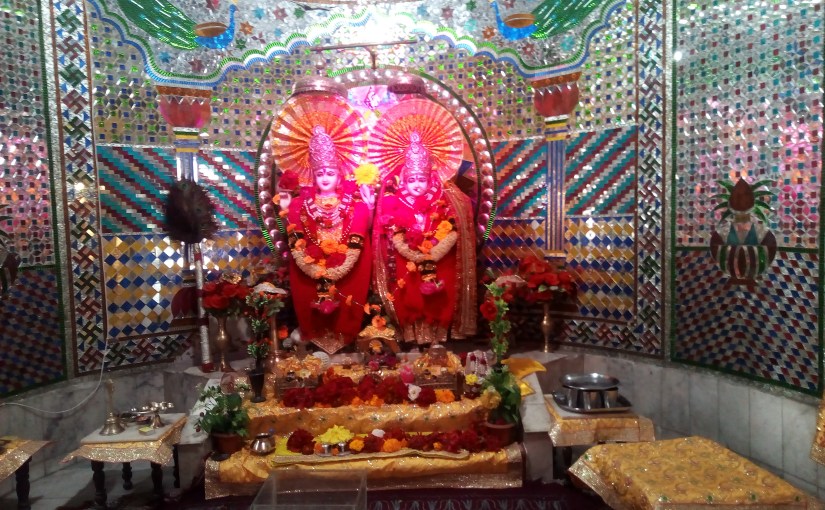
Kundalini awakening as Deepawali and Lord Rama’s yogasadhana as mythological allegory of the epic Ramayana

Shubh Diwali!

Kundalini is Goddess Sita and soul is Lord Rama

Sita is the Kundalini who enters from outside world in the form of a picture of the object through the light entering the eyes. In fact, the Kundalini energy of the body has gone out of the eye. It is also said in the scriptures that the whole personality of a man resides in his mind, which keeps wandering in the outside world by going out through the external senses. Everywhere outside is the kingdom of material defects or Doshas i.e. Ravana, a ten-headed demon. That kundalini power comes in his possession, and cannot escape from his clutches. The living soul i.e. Rama, who resides in the brain, looks helplessly at Sita Shakti wandering in that external world. This is what Jatayu’s brother Sampati ie. a big vulture has to see across the ocean with his sharp eyes and tell her well being to Rama. Then Rama engages in yoga, and associates a lot with the idol of the deity made in a temple, etc. or the guru living there, and pleases him with body, mind and wealth. By this, gradually the impression of the picture of his master deepens in his mind, and there comes a time when that mental picture becomes permanent. This is the start of samadhi or kundalini awakening. This is said as rescuing Sita from Ravana, the king of Lanka, and bring her to city of Ayodhya by crossing the bridge over the sea. The ray of light is that bridge, because through it the physical picture from outside entered the mind. The mind is Ayodhya, in which the soul of Rama resides. No one can fight with the mind, because it is beyond materialism. Very little is known about the mind of others. Everyone can fight with someone’s body, but not with the mind. Its second meaning is also that the mind should be put on the right path only after persuasion and not by coercion or scolding. Even through telepathy etc., it is just a guess. One can never know completely about another’s mind. First of all, the soul of Rama, wandering in the outside world that’s in Ravana’s Lanka, kept seeing his half part that’s Sita Mata from afar. Meaning he didn’t pay much attention to her. Even if he went out, he indulged himself half-heartedly. That is, he did not make enough efforts to bring back the kundalini power. Then, when Rama became very upset by her separation, then he jumped energetically out of his mind in to the outside world. This is what is depicted in the form of his battle with the demons. In fact, the real and lively life is like a war-level struggle and outward facing or extrovert life. It’s Karmyoga, the root and beginning of every meditation. Meaning that he came out of Ayodhya and entered Lanka through the bridge of eyesight. He started working hard in the world with his full heart and with full attention. Meaning that he started looking for Sita in Lanka. Then due to some satsang or good company, divine qualities started increasing in him. Meaning that the practice of Yama-Niyamas of Ashtanga Yoga of Patanjali started by him by itself. This satsang is in the form of friendship between Rama and the demon saint Vibhishana. Due to this, the soul Rama liked something very much, and he was constantly in contact with that one thing. Meaning that Rama’s eyes fell on his dearest Sita, and he began to be engrossed in her love. Meaning that in this metaphorical story, this principle of tantra has also been propounded that a woman that’s wife is the most helpful in yoga. The main purpose of the Puranas is spiritual and transcendental. The temporal purpose is secondary or inferior. But most people get the opposite. For example, they draw from this spiritual myth the same cosmic ethic that one should not cast an evil eye on a foreign woman like Ravana. Although this teaching is also correct, but they either do not understand or ignore the main and basic purpose of Kundalini Yoga hidden in it. Then the position or posture of the body of the soul Rama and the process of breathing itself began to adjust in such a way that maximum attention could be kept on the object of his favorite. Due to this, the development of Yogi Ram reached the asana and pranayama part of Ashtanga yoga. This means that Rama would sometimes stand for a long time to see Sita from afar and secretly, sometimes he would sit this or that way for a long time, sometimes he had to hold his breath for a long time, sometimes he had to breathe very slowly. This was so that the people entangled in the world, the demons of Lanka, would not come to know about this act of meditation or dhyana, so that they would not disturb his attention or meditation. What is actually a material object or a woman, that or she does not even know that someone is meditating on that or her. This is done very cleverly. If she finds out, she will shy away and will not be able to display her varied looks and emotions. Due to this meditation wouldn’t mature, Also, due to the creation of ego due to this, there will be further impairment in meditation. The same happens in the case of Guru as well. Similarly, what does a stone idol standing in the temple know that someone is meditating on it? Because Sita’s picture had occupied most of the space in Rama’s mind, so it had no desire to store unnecessary ambitions and unnecessary things. Due to this the fifth limb of Ashtanga Yoga, Aparigraha itself became manifest. Aparigraha means neither accumulation of unnecessary things nor wanting them. Then in this way, by prolonged practice of these initial five limbs of yoga, the image of that object or woman becomes fixed in the mind of the soul Rama. These are the dharana and dhyana or meditation, advanced limbs of ashtang yoga. You can call it as start of Samadhi or kundalini awakening. It means that Rama rescued Sita from Ravana of Lanka, and carried her through the same ray of light as bridge built on the ocean of atmosphere to the beach of eyes and then to Ayodhya in the form of mind or through Pushpak vimana that’s an classical aeroplane named Pushpak as written in Ramayana. Due to this the ten defects of his senses were destroyed. It is celebrated on the day of Dussehra festival as burning of effigy of Dashanan or ten-headed Ravana. The soul or Rama then practiced tantric yoga for twenty days to provide the final and emancipatory leap or escape velocity to kundalini for its awakening. During that time, he kept on taking picturesque and scenic journeys to reach home. Anyway, meditation along with remembrance of one’s permanent home gives more strength to Kundalini, because Kundalini is also associated with permanent house, as I mentioned in a previous article. Kundalini gets additional strength even from picturesque journeys, that’s why pilgrimage trips have been made. With that all-out effort, his Kundalini was awakened within a short span of twenty days. This is Ram’s reaching Ayodhya that’s the original place of Kundalini. This is the Kundalini awakening. The light of sattvikta that engulfs the mind after Kundalini awakening is depicted as the festival of lights, Deepawali. Because the effect of Kundalini awakening spreads the light of joy by spreading all around in the society, especially in the home, so this is the joint celebration of Happy Diwali festival by the people of Ayodhya.

Kundalini awakening and self-realization aka enlightenment are basically one and the same thing

I got information from Bing AI that self-realization aka enlightenment is achieved gradually and not all at once through any technique like yoga etc. But self-knowledge is called realizing oneself. How it can be delayed. Many people have realized this through yoga techniques. Luckily, with God’s countless grace I too had experienced its ordinary glimpse through the tantra-assisted Kundalini Yoga, which has been described on this website as the so-called 10-second Kundalini awakening momentary glimpse. Unfortunately, most people may not have been able to reach this level and may have been limited to Kundalini activation or so-called Kundalini awakening, and similar descriptions they may have made online, which may have been picked up by Bing AI. Perhaps chat gpt catches only what is more. Their Kundalini awakening would be of lower level than self-realization. There are levels of awakening or samadhi too. Just like some man sits awake, some walks, some runs, and even some conquers the world. Similarly, the final culmination of Kundalini awakening is self-realization. If by my Purana-reader guru’s indirect inspiration and gods’ proximity generated blessings, I had not given tantric strength to the ordinary Kundalini awakening, it would not have been fully awakened though momentarily. This complete awakening is self-realization. Meaning in this the mind has awakened and become as expanded as the soul or God. There is only a difference of level, nothing else. This can also be called complete samadhi. Samadhi in so called common language is also a very high level of Kundalini awakening. Actually, every experience is some level of samadhi. We cannot experience something without being connected to it. But complete awakening means self-realization is one step ahead of the so-called or popular Yogasamadhi. In most cases, Samadhi is considered to be the final stage achieved through Yoga. This is because very few people would have gone beyond samadhi with the help of yoga, whose voices would have been ignored. In this world, there is great hearing for the lute. Most of the people would not be able to give sexual tantric strength to their Samadhi due to not being able to leave their homes due to social embarrassment or attachment to family life. Perhaps for this reason, Patanjali has also considered Samadhi as the last stage of Yoga in his Ashtangayoga Sutra. It is possible that he may not have been able to hear the voices of minority yogis. Patanjali also says that if after Samadhi, life is lived with the help of God, then by His grace one attains enlightenment soon. Whatever work a man can do on his own, one should try for it, after all God always helps everyone. It often happens that help is sought from God to fulfill the shortcomings of one’s work. I also think there has been a misunderstanding. Because Samadhi is often experienced during the practice of Yoga, but not the awakening. Awakening happens more often at some beautiful place like near a lake, on a mountain, or at a ceremony etc. But it should not be forgotten that even at that time, only the Kundalini energy gathered through regular Tantric Yoga practice running at that time leads to awakening. Because only through tantric method, yoga practice can give enlightenment scientifically and in a short time, i.e. within a few months, but with ordinary yoga, it is completely uncertain. Who knows whether Yoga will deliver final result in how many years, whether it will take a lifetime or not even in the lifespan. It seems that most people do not have a life. Whether people hide or tell is a different matter. A complete miracle or special grace is required, as Patanjali says. Well, this might have been Patanjali’s compulsion because if Tantra had been mentioned in his book, it might not have been very acceptable to the over idealistic society of that time. To become a successful writer, sometimes one has to cover up the truth. That is why I consider Shiva to be the greatest god, because he openly presents the truth to everyone. What is described on online portals as being achieved gradually with age, is not self-realization but the cleansing of the filth of thoughts of the soul. Only a few moments are enough to know the soul. We do not take more than a few moments to recognize a friend, then how can we take more time to recognize ourselves, the one who is closest to us.

Happy Dipawali