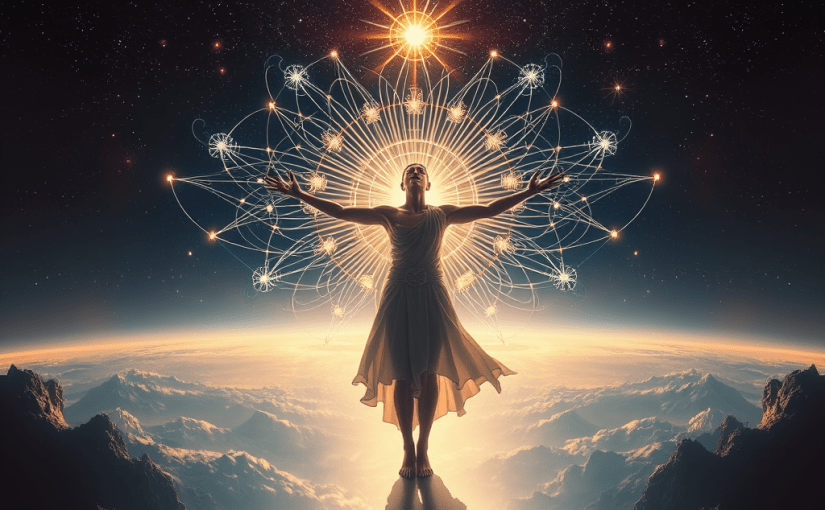
Vīra Rasa represents heroism, courage, and inner strength. In classical Indian aesthetics, it arises when an individual faces difficulty with confidence, clarity, and determination. When viewed through a quantum–spiritual lens, Vīra can be understood as the alignment of inner energy that enables consciousness to overcome resistance and act with purpose. Just as quantum systems operate beyond ordinary limitations, courage allows human beings to transcend fear and uncertainty.
Vīra Rasa is the alignment of individual energy with cosmic energy. It supports the universal order and stands in favor of truth. This is why it differs from mere physical bravery.
Physical bravery may sometimes be only a display of strength without a higher purpose. It can even act against truth or against the cosmic order. Such bravery does not resonate with universal energy and therefore remains temporary and short-lived.
Vīra Rasa, however, emerges when individual energy aligns with universal energy. Because of this alignment, it resonates with the universal force and becomes amplified. For this reason, it carries a lasting power.
Quantum Tunneling: Overcoming Barriers with Courage
In quantum physics, tunneling describes a phenomenon where a particle crosses an energy barrier that it cannot overcome through classical means. This mirrors human courage, where one acts despite fear, doubt, or apparent impossibility. Spiritually, Vīra Rasa resembles quantum tunneling of consciousness—moving forward even when logic predicts failure. Heroism, in this sense, is the willingness to step into the unknown with resolve. Both serve meaningful and truthful purposes. Quantum tunneling enables many biological phenomena and thus makes life possible, while Vīra Rasa helps preserve and sustain humanity.
Spin Alignment: Inner Coherence and Heroic Action
Particles in a magnetic field align their spins, creating coherence and collective strength. When the spins of electrons point in the same direction, their tiny magnetic moments add together instead of canceling out, and the material becomes magnetized. One may imagine a magnetic field as an army commander that aligns particles like disciplined soldiers, creating unity and collective strength to defend the nation from enemies. This coordinated behavior evokes a sense of charm and awe, as scattered particles suddenly act like a disciplined army. Through this alignment, their collective power performs many remarkable and almost “heroic” tasks in the physical world. In a similar way, armies and civilians perform heroic acts when they create countless structures through disciplined unity and collective alignment. Magnets created by aligned spins can lift heavy iron and steel in industrial cranes. Electric motors and generators operate because magnetic forces produced by aligned spins convert electricity into motion and motion into electricity, powering countless machines of modern civilization. In magnetic storage devices such as hard drives and magnetic discs, billions of tiny magnetic domains—each formed by aligned spins—store digital information. Through this microscopic organization, enormous libraries of human knowledge, scientific data, literature, images, and communication are preserved and retrieved. In medical technology, strong magnetic fields align nuclear spins inside the human body, making Magnetic Resonance Imaging (MRI) possible, allowing doctors to visualize internal organs and detect disease without surgery. Individually, each particle contributes only a minute effect, but when trillions align, their combined action produces extraordinary strength, organization, and usefulness. This alignment generates confidence among them and transforms scattered particles into an effective collective force, which metaphorically resembles the emergence of Vīra Rasa.
Sometimes a single individual displays such extraordinary courage and determination that he is called a “one-man army.” Even though he stands alone, his alignment with truth and purpose generates a force that can influence many others. What begins with a single person may gradually inspire collective strength and unity.
A similar principle can be seen in the quantum world. A single quantum particle aligning its spin within a magnetic field may become part of a larger process in which many particles align together, producing strong magnetism. In this way, even a tiny beginning can lead to a powerful collective effect.
In human life, this resembles the emergence of Vīra Rasa. When even a single individual aligns with truth and the universal order, that alignment can initiate a heroic force that eventually spreads and strengthens many others. Thus, both in the quantum realm and in human society, a great movement of strength may begin from a single aligned unit.
From another perspective, Vīra Rasa arises when the mind, heart, and body become aligned toward a single goal. True courage is not reckless behavior but a state of inner harmony in which thoughts, emotions, and actions move together. Just as aligned spins generate magnetism and collective power capable of performing great tasks, aligned inner faculties generate stable heroism. This alignment gives courage its strength, coherence, and moral grounding.
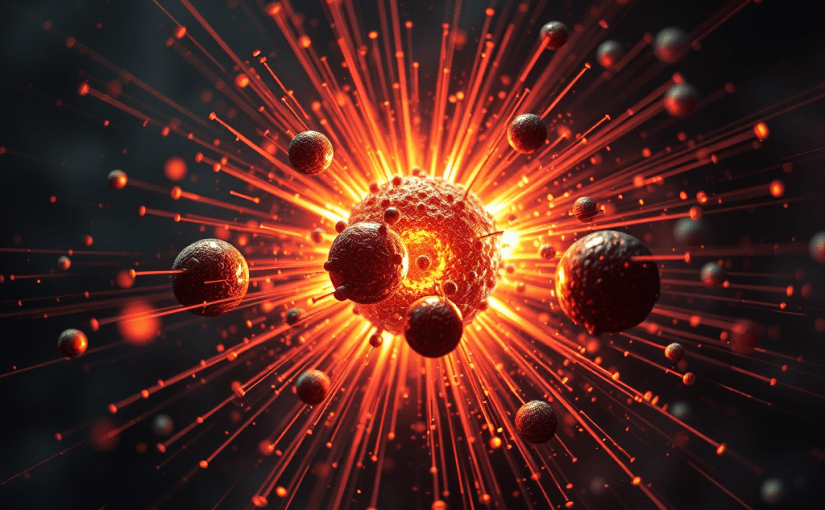
It also demonstrates that strength lies in unity. However, unity can sometimes be misused. In society, certain groups unite not to uphold justice but to oppose humane laws and demand inhuman rules, using the power of the crowd to disturb balance. Similar anomalies can also be observed in the quantum world. When particles act in harmony, they produce powerful collective effects such as coherence and magnetism, showing the constructive strength of unity. Yet unity can also create paradoxical or destructive outcomes. In destructive interference, many waves combine but cancel each other completely, producing no result despite collective effort. In quantum decoherence, the coordinated state of particles collapses when disturbed by the environment, causing the loss of unity and order. It is similar to the unity of an army or a lawful rebellion, which can be weakened when external forces interfere and break that unity through a divide-and-rule strategy. In the quantum world, when the external environment breaks the unity of quantum particles, their coordinated behavior is disturbed and they become absorbed into separate processes that serve the growth of the surrounding system. Similarly, when enemies break the unity of a nation, they can exploit the divided people for their own advantage and growth. In quantum tunneling, the collective probability of particles allows them to cross barriers that would normally confine them, leading to processes like radioactive decay, where particles escape from atomic nuclei and release harmful radiation that can damage living tissue. Similarly, uncontrolled chain reactions in nuclear processes arise from collective particle behavior and can result in massive destructive energy. On the other hand, nature also imposes limits through principles such as the Pauli Exclusion Principle, which prevents electrons from occupying the same state and thereby avoids the collapse of matter. Thus, the quantum world reveals that unity is powerful but not inherently virtuous; its consequences depend on whether the collective action supports harmony, stability, and the preservation of order. It also demonstrates that strength lies in unity. but some people misuse it and make unity to disassemble society and justice. they making crowd oppose humane laws and demand inhuman laws and rules. such anomalies also exist in quantum world.
Energy Transition: From Potential to Manifest Courage
Electron transitions in quantum mechanics occur when energy is absorbed or released, shifting the electron between different energy levels. This process does not involve intention but demonstrates how stored energy can suddenly manifest as activity. Human courage follows a similar energetic pattern. A person may carry latent strength within, remaining in a quiet or restrained state. When circumstances demand action, that stored potential rises into expression, much like an electron moving to an excited state after absorbing energy. Vīra Rasa thus represents the transformation of inner potential into visible and decisive action. Unlike electrons, however, human beings act with awareness and purpose, turning energy into meaningful direction.
Awareness is overlaid upon the fundamental activities already occurring in nature. The processes of nature—energy transitions, particle interactions, and transformations—continue according to their intrinsic laws. Awareness does not create these activities nor fundamentally alter them; it simply observes, recognizes, and sometimes guides their expression at the human level. In quantum mechanics, electrons shift between energy levels by absorbing or releasing energy, a process that occurs naturally without intention. Human courage follows a similar energetic pattern: latent potential rises into active expression when conditions demand it. Vīra Rasa therefore represents the transformation of stored inner strength into visible action. The underlying energetic movement already exists in nature; human awareness merely witnesses it and channels it consciously into meaningful direction.
If human awareness becomes stunned or dissolved in nonduality, the fundamental activities of life do not stop. Breathing, perception, thought, and action continue according to the intrinsic processes of nature. Awareness is therefore not the generator of activity but an overlay upon deeper natural functions. This insight forms the basis of what may be called Quantum Darshan: dulling or quieting the excessive, restless awareness that creates bondage, fear, and ignorance, while allowing the underlying natural processes to function freely and harmoniously. Just as in the quantum world particles continuously interact, transform, and move without deliberate intention, human life can remain fully active even when the ego-centered awareness subsides. In this state, activity continues, but the burden of psychological interference is reduced, allowing action to arise more naturally, efficiently, and spontaneously in a balanced human way.
Quantum Resonance: Amplifying the Power of Purpose
Resonance occurs when energy is applied at the right frequency, amplifying its effect. In human life, courage becomes powerful when it resonates with a higher purpose such as truth, duty, or compassion. Even small acts of bravery can create large impact when aligned with universal values. Spiritually, Vīra Rasa reflects resonance between individual will and cosmic support.
In my early life, what I emphasized most was simple humanity. I spoke about it, wrote about it, and tried to live by it. At that time, it appeared to be a very small effort—hardly a courageous act, almost devoid of Vīra Rasa.
Yet, because it resonated with a deeper cosmic principle, it gradually evolved into a powerful expression of Vīra Rasa as it became connected with various worldly actions.
This reveals that even a seemingly insignificant but truthful step, taken at the right stage of life, can resonate with time and universal values. In time, that small step may transform into a great heroic force.
Thus, even a single truthful mental resolution can bring a dramatic transformation in life. In my early years, I emphasized simply humanity—I spoke about it, wrote about it, and acted upon it. At that time, it seemed like a very small act, lacking courage and almost devoid of Vira Rasa. However, because it resonated with a cosmic principle, it later evolved into a powerful expression of Vira Rasa as it became connected with various worldly activities. This shows that even a seemingly negligible but truthful step, taken at the right stage of life, aligns with time and universal values and eventually gains great strength and significance; therefore, even a single truthful mental resolution can bring a dramatic change in life.
Vīra Rasa: A Quantum–Spiritual Synthesis
Through the lens of quantum analogies, Vīra Rasa can be understood as the science of inner strength. It is the courage to cross barriers, the coherence of aligned intention, the rise into higher energy states, and the resonance of purpose-driven action. Heroism, therefore, is not merely physical bravery but a deep energetic alignment between consciousness and the universal order.






 Demystifying Kundalini