My Inner Dussehra

✨🙏 Happy Dussehra 🙏✨
May this day remind us that just as Lord Rama conquered Ravana, we too can conquer the Ravanas within—ego, doubt, and restlessness—and let them merge into the light of awareness. Wishing you and your family joy, strength, and the victory of truth over all that holds us back. 🌸🔥🌿

Today, on Dussehra, I woke up early around 4 am and sat for dhyāna. The breath was fast, the mind restless, but I chose not to interfere. I just allowed it to flow and kept watching like a witness. After some time, when the sitting felt uneventful, I stood up for water and herbal tea. Once refreshed, I sat again but still no stability came. Then I turned to cleansing practices—jal neti and gajkarni. The water that had slipped into the throat, I drew back up through the nose to clear it. A few sneezes followed, and then with kapalbhati and anulom vilom I dried the remaining water passages. Gentle neck tilts and shoulder rotations released the stiffness.

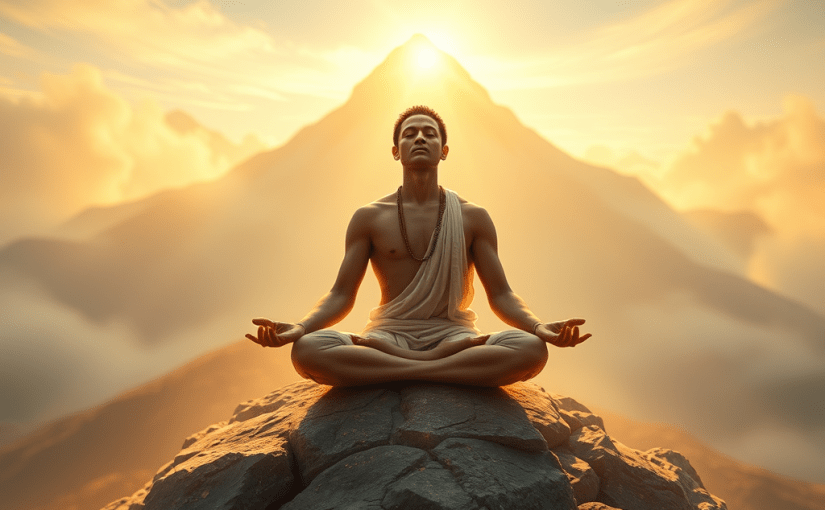
After this preparation, I again sat for meditation. This time, the mind settled quickly. Breathlessness deepened and I found myself resting in pure awareness, like Narayana in the vast ocean of ekarnava. For half an hour, there was a depth filled with bliss. Later, when family called me to get ready for a visit to the city, I moved from that deepness back into a witnessing state. Breath became minimal, almost absent, while thoughts arose and merged one by one into pure awareness—just like Ravana’s heads burning and dissolving into Rama’s light.

It felt as if my Dussehra had been celebrated inwardly before the outer festival. The inner Ravana—restless thoughts and subtle ego—was burned and offered into the inner Rama—pure awareness and bliss. Standing up, I felt fresh and ready for worldly duties, yet carried within the fragrance of this inner victory.

Festivals hold meanings much deeper than rituals and celebrations. When seen inwardly, they become reminders of our own inner journey, of the battles we fight silently, and of the joy of transformation that blesses not only us but also those around us.

Enhancing Dhyana through Yogic Cleansing Techniques

Recently, I noticed that after performing rubber neti, a distinct sensation persisted along my left nostril passage. When I sat down for dhyana and focused on this sensation, my breath felt partially suspended, and I could observe subtle internal responses. I had also done vastra dhauti, and together these practices led me into a wonderful state of kevala kumbhaka during dhyana. This shows that such cleansing techniques truly support meditation. This heightened sensitivity is likely connected to the internal awareness cultivated through yoga and pranayama practices.

Later, during Vastra Dhauti, I ingested a full-length gauze bandage of about one and a half feet, though I captured its end carefully with my hand to ensure safety. Unlike earlier experiences where I felt resistance from the lower esophageal sphincter, this time it came out easily when I pulled it. I reflected on why the sphincter’s grip was different this time. Physiologically, sphincter tone naturally varies due to factors like relaxation, digestion, hydration, and nervous system state. From a yogic perspective, classical texts describe the resistance as the body’s natural “gate” holding impurities, which can reduce as the body becomes cleansed and the channels more open.

I also considered recent influences on my internal state. About fifteen hours earlier, I had consumed a beverage containing a small percentage of green tea along with herbal components. That night, I experienced strong GERD with momentary suffocation during sleep. The combination of caffeine, catechins, and acidic foods like sour lassi and curry likely contributed to LES relaxation, increased stomach acid, and heightened sensitivity to reflux. Even sleeping with my head elevated 20–25% did not fully prevent the episode, highlighting that LES tone, residual acid, and heightened internal awareness can overpower positional benefits.

This experience reinforced my observation that prana-raising yoga can heighten sensitivity to GERD. Pranayama, Kundalini, and other prana-focused practices modulate the autonomic nervous system — often increasing vagal tone and at times sympathetic activity. These shifts can contribute to transient relaxations of the lower esophageal sphincter and, combined with heightened interoceptive awareness from yoga, may make sensations such as reflux more noticeable. Even a standard wait period of three to three and a half hours after meals does not always prevent reflux for someone with heightened sensitivity. That is why, in Yoga, cleansing techniques such as Vaman and Dhauti are prescribed — they help purify the digestive tract and may indirectly support functions like those of the LES.

I have clearly found that Keval Kumbhak Dhyana helps reduce GERD and gastritis. When I lie down to sleep in a bad mood, feeling bored or stressfully tired, acid often rises, burning my esophagus and throat, and even eroding my teeth. But when I sit for Keval Kumbhak Dhyana, I become cool and refreshed. After such practice, I notice that during subsequent evening or night sleep, acid reflux does not occur. This clearly proves that deep dhyana reduces stress and promotes healthy forward gut motility. I also feel an increase in appetite after dhyana. It means that easy and calm yoga, without strenuous or rapid energy shifts, is better in this condition.

GERD is primarily caused by transient lower esophageal sphincter relaxations (TLESRs), which are neurogenic reflexes mediated through the vagus nerve in the parasympathetic system. Excess vagal activation, often triggered by gastric distension or autonomic shifts, is what induces these relaxations. Constant sympathetic dominance by itself does not usually cause GERD, but it can impair esophageal clearance, slow digestion, and heighten stress-related sensitivity to symptoms, making reflux episodes feel worse. Thus, it is the dynamic shifts and imbalances between parasympathetic and sympathetic activity—rather than a single constant state—that underlie both the occurrence of reflux and the way it is perceived. So, it’s really over-activation or imbalance (too much of either, or rapid shifts between the two) that creates the problem — not their normal physiological levels. In yoga, however, the deliberate play of the sympathetic and parasympathetic nervous systems may often cause surges in either and rapid shifts between both states, which explains why heightened awareness of reflux can occur during intense prana-raising practices. However in yoga, both mechanisms can play a role — sometimes it’s just heightened awareness of normal reflux, and sometimes the practice itself can physiologically trigger reflux through vagal reflexes, abdominal pressure, or autonomic shifts.

I also explored alternatives to reduce such effects while retaining benefits. Non-caffeinated or decaffeinated green tea provides the antioxidants and catechins of green tea without stimulating the nervous system or relaxing the sphincter excessively. Choosing decaf blends or herbal infusions allows for the health benefits without aggravating GERD, making them more compatible with yogic cleansing practices.

Finally, I considered a safety protocol for Vastra Dhauti after reflux-prone days: waiting 24 hours after acidic or caffeinated foods, checking stomach comfort, ensuring well-lubricated gauze, maintaining upright posture, breathing calmly, observing LES response, and monitoring for soreness or burning afterward. This cautious approach, combined with attention to diet, posture, and timing of prana-raising practices, helps sustain the benefits of yogic cleansing while minimizing discomfort or risk.

Morning Dhyana: My Journey Through Nirvikalpa and Heart-Space Purification

Recently, I noticed a new development in my morning sadhana. Immediately after rising from bed, I concentrated on the Ajna and Sahasrara chakras, with subtle awareness of breathing seemingly rising from there. My mind waves began dissolving into a vast background space, leaving a sense of stillness. It felt effortless, as if the nirvikalpa-type dhyana was happening naturally without any prior yoga or preparatory practices.

After about an hour, my awareness shifted downward to the heart area. There, I felt a heavy darkness, which I realized was the emotional weight stored over time. Slowly, emotions and thoughts associated with those impressions emerged into my awareness, making the space lighter. It felt like an inner cleansing, a natural process of emotional and karmic purification.

From a Kundalini perspective, this process shows a beautiful rhythm: first, energy rises to higher centers, giving freedom from thought and and bringing waveless awareness. Then, it naturally descends to integrate higher consciousness into the emotional body. The darkness I felt in the heart was dense energy, now being slowly dissolved. This combination of upward transcendence and downward integration is rare, as many practitioners rise without cleansing the lower centers.

From a psychological perspective, the heaviness in the heart reflected unconscious or repressed emotions. By observing them in awareness, they surfaced without resistance and gradually lightened. This is a natural catharsis — the mind sees what was hidden, allowing tension and stored impressions to dissolve.

This experience made me question whether my usual physical asanas, cleansing techniques, and pranayamas were necessary before morning dhyana. I realized that if nirvikalpa absorption arises naturally, intense or long practices could drain the subtle energy needed for it. Gentle, minimal preparation, however, can support the body and subtle channels without interfering with the natural flow.

My guru had suggested a few practices: Jal Neti, Vastra Dhouti, Vaman, sneezing, Kapalbhati, Anulom Vilom, Sarvottan Asan without stretching, Greeva Chalan, Skandh Chalan, Nabhi Chalan (10 forward + 10 backward), and Sarp Asana. Upon reviewing them, I found them light enough if performed gently, slowly, and briefly. Vaman should only be done when advised or needed for it may be heavy in gerd; Kapalbhati should be mild; movements should be smooth and relaxed.

I created a light, energy-preserving morning prep routine to complement my dhyana: start with 3–5 minutes of gentle cleansing (Jal Neti, Sneezing, Vastra Dhouti), then 4–6 minutes of light movements (neck, shoulder, and core), followed by 3–5 minutes of gentle pranayama (Anulom Vilom and mild Kapalbhati), a short Sarvottan Asan without stretching, and finally 2 minutes of settling into stillness. After this, I enter nirvikalpa-type dhyana, focusing first on Ajna and Sahasrara for 15–20 minutes, followed by heart-space descent for 5–10 minutes to observe and release emotional heaviness. I end with integration and gentle awareness for 2–3 minutes.

The guiding principle is simple: let the dhyana arise naturally and effortlessly. Pre-dhyana practices exist only to prepare the body and subtle channels, not to produce forceful energy. Overdoing movements, pranayama, or cleansing can drain the subtle prana that fuels morning absorption. Consistency and gentleness are more valuable than intensity.

However, this is not always true. Most often, my rigorous energy work with strong āsanas, spinal breathing, and chakra meditation creates such potential in the brain that, after deep nirvikalpa dhyāna within five to ten minutes, I feel the āsanas themselves become perfected. When the same āsanas are practiced for many years, they seem to make the nāḍīs flow better, whereas new or even complicated āsanas do not have the same effect. Of course, these are simple ones like leg lifts, shoulder turns, and similar stretches. Probably, the nāḍīs develop in better alignment with the direction of those habitual āsanas with time. Interestingly, the guru-given effective āsanas did not work as well for me as my own simple stretching poses, which I had been doing for decades. No doubt, the guru’s prescribed āsanas will also become perfected with time, perhaps in an even better way. Thus, time and habit seem to be the main factors. When I am sufficiently tired, simple dhyāna starts by itself; when I am fresh and energetic, energy work leads to better dhyāna with greater awareness.

Through this approach, I am learning to harmonize high consciousness in the brain and subtle emotional purification in the heart. Simple Thokar practice also helps heart a lot. The upward flow gives bliss and waveless awareness, while the downward flow clears the unconscious, leaving a light, integrated, and balanced inner state. Observing my own responses allows me to adjust pre-dhyana practices, ensuring that maximum absorption and minimal energy drain occur every morning.

This journey teaches me that advanced sadhana is not about more effort but about precise awareness, gentle preparation, and letting the natural currents of energy and mind guide the practice. By honoring this rhythm, the heart opens, the mind rests, and the subtle energy supports a consistent and deepening nirvikalpa experience. However, all of this is relative. The definition of effort, energy, and practice may vary from person to person. So the approach is simple: try, observe, and practice — the “TOP” formula.


Harnessing Neti Neti for Deeper Meditation

Sometimes during dhyana (meditation), things don’t unfold as smoothly as we’d like. The breath may remain restless, the body refuses to settle, and the mind continues its habitual wandering. In such moments, the subtle movements of prana—the life force—seem to keep the system agitated. It’s as though the very thing that carries life within us also prevents us from fully resting in that silent space beyond all activity.

This is where the practice of mental chanting, especially neti neti, reveals its quiet power. “Not this, not this”—a simple phrase, yet profound in its effect. Mentally repeating it, not with strain but with sincerity, helps cut through the unnecessary. Every thought that arises, every feeling that pulls attention, every story or identity that surfaces—neti neti gently negates them. Not with violence, but with wisdom. Not this… not this…

I have come to see neti neti as a bridge—especially when keval kumbhak, the spontaneous suspension of breath, has not yet taken over. In those rare and beautiful moments when prana itself becomes still and the breath ceases naturally, no effort is needed. There is no gap to fill. The Self reveals itself effortlessly. Silence becomes solid. Awareness shines by itself, needing no reminder, no pointer.

But this depth is not always available. The body and mind often carry momentum. In such cases, neti neti becomes more than just a mantra—it becomes a companion. A whisper in the background reminding me of what I truly am not, so that what I truly am can gradually become clearer. When breath is not restful, when energy is still moving, the mind tends to seek content, to latch onto something—anything. This is where neti neti becomes a gentle replacement, a redirection away from identification, toward detachment, and eventually toward presence.

What’s unique about this practice is that it doesn’t demand that you believe anything. It doesn’t create a new identity. Instead, it un-builds. It dissolves. It peels away. It respects the structure of your being and only asks you to negate what is not permanent, not peaceful, not you.

Over time, I’ve noticed that chanting neti neti during dhyana not only helps quiet the mind, but also creates a subtle sense of inner space—like the difference between a cluttered room and one with just a mat and silence. This space doesn’t arrive by force. It unfolds gradually, like dawn. And when the space is finally there, awareness can relax into itself. Breath may still be moving, prana may still dance, but the grip of it weakens.

Of course, neti neti is not a mechanical technique. It is alive. It responds to sincerity, not repetition. When practiced with mindfulness and simplicity, it becomes a living pointer to the reality that is always here, just beneath the noise.

Whether prana is dancing or resting, whether the breath is moving or suspended—neti neti remains a quiet, humble companion on the path to the Self.