When a Simple Practice Triggered Unexpected Change
It started with what seemed like a simple yogic cleansing technique. I used Sutra Neti on my right nostril, but instead of clarity, it created a sudden shift in my behavior. It wasn’t just mild irritation. The nostril felt inflamed and blocked, and along with that came an unexpected wave of anger, frustration, and worry. Social interactions became difficult for a few days, almost as if something in my internal balance had been disturbed. This was not a subtle experience—it was intense enough to affect my day-to-day functioning.
Looking back, it became clear that this was not just a superficial issue. The nasal passage is deeply connected to the nervous system, and irritation there can influence mood and emotional regulation. The inflammation likely triggered a stress response, and the blockage altered my breathing pattern, which in turn affected my mental state. What I initially thought might be some deeper yogic shift turned out to be a very grounded physiological reaction. The lesson was immediate: not every yogic technique suits every stage of practice, especially when the system is already sensitive.
Moving Away from Aggressive Techniques Toward Stability
After that experience, Sutra Neti started to feel unnecessary. I realized that I was already getting good dhyana through spinal breathing and some asanas. There was no real need to add something that introduced instability. The focus naturally shifted toward what was already working. Simpler practices were not only sufficient but actually more supportive of a stable meditative state.
This marked an important shift in understanding. Earlier, there was a tendency to think that adding more techniques would enhance progress. But now it became clear that once dhyana begins to stabilize, the role of additional techniques diminishes. The system does not need stimulation; it needs balance. Practices like Jala Neti may still have a place, but only when truly required, not as a routine.
Subtle Experiences During Spinal Breathing
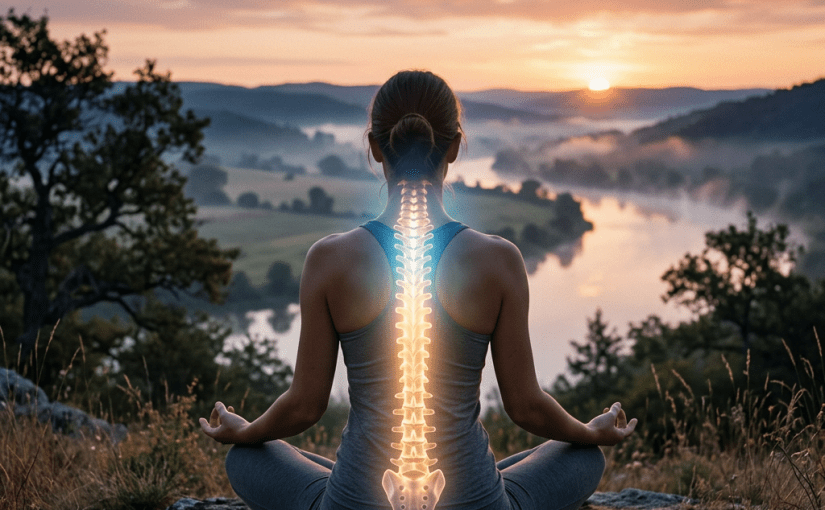
As practice continued, I began to notice sensations along the spine, especially around the Vishuddha Chakra. Sometimes the awareness would be felt in the front of the body, sometimes shifting to the rear, almost as if the perception itself was moving through layers. When the gaze naturally turned upward toward the Ajna Chakra, breathing became extremely subtle. At times, it felt as if breathing was happening on its own, without any conscious effort, almost like it was fulfilling itself. Sometimes stimulation and activation of rear agya chakra point noticed especially at times of awareness in upper chakras.
This was not literal cessation of breath, but a refinement of it. The body required less oxygen, and the nervous system entered a deeply calm state. What appeared mystical at first gradually revealed itself as a natural progression of meditative refinement. The key insight here was not to interfere. The moment I tried to control or prolong these experiences, imbalance would creep in. But when left alone, they unfolded smoothly.
The Gradual Deepening of Dhyana
With consistent daily practice, spinal breathing began to feel more refined and increasingly blissful. This raised an important question: does continuous practice over years extend dhyana and lead to samadhi? The answer became clearer with experience. Practice does not accumulate like time in a bank. Instead, it removes resistance.
Dhyana becomes longer and more stable not because of effort, but because effort reduces. Samadhi is not just extended meditation; it is a qualitative shift where the observer and the process dissolve into one. This cannot be forced by increasing duration. It emerges when interference drops to zero. The breath becoming subtle, awareness stabilizing, and the sense of ease increasing are all signs of this direction, but they are not goals to chase.
Natural Timing and the One-Hour Cycle
An interesting pattern appeared: after exactly one hour, the body would come out of dhyana on its own, without looking at a clock. This initially felt significant, but it turned out to be a natural rhythm. The body operates in cycles, and after a certain duration, it rebalances itself. This is not a limit but a self-regulation mechanism. Forcing beyond it or trying to hold the state would only create disturbance.
The key realization was that meditation is not about duration but about quality. Whether it lasts forty minutes or seventy, the depth and stability matter more than the clock.
The Role of Padmasana and Physical Limits
Alongside meditation, posture also evolved. Holding Padmasana became easier, increasing from thirty minutes to nearly an hour. However, after thirty minutes, a mild strain in the knee would appear. This raised an important question about whether the body should be challenged to increase stamina.
The answer became clear: muscles can be trained, but joints must be respected. The knee is not designed to adapt to strain in the same way muscles do. The strain indicated that the hips were not fully open yet, and the knee was compensating. Pushing through this would not build strength; it would accumulate risk.
Breaking posture briefly did not disrupt dhyana when done consciously. In fact, it often improved the second phase of meditation by removing subtle discomfort. This shifted the focus from rigid continuity to intelligent continuity—maintaining awareness rather than posture.
Observing Knee Sensitivity Beyond Practice
Another important observation was that the right knee showed stress not only in lotus but also after driving or when physical activity was reduced. This indicated that the issue was not limited to posture but involved general joint sensitivity. Long periods of immobility or repetitive use, such as driving, were enough to trigger discomfort.
This reinforced the need for balanced movement and gentle care rather than pushing limits. The body was signaling clearly that it required attention, not force.
Morning vs Evening Meditation Dynamics
A subtle but practical understanding developed regarding timing. After dinner, focusing strongly upward toward the Ajna center felt uncomfortable, possibly because digestion was active. In contrast, morning meditation before breakfast felt naturally deeper and more stable.
This led to a simple approach: use the morning for deeper practice and keep evening sessions lighter. There was no need to manipulate energy or direct it consciously. The body’s natural rhythms were enough to guide practice.
Integrating Meditation with Daily Life
Another practical question arose about how long to wait before breakfast after meditation. A short gap of about fifteen to twenty minutes proved sufficient. This allowed the body to transition from deep calm to active digestion without abrupt shifts. Simple activities like sitting quietly or moving gently were enough during this interval.
Final Understanding: Effortless Progress
Looking at the entire journey, the central theme that emerged was simplicity. Techniques, duration, posture, and even subtle experiences all have their place, but none of them should be forced. Progress in meditation is not about doing more; it is about interfering less.
The initial shock from Sutra Neti, the evolving breath, the shifting sensations along the spine, the natural one-hour cycle, the knee’s feedback, and the timing of practice all pointed toward the same conclusion. The system knows how to balance itself if allowed.
The real movement is not upward or downward, not toward any chakra or state, but toward effortlessness. And in that effortless state, dhyana deepens on its own, without struggle, without force, and without the need to chase anything further.


