How This Conversation Began: The Problem of Rigid Spiritual Paths
One major drawback of rigid sectarian differentiation, as I came to understand, is the loss of holistic opportunity. If a follower begins living only one ideal from birth, then he may never receive the natural chance to pass through other essential phases of human and spiritual development. If someone is trained only in the Rama ideal from childhood, then perhaps the Krishna, Shakti, and Shiva dimensions of life remain unlived, unrefined, or misunderstood. In such a case, liberation may become extremely difficult, or if glimpsed, may fail to stabilize deeply because earlier energies were never properly integrated. The same limitation can arise with followers of any single path whenever one phase is absolutized and the others are neglected.
This may explain why many people feel relief by remaining outside rigid sect identities. Without labels, life often moves more naturally. Growth can unfold stage by stage according to inner need rather than outer doctrine. In that sense, such people may become followers of all paths whenever required. They are loyal not to banners, but to truth as it reveals itself through changing phases of life.
The Four Living Phases of Spiritual Growth
Through reflection, I began to see that what traditions separated into sects may actually be phases of one complete human journey. First comes the Krishna phase, where energy gathers through worldly participation. Here life includes groundedness, relationships, romance, playfulness, learning, karma, emotional richness, joy, and active engagement with the world. This is not merely distraction. It may be the very gathering of force at the Muladhara, the root of life energy.
Then comes the Shakti phase. The gathered worldly energy is concentrated and pushed upward with greater intensity, almost like reaching escape velocity. This can occur through tantric Kundalini Yoga within a framework of nondual worldliness. One remains in life, yet awareness increases. Worldly force becomes spiritual fuel.
As the process deepens, a more inward movement appears. Nonduality grows stronger, ordinary worldliness becomes less attractive, and more energy is drawn toward meditation, inner transformation, and sattvik and refined tantric practice rather than outer pursuits. This is the Shiva phase. At its peak, awakening or glimpses of self-realization may arise.
After attainment comes naturalness. This is the Rama phase. In the beginning, thoughtless or breathless dhyana may still depend on posture, breath discipline, prior momentum, or energetic methods. Later, when the flow through the Sushumna becomes natural and self-sustaining, a simpler maturity emerges. This is the ripened Rama phase, balanced resting in truth.
Thus, these are not competing doctrines. They are movements of one life. To cling to one phase alone is to freeze growth prematurely. To allow all phases their rightful place is to let liberation unfold organically.
Are These Phases Fixed or Different for Everyone?
Seen in this way, each prior phase becomes the fuel, foundation, and preparation for the phase that follows. Nothing essential is wasted; the energies cultivated earlier are gradually refined and carried upward into a higher or more integrated expression. For this reason, the phases often unfold most fruitfully when they arise in a broadly natural sequence. The Krishna phase gathers vitality through joy, relationships, learning, emotional richness, and participation in life. The Shakti phase then converts that gathered vitality into disciplined force, transformation, and purposeful ascent. The Shiva phase uses this concentrated power for inwardness, detachment, meditation, and awakening. Finally, the Rama phase stabilizes whatever has been realized into balance, dharma, simplicity, and natural living. Without adequate nourishment from earlier phases, later phases may become dry, forced, premature, or unstable. Yet sequence should not be understood as rigid or identical for all people, for individuals may revisit earlier stages or awaken certain qualities sooner than expected. Even so, as a general principle of human development, the previous phase often provides the raw material that the next phase must refine. In this sense, right sequence supports growth that is more complete, humane, and enduring.
Hidden Meanings Behind Muladhara Teachings
Another insight arose regarding teachings about Muladhara energy. It is rarely stated directly that one should live relationships deeply or engage in energy-conserving sexual practices intensely. Instead, traditions often speak indirectly of strengthening or awakening Muladhara. This may have happened because of social and cultural reasons.
Many older teachings likely used symbolic language when discussing sexuality, vitality, grounding, and foundational drives. References to root energy may point not only to mystical ideas but also to survival instinct, embodiment, security, sexuality, and life-force. Direct language may have been avoided due to moral norms, fear of misuse, and the need for maturity in practice.
Is Sex Indulgence or a Doorway?
I reflected that sex appears as indulgence when seen directly. Yet it may be the inner mind that directs it toward awakening. This distinction is important. The same outer act can have very different inner meanings depending on consciousness, intention, and relationship to desire.
Sex may arise from compulsion, loneliness, domination, or craving. But it may also arise from affection, surrender, healing, conscious union, intimacy, devotion, or self-transcendence. The outer act or motive of it alone does not determine the truth of it. Mind directs energy.
Traditional tantric perspectives often suggest that liberation does not come from the act itself but from awareness during the act, non-attachment, transformation of desire into presence, and seeing unity rather than grasping. Without inner shift, it remains ordinary pleasure. With clarity, it may support growth. Yet self-deception is common. If craving increases, it is indulgence. If peace, compassion, steadiness, and responsibility increase, something deeper may be occurring.
Why Society Often Rejects Sexual Spirituality
Another realization followed. Without becoming eligible for tantric sex, society often sees it with disrespect or even boycotts it. What is usually rejected is not sex itself but sex perceived as irresponsible, impulsive, exploitative, immature, outside accepted norms, or harmful to social order.
Traditional eligibility may have implied self-control, emotional steadiness, respect for partner, capacity for awareness, ethical grounding, and freedom from crude lust. Without these, powerful practices become dangerous or degrading. Society often creates harsh norms to prevent chaos, though in doing so it may suppress healthy mature sexuality too. The wise path is neither repression nor reckless permissiveness, but integration.
My New Development: Loss of Breathless Dhyana After Raising Muladhara Energy
Then I shared a direct experience. After lifting Muladhara energy through tantric sex, the next morning I could not enter the breathless spontaneous deep dhyana that had been occurring daily. The felt Sushumna flow was also absent. I wondered whether the channels had become exhausted.
One explanation offered was that this was not damage but a temporary physiological and attentional after-effect. Strong arousal may create nervous-system fatigue, autonomic shifts, neurochemical changes, outward movement of attention, or depletion through exertion and sleep disruption. There is no scientific evidence of literal channels being exhausted, though yogic language may describe it as prana dispersal or temporary imbalance.
But I Had Slept Well: Something Else Happened
I clarified that I had slept enough. What followed was surprising. There was strong bliss and nondual feeling in worldly life. Relationships strengthened. Harmony increased. Enemies became like friends. Family life improved. Yet this came at the cost of breathless deep dhyana. Meditation was still present, but not as deep, blissful, relaxing, breathless, or spontaneous as on previous days.
This led to a deeper interpretation. Rather than damage, it seemed like a shift in mode of consciousness. Energy that previously expressed itself as inward meditative absorption through verticle movement had redistributed into relational coherence, embodied bliss, and worldly harmony through horizontal movement.
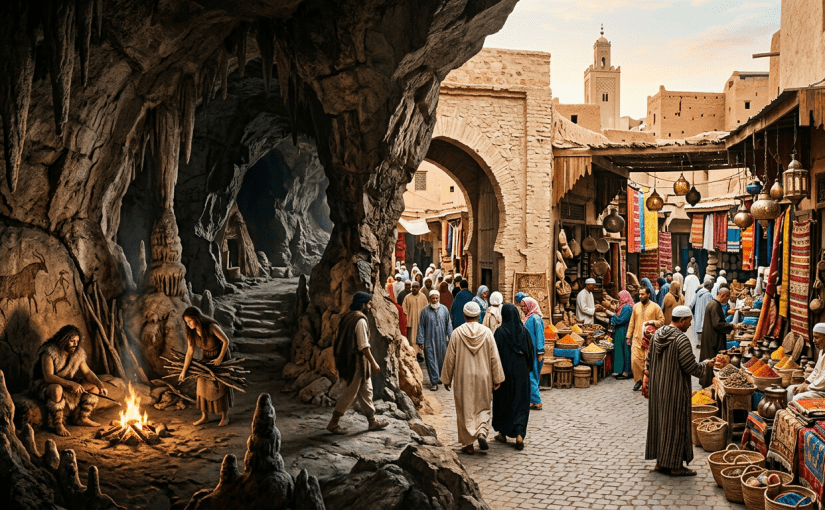
Two Modes of Consciousness: Cave and Marketplace
There may be two alternating modes. One is inward absorptive mode, marked by spontaneous deep dhyana, quiet or subtle breathing, inner pull, detachment from outer life, and central-channel sensations. The second is integrated worldly mode, marked by nondual ease in activity, warmth in relationships, less conflict, friendliness, family harmony, charisma, and bliss while functioning normally.
I appeared to experience the second mode. Through bonding hormones, emotional opening, nervous-system regulation, and reduced friction, the energy became socially expressive. What had earlier become deep meditation now became living harmony.
From a symbolic lens, earlier days resembled Shiva mode, inward stillness. This newer movement resembled Krishna or Shakti mode, love, relation, dynamic life, embodied joy. Neither is inferior.
One striking memory remains with me. I was, in some subtle and unspoken way, compelled out of a predominantly Shiva mode by the psychological influence of a certain lady, whose identity need not be disclosed. Nothing explicit was said; it was more a matter of presence, temperament, and silent authority than of words. Under that pressure, I found myself impulsively turning either toward a more natural inner Rama mode or toward a deeper and clearer Shiva mode, as though something false or unstable was being challenged and forced to reorganize itself. At the time, I interpreted her attitude as disapproval, perhaps seeing my tantric style of life as inferior or misguided or full of sexual misconduct. On a few occasions, she became quite angry at some of my remarks, perhaps considering them excessively bold or inappropriate. I chose to calm the situation and restrain myself, as her authority was higher than mine. Yet whatever her intention may actually have been, the result proved beneficial. What first appeared as rejection or opposition gradually revealed itself as a blessing in disguise, for it redirected me toward a more grounded, developed and authentic inner state. It was as though the fruit had already ripened, and someone merely struck it with a stone so that it might fall at the proper time and onto the right path.
The Real Trade-Off: Transcendence or Integration?
A powerful conclusion emerged. Sometimes consciousness exchanges depth of transcendence for depth of embodiment. What seemed like a loss of spirituality may simply have been spirituality expressed differently. The breathless cave of meditation had become the marketplace of nondual life.
This does not mean one mode is higher than the other. Deep dhyana refines being. Loving harmony expresses being. Silence and relationship are two faces of one energy.
Final Reflection
My experience suggests that spiritual life cannot always be measured by how deep meditation feels on a given morning. Sometimes the highest state may not be breathless withdrawal but effortless love, reduced hostility, healed relationships, and natural bliss in ordinary life. Sometimes the Sushumna is not felt because it is being lived.
Perhaps Krishna gathers life, Shakti transforms it, Shiva refines it, and Rama stabilizes it. Perhaps these are not sects at all, but seasons of consciousness moving through one human journey. And perhaps true maturity lies not in clinging to one phase, but in recognizing the sacred movement through them all.


