Chapter 19: Dreams, Myra, and Mystery

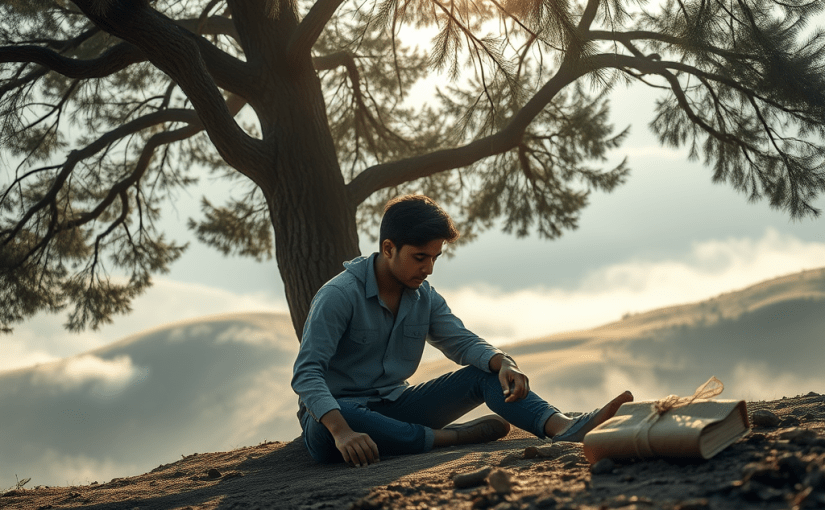
By the time Ishaan reached Chapter Nineteen of She Who Became My Guru, the afternoon sun had begun its quiet descent behind the cedar-clad ridges of his Himalayan retreat. A thin veil of cloud floated lazily across the peaks, diffusing light like an old memory—neither too bright, nor too dim. He sat cross-legged on the floor by the open bay window, a mild breeze carrying the scent of pine and distant rain. The pages of his own book fluttered gently on the table, as if eager to remind him—this isn’t over yet.

He turned to the chapter titled Dreams, Myra, and Mystery.

And just like that, it began happening again.


Back then, he never saw it coming. The awakening. The spiral. The slow but powerful inward turn of his senses.

But it didn’t begin with scriptures or chants. It began with her.

Not in the ashram. Not during a retreat. But in the cluttered corridors of Pine Crest School—amid exam stress, adolescent jokes, and half-said goodbyes.

Her name was Myra.

Everyone saw her as just another brilliant, quirky, vibrant schoolmate with that odd yin-yang mix—wild laughter and sudden silences. But to him, she had always been something else. Something unnameable. He could never quite look at her directly for long. Something stirred. Something too vast for a teenage mind to hold.

She made him restless—but not in the way of infatuation. It was more like standing near a forgotten temple: you don’t know why your chest tightens, but you feel something ancient awakening.

Back then, he called it attraction.

Now, reading his own words, older and inwardly calmer, he knew it was initiation.


The dreams started the same year his curiosity toward yoga and mysticism bloomed. He would see her—not as a classmate—but as light. Sometimes sitting beneath a tree reading ancient texts. Sometimes walking silently through ruins. And sometimes, simply staring at him with an unsettling stillness that made everything else blur.

He once told Gagan about a dream, casually.

Gagan had chuckled, “Oye, she’s your dream girl in the literal sense now!”

But Anjali—Myra’s observant friend—had overheard and said something cryptic:
“Not all dreams come from sleep. Some come to wake you up.”


What confused him most was that the pull toward her never felt impure. His growing interest in Kundalini, in chakras, in breathwork—somehow, she kept surfacing in the background of all of it.

Like she was threaded through the sadhana itself.

The tipping point came one dusky evening in the school library. He was reading a translated copy of the Devi Bhagavatam, and as if scripted by fate, Myra walked in and sat at the adjacent table. For a moment, he forgot the book entirely. Then she asked, without lifting her eyes from her notes:

“Do you think all energy is feminine?”

He froze. “Why do you ask?”

She shrugged. “Just curious. Shiva sits still. Shakti moves.”

That line haunted him for weeks.


At that age, he didn’t yet understand how lust could be lifted, not denied. He only knew that trying to suppress what he felt led to tension, and indulging it dulled his clarity. It was Govind bhaiya—his elder cousin, silent seeker, and mystic-in-hiding—who gave him the key.

“Energy doesn’t ask questions,” Govind had said one afternoon while flipping hot parathas. “It just moves. Where you let it move is your sadhana.”

Those words were the silent switch.

The chaos he felt—so easily mistaken for teenage hormones—was quietly turned inward. The same pulse that stirred when Myra looked at him now found refuge in dhyana. He began using her as a dhyana-mudra without even knowing the term. Not her form, but her presence. Her mystery. Her silence.

Mr. Dutt, their unconventional teacher, had once noticed Ishaan unusually silent in class.

“You look like you’re meditating, Sharma.”

“Maybe I am, sir.”

To which Mr. Dutt had only smiled and whispered, “Good. But meditate upward.”


In one of his deepest dreams, years later, Myra appeared again—older this time. Not aged, but ageless. She stood beneath a tree made of light, its leaves shimmering like miniature galaxies. In the dream, he was fully conscious, aware he was dreaming, and yet unable to wake. It was not sleep—it was a journey.

“Myra?” he had asked, voice quivering.

“No,” she answered softly. “Not anymore.”

“Then… who?”

“I am what you made of me.”

Her eyes held a mother’s compassion, a friend’s mirth, and a Guru’s power.

“You carved me with longing,” she continued. “Then sculpted me through silence. Now let me dissolve into stillness.”

He reached for her hand, but she melted into light.


That dream marked a turning point.

From that day, he never saw Myra as a lost love. He saw her as the force that first cracked open his inner world. The fire that didn’t burn—but transformed.

She had never truly been a girl. She had been the Shakti principle in disguise—clever enough to wear adolescent charm, but wise enough to leave when the work was done.

She was the movement that led him to stillness.


He still remembered how difficult it had been to explain this to Vedika, his wife.

Not because she wouldn’t understand—but because he feared she might.

But Vedika had only smiled, serene as ever, and said:

“If she opened your path, then I’m grateful to her. We all have someone who breaks us open.”

He had stood quietly, humbled by the depth of her presence. She wasn’t jealous. She was aware.

“Besides,” Vedika had added, “if she was your Guru, she chose well when she stepped away.”


Now, at 52, surrounded by the scent of cedarwood and the songs of whistling thrushes, Ishaan closed his eyes and relived it all—not as memory, but as living now. He had long stopped distinguishing the outer world from the inner one. Everything was part of the same eternal unfolding.

He thought of Vinod, his genius classmate, who once joked that Ishaan was “writing devotional poetry disguised as teenage love letters.”

He thought of Ranjana didi, who called Myra “your spiritual vitamin.”

He thought of Anjali, who knew far more than she ever said, and whose quiet nods had once reassured him more than any words could.

Even now, even after years of advanced yogic states, silent retreats, and mystical highs, that first flame—the tender confusion of seeing Myra for what she really was—remained the most sacred moment.

The gateway.

The adi-darshan.


As the chapter drew to a close, the clouds parted, and golden light poured onto the hilltop like prasad. Ishaan rose, book in hand, and stepped out into the open. The valley stretched endlessly before him, soaked in silence and light.

He stood there, breathing slowly, the book held close to his chest.

“Myra,” he whispered—not as a name, but as a mantra.

A bird took flight.

The wind brushed his face like a blessing.

And in the stillness that followed, he didn’t feel alone.

He felt guided.

Always guided.

By her, and through her, and beyond her.

By that which she had always pointed toward—the One who has no name, no form, yet wears every face we’ve ever loved.

Chapter 5: A Spark Without Words

The final school bell had rung, and like a flock set free, the students poured out into the corridor, the air filling with laughter, chatter, and footsteps shuffling against the dusty tiles.

But Ishaan Sharma didn’t rush. He never did.

He stood at the corner of the verandah, half hidden behind a pillar weathered by years of monsoons and sun, watching the world with that same quiet, curious stillness that had started to draw attention — especially Myra’s.

Her friends were giggling as usual — Anjali in particular was animated, narrating something with wild hand gestures — but Myra was quieter today. Her glance, as fleeting as a breeze in spring, drifted to where Ishaan stood, head tilted slightly, eyes cast downward in thought.

They had never talked alone. Never walked together. Not even by accident.

And they never would.

Not here.

Not in this time.

Not in this place.

It was a different era in their little town — one where even walking in a pair of opposite genders was enough to become the centre of murmurs and raised eyebrows. A single touch — even an accidental brush of the hand — was enough to stir storms in conservative corners. Usually, the dress used to be decent and classical, with a traditional style of tying the hair. Although the subjects of study were purely science-oriented and modern, it was a good blend of tradition and modernity.

Myra, graceful and thoughtful, followed those boundaries as naturally as a river flowing within its banks. Not out of fear. But out of deep respect — for her family, her culture, her own sense of purity.

And Ishaan… Ishaan would never even imagine crossing those lines.

He barely spoke as it was.

If he ever did, it was only when asked something directly. His answers were short, sometimes just a nod, sometimes a quiet, “Hmm.” He had no idea what love meant — not in the way others his age teased or whispered about it. But when Myra was near, something happened. Not to his body, but to his breath. To his soul.

One afternoon, while the students waited for their class teacher, Anjali joked loudly, nudging Myra, “Look at Ishaan — again! That stillness! Myra, I think he’s about to open his Shiva’s third eye!”

Everyone burst into laughter.

Myra laughed too, her tone light, but there was a twinkle in her eye that didn’t match her laughter.

“Ishaan Sharma,” she teased across the room, “Tell us — are you meditating or planning world salvation?”

He looked up, surprised by the attention. Then — as usual — looked away, the faintest blush warming his face.

He didn’t answer. He didn’t need to.

That silence of his had its own gravity.

The kind that made even jokes fall quiet after echoing too far.

Many boys stayed in the small hostel attached to the school — a faded, timeworn building behind the playground. It was noisy, cramped, and full of the usual pranks, midnight whispering, and the chaotic joys of teenage boys.

But Ishaan almost never stayed back.

Each day, after the last class, while most boys ran off to games or to the hostel mess, Ishaan would begin a long journey home — several kilometers on foot just to catch a rattling state bus, which took him further into the outskirts of town. And then again, he walked.

No one understood why he put himself through that daily ritual.

But for Ishaan, there was something waiting at home that no hostel comfort could match.

As the sun softened and shadows stretched long on the mud path, Ishaan would arrive at his modest home — a place that smelled of earth, incense, and old wisdom. Inside, seated cross-legged near the window that opened to the backyard peepal tree, his grandfather chanted from the *Puranas* — the *Shrimad Bhagavat*, the *Shiva Purana*, or sometimes, from the *Devi Bhagavatam*.

The words floated through the evening air like gentle fireflies.

“…And when Radha saw Krishna walking away with others, she smiled, not out of jealousy, but from love that knows freedom…”

Ishaan would stand silently at the door, schoolbag still on his shoulders, listening. His great-grandmother, old and blind, sat on a woven cot nearby, swaying gently, muttering the name of Hari under her breath with every bead of her rudraksha mala.

Those stories — soaked in devotion, layered with longing and surrender — were not fiction to him.

They were mirrors.

He could feel them echoing somewhere inside, in a space still unnamed.

It was on one such evening, while his grandfather spoke of Radha’s love, that Ishaan found himself thinking of Myra.

*Could that kind of love still exist?*
*The kind that waits, that watches, that never asks or takes or even speaks, but simply… is?*

She had never once walked beside him. Never sat alone with him. Never touched his hand. And yet, somehow, he felt as if she lived in his breath now. Not as an obsession, but as a presence — gentle, sacred, untouchable.

Like the flute music only Radha could hear.

One day, during a group assignment, Myra turned to him suddenly and said, “You always listen like you’re not just hearing me, but… remembering me.”

Her voice was half-teasing, half-vulnerable.

Ishaan blinked. “Maybe I am,” he replied without thinking.

The group laughed.

Myra paused. Her smile faded just a little — replaced by something softer.

They returned to their books, but the air between them had changed.

A string had been plucked.

The school had announced a visit to a nearby heritage temple — an old Shiva shrine atop a small hill, as part of an educational outing. The excitement was palpable. But Myra, even here, chose to remain in the company of her close-knit circle of girls. Even during the bus ride, she sat with Anjali, keeping the invisible lines of decorum intact.

Ishaan sat near the back, watching the green hills pass by, the wind tousling his hair.

At the temple, students scattered in groups, climbing the stone steps, marvelling at the ancient architecture, clicking pictures with shaky school cameras.

Ishaan drifted towards the rear courtyard of the temple — drawn to the silent banyan tree whose roots kissed the stones below.

A breeze blew. A cowbell chimed. And from the temple’s sanctum, a faint *Om Namah Shivaya* floated outward.

He sat beneath the banyan, closing his eyes. Not to meditate. Just to *be*.

A few minutes later, soft footsteps approached.

It was Myra.

She didn’t sit beside him. But she stood nearby, her hands folded, eyes on the leaves swaying above.

“You feel different,” she said suddenly.

He opened his eyes.

“In what way?” he asked.

“Like someone who doesn’t belong entirely to this age.”

Ishaan gave a faint smile. “Maybe I read too many stories.”

She shook her head. “Or maybe you *remember* too many.”

There was silence again.

Then she whispered, “Tell me… what is love, really?”

He looked at her for a long moment, then answered, “I think love is what remains when all desire has fallen asleep.”

The bus ride back was quiet.

Nobody said much. Not even Anjali.

Ishaan sat by the window, watching the trees sway under the dimming sky. Myra was two rows ahead. But their reflections, caught briefly in the glass — her gaze looking forward, his slightly turned — touched each other.

Not a word.

Not a touch.

Just a spark.

Without words.

That night, at home, as his grandfather read the same verse once more — “…Radha’s love knew no possession. Only presence…” — Ishaan closed his eyes and let the story carry him.

Not into fantasy.

But into something very, very real.

Chapter 4: Pages and Perceptions

The mist lingered low over the hills that morning, weaving like a soft shawl draped across the slopes. Ishaan sat beneath the deodar tree, his fingers tracing idle patterns into the moist earth, while thoughts of Myra shimmered through his mind like sunlight dancing on still water. Something had changed after the quiz—their quiet camaraderie now hummed with a subtle intensity neither of them fully understood, but both deeply felt.

It was not in grand gestures or spoken promises. It was in the way her name lingered on his lips even when unspoken. In the way his heart beat just a touch faster when he spotted her from across the corridor. Myra had stepped into his life not like a storm, but like a soft poem read under candlelight—each line revealing more than the last.

He recalled clearly the day she first approached him for help. It wasn’t just the request for a book; it was the way she’d asked. Direct, but with a hint of curiosity that seemed to reach beyond the surface. The quiz topic had surprised many—Child Care and Family Planning—a mature subject, loaded with societal perceptions and silent hesitations. But Myra had asked for reading material without the slightest giggle or awkwardness. Ishaan had admired that.

What he didn’t admit to anyone, not even himself at the time, was how heavily he’d hesitated before deciding to lend her the book. It wasn’t a textbook from their syllabus—it was from his uncle’s private collection, a well-thumbed medical volume, factual but unflinching. It spoke candidly of biology, reproduction, contraception—terms that still made classmates squirm in discomfort.

But she had asked. And he could not deny her.

When he had handed it to her the next day, carefully wrapped in newspaper to preserve both dignity and discretion, he noticed how her eyes searched his face—not for approval or attraction, but perhaps for understanding. He offered none. Just a nod, and a simple sentence: “It’s straightforward. But helpful.”

She had taken it, her fingers brushing his, the touch brief but electrifying. For the next two days, Ishaan avoided thinking too deeply about it. Until she returned the book.

There was a hesitation in her movement, the way she held it between both hands like it was something sacred yet fragile. A flicker of embarrassment danced across her face, but her smile outshone it.

“Very helpful,” she had said softly, eyes not quite meeting his. “Thank you… and for being so… open.”

It wasn’t just the gratitude that touched him, but the honesty behind it. That simple exchange had stripped away the superficial awkwardness often surrounding such subjects. Myra hadn’t laughed. She hadn’t mocked. Instead, she had returned it with respect, appreciation, and something unspoken.

From that point on, the air between them shimmered with unsaid things.

The day of the quiz had been one of nervous anticipation. And this time, it wasn’t fate or faculty that paired them together—Myra had asked Ishaan to participate with her. It was a quiet invitation, shared under the tree between classes.

“I want you with me,” she’d said, almost casually, but her eyes revealed the sincerity behind the offer.

There were only two boys among five girls in the medical session, so the competition for a female partner was not intense. In fact, Myra’s friends had taken note of her growing closeness with Ishaan—and not all of them were pleased. A few tried to dissuade her subtly, drawing her attention away, placing gentle wedges between their growing bond. Even Anjali, one of her friends pretended to show love and care for Ishaan, just to draw him away from her and closer to herself by pointing out how much more affection he was showing. Envy has its own ways of dressing in friendly concern.

But Ishaan had sensed the truth. Beneath the smiles, the shared laughter, he could hear the deeper call. Myra wasn’t just choosing him for his academic grasp—she was choosing him for something more instinctual, more spiritual. And that was all he needed to know.

Ishaan’s calm presence and sharp knowledge complemented Myra’s eloquence and poise. Together, they were a force of quiet brilliance.

During the segment on child development, when Myra spoke about the psychological importance of early parental bonding, Ishaan couldn’t help but notice the way a hush fell over the room. Her voice carried both intelligence and care. She wasn’t reciting answers—she was speaking truth.

Later, one of their classmates whispered to Ishaan, “Bro, you looked like you were going to cry when she answered that question. You okay?”

He had laughed it off, but in truth, something had stirred within him. Not just admiration—but reverence.

Now, sitting beneath that deodar, those moments replayed in his mind. The quiz was over. Their names had been announced among the top scorers. But the event had done something more than just bring accolades. It had opened a new page in the quiet book of their shared story.

They still hadn’t spoken alone since. Conversations remained nestled within the comfort of the group—safe, public, undefined. Yet, each shared glance felt like a verse in an ancient poem only they could read.

Sometimes, Ishaan would catch her watching him when she thought he wasn’t looking. And sometimes, their eyes would meet across the classroom, and something ancient would stir—something older than their lives, something deeper than teenage affection.

One afternoon, as they sat with friends discussing the quiz, the topic drifted to the book.

“Ishaan gave me the weirdest book,” Myra said casually, but there was a twinkle in her eyes.

“Weird?” he asked.

“Weirdly… honest.”

A chuckle went around. Someone added, “Bro, bold move giving that to a girl.”

Ishaan shrugged. “She asked.”

Myra smiled. “And I respect that he didn’t sugarcoat knowledge. Truth shouldn’t be hidden in silence.”

That moment etched itself into Ishaan’s soul. In her, he saw the fearlessness of a seeker. Someone who valued truth over comfort. Someone who could laugh at herself but never at the sacred.

That night, Ishaan lay on his cot, eyes open to the ceiling. The quiet murmur of pine needles brushing against his window felt like whispers from a wiser world.

He thought of Myra—not as a girl, not as a crush, but as a reflection. She hadn’t just stepped into his world—she had cracked it open.

He remembered something his grandfather once told him during a village evening under the stars: “When your soul’s longing takes form, she may appear not as a goddess, but as a friend. Or a stranger. Or even a classmate. But you’ll know her—not by her words, but by what her silence awakens in you.”

That’s what Myra had become.

Not merely a girl with curious eyes and a confident smile. But a mirror that reflected his truest yearning—to learn, to grow, to awaken.

Perhaps that was why the subject of family planning, so taboo for many, had not felt inappropriate between them. It had felt… natural. Because they were seekers. Not of romance, not even of companionship—but of understanding. Of truth, no matter where it lay.

And Ishaan began to sense it—Myra was not here by chance.

She was not just a classmate.

She was his catalyst.

She would become his Guru.

And though their journey had barely begun, the first pages of perception had already turned.

Like ancient scriptures hidden in plain sight, waiting to be read.

As he drifted into sleep, he whispered a thought to the night wind:

“She who became my Guru… doesn’t even know it yet.”

The pines rustled softly.

Perhaps they did.

Chapter 3: Her Entrance: Myra

The pines stood still, like ancient witnesses, swaying gently in the cold morning breeze, as if whispering secrets only the mountains knew. Ishaan Sharma, with his satchel slung over one shoulder, walked silently towards the classroom, his shoes crunching faintly over fallen needles and pebbles. The calm rhythm of his new life in the cantonment-flavored school in Himachal Pradesh had begun to settle in like snow on a quiet ledge. It was peaceful—almost too peaceful. But somewhere in his heart, a strange anticipation pulsed. Something—or someone—was about to change everything.

The school, though civilian in name, bore the discipline of the army around it. A blend of civilian institutions nestled in an area that otherwise echoed with the boots of patrolling soldiers. Yet, even amidst such order, Ishaan had started finding his rhythm. The mess food had become more edible, the library more welcoming, and his bunked evenings beneath pine trees had started feeling like silent conversations with the cosmos. After the chaos of a city school he’d briefly tried—loud, impersonal, and utterly devoid of true learning—this haven amidst Himachal’s misted slopes felt like a calling answered.

That morning, he was early. His usual spot on the third bench near the window offered a perfect view of the hills beyond—hills that reminded him of his village, his parents, and the way the wind used to carry the scent of rain before it fell. He took a deep breath, as if drawing strength from that distant memory.

And then, like a quiet thunderclap in the midst of his silent sanctuary, **she walked in**.

Myra.

Her entrance wasn’t grand. There was no gust of wind, no celestial spotlight, no dramatic background music. Just a girl with curious eyes, hair tied in a lazy braid, and a smile that wasn’t trying to impress anyone. She walked into the room as if she belonged there—not in the arrogant way some do, but like a song finding its chorus.

She glanced around the room and, strangely, her eyes landed on Ishaan—as if drawn not by accident, but by some quiet gravity. He looked away instinctively, but the moment lingered, suspended like dew on a leaf just before it falls.

They didn’t speak that day.

The next day, she was back, this time seated two rows behind him. Ishaan, out of habit, listened more than he spoke. But Myra had a different rhythm altogether. During the short breaks between lectures, she would hum to herself or scribble in a notebook filled with doodles and notes. There was something oddly comforting in her presence, like the way certain dreams stay with you long after you’ve woken up.

Then came the announcement.

A regional quiz competition. The topic: Child Care and Family Planning.

That afternoon, Myra approached Ishaan as the class was dispersing.

“Hey… Ishaan, right?”

He turned. “Yes?”

“Would you have any good material to prepare for the quiz? I mean, I don’t want to go in blind.”

He paused, then nodded slowly. “Actually… I have a book. It’s from my uncle’s collection—he’s a medical practitioner. It covers family planning and child care quite thoroughly. Some diagrams too. I can bring it tomorrow.”

Her face lit up. “That would be perfect! Thanks!”

He gave it to her the next day, neatly wrapped in an old newspaper. Myra took it with a quiet smile, her fingers brushing against his. Something passed between them—silent, unformed.

The book was slightly clinical, rich with factual knowledge, diagrams, and medical insights. Ishaan had hesitated for a moment before deciding to hand it over. But since Myra had asked for it herself, a part of him felt unburdened—free from the guilt of handing a girl something so… straightforward. Perhaps even too straightforward.

She returned the book two or three days later. There was a lightness in her step, and yet, a shade of bashfulness touched her cheeks. She looked away while handing it back, but a faint happiness shimmered in her eyes.

“Very helpful,” she mumbled. “Thank you… and for being so… open.”

Ishaan simply nodded, heart quietly racing. A strange comfort had grown between them—born not of sweet nothings but of shared learning and silent honesty.

On the day of the quiz, rain clouds loomed like curious spectators. As they stood outside the assembly hall waiting for their turn, Myra turned to him and whispered, “Nervous?”

He shook his head. “No. With you, I’m calm.”

She laughed gently. “Good. Because I’m a nervous wreck. If I mess up, just smile at the judges. You have that mountain-boy innocence. It works.”

He smiled. “And if I mess up?”

She thought for a second. “Then I’ll cover up with my city-girl overconfidence. We’re balanced.”

The quiz was intense, yet their preparation showed. Ishaan’s factual clarity blended with Myra’s confident articulation. They handled complex questions on contraception methods, child nutrition, family welfare schemes, and infant care. A few spectator students later commented that Ishaan seemed emotionally stirred when Myra spoke—as if her voice awakened something deeper in him.

After that day, the invisible current between them deepened. They never talked directly and separately—only among classmates—but something had already begun taking root.

In shared glances, in accidental smiles, in the casual way Myra mentioned his name during group discussions, something beautiful stirred. Neither confessed, neither chased.

But the mountain breeze knew. So did the pines.

And perhaps, so did their souls.

She had unknowingly become his mirror, his muse, and perhaps even the flicker of something sacred. There was a mystic current beneath their connection, as though their souls had once circled each other in a different lifetime, now reunited in these hills.

And Ishaan, who once spoke only to mountains, had begun to speak with his heart.

What he didn’t know then was that Myra’s presence in his life wasn’t just to offer companionship or inspiration. She had come to awaken something far more profound. She would become the very spark that lit his path—not just through exams or classrooms, but through the winding, sacred journey of the self.

He didn’t know it yet.

But she would become his Guru.

And this—this was just the beginning.

Chapter 2: A School in the Arms of Discipline

The scent of resinous pine hung softly in the air, like the memory of something sacred.

As Ishaan stepped down from the last rickety bus that had brought him up the winding roads from the comfort of home, a silence greeted him—one that wasn’t empty, but full. It was as if the mountains themselves were holding their breath. The sunlight filtered through tall deodars, dappling the gravel path like blessings from the sky. His city-worn shoes crunched over dry needles and hidden pebbles, but even that sound felt respectful here, hushed by nature’s quiet grandeur.

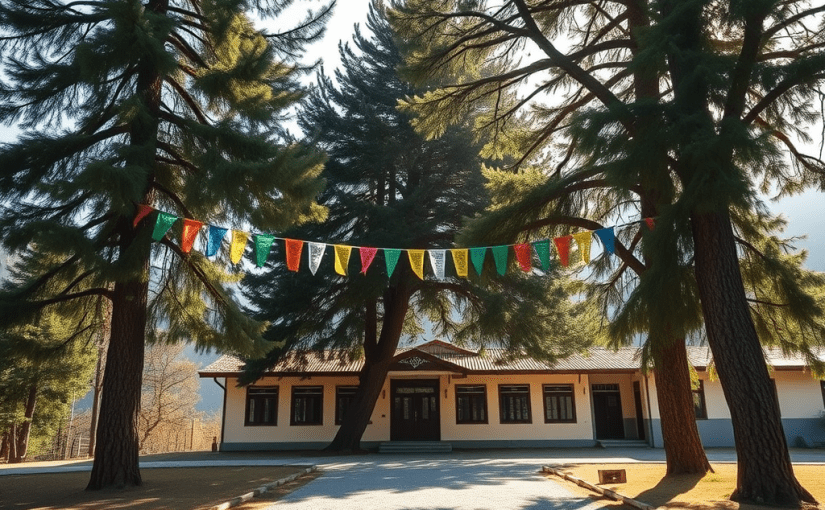
He paused. His gaze wandered to the fluttering prayer flags strung between two oaks—tired from the wind, but still dancing. Somewhere nearby, a bird sang just once, then flew off, its wings slicing the silence like a whisper.

This was not the city. Not even close.

Not the crowded school he had tried earlier in Chandigarh even though for a very brief period—a place full of vehicles, vending machines, and voices louder than thoughts. That city school had promised everything—facilities, computers, science labs, even a swimming pool—but the noise! The endless, soul-numbing hum of engines, gossip, mobile phones, and ambition. There, no one really studied. They competed. No one really listened. They just waited for their turn to speak. Ishaan’s heart, already too soft for that world, had shrunk into itself like a turtle under threat.

This, however, was different. That’s why the mountains, his inborn mates, were calling him back once again—away from the hustle of the city.

Here, amidst the thick woods of Himachal Pradesh, was a modest civilian school nestled within a cantonment area—a strange blend of order and calm. Though the buildings wore no army badge, the air carried discipline, a certain stillness of routines long practiced. The cantonment itself was mostly civilian now, with shops and households run by locals, but the army’s subtle influence hung in the backdrop like a prayer woven into the air—never loud, never pushy, just present.

Even the wind seemed to move with purpose.

He approached the school gate, where two children—perhaps from the senior classes—stood chatting softly, their uniforms neat and their postures straight. One of them looked at Ishaan and gave a small, sincere smile. Not the polished, indifferent half-smile of city kids, but something more human.

“Ishaan Sharma?” a voice called from the porch.

He turned. A teacher, tall and lean, with streaks of silver in his hair and eyes that had clearly seen more than textbooks, stepped down the stairs and offered a hand. “Welcome to Pine Crest School.”

Pine Crest.

Even the name carried dew.

As Ishaan walked beside him toward the main building, he noticed everything—the prayer flags near the flagpole, the scent of turmeric wafting from the kitchen, the rhythmic chirping of crickets from somewhere behind the library. No noise. No rush.

For the first time in many weeks, his heartbeat matched the rhythm of his steps

A Different Kind of Routine

The days that followed were unlike anything he had imagined. Here, students stood up when teachers entered not out of fear, but habit. The morning assembly wasn’t a chore—it was an invocation. Each student spoke something—a quote, a poem, a prayer—not to impress, but to share. And the teachers, though firm, seemed like mountain guides—always watching, but never pushing too hard.

The classrooms were modest—no smartboards, no plush seating—but what they had was attention. Focus. A kind of warmth that even broken desks couldn’t hide. Ishaan would often catch himself staring at the window during lectures, only to realise that the lessons were somehow seeping in even as he drifted. It was as though the very air here whispered equations and metaphors.

One day, during recess, a curious boy named Gagan plopped down next to him with a lunchbox full of pickled lingdu and chapatis.

“You’re the city guy?” he asked, mouth already full.

“I was,” Ishaan smiled. “Now I’m here.”

Gagan squinted like a monk considering a riddle. “You’ll stay. People like you always stay.”

“Why?”

“Because you look like you came searching for something.”

That line stayed with him longer than the taste of wild fern pickle.

The Silent Guru

The school had no formal guru. But in the silence between lectures, during the morning PT runs under foggy skies, or while sitting alone on the sun-warmed steps of the old temple behind the school, Ishaan found teachings more profound than words could ever deliver.

Once, during a class on moral science—a subject often laughed off elsewhere—the teacher, Mr. Dutt, placed a pebble on the table.

“What is this?” he asked.

“A stone,” someone replied.

“A weapon,” said another, giggling.

Mr. Dutt smiled. “Yes. But it is also a reminder. This came from a river nearby. Rolled, shaped, softened over decades. Like you. Life will toss you, polish you, bruise you—but if you allow it, it’ll shape you. Into what? That’s your choice.”

Something stirred in Ishaan’s heart.

He had thought transformation was loud, like lightning splitting the sky. But here, it arrived on little feet. Quiet. Patient.

That evening, he wrote in his journal—a habit he had picked up from the school’s curious emphasis on self-reflection:

> “I thought I needed a guru in saffron robes, speaking mantras. But maybe the pine trees are my gurus. Maybe the wind that wakes me up is. Maybe I am.”

Whispers in the Forest

There was a trail behind the hostel—a winding path that led to an abandoned British-era stone bungalow half-swallowed by moss. Rumor had it a saint once lived there. Some said it was haunted. Others said it was blessed. Naturally, the boys were forbidden to go.

Naturally, Ishaan went.

One misty Sunday morning, he followed the deer-trodden trail alone. With each step, the air thickened—not with fear, but with a kind of electric stillness. The kind you feel before a revelation. Or a memory.

The bungalow appeared like a forgotten temple, cradled in vines and secrets. He stepped inside. Dust motes floated like souls in sunlight. There were no ghosts, but in the silence, he heard something deeper.

His own breath.

His own heartbeat.

And then—nothing.

A strange emptiness bloomed inside, and for a fleeting second, he felt his “I” dissolve. No name, no class, no boy from the hills—just an awareness. Expansive. Eternal. Not frightening, but freeing. Like falling into the sky and finding it soft.

Then a bird chirped.

And the moment passed.

But it had happened. He couldn’t un-feel it.

The Awakening

Back at school, things seemed the same—but something inside had changed.

When he looked at classmates, he saw not competition, but stories. When teachers scolded him, he didn’t shrink—he listened. When the school’s peon, old Lalaji, limped across the corridor, Ishaan no longer ignored him. He offered a hand. And a smile.

“Something’s different about you,” Gagan remarked one evening.

“I think I’m just… beginning to notice things.”

Gagan nodded. “That’s how it starts. Before you know it, you start noticing yourself.”

Epilogue to a Beginning

Months passed.

Winter arrived with silence painted in snow. The mountains donned white robes like saints meditating in plain sight. The school felt warmer somehow. Perhaps because Ishaan had stopped looking for warmth outside.

He had come to escape the city. He had stayed because this place—this school wrapped in deodars, shadowed by army boots but sung into silence by birds—had taught him what no classroom ever could:

That discipline was not about rules, but rhythm.

That spirituality didn’t always wear beads—it sometimes wore sweaters and read geography.

And that the first guru… often waits quietly… until the student becomes silent enough to hear.

अब तो पुष्प खिलने दो, अब तो सूरज उगने दो~कुंडलिनी रूपकात्मक आध्यात्मिक कविता

अब तो पुष्प खिलने दो

अब तो सूरज उगने दो।

भौँरा प्यासा घूम रहा

हाथी पगला झूम रहा।

पक्षी दाना चौँच में लेके

मुँह बच्चे का चूम रहा।

उठ अंगड़ाई भरभर के अब

नन्हें को भी जगने दो।

अब तो पुष्प--

युगों युगों तक घुटन में जीता

बंद कली बन रहता था।

अपना असली रूप न पाकर

पवनवेग सँग बहता था।

मिट्टी खाद भरे पानी सँग

अब तो शक्ति जगने दो।

अब तो पुष्प ---

लाखों बार उगा था पाकर

उपजाऊ मिट्टी काया।

कंटीले झाड़ों ने रोका या

पेड़ों ने बन छाया।

खिलते खिलते तोड़ ले गया

जिसके भी मन को भाया।

हाथी जैसे अभिमानी ने

बहुत दफा तोड़ा खाया।

अब तो इसको बेझिझकी से

अपनी मंजिल भजने दो।

अब तो पुष्प--

अबकी बार न खिल पाया तो

देर बहुत हो जाएगी।

मानव के हठधर्म से धरती

न जीवन दे पाएगी।

करो या मरो भाव से इसको

अपने काम में लगने दो।

अब तो पुष्प --

मौका मिला अगर फिर भी तो

युगों का होगा इंत-जार।

धीमी गति बहुत खिलने की

एक नहीं पंखुड़ी हजार।

प्रतिस्पर्धा भी बहुत है क्योंकि

पूरी सृष्टि खुला बजार।

बीज असीमित पुष्प असीमित

चढ़ते मंदिर और मजार।

पाखण्डों ढोंगों से इसको

सच की ओर भगने दो।

अब तो पुष्प खिलने दो

अब तो सूरज उगने दो।

स्कूल चले हम

घर को चले हम, घर को चले हम
स्कूल से अपने घर को चले हम।
को-रो-ना से डर हरदम
अपने-अपने घर चले हम।।
घर को चले हम, घर को चले हम
स्कूल से अपने-घर को चले हम।

खेल नहीं अब सकते हम
स्कू-ल के मैदान में।
कूद नहीं अब सकते हम
खेलों के जहान में।।
अब तो मजे करेंगे हम
खेत पर खलिहान में।
बूढ़ी अम्मा के संग-संग
बतियाएंगे हम हरदम।।
घर को चले हम, घर को चले हम
स्कूल से अपने घर को चले हम।
को-रो-ना से डर हरदम
अपने-अपने घर चले हम।।
घर को चले हम, घर को चले हम
स्कूल से अपने-घर को चले हम।

ऑनलाइन से पढ़ेंगे हम
ऑलराउंडर बनेंगे हम।
फालतू मीडिया छोड़कर
नॉलेज ही चुनेंगे हम।।
घर में योग करेंगे हम
इंडोर खेल करेंगे हम।
प्रातः जल्दी उठ करके
वॉकिंग भी करेंगे हम।।
घर को चले हम, घर को चले हम
स्कूल से अपने घर को चले हम।
को-रो-ना से डर हरदम
अपने-अपने घर चले हम।।
घर को चले हम, घर को चले हम
स्कूल से अपने-घर को चले हम।

स्कूल तो अपने जाएंगे
वैक्सी-नेशन के बाद।
फिर तो हम हो जाएंगे
जेल से जैसे हों आजाद।।
फिर तो नहीं करेंगे हम
व्यर्थ समय यूँ ही बरबाद।
पढ़-लिख कर व खेल कर
हम होंगे बड़े आबाद।।
शिक्षार्थ स्कूल जाएं हम
सेवार्थ हो आएं हरदम।
स्कूल का नाम रौशन करके
देश को रौशन करदें हम।।
स्कूल चले हम, स्कूल चले हम
घर से अपने- स्कूल चले हम।
हरा के उस को-रो-ना को
अपने-अपने स्कूल चले हम।।
स्कूल चले हम, स्कूल चले हम
घर से अपने-स्कूल चले हम।

बीच का बंदर खेलेंगे
स्टप्पू भी अब खेलेंगे।
लुक्का-छुप्पी खेलेंगे
चोर-सिपाही खेलेंगे।।
इक-दूजे संग दौड़ें हम
प्रेम के धागे जोड़ें हम।
मिलजुल रहना सीखें हम
कदम से सबके मिला कदम।।
स्कूल चले हम, स्कूल चले हम
घर से अपने-स्कूल चले हम।
हरा के उस को-रो-ना को
अपने-अपने स्कूल चले हम।।
स्कूल चले हम, स्कूल चले हम
घर से अपने-स्कूल चले हम।
-हृदयेश बाल

Kundalini awakening as the peak point reached, then the order of the universe’s development stops, and after some period of stability, the process of holocaust or Pralaya starts

Friends, I wrote in the previous post that Srishti or creation development is only for Kundalini development, and with Kundalini awakening, Srishti development completes and thereafter stops. Today we will discuss what happens after that. Actually, the event of holocaust also happens inside our body, not outside.

Description of Holocaust or Pralaya in Hindu Puranas

According to the Hindu Puranas, there are catastrophes when four eras have passed. The first era is Satyuga, the second era is Dwapara, the third is Treta, and the last age is Kali Yuga. There is a gradual decline of human beings in these ages. Satyuga has been described as the best and Kali Yuga as the worst. The order in which the creation of the world happens, in the same order, the holocaust also takes place. The five elements dissolve in the sense organs. The senses merge into the Tanmātras or subtle experiences. Panchatnamatras merge in ego. The ego merges in mahattattva or intellect. In the end, the mahattattva merges into nature. At the end of the disaster, nature also merge into God.

The four ages are in the form of the four stages of human life and the four ashramas

The childhood of man can be called the Satyuga. In this man would be free from all mental and physical disorders. He is as true as the deity. Then comes adolescence. It can be named Dwapara. In this, some disorder starts in the mind. The third stage is maturity age, in which a man becomes greatly depressed by the mess of worldliness. The last stage is that of old age. It is like Kali Yuga, in which darkness prevails due to distortion of mind and body. Similarly, the four ashrams or residencies of human life are also in the form of four yugas. Brahmacharya ashram can be called Satyuga, householder’s residency is Dwaparyuga, Vanaprastha is Tretayuga and Sannyasam Ashram is Kaliyuga. In fact the states are being matched from outside by looking at the Holocaust. In any state of body, a man can be at any higher level of mind.

Human death is depicted as a holocaust

As we clarified in the previous post that man can never know the world outside his mind. His world is limited to his mind. This means that then worldly creation and holocaust are also in the mind. This mental world is described in the Puranas. We fall into deception and understand it in the physical world outside. After Kundalini awakening or mental maturity, man’s attachment is not in the outside world. He lives with advaita bhava or non duality and detachment. We can call this the stability of the universe after its complete development. Then in the last days of his life, the process of holocaust starts in him. Due to weakness, he leaves the work of worldliness and keeps busy with the maintenance of his body. In a way we can say that the Panchamahabhutas or five elements merge into the senses. Then over time his senses also start to diminish. Due to weakness, his focus shifts from the senses to the inner mind. He cannot drink water with his hand. Others feed him with water in his mouth. He feels the juices of waters. Nearby attendants feed him food by putting food in his mouth. He feels the taste and smell of food. Families bathe him with their hands. He feels the touch of water. Others show him various pictures etc. He realizes their beauty. Others tell him Katha Kirtan or godly stories. He rejoices to feel their sweet and knowledge-filled voice. In a way, the senses merge into the Panchathanmatras or five subtle inner experiences. Even with the growing weakness, the man also has difficulty in experiencing the Panchatnamatras. Then his beloved brothers call him by name. This causes the flow of a little energy inside him, and he starts to enjoy himself. We can say that the Panchatnamatras merged in ego. With the further increase of weakness, the ego’s sense in him also starts to wane. He does not achieve agility even when called by name. With his intellect, he starts analyzing about his condition inside, it’s cause, it’s remedy and future outcome. In a way, the ego merges into the mahattattva or intelligence. After that, there is no energy to think even in the intellect. Man becomes like a lifeless. In that state he either goes into a coma or dies. We shall call this as mahattattva merging into nature. As mentioned in the previous post, at that stage all the gunas fall into equilibrium. Neither do they increase, nor decrease. They remain the same. In fact, it is the thoughtful brain that provides waves to increase and decrease the gunas of nature. It is a simple matter that when the brain itself is dead, then what will give the shock of thoughts to the gunas. Ignorant people go as far as nature. These types of people keep coming back and forth as birth and death again and again. The Enlightened one may goe one step further. They leave nature and merge into Purusha or God. All the gunas of nature cease there, and man becomes a form of light. There is no rebirth from there. This can be called as extreme holocaust or atyantik Pralaya.

Kundalini awakening is the sole purpose of creation; foetus development depicted as the universe development in Hindu mythological Puranas

Friends, the creation has been specifically described in the Puranas. Somewhere the egg explodes in the sky, somewhere the lotus appears in the baseless water body and the sudden appearance of a deity on it, etc. Somewhere it comes that the direct appearance of intellect from nature, ego from intellect, the subtle experience of natural elements from ego, the senses from it and all the gross creation was born from senses afterwards. When I was younger, I used to ask my grandfather (who was a famous Hindu priest and a household Purana reader) how all of these things suddenly appeared in the open sky without any basic infrastructure. He used to say in the manner of a traditionalist and mystic philosopher, “This is how it is done. It is done.” They did not go too deeply. But now with the help of Kundalini Yoga, I understand this classical dictum as the root of all mysteries, “Yatpinde Tatbramhande”. This philosophical saying has been scientifically proven in the book “Shareervigyan darshan” in Hindi. This means that whatever is there in this body, that everything is also in the universe, nothing else. Actually, a man can never know anything other than his mind or brain, because whatever he describes that’s there inside his brain, not outside. That is why the ancient sages have explained the universe by describing the body. They were amazing body scientists and psychologists.

The creation of universe is explained in the Puranas with help of human body creation

At many places, a lotus was born from the navel of Vishnu that was lying on a great serpent swimming in the endless ocean, on which Brahma originated. His mind created the world. You can consider mother as Vishnu. His body is like a Sheshnag or mythical serpent as the central nervous system, which is located in the spinal cord-brain axis. The serpent is always immersed in the cerebrospinal fluid that’s metaphorically related to the ocean water. The sensations of the Kundalini or mother’s mind in that serpent are the form of Lord Vishnu that are dispersed throughout the body of serpent, because there is essentially no difference between Shakti and the powerful God. During pregnancy, the belly of the mother emerges outside in the navel area, the same is the appearance of the lotus from the navel of Lord Vishnu. The gravid uterus is also connected with the mother’s body through blood vessels and nerves arising nearby the mother’s navel area. These are as stem of lotus. Like the lotus petals blooming, in the womb, the placentomes and cotyledons of placenta are formed on the uterus. These button like structures are then again attached to the navel of the infant with a chord called umbilical chord that’s again like stem of the lotus flower. These structures provide nutrition to the infant. This infant is Brahma, who develops on that blooming lotus. The pure and unblemished form of the infant is the basic nature, in which there is no waves in gunas (3 basic constituents of nature). In a way, it has all the three basic gunas in equilibrium or equal quantity. Earlier I used to think that samyastastha or equilibrium means that all gunas are equal to each other. Even today many people think so. But it is not so. If this happens, then basically all living beings would be the same, but they maintain their separate identity even after the Holocaust or death. This happens because the amount of tamoguna that covers the soul’s light is different. Due to it, the quantity of other gunas also differs by itself. If Tamoguna is more then Satoguna is reduced in the same proportion and vice versa, because they are opposed to each other. In fact, all the gunas are in the unchanging state in samyavastha.  All gunas in equilibrium with no waves means that satoguna (showing light and knowledge) remains same without rise or fall, rajoguna (showing motion, energy and change) also remains same, and the tamoguna (showing darkness and ignorance) too. With this, the baby does not crave for any particular guna, as he has no habit of fluctuating gunas. That is why the child remains a bit indifferent even after experiencing everything. Actually, it can’t be said as absence of gunas but it’s gunas in equilibrium. Waves in gunas can only be produced if these gunas are already there, not in zero. Only God is nirguna or without guna. That’s why God never experiences waves in gunas as observed by all the creatures that bind the soul. This makes God perfectly changeless. God has zero gunas because God has not dark envelope of ignorance on it’s soul that makes tamoguna. Tamoguna is the base source of all gunas. That’s why panchmakarik leftist tantric appears well developed both in worldly as well as spiritual matters. Then when the baby is a little older, there is an increase in the sensations of the mind or brain. He is attracted towards light. With this, wave is produced in gunas mainly satoguna, and as a result the sattoguna form mahattatva is formed, that is, intelligence. He begins to realize how important it is for his existence to cry and drink milk. This makes the baby feel special and different, which is called ego. Tanmatras originate from it. Tanmatra is the subtle form of the Panchamahabhootas or 5 basic natural elements, which we experience in the brain. It’s the smell of the earth, the juiciness of water, the touch feel of air, the form feel of fire and the sound feel of the sky. He recognizes the taste of milk juice, recognizes the smell of toys, touches the warmth of his urine, begins to understand the difference between beautiful and ugly through form, is attracted to the sound of ghungroo or bell or toys. Then the infant looks outside to see where these sensations came from. The senses originate from it, because all of it feels outside with the help of senses such as eye, ear, skin, tongue, nose etc. Along with this, the internal sense of mind also develops, because that is what he thinks of all this. The above five elements originate from the senses, because he seeks or knows them only with help of his senses. He learns that physical substances like milk, toys, ghungroos or bells etc. are also there in the world, which he feels through his senses. Then as the child continues to learn, the origin of such creation continues to move forward. In this way, the entire creation is expanded inside a man.

Kundalini awakening is the limit of the development of creation

Man extends the creation of the universe only for Kundalini awakening. This fact is proved by the observation that after awakening of the Kundalini, man becomes a bit like a detached from the universe. His inclination starts to move away from the worldly trend but towards retirement. His tendency also becomes like a retirement, because then there is no craving arising out of attachment. It’s to be kept in mind that it’s only mental tendency as physically he may remain fully indulged and growing in the world. After awakening of the Kundalini, the man feels that he has attained everything worth attaining, and has done everything worth doing.

According to Shiva Purana, the creation was made from Shiva’s semen

In Shivpurana, it comes that an egg originated from Shiva’s semen deposited in the vagina of nature. The egg lay in water for 1000 years. Then it broke through the middle. Its upper part became the scalp of the universe. From that originated the upper heavenly abodes. From the lower part, the lower abodes were formed.

Actually Shiva is the father here, and Prakriti or Parvati is the mother. The egg is formed in the uterus by the union of semen and ovum fluid. It remains in the nutritious water of the uterus for a long time and continues to develop. Then it explodes, that is, it begins to differentiate into shape of a human being. The top part of it was clearly visible like a head or a scalp or kapola. In it, the upper worlds originated in the form of Sahasrara Chakra, ajna Chakra and Vishuddhi Chakra. In the lower part, lower abodes developed as lower chakras.

कुंडलिनी जागरण के लिए ही सृष्टिरचना होती है; हिंदु पुराणों में शिशु विकास को ही ब्रह्माण्ड विकास के रूप में दिखाया गया है

मित्रो, पुराणों में सृष्टि रचना विशेष ढंग से बताई गई है। कहीं आकाश के जल में अंडे का फूटना, कहीं पर आधाररहित जलराशि में कमल का प्रकट होना और उस पर एक देवता का अकस्मात प्रकट होना आदि। कहीं आता है कि सीधे ही प्रकृति से महत्तत्व, उससे अहंकार, उससे तन्मात्रा, उससे इंद्रियां और उससे सारी स्थूल सृष्टि पैदा हुई। जब मैं छोटा था, तब अपने दादाजी (जो एक प्रसिद्ध हिंदू पुरोहित और एक घरेलू पुराण वक्ता थे) से पूछा करता था कि अचानक खुले आसमान में बिना आधारभूत संरचना के ये सारी चीजें कैसे प्रकट हो गईं। वे परंपरावादी और रहस्यवादी दार्शनिक के अंदाज में कहते थे, “ऐसे ही होता है। हो गया तो हो गया।” वे ज्यादा बारीकी में नहीं जाते थे। पर अब कुंडलिनी योग की मदद से मैं इस शास्त्रीय उक्ति को ही सभी रहस्यों का मूल समझ रहा हूँ, “यत्पिण्डे तत्ब्रम्हांडे”। इसका मतलब है कि जो कुछ इस शरीर में है, वही सब कुछ ब्रम्हांड में भी है, इसके अतिरिक्त कुछ नहीं। इस उक्ति को पुस्तक”शरीरविज्ञान दर्शन” में वैज्ञानिक रूप से सिद्ध किया गया है। इसलिए प्राचीन दूरदर्शी ऋषियों ने शरीर का वर्णन करके ब्रम्हांड को समझाया है। वे गजब के शरीर वैज्ञानिक और मनोवैज्ञानिक थे। दरअसल, एक आदमी कभी भी अपने मन या मस्तिष्क के अलावा कुछ नहीं जान सकता है, क्योंकि वह जो कुछ भी वर्णन करता है, वह उसके मस्तिष्क के अंदर है, बाहर नहीं।

सृष्टि रचना पुराणों में शरीर रचना से समझाई गई है

 कई जगह आता है कि शेषशायी विष्णु की नाभि से कमल पैदा हुआ जिस पर ब्रह्मा की उत्पत्ति हुई। उसी के मन ने सृष्टि को रचा। माँ को आप विष्णु मान सकते हो। उसका शरीर एक शेषनाग की तरह ही केंद्रीय तंत्रिका तंत्र के रूप में है, जो मेरुदंड में स्थित है। वह नाग हमेशा ही सेरेब्रोस्पाइनल फ्लुइड रूपक समुद्र में डूबा रहता है। उस नाग में जो कुंडलिनी या माँ के मन की संवेदनाएं चलती हैं, वे ही भगवान विष्णु का स्वरूप है, क्योंकि शक्ति और शक्तिमान भगवान में तत्त्वतः कोई अंतर नहीं। गर्भावस्था के दौरान जो नाभि क्षेत्र में माँ का पेट बाहर को उभरा होता है, वही भगवान विष्णु की नाभि से कमल का प्रकट होना है। विकसित गर्भाशय को भी माँ के शरीर की नसें-नाड़ियाँ माँ के नाभि क्षेत्र के आसपास से ही प्रविष्ट होती हैं। खिले हुए कमल की पंखुड़ियों की तरह ही गर्भाशय में प्लेसेंटोमस और कोटीलीडनस उन नसों के रूप में स्थित कमल की डंडी से जुड़े होते हैं। वे संरचनाएं फिर इसी तरह शिशु की नाभि से कमल की डंडी जैसी नेवल कोर्ड से जुड़ी होती हैं। ये संरचनाएं शिशु को पोषण उपलब्ध कराती हैं। यह शिशु ही ब्रह्मा है, जो उस खिले कमल पर विकसित होता है। शिशु का साम्यगुण रूप ही वह मूल प्रकृति है, जिसमें गुणों का क्षोभ नहीं है। पहले मैं समझा करता था कि साम्यावस्था का मतलब है कि सभी गुण (प्रकृति का आधारभूत घटक) एक-दूसरे के बराबर हैं। आज भी बहुत से लोग ऐसा समझते हैं। पर ऐसा नहीं है।अगर ऐसा होता तो मूल रूप में सभी जीव एक जैसे होते, पर वे प्रलय या मृत्यु के बाद भी अपनी अलग पहचान बना कर रखते हैं। ऐसा इसलिए होता है क्योंकि आत्मा के प्रकाश को ढकने वाले तमोगुण की मात्रा सबमें अलग होती है। इससे अन्य गुणों की मात्रा भी खुद ही अलग होती है। यदि तमोगुण ज्यादा है, तो उसी अनुपात में सतोगुण कम हो जाता है, क्योंकि ये एक-दूसरे के विरोधी हैं। दरअसल उसमें सभी गुण साम्यावस्था में अर्थात समान अवस्था में होते हैं। सभी गुणों का समान अवस्था में होने का या उनमें क्षोभ या लहरों के न होने का मतलब है कि सत्त्वगुण (प्रकाश व ज्ञान का प्रतीक) भी घटने-बढ़ने के बजाय एकसमान रहता है, रजोगुण (गति, बदलाव व ऊर्जा का प्रतीक) भी एकसमान रहता है, और तमोगुण (अंधकार व अज्ञान का प्रतीक) भी। इससे वह किसी विशेष गुण की तरफ लालायित नहीं होता। इसीलिए शिशु सबकुछ अनुभव करते हुए भी उदासीन सा रहता है। वह निर्गुण नहीं होता। क्योंकि गुणों में क्षोभ तभी पैदा हो सकता है, यदि गुण पहले से विद्यमान हों। निर्गुण या गुणातीत तो केवल भगवान ही होता है। इसलिए उसमें कभी गुण-क्षोभ सम्भव नहीं हो सकता है। इसीलिए ईश्वर हमेशा ही परिवर्तनरहित हैं। ईश्वर निर्गुण इसीलिए होता है, क्योंकि उसमें आत्म-अज्ञान से उत्पन्न तमोगुण नहीं होता। सभी गुण तमोगुण के आश्रित होते हैं। इसी वजह से तो पंचमकारी या वामपंथी तांत्रिक दुनियादारी और अध्यात्म दोनों में अव्वल लगते हैं। फिर शिशु के थोड़ा बड़ा होने पर चित्त या मस्तिष्क में वृत्तियों या संवेदनाओं के बढ़ने से गुणों में, विशेषकर सतोगुण में क्षोभ पैदा होता है, और वह प्रकाश की ओर आकर्षित होने लगता है। इससे सतोगुण रूप महत्तत्व अर्थात बुद्धि उत्पन्न होती है। उसे लगने लगता है कि उसकी सत्ता के लिए उसका रोना और दूध पीना कितना जरूरी है। उससे शिशु को अपने विशेष और सबसे अलग होने का अहसास होता है, जिसे अहंकार कहते हैं। इसप्रकार अहंकार की उत्पत्ति हो जाती है। उससे तन्मात्राओं की उत्पत्ति होती है। तन्मात्रा पंचमहाभूतों का सूक्ष्म रूप या अनुभव मात्र होती हैं, जिन्हें हम मस्तिष्क में अनुभव करते हैं। जैसे पृथ्वी की तन्मात्रा गंध, जल की रस, वायु की स्पर्श, अग्नि की रूप और आकाश की शब्द होती है। वह दूध के रस के स्वाद को पहचानने लगता है, खिलौने की गंध को पहचानता है, अपने किए मूत्र की गर्मी को स्पर्ष करता है, सुंदर-असुंदर रूप में अंतर समझने लगता है, घुंघरू या खिलौने की आवाज की ओर आकर्षित होता है। फिर शिशु बाहर की तरफ नजर दौड़ाता है कि ये अनुभूतियाँ कहाँ से आईं। उससे इन्द्रियों की उत्पत्ति होती है, क्योंकि वह चक्षु, कान, त्वचा, जीभ, नाक आदि इन्द्रियों की सहायता से ही बाहर को महसूस करता है। इसीके साथ मन रूप इन्द्रिय भी विकसित होती है, क्योंकि वह इसी से ऐसा सब सोचता है। इन्द्रियों से उपरोक्त पंचमहाभूतों की उत्पत्ति होती है, क्योंकि वह इन्द्रियों से ही उनको खोजता है और उन्हें अनुभव करता है। उसे पता चलता है कि दूध, खिलौना, घुंघरू आदि भौतिक पदार्थ भी दुनिया में हैं, जिन्हें वह इन्द्रियों से महसूस करता है। फिर आगे-2 जैसा-2 बच्चा सीखता रहता है, वैसी-2 सृष्टिरचना की उत्पत्ति आगे बढ़ती रहती है। इस तरह से एक आदमी के अंदर ही पूरी सृष्टि का विस्तार हो जाता है। 

कुण्डलिनी जागरण ही सृष्टि विकास की सीमा है

सृष्टि रचना का विस्तार आदमी कुंडलिनी जागरण के लिए ही करता है। यह तथ्य इस बात से सिद्ध होता है कि कुंडलिनी जागरण के बाद आदमी सृष्टि विस्तार से उपरत सा हो जाता है। उसका झुकाव प्रवृत्ति (दुनियादारी) से हटकर निवृत्ति (रिटायरमेंट) की तरफ बढ़ने लगता है। उसकी प्रवृत्ति भी निवृत्ति ही बन जाती है, क्योंकि फिर उसमें आसक्ति से उत्पन्न क्रेविंग या छटपटाहट नहीँ रहती। पर यह बात ध्यान देने योग्य है कि यह स्थिति मन की होती है, बाहर से वह पूरी तरह से दुनियादारी के कामों में उलझा हो सकता है। कुंडलिनी जागरण के बाद आदमी को लगता है कि उसने पाने योग्य सब कुछ पा लिया है, और करने योग्य सबकुछ कर लिया है। 

शिव पुराण के अनुसार सृष्टि रचना शिव के वीर्य से हुई

शिवपुराण में आता है कि प्रकृति रूपी योनि में शिव के वीर्यस्थापन से एक अंडे की उत्पत्ति हुई। वह अंडा 1000 सालों तक जल में पड़ा रहा। फिर वह बीच में से फटा। उसका ऊपर का भाग सृष्टि का कपोल बना। उससे ऊपर के श्रेष्ठ लोक बने। नीचे वाले भाग से निम्न लोक बने। 
दरअसल शिव यहाँ पिता है, और प्रकृति या पार्वती माता है। दोनों के वीर्य और रज के मिलन से गर्भाशय में अंडा बना। वह गर्भाशय के पोषक जल में लंबे समय तक पड़ा रहा और विकसित होता रहा। फिर वह फटा, अर्थात मनुष्याकृति में उससे अंगों का विभाजन होने लगा। उसमें ऊपर वाला भाग सिर या कपोल की तरह स्पष्ट नजर आया। उसमें सहस्रार चक्र, आज्ञा चक्र और विशुद्धि चक्र के रूप में ऊपर वाले लोक बने। नीचे के भाग में अन्य चक्रों के रूप में नीचे वाले लोक बने।