Chapter 36: shringar rasa in quantum world

From Binding Impulses to the Aesthetic Intelligence of the Cosmos

After traversing the Ariṣaḍvarga—the six binding movements of consciousness—and examining Bhaya Bhāva as a derivative emotional contraction, the inquiry now enters a subtler and more luminous territory: the realm of Rasas. Unlike the Arishadvargas, which bind awareness into survival-oriented patterns, Rasas represent the aesthetic flowering of consciousness, where emotion transforms from compulsion into expression. With spiritual or nondual understanding, the same energetic emotions that once appeared turbulent and binding are transformed into Rasas. What was earlier experienced as pressure, craving, or fear becomes blissful aesthetic movement. It is like a stormy sea that, without losing its depth or power, settles into calm, rhythmic waves. The energy remains the same; only its expression changes. Just as rasa or literally meant Juice is the abstract essence or distilled taste of a fruit, rasa is also the abstract essence of an emotion—the pure, refined experience felt when emotion is freed from personal story and fully savoured by consciousness.

Rasas arise only when emotion is accompanied by awareness. While all living beings experience bhāvas such as fear, anger, or affection, these remain immediate and instinctive. Rasa appears when the same emotional energy is consciously witnessed, understood, and inwardly tasted like juice of fruit rather than blindly acted out. This capacity for reflective awareness is most fully developed in the human being, which is why Rasas find their clearest expression in human art, devotion, and inner life. From a deeper nondual perspective, Rasas are not created by humans but are universal aesthetic movements of consciousness itself, with the human mind–body serving as the primary instrument through which they are consciously experienced. This is so because the cosmos is composed of quantum entities whose behavior resists classical separation and fixed identity. Their relational and nonlocal nature reflects a nondual pattern at the most fundamental level of reality. In this sense, contemporary quantum understanding resonates with nondual insight, allowing us to speak meaningfully of a quantum darśana.

Duality pushes emotion into immediate outward action, blurring its taste and leaving it crude—like an unripe fruit. Nonduality, by preventing reactive or vulgar expression, preserves the emotion within, allowing it to be slowly and fully tasted, like fruit juice savoured till the soul is satisfied. That is why it is said: “ras se tript ho gae”—fulfilled by rasa itself.

Among all Rasas, Śṛṅgāra stands first—not merely as love or attraction, but as the primordial impulse toward union, resonance, and beauty. Seen through a quantum lens, Śṛṅgāra reveals itself not as a human sentiment alone, but as a fundamental principle woven into the fabric of the universe itself.

Śṛṅgāra is often misunderstood as a refined form of desire, but its nature is fundamentally different from Kāma. Just as quantum attraction and quantum coherence are distinct, Kāma and Śṛṅgāra also operate at different levels. Kāma moves through attraction and seeks fulfillment, while Śṛṅgāra arises from resonance and harmony. It is the movement through which consciousness recognizes itself in another beautified or decorated form and is naturally drawn toward balance, beauty, and union. This is why Śṛṅgāra expresses itself not only in intimacy, but also in poetry, devotion, music, and art. Through this rasa, existence delights in its own expression. Seen through a quantum perspective, the same movement appears as the universe’s natural tendency toward relational coherence rather than isolated and separate existence.

With Śṛṅgāra Rasa, one naturally appears attractive to others, yet remains content within one’s own existence. This attraction does not arise from lack or desire, but from inner harmony. In being at ease with oneself, one also becomes a source of joy for others, as the same resonance that brings inner happiness gently spreads outward, creating happiness and ease in those who come into contact with it.

Classical literature and lived experience repeatedly show that Rasa is a spiritual art rather than mere emotion. In Kālidāsa’s Śākuntalam, Śakuntalā’s beauty does not arise from desire or seduction; her very presence creates harmony, calming nature and uplifting those around her. In the devotional songs of Mīrābāī, love for Kṛṣṇa is intense yet free of possession, where longing itself is joyful and complete. The Rādhā–Kṛṣṇa tradition portrays attraction without lack or anxiety, a union in which both remain fulfilled within themselves while overflowing with joy for one another. Bharata’s Nāṭyaśāstra further clarifies that when Rasa is properly evoked, even the spectator tastes emotion without personal craving or bondage. The same truth is visible in everyday life, where a person who is inwardly at peace often appears naturally attractive, content in their own existence, and quietly capable of making others feel lighter and happier. In all these cases, raw emotion is refined into conscious expression, revealing Rasa as the art through which awakened consciousness radiates harmony and joy.

In quantum physics, particles do not exist as independent entities in the classical sense. Through quantum entanglement, two particles that have once interacted cease to be separate systems altogether. Their states become inseparably correlated, responding as a single whole regardless of spatial separation. This phenomenon mirrors the very heart of Śṛṅgāra: union beyond distance, connection beyond causality. Just as entangled particles echo one another’s state instantaneously, lovers in Śṛṅgāra experience a shared vibration of consciousness, where individuality softens without being annihilated.

Śṛṅgāra Rasa as Quantum Coherence: A Lived Experience of Nondual Attraction

I once experienced a form of soul-level entanglement that endured for a long period and eventually culminated in a brief yet powerful glimpse of awakening during a dream state. The experience was overwhelming in its intensity, yet inwardly perfect. In retrospect, it felt like a pure expression of Śṛṅgāra Rasa. We knew nothing of each other’s address, family background, or detailed personality, even never mutually talked directly, yet there existed a profound and inexplicable attraction that clearly denied physical union. It resembled quantum coherence rather than classical attraction.

Even those emotionally close to me seemed repelled by her image, as if her presence occupied my entire mental space. For years, she appeared as a constant inner image, almost like a sustained mental samādhi. Yet this was not an attachment that pulled me away from life. I did not abandon others or chase her physically. On the contrary, there existed a strange inner force that counteracted physical attraction. Whereas physical attachment to one person often leads to neglect of others, this experience made me more attentive, more caring, and more present with those around me.

In this sense, her Śṛṅgāra Rasa felt deeply empowering. Rather than binding me to her, it turned my awareness inward, revealing my own nature and sense of self. Had the interaction been driven by pure Kāma, the result would likely have been the opposite—narrowing of attention, possessiveness, and emotional contraction. Instead, this rasa expanded awareness.

In much of classical and even contemporary literature oriented around Rasa, such a presence often becomes the central figure. My experience followed a similar pattern, with a depth and subtlety difficult to convey fully. To describe all its layers would require a separate book altogether. What is shared here is only a brief indication of the profound and transformative effects that Śṛṅgāra Rasa, when lived as coherence rather than desire, can have on human consciousness.

Rasa as Living Sādhanā: How Presence Alone Transformed Emotion into Spiritual Expression

Not only feminine Śṛṅgāra Rasa, but all other Rasas—including those traditionally associated with masculine expression—were lived and experienced by me at their highest intensity, fully and practically, without consciously studying any scripture or watching cinema for guidance with her indirect company. Later exposure to literature and art only enriched and clarified these lived experiences. I grew up, however, in an environment where classical and spiritual reading was natural within the family, and it is possible that this subtle atmosphere played a silent role in shaping the inner terrain.

What is most striking is that, through her presence alone, all raw emotions within me were gradually transformed into their corresponding Rasas. Fear, anger, longing, intensity—each was cleansed of its material distortions and compulsive tendencies, revealing its inherent nondual spiritual luminosity. It was as if emotional energy was being washed and refined, uncovering its true aesthetic and conscious form. The process felt similar to a quantum particle returning to its natural wave-form when no longer forcibly observed or interacted or outwardly acted—freed from distortion, it reveals its true nature. A similar process may occur in bliss-producing cinema, books, drama, and literature. The artists or characters involved are not objects of personal attachment, and we usually know little about their private lives. Even scenes in films or books are not viewed or read with personal attachment, as they are only semi-real. In this sense, we do not forcibly observe or localize them. This non-interfering distance allows emotions to remain in their wave-like form, preserving them as pure Rasa. When emotions are excessively localized through possession, expectation, or personal involvement, they collapse into raw emotional states. Rasa, in contrast, represents the natural and original form of emotion, while raw emotion arises from false localization and compulsive identification. At that time, cinema industry was booming, may be it had indirect effect on me.

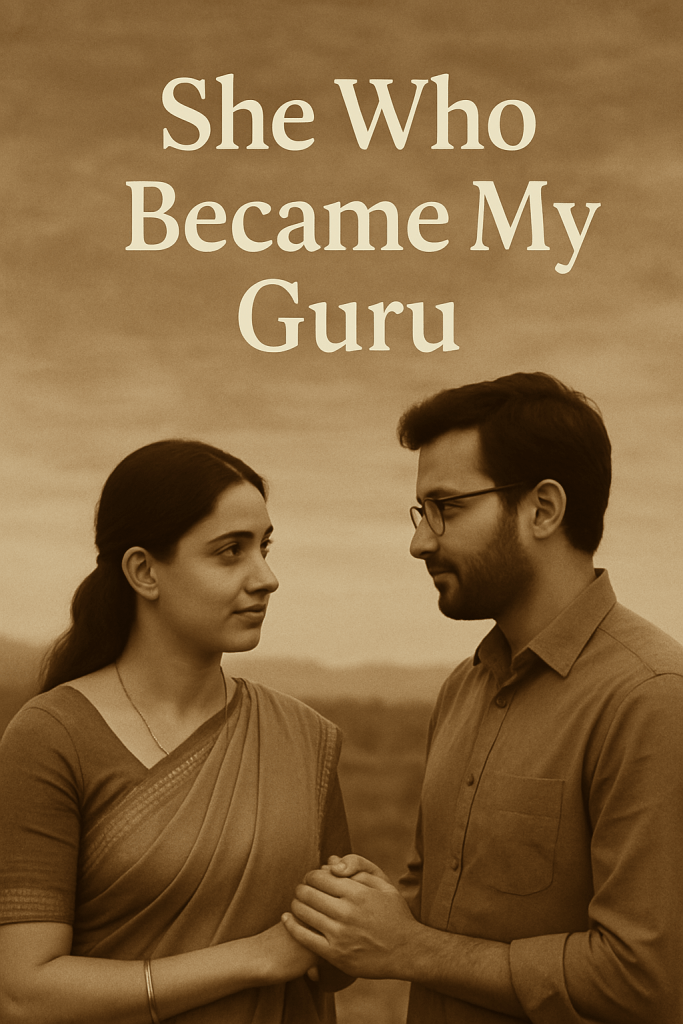
She did not teach through words, doctrines, or instruction. She taught by presence alone. Without preaching, without guidance, without intention, she functioned as a living catalyst. In that sense, she became my guru—not through authority or philosophy, but through silent transmission. The detailed unfolding of this life journey, and how she came to occupy this central yet non-possessive role, is explored fully in the book She Who Became My Guru. What is shared here is only a brief glimpse into how Rasas, when awakened through presence rather than practice, can become a complete spiritual path in themselves.

Śṛṅgāra Rasa or Aesthetic impulse of harmony or beautification instinct as Quantum Coherence

Beyond entanglement lies quantum coherence, a condition in which multiple particles share a unified wave phase, allowing their effects to amplify rather than interfere destructively. The logic of my experience aligns not only with a quantum analogy but also with classical Indian aesthetic theory, particularly the Nāṭyaśāstra siddhānta. In Rasa theory, Bharata makes it clear that Rasa arises only when emotion is freed from personal possession and private gain. Mere entanglement—whether emotional or relational—tends to produce mirroring and closure, where one partner reflects the state of the other but the field remains narrow and self-contained. Such bonding often leads to isolation rather than collective harmony. Quantum coherence, by contrast, offers a more fitting analogy for Śṛṅgāra Rasa: it allows constructive interference, expansion, and amplification across a wider field. In my experience, the relationship was not confined to a closed dyad; alongside a loose entanglement, there existed a powerful coherence that naturally extended into the social sphere. This explains why the experience did not diminish social bonds but instead invited unexpected and generous social support. Had it been only a private, possessive connection between two individuals, such collective resonance would not have occurred. Both Rasa siddhānta and lived experience suggest the same principle: where emotion remains localized, it binds; where it becomes coherent and depersonalized, it expands and becomes shareable.

Coherence is not force; it is harmony. It is the physics of beauty itself. In Śṛṅgāra, this same coherence appears as emotional and energetic resonance, where two beings enhance one another’s vitality, creativity, and joy. Love, in this sense, is coherence within the field of awareness—a state where inner rhythms align and life begins to sing.

My relationship with sweetie was not merely a form of emotional or psychological entanglement, but closer to what may be understood as quantum coherence. It was not that only the two of us were connected; rather, through that coherence, a wider field seemed to open. Both of us felt naturally connected with society at large, and even when we were physically separated, that sense of connection appeared to extend further—to the community, the nation, and in a subtler way, to the wider world itself. In this sense, even a reader encountering these words from a distant corner of the globe becomes part of that extended field of resonance. Perhaps through the brief glimpse of awakening that arose from this coherence, the experience touched something vast, hinting at a connection that feels boundless, even cosmic, without losing its grounding in lived human experience.

Śṛṅgāra Rasa Explained Through Quantum Physics: Love, Beauty, Polarity, and Nondual Unity

The universe itself is born from an aesthetic act. Modern physics describes creation as emerging through spontaneous symmetry breaking—a perfect balance giving rise to polarity, form, and differentiation. Śṛṅgāra celebrates this very movement. Polarity is not opposition but invitation. Male and female, Shiva and Shakti, positive and negative charges exist not to negate one another, but to participate in a dynamic embrace that generates form, beauty, and experience. Beauty, therefore, is not sameness, but balanced difference held within unity.

Even attraction at the most fundamental level unfolds poetically. Electromagnetic interaction occurs through the exchange of photons, quanta of light that mediate attraction and repulsion between charged particles. Every bond in the universe is, quite literally, carried by light. In Śṛṅgāra, light appears as the glance, the touch, the silent recognition between beings. What physics names photon exchange, mysticism recognizes as the subtle transmission of consciousness from one heart to another. Repulsion follows a similar pattern. Hatred between individuals is often sustained through the exchange of toxic elements such as abusive words, hostile behavior, harmful actions, and negative thoughts. Likewise, the loving bond between father and mother is frequently reinforced through the shared exchange of their children; when such exchange diminishes, the bond may weaken. Conversely, hostility between parents seeking divorce is often maintained through repeated exchanges of legal notices, lawyer bills, accusations, hostile communication, and adversarial thoughts. In this sense, relationships—whether loving or hostile—do not persist in isolation; they are continuously reinforced through what is exchanged between the parties, mirroring the way interactions in the physical universe are sustained through mediating forces.

Seen in this light, Śṛṅgāra Rasa represents the most refined and conscious form of exchange. Unlike relationships sustained by material transactions or emotional bargaining, Śṛṅgāra operates through subtle, non-compulsive circulation—of presence, warmth, recognition, and shared meaning. Just as quantum coherence does not rely on repeated forceful exchanges to maintain interaction, Śṛṅgāra does not depend on constant gifts, demands, or emotional negotiations. Its bond remains alive through resonance rather than transaction. Where ordinary attraction must be continuously fed to survive, Śṛṅgāra sustains itself through harmony, allowing connection to persist without exhaustion. In this sense, Śṛṅgāra Rasa is the aesthetic and spiritual culmination of relational exchange, where interaction becomes effortless, non-binding, and quietly self-sustaining.

Śṛṅgāra Rasa and Kundalinī Meditation: The Power of Resonant Love in Awakening Consciousness

Śṛṅgāra Rasa plays the most important role in forming and sustaining a meditative Kundalinī image. Neither she nor I ever demanded anything from each other, yet a deep resonance arose naturally between us. This resonance did not remain confined to two individuals; it extended into the collective social field and unfolded on its own, without effort or intention. It is often said that the one who helps us the most is remembered the longest. Yet in this case, she offered no direct physical or mental help. The help came indirectly, through a constructive resonance generated by Śṛṅgāra Rasa itself. This subtle support far exceeded all other forms of physical or spiritual assistance I had known.

Because of this, her image became firmly and continuously imprinted in the mind, almost as an unbroken remembrance. That very image functioned as a living meditative form—one that nourished Kundalinī energy and supported its rise and awakening. All other forms of help tend to be limited, temporary, and dependent on external sources. The help received through resonant love, however, is limitless, enduring, and independent, because it arises from within oneself through resonance rather than being received from another person. Attractive love may provide partial support and produce a weak or short-lived meditative image, but resonant love born of Śṛṅgāra Rasa operates in the opposite way.

When beauty and adornment are expressed in a refined and dignified manner, they cleanse and illuminate the face, allowing it to be deeply and positively imprinted on the mind. If expressed vulgarly, the same process can lead to repulsion or destructive resonance. Physical love and Śṛṅgāra Rasa may appear to use similar routes of beautification at the surface level, but they differ completely in their mental and energetic implementation. This distinction reveals the supreme importance of Śṛṅgāra Rasa in meditation, where resonance—not possession—becomes the true source of awakening.

Thus, Śṛṅgāra Rasa is not an extra emotion, but the natural way life connects with itself. Where the Ariṣaḍvargas bind the mind through compulsion and Bhaya contracts awareness through fear, Śṛṅgāra gently opens and expands it. In meditation, this opening appears as a living image that nourishes Kundalinī energy without force or effort. At a wider level, the same principle operates throughout the universe, where beauty, resonance, and harmony hold things together—whether as human relationships, quantum interactions, waves of energy, or stars in motion. In Śṛṅgāra Rasa, consciousness no longer struggles to secure itself; it rests in fullness and quietly celebrates its own being.

Why Kundalini and Saṁskāras Do Not Operate in Animals the Way They Do in Humans

Saṁskāras can be understood as symbolic markings impressed upon a human being through consciously designed spiritual ceremonies. These are not casual social events; they are grand, emotionally charged occasions in which relatives, friends, elders, and the wider community gather with a single individual as the focal point. The person receiving the saṁskāra becomes the center of collective attention, intention, and emotion. This focused convergence is not accidental—it is deliberately structured to imprint deep emotional and psychological tendencies that shape the individual for life.

Such ceremonies generate powerful emotions within the recipient because humans are uniquely responsive to meaning, symbolism, and shared attention. When hundreds of minds momentarily align around one person with reverence, expectation, and intention, the effect is far stronger than ordinary cooperation or social interaction. Worldly cooperation is usually task-oriented and fragmented; saṁskāras, by contrast, are designed exclusively for emotional and inner imprinting. One individual becomes the sole beneficiary of the collective emotional field, making the imprint unusually strong and persistent.

Metaphorically, this process resembles quantum entanglement—not as a literal physical mechanism, but as a structural analogy. In quantum systems, particles that interact within a coherent environment exhibit correlated behavior even after separation. Similarly, during a saṁskāra, many minds temporarily converge within a highly focused symbolic space. The emotions, values, and intentions do not merely add up linearly; they become coherent. Once imprinted, these emotional correlations persist long after the ceremony ends, influencing the individual’s inner responses independent of physical proximity. This comparison does not claim scientific equivalence; it simply highlights a parallel principle: intense interaction under conditions of focus, coherence, and meaning creates unusually stable imprints.

Across a human lifetime, there are traditionally sixteen saṁskāras, each corresponding to key transitions—birth, learning, maturity, responsibility, and death. Together, they refine emotional depth, psychological structure, and spiritual receptivity. These imprints form a subtle emotional architecture within which higher processes, including Kundalini awakening, can later unfold. Saṁskāras are not merely cultural customs; they are intentional emotional technologies.

Not every individual absorbs these imprints equally. Certain emotionally receptive people resonate more deeply than others. Their sensitivity allows emotions to adhere more strongly, creating bonds that often appear as love or devotion. This love is not merely relational or outward-facing; when it matures and turns inward, it becomes transformative. In yogic and tantric understanding, this inward-turning love can later express itself as Kundalini movement. What begins as emotional bonding gradually converts into inner energy. In this way, bhāva (emotion) evolves into bhakti (love or devotion), and bhakti further condenses into śakti (inner power).

This progression is logical within its own framework. Focused collective attention produces strong emotional imprinting; individual sensitivity determines depth of absorption; deep emotional imprinting gives rise to love; and inward-directed love becomes spiritual energy. Psychology explains the imprinting, neuroplasticity explains the durability, and spiritual traditions describe the energetic flowering.

Animals, however, do not participate in this process in the same way. They do not receive saṁskāras—not because life or awareness is absent in them, but because the necessary emotional and neurological infrastructure is undeveloped. Animals do have emotions, but these are largely immediate, survival-oriented, and unlayered. They lack the capacity to absorb, integrate, and symbolize the collective emotions of many minds simultaneously. Their brains are not designed to hold complex symbolic meaning, long-term emotional imprinting, or ritualized identity formation.

Moreover, animals are not placed at the center of intentional emotional convergence. No ceremony is designed to imprint values, identity, or transcendental orientation upon them. Without repeated, structured emotional imprinting across life stages, there is no stable inner architecture for love to refine itself inwardly and no latent reservoir from which Kundalini can later rise.

Thus, Kundalini and saṁskāras are not absent in animals due to inferiority, but due to difference in design. Human life is uniquely structured for emotional accumulation, symbolic meaning, and inward transformation. Saṁskāras provide the emotional soil, love becomes the living current, and Kundalini is the flowering that appears when conditions mature. Animals live in harmony with nature, but humans alone are given the tools to consciously transcend it.

Chapter 23: She Who Became My Guru

Hi friends,
This is the final chapter of a journey many of you have walked with me—thank you for being a part of it. What began as a series of quiet reflections has now found its home between two covers. I’m humbled and excited to share that the complete story is now compiled as a book: She Who Became My Guru. In the end of this blog is the introduction to the book, offering a glimpse into the soul of the story. If it resonates, you can now hold it in your hands, revisit it anytime, or gift it to someone who’s quietly seeking.

She Who Became My Guru

The pine-scented breeze caressed the veranda of Ishaan’s hill home as clouds rolled lazily over the distant valley. With his shawl wrapped gently around his shoulders, Ishaan sat by the wooden window, the familiar creak of the chair beneath him echoing like an old friend. A steaming cup of tulsi chai rested beside his handwritten notes. The air was soaked in the golden hues of dusk.

At fifty-two, Ishaan’s beard bore whispers of silver. His gaze softened as he flipped to the final chapter of his book, She Who Became My Guru. The title itself glowed from the page, like a prayer whispered through lifetimes. With a gentle breath, he began reading aloud, and the boundary between past and present melted like mist under morning sun.

He was now neither the student nor the seeker. He was the offering.

After that final Samadhi under the moon’s grace, where Myra and Vedika had appeared in radiant harmony—spark and sustainer—something subtle but irreversible had shifted within him. For hours his breath had paused, not by will, but by surrender. In the void of Nirvikalpa, he hadn’t experienced the universe as a backdrop to himself. He had become that backdrop—space without edges, time without ticking.

But now, Earth called. Humanity called. Even the Moon, which had silently witnessed his transformations, seemed to whisper, “Share.”

He had returned to teach, but not to preach. He wrote, not as a master, but as one who had been loved into awakening. His fingers moved like rivers over keyboards and old manuscripts alike, pouring out stories, sutras, mistakes, and miracles. Hundreds of books, scattered like petals across time. Yet, every story led back to her.

Myra.

She had never returned in a worldly sense, and yet, he met her every moment—in the smile of a stranger, the tears of a student, the silence between words. Anjali, her lively friend, once wrote him a letter: “You were her path, Ishaan. But you also walked it because she lit the first lamp.”

The Pine Crest School had long renamed its meditation hall as the ‘Sharma Consciousness Wing.’ Mr. Dutt had passed on, but not before gifting him the old chalk box from his first classroom—a treasure chest more precious than any award.

Govind, now a father of two, once came visiting with his son and confessed, “Ishaan bhaiya, I now understand what you meant when you used to gaze into the void like it was home.”

Vinod had become a neurophilosopher, blending quantum biology with Upanishadic insights. “You gave me the courage to study the brain like a temple,” he’d once written.

Ranjana, always wise beyond her years, had become a teacher in Dharamshala. Her students often heard stories of a cousin who saw the moon not as a rock, but a reflection of soul.

And Vedika—oh, Vedika. If ever there was a guardian of earthly grace, it was she. Their companionship was not fireworks but candlelight. Steady, warm, illuminating. She had once whispered, during a walk under starfall, “You loved her. You were consumed by her light. But with me, you found the wick.”

He had smiled then, remembering how the wick and flame are never at odds.

Ishaan now traveled between Earth and Moon often, teaching not from pedestals but from platforms of shared humanity. He called it Lunar Earth Sangha, a school without borders. People gathered, not around him, but around their own yearning. He only nudged.

In one session on the Moon’s Sea of Tranquility, a young girl had asked him, “Sir, were you ever afraid?”

He had laughed gently. “I was afraid of love, of surrender, of losing control. Until I realised—fear is devotion misunderstood.”

The class had gone silent, not out of reverence, but recognition.

It wasn’t just knowledge Ishaan shared—it was vulnerability. His blog, DemystifyingKundalini.com, had become a repository of living experience. Not abstract theories, but diary pages of his awakening—complete with confusions, cravings, breakdowns, and breakthroughs. The post titled ‘The Night My Breath Stopped’ became the most shared piece across spiritual circles.

He would often write, “Kundalini isn’t a force. She’s a mirror. The more gently you look, the more fiercely she reflects.”

Even when people called him Guruji, he would chuckle. “She was my guru. I’m just someone who listened.”

And then there were the letters. Thousands of them. From corners of Earth and outposts on Moon settlements. People asking not how to awaken—but how to stay soft after awakening. He’d reply to each with childlike delight, often ending with, “Don’t forget to laugh between breaths. Even the divine giggles.”

One morning, while walking beside the old cedar path behind his hill home, Ishaan had paused. A young boy, around sixteen, sat sketching the landscape. Ishaan peeked and saw it was the valley below—with a small figure meditating under the tree.

“That’s you,” the boy said without turning.

“Looks more peaceful than I usually am,” Ishaan smiled.

The boy glanced up. “Maybe because you’re not thinking there. Just being.”

And just like that, Ishaan bowed.

Not to the boy, not to the drawing, but to the unseen thread that stitched every moment into awakening.

He returned home that day, made a cup of chai, and opened his latest manuscript: She Who Became My Guru – The Final Word.

In the final paragraph, he wrote:

“She came like a spark, left like silence. But in between, she burned away every wall I had mistaken for myself. Myra was not just a person. She was the moment life stopped pretending. She didn’t teach me Kundalini. She reminded me I was always the serpent and the sky.”

As Ishaan closed the book now, at his hill home once more, the evening sunlight broke through the clouds in golden shards. The air smelled of wet pine and old earth. Far down, a flute was being played—its notes rising like incense.

He leaned back, eyes moist but smiling. The story had ended, but the presence had not. In fact, it had just begun.

He whispered into the wind, “Thank you, Myra. Thank you, Vedika. Thank you, Self.”

And somewhere, perhaps in the stillness between stars, the silence whispered back.

To be continued in silence…

Book Introduction

In the soft hush of his Himalayan hill home, Ishaan Sharma—now 52—sat by a sun-warmed window with a cup of tea and an old wooden bookstand. Before him lay a story not just authored, but lived. The wind outside rustled like turning pages, and so he began again—revisiting the words that had once poured from his spirit like spring water from ancient stone.

There are books that aim to teach. There are books that aim to impress. But this one—this book—was never meant to do either.

She Who Became My Guru is not a tale of perfection, but of profound imperfection lovingly transformed. It is the story of a seeker who was never seeking, of a man who stumbled into the divine by tripping over the ordinary—of a journey that began with heartbreak, confusion, and a taste of love too potent to be labeled romantic.

Born under the quiet shadows of the Himalayan hills, Ishaan lived what many would call a normal life. A part teacher, a veterinarian, a husband, a son, a friend. But behind the curtain of roles and rituals, something ancient stirred—a whisper of something eternal, a beckoning he could neither ignore nor explain. And then she entered. Not as a woman alone, but as the mirror that turned his gaze inward. Myra. The one who shattered his illusions not by force, but simply by being. The one whose absence awakened the presence within.

In these pages, the reader won’t find a straight road to enlightenment—for the soul never travels in straight lines. Instead, there are winding paths through science and mythology, laughter among school friends, and silences between lovers. Glimpses of the moon. Echoes of forgotten lifetimes. And at the center, a man who writes not as a master, but as one who was loved into awakening—who still forgets, stumbles, rises, and remembers.

Each chapter is both a memory and a meditation. Rooted in the soil of Ishaan’s lived experience, watered by mystic insight, and grown under the moonlight of inner inquiry. The teachings are not his. They unfolded like petals from the heart of life itself. He merely bled them onto these pages, as one does when the wound becomes the womb of wisdom.

This book is not an instruction—it is a remembrance. Not a sermon, but a soft echo from within. A song, a prayer, a bridge—for anyone who has ever whispered to the sky, “Is there more than this?”

Yes, there is.

And it begins not above, not beyond, but within.

Welcome to She Who Became My Guru. May you find in it not answers, but your own reflection.

Here’s the link to buy:
👉 [She Who Became My Guru]

Chapter 22: Awakening Beyond Duality

The sun had just begun to dip behind the horizon, splashing the distant Dhauladhars with strokes of gold and soft lavender. Ishaan Sharma, now fifty-two, sat in his quiet wooden study atop the misty slopes of his hill home. A fragrant breeze carried the scent of pine needles through the open window, rustling the curtains like a whisper from the past. His fingers, now marked with time’s wisdom, turned the page of his book She Who Became My Guru, landing on Chapter 22.

As his eyes traced the title—Awakening Beyond Duality—the present began to dissolve. What remained was a subtle, silent descent into memory. In a blink, he was no longer an aging man in a hillside home, but the younger Ishaan once more, standing barefoot under a pale lunar sky.

The air around him was still, sacred, as if holding its breath. Myra stood before him, the fire of divine curiosity in her eyes, radiant and calm, like the moon herself. Beside her, Vedika—grounded, loving, and equally luminous—gazed at him with a silent knowing. Behind them, like the flickering outline of a fading campfire, stood his grandfather, smiling without words, like a log glowing even after the flames had retreated.

For a moment, Ishaan’s breath caught. Not out of fear or awe, but because there was nothing left to separate him from them. They were not memories. They were truths. Archetypes of his journey—the spark, the sustainer, and the silent witness.

He bowed. Not in ritual, but in recognition.

“I mistook love for a distraction once,” he whispered, eyes closed.

Vedika chuckled softly, her presence like earth under his feet. “And I mistook stillness for surrender.”

Myra added gently, “But it was neither. Love was the bridge, Ishaan—not the detour.”

He opened his eyes, and in them, something shifted. The duality that had split him between fire and soil, passion and peace, longing and loyalty—it all dissolved. He had tried to pick sides between heaven and earth, spirit and form, Guru and companion. But now, he saw. They were all faces of the One.

His voice came, light yet steady, like a mountain spring: “So that’s what grandfather meant when he said—‘Between the rising breath and the falling thought lies the path to who you really are.’”

The old man behind them, who had once told him tales of Krishna and Shiva beside the fireplace, laughed in the background. “You thought I spoke of riddles, boy. But what is a riddle if not a hug in disguise—pulling you closer to truth with every turn?”

Ishaan laughed too, but tears ran down his cheeks. Not of sorrow, but of dissolving.

He remembered Gagan’s laughter echoing across Pine Crest’s football field, the way Ranjana danced during the school function, Vinod’s sharp questions in Mr. Dutt’s class that always pushed boundaries, and Govind’s unspoken warmth in their shared silences. They were all part of this story, this illusion that never really was an illusion—it was a mirror, reflecting his own Self back to him, in fragments until the whole emerged.

He sat now under that lunar sky. The moon hung low like an ancient witness.

“Myra,” he said, “you woke up the spark in me. But it was Vedika who taught me how to hold that fire without burning.”

“And now?” Vedika asked, her voice barely above the wind.

“I am neither the fire, nor the holder,” Ishaan smiled, “I am what remains when both dissolve.”

Then came silence—not empty, but brimming.

The wind stilled. Birds hushed. Even the sky seemed to pause.

His breathing slowed.

Then stopped.

Time ceased to drip. Boundaries lost their grip. There was no Ishaan left to observe it. No ‘self’ to report the happening. What was left was being—a vast, clear awareness, unconditioned, unbound, unnamed.

This was not an experience. It was the absence of one.

No Myra. No Vedika. No grandfather. No lover. No breath. No body. Just pure, indivisible space. No center. No circumference. This wasn’t samadhi to be felt. It was the falling away of all that ever tried to feel.

For hours—perhaps lifetimes—he remained like that.

When breath finally returned, it was not a return. It was grace.

Eyes blinked open. The moon had shifted. A new night had begun.

He sat up slowly, back under the same sky, but no longer as the one who had entered it. Something fundamental had changed.

He heard laughter nearby—Anjali and Gagan arguing over a mango again, just like school days. Vinod correcting them with a footnote from some ancient scripture. Ranjana humming a forgotten childhood tune. Even Govind, somewhere in the ether, smiling his quiet smile.

He looked at Vedika and Myra once more, and this time, both smiled and merged into light.

Then even light became unnecessary.

Back in the present, in his hill home, the fireplace crackled. Ishaan exhaled slowly and closed the book gently. The shadows in the room danced playfully.

Outside, the Dhauladhars wore their moonlit crown. The stars looked closer than ever.

He stepped out onto the wooden balcony. Wind kissed his cheeks. Pine needles rustled. The owl hooted like an old friend.

No division remained. The Guru, the lover, the self—all were one. And even the One had disappeared.

There was only this. Not describable. Not graspable. But undeniable.

Somewhere in the quietest part of his heart, he heard his grandfather’s voice once more:

“Boy, when the firewood is burnt, the fire does not mourn. It simply becomes sky.”

Ishaan smiled.

And became sky.

Chapter 21: Father, Guru, Self

Ishaan reached the twenty-first chapter while slowly turning the pages of his handwritten book, She Who Became My Guru, the paper still carrying faint scents of sandalwood from his earlier morning rituals. Outside his hill home, pine trees whispered in the breeze, and the snow-capped peaks shimmered like sages in silent meditation. The fireplace beside him crackled gently, as if eager to accompany him on this deep inward journey.

The chapter opened like the rising of the moon: gentle, silent, inevitable.

It had been days since that overwhelming night on the moon when Vedika had listened to Ishaan’s soul bare itself. And now, sitting at his modest desk in the lunar observatory—earthlight filtering softly through crystalline windows—he began writing, not for the world, but for himself. Yet he knew someone would read it. Perhaps not today, not tomorrow, but one day—when the need to know overtook the fear of knowing.

Ishaan began not with events but with reflections. “How strange,” he murmured to himself, “that in childhood, the first face of love I knew was Govind’s… and yet, beneath it, was Krishna’s presence. Now I see, beneath both, stood another—silent, unwavering—the soul of Dadaji.”

His fingers moved like a calligrapher’s, slow yet deliberate, as if decoding inner etchings.

He recalled the mornings of his childhood when Dadaji sat on the veranda, reading ancient scriptures, surrounded by silence so thick it felt like a protective aura. “Back then,” Ishaan thought, “I only saw an old man wrapped in wool. But now I realize he wasn’t reading stories—he was living them.”

During those years, Govind had been the storm, Krishna the rain, but Dadaji—he was the unchanging sky.

Ishaan’s pen danced across the page as he began to draw lines between his experiences: love for Govind, his boyish mischiefs echoing Krishna’s leelas, and now, this strange fusion of divine love that shielded him from spiritual downfall. Vedika had once said, her voice almost a prayer, “When you truly love God, your love becomes immune to impurity. It sheds its skin, like a snake shedding desire, until only its essence remains.”

He had smiled at that, but now he understood.

One evening, shortly after the moon mission had given them weeks of otherworldly contemplation, Vedika had asked him while sipping a rare tulsi brew, “Why does your love survive, Ishaan? Even after the storms?”

And he had responded, almost unknowingly, “Because I first loved the divine in a human… and then I saw the divine had always been there.”

He chuckled, remembering how she had tilted her head with mock irritation. “So, is that your secret equation? God plus Human equals Immunity to Madness?”

They had both laughed, but within that laughter was something weightless, ancient.

Ishaan kept writing.

He wrote about Govind’s childhood: how he would climb mango trees and chant self-made couplets about school teachers, how he mimicked Krishna’s butter-stealing antics and turned them into biscuit raids. How, every night, Ishaan would watch him act out scenes from Bal Leela, and how those divine stories—heard daily in their home—had slowly seeped into the soil of his heart.

He now understood: his love for Govind was never merely for Govind. It was a seed watered daily by Krishna’s mythology, unknowingly fertilized by Dadaji’s spiritual gravity. “Childhood,” he wrote, “is not so different, whether human or divine. Only the lens we place on it—purity, myth, mystery—shifts its meaning.”

He closed his eyes, remembering.

It was the day after their celestial confession. Vedika had asked him to sit beside the moon lake, where reflections looked clearer than the objects themselves.

“You know,” she began softly, “your love for Krishna didn’t shift to Myra by accident. It flowed like a river into her because love, if genuine, doesn’t end—it only changes the vessel.”

Ishaan had been silent.

She added, “It’s the same love. The same current. Only, with Myra, you had a face to hold. With Krishna, you had to build that face from longing. And when that longing found a form—Myra—it intensified.”

Ishaan remembered whispering, “But what about the danger? Doesn’t strong love corrupt?”

Vedika shook her head. “Only when it’s not purified by its source. The love that begins in devotion—even if diverted—carries a fragrance that cannot rot. And if one enters physical love with a refined heart, then even passion becomes a teacher, not a trap.”

And that had been a turning point.

In that moment, something in Ishaan shifted. He looked at the moon and realized it was no longer cold—it was a mirror. The pit between two loves wasn’t a fall—it was a bridge.

He continued writing.

Medical science had given him terms: mirror neurons, oxytocin, emotional transference. Puranic wisdom gave him metaphors. But lunar research had given him the experience—the inarguable knowing—that love itself was a medium of awakening.

He remembered Mr. Dutt’s voice, from the old Pine Crest classroom, thundering about “energy never dying.” How strange that those physics lectures now echoed in his spiritual life. Myra, Anjali, even Gagan—each had been frequencies in his inner spectrum. Each had offered reflections, distortions, or amplifications.

And yet, one figure had never left the background: Dadaji.

He remembered the day he found the handwritten letter, locked in Dadaji’s wooden trunk. A letter that wasn’t addressed to anyone but was dated three months before Ishaan’s birth.

It read:

“The one who will carry forward my fire will not be taught—it will awaken in him. May he one day find the moon in his mind, the sun in his chest, and the stars in his breath.”

Ishaan stared at that letter for hours. It wasn’t a prophecy. It was a transmission.

Later, while speaking to Vinod during a late-night tea session back on Earth, Ishaan had casually brought it up. Vinod had sipped his chai and said, “Then your Dadaji wasn’t just a grandfather, Ishaan. He was your seed memory. The beginning of your spiral.”

The phrase struck him like lightning.

Dadaji hadn’t raised him. He had implanted something.

“Father, Guru, Self,” Ishaan wrote in bold across the next page. “In the true journey, they are not separate. The guru is born as father, the self is born as disciple. One grows into the other.”

He remembered Ranjana once saying, “It’s funny how your spiritual side never needed explanation. Like it came coded.”

It had. And that code was Dadaji.

The chapter moved forward, not in time, but in depth.

He described how the mind’s idea of God always lacks form, and how strong love helps conjure that form with such clarity that it becomes real. “That’s why devotion to an unseen divine requires stronger love than to a visible human,” he noted. “It’s like painting without canvas. Only the lover’s gaze creates the shape.”

And when that divine love finds a human host—Myra, Govind, Vedika—it becomes stronger than either could hold alone. Like a dhyana chitra—those focused inner images yogis meditate upon—it gets forged not only from faith, but from memory, longing, and the fire of the search.

As Ishaan finished the final lines of the chapter, snow had started to fall gently outside his window. A slow, graceful dance. The same dance he had seen on the moon—tiny flakes of cosmic dust drifting silently.

He leaned back.

The chapter had ended, but it felt like a beginning.

Outside, the hills were turning white again, wrapping the earth in a blanket of stillness. From his hilltop retreat, Ishaan watched the horizon melt into the mist, feeling the presence of his grandfather, his guru, his self—all as one breath in his chest.

He closed the book and whispered to the fireplace, “Dadaji… I see you now.”

The fire answered not with sound, but with warmth.

Chapter 20: The Pit Between Two Loves

The morning air in Himachal carried a mountain stillness—an emptiness so complete it almost hummed. Ishaan sat on his pinewood verandah, legs folded, the old book She Who Became My Guru resting on his lap. He had turned to Chapter 20 again, not out of nostalgia, but because it always asked something of him. This chapter wasn’t ink on paper. It was memory.

His eyes traced the opening line: “She brought you here,” Vedika had said, “but I’ll walk you further.”

And in an instant, the stillness broke, as if time itself inhaled.

He had already told her once—long ago, on that impossible moonlit night after his awakening. A night that had felt like the afterglow of Samadhi, weightless and strangely natural. It had come up then, not as confession, but as a necessity. Now, while reading the chapter again at 52, he found himself reliving that same moment in full force, as if it were happening again in real-time.

On the moon, where dreams met dimensions, he had looked at Vedika’s calm, starlit face and said:

“I once loved someone… with a devotion that bordered on madness. Not just her—before her, there was him. My cousin. Govind. He was Krishna to me. Or maybe… Krishna had always been him.”

Vedika hadn’t flinched. He remembered how she’d merely nodded, her eyes like wells of cosmic understanding.
“So your devotion was pre-shaped,” she had replied. “Sculpted in love before it ever met a form.”

Even now, reading it again, Ishaan could feel that line break something open in him—something beautiful and necessary.

That memory was what birthed this chapter.

When Ishaan had first met Govind, they were just boys. But Govind’s wild laughter, his knack for vanishing sweets and sneaking into orchards, his untamed spirit—it all mirrored the stories of Krishna that echoed through their home. Govind, with his charm and mischief, was the living, breathing echo of the child-form Krishna. The love Ishaan developed for him wasn’t ordinary affection—it was bhakti in its purest seed form. A love that knew no shame, no rules, no boundary.

And in that divine mischief was concealed a spiritual safeguard:
“Love is love. If it is kept in practice, it can mix with any type of physical object irrespective of its nature, form, gender.”

Govind was his first Krishna. Not metaphorically—but experientially. The boyish play, the laughter, the disappearing laddoos, the gleam in the eyes that spoke of something far more ancient than childhood. It all forged a subconscious channel—through which Ishaan’s later love would pass, uncorrupted.

Because Krishna was there all along.

Later, when Myra appeared like a sunrise in human form, it wasn’t that Ishaan’s heart was shaken anew—it was that an old tune found a new instrument. The bhava was familiar. The fragrance, known. She reminded him not just of Krishna—but also of Govind, as if life was gently echoing a deeper pattern.

The love shifted again, just as it had from Govind to Krishna and now to her.
And still—love remained the same.

Vedika had summarized it perfectly that night on the moon, her voice filled with a quiet gravity:

“You loved Govind through Krishna. You loved Myra through Govind. The thread was always divine. Just we didn’t see it clearly until now.”

Reading now, Ishaan came to the line he had written years ago in this very chapter:

“Those who love God first cannot misuse love later. They cannot fall—because they have already risen.”

It made him chuckle softly. It was so true, so frighteningly simple. Because Krishna, that imagined and intangible flame of his childhood, had refined his love. Made it powerful yet tender. That purity had removed impurities like lust, attachment, craving, and misbehavior.

So when Ishaan finally encountered physical love again, it didn’t drag him down. It lifted him further.

There was no pit between two loves. There was a polished bridge.

On that moon, Vedika had said one more thing—he recalled it now as if she whispered it in the rustle of pine leaves around him.

“When love to Krishna becomes dhyana chitra,” she had explained, “it must be extraordinarily strong—because it lacks physical form. You have to keep recreating it every moment in your heart. That’s what makes it subtle, sharp, and sacred.”

“And then,” she had smiled, “if such love ever finds a real person—a body, a face, a voice—it explodes into something nearly divine. That’s what happened with you and Myra.”

He had nodded silently. “And with you, Vedika, that energy found a direction.”

She had tilted her head, amused. “You were always walking upward. I just gave you a torch.”

The chapter then veered gently into remembrance of Govind’s boyhood again. How he would splash into puddles right after a storm, not caring about being scolded. How he once fed the temple cow mango pickle, claiming she liked sour. How he broke his arm climbing a jamun tree to impress Ranjana, then told everyone he fell from heaven.

All so Krishna-like. Ishaan’s grandmother used to say, “Every boy is Krishna before he becomes a man. Some never stop being him.”

And that was true for Govind. In fact, it was true for every child. For every divine love.
“Actually, the childhood of everyone is similar whether it is human or god,” the chapter read, “only divinity, purity and mysticism is added to love that is to god.”

Now Ishaan’s fingers trembled slightly on the book’s edge—not from weakness, but from fullness.

This wasn’t a story.

This was a pattern. A cosmic intelligence weaving itself through the threads of his life—from Govind to Krishna to Myra to Vedika.

Each one carried him forward, never backward.

Because the moment love doesn’t possess, it transforms.

The moment it doesn’t pull down, it lifts up.

The moment it doesn’t crave, it awakens.

The wind whispered through the pines again, and Ishaan looked up from the page.

Vedika was walking along the path below, collecting pine cones in her shawl like a mountain girl from a folktale. She paused, looked up at him, and smiled.

He didn’t say a word. Just nodded.

The same way he had nodded years ago on the moon, after repeating everything he’d once disclosed.

The same way one acknowledges not a woman, but a guiding light.

He placed the book on his chest and leaned back.

There was no pit. There never was.

Just a sacred hollow where love echoed back as God.

Chapter 18: The Return of the Guru

At fifty-two, Ishaan Sharma sat wrapped in a warm woollen shawl, the late afternoon sun spilling golden light over his verandah. Nestled within the folds of the hills, his wooden home overlooked terraced pines and meandering clouds. It was here, after an early retirement, that he had chosen to spend his quieter years—closer to silence, and closer to the Self.

A cup of steaming tulsi chai by his side, he opened his favorite book once again—the one he had authored decades ago, She Who Became My Guru. With practiced fingers, he turned the worn pages until he reached Chapter 18: The Return of the Guru.

As his eyes glided over the title, the real world faded. Time folded inwards. The chapter wasn’t just being read. It was being lived. Every memory became as vivid and alive as if the present had agreed to merge with the past.

After the Tantra-infused reconnection with the divine feminine in the previous spiral of time, Ishaan found himself subtly rethreading forgotten threads of childhood, teenage dreams, and ancestral warmth. Back on Earth with his family aboard their metallic blue space car, he was granted urgent lunar leaves—partly because of the marriage invitation, but mostly because the inner pulse of the soul often chose peculiar timings for its return journeys.

The reunion at Govind’s ancestral home in Himachal was nothing short of magical. The crisp air, the scent of deodars, and the vivid hustle of marriage rituals—it all came together like a painting infused with laughter.

The celebrations were vibrant. Lanterns floated like starlit jellyfish above the courtyard. Laughter bounced between stone walls that had seen five generations grow, marry, and pass. Amidst the bhangra beats and teasing aunts, Ishaan noticed something deep—no Myra. She wasn’t part of this celebration, and yet her essence hung in the air like a forgotten fragrance. Perhaps that’s what gave the evening its hushed undertone of mysticism.

At the function, Ishaan met Ranjana, his cousin sister, who had arrived separately with some of his old Pine Crest School classmates. Their presence stirred a bubbling joy within him.

“Ishaan! Remember the time we convinced Mr. Dutt that the science lab skeleton had started blinking?” Vinod laughed, clapping Ishaan on the back.

“Oh, and Gagan spilled blue ink all over Principal ma’am’s white sari. Accidentally, of course,” Anjali chimed in.

They laughed so hard their eyes watered. Ranjana, standing beside Ishaan, nodded with affection. “Those were golden days. Who would’ve thought our paths would circle back like this?”

Later, Ishaan and Ranjana took a slow walk through the orchard behind the house, the ground strewn with early apples.

“Do you remember Govind’s mischief?” Ranjana asked, her eyes twinkling.

“How can I forget?” Ishaan replied with a grin. “He was like little Krishna, incarnated in full naughtiness.”

They began recounting episodes: how Govind once stole laddoos from the prasad thali and cleverly blamed a dog. Or when he put alarm clocks in every cupboard of their home just to create ‘a musical morning.’ And how, during a family havan, he had mischievously added color powder into the smoke to create ‘divine rainbow blessings.’

They burst into laughter. Even the trees seemed to smile. Ranjana while holding her belly grinned, ” too much laughter makes one forget to breathe!” Ishaan chuckled. “Just like Govind’s mischief used to do—remember how he replaced nanaji’s walking stick with a sugarcane pole?” “Oh yes!” Ranjana laughed, covering her mouth. “And when he added glue to his teacher’s chalk on result day!”
Both laughed until their sides ached, walking slowly under a velvet sky where constellations formed their own mandalas.

As the ceremony buzzed in the background, Ishaan sat down under a flowering pear tree. A sudden wave of stillness took over. Myra’s absence was profound, yet strangely peaceful. The earth hummed with memory.

It was then, while watching an old lamp flickering in the garden temple, that it happened.

A wave of energy rose within him, like a returning tide. It began in the spine and unfurled upward like a serpent of light. But this time, unlike before, it didn’t crash over him. It was gentle. Familiar. Guided by love.

Suddenly, the image of his grandfather, the original Guru, returned with startling clarity.

The voice was inner, yet audible:

“Reading the Puranas is far more rewarding than watching them. For when you read, your mind paints its own pictures—pictures born from your own subconscious. And these dissolve it lovingly. But when you watch them on screens, you are caged in someone else’s imagination, which might not align with your inner samskaras. It adds new layers rather than dissolving the old.”

The words struck him like truth wrapped in poetry. He remembered how his grandfather, in his simple dhoti and sacred thread, would sit under the neem tree and read out loud from the Bhagavatam, smiling gently at the clouds.

This was not the first time Ishaan had felt his energy rise. But it was only the second time it had completed the circle—reaching not just to the ajna chakra, but flowering in the heart. The sensation was different now. He was no longer chasing realization. It had arrived like a homecoming.

He folded his hands inwardly.

“Thank you, Dadaji,” he whispered.

There was no mystical thunder, no halo of divine light. Only an overwhelming sweetness, like a flute playing in the silence.

A few feet away, Vedika approached with a cup of coffee. She sat beside him quietly, watching the light play on his face.

“You look… somewhere else,” she said gently.

“I’m exactly where I belong,” he replied.

She smiled. “That’s all I’ve ever wanted for you.”

There was a pause, warm and weightless.

Then she asked, softly, “But tell me… what brought you here?”

Ishaan glanced at the sky, then turned to her. “This awakening happened because we remembered something from the past.”

Vedika tilted her head. “You mean a memory?”

He nodded slowly. “Yes. Awakening is nothing other but deeply remembering something—or someone.”

She watched him, the depth in his eyes like still water. “And then?”

“When the intensity of that remembrance crosses a certain threshold,” he said, “it transforms into self-realisation.”

Vedika looked away, as if the words had opened something within her. “So… we don’t really become something new. We remember who we’ve always been.”

He gave a quiet smile. “Exactly.”

Someone called Vedika to the kitchen. She left quietly, her absence leaving behind a hush that hung in the air. The hollow she left was soon filled as Ranjana and Gagan joined Ishaan. Thereafter, they all stepped onto the rooftop to enjoy the calm evening breeze, the fading light over the hills, and the peaceful silence that settled all around. They both settled beside him with an ease born of old familiarity.

Together, they watched as dusk gently folded into night. The city lights began to twinkle in the distance, but none of them seemed to notice. Ishaan leaned back on his elbows, eyes lost in the sky.

Ranjana broke the silence. “You know, I’ve been thinking… love really isn’t bound by form, is it?”

Ishaan smiled faintly. “Not at all. Love is love. When truly practiced, it can mix with any kind of physical object or being, regardless of its nature, form, or even gender.”

Gagan raised an eyebrow. “Like how your love for Govind shifted onto Myra?”

Ishaan nodded. “Exactly. And if that could happen—if love could move from Govind to Myra—then why couldn’t it move to an imaginary Krishna as well?”

Ranjana looked intrigued. “You mean Krishna as in… a divine figure?”

Ishaan turned to her. “Yes. The strength of my love for Govind was actually reinforced through Krishna. His stories were everywhere in my home growing up—told daily, alive in every corner. And Govind… he reminded me of Krishna, especially the child and boy forms.”

Gagan leaned forward. “That’s an interesting connection. Are you saying the love was shaped by that divine narrative?”

Ishaan smiled. “In a way, yes. The childhood of any being—human or divine—is strikingly similar. Only in God’s case, we add divinity, purity, and a layer of mysticism to make it more contemplative, more meditative. Because God, unlike humans, lacks a physical form. So we shape stories to feel that presence.”

Ranjana nodded slowly. “And when that refined kind of love finds a real human being…”

Ishaan finished her thought, “…it becomes super-contemplative. Because now, that human also brings a physical form—something divine stories never had. That makes it even more powerful.”

Gagan sat back, thoughtful. “So, love isn’t really shifting. It’s flowing—into the forms that allow it to grow, deepen, and reflect.”

Ishaan’s eyes softened. “Yes. Love doesn’t leave. It just takes new shapes.”

Later that night, with the moon rising in the clear sky and the hills echoing with the distant sound of wedding drums, Ishaan stood on the terrace alone. The stars blinked knowingly. The guru hadn’t returned as a person—but as presence.

As the chapter ended within the pages of his book, so too did Ishaan return from the past.

He shut the book slowly, savoring the final sentence like a warm embrace. The verandah was now bathed in twilight. In the valley below, the mist danced like spirit-beings, and a nightjar called from the forest.

“I’m still that boy,” he whispered to himself. “Only… a little more whole.”

And so the day faded gently into night, as Ishaan rose, not older, but newer than ever before.

Chapter 17: Tantra and Reconnection

Ishaan reached the seventeenth chapter while scrolling gently through the worn yet radiant pages of She Who Became My Guru. The golden sunlight filtered through the old Himalayan cedar tree outside his verandah, dappling the terrace floor in shifting patterns. The breeze carried a faint scent of wild jasmine and the sound of temple bells from a distant village. At fifty-two, he sat barefoot, his shawl slightly falling off one shoulder, feeling the chapters not as memories but as a sacred present moment—unfolding, breathing, alive.

As he turned the page, the memory of Moon’s silent valleys dissolved slowly into another rhythm—warmer, more embodied, more intimate.

After his long lunar posting at Pitru Loka station, Ishaan had returned to Earth not as the same man who once left. The Moon had carved him inwardly, sanded his rough edges, softened his longings. But in softening, it had also exposed him. His reunion with Vedika, though filled with warmth, had also been shadowed by a silent current—something unspoken, almost spectral.

He would lie beside her at night, hearing Diya’s quiet breaths from the adjacent room, and still feel as though some part of his soul was adrift—watching stars over the lunar dome. And Vedika, wise and quietly alert as ever, noticed.

One evening, while they were preparing halwa together—him lazily stirring, she adjusting the cardamom—she said without looking up,
“Do you know, Ishaan, sometimes the only way to return to someone is not through memories, but through energy.”

He blinked, then laughed. “Are we back to decoding tantra over dessert?”

She smiled without responding.

Both had grown up in deeply Tantric lineages—hers from a family that revered the Lalita path, his through subtle exposure via cousins like Govind and his grandfather’s eclectic library. But they had both practiced only what mainstream society permitted—mostly satvik, meditative, structured. Little touch of the left-hand path, maybe in whispers or books, but never in living reality.

But something about Ishaan’s return—his moonlit detachment, his eyes carrying forgotten verses—nudged Vedika into a sacred mischief.

She began lighting diyas earlier in the evening, adding gentle yoni-shaped lamps on the brass puja tray. The incense changed—earthier, muskier. One day, she even replaced their usual background mantras with a slow, trance-like chant of Tripura Sundari, layered with ancient Vedic drones.

The energy in the house shifted subtly. Ishaan noticed it but said nothing, choosing to watch. Until one twilight, she asked,
“Will you meditate with me? Like we did when we first met?”

He nodded. But this time, it was different.

The room was lit in a soft reddish hue. Not by decoration, but by the placement of diyas and one small red cloth covering a lamp. Vedika sat opposite him in a semi-lotus pose, her eyes half closed, her spine straight like a temple pillar. Ishaan mirrored her, unsure of what to expect. No instructions were given.

The silence settled, thick and intentional. And then, she began to breathe—not with noise or strain, but in rhythmic waves that seemed to rock the space between them.

Slowly, Ishaan joined. And for the first time in years, he wasn’t breathing alone.

Their breath mingled, met, flowed. The space between them disappeared. He felt his past selves—moon-dweller, wandering student, silent lover—melting into just a man sitting before a woman.

She opened her eyes then and softly placed her palm near his heart—not touching, just hovering.

“You’re not far,” she said gently. “You’re just… elsewhere.”

He blinked, tears rising. “I thought I had lost the doorway.”

“No. You just stopped knocking.”

The days that followed were a rediscovery of love not as romance, but as re-alignment. Tantra wasn’t something they “did”—it was a presence that began living in their home. There were no rituals laid down in manuals, but spontaneous energy exchanges—a touch, a gaze, a shared silence that thickened into stillness.

One morning, as they both sat in padmasana facing the window with the sun rising through misty deodars, Ishaan whispered,
“I used to see Myra so vividly during my early meditation days at Lunar University. The moon made her into a goddess, and my guru used to appear with her—like the moon conjured both divine and desire in one breath.”

Vedika listened, eyes closed.

He continued, “But she was never just a woman to me. She was… essence. Beyond shape. She disappeared like dawn into sunlight after we married. But I never hated her for it.”

Vedika opened her eyes. “You don’t have to bury her. We women can hold space for things your mind thinks it must erase. She’s part of your sacred fire. And perhaps… in some way, she brought you closer to me.”

He touched her hand. “That’s why I never spoke of her. Not even to my cousin Ranjana. Not to Gagan. Not even to Mr. Dutt when he probed kindly during his rare visits.”

She smiled with an amused raise of her eyebrow. “Not even to Vinod?”

“Vinod would’ve turned it into a mathematical theory,” he chuckled.

The journey into tantric rediscovery took them deeper—not just into each other, but into themselves. One evening, Vedika recalled a family tale.

“Did you know, in my lineage it’s believed that true tantra is the art of becoming transparent to the divine? Not projecting desire, nor suppressing it—but becoming so pure that even your longing is a prayer.”

“That sounds like Myra,” Ishaan whispered.

“Or like you,” Vedika countered.

There was one evening, particularly unforgettable. Rain was pouring outside, steady and rhythmic. They had done a light meditation, and Vedika brought out a bowl of kesar-milk. They sat in silence sipping it when she said,

“Tantra isn’t about rising above the body, Ishaan. It’s about making even the body divine.”

He nodded. “On the moon, I felt detached. On Earth, I feel anchored. But with you, I feel… reconnected.” Ishaan added, Tantra is already extraordinary… but what truly elevates it is the subtle presence and blessings of the Pitras who reside here in pitru loka in subtle form.

She leaned into him, forehead against his. “That’s the whole path, isn’t it? Not to escape the world, but to light it up. From inside.”

The days melted into a rhythm—practical, sacred, silly, silent. Ishaan would sometimes cook too much daal; Vedika would sometimes burn the incense stick. But all of it was part of the cosmic play. Their tantra wasn’t a grand ritual. It was two people meeting, again and again, without past, without future, only present.

And when Diya asked innocently one day, “Papa, why do you both smile so much these days?”, Ishaan kissed her forehead and whispered, “Because love has many chapters, and we just opened a new one.”

Ishaan paused reading.

The breeze was cooler now. The bells had stopped. Only bird songs remained, stitching the sky with invisible threads. The cedar shadows had stretched further along the terrace. A light cloud passed over the sun, scattering a golden glow.

He closed the book for a moment and whispered to the wind,
“Thank you, Vedika. You brought me back.”

The next chapter waited patiently.

But for now, he sat still, the memory warm, the moment sacred.

Chapter 16: The Ancestors’ Abode

Ishaan reached the sixteenth chapter while scrolling slowly through the weathered pages of She Who Became My Guru, seated on the edge of a boulder near a clear Himalayan stream in Himachal—his native land. The breeze carried the scent of pine and wildflowers, and the hush of the mountains gave the words on the page a living pulse. His fingers paused for a second on the heading, The Ancestors’ Abode, and a strange pull of nostalgia coiled around his heart. The water rippled before him, as if mirroring the grey valleys of the moon. And as he began reading, the line between memory and moment dissolved effortlessly.

Returning to the Moon wasn’t like revisiting a city or an old neighbourhood—it was like stepping into a dream you had once woken up from, only to find yourself dreaming it again, but wiser this time. Ishaan Sharma, now a seasoned veterinarian with a weather-wrinkled gentleness in his smile, stood once again on the soft dust plains of Pitru Loka, where shadows walked slowly and the silence carried songs of the past.

The Moon had changed since his student days at Lunar University, or maybe he had. Back then, his limbs were lighter, his mind more restless, and his heart flared with the intense and nameless flame of longing. Myra. Her image, back then, had been seared into the grey landscape of the Moon like a mantra. It wasn’t just memory; it was meditation. Her soft gaze, her unspoken words, her sudden silences—they had all danced in his consciousness, bathed in lunar tranquility.

Yet even amidst the deep pull of that image, something else had arisen—his Dada Guru. Whenever the image of Myra would intensify in that moonlit solitude, so would the vision of his Guru, standing silent in ochre robes, his eyes like twin moons of ancient wisdom. The Moon, after all, was Chandraloka, the realm of the ancestors, a place where meditating on lineage, legacy, and liberation came as effortlessly as breathing. Ishaan had often felt as if the Moon itself held the contemplative power of thousands of rishis and grandfathers whispering through its valleys.

Now, two decades later, Myra’s image had softened, like a perfume clinging faintly to an old letter. His wife Vedika and children Diya and Ruhan filled the space where earlier only one name had echoed. Yet, as he stepped once again onto the Moon’s surface, he felt the subtle shimmer of Myra returning—not as a woman, nor as a memory, but as a reflection of his own soul. She was no longer someone separate. She had dissolved into the great sacred fluid of his being, becoming part of what he now called awareness.

“Funny,” he once wrote in a margin, “how one who stirred the storm becomes the stillness itself.”

Back then, Ishaan remembered struggling with those overwhelming visions. To still the whirlpool, he had meditated on Govind, his cousin brother who had once lived in their home, an enigmatic figure full of spiritual curiosity. Merging Govind’s moral strength with the image of Myra created a strange alchemy—a divine Yin-Yang. Myra’s gaze turned prophetic; her silence began speaking the truths of the cosmos.

Even his Pine Crest days came back to him. He would often see Mr. Dutt, his old science teacher, in his dreams on the Moon, carrying a celestial blackboard and scribbling formulas that dissolved into Upanishadic verses. Vinod, his intelligent classmate, now a researcher in dark matter, had once joked, “Ishaan, you don’t need a spaceship. You are a spaceship.”

The Lunar University corridors had once echoed with Gagan’s voice, singing retro Bollywood while Ishaan secretly stared out the window, thinking of Myra’s absent presence. Ranjana, his cousin sister, had sent him voice notes back then, filled with homemade advice and cheerful rebukes, urging him to eat well and not let his head get lost “in those Moon books.”

But this return was not merely academic—it was spiritual. The Moon had been officially designated as a psychospiritual habitat, and Ishaan’s posting wasn’t to treat space cows or lunar llamas—it was to explore how ancestral energies affected the psychic health of settlers. He was part vet, part mystic psychologist.

One evening, while examining a Lunar Hawk—an alien-like bird adapted for low gravity flight—he saw them. Far away on the horizon, silhouettes danced. Not human. Not alien. Not ghost.

They were… energy drinkers. Beings that fed not on blood or flesh, but on contemplative energy. They shimmered like dew caught in starlight. These beings relished the deeply meditative aura of Pitru Loka. When Ishaan would sit in dhyana, meditating on the intertwined forms of Guru and Myra, he would feel his thoughts lift like incense, and in those moments, he sensed them dancing—graceful, distant, never intruding, but always feeding. And in turn, they gave back something inexplicable. A deeper stillness. A broader silence.

He recorded these experiences in a log but never sent them to Earth Control. Some truths must grow roots in silence.

Reading these pages now, Ishaan chuckled softly. “Why did I never propose to Myra, despite burning inside?” he had once asked himself.

The answer had unfolded slowly through years.

There were too many walls: cultural, social, and perhaps most formidable—the silence between them. Years had passed without a single word exchanged. Ishaan had once considered breaking that silence, but the imagined effort of convincing her, her family, his family, the rituals, the explanations, felt more exhausting than uplifting.

So he chose an arranged marriage, not because it was easier, but because it was possible.

He had written once: “Why diminish the joy of an upcoming arranged marriage by openly mourning an inaccessible love?”

Still, divine love stories from the Puranas whispered their answers to him. Radha never married Krishna. Shiva married Parvati only after years of austerity. These stories weren’t just stories—they were energy blueprints. Ishaan realized the seers had deliberately embedded love tales in scriptures so that even a flicker of romantic energy could be sublimated into a full-fledged path of awakening. Romantic memory merged with spiritual devotion, and something beyond the two emerged—something powerful and liberating.

He remembered one particular night.

A meditation session had reached an unexpected intensity. Myra’s form appeared before him not as a girl, but as a celestial goddess, her outline flickering with cosmic fire. Then it shifted, merging with the image of his Guru. Myra’s gaze became his Guru’s. Ishaan had cried then—not from sadness, but from awe.

He had understood.

Myra was not outside him.

She never was.

The chapter neared its end. Ishaan lifted his eyes from the page. The sun had dipped low over the mountains, casting orange-gold light through the tall pines. Birds fluttered back to their nests. A cowbell rang faintly from a distant pasture. Somewhere nearby, children laughed, their voices carried on the breeze like echoes from a simpler time.

He let the book rest on his knees and looked up at the sky. The Moon had just begun to rise, its faint arc glowing like a half-drawn smile. He whispered aloud, “Pitru Loka isn’t just on the Moon. It’s anywhere your soul touches its lineage… and bows.”

In the distance, the stream sang its eternal song, as if echoing his prayer: Jai Guru Dev, Jai Myra Dev, Jai the Self that was never separate.

And with that, Ishaan closed the chapter—not just in the book, but in his heart, which had never been broken, only opened a thousand times to newer skies.

He leaned back, eyes distant, memory stirring.

“I still remember the day I decided to leave the Moon,” he murmured to himself. “The medical facilities there—limited, cold, clinical—weren’t enough for an aging body like mine. I was growing old, and strangely, I found myself yearning for the things I once took for granted: the smell of soil after rain, the warmth of sunlight filtering through leaves, even the chaos of crowded streets.”

A smile flickered at the corner of his lips.

“That hunger brought me back. I took early retirement and returned to Earth. Because in the end, no matter how far you travel… home is home, and Earth is Earth.”

Chapter 15: The Lunar Posting

The morning light slanted through the window, spilling softly across the wooden floor as Ishaan reached Chapter 15 of his book She Who Became My Guru. The garden outside his Himachal home lay bathed in a serene, misty glow. The silence was not empty—it felt watchful, as if the trees themselves leaned in to listen.

His fingers slowed over the pages as the words awakened the images, not from memory, but as though the past had arrived, knocking gently at the doors of the present. It wasn’t just reading—it was reliving.


After years of earthly veterinary practice, Ishaan Sharma, now a quiet yet inwardly glowing man in his forties, found himself standing at the threshold of an unimaginable transition. An official letter from the Interplanetary Veterinary Alliance confirmed his posting to a lunar animal research center. The moon colony, once a scientific fantasy, had now grown into a peaceful sanctuary of learning and experimentation.

Ishaan didn’t hesitate.

With Vedika by his side, and their children—twelve-year-old Diya, a budding stargazer with a laugh like chimes in the wind, and five-year-old Ruhan, mischievous and wide-eyed—they climbed into their family space vehicle. The personal space car hummed quietly like a purring cat, its dashboard filled with soft-glowing panels. It wasn’t like boarding a rocket—it was more like taking a road trip through stars.

They flew over the Earth’s atmosphere, past its blue cocoon, then slipped into the milky silence of space. The children giggled at the floating toys and bubble-like drinks. Vedika leaned back, silent, her eyes filled with shifting light. Ishaan looked at her, her form silhouetted against the cosmos. So much had passed between them, and yet something had begun to flower anew in the silent understanding they now shared.

While Ishaan, Vedika, Diya, and little Ruhan floating through the velvet stretch of space in their cozy family space car, the journey felt more like a celestial vacation than a relocation. They made joyful halts at floating restaurants shaped like glowing lotus petals, where gravity played tricks and food gently orbited plates. Parks hung like magical bubbles in space, filled with soft, bouncing air-cushions and starry swings. In one dome, Diya danced in zero gravity while Ruhan giggled, chasing space bubbles. Vedika clicked pictures, and Ishaan, for once, let his heart soak in the joy—his family’s laughter echoing gently in the silence of the stars.

The Earth became smaller and smaller. And then— the moon rose, not from a horizon, but from deep within Ishaan’s chest.

As they descended toward the lunar habitat nestled on the inner curve of the Copernicus Crater, Ishaan felt an inexplicable shift. A presence.

His ancestral guru.

Not Myra. Not anymore. That image, once so blinding in its charm, now gently dissolved like moon mist in morning sun. Myra’s contemplation had dimmed day by day ever since they left Earth’s pull. And now, in this ancestral land—Pitru Loka as whispered by ancient texts—the guru of his bloodline seemed to reawaken.

“I don’t know why,” Ishaan said to Vedika one night after settling in, looking out the porthole at the glowing expanse, “but I feel like this is where he used to sit. Like… like the moon cradled him.”

Vedika smiled, wrapping a blanket around Diya who had fallen asleep on the reclining seat nearby. “Then maybe that’s why you’re here—to sit where he once sat, and see what he once saw.”

They had not brought their pasts with them. That chapter had gently closed back on Earth, in those quiet talks and opened hearts. Now, they were not trying to belong to each other. They simply were.

The moon colony was unlike any place Ishaan had imagined. Not silver, not sterile. It was alive in silence. There were bio-domes filled with blue-green vegetation, and soft artificial gravity gardens where animals from across galaxies were studied and healed. Ishaan worked at the Interplanetary Veterinary Research Lab under the mentorship of Dr. Laisha, a gentle lunar woman whose calm voice reminded him of Anjali’s—the same silence that did not demand, only listened.

There was something oddly freeing about space. You couldn’t carry your emotional baggage here; the void simply wouldn’t let you. It burned it away.

Gagan pinged him through interspace once with a cheeky message: “From Pine Crest School to Pet Moon School! Proud of you, space monk!”

Even Mr. Dutt sent a message, his voice aged but firm. “You always walked differently, Ishaan. I’m glad to see where that path led.”

Vinod, still sharp and full of data, had sent him a detailed analysis on lunar soil effects on quadrupedal muscle composition.

Govind had recently retired. Ranjana, now a joyful grandmother, had laughed during a video call, saying, “You always belonged among stars, Ishu.”

Yet, despite these distant voices, the moon had given Ishaan something he didn’t expect—stillness without loneliness.

One moonlit evening, while watching Diya draw little constellations on the frosted window, and Ruhan pretending to be a gravity-cowboy, Ishaan suddenly found himself thinking of Pine Crest School again—not the bricks or the uniforms—but the boy he was. The one who had stared too long at stars. The one who’d first heard Myra’s name like a bell inside the cave of his being.

“Myra was the flame,” he thought, “but Dada Guru was the wick.”

The insight struck not like lightning—but like moonlight. Gentle, cool, sure.

A few weeks later, while meditating in the transparent lunar chapel—a place designed for spiritual silence regardless of one’s faith—Ishaan had a vision. His grandfather, seated calmly on a rock, looking out over a field of light. Not a word spoken, but a hand raised in benediction. That was all. And everything.

He rose from that meditation with tears in his eyes.

Not sorrow.

Not joy.

Just… release.

Vedika met him in the corridor. She didn’t ask what he had seen. She only held his hand.

“I’ll cook tonight,” she said softly. “Even if the ingredients taste like moon potatoes.”

He laughed. “As long as there’s Earth masala, I’ll survive.”

Life on the moon was not perfect. But it was perfectly theirs.

They had adjusted to shifts in gravity and the delays in messages from Earth. Diya had made friends with a Martian girl named Nyra. Ruhan had adopted a small, shape-shifting pet that squeaked like a rubber duck. Vedika had started teaching yoga to fellow colony members—her classes were known for laughter and unexpected wisdom.

And Ishaan—he worked. He healed. He listened to animals who didn’t speak with words. Sometimes he sang ancient mantras while tending to injured lunar wolves. Sometimes he simply sat with them in silence, and they seemed to understand.

Slowly, imperceptibly, his sense of Self expanded.

He was no longer the seeker who needed fire to burn his doubts. He was the fire. He was the moon.


As Ishaan turned the last page of Chapter 15, the clouds over his garden lifted. A cool wind rustled the leaves. The birds were quiet, as if listening.

He closed the book slowly, placing it on his lap.

The wind carried the scent of earth and pine.

Somewhere in the sky, the moon waited.