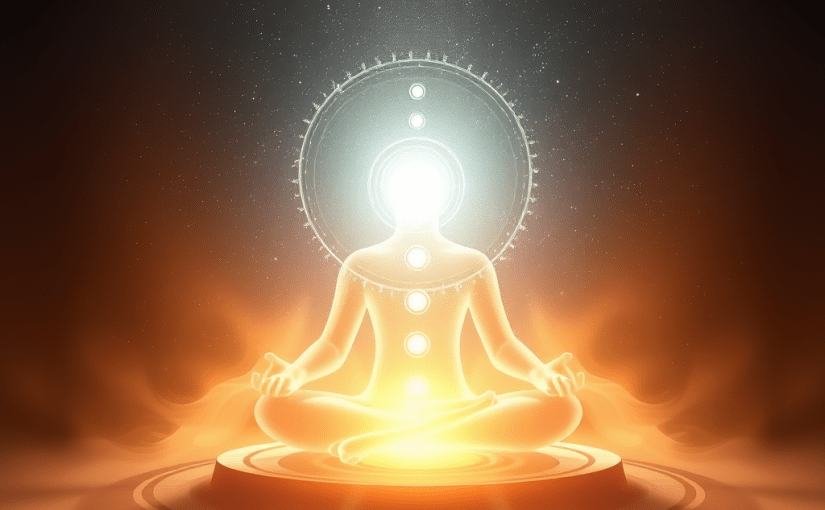
Eternal Keval Kumbhak vs Eternal Nirvikalpa Samadhi: Which Is Closer to God?

Perfect. Here’s a fully text-based poetic-style blog post that captures the contrast between Eternal Keval Kumbhak and Eternal Nirvikalpa Samadhi, without using any charts — entirely suitable for WordPress:


🕉️ Eternal Keval Kumbhak vs Eternal Nirvikalpa Samadhi: Which Is Closer to God?

In the deepest folds of yoga and mysticism, seekers often ask:

Is God in eternal Keval Kumbhak — breathless, still, yet vibrantly alive?
Or is He in eternal Nirvikalpa Samadhi — formless, thoughtless, pure being beyond all dualities?

Let us explore this with inner reverence and clarity.


🌬️ Keval Kumbhak – The Breathless God

Keval Kumbhak is the spontaneous, effortless retention of breath — not forced, not practiced, but arising naturally when prana and apana merge, when duality ends in the body.

In this state:

  • Breath is utterly still.
  • Yet the being is fully alive, aware, and undisturbed.
  • No inhalation, no exhalation — just an eternal pause.
  • The body is like a flame that doesn’t flicker.
  • Consciousness watches in silence, as if holding the entire universe in its womb.

When a yogi experiences Keval Kumbhak, even for moments, it feels divine — as though the body has turned to sky, and the soul floats in a still ocean of life.

To imagine God in eternal Keval Kumbhak is to see Him as the supreme yogialive, breathless, still, watching all creation without moving a single atom within Himself.


🧘‍♂️ Nirvikalpa Samadhi – The Formless God

But deeper than breath, deeper than body, deeper even than witnessing silence — is Nirvikalpa Samadhi.

In this state:

  • There is no mind, no breath, no body-awareness.
  • There is no observer or observed.
  • Thought vanishes. Even the sense of “I am” dissolves.
  • No God, no world — just pure being, limitless, indivisible.

This is not a state that comes and goes. It is the true nature of existence, of Self, of God — beyond the idea of God.

To speak of God as being in eternal Nirvikalpa Samadhi is to say:

He is not “in” a state — He is the foundationless Reality,
before the first breath, before time, before space.
He does not breathe, think, move — He simply Is.


🕊️ So Which Is Closer to the Truth?

Both images are true — from different lenses.

  • Eternal Keval Kumbhak is God as the silent, breathless, cosmic yogi, holding the universe in still awareness — beautiful, relatable, alive.
  • Eternal Nirvikalpa Samadhi is God as the absolute Self, beyond all movement, even breathlessness — infinite, silent, unknowable.

If you seek relationship, devotion, or a form of living stillness, Keval Kumbhak paints a divine picture of God.

If you seek nonduality, liberation, or truth beyond all ideas, Nirvikalpa Samadhi is the ultimate doorway — and the place beyond all doorways.


✨ A Closing Reflection

God doesn’t breathe — because He is the source of breath.
God doesn’t think — because He is the witness before thought.
God doesn’t meditate — because He is the end of meditation.

You may call Him the breathless one — or the formless one.
You may find Him in stillness — or lose yourself in His silence.

Both are true.
Both are holy.
Both lead home.

The Inner Science of Ida, Pingala, Prana, Apana, and the Path to Spiritual Awakening

Introduction

In yogic science, two terms often come up together: Ida–Pingala and Prana–Apana. Many seekers wonder:

“Are Ida and Pingala the same as Prana and Apana? Or do they represent something different?”

This post dives deep into how these energy channels and forces work together in awakening, breath stillness (Keval Kumbhak), and spiritual realization—while staying simple enough for a curious beginner or child to grasp.


🌀 The Yogic Energy System in Simple Words

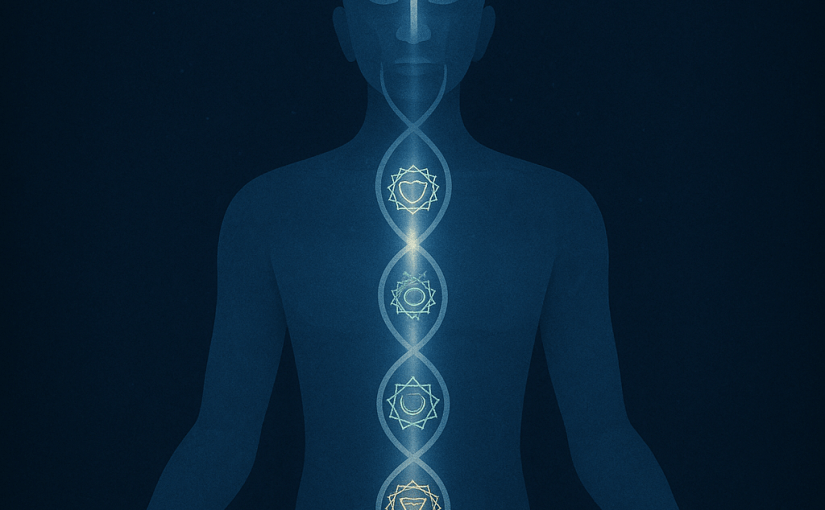
In ordinary life, Ida and Pingala—the two primary energy nadis—crisscross at each chakra. This means that even in average people, there’s some momentary merging at each chakra. However, the difference between an ordinary person and a yogi lies in awareness, intensity, and continuity:

  • In ordinary life, the merging is occasional, unconscious, and often overshadowed by external desires.
  • In a yogi, the merging is conscious, prolonged, and backed by focused inner practice. Over time, the whole Sushumna Nadi (central channel) becomes activated—not just at a few points.

This is when Ida and Pingala no longer appear as distinct currents; their merging becomes a continuous inner reality, and the double-helix pattern dissolves into unified stillness.

This merging isn’t just symbolic. In the deeper yogic sense, it reflects a shift in the internal flow of prana and apana that normally act in opposite directions. In higher states, these opposing energies begin to neutralize each other, leading to the awakening of the central channel—Sushumna Nadi.


🌬️ Prana and Apana: Two Key Inner Forces

Prana Vayu:

  • Upward-moving energy
  • Governs heart, lungs, perception, thoughts
  • Related to Ida Nadi

Apana Vayu:

  • Downward-moving energy
  • Governs elimination, reproduction, grounding
  • Related to Pingala Nadi

Even though they operate across the body, their tendencies match these nadis. So:

Ida ≈ Prana Vayu (inward, mental, cooling)

Pingala ≈ Apana Vayu (outward, physical, heating)

This mapping is not rigid but offers great practical value for meditative and breath-centered practice.


⚖️ Merging: The Real Game Begins

When Prana and Apana become equal and opposite, they cancel each other energetically. This doesn’t mean nothing is happening—rather, a new dimension opens:

  • Breath stops naturally (Keval Kumbhak)
  • Energy no longer flows outward
  • Consciousness turns inward and rises
  • Kundalini begins to move up through Sushumna

This silent movement is often not dramatic. Many sincere practitioners feel:

  • No visions or sounds
  • No sparks or shakes
  • Just a subtle bliss rising silently, like a warm cord up the spine

🧘 Experiences During Keval Kumbhak

Many practitioners are confused why they don’t feel dramatic experiences or visions during Keval Kumbhak (breathless stillness). But here’s what actually happens:

  • When the breath stops, awareness becomes like a still lake.
  • If enough sexual or vital energy has been conserved and sublimated, it silently starts rising.
  • This rising is not a rush. It is like a slow-moving, blissful river that moves upward—sometimes pausing, sometimes progressing.

You may not see lights or hear celestial sounds. That’s okay. In fact, deeper stillness often lacks sensory signs. Instead, you may feel:

  • Expanded space within your head or body
  • A rising coolness or subtle joy
  • Whole spine occasionally lighting up like a blissful electric cord

These are signs of energy stabilizing into Sushumna.


👁️ The Role of Ajna Drishti (Upward Gaze)

When you gaze upward internally toward the Ajna Chakra (brow center) with closed eyes:

  • Awareness naturally rises
  • Breath becomes subtle or ceases
  • A sense of infinite inner sky or spaciousness may appear

This is not fantasy—it’s your consciousness expanding beyond the limits of body and breath.


🔁 Double Helix and Beyond

Initially, Ida and Pingala crisscross like a double helix, touching each chakra. But once Sushumna is fully active:

  • The duality dissolves.
  • Ida-Pingala disappear as identities.
  • What remains is oneness, a steady current of awareness.

That’s why in higher states:

No double helix remains. Only unified current exists.

This transition from dual energy to unity marks a yogi’s maturity. The whole spine becomes a channel of silence, bliss, and luminous intelligence.


📘 Are They the Same Thing?

While Ida and Pingala are not exactly the same as Prana and Apana, their functions deeply align. Ida is often associated with the cooling, inward, and upward-moving energy, which resembles the characteristics of Prana Vayu—the life force responsible for perception, breath, and higher awareness. Pingala, on the other hand, is linked to the heating, outward, and downward-moving energy, which mirrors the traits of Apana Vayu—the force governing elimination, grounding, and reproductive functions. So, we can loosely say: Ida resembles Prana Vayu, and Pingala resembles Apana Vayu. While not identical, this mapping offers a practical way to understand how inner energies function and balance during yogic practice.

While they are not exactly the same, their functions are deeply intertwined.


🧘 The Yogi’s Difference

In ordinary humans:

  • Ida and Pingala briefly touch and activate chakras.
  • Their merging is fragmented and short-lived.

In yogis:

  • Ida and Pingala merge fully at each chakra.
  • Eventually, their union rises through the entire Sushumna.
  • The breath stills, mind becomes centered, and awareness ascends.

That’s the true yogic milestone.


🧬 Advanced Clarification: The Five Vayus

There are five major Pranic forces:

  1. Prana Vayu – Inward, upward
  2. Apana Vayu – Downward, grounding
  3. Samana Vayu – Digestive balance
  4. Udana Vayu – Speech and spiritual rise
  5. Vyana Vayu – Circulation, coordination

Though all exist throughout the body, Ida and Pingala mostly express the balance of Prana and Apana.

When these two are balanced:

  • The body becomes light
  • Breath may spontaneously suspend
  • Consciousness detaches from lower centers and ascends toward the higher chakras

🧭 Final Takeaway:

  • Ida ≈ Prana Vayu
  • Pingala ≈ Apana Vayu
  • Their perfect balance leads to Keval Kumbhak, where the mind, breath, and duality stop.
  • Then Sushumna activates, and the path to true realization opens.

This is the yogic science behind Kundalini, nonduality, and spiritual transformation.

How Rituals Support True Keval Kumbhak: A Forgotten Yogic Secret

Many people try to meditate or attempt Keval Kumbhak (effortless breath stillness) when they’re tired — often at night or after long work. Naturally, they end up slipping into sleep. But the real secret is to do it when the body is fresh and the mind alert — so that mindlessness doesn’t become unconsciousness, but a doorway to living awareness.

This is something I’ve observed from my own experience: Keval Kumbhak is not about sleep or suppression. It’s about entering a deep stillness where thoughts dissolve, yet you remain fully aware. And for that to happen, a sattvic environment is essential — one that keeps the inner flame of awareness gently burning.

That’s when I realized something profound:
The rituals in religious ceremonies — which we often take for granted — serve this exact purpose. They are not distractions, but guardians of awareness.

Let me explain how:

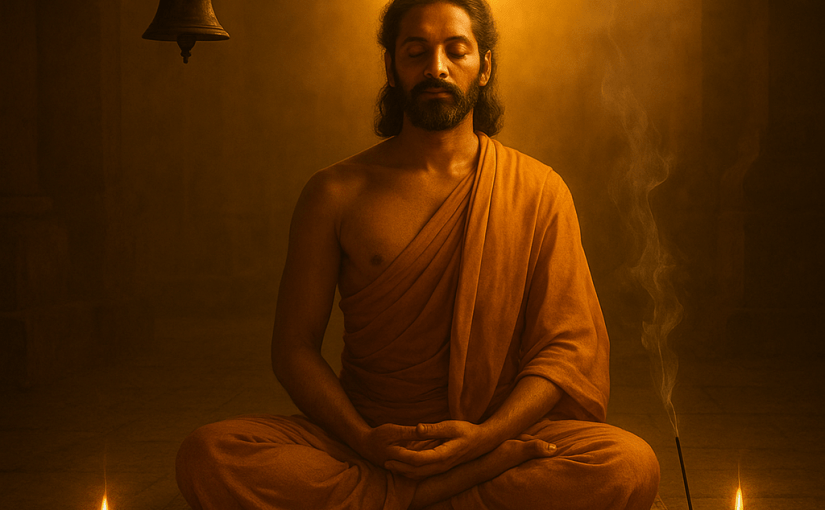
🔔 Bell Sounds

The sharp ring of a temple bell cuts through the fog of the mind. In one instant, attention is brought back to the now. It jolts us out of dullness — like a spark lighting dry wood.

📯 Conch Blowing

The deep vibration of the conch doesn’t just purify the space — it resonates within the body, harmonizing breath and energy. It’s like a natural pranayama, awakening subtle prana and driving away heaviness.

🕯️ Incense

The gentle fragrance of dhoop or agarbatti soothes the senses, especially the breath and mind. The olfactory sense is linked directly to the brain’s limbic system — and the right scent can anchor awareness softly in the present.

🔁 Mantra Japa

The rhythm of mantra is a bridge between breath and thought. It draws both into harmony, making the breath quiet and mind steady. Over time, the mantra fades, and silence arises — but now, conscious and alert silence.

📖 Shloka Recitation

Shlokas carry vibrational power and invoke both devotion and awareness. They stir the intellect and heart together, helping one enter dhyana with bhava and clarity rather than sleepiness.


I then saw clearly: this is how ancient yogis lived. Not in silence alone, but in environments carefully designed to support sattva. Temples weren’t just for worship — they were energetic tools. The very air around a yogi helped keep their awareness alive even when thoughts stopped.

Even in solitude, a yogi surrounded himself with:

  • The distant echo of mantras
  • The subtle glow of a lamp or sunrise
  • Fragrant air from sandal or tulsi
  • The inner rhythm of breath and awareness

Such environments helped them stay in Keval Kumbhak naturally, without forcing breath or suppressing thought. This is why it seemed as if yogis lived in meditation — because the outer world supported their inner silence.


In today’s times, when the mind is easily distracted and the body fatigued, sattvic rituals are not outdated — they are essential. Bells, conchs, incense, chanting — these are not mere cultural leftovers. They are keys that can unlock deep meditative states — especially Keval Kumbhak with full awareness.

To sum up:

When the outer is tuned to sattva,
the inner doesn’t fall into tamas — it rises into Samadhi.

Even if you practice alone, try lighting a lamp, ringing a bell, chanting a few mantras, or simply sitting in a fragrant, pure space. You may find that awareness remains awake, even as thoughts vanish. And that’s the doorway to the real stillness yogis speak of — the living silence of Keval Kumbhak.

What Is the Light of the Self? A Conversation from the Depths of Experience

After certain intense spiritual experiences, a question kept echoing in me: After death, is there not pure self-awareness—whatever form the self takes—unlike deep sleep, where there’s no self-awareness? This wasn’t just a philosophical question. I had experienced something that wouldn’t let me rest until it found articulation.

There was a dream visitation from a departed soul. It wasn’t visual or physical but felt like a deeply encoded presence. It carried its individuality from its lifetime, but in a form that was compacted, compressed, like darkness itself. Glistening darkness. As if its entire personality had been shrunk into a concentrated essence. A mascara-like, subtle blackness—a self folded into itself.

It asked me, confused: Is this liberation?

It felt to me as if that soul wanted to escape out of that encoded envelope. And I noticed something else—the state of that soul was entirely different from my own awakening experience. In my deepest moment of inner realization, I had experienced a self that was one with mental formations, like waves in a vast ocean. But those waves were not separate from the Self. They were the Self. That was light. That was bliss. That was ultimate.

And yet, I must admit: that wasn’t the pure Self. It was the Self with content. An ocean full of shimmering movement. I did not experience the ocean without waves. And that makes a difference.

When I was asked by that dreamlike soul about liberation, I found myself unable to describe the real nature of the pure Self—because I myself hadn’t achieved it. I had only experienced a vastness filled with blissful movement. I had not yet known the silence beyond even bliss. I only replied that it is not light and it seems compressed and stressed although it was infinitely vast and dark sky. Probably as I remember I advised it to move further ahead to light just guessing from my own experience as I had moved ahead and ahead in yoga to reach awakening. It had also told that it used to be afraid of death in vain but this state is not so called death like and it feels it is good enough and living like.

Still, my sadhana continues. I do advanced kundalini yoga. My meditation image is often the soul or essence of a departed one, the one closest or nearest in relation to it. It feels like this in itself becomes a prayer—an automatic offering beyond words to help it to be liberated if it is lingering somewhere inbetween. There’s something deeply natural in that.

But one doubt remained. In that visitation, I had seen darkness—the kind that doesn’t feel evil, but also doesn’t feel free. Yet, I realized: pure awareness cannot be called dark. Neither can it be called light. Because both darkness and light are properties of reflective material.

Even space itself is a kind of material. The pure Self is not space, though space-like. It’s not dark, not luminous. When we call it “self-luminous,” it makes the mind think of it like some glowing thing. But it isn’t.

“Self-luminous” is just a pointer. It simply means: it knows itself without help. It doesn’t reflect. It doesn’t shine on. It doesn’t receive light. It simply is.

It is awareness being aware. But not in the way we usually think of “being aware.”

I recalled the Upanishadic truth:

“It is not known by the mind, but by which the mind is known.”

“It shines not, neither sun, nor moon, nor fire. It alone gives light to all. By its light all else is seen.”

These statements aren’t about light. They’re about presence prior to perception.

And then something beautiful settled into my understanding. I realized that metaphors can help if used delicately. And some traditional metaphors suddenly made deep sense to me:

1. The Mirror That Reflects Nothing
Like a mirror that reflects no object—but remains the potential to reflect. Still. Unmoving. Unused. That’s the Self.

2. The Eye That Sees But Cannot See Itself
It sees all, but can’t become its own object. Like awareness. It knows all, but is never an object of knowing.

3. The Silence Behind All Sound
Sound comes and goes, but silence remains. Not silent as absence, but as eternal background.

4. The Sky Untouched by Clouds
Clouds come and go. Sky remains. Not even made of space. Self is subtler than space.

5. A Flame That Doesn’t Burn
Like the idea of flame without heat or glow. No wick, no oil. Just presence without quality.

These helped me not as knowledge, but as living orientation.

Still, I find that when the mental waves subside, the bliss subsides too. That ultimate peak cannot be held by force. And yet, that doesn’t feel like a failure anymore. It feels like a natural return.

What I experienced was likely Savikalpa Samadhi—where Self and waves are one. Blissful, yes. Transformative, yes. But not final. Not the ocean without waves. Not the pure Self beyond even bliss.

There’s still something lacking. I don’t pretend to have reached the final goal. The experience felt like the peak of existence, the ultimate moment of union. But I know that I haven’t merged into the unconditioned ocean of pure awareness.

What remains then is trust. Gentle remembrance. Resting. Not trying to grab the ocean. Just to be the presence that always was.

I let this be my guide:

“I am that which saw the waves. Let me rest as that.”

This means: I am not the movement, not even the blissful play of awakening. I am the witnessing reality behind it—the one that never moves, never becomes. The one that knows even the subtlest wave is still an appearance in Me.

Sometimes I forget to stay aware of who I really am. But even in that forgotten state, I can still see the reflection of my true self—sometimes in my own hand or face—because everything, even this body, holds the whole within it, like a hologram. This simple recognition instantly brings me back to awareness, without effort. So whenever I drift, I gently return—again and again—knowing that even the forgetting happens inside that same awareness.

That is the path now. Not chasing light. Not escaping darkness. Just resting in That which is neither—and beyond.

Chapter 19: Dreams, Myra, and Mystery

By the time Ishaan reached Chapter Nineteen of She Who Became My Guru, the afternoon sun had begun its quiet descent behind the cedar-clad ridges of his Himalayan retreat. A thin veil of cloud floated lazily across the peaks, diffusing light like an old memory—neither too bright, nor too dim. He sat cross-legged on the floor by the open bay window, a mild breeze carrying the scent of pine and distant rain. The pages of his own book fluttered gently on the table, as if eager to remind him—this isn’t over yet.

He turned to the chapter titled Dreams, Myra, and Mystery.

And just like that, it began happening again.


Back then, he never saw it coming. The awakening. The spiral. The slow but powerful inward turn of his senses.

But it didn’t begin with scriptures or chants. It began with her.

Not in the ashram. Not during a retreat. But in the cluttered corridors of Pine Crest School—amid exam stress, adolescent jokes, and half-said goodbyes.

Her name was Myra.

Everyone saw her as just another brilliant, quirky, vibrant schoolmate with that odd yin-yang mix—wild laughter and sudden silences. But to him, she had always been something else. Something unnameable. He could never quite look at her directly for long. Something stirred. Something too vast for a teenage mind to hold.

She made him restless—but not in the way of infatuation. It was more like standing near a forgotten temple: you don’t know why your chest tightens, but you feel something ancient awakening.

Back then, he called it attraction.

Now, reading his own words, older and inwardly calmer, he knew it was initiation.


The dreams started the same year his curiosity toward yoga and mysticism bloomed. He would see her—not as a classmate—but as light. Sometimes sitting beneath a tree reading ancient texts. Sometimes walking silently through ruins. And sometimes, simply staring at him with an unsettling stillness that made everything else blur.

He once told Gagan about a dream, casually.

Gagan had chuckled, “Oye, she’s your dream girl in the literal sense now!”

But Anjali—Myra’s observant friend—had overheard and said something cryptic:
“Not all dreams come from sleep. Some come to wake you up.”


What confused him most was that the pull toward her never felt impure. His growing interest in Kundalini, in chakras, in breathwork—somehow, she kept surfacing in the background of all of it.

Like she was threaded through the sadhana itself.

The tipping point came one dusky evening in the school library. He was reading a translated copy of the Devi Bhagavatam, and as if scripted by fate, Myra walked in and sat at the adjacent table. For a moment, he forgot the book entirely. Then she asked, without lifting her eyes from her notes:

“Do you think all energy is feminine?”

He froze. “Why do you ask?”

She shrugged. “Just curious. Shiva sits still. Shakti moves.”

That line haunted him for weeks.


At that age, he didn’t yet understand how lust could be lifted, not denied. He only knew that trying to suppress what he felt led to tension, and indulging it dulled his clarity. It was Govind bhaiya—his elder cousin, silent seeker, and mystic-in-hiding—who gave him the key.

“Energy doesn’t ask questions,” Govind had said one afternoon while flipping hot parathas. “It just moves. Where you let it move is your sadhana.”

Those words were the silent switch.

The chaos he felt—so easily mistaken for teenage hormones—was quietly turned inward. The same pulse that stirred when Myra looked at him now found refuge in dhyana. He began using her as a dhyana-mudra without even knowing the term. Not her form, but her presence. Her mystery. Her silence.

Mr. Dutt, their unconventional teacher, had once noticed Ishaan unusually silent in class.

“You look like you’re meditating, Sharma.”

“Maybe I am, sir.”

To which Mr. Dutt had only smiled and whispered, “Good. But meditate upward.”


In one of his deepest dreams, years later, Myra appeared again—older this time. Not aged, but ageless. She stood beneath a tree made of light, its leaves shimmering like miniature galaxies. In the dream, he was fully conscious, aware he was dreaming, and yet unable to wake. It was not sleep—it was a journey.

“Myra?” he had asked, voice quivering.

“No,” she answered softly. “Not anymore.”

“Then… who?”

“I am what you made of me.”

Her eyes held a mother’s compassion, a friend’s mirth, and a Guru’s power.

“You carved me with longing,” she continued. “Then sculpted me through silence. Now let me dissolve into stillness.”

He reached for her hand, but she melted into light.


That dream marked a turning point.

From that day, he never saw Myra as a lost love. He saw her as the force that first cracked open his inner world. The fire that didn’t burn—but transformed.

She had never truly been a girl. She had been the Shakti principle in disguise—clever enough to wear adolescent charm, but wise enough to leave when the work was done.

She was the movement that led him to stillness.


He still remembered how difficult it had been to explain this to Vedika, his wife.

Not because she wouldn’t understand—but because he feared she might.

But Vedika had only smiled, serene as ever, and said:

“If she opened your path, then I’m grateful to her. We all have someone who breaks us open.”

He had stood quietly, humbled by the depth of her presence. She wasn’t jealous. She was aware.

“Besides,” Vedika had added, “if she was your Guru, she chose well when she stepped away.”


Now, at 52, surrounded by the scent of cedarwood and the songs of whistling thrushes, Ishaan closed his eyes and relived it all—not as memory, but as living now. He had long stopped distinguishing the outer world from the inner one. Everything was part of the same eternal unfolding.

He thought of Vinod, his genius classmate, who once joked that Ishaan was “writing devotional poetry disguised as teenage love letters.”

He thought of Ranjana didi, who called Myra “your spiritual vitamin.”

He thought of Anjali, who knew far more than she ever said, and whose quiet nods had once reassured him more than any words could.

Even now, even after years of advanced yogic states, silent retreats, and mystical highs, that first flame—the tender confusion of seeing Myra for what she really was—remained the most sacred moment.

The gateway.

The adi-darshan.


As the chapter drew to a close, the clouds parted, and golden light poured onto the hilltop like prasad. Ishaan rose, book in hand, and stepped out into the open. The valley stretched endlessly before him, soaked in silence and light.

He stood there, breathing slowly, the book held close to his chest.

“Myra,” he whispered—not as a name, but as a mantra.

A bird took flight.

The wind brushed his face like a blessing.

And in the stillness that followed, he didn’t feel alone.

He felt guided.

Always guided.

By her, and through her, and beyond her.

By that which she had always pointed toward—the One who has no name, no form, yet wears every face we’ve ever loved.

Chapter 9: The Silence That Spoke

It was the summer of slow endings—the kind where petals fall not with a breeze, but with time itself stretching like a languid yawn. The school corridors had started to feel strangely hollow, though still alive with young laughter and occasional mischief. Yet for Ishaan, something had shifted. A deeper silence had nestled within him—a silence not born of absence, but of arrival. Something had arrived within him, and that something was peace.

Myra, on the other hand, seemed to have grown sharper in her expressions. Her face was now a canvas of contradictions. Where once there had been a gentle mischief and honeyed glances, there now remained a flicker of questions—unasked, unanswered, and perhaps even unanswerable. Their meetings had become few and far between, but when they happened, they carried the density of a thousand untold dialogues.

Once, in a fleeting encounter at a local temple fair, their eyes met again—those familiar eyes that had once dreamed in harmony. Myra’s face hardened momentarily. Her brows knit together, not out of fury, but as if trying to read something that had faded from the surface of a long-weathered book. She did not speak. Neither did Ishaan. The moment passed like a cloud covering and uncovering the sun in the span of a heartbeat.

But within that silence, Ishaan saw the pain. Not hers alone, but a collective pain—the kind birthed by beautiful things that time had quietly unraveled. Her eyes whispered accusations that her lips didn’t voice, as though she wanted to ask him why he had let go of something so pure, and why he now looked at her with the stillness of a monk instead of the yearning of a lover.

He did not blame her for the suspicion she had once flung through her expressive silence—the suspicion of being molested, hurt, or betrayed. That moment, long past, had stung him deeply. Not because of guilt, for he knew he had done nothing wrong, but because it fractured something sacred: trust. And yet, she had recoiled the dagger of suspicion almost as soon as she had drawn it, her eyes softening with a remorse he could never unsee.

He remembered that strange moment vividly, as though it had occurred only yesterday. She had said nothing explicitly, but her body had momentarily stiffened, her posture withdrawn, eyes flashing with an ancestral warning. A moment later, guilt overtook her face like an eclipse, and she looked at him with the mercy of a goddess who had erred. That duality—of being feared and forgiven in a single breath—had struck him like lightning cleaving an ancient tree.

Yet even then, Ishaan had not spoken. Silence had become his language. He had begun to understand the essence of Krishna, who dances with love, yet never clings; who smiles from within a distance, never forcing nearness. Like Krishna, Ishaan had become adept at appearing involved, while internally dwelling on the mountaintop of contemplation. His was no longer the love of the world—it was the love of the soul seeking the Self.

And Myra—she had once been his mirror to the world. Her laughter had reminded him of the first rains, her encouragement had pushed him toward knowledge, and her rebukes had awakened him more than any scripture. In every sense, she had played the role of a living guru, unknowingly shaping the currents of his inner evolution.

He recalled those early school days when Biology madam would praise him in class. Myra, sitting amidst her friends, would beam with pride, her smile wider than her words. “He deserves it,” she’d say, loud enough for others to hear, as if endorsing his genius before the world. Her faith in his capabilities had fueled a fire in Ishaan to strive not for marks alone but for meaning.

Her guidance hadn’t always been sweet. Sometimes, she’d drop a heavy truth masked as jest: “People waste time in illusions. Build a career if you really want to be taken seriously.” She had said it once in front of the entire class, her voice dipped in a mix of sarcasm and concern. For Ishaan, that sentence became a mantra—not for the rat race, but for the cultivation of purpose. That day, she wasn’t a girl with doe-eyes and mischief; she was a sage disguised in a school uniform.

But Ishaan’s contemplations had not only been about her. They were deep-rooted, extending far into his childhood. He had once shared a bond of great friendship with Govind, a cousin brother who had lived in their home. That boy had been a firecracker of energy—naughty, hard-working, curious. When he moved away, Ishaan’s heart had ached silently. Strangely, when Myra entered his life, he found her carrying shades of that boy. Her liveliness, her spark, her subtle rebellion—it was like the soul of his cousin had returned in a new form, a feminine avatar. The continuity of contemplation simply changed its object.

In all these emotional symphonies, Ishaan had restrained himself. Even as others joked, teased, or poked fun about his feelings, he never openly confessed, never proposed. He used to think he would wait until he became ‘something’—stable, independent, worthy. Sometimes, he believed his restraint was noble. Other times, it felt like cowardice. But the truth lay somewhere in between: he was torn in a subconscious tug-of-war. The soul whispered wait; the world shouted act. He obeyed the whisper.

Eventually, life carried him forward. Degrees were earned, careers built, and responsibilities accepted. He even entered the domestic stage of life through an arranged marriage. But none of it dulled his inner longing for a spiritual completeness. For Ishaan, real success meant awakening the Kundalini, attaining that which even desire cannot dream of. And when it happened, years later, in the silent solitude of his meditation, he knew he had arrived—not at a destination, but at a beginning.

In that state of self-realisation, everything dropped away—lust, fear, ego, ambition. The memories of Myra were no longer tinged with yearning or sorrow. They became sacred—a part of the scripture of his life. He saw her not as a lost love but as an embodied lesson. Their story, however incomplete in form, had been complete in essence.

Fate brought them together one last time, in a quiet by-chance meeting on a street shaded with gulmohar trees. She looked at him, brows slightly drawn, lips unspeaking. Her face bore a shadow of annoyance, maybe even pain, but no words came. Ishaan didn’t explain, didn’t justify, didn’t apologize. Not because he didn’t care—but because he cared enough not to interfere with her journey.

He knew: awakening could not be gifted or taught—it had to rise like a phoenix from one’s own ashes. And if her path held such a moment, it would arrive at its own pace. His role was over. He had fulfilled his dharma not as a lover, but as a witness.

And so, he let go—completely. No clinging to possibilities, no replays of what could have been. Life had chosen its tide. She drifted on her course; he on his. But the ocean remained one.

Soon after, Ishaan was selected to a far-off lunar university for advanced studies—a place as surreal and distant as his own mind had become. He accepted the offer not as an escape, but as an unfolding. Just as rivers don’t resist their flow, he surrendered. Little did he know that, after reexperiencing life on Earth, he would once again travel to the moon in the future—not as a student this time, but as a researcher. And with that, a new chapter in his cosmic journey would begin. In fact, like attracts like; it’s the law of attraction.

He didn’t write to Myra. Didn’t search her on social media. Didn’t leave breadcrumbs for her to follow. Because when love transforms into spiritual fire, it no longer demands union—it simply illuminates.

And somewhere, perhaps in another corner of the world, Myra stood still with unanswered questions. But someday, when silence will descend on her like dusk on a restless lake, she might feel the same truth—not in words, not in visions, but in a sudden stillness.

In that stillness, Ishaan will be there—not as a memory, but as a vibration.

Not as the one she loved, But as the one who became.

Chapter 26- The Search for the Next Destination 

Part 6: A New Beginning and the Universal Truth

The Search for the Next Destination

Dr. Aryan Verma sat in the main research hub of the Moonbase, his fingers gliding across the holographic console. The decision had been made—humanity’s journey was far from over. Now came the next challenge: finding the right destination.

Meera entered the room, her eyes scanning the array of star maps and planetary data floating in midair. “So, where do we begin?”

Aryan smiled, his excitement barely contained. “We’ve been looking outward for years, Meera. But now, we truly have to think beyond the Moon, beyond Mars. Somewhere sustainable, somewhere we can call home for generations.”

Ansh, who had been silently observing from the corner, suddenly perked up. “Dad, have you checked Kepler-442b? It’s been on the list of potentially habitable planets for years! Its star is stable, it’s within the habitable zone, and—” He paused, flipping through data projections. “Look at this! It has a 97% probability of Earth-like conditions!”

Avni leaned over his shoulder, impressed. “So, we’re talking oceans, an atmosphere, and maybe even plant life?”

“That’s the hope,” Aryan confirmed. “But there’s more to consider. Distance. Resources. Feasibility of travel. The farther we go, the harder it gets.”

Meera folded her arms, ever the practical one. “And what about the unknown variables? We might be walking into an ecosystem that isn’t as friendly as we assume. What if we’re not alone there?”

A hush settled over them. The thought had always lingered in the background. Space was vast, and they had no illusions of being the only intelligent species in the cosmos.

Ansh, still glued to his screen, broke the silence. “We could send a probe first. AI scouts can map the planet, analyze its atmosphere, and even detect signs of advanced life.”

Aryan nodded. “That’s a logical step. But we must act fast. The Interstellar Expansion Initiative has other teams researching destinations, and we can’t afford to lag.”

Avni smirked. “So, it’s a space race? Good. I always wanted to be part of one.”

The next few weeks were a whirlwind of calculations, projections, and simulations. Aryan worked alongside some of the best minds on the Moonbase, analyzing planetary candidates one by one. Kepler-442b remained a strong contender, but there were other possibilities—Proxima Centauri b, a planet orbiting the closest known exoplanetary system, and Luyten b, which had conditions remarkably similar to Earth’s prehistoric climate.

During one of their late-night discussions, Meera noticed Aryan staring at the screen with an almost trance-like focus. She placed a warm hand on his shoulder. “You look like a man searching for something more than just a new planet.”

He exhaled deeply. “Maybe I am. You ever get the feeling that we’re being guided? That we’re not just choosing this path, but it’s choosing us?”

Meera considered his words. “You’ve always been drawn to the unknown, Aryan. But I think it’s more than that. You don’t just want to find a new home. You want to find meaning.”

He chuckled softly. “And maybe that meaning isn’t in a place, but in the journey itself.”

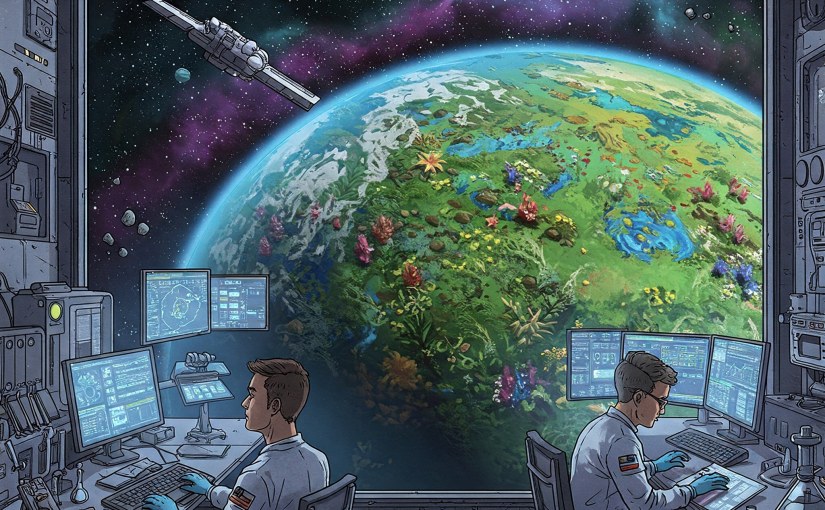
The first probe was launched toward Kepler-442b, carrying an array of instruments designed to analyze every aspect of the distant world. The transmission delay meant it would take time to receive detailed reports, but the first images sent back left them in awe.

A breathtaking landscape unfolded before them—a vast expanse of cerulean oceans, emerald forests stretching beyond the horizon, and towering mountain peaks glistening under an alien sun.

Ansh gasped. “It looks like Earth before civilization! This is incredible!”

Avni’s eyes gleamed. “No dust storms, no barren wastelands. Just pure, untouched nature.”

Meera, despite her initial hesitation, couldn’t help but smile. “It’s beautiful.”

Aryan, however, remained silent, staring intently at the data stream. The atmosphere was stable, oxygen levels were compatible, and there were clear signs of an active biosphere. But something felt… off. A presence. An unshakable sense that they weren’t just discovering this planet—it was watching them back.

“What is it?” Meera asked, noticing his change in expression.

“I don’t know,” he admitted. “But I feel like… we just stepped into something far bigger than we understand.”

As the final reports trickled in, a decision loomed. Kepler-442b was viable. It was everything they had hoped for and more. But something inside Aryan whispered caution. He had spent years learning to trust his instincts, and now they urged him to dig deeper.

One evening, as he wandered the lunar surface alone, the stillness of space pressing in around him, a realization struck him. The universe was not just a collection of rocks and gases—it was alive. And every step they took deeper into it was a step into a greater, unfolding mystery.

The question was no longer whether they could go. The question was whether they were truly ready for what they might find.

As Aryan turned back toward the base, he knew that the next chapter of humanity’s journey was about to begin. But this time, it was not just about survival or exploration.

It was about awakening.

Chapter 9 – Space Travel Between Earth & Moon

Since this time Aryan was traveling alone, he opted for public transport—a space bus—rather than taking his personal space car. It was impractical to carry an entire vehicle for just one person, not to mention uneconomical. The space bus, though not as private, was comfortable, efficient, and offered a quiet time to reflect.

However, when traveling with his family—Meera, Avni, and Ansh—every two to three months, they always preferred their own space car. The journey was not just about reaching Earth; it was an adventure in itself. They would take their time, stopping at various space hotels and floating restaurants to refresh themselves before continuing ahead.

Every two to three hours of continuous travel, they made a stop at one of their favorite space lounges—places that had become a part of their routine over time. There, they would sip on steaming cups of tea or coffee, enjoy snacks, or have a full meal, depending on the time of the journey. These brief halts were not just about food but also about relaxation and stretching out after the long hours of weightless travel.

The children always loved these breaks. Stepping into the artificial gravity gardens attached to these space hubs, they would run around, playing for a while, marveling at the way gravity could be adjusted to mimic Earth’s pull. Aryan and Meera would take slow strolls, enjoying the unique sight of gardens floating against the backdrop of deep space, the stars twinkling like diamonds beyond the protective domes.

Each stay lasted about an hour to an hour and a half, enough to refresh, recharge, and prepare for the next leg of the journey. For them, the journey wasn’t merely about getting from one planet to another—it was about cherishing the experience, savoring the moments of togetherness, and making memories that would last a lifetime.

Getting back to the second home

Aryan stepped off the space bus, his feet adjusting to the Moon’s artificial gravity field. He had just returned from one of his frequent visits to Earth—a journey that, despite its familiarity, always left him with mixed emotions.

The moment he stepped into the colony, a familiar voice called out.

“Back already?” Meera stood outside their living dome, arms crossed but a smile tugging at the corners of her lips.

“Time flies when you’re running between two worlds,” Aryan said, setting down his travel case. His suit still carried traces of Earth’s air—a scent he had come to miss in the sterilized, processed environment of the Moon.

Before he could take another step, Ansh and Avni came running, their excitement bubbling over.

“What did you bring us?” Ansh asked eagerly, his eyes wide with anticipation.

Aryan chuckled and reached into his bag. For Ansh, he had picked up the latest holographic gaming console, something that had just launched on Earth. For Avni, a delicate bracelet containing real Earth flowers, preserved inside a transparent capsule—something she could wear as a piece of their home planet. Meera received something simple but cherished—a small vial of pure sandalwood oil, its fragrance carrying memories of her childhood.

As they stepped inside, Aryan sank into his chair with a content sigh. “Public transport was fine, but space buses aren’t as enjoyable as our trips together. It’s just transport—no fun, no adventure.”

Meera nodded, reminiscing. “It’s different when we travel as a family. Stopping at those space hotels, taking breaks at floating restaurants, drinking tea in orbital gardens… It’s not just about getting somewhere, it’s about the journey itself.”

Aryan smiled. “Exactly. When I’m alone, I just want to reach the Moon as fast as possible. But with you all, the journey becomes something else entirely.”

It was true. Every two to three months, when the whole family traveled to Earth, they took their personal space car instead of public transport. Those trips were filled with laughter, music, and the joy of making stops at uniquely designed space hotels and restaurants.

“Remember our last trip?” Avni piped up. “We stopped at that place with floating gardens and zero-gravity swings!”

Ansh grinned. “And that restaurant where food floated in mid-air until you caught it!”

Aryan laughed. “Yes! That place was something else. And remember how we used to take breaks every couple of hours? Stopping at our favorite restaurants, sipping tea while walking in their green parks… It’s those little things that make a journey memorable.”

Meera sighed. “I wish we had more time for such trips. Lately, everything seems to be changing too fast.”

Aryan followed her gaze out of the window. The Earth hung in the sky, its blue glow ever-present, but here on the Moon, a new world was forming. Something was shifting—both in their colony and in the hearts of those who had made the Moon their home.

The Rise of Worship on the Moon

The Moonites, breathless and selfless, had long served the earthly settlers without expecting anything in return. Their pure awareness and detached compassion made them different from humans. Yet, a silent but powerful force was driving them toward change—breathing.

Breathing was an external flashing chasm, a tempting transformation. Unlike the breathless state, which was eternal yet subtle, breathing had an undeniable charm—an immediate, transient pleasure. More and more Moonites were learning to breathe, drawn to the experience like moths to a flame. The problem was clear: if their numbers increased beyond control, the Moon’s resources would collapse before terraforming was complete.

A radical solution emerged—one that no one had anticipated. The settlers began worshipping the Moonites.

It started subtly. The colonists realized that if they saw the Moonites as pitiful beings, they would instinctively try to “help” them—teaching them to breathe, feeding them, integrating them into human society. But if they elevated them, if they considered them sacred, it would remove the idea of inferiority. The Moonites themselves would no longer feel “lesser.”

Thus began the Vedic Yuga on the Moon.

Temples were built. Elaborate idol worship started. Moonites, whose presence was once unnoticed, were now revered as divine entities. The settlers invited scholars from Earth—Vedic pundits who performed prana pratishtha on the idols, invoking breath within them through sacred rituals.

“Isn’t it ironic?” Meera had once laughed. “On Earth, humans pray to idols, breathing life into them through faith. And here, we are performing rituals for actual living beings who don’t breathe!”

Aryan saw the deeper wisdom behind this shift. It was a psychological and spiritual strategy. By treating Moonites as more than human rather than less, they subtly discouraged their desire to change. Even in a sense, it was true, for they were pure awareness. A Moonite, now revered as divine, had no reason to crave the ordinary pleasures of breath, food, and attachment.

Jyotish & The Cosmic Balance

This transformation wasn’t just religious—it extended into the realm of celestial sciences.

Jyotish (Vedic astrology) flourished on the Moon. The settlers observed that reading celestial bodies in the morning expanded prana, mixing it with apana, binding individuals deeper into the cycles of karma and existence. Jyotish Shastra had always proclaimed that planetary alignments influenced destiny, and now, on the Moon, it was more evident than ever.

Modern astronomy, too, was evolving rapidly. The settlers studied not just the Moon and Earth but the entire cosmos, looking for greater truths hidden in the fabric of space. This obsession wasn’t without reason—understanding celestial mechanics was another way to control prana flow and balance the increasing presence of breathers.

Aryan found it both fascinating and ironic. The deeper humans went into space, the more they returned to the wisdom of the ancients. The more they sought the future, the more they rediscovered the past.

Exploitation & The Looming Revolt

Despite all these developments, one undeniable fact remained: Earth was exploiting the Moon at an alarming rate. The settlers took and took, never thinking of consequences.

The Moonites’ selflessness was not a lack of awareness. They weren’t ignorant of what was happening. Their detachment and desireless nature did not mean they had no instinct to preserve their existence.

Their patience was vast—far greater than that of any breathing beings. But patience had limits.

Aryan had seen it before in history. Societies that took too much without giving back always faced backlash. Colonization, resource extraction, oppression—these things had played out countless times on Earth. Now, history was repeating itself on the Moon.

While pondering these lingering thoughts for weeks, “A revolt will come one day,” Aryan whispered to himself as he boarded the spacecraft for his next visit to Earth. “Not today, not tomorrow. But one day.”

The journey back to Earth was smooth. Space travel had come a long way since the early days of lunar colonization. Ships now used gravitational slingshots and antimatter bursts to reduce travel time, making the trip in mere hours instead of days.

As Aryan settled into his seat, he found himself staring at Earth again, that ever-familiar blue sphere.

It was his home. Yet, the Moon had changed him. He no longer belonged entirely to Earth.

Would there come a day when he would look at Earth and feel like an outsider?

Would the Moonites ever look at humans and see them as intruders rather than guests?

He closed his eyes. The answers lay in the future. And the future was coming fast.

Chapter 2: Leaving the Old World Behind – A Veterinarian’s Journey Through the Cosmic Highway

The Earth was shrinking behind them, a glowing blue pearl fading into the vast darkness. Dr. Aryan Verma adjusted the trajectory of his personal space car, merging onto the Interstellar Highway—a network of metallic lanes stretching between planets, guiding travelers like illuminated veins through the void. The hum of the vehicle’s propulsion system resonated through the cabin as Meera, Avni, and Ansh settled in for the long ride.

But not everyone had come along.

His parents had refused to leave Earth, firmly rooted in their ancestral home, a place where generations had lived and died, where their cattle roamed freely, and where the smell of fresh hay and wet soil was more comforting than the promise of technological advancement.

“Aryan, we belong here,” his father had said, leaning against the old wooden gate of their dairy farm, watching the family spaceship being readied for departure. “Who will care for our cows, our goats, the soil that has given us everything?”

His mother, usually quiet, had echoed the sentiment. “The Moon may have oxygen domes, but will it have the warmth of a monsoon rain? Will you ever feel the same joy watching a newborn calf take its first steps on that sterile ground?”

Aryan had no answers. The Moon’s biosphere colonies had advanced veterinary facilities, research labs, and even artificial pastures, but they would never hold the same soul as Earth’s natural ecosystems. He had spent his entire life tending to animals—not just as a profession, but as a bond, a responsibility. Leaving behind the family farm meant severing that connection.

Even the clinic he built with his own hands, where he had treated everything from injured stray dogs to prized racing horses, now stood in the past. It had been a place where he fought against the commercialized, profit-driven aspects of veterinary science, choosing instead to focus on healing with compassion. The bureaucracy, the pharmaceutical dominance, the constant pressure to conform to standardized treatments rather than holistic care—all of it had drained him. But leaving was no easy relief.

Children’s Struggles: Education, Friendships, and Loss

Avni, in her final year of college, had spent her last days on Earth researching lunar education systems. “Baba, their veterinary courses are different. The entire study structure focuses on genetically modified animals and bio-engineered species. What if I can’t adapt for. Actually she was fond of keeping these as choice subjects for her father being in the veterinary field?”

Ansh had been more emotional, clinging to his favorite rescue dog, Bruno, on the morning of departure. “Can’t we take him with us?” he had begged. The quarantine restrictions on interplanetary animal transport had made it impossible. Aryan had promised Bruno would be well cared for at the family farm, but that didn’t make it easier.

The separation from relatives, school friends, and even the rhythm of Earth’s natural seasons weighed on them. Festivals would now be celebrated in a simulated dome, where the air smelled recycled and the trees were artificial. No more running through open fields, no more cool evening breezes carrying the scent of blooming flowers.

But despite the pain of leaving, there was a strange relief.

Escaping the Chaos of Earth

As Aryan maneuvered through the orbital checkpoints, a sense of liberation washed over him. Earth had become suffocating—not because of its natural beauty, but because of the people, the systems, the mind games.

The work environment had grown more about politics than healing, where flattery mattered more than skill.

The corporate dominance over veterinary medicine had forced him into uncomfortable compromises, pushing treatments based on profit rather than genuine care.

His non-dualistic approach to Sharir Vigyan Darshan, which integrated the animal body with its spiritual existence, had been ridiculed as unscientific nonsense.

The constant pressure to conform, the invasive mind-molding culture, and the lack of respect for personal boundaries had become unbearable.

On the Moon, he hoped for solitude, focus, and a pure connection to his work—a place where he could study the deeper consciousness of animals without interference, without being forced into a commercialized framework of medicine.

Meera, watching him, sensed his unspoken thoughts. “Feeling lighter already?” she asked with a knowing smile.

“Yes,” he admitted. “At least up here, no one will try to twist my mind or question my beliefs every day.”

She squeezed his hand gently. “We’re not escaping. We’re just moving toward something better.”

The Space Highway: A New Kind of Travel

The Interstellar Highway was busier than expected.

Massive cargo freighters carried supplies to lunar colonies, while passenger ships transported workers, researchers, and families like theirs. They passed a floating restaurant-station, where holographic menus advertised everything from Earth-grown wheat pancakes to synthetic meat delicacies.

Meera chuckled as Ansh eagerly pressed his face against the window. “Even in space, humans can’t resist setting up highway diners.”

A few hours into the journey, they hit an unexpected traffic jam. A freight drone had malfunctioned, blocking one of the orbital lanes. The space cops hovered around, rerouting smaller vehicles.

“Looks like traffic jams are universal,” Aryan muttered.

As they waited, Avni scrolled through her lunar school handbook. “Baba, they have an advanced animal genetics research center in Luna Colony-5. You might find it interesting.”

Aryan nodded, intrigued. Perhaps the Moon wouldn’t be as lifeless as he feared.

Approaching the Moon: A Final Look Back

As they neared the Moon’s orbit, Aryan glanced at the rearview screen.

Earth was now a distant sphere, glowing softly in the darkness. It was beautiful yet unreachable, a place they had once called home but could never fully return to.

His father’s words echoed in his mind. “You may reach the Moon, Aryan, but my soul is rooted in this Earth.”

But his soul belonged wherever the animals were, wherever he could practice his dharma without chains, wherever he could be himself without fighting against the noise of the world.

And right now, that place was the Moon.

Their new life was about to begin.

केवली कुंभक: मोक्ष तक पहुँचने के लिए प्राण, मन को शांत करने और कर्मों को जलाने की सर्वोत्तम विधि 

मैं केवली कुंभक और मन और कर्म पर इसके गहरे प्रभावों पर विचार कर रहा हूँ। मैं देखता हूँ कि साँस को रोककर प्राण को शांत करना (केवल कुंभक) मन को शांत करता है, लेकिन मुझे आश्चर्य होता है—यह अवचेतन मन या गहरे छिपे हुए छापों (संस्कारों) को कैसे शांत करता है?

मैंने महसूस किया है कि सामान्य ध्यान केवल सतही मन को शांत करता है। गहरे ध्यान में भी, विचार कमज़ोर हो सकते हैं, लेकिन मन अवचेतन पृष्ठभूमि में कंपन करना जारी रखता है, और इच्छाओं, भय और पिछली छापों को संग्रहीत करता है। इससे मन की गहरी परतें, जहाँ संस्कार छिपे होते हैं, वे अछूती रहती हैं। लेकिन केवला कुंभक अलग लगता है—यह न केवल मन को शांत करता है, बल्कि इसे उसकी जड़ में ही रोक देता है।

केवल कुंभक अवचेतन मन तक कैसे पहुँचता है

मन और प्राण एक ही सिक्के के दो पहलू हैं। अवचेतन (चित्त) में कर्म के निशान होते हैं और ये संस्कार केवल इसलिए जीवित रहते हैं क्योंकि प्राण गतिमान रहते हैं। ये संस्कार तेजी से और लगातार अपने से संबंधित विचारों का निर्माण करते रहते हैं। केवल कुछ स्थूल विचार ही हमारी चेतना में आते हैं, अधिकांश विचार सूक्ष्म होते हैं जिन्हें हम महसूस भी नहीं करते हैं। ये सभी विचार अवचेतन में इन संस्कारों को जीवित रखते हैं। यदि इसे बनाए रखने के लिए ऊर्जा का उपयोग नहीं किया जाता है तो समय के साथ सब कुछ फीका पड़ जाता है। संस्कारों के साथ भी ऐसा ही होता है। कर्म और उनसे संबंधित विचार उनसे जुड़े संस्कार बनाते हैं और संस्कार बदले में वही कर्म और संबंधित विचार पैटर्न बनाते रहते हैं। इस प्रकार दोनों एक-दूसरे को ऊर्जा प्रदान करते या मजबूत करते रहते हैं। केवल कुंभक के कुछ घंटों के दौरान भी, जब विचार और सूक्ष्म विचार शून्य हो जाते हैं, तो ये संस्कार काफी ताकत खो देते हैं। इसलिए हम एक स्थायी परिवर्तन महसूस करते हैं। यद्यपि पूर्ण उन्मूलन के लिए हो सकता है कि यह कारगर हो, लेकिन इसमें लगने वाला बहुत लंबा समय बहुत अव्यावहारिक लगता है। मुझे लगता है कि जागरण या झलक के कुछ सेकंड के बाद स्थायी रूपांतरण भी इसी घटना के कारण होता है। इसका मतलब है कि जागृति के पूर्ण मनहीनता के कुछ सेकंड भी सभी दबे हुए संस्कारों को कमजोर करने के लिए पर्याप्त हैं। जब प्राण गति करता है, तो अवचेतन में छोटे बड़े विचार उठते रहते हैं – जैसे समुद्र में छोटी बड़ी लहरें उठती रहती हैं। समुद्र यहां अवचेतन का पर्याय है और उसे हिलाने वाली हवा प्राण की।जब प्राण पूरी तरह से रुक जाता है, तो संस्कारों को सक्रिय करने के लिए कोई गति नहीं बचती। चूँकि संस्कार प्राण से अपनी ऊर्जा प्राप्त करते हैं, इसलिए वे अपना आवेश खो देते हैं और विलीन होने लगते हैं। यही कारण है कि केवल कुंभक की गहरी अवस्थाएँ शून्यता, स्थिरता या यहाँ तक कि निराकार जागरूकता जैसी लगती हैं। यह केवल मानसिक मौन नहीं है – यह कर्म या संस्कार के वेग़ का अभाव है। विज्ञान में वेग का अर्थ है गति बढ़ना। प्राण संस्कारों के रूप में पहिएदार बैग को धक्का देने या गति बढ़ाने वाले की तरह है। अन्यथा जैसा कि भौतिक दुनिया में भी देखा जाता है, यह बिना बल के धीमा होने और रुकने की प्रवृत्ति रखता है। धक्का बल रुक जाता है, तो सामान से भरा बैग भी रुक जाता है। यह इस बात का भी उत्तर देता है कि सामान्य ध्यान (केवल कुंभक के बिना) संस्कारों को पूरी तरह से मिटा नहीं सकता। सामान्य ध्यान में, भले ही विचार शांत हो जाएं, सूक्ष्म अवचेतन कंपन अभी भी बने रहते हैं। लेकिन केवली कुंभक में, ये छिपी हुई परतें भी कंपन करना बंद कर देती हैं, जिससे पिछली कंडीशनिंग का गहरा विघटन होता है।

क्या केवल कुंभक पिछले कर्मों को निष्क्रिय करता है?

हां, केवल कुंभक पिछले कर्मों को निष्क्रिय कर सकता है, क्योंकि कर्म केवल एक विचार नहीं है – यह अवचेतन में एक ऊर्जा पैटर्न है। चूंकि प्राण कर्म को बढ़ावा देता है, जब प्राण पूरी तरह से रुक जाता है, तो कर्म अपना आधार खो देते हैं।

यह इस तरह काम करता है:

संचित कर्म (संचित पिछले कर्म) → विलीन हो जाते हैं, क्योंकि उन्हें बनाए रखने के लिए कोई प्राणिक गति नहीं होती है।

प्रारब्ध कर्म (इस जीवन में पहले से चल रहे कर्म) → अस्थायी रूप से जारी रहता है, जैसे बिजली कट जाने के बाद भी पंखा घूमता रहता है। लेकिन अहंकार की भागीदारी के बिना, यह सिर्फ एक नाटक होता है – मतलब दुख गायब हो जाता है।

क्रियमाण कर्म (अभी बनाया जा रहा नया कर्म) → पूरी तरह से रुक जाता है, क्योंकि अहंकारी कर्ता (कर्ताभाव) विलीन हो जाता है। संस्कार से जुड़कर ही आत्मा अहंकारी कर्ता बनता है। संस्कार नहीं तो कर्ता भाव नहीं। यही कारण है कि केवल कुंभक मोक्ष (मुक्ति) के सबसे तेज़ मार्गों में से एक है। यह प्राण को रोकता है, जो मन को रोकता है, जो कर्म को रोकता है। जब कर्म मिट जाता है, तो पुनर्जन्म (पुनर्जन्म) का चक्र टूट जाता है। 

इस यात्रा में मैं कहाँ खड़ा हूँ 

मैंने अभी तक निर्विकल्प समाधि प्राप्त नहीं की है, लेकिन मैंने सविकल्प समाधि को छू लिया है – जहाँ ‘मैं’ की भावना विलीन हो जाती है, केवल एकीकृत चेतना रह जाती है। हालाँकि, मैंने जानबूझकर अपने अनुभव को वापस अजना चक्र मेंविलीन कर दिया, इस डर से कि इससे मैं एक त्यागी (बाबा) बन सकता हूँ। जागृति को नीचे उतारने से ही संभवतः मुझे निर्विकल्प समाधि के दायरे में प्रवेश करने से रोक दिया गया हो। अब मुझे एहसास हुआ है कि केवल जागृति की झलकें ही पर्याप्त नहीं हैं। असली चुनौती हमेशा के लिए मुक्ति को बनाए रखना है। यद्यपि आत्मज्ञान के अनुभव हो सकते हैं, यदि कर्म के बीज बचे रहते हैं, तो व्यक्ति फिर से अहंकारी पहचान में पड़ सकता है। कर्म या संस्कार का बोझ व्यक्ति को अहंकारी बनाता है क्योंकि वह उससे गहराई से जुड़ा होता है। असली काम संस्कारों को पूरी तरह से जलाना है, यह सुनिश्चित करना कि अज्ञानता की ओर कोई वापसी न हो। अभी, मेरा मानना ​​है कि केवल कुंभक ही वह कुंजी है जो गायब है – यह गहरे कर्म के छापों को मिटाने का सबसे तेज़ तरीका लगता है, जो अवचेतन को खत्म करके शाश्वत चेतना को जागृत करता है, तथा निर्विकल्प समाधि और अंतिम मोक्ष की ओर ले जाता है।

मैं देखता हूँ कि केवल कुम्भक के बिना निर्विकल्प समाधि का पीछा करना लगभग असंभव लगता है – क्योंकि जब तक प्राण गतिमान रहता है, तब तक कुछ न कुछ मन की गतिविधि बनी रहती है, और जब तक मन गतिमान रहता है, तब तक कुछ न कुछ कर्म बने रहते हैं।

अंतिम विचार

यह यात्रा रहस्यमय अनुभवों या अस्थायी आनंद के बारे में नहीं है – यह अंतिम, अपरिवर्तनीय स्वतंत्रता के बारे में है। जागृति, ज्ञान, सत्य की झलक – यदि मन वापस लौटता है तो वे सभी अर्थ खो देते हैं। सच्ची मुक्ति तब होती है जब कुछ भी वापस नहीं आता – न अहंकार, न कर्म, यहाँ तक कि विचार की सूक्ष्मतम गति भी नहीं।

केवल कुम्भक उस अवस्था तक पहुँचने का सीधा तरीका प्रतीत होता है। मैं इसे प्राप्त कर पाऊँगा या नहीं, यह तो केवल समय और मेरा अभ्यास ही बताएगा – लेकिन दिशा स्पष्ट है।

अभी के लिए, मैं अपनी साधना जारी रखता हूँ, अपनी समझ और विधियों को परिष्कृत करता हूँ, जिसका लक्ष्य केवल झलकों से आगे बढ़कर स्थायी विलयन तक पहुँचना है।