From Tantric Bliss to Kevala Kumbhaka: My Journey from Revolving Prana to Breathless Meditation

The Early Phase: When Bliss Moved with Prana

Every spiritual journey has its own rhythm, and looking back at mine, I can clearly see that different stages unfolded naturally without any conscious planning. One of the most fascinating phases was the period of intense tantric practice. During those days, I frequently experienced a complete fullness in the head accompanied by powerful upward movement of prana. It was strange that there used to be no feeling of pressure or strain in head. Surprisingly, although I received my first glimpse of awakening during this phase, I did not immediately settle into deep breathless meditation or effortless dhyana. For a long time I wondered why this happened.

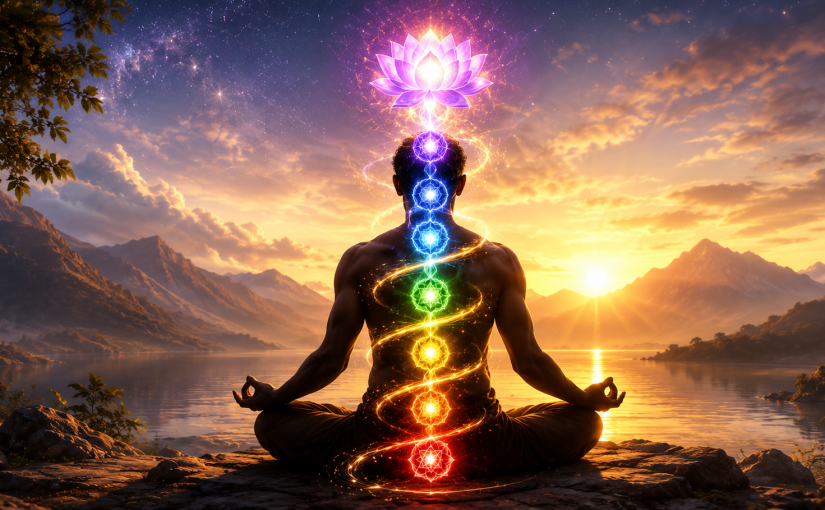
Gradually, an understanding began to emerge. It seemed that I was deeply enjoying the subtle energetic play itself. Prana continuously revolved in a loop between the muladhara and the sahasrara chakra. The movement never remained static. Instead, it flowed continuously, producing an extraordinary state of bliss. Although an ordinary observer might compare it with sexual pleasure because its energetic origin appeared to be near the muladhara, the actual experience was far more refined, subtle and spiritual. It was not ordinary sensual enjoyment but a deeply transformed form of bliss. The bliss appeared to originate in the muladhara while being experienced most profoundly in the sahasrara.

Because this circulation of prana remained continuous, the energy never completely settled. The mind remained associated with this subtle movement. Looking back, it appears that this constant motion itself prevented meditation from naturally settling into prolonged breathless absorption. Dynamic bliss and complete stillness were existing together, but the dynamic aspect remained dominant.

How the Meditation Image Changed the Nature of Bliss

Another important transformation gradually became evident. Throughout this period, the bliss became increasingly associated with my meditation image. This association slowly changed the quality of the experience itself. The meditation image was not merely an object of concentration. For me, it represented the nearest approach to pure self-awareness. As the connection between the meditation image and the bliss deepened through continuous practice, the bliss itself became more satisfying, more refined and more persistent.

It no longer appeared dependent solely upon the energetic circulation of prana. Instead, it seemed to mature into a subtler experience. However energetic circulation was responsible to make momentum that used to keep subtle bliss channels open for a day or two and thereafter needing further tantric pranic push. Since the meditation image pointed toward pure awareness, the bliss also felt progressively closer to what I perceived as the bliss of the Self. Whether one describes it as the bliss of self-awareness or simply a bliss associated with increasingly silent consciousness, the practical observation remained the same. The repeated connection made between meditation image and bliss or energy through specific advanced yoga practice transformed the character of the bliss itself.

Many contemplative traditions suggest that repeated association of attention with stillness gradually changes consciousness. Looking back, my own experience appears consistent with this understanding. The bliss became increasingly peaceful rather than merely ecstatic, increasingly satisfying rather than merely intense, and increasingly stable rather than dependent upon energetic excitement.

The Feeling of Invisible Guidance

One feature of this journey remains deeply meaningful to me. During those intense periods of practice, I repeatedly felt as though some invisible presence was inspiring me to continue allowing prana and bliss to revolve. I never consciously forced this process. Rather, it felt as if I was gently encouraged from within to continue until the energetic process naturally reached its highest point.

Eventually this period culminated in what I experienced as an awakening accompanied by a glimpse of self-realization. Whether this invisible inspiration represented divine grace, the inner Guru, the awakening of deeper intuition or simply the wisdom of the unconscious mind cannot be established objectively. Different traditions would explain it differently. What remains undeniable is the subjective experience itself—the strong feeling of being guided through an unfolding process that eventually coincided with a profound awakening glimpse.

Was My First Awakening in the Dream State Incomplete?

Looking back over the entire sequence, another possibility occasionally comes to mind. My very first awakening glimpse occurred during the dream state. Sometimes I wonder whether that experience represented only an initial opening rather than the completion of the entire process.

Perhaps the subsequent months of intense pranic circulation, refined bliss and continuous tantric practice were not separate events but a natural continuation of that original glimpse. It often feels as though the earlier awakening was gradually maturing until it became clearer and more integrated. Of course, this remains only my own interpretation. It is impossible to establish objectively whether the later experiences literally completed the earlier one. Nevertheless, the continuity between the two feels remarkably natural when viewed as one uninterrupted journey.

Why I Continued Tantric Practice Even After Awakening

An interesting aspect of my journey is that awakening itself did not bring my tantric practices to an immediate end. I simply continued because the process itself seemed unfinished. The energetic movement continued naturally, and I felt no reason to abandon it merely because an awakening glimpse had already occurred.

Only later did circumstances begin to change. Physiological difficulties gradually made it harder to continue the same intensity of tantric practice. Around the same period, another change appeared simultaneously. There arose a strong inner urgency to engage more actively with practical worldly responsibilities. It seemed that the same inner energy which had earlier expressed itself primarily through tantric practice gradually redirected itself toward ordinary work and worldly action.

Looking back, this did not feel like a loss of spirituality. Instead, it appeared as though the same energy had simply found another mode of expression. Rather than revolving continuously within the subtle body, it increasingly became available for practical activity, responsibility and service.

The Door to Kevala Kumbhaka Opened

This transition produced another remarkable change. As tantric energetic activity naturally reduced, the continuous turmoil and movement of prana also began to slow. With less energetic circulation occupying the system, a completely different quality of meditation started appearing.

For the first time, effortless breathless meditation, traditionally called kevala kumbhaka, began to establish itself naturally. Nothing was forced. Breathing simply became extraordinarily subtle and, at times, seemed to suspend by itself as meditation settled into profound stillness.

Looking back, it appears that the reduction of continuous pranic movement opened the doorway to this new phase. During the earlier tantric period, movement itself dominated the experience. During the later phase, stillness gradually became the dominant characteristic. Dynamic bliss slowly matured into silent absorption.

Although it cannot be objectively stated that the slowing of pranic movement directly caused kevala kumbhaka, the two repeatedly appeared together in my own experience. The practical relationship became increasingly obvious through repeated observation.

What I Observe Even Today

Even today I continue noticing the same relationship. Whenever worldly responsibilities increase, emotional involvement becomes stronger or pranic movement becomes highly active, effortless kevala kumbhaka becomes comparatively difficult to establish. It is as though the increased movement of energy keeps both mind and prana dynamically engaged, making complete stillness less accessible.

On the other hand, during peaceful days when emotional disturbances are minimal and worldly activity is comparatively lighter, the entire system settles much more easily. Prana naturally becomes quieter, meditation deepens effortlessly and kevala kumbhaka establishes itself without any deliberate attempt.

This repeated observation has become one of the clearest practical lessons of my own spiritual journey. Dynamic prana appears well suited for action, creativity and energetic transformation, whereas quieter prana seems to favour deep meditation, effortless stillness and spontaneous breath suspension. Rather than opposing each other, these two phases appear complementary. One represents movement; the other represents rest. One expresses energy; the other reveals silence. Both have their own place in the unfolding of practice.

A Personal Reflection on the Journey

Looking back over the entire journey, I no longer see these phases as separate events. The intense tantric circulation of prana, the refined bliss centred between muladhara and sahasrara, the gradual association of bliss with the meditation image, the mysterious feeling of inner guidance, the awakening glimpses, the possible continuation of an earlier dream-state awakening, the natural reduction of tantric practice, the redirection of energy toward worldly responsibilities and the effortless emergence of kevala kumbhaka now appear as different chapters of one continuous process.

Each phase seemed necessary for the next. The dynamic movement of prana refined the system. The meditation image transformed the quality of bliss. Worldly life unexpectedly helped reduce excessive energetic movement. That reduction allowed deeper stillness to emerge. Finally, breathless meditation became not something to be achieved but something that arose naturally when conditions became favourable.

This remains only the story of my own experience rather than a universal map for every practitioner. Yet it has taught me that spiritual development need not always proceed in a straight line. Sometimes intense movement prepares one for profound stillness. Sometimes bliss matures into peace. Sometimes the same inner energy that once expressed itself through powerful tantric experiences later expresses itself through ordinary work, quieter meditation and effortless awareness. For me, these have not been contradictory paths but successive expressions of the same unfolding spiritual journey.

My Journey Through Sharirvigyan Darshan, Tantric Kundalini, and Self-Realization

Friends, this is one of my favorite posts, deeply experiential in nature and reflective of my lifetime spiritual journey. Ever since I began exploring meditation, I noticed a subtle yet profound distinction between thought-based contemplation and the deeper, formless stillness of awareness. Raman Maharshi often said it is better to engage in neti-neti or non-dual contemplation, yet I realized that these experiences — as blissful as they were — were still transient. Nirvikalpa samadhi, on the other hand, creates chidakash or ekarnava, a stillness that abides for longer periods, whereas contemplation alone only gives fleeting glimpses.

Eventually, I understood that to sustain even the transient experiences of ekarnava, one has to embrace breathlessness. Before I experienced keval kumbhak, even after Kundalini awakening, self-realization, and non-dual awareness through sharirvigyan darshan, I could not fully comprehend thoughtless awareness. Yet I had immense bliss, rest, satisfaction, and a feeling of completeness — all connected to subtle thought. I realized that bliss and non-duality connected with thought could not reach the final state of fully thoughtlessness.

This led me to a subtle but important insight: after self-realization and Kundalini awakening, and even sharirvigyan darshan, one can attempt to reach breath stillness more quickly, because the ego is already weakened and the body-prana system more prepared. In the same way, Ramana Maharshi had cautioned against forceful breath control without inner maturity. He emphasized that natural keval kumbhak arises only when the mind and ego are ready. Forceful suppression might temporarily quiet thoughts, but it does not destroy the ego and can create strain or attachment.

In my observation, thought stillness slows the breath but does not stop it sufficiently or for long periods, whereas breath stillness immediately calms the mind and lasts longer. This is because thought is like waves on the lake’s surface — you can quiet them, but the lake still moves underneath. Breath, however, is like the spring feeding the lake: if the source of movement stops, the surface cannot ripple. This shows why prana stillness (keval kumbhak) is far more decisive for sustained thoughtless awareness.

Ramana Maharshi often said, “Mind and breath arise from the same source. To still one is to still the other.” Ego is the hidden source of both. When the ego weakens, prana settles naturally; when prana is still, the mind has no fuel for thought. In deep states, breath is the shadow of the ego. This simply means that in ordinary, laborious worldly activities, breath reflects not only the ego but also the need for oxygen. During deep meditation without ego, the breath itself fades, and awareness abides in pure stillness — the chidakash or ekarnava.

I noticed subtle variations in breath depending on ego orientation. Unequal inspiration and expiration reveal ego tendencies:

  • Longer inspiration reflects inward, self-centered attention.
  • Longer expiration reflects outward, world-centered attention.

This aligns with the ida–pingala–sushumna play in yogic physiology:

  • Ida (left, inward) → longer inhalation → self-absorption.
  • Pingala (right, outward) → longer exhalation → outer engagement.
  • Balance in breath → equilibrium between ida and pingala → sushumna activation → mind quiets → doorway to sustained stillness. That is why it is said that when breath flows equally through the left and right nostrils, dhyana becomes fixed quickly. This is because equal inhalation and exhalation balance each other, leading to a natural stillness of breath.
  • The up-and-down movements of the breath reflect both the vertical and left-right movements of Ida and Pingala: up for the left, down for the right. Actually, Ida Nadi feels more inclined toward inhalation or upward breath movement, while Pingala feels more inclined toward exhalation or downward breath movement.It is amazing. The left nostril activating Ida does create a subtle left-side dominance in energy, and right nostril activating Pingala creates right-side dominance.

Even a single complete breath moves awareness up and down: inhalation lifts consciousness inward or upward, exhalation spreads it outward or downward. Prolonged breathing keeps awareness oscillating. Only when prana rests in sushumna, in natural breathlessness, does awareness remain steady. Sushumna means that the breath is neither moving up nor down, but stays in the center; it is neither in the left nor the right, but centrally aligned—this corresponds to the breathless state, or Kevala Kumbhaka. Breathing through the left nostril brings the sensation of the breath moving through the left side of the body and more upward, and breathing through the right nostril brings the sensation of the breath passing through the right side and more downward. When there is no breathing, it is self understood that the breath is flowing neither through the left nor the right nostril, neither upward nor downward. When there is no left-right sensation, it is self-evident that the breath is central, along the midline of the body or through the backbone. The sensation also confirms this. Along with it, when there is no up-down movement in the breathless state, the breath is understood to be in the central line, precisely at the midpoint of that line. “No up-down movement” does not imply prana is physically fixed at the midpoint; it means prana is static along the central channel. Feeling it at the midpoint is a perceptual focus, not a literal physical location. It is amazing psychology and terminology, sometimes confusing too. At first, I used to think of Sushumna as a special type of heavenly breath, never imagining a breathless state for a living being, but my experience now shows otherwise. This is why destroying ego, reducing breath oscillations, and balancing breath are crucial. Ego is notorious in producing duality. Yet, with sharirvigyan darshan, the ego feels hurt — the body is revealed as a non-dual, ego-less and detached living system, not as “me,” and that hurt is purification, loosening the ego’s grip.

In a nutshell, Keval Kumbhak (breath stillness) and Sushumna breathing are synonymous. Both are highly praised in the scriptures and regarded as the direct doorway to liberation as well as the source of supernatural powers. Yet, liberation itself is the supreme power — beyond all others. Strictly speaking, Sushumna breathing (when ida and pingla flows are equal) prepares the ground and naturally matures into Keval Kumbhak, so the two are inseparably linked stages rather than exactly the same.

When breath flows equally through both nostrils, it shows that Idā and Piṅgalā are balanced and prāṇa is entering the Sushumnā, creating the right state for meditation; when this deepens, the breath may stop on its own without effort—this is Keval Kumbhak, the natural peak of Sushumnā flow where prāṇa is fully absorbed and the yogi rests in stillness.

The insight of sharirvigyan darshan was a turning point for me. I realized why I was drawn toward Tantric Kundalini Yoga after practising it consistently: in Tantra, contemplation or thinking, beautification, care, respect, and love toward the body are of prime importance—just as in Sharirvigyan Darshan—thus both complementing each other at both the physical and spiritual levels, leading to progressive development. It is another amazement. The cells of the body live without claiming doership of work or enjoyment, so why should I? This shook the ego profoundly, and freed prana or energy for meditation. Sharirvigyan darshan gave me a contemplative base — a rational, embodied insight — while Tantric Kundalini Yoga liberated my world-entangled energy, allowing me to offer it to the meditation image. This image, nourished by freed prana, awakened and became alive before me, not just a mental visualization. That living image led to glimpse of self-realization.

The sequence of my journey — Darshan → Energy Release → Image Awakening → Realization — mirrors the Tantric map of jñāna-śakti (knowledge), icchā-śakti (will), kriyā-śakti (action), and śakti (energy/awakening):

  1. Sharirvigyan darshan gave me knowledge.
  2. My choice to pursue Tantric Kundalini Yoga provided will. Although it originated itself through practice of sharirvigyan darshan. It is the most amazing part. In majority of scriptures, will is forced that seldom succeeds.
  3. The practice itself — offering energy to the meditation image — was action.
  4. The awakened image and glimpse of Self-realization was the manifested energy, śakti.

This phenomenon is interpreted differently in various traditions:

  • Tantra sees the image awakening as divine Shakti appearing in form, a sacred manifestation.
  • Advaita Vedānta regards it as a transitional phenomenon; the image is only a springboard — awareness turning inward leads to direct realization.
  • Yoga Sutras classify this as savitarka samadhi, where meditation on form (image) is energized and luminous, leading toward nirvitarka (formless stillness).

Had I pursued Tantric Kundalini Yoga alone, without sharirvigyan darshan, I could still have achieved realization with great difficulty and after prolonged practice, even getting none because favourable conditions do not sustain for long. Even after getting plainly, I would have missed the extraordinary bliss, creativity, and worldly play that arose naturally when freed energy flowed into the meditation image during normal worldly activities. This illustrates the difference between the nivṛtti-mārga (ascetic vertical path) and pravṛtti-mārga (world-affirming spiral path) of Tantra:

  • Nivṛtti: rapid, inward ascent, ego dissolves quickly, but world’s richness may feel muted. But failing it, one may feel astrayed forever.
  • Pravṛtti: spiral, celebratory ascent, energy sanctifies worldly life while also piercing into realization — what I experienced.

In my path, Sharirvigyan Darshan provided a non-dual type of insight, while Tantric Kundalini Yoga freed the energy bound to latent thoughts and impressions. This happened through two processes: carrying the non-duality of Sharirvigyan Darshan to its peak, and knocking out hidden mental activities. In this way, the last drop of available energy was extracted, with which the meditation image became alive by itself—just like drinking that very energy, similar to Goddess Kali drinking the bowl of blood—leading to glimpse of Self-realization. The world itself became part of the practice, joyous and meaningful, not something to escape. My experience beautifully combined both liberation and enjoyment, embodying the Tantric principle of bhoga-apavarga-samyoga — the union of divine enjoyment and liberation.

This journey shows that self-realization, energy mastery, and meditation image awakening can converge naturally when knowledge, will, and action align, and when the ego loosens its grip. Breath stillness (keval kumbhak) and mind stillness become inevitable outcomes, leading to sustained awareness, ekarnava, and chidakash, where thought, duality, and oscillation finally dissolve.

In essence:

  • Sharirvigyan darshan shook the ego and freed energy.
  • Tantric Kundalini Yoga harnessed that energy for inward ascent.
  • Meditation image became alive, serving as the doorway to realization.
  • Breath and ego gradually stabilized, leading toward sustained stillness.
  • The world became a stage for bliss, not a distraction.

My journey exemplifies a harmonious path where insight, energy, and practice converge, showing that the Self can be realized not only in withdrawal but also in full-bodied, joyful engagement with life.