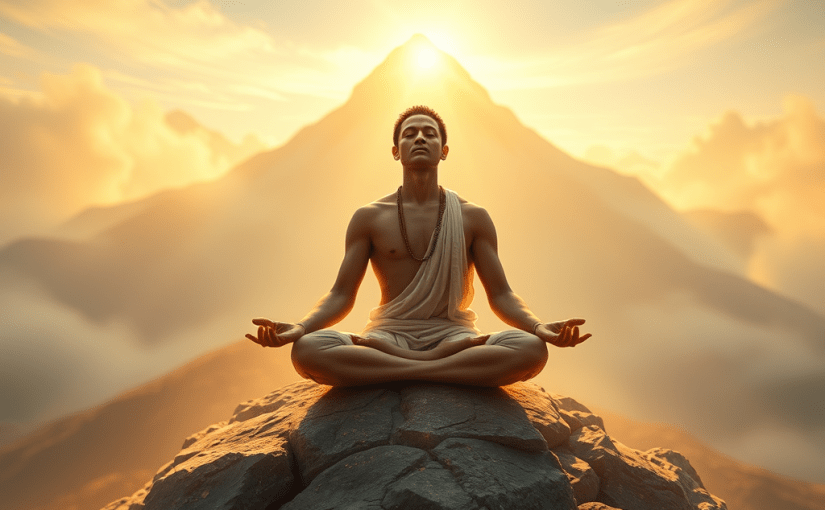
When Breath Dissolves: A Real Experience of Deep Dhyana, Prana Movement, and Silent Awakening

Sometimes I feel a quiet repentance for breaking my breathless Dhyana for small worldly reasons—like taking a meal. Yesterday evening, after many days, I found myself alone in perfect silence, almost like being in a forest retreat.

For the first hour, my breath was irregular, sometimes resembling Kapalbhati. It felt as though the Pranas were adjusting themselves, preparing for breathlessness. I broke this preparatory phase two or three times by standing up, changing asana, or making small neck movements. Once, I even went to the kitchen to check if my dinner had arrived. When the tiffin man called to say his scooty had broken down, I told him not to worry—I suddenly felt grateful, as this delay gifted me more time for Dhyana.

The Deepening Stillness

I sensed that my difficulty in entering Dhyana might be due to sitting in Padmasana, so I shifted to Vajrasana. To my amazement, within fifteen minutes, my breath began to calm and regulate on its own, and Dhyana deepened.

Because the state was still fragile, I remained extra alert—aware that even a slight movement or swallowing of kuf (phlegm) voluntarily could disturb it. As I allowed it to deepen, my legs slowly became numb. I tolerated it patiently and then changed posture to Sukhasana with utmost care, keeping awareness steady on breath and movements minimal. Interestingly, as blood returned to the legs, the Dhyana deepened further.

Soon, my neck began to stiffen. I gently alternated between left, right, and central positions, staying for a while at each position as per guidance of dhyana without losing awareness. This small movement stabilized the Dhyana even more.

The Movement of Prana

It felt as if imperceptible breathing currents were flowing through different chakras—sometimes at the rear Ajna, sometimes Vishuddhi, sometimes Anahata. Later, while in Siddhasana, subtle activity appeared even at Swadhisthana and Muladhara, though faintly. I couldn’t easily focus at the Navel Chakra, though a very slight alignment was felt there too. However, while trying dhyana later on after dinner, energy had seemed focusing more on naval chakra.

It felt as if a blissful yet mildly tired sensation was developing at certain chakras that needed attention. When I focused on that sensation during inhalation and exhalation, both breath and awareness seemed to converge there naturally.

During inhalation, as energy rose from that chakra, my attention simultaneously descended onto it—like the merging of Prana (upward force) and Apana (downward force). I realized this might be what ancient texts refer to as the union of Prana and Apana during deep Dhyana.

When I heard the tiffin man’s voice in the kitchen, I replied without seeing him—calmly, directly, without disturbance. There was still some very light mental activity, but it was stable and non-chaotic, like thoughts moving in slow motion and dissolving soon—either directly or after transforming into two or three subtle thoughts, often of the meditation image or Guru form.

The Silent Ocean Within

I started mental chanting of “Ekarnava,” connecting with the sense of the endless, wave-less cosmic ocean. The vibration of the mantra felt alive and meaningful.

Later, as I tired in sukhasana and again shifted to Siddhasana for grounding energy in the lower chakras, mild fatigue appeared in this asana too after sometime. The call of dinner tempted me to end the session. I finally rose, already grounded and centered, without losing worldly balance.

A subtle repentance followed: why didn’t I just change posture and raise the energy again, instead of ending the Dhyana altogether? Hunger had already faded due to the deep state, and I could have continued longer. But I accepted that perhaps the energy had already been sufficiently expended.

Dinner was light, taken without much appetite—very different from the earlier days when I felt strong hunger after immature Dhyana. It seemed as if the body’s energy for digestion had been diverted toward Dhyana.

Interestingly, I usually enter Dhyana more easily after meals, but this time, in an empty stomach, the state felt more genuine and spontaneous. Taking a meal may make energy forcefully downward and so calming breath and awareness just like artificially. After dinner, I couldn’t re-enter the state, perhaps because the accumulated Yoga Shakti had already expressed itself.

Short vs. Long Immersions

Many yogis say short, regular sittings are better than long, infrequent ones. Yet, occasional long immersions, supported by daily shorter Dhyana, have their unique benefits. This session reaffirmed that balance is key—neither suppression of the body’s needs nor indulgence in them.

That night, I also had faint dreams of talking with subtle beings or spirits—not vivid, and not much memorable but peaceful and meaningful in their own way.

Reflections

Looking back, I realized a few gentle truths:

  • Dhyana never truly breaks; it only shifts form.
  • Body needs are not obstacles, but part of the spiritual rhythm.
  • Repentance arises from attachment and ego; gratitude dissolves it.
  • The movement of Prana among chakras is self-guided, not to be forced.
  • After-effects like calm hunger or subtle dreams are natural signs of internal rebalancing.

A simple reminder arose within:

“Let what was revealed in stillness spread through movement also.”

Every act, even eating or walking, can then continue the same Dhyana in motion.
Riding Over Sleep

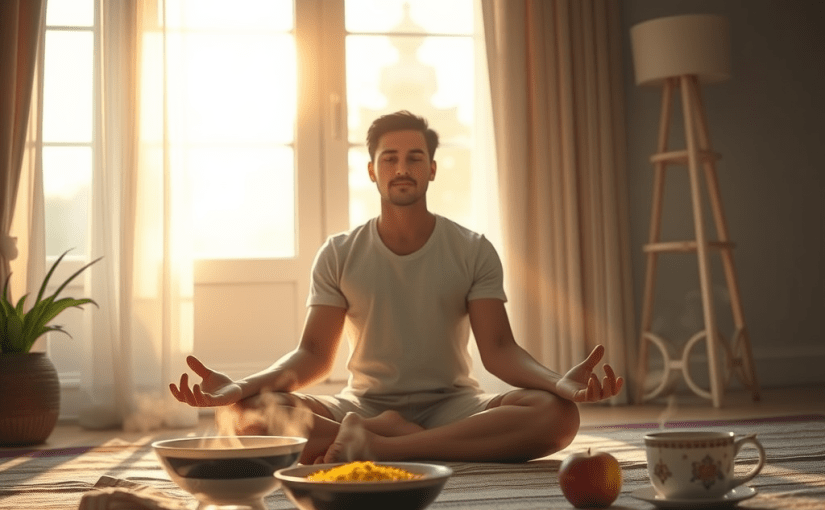
The very next day, my sleep broke at 2:30 a.m. I left the bed and sat on the ground in asana. The breath was agitated but not as rocket-like as the previous day. After trying for an hour, I did yogasana for the next half hour, followed by spinal breathing. Then I again tried dhyana for an hour — no success, though the witnessing of buried thoughts continued with a sense of bliss. But how can the mind be satisfied with that once it has tasted the deep breathless dhyana?

Afterwards, I ate a bowl of khichari, a ripe apple, and some herbal tea. However, the herbal tea, being strong, caused a little acidity, so I decided not to use it in a strong ratio in the future. Then I sat again for half an hour, but there was not much improvement. The morning light has grown outside. After that, I did chakra meditation on each chakra. A blissful yogic pressure arose, and I felt dhyana ripening. There was some throat obstruction, so I did jala neti. At various moments during the entire sitting since beginning, pranic energy was rushing upward.

Then deep dhyana launched — the breath became very shallow, and there was a partial entry into pure awareness. For a moment or two, the breath stopped completely, with total merging into pure awareness, but it was too transient. Suddenly, the face of a man seemingly practicing distorted tantra appeared with a strange, cursing expression—though silent, it felt as if he were speaking ill behind my back. This vision dislodged me from that dhyana despite my attempt to remain unaffected.

A new understanding emerged — Dictatorial control, even if positive in intent, should not be held in mind toward such selfstyle people. The amazing thing is that it becomes little bit difficult to reopen the pranic channels and flow energy inside them even after just a few days of yogic inactivity or worldly involvement, or both. Moreover, sexual energy had also been drained away to clean and freshly refill the reservoir. This, too, had slightly slowed the upward movement of energy. Truly, successful yoga depends on many positive contributing factors, not just one. Each factor adds gradually, culminating in a unified whole. Like bricks coming together to build a sturdy home, all these elements combine to create the full structure of yoga practice. Let us now pick up the formal yoga blog next.

Riding Over Sleep

There’s something I keep noticing — sleep and yoga feel almost the same sometimes. When I sit quietly, some people around me say I’m not meditating, just sitting and pretending while actually dozing off. They don’t know how thin that line really is.

In a jagrata, during an all-night bhajan or kirtan for Mata or Shiva, something similar happens. You ride on the wave of sleep instead of letting it swallow you. The body is tired, but you don’t collapse. You stay alert through music, rhythm, and devotion. Slowly the boundary between waking and sleep melts. If you manage to stay aware at that edge, you touch a state that feels like Nirvikalpa — awareness without thought, just stillness watching itself. However if one is highly tired, he may sleep too while sitting in meditation pose. Moreover, it is better to meditate at a sufficient distance from such kirtans; otherwise, the loudspeaker’s sound can be disturbing. However, it should still be faintly audible so that its sattvic vibrations can have an uplifting and purifying influence.

Spiritually it makes sense. The repetition of divine names and surrender quiets the usual noise of the mind. Consciousness stays bright though the body is dull. You hover right between wake and sleep — the thin doorway the scriptures call Turiya, the state behind waking, dream, and deep sleep.

Even physiologically it fits. Chanting soothes the nerves, slows the breath, and keeps you relaxed but awake. Sleep pressure builds, yet rhythm and emotion don’t let you slip into full sleep. The brain rests while awareness stands guard — a soft, glowing balance that scientists call a hypnagogic state, and yogis call bliss.

So yes, jagrata can really open that doorway if the inner condition is right. Not everyone reaches Nirvikalpa through it, but the path runs that way.

The Mandukya Upanishad describes this beautifully. It speaks of four states — waking (jagrat), dream (svapna), deep sleep (sushupti), and the fourth one, Turiya. The first three come and go, but Turiya stays untouched. When you are at that sleepy edge during bhajan yet remain aware, you are already brushing Turiya.

Yoga Vasistha echoes the same truth. Sage Vasistha tells Rama that a wise person “sleeps even while awake and is awake even while asleep.” It means a yogi’s awareness doesn’t blink, no matter what the body does. What ordinary people call rest becomes conscious rest for the yogi. The body may be half asleep, yet awareness shines quietly. This is Yoga Nidra or Jagrat Sushupti — wakeful deep sleep, the art of riding over sleep instead of sinking into it.

Now, look at it through the Kundalini–Tantra eye. The state between waking and sleep — jagrat sushupti sandhi — is where prana turns inward. Usually energy flows outward through senses. In sleep it withdraws, but awareness also fades. If, by mantra or kirtan or still meditation, awareness stays awake while energy turns inward, you catch the serpent of sleep consciously — that’s Kundalini entering Sushumna, the central channel. This edge is the real turiya-dwara, the doorway to the fourth state.

During long chanting or meditation, breath evens out, emotions settle, Ida and Pingala — the left and right flows — come into balance, and Sushumna opens. Energy that once fed thoughts now rises upward. When awareness is pure and surrendered, it merges into silent consciousness — Nirvikalpa-like stillness. When awareness wavers, it still brings a wave of bliss or devotion, though not full samadhi.

Tantra says nothing is to be rejected, not even sleep. “Whatever binds you can liberate you, when seen rightly.” Even sleepiness can help if you meet it consciously. At that edge, Muladhara energy melts upward, the Ajna and Sahasrara light up. A tired body with wakeful awareness is fertile ground for spontaneous samadhi. That’s why many saints reached awakening through music, love, and surrender rather than severe austerity — their prana rose gently, effortlessly.

If you learn to watch yourself at the point where waking becomes sleep and stay aware with devotion or mantra, that small passage turns royal — it takes you straight toward Turiya. Nothing to force, nothing to do, just don’t fall unconscious.

The same energy that pulls you into sleep can, when met with awareness, lift you into samadhi.

It all began from a simple feeling that yoga and sleep seem alike. Yet behind that simple resemblance hides a deep secret — both touch the same doorway. In jagrata or devotional wakefulness, sleep stops being an enemy. It becomes a wave to ride — one that can carry you beyond waking and dream into that luminous stillness where only awareness itself remains.

Keval Kumbhak, Prana–Apana Balance, and the Quantum Nature of Thoughts

There is a certain moment in deep meditation when the breath simply stops.
It is not forced. It is not held. It just… disappears.

This is keval kumbhak — a natural cessation of breath. For me, this happens when the up–down oscillations of pranic energy at a chakra slowly merge into a central still point. The wave’s amplitude reduces and reduces until it reaches zero.

In that zero point, I notice something striking — the mind is gone.
No thoughts, no images, no mental chatter. Just an absolute stillness.

Zero Amplitude – Zero Thoughts

While sitting in that state, it feels as if all mental activity has stopped. But thinking deeper, I realized: maybe the mind has not truly stopped existing. Maybe it is still active somewhere, just not where my awareness is looking.

When the amplitude of the pranic wave is at zero, my attention is also resting in that zero point. Thoughts may still be forming somewhere in the “mind-field”, but in this zone, they are simply not perceptible.

It’s like looking at a large movie screen but focusing on one tiny, blank center spot — all the action at the edges is still playing, but you don’t see it.

Breath Amplitude as the Thought Gateway

As I slowly come out of that deep point and start observing the breath’s movements again, I notice something:

The moment the breath-wave amplitude increases, thoughts start appearing. Small amplitude → few thoughts. Larger amplitude → more thoughts.

It’s as if the breath’s oscillation opens the gate for more of the mind-field to become visible. The breath amplitude acts like the size of a window — the bigger the opening, the more thoughts can pass into perception.

The Quantum Analogy

This reminded me of quantum wave mechanics.

In quantum theory, a particle’s probability of being found at a certain location depends on the amplitude of its wavefunction. Zero amplitude means zero probability — the particle simply won’t be found there. Means, the probability of finding a wavy quantum particle increases in direct proportion to its wave amplitude, with zero amplitude meaning zero probability.

My experience felt similar:

  • Mind = quantum particle
  • Thoughts = particle detections (collapses)
  • Breath/pranic amplitude = probability amplitude for perceiving thoughts

At zero amplitude (in keval kumbhak), the probability of detecting a thought is effectively zero in the zone of observation. When amplitude rises, the probability rises — thoughts appear.

Orch-OR Connection

Orch-OR (Orchestrated Objective Reduction), proposed by Hameroff and Penrose, suggests consciousness arises from quantum collapses in microtubules inside neurons.

In my case, I don’t think those collapses stop entirely in samadhi. Instead:

  • Collapses (thought formations) still happen in the mind-field.
  • But my awareness in deep meditation is focused on the zero-amplitude center, where no thoughts register.
  • When pranic amplitude grows, awareness spreads over a wider zone, catching more of these collapses as thoughts.

It’s a subtle but important difference:
The mind’s activity might still exist in potential form, but in samadhi, I am tuned into a region where it doesn’t show up.

The Practice-Based Side: Prana–Apana Tactics

In truth, this is not just a passive state that “happens” — it can also be reached deliberately through classical yogic techniques.
It involves balancing prana (upward-moving energy) and apana (downward-moving energy) in specific ways:

  • Making one dominant over the other
  • Reversing them — sending physical breath in one direction, mental breath (visualized energy) in the other
  • Colliding them so they meet at a chosen point in the body
  • Merging them completely into a single unified flow

The “mental breath” here is not literal air but the directed pranic flow in awareness. The “physical breath” is the actual inhalation/exhalation movement. These two can be made to work in opposite or complementary ways.

When they fully merge or balance, their oscillations cancel out, creating the still-point — the zero-amplitude zone I described earlier. That is where keval kumbhak naturally occurs, and thought perception drops to zero.

This is why it is hard to explain literally — without direct practice, the idea of “moving physical breath one way and mental breath the other way” sounds abstract. But in practice, it is as real and mechanical as adjusting two water streams so they meet perfectly.

Why This Feels Unique

I have read yoga texts, studied some Kashmir Shaivism, and explored modern quantum-consciousness theories.
Yoga speaks of chitta vritti nirodha (stilling the mind waves).
Kashmir Shaivism says vibration (spanda) never fully stops, but one can rest in the bindu (center).
Science says breath influences brain rhythms.
Orch-OR says quantum collapse underlies awareness.

But I have not come across anyone directly mapping breath/pranic amplitude to the probability of perceiving thoughts, using both lived yogic experience and quantum analogy.

This feels like my personal discovery — a bridge between keval kumbhak and quantum perception theory.

The Simple Takeaway

In keval kumbhak, the mind does not truly vanish — it simply becomes unobservable when awareness rests in the zero-amplitude point of the pranic wave.
As breath amplitude increases, the observable field expands, and thoughts return in proportion to that amplitude.

It is not about stopping the mind entirely; it is about where the lens of awareness is placed.

In the deepest stillness, the movie of the mind is still running somewhere — but I am looking at a blank spot in the center of the screen.

Harnessing Neti Neti for Deeper Meditation

Sometimes during dhyana (meditation), things don’t unfold as smoothly as we’d like. The breath may remain restless, the body refuses to settle, and the mind continues its habitual wandering. In such moments, the subtle movements of prana—the life force—seem to keep the system agitated. It’s as though the very thing that carries life within us also prevents us from fully resting in that silent space beyond all activity.

This is where the practice of mental chanting, especially neti neti, reveals its quiet power. “Not this, not this”—a simple phrase, yet profound in its effect. Mentally repeating it, not with strain but with sincerity, helps cut through the unnecessary. Every thought that arises, every feeling that pulls attention, every story or identity that surfaces—neti neti gently negates them. Not with violence, but with wisdom. Not this… not this…

I have come to see neti neti as a bridge—especially when keval kumbhak, the spontaneous suspension of breath, has not yet taken over. In those rare and beautiful moments when prana itself becomes still and the breath ceases naturally, no effort is needed. There is no gap to fill. The Self reveals itself effortlessly. Silence becomes solid. Awareness shines by itself, needing no reminder, no pointer.

But this depth is not always available. The body and mind often carry momentum. In such cases, neti neti becomes more than just a mantra—it becomes a companion. A whisper in the background reminding me of what I truly am not, so that what I truly am can gradually become clearer. When breath is not restful, when energy is still moving, the mind tends to seek content, to latch onto something—anything. This is where neti neti becomes a gentle replacement, a redirection away from identification, toward detachment, and eventually toward presence.

What’s unique about this practice is that it doesn’t demand that you believe anything. It doesn’t create a new identity. Instead, it un-builds. It dissolves. It peels away. It respects the structure of your being and only asks you to negate what is not permanent, not peaceful, not you.

Over time, I’ve noticed that chanting neti neti during dhyana not only helps quiet the mind, but also creates a subtle sense of inner space—like the difference between a cluttered room and one with just a mat and silence. This space doesn’t arrive by force. It unfolds gradually, like dawn. And when the space is finally there, awareness can relax into itself. Breath may still be moving, prana may still dance, but the grip of it weakens.

Of course, neti neti is not a mechanical technique. It is alive. It responds to sincerity, not repetition. When practiced with mindfulness and simplicity, it becomes a living pointer to the reality that is always here, just beneath the noise.

Whether prana is dancing or resting, whether the breath is moving or suspended—neti neti remains a quiet, humble companion on the path to the Self.

The Silent Secret After Yoga: Why Still Sitting Matters Most

Idol seems like a personification of pure awareness that’s conscious. It’s worshipped because it’s far superior to our limited consciousness. In amusement parks like rock gardens, various objects are also personified, but not worshipped — and that’s why, although we may feel bliss or amusement there, we don’t develop reverence or honor toward them. They don’t invoke that deep transformative respect in the intellect which leads toward spiritual evolution.
In this sense, everything is living if we keep all-pervading pure awareness in mind. It’s amazing that this pure awareness is fully satisfied with itself — forever. But attaining that inner state of pure self-satisfied awareness is not easy; it’s impossible without Kevala Kumbhaka — the spontaneous stilling of breath. Am I right?
People claiming to have attained Nirvikalpa Samadhi without Kevala Kumbhaka or stillness of breath are utterly lying — because even science doesn’t allow this. No breath-stopping means no mind-stopping, and if the mind hasn’t stopped, then pure awareness hasn’t truly dawned. Therefore, if someone like Ramana Maharshi attained Nirvikalpa without breath cessation, then it was either for a transient period or partial — but fully entering Nirvikalpa without breath stasis is impossible. Am I right?
It is a psychological fact — what we revere, honor, and love by heart, we become like that. So worshipping idols helps one become pure existence — like that which the idol represents. This is the same as the Law of Attraction. You attract what you focus on, align with, and love. In deep worship or contemplation, that which you love transforms you. Children loving their toys should be yogis in this sense — probably they get the bliss of pure existence by such innocent absorption.
It is largely true that Kevala Kumbhaka is not just a procedure — it’s a sign of nondual absorption. However, there may still be some technical methods to reach it directly to some level. In my experience, when a pranic tension builds up in the body — mainly in the head — after deep yoga exercises, simply sitting silently at the end of it leads to Kevala Kumbhaka. Those who rush into worldly activities immediately after yoga, without still sitting, unknowingly dissipate the very energy they’ve just awakened. Instead of allowing it to crystallize into Kevala Kumbhaka and blossom into pure self-awareness, they divert it outward — spending it on action, thought, and distraction. True yoga bears fruit only when movement ends and silence is honored. In that still sitting, the awakened energy turns inward and reveals itself as pure existence. But for this, one needs to rise at 4 am, because at least three hours are needed for all of this — including the final silent sitting.
Still, a persistent issue disturbs this: cough in the throat. It interferes with Kevala Kumbhaka intermittently. Especially when there’s Ayurvedic kapha or mucus — not necessarily thick, but it feels choking during Kevala Kumbhaka. There’s a repeated reflex to swallow it, even though it’s hardly sticky — and this reflex disturbs the inner stillness.
I eat three hours before bed in the evening. Can I eat rice then? Once, during weekly Bhagavatam Satsang in a cold hilly area, I used to eat two times — light vrata meals during the day and an early evening meal. The food was just normal — rice, sweets, pulses, vegetables — made commonly, but I took it lightly, with fewer spices. And I never felt kapha or mucus in day sadhana. In fact, I found sadhana during those days to be quite effective.
What can I conclude from that? That even in a cold, kapha-prone environment, when the food is simple, taken early, and in the right mindset — especially with vrata bhava (vow-consciousness) — there is no mucus buildup. There’s no interference with Kevala Kumbhaka, and inner absorption happens more effortlessly. That experience confirmed for me that timing, lightness, and mental purity are far more important than whether the food was traditionally ‘mucus-forming’. Even simple rice and sweet dishes didn’t harm sadhana when taken in moderation, in devotion, and with awareness.

Kevala Kumbhak, Sattvic Living, and Subtle Grace of Inner Absorption

During my spiritual journey, I started noticing something subtle yet powerful — how disturbances in the throat region directly affect the depth of meditation, especially Kevala Kumbhak, that natural state of breathless stillness that arises without any effort. I began understanding this through the lens of Ayurveda, particularly the tridosha theory — Vata, Pitta, and Kapha — and how they connect deeply with yogic experience.

I realized that Vata, especially when imbalanced in the form of Udana Vayu, tends to move upward from the stomach, which is similar to gastric acid rising to the throat — something we often call acid reflux. This upward movement disturbs not just digestion, but subtler pranic flows. When Pitta is high, it shows up as inflammation or heat in the throat due to that same acid. And when Kapha gets aggravated, it results in mucus build-up in the throat, which causes a heavy, blocked feeling. I’ve felt all these at different times — and all of them make it nearly impossible to enter Kevala Kumbhak or remain still for long in deep meditation. That mucus-type block in the throat is the most annoying for a yogi because it constantly brings you back to the body and disturbs inner silence.

That’s when I realized why Sattvic diet — light, clean, non-spicy, and non-oily food — is so strongly advised in yoga. Not just for health, but for inner stillness. This kind of diet is also part of traditional devotional practices like fasting or rituals. Once, I attended a seven-day religious ceremony, eating only light, fruit-based meals with other fasting devotees. To my surprise, my breath naturally slowed, and I effortlessly slipped into Kevala Kumbhak. I even experienced momentary glimpses of Nirvikalpa Samadhi — a deep, ego-free stillness that comes with great joy. It wasn’t planned; it simply happened repeatedly during those seven days. But on the last day, something changed. I got into a minor heated conversation, and my mental peace broke. That day, despite the same food and environment, I couldn’t enter that breathless stillness. It showed me that mental harmony is as important as diet. Even one small disturbance can disrupt the entire inner field.

Throughout the ceremony, I sat silently in asana, eyes closed, facing the priest. I was surrounded by mantra chanting, the ringing of bells, conches, incense, and devotional stories being narrated — all the sacred sounds of worship. But rather than distracting me, these sounds seemed to deepen my inner silence. I wasn’t paying attention to the words or trying to understand anything. My awareness was on the breath, drifting inward, letting stillness arise. Yet, I felt an immense joy, often deeper than those who were actively listening and thinking about the stories. That puzzled me at first. But then I realized — my conscious mind wasn’t involved, but my subconscious or deeper self was absorbing everything in the background. The sacred environment entered me not through effort but through presence.

I now see that in such devotional spaces, the sound vibrations are not mental distractions — they are like gentle waves that harmonize the subtle body. Because I was already inward, in pratyahara (sense withdrawal), these sacred sounds didn’t pull me outward. Instead, they stabilized me deeper, anchoring my breath into stillness. The presence of other peaceful, fasting, devotional people around me created a collective sattvic energy that supported my inner practice — even though I was not following the ritual mentally.

This showed me that true listening doesn’t always require effort. When the mind is quiet and the heart is receptive, the soul listens silently, and the fruit of devotion enters you effortlessly. It was like receiving grace through stillness, not through study. That’s probably why my joy felt deeper — there was no thinking, no effort — only being. This is where bhakti (devotion) and jnana (self-awareness) meet — not as separate paths, but as spontaneous states of grace.

Reflecting on all this, I realized that such a powerful experience can be gently recreated at home. You don’t need a temple crowd or full ceremony. I started planning experimenting with a home-based mini retreat — just one or two days of silent sattvic living, where I do the following:

  • Eat only fruit-based or boiled sattvic food, preferably in small quantities.
  • Play soft Bhagavatam katha, mantra chanting, or sacred music in the background.
  • Sit in a simple asana, eyes closed, and focus only on the breath.
  • Avoid all arguments, overthinking, or emotional disturbances for the day.
  • Stay away from screens, except for playing spiritual audio.

I call this my “Inward Listening Retreat.” It’s not about attending externally. It’s about resting inwardly while allowing sattvic vibrations to bathe the subtle body. Even a few hours like this brings the return of that Kevala Kumbhak and a soft taste of causeless joy. Sometimes, even without trying, I feel that my being is “listening” in the background, and something deeper is getting purified or uplifted.

These simple practices are not meant to chase samadhi, but to remove the inner disturbances that block the natural rising of bliss. It’s not a question of more effort — it’s a question of less friction. When the breath stops on its own, when the mind falls inward without force, when devotion touches you without words — that is the real grace of yoga.

Kunjal Kriya: The Morning Ritual for Gut Cleansing

I used to believe yoga always heals. But one thing kept bothering me. Every time I did yoga in the morning, even intense practices like Kunjal Kriya, Keval Kumbhak, or leg lifts, I felt good. No gas, no reflux, no acidity. Just clarity.

But when I did even light yoga later in the day, or even gentle breathing like Keval Kumbhak in the evening — it felt wrong. Sometimes I felt a gushing in the belly, sometimes acidity, sometimes a stuck sensation on the right side. I wondered: is it really the food? Or something deeper?

I tried Kunjal Kriya — where you drink lukewarm saline water on an empty stomach and voluntarily vomit it out. I vomited about 200-250 ml water out. I tried by rubbing two fingers on back of tongue and on glottis. Only it should be done few times otherwise inflammation or injury may happen to delicate oral mucosa. As much water expelled out that much is enough. Rest would have passed away to intestine from stomach. So it should be done within 5-7 minutes of drinking otherwise it srarts passing down to intestine. Keep head and chest down while vomiting. I think sitting on chair in bathroom and bending down from it would have been better. I did it calmly, and within an hour, I passed a half-liter watery stool also. My belly had a dull sensation on the right side, like something was clearing but not fully gone. That’s when I asked: is this my appendix? Is it normal?

The answer came in parts.

Understanding the Cleansing Chain Reaction

Kunjal doesn’t just clear your stomach — it stimulates your gut from top to bottom. That “gushing” feeling isn’t a problem. It’s the body saying, “Let me finish cleansing.” Sometimes the water travels downward, clears the intestines, and even triggers loose stool. It’s like a mini version of Shankh Prakshalana, the full gut wash, but done gently.

What’s more important is to wait before doing strong asanas after Kunjal. One should not do such asanas after Kunjal that press the belly. I did try a few light postures — like Bhujangasana, Balasana, Cat-Cow, and Uttanpadasana. I was careful. These movements gently encouraged the intestines to finish their work — and they did.

About two to three hours after Kunjal or Vaman, I ate a small cup of light moong dal khichdi. That was enough banana can also be eaten as it soothes the mucosal lining. It didn’t burden the system. It soothed the belly and brought balance. After kunjal, gut surface becomes raw and can be easily irretated with excessive and spicy food. Kunjal removes excess and rottening mucous, toxins etc. from stomach mucosa that helps vagus nerve getting healthy and correct signals for healthy digestion and git movements.

I also tried Jal Neti using a neti pot. It helped clear the nasal passages and stopped mucus from dripping into my throat from the sinuses. That alone made my breathing and head feel lighter.

But when I tried the same yoga later in the day — even hours after food — the belly resisted. That’s when I realized: it’s not the technique. It’s when and how I do it.

Why Does Morning Work But Not Evening?

In the early morning, the stomach is empty, nerves are calm, the system is rested. That’s when the vagus nerve — the long wire connecting brain to belly — is most balanced. That’s why cleansing feels natural then.

The vagus nerve is like a telephone line between the brain and gut. It is named ‘vagus’ because it wanders blindly or vaguely and covers almost the whole body. When the line is clear, signals flow smoothly. But if it’s overused or disturbed, miscommunication starts.

But later in the day, the same actions confuse the system. Even when no food is present, the body is digesting emotions, stress, or previous pranic actions. The vagus becomes sensitive. Even a soft technique like Keval Kumbhak, meant to be passive, can become slightly activating. Not because it’s forceful — but because timing and readiness matter. That’s why keval Kumbhak settles better on a fast or light meals day that’s often kept in religious rituals.

Simple Way to Understand the Body

Think of your body as a house with three workers.

The Upward Boy lives in the chest. He handles speech, burping, and vomiting. If he gets hyper, he throws acid upward. This is Udana prana.

The Middle Cook lives near the navel. He digests. If he’s disturbed, food remains half-done and creates discomfort. This is Samana prana.

The Downward Sweeper lives below the navel. He moves waste out. If he’s lazy or blocked, gas rises, and the Upward Boy panics. This is Apana prana.

Kunjal wakes them up in the morning gently. The Sweeper starts working, the Cook warms up, and the Boy upstairs stays calm.

But if you repeat the same actions when these workers are already busy, they get annoyed and over stimulated. The Boy gets jumpy. The Cook gets confused. The Sweeper hides. Then acid rises. Then breath feels off. Then your practice backfires.

I Also Worried: What If It’s My Appendix?

That dull right-side belly ache — I feared it could be appendix. But I learned: Kunjal can never cause appendicitis. However, if appendicitis was already silently forming, the cleansing may bring it into awareness. True appendix pain doesn’t shift or ease. It grows, becomes sharp, and brings fever or vomiting. What I had was likely trapped gas or water in the right colon — common after cleansing. It went away with rest, left-side lying, and warm ajwain water.

Appendix pain doesn’t shift or ease. It grows. If in doubt, yes — an ultrasound can help. But if symptoms are mild, shifting, and improving with posture, it’s usually not dangerous.

How to Sleep After Kunjal?

It’s best to sleep two to three hours after Kunjal not earlier, once belly settles. Although it’s voluntary. Best position is left-side, which helps drain residual water or gas from the right colon to the exit path. Avoid lying flat too soon. I rested on my left, and the body took care of itself.

So Can Kunjal Cure GERD?

Yes — if GERD is not caused by physical damage, but by habitual upward movement of energy, Kunjal can help reverse it. It clears mucus, resets reflexes, and re-teaches the stomach to behave.

But it has to be done:

  • In the early morning
  • On an empty belly
  • Not too often
  • And followed by rest and soft food

If overdone or mistimed, it can irritate the same vagus nerve it’s meant to soothe.

And What About Keval Kumbhak?

Yes — it’s supposed to be passive. A gentle pause in breath when the mind is still. But even that can subtly stir upward energy in sensitive people, especially outside morning.

If I try to “hold breath” or even mentally wait for silence, my system can misinterpret it as tension. The key is: let breath stop on its own. Don’t invite Keval. Let it come like sleep — naturally, humbly, without effort.

What Finally Made Sense

Probably the GERD wasn’t from food or a disease. It was a pranic imbalance, caused by wrong timing of practice. My morning body accepted everything. My evening body said no.

So now, I simply follow:

Do all active yoga, Kunjal, Agni Sara, or breathwork only in the morning. In the evening, I rest. I gargle. I lie on my left side. I do Brahmari. I don’t chase silence or Kumbhak. I let it come.

My GERD listens. My breath listens. And I listen to them in return.

This is yoga. Not of muscles or names. But of rhythm, surrender, and truth.

Let the Boy upstairs or udana prana stay quiet. Let the Cook or samana prana do his job. Let the Sweeper or apana prana walk in peace.

That’s all.

All Yoga Is One: From Karma to Hatha to Raja – My Real Experience

For International Yoga Day — by a Seeker


Starting Point

In my youth, I was healthy and mentally curious. After a certain experience, which I later understood was a transient Savikalpa Samadhi, a shimmering image of meditation stayed in my mind. That image remained alive for years and I used it for deep inner nourishment. With that energy, I studied, experimented, and shared spiritual knowledge with others.

At that time, I now feel, I could have gone into Keval Kumbhak and from there to Nirvikalpa Samadhi, if I had focused completely. The inner image was already guiding me. But I got involved in sharing, not settling.


Later Obstacles

Now at this stage of life, GERD, gastric pressure, and mucus buildup in the throat create interruptions in breath. Even if I don’t try to stop the breath, and just sit silently, the breath starts calming down on its own — but a reflex like engulfing mucus or a throat tickle brings breath back. This keeps disturbing the entry into Keval Kumbhak and the stillness needed for Nirvikalpa Samadhi. Though Kunjal is contraindicated in GERD, regular practice from early life may help prevent GERD from developing.

Similarly, Practicing knee-based asanas like Padmasana and Siddhasana from an early age helps keep the knees strong and healthy, preventing age-related weakness and pain that hinder maintaining prolonged asana as needed for nirvikalp samadhi.

This taught me that Hatha Yoga is not optional. It is necessary.


Misreading the Scriptures

In old texts of Hatha Yoga it is written:

“Hatha Yoga is fruitless without Raja Yoga.”

But that sentence has been misunderstood.

People took this to mean that Hatha Yoga is a separate, lower yoga, and Raja Yoga is a different, higher one.

But this is not true.

I now see that:

Hatha Yoga itself becomes Raja Yoga when it matures.

The so-called Raja Yoga — Dharana, Dhyana, Samadhi — arises automatically when the Hatha practices bring breath and body to perfect stillness. They are not two branches, but stages of one path.


Hatha Yoga Leads Honestly

Hatha Yoga is simple and honest.

When you do Shatkarma (cleansing), you can feel the result.
When you do asanas, you know if your spine is straight or not.
When breath slows, it is known directly.

There is no illusion.
There is no imagination.
And if Keval Kumbhak happens even briefly, there is nothing else to believe.

But in many “Raja Yoga” circles, people sit and try to meditate without preparing body and breath. Then they keep thinking they are meditating, but nothing goes on happening. Breath is disturbed. Body is stiff. Samadhi doesn’t happen.

That’s why I now feel:

Even only Hatha Yoga is better than only Raja Yoga.
Because Hatha Yoga eventually gives you real Raja Yoga anyway.


How Karma Yoga Comes First

Before Hatha, Karma Yoga helped me. But I didn’t realize it in words.

I used my own understanding of holographic reality and science based philosophy Sharirvigyan Darshan to approach life nondually.
This gave me a peaceful mind, a natural sense of surrender in action, and a body-breath rhythm that was already inward. I wasn’t reacting too much to success or failure. I stayed calm while doing duties.

Without knowing, this became Karma Yoga.

This helped my posture stay relaxed, and breath stay smooth, even in daily life. It became easier to move into stillness when I sat down for meditation or inner work.


So All These Yogas Are One Ladder

Now I see clearly:

  • Karma Yoga comes first — it calms you in action.
  • Hatha Yoga comes next — it prepares your body and breath.
  • Raja Yoga comes last — it happens on its own when stillness is perfect.

They are not three different paths.
They are one natural unfolding.


Today’s Confusion

Today, Yoga is divided:

  • Some do only asana as fitness.
  • Some do only meditation without body discipline.
  • Some talk only about philosophy.
    But all are incomplete alone.

That’s why many people don’t feel any deep transformation, even after years.

But I feel even if one does basic Karma Yoga and regular Hatha Yoga, stillness will come one day. Raja Yoga will not be needed as a separate practice — it will happen.


What I Suggest Now

For those who want real Yoga:

  • Don’t label the path.
  • Live peacefully with surrender (Karma Yoga will begin).
  • Practice weekly or daily Shatkarma, Asana, gentle Pranayama (Hatha will deepen).
  • Sit without forcing (Raja Yoga will arise).

Let the shimmering meditation image grow silently.
Let breath slow down naturally.

Let Yoga be one, not many.


Final Line

I no longer believe in separating Karma, Hatha, and Raja Yoga.
I feel now that all are steps of the same inner ladder.
I walked it, without planning, and it showed itself as one path.

If I could give one message on this International Yoga Day, it is:

Yoga is not about variety. Yoga is about unity — of body, breath, and awareness.

Everything else is support.


And lastly, don’t forget:
Yoga is the best job — it gives a salary of peace and bliss for limitless time, not like a physical job that pays only for a few decades, at most a hundred years.

Yoga is also the best family — it offers companionship of the Self for eternity, not just for a short human lifespan like a physical family.

✨ So let us all take an oath on this year’s International Yoga Day — to keep Yoga at the very top of our to-do list.
Not just for a day, but for a lifetime.

Yes, don’t forget – one yoga=one health.

Title: When the Image Fades — My Journey from Savikalpa to Keval Kumbhak

Some truths arrive late, not because we’re not ready, but because they ripen slowly, like fruit in quiet sun. I realized this only after nearly a decade had passed since my Kundalini awakening — what I now understand was the peak of Savikalpa Samadhi.

At the time, I didn’t label it. No guru told me what it was. No book explained it with certainty. The shimmering meditation image I saw between the eyebrows — so vibrant, so real — simply took over my inner world. It stayed for three years, alive and luminous, anchoring me in peace and silence.

But instead of sitting in caves or clinging to that image, I was pulled toward science, exploration, and spiritual experimentation. My mind became sharp, investigative, playful. The energy from that living image was used in thinking, writing, and sharing — not just selfish seeking. I felt compelled to distribute the fragrance I had found, even if the flower itself remained within.

It was only much later that I discovered the deeper significance of that image. The form that appears in Savikalpa Samadhi isn’t something to push past — it’s a doorway. But back then, I didn’t know. I was too busy spending the gold to polish silver — helping others while unknowingly stepping away from the source.

Even so, there was no regret. Those years of reflection and giving weren’t wasted. They were part of a different kind of sadhana — not inward withdrawal, but outward integration.

Still, the image faded. Slowly. Almost painfully. Like a friend moving to the background of a dream. I kept working. Kept serving. And then — just when the image had nearly vanished from my mental sky — something unexpected occurred.

For the first time, I experienced Keval Kumbhak — the breathless silence. Not forced, not imagined. It just happened. Not while meditating with an image. Not while reading. Just… happened. There was no breath, but no panic either. Just dead-still awareness. No object, no mantra, no concept.

And I began to understand.

The meditation image, though now dim, had prepared the path. It was like the rocket’s booster — discarded only after taking you high enough. Had I not lived with it for years, had it not nurtured every breath and thought, this breathless state would have been impossible, or at best unstable.

Now I see — Savikalpa was not a lower step. It was the womb. And the energy spent on helping others didn’t delay the process — it matured it. The mind had learned how to be quiet even while engaged. The ego had softened through giving. The ground was fertile.

Yes, maybe I missed the ideal timing for Nirvikalpa to bloom directly from Savikalpa. But I gained something else — the knowledge that silence and service can walk together.

Now, as Keval Kumbhak comes uninvited, I don’t seek, I don’t resist. I just stay open. The shimmering image may be faint, but its impression is eternal. It’s not about the picture anymore — it’s about the space it left behind.

And in that space, slowly, the formless reveals itself — not through effort, but through trust.

The Invisible Breath Behind Samadhi

In my recent meditation, I stumbled upon something subtle yet profound. I was in a state where breathing had nearly vanished — almost breathless on the outside, yet I felt an inner breathing through the spine. That familiar spinal flow of energy was alive and vibrant.

Curious, I did something simple: I closed both nostrils with my fingers, gently. And to my surprise, that inner spinal breathing stopped immediately. Just like that — the whole current was gone. It was as if some secret support had been pulled away.

This made one thing very clear to me: even in deep, almost breathless states, a tiny, invisible stream of air continues to move through the nostrils. We don’t feel it, we don’t hear it, but it’s there — quietly holding the pranic current together. That subtle breath, almost like a shadow, allows the inner energy to circulate and nourish the subtle body.

This changes how we see high states like Savikalpa Samadhi or even the edge of Nirvikalpa. We often think that in such states the breath must stop completely. But maybe that’s not entirely true. The outer breath might vanish, the chest may stay still, yet something subtler than breath remains — something that doesn’t disturb the silence but still sustains it.

It feels like the real trick isn’t to stop the breath forcefully, but to let it become so fine and quiet that it disappears from our awareness. Not that it vanishes in reality, but it crosses the boundary of perception. Life goes on — invisibly.

Yogic texts have hinted at this. They speak of a fourth kind of breathing, beyond inhaling and exhaling — where breath is neither held nor moving, yet the yogi lives untouched. I used to read those lines like poetry. But now I see their practicality. The body breathes without breathing.

This also helps explain something else I had noticed before: that Savikalpa Samadhi — where the mind is absorbed in a form or image — may be essential before Nirvikalpa. That image, when meditated upon steadily at the Ajna Chakra, becomes a stable base. Over time, the image dissolves, but the attention remains. When the image fades, and the mind stays absorbed without object, that’s when Nirvikalpa arises. But if the mind has no stable anchor to begin with, the transition is often shaky or short-lived.

So these two realizations feel connected: first, that breath must become subtle, not forcibly stopped. Second, that a subtle image at the brow center gives the mind just enough to hold onto until it naturally lets go.

Breath and attention — both become invisible before real Samadhi. And yet, both remain gently alive in the background. The key isn’t to destroy them. The key is to stop needing to feel them.

That’s the doorway.