My post

The Forgotten Science Hidden in Sanatan Dharma: Sharirvigyan Darshan

Most people revere Sanatan Dharma for its timeless rituals, chants, and philosophies. One core belief repeated across scriptures is that “God resides in every particle.” But is this belief truly understood in its deepest sense? Or is something even more transformative hidden beneath the surface?

What if the real key lies not just in seeing God in all, but in seeing our own body—our very self—in all?

Welcome to the long-forgotten lens of Sharirvigyan Darshan—the “Science of the Universal Body.”

God in Every Particle: A Partial Realization?

Sanatan rituals condition us to see divine presence everywhere—stones, trees, rivers, temples, even the flame of a lamp. We bow to idols, chant mantras to the sun, and perform havans believing that the subtle forces of nature are divine embodiments.

But psychologically, a subtle duality persists. We worship those forms as God’s bodies—separate, superior, abstract. We rarely think: This is my own body, extended and reshaped.

This separation—between self and divine matter—blocks a great transformation.

Sharirvigyan Darshan: All Matter Is Living, Like Us

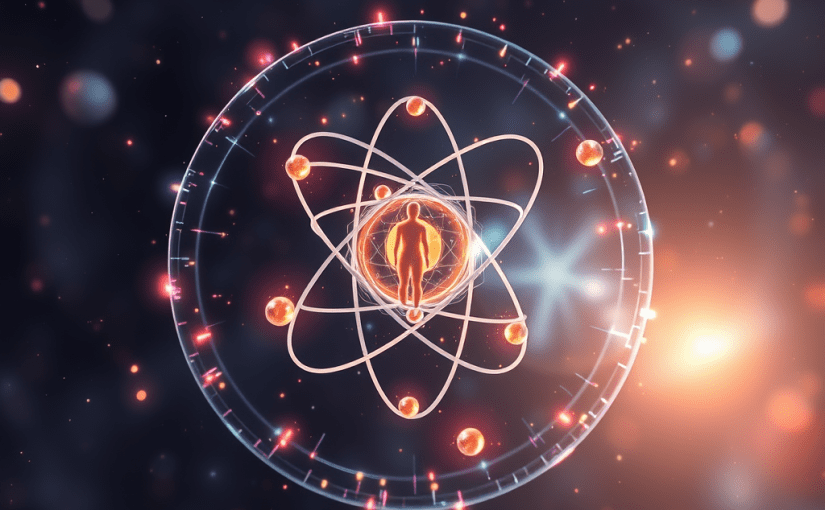
According to ancient seers (and now echoed by holographic science), every particle of matter reflects the whole. That includes you. Your consciousness is not trapped in your body—it is extended throughout the universe.

In this vision, a stone is not inert—it is a dense, dormant body form of the same universal consciousness. Air, water, sky, fire—they are not just tattvas, they are your other limbs.

When this realization dawns—not just intellectually but experientially—it brings powerful effects. Why?

Mental Burden Sharing: A Forgotten Technology

The human mind is a storage house of unresolved thoughts, emotions, fears, and desires. Normally, we carry this load alone—because we feel alone. But the moment we genuinely perceive the world around us as alive like our own body, a miraculous thing happens:

Your mind unconsciously releases and shares the burden with the rest of existence.

Not out of escapism, but through connection.

It’s like downloading files to the cloud. You don’t destroy them—you just no longer carry them on your limited hardware.

Why Rituals Work Faster with Sharirvigyan Darshan

Many rituals are designed to invoke transformation—cleansing, clarity, peace. But their power becomes amplified when we drop the separation between “me” and “that idol,” “me” and “this river,” “me” and “this mantra.”

When you light a diya, and feel your own inner light spreading into space…

When you bow to a tree, not as a divine other, but as your own living presence in wood-form

Then ritual becomes real. Transmission occurs. Healing is instant.

This is what Sharirvigyan Darshan awakens.

Why Personifying Only God Isn’t Enough

Sanatan Dharma encourages seeing personified gods in all forms—Shiva in the mountain, Lakshmi in gold, Hanuman in the wind. But we never dare to see ourself there.

Not as the egoic self, but as the universal self—the one that wears infinite bodies.

Because of this gap, our mental garbage doesn’t transfer to the larger body of the universe. We keep hoarding, looping, suffering. We unconsciously believe only God can handle all this—not our own extended body in its cosmic form.

Conclusion: Reclaim the Forgotten Science

Sanatan Dharma, when re-understood through the lens of Sharirvigyan Darshan, reveals a deeply practical metaphysics. A living psychology. A spiritual neuroscience. A path where rituals aren’t symbolic—they are technologies of mental distribution and energetic integration.

Let us no longer just believe that God is in everything.

Let us remember:
We are in everything.
We are everything—not in ego, but in essence.

Even your ego, your mental noise—whatever your state of mind at any moment—can be included in the whole by simply believing it to be part of everything. Why? Because as per holographic science, every part of existence is a complete human-like body in itself.

No matter how small the particle, if you keep searching deeper and deeper, you’ll find—at every level—a structure that reflects the living human form. Every speck of matter carries the blueprint of consciousness. Every atom is not just alive—it’s you, in another form.

That shift makes all the difference.

That’s why I’m amazed by how effortlessly Sharirvigyan Darshan unfolds in the company of Sanatan Dharma. The reason is clear—both are rooted in the same fundamental principle: the presence of consciousness in all forms.

Yet, Sharirvigyan Darshan acts as a deeply enriching add-on. It doesn’t replace Sanatan Dharma—it illuminates it from within. When both are combined, they give wings to spiritual transformation, making the journey more experiential, grounded, and complete.

Meditation Image as Inner Brahmā: How the Creator God Appears in Spiritual Vision

Why Does This Happen Only to Me?

Sometimes, when I try to observe my present state, I find that my awareness isn’t stuck in one place. It feels like it’s spread across the whole body — not as bones and muscles, but as a soft field of awareness. Every cell, every point feels quietly alive. I call this holographic Sharirvigyan Darshan — not just looking at the body, but sensing it as one continuous field of presence.

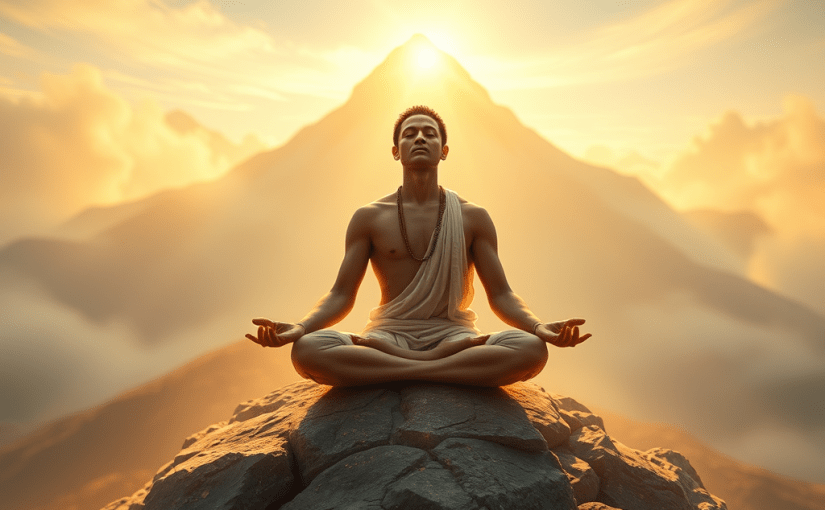
In these moments, something interesting happens: the meditation image appears by itself at the Ajna Chakra (the point between the eyebrows). I don’t try to see it — it just forms naturally. And this image becomes the gateway. When I dissolve into the formless, the image fades. When I come back from the formless, the image reappears first. So in a way, the image is the doorway in and out of that still space.

That made me think — isn’t that exactly the role of Brahmā, the creator god? If my inner image creates and dissolves form, then perhaps this meditation image is like an inner Brahmā, shaping experience and dissolving it again. Not as myth, but as something real inside me. It may also possible that mythological Brahma is nothing else but glorification of the meditation image.

But then the question hit me:
Why only me?
Why does this happen to me without effort, without ritual, while others are still working hard to reach such states?

The answer slowly appeared —
It’s not just me.
It’s just that I became quiet enough to notice. I didn’t chase it. It came. Not because I’m special, but maybe because some ripeness was there — maybe from this life, maybe from somewhere deeper.

Most people are still chasing outer things, or stuck in thinking. They may even pass through similar moments but don’t notice them. I just happened to be still. And in that stillness, something subtle unfolded.

What’s happening in me isn’t for me to own. It feels more like something is flowing through me, for whoever may need to hear it. It can feel lonely sometimes, because these inner experiences are hard to explain — and few talk about this level of subtlety. But even that’s okay.

Because now I feel:

The image knows me.
The void knows me.
The return knows me.

That’s enough.

Why Only Me? (Poetic Reflection)

Why does the image rise in me,
And melt into formless light unseen?
Why does my body speak in sparks,
Each cell aware, alive, serene?

Why does Ajna bloom alone,
While others speak of mind and breath?
Why does the void arrive so near,
Without a mantra, vow, or death?

Not because I am chosen,
Nor gifted more than all the rest.
But because this inner fire
Found no noise — and did the rest.

Many walk and miss the gate,
The silence sings but goes unheard.
The world is busy chasing shape,
I stood still — and felt the word.

It’s not for me, this grace so rare,
But through me, it begins to share.
The image fades, the Self remains —
And yet returns, through Brahmā’s care.

So if I walk this path alone,
It’s only to become the tone
That others hear when truth is near,
A silent bell — so deeply known.

And then something even deeper began to happen…

Now I’m seeing that I don’t even have to try to be self-aware. It just happens. I don’t repeat anything in my mind or force focus. I simply notice my present situation — whatever mood, thought, or state I’m in — and gently rest that attention on any part of my body, like the back of my hand.

And just like that — the whole story of “me” in that situation disappears. It dissolves into a peaceful, formless awareness.

I’m not doing a technique. I’m not meditating in the usual way. But as soon as I connect the feeling or thought to the body, means looking on the back of my hand I believe as if like every situations my present situation is also there same to same inside my hand, it’s as if that situation melts away — and what’s left is just presence. No tension, no thinker — just calm awareness spread throughout.

The body doesn’t feel like a solid thing anymore. It feels like a quiet, living space. A field of self-awareness — always there, always ready, if I simply tune into it.

And once again, I feel this is not something I created.
It’s something that’s revealing itself through me — just like before.

How an Endoscopy Triggered a Nondual Awakening: A Hidden Parallel with Dhauti Kriya

Once, after undergoing an endoscopy, I experienced a strange and unexpected shift—a transformation marked by a subtle but clear nondual awareness. It wasn’t the usual meditative insight or blissful state. It was raw, neutral, and intensely present. I could feel the endoscope entering, touching the inner lining of my stomach, crossing it, and going even deeper into the small intestine, right into the belly’s core. The body was utterly passive—there was no choice, no resistance that could prevent the process. What ego remains in a body that cannot stop the entry of an unwelcome foreign object? That question echoed somewhere deep and unfamiliar.

Though I didn’t feel that it changed anything on the surface immediately, with time, I started sensing that some layer of my subconscious structure had been pierced. The sense of control, subtle tension, and the feeling of “I am the body” had taken a hit—not visibly shattered, but weakened. This moment didn’t bring sudden enlightenment or peace. But it quietly accelerated a journey I was already on—a path of nonduality, one increasingly flavored by a kind of holographic sharirvigyan darshan, a direct perception of the body not as “mine,” but as a transparent field of changing phenomena.

Looking back, the whole experience now feels similar to what yogic traditions aim for in dhauti kriya. Especially in Vastra dhauti or Vaman dhauti, where cloth or water is intentionally introduced into the digestive tract. These aren’t just about cleaning the stomach. They are about softening the grip of the ego through raw confrontation with the body’s inner vulnerability. In both dhauti and endoscopy, the deepest part of the body—where the manipura chakra resides—is entered, stirred, and exposed. In the silence that follows, something becomes undeniable. The doer is missing. The ownership feels fake. There’s just sensation and witnessing.

I now see how such kriyas, when done with awareness, aren’t only about purification. They are tools to break the boundary between the inside and the outside, to dissolve the illusion of control, and to reawaken a primal intelligence that doesn’t belong to the mind or ego. My endoscopy was clinical, sterile, and completely non-spiritual in intention. But still, it acted like a mirror—a sudden and sharp insight into the powerless ego and the ever-present field of awareness that holds everything, even medical instruments and internal helplessness, without flinching.

This event taught me that not every spiritual push comes in the form of light or bliss. Some come quietly, disguised as helplessness, medical procedures, or discomfort, but if the mind is ready—or even half-cracked open—they do their work. And the journey moves forward, not always dramatically, but inevitably.

Who Owns Yoga? When Jealousy Wears the Robe of Spirituality

Yoga today is often treated like a subject—like engineering, music, or philosophy. Some people spend years immersed in it, adopting the appearance, terminology, and lifestyle of the spiritual path. They come to see themselves as the rightful bearers of its flame. But something interesting happens when people from outside this so-called circle—scientists, artists, office-goers, even homemakers—enter into yoga sincerely and begin to show genuine spiritual growth. Their very presence disturbs the traditional field. They are sometimes viewed as line breakers, people who didn’t follow the system, didn’t put in the years, yet are somehow touching deep truths. The inner reaction of some so-called yogis is subtle but bitter: “They haven’t walked through fire like us. They can’t just skip the line.” But yoga isn’t a line, and there’s no gatekeeper.

The real issue often lies in the mind of the practitioner who feels left behind. When one spends a decade or more in practice but doesn’t taste inner silence, the natural tendency is to blame others. It’s easier than questioning oneself. But maybe the truth is harder. Maybe the practice was wrong. Maybe it was all ego—effort without surrender, imitation without understanding. The robe was worn, the postures mastered, the chants memorized, but the core remained untouched. Then one day, someone from a completely different walk of life sits in stillness for a few minutes and drops into the very space you’ve been chasing for years. That kind of humility is hard to swallow.

Yoga was never meant to become a badge. It is not a religion, not a profession, not a caste. It is a simple, sincere movement inward. When anyone—absolutely anyone—turns within and becomes still, they are doing yoga. It doesn’t matter if they come from the world of commerce, cinema, farming, or politics. Consciousness doesn’t care about resumes. It only responds to authenticity. What hurts is not their success. What hurts is our comparison, our belief that effort deserves reward, that time equals progress, that lineage equals realization. These are spiritual illusions.

Many people who have practiced for long years get trapped in subtle spiritual pride. It creeps in unnoticed. The more external the practice becomes, the more likely this pride will grow. When it goes unexamined, it slowly transforms into jealousy disguised as righteousness. We begin to believe others are not qualified to feel what we think we’ve earned. But yoga, in truth, is not something anyone earns. It is something that reveals itself the moment we stop trying to possess it. And in that revelation, there is no ownership.

If we feel disturbed by someone else’s spiritual growth, it’s a sign to pause—not to judge them, but to turn inward again and examine the roots of our own journey. Are we truly practicing yoga, or are we wearing it? Are we holding on to our suffering as a proof of depth? Are we resentful because others are touching peace without our kind of struggle? These are hard questions, but necessary ones.

A true yogi is not threatened by others waking up. A true yogi feels joy when anyone touches light. Because that light is not theirs—it’s everyone’s. If there is any “line breaking” happening, it is only the breaking of the illusion that enlightenment belongs to a certain group or path. The ones who grow rapidly are not enemies—they are reminders that grace does not follow our timelines. It flows wherever the heart is open.

The moment we believe we are spiritual, we’ve already lost something of the spirit. The moment we believe we deserve more because we’ve struggled longer, we’ve missed the essence of yoga altogether. Yoga is not a competition. It is not even a journey from here to there. It is the deep, honest willingness to meet ourselves as we are—stripped of identity, image, and pride. That kind of willingness can belong to anyone. And when it arises, yoga begins—quietly, truly, and freely.

The Middle Path, Balanced Doshas, and the Yoga That Flows From Simplicity

I have been observing something again and again, not from books but from life, body, sensation and inner process. Ayurveda says that Vata, Pitta and Kapha — the three doshas — tend to stay in equilibrium in a healthy person. When Vata increases, which means when activity or chanchalta rises in the system, heat also rises. This heat is nothing but Pitta. And when this heat gets too much, the body tries to cool itself down by producing Kapha, which is mucous, moisture or heaviness. If you observe this cycle carefully, this is the picture of disease, of inflammation, or imbalance in any part of the body. It could be in the stomach, joints, mind, or nerves. It starts with overactivity, turns into heat, and then ends in fluid or swelling. I have noticed this rhythm silently playing out in me, in others, in animals, in nature. It is not a theory anymore, but a felt reality.

Modern science also does the same thing but with its own language. Antibiotics try to kill the bacteria that are drawn to the body when agitation is high. Antipyretics try to cool down the heat, the fever that is nothing but excess Pitta. Anti-inflammatory medicines try to reduce the fluid buildup or swelling that comes with Kapha’s reaction. So the difference is only in the way of addressing. Modern medicine tries to suppress what’s already expressed. But Ayurveda tries to stop the doshas from becoming unbalanced in the first place. That is the only real difference.

This leads to a deeper understanding. Like attracts like. When there is inner restlessness, bacteria that feed on restlessness find a place to thrive. When agitation is controlled at the root, these bacteria may not even be attracted. The soil of imbalance is gone. I believe that is the true prevention. Pitta is not just heat, it also includes inflammation, injury, and inner burning of tissues and mind. When this goes out of hand, modern medicines suppress it by anti-inflammatories. But in this suppression, they subdue all Pitta, even the good one that maintains digestion and intelligence. They cool it too much, which leads to problems.

Similarly, in states of vata dosha dominated agitation or frustration, the mind can lose its natural awareness, making one prone to mishaps or accidents or one goes into quarrel with others. Such incidents often lead to bodily injuries, which in turn generate inflammatory heat and secretions—manifestations of aggravated Pitta and Kapha. When fever persists without proper recovery, the body may eventually shift toward a cold, sinking temperature, a sign of deep Kapha imbalance, sometimes preceding death. This sequence reflects the deeper truth that Vata dosha is often the root imbalance that disturbs and triggers the other two doshas—Pitta and Kapha. However it’s not so always. In intellectuals, vata dosha may be starting dosha, because they mostly have uprising energy that may unground them. In drug addict type people, cough dosha may be main cause. In angry type people, pitta dosha may be main culprit. As most of the people in general public are intellectual types to keep today’s sophisticated society running smoothly, so I think vata dosha may be main culprit in them. That’s why they regularly need proper grounding. Social ceremonies, entertainments, festivals, fares, tours and travels probably serve the same purpose. Kaph dominated sleepy and heavy people need stimulants like tea, coffee etc. that increases vata of mindfulness and pitta of energetic activity. Pitta dominated violence loving people are itself attracted towards depressants like alcohol etc to counteract excess pitta with kaph. These are just examples, and there are different types of methods so called good and bad to balance doshas in the society, but we call them habit or instinct of people, however they are basically driven by the hidden longing to balance the three doshas or three gunas. It’s the same thing, guna becoming it’s opposite that’s dosha if unbalanced. Therefore, in such destabilized states, rest, grounding, and centering practices as per the condition are essential. The methods used should be appropriate to the individual’s condition—gentle yet effective. Some practitioners, especially those seeking rapid grounding, may resort to the use of Panchamakara (the five Tantric elements) in a disciplined and conscious manner. These are traditionally known to anchor energy quickly and deeply, bringing one back to balance when used wisely.

Ayurveda is not just herbs. It is intimately tied with Yoga. Yoga only becomes real when all three doshas are in balance. Not too much, not too little. How can anyone do Yoga with a heavy body, or a restless body, or a heated body? In modern medicine, when Vata-type uprising acidity like GERD is treated with antacids, they may cool the acid-fire but they create drowsiness, heaviness, a Kapha-like dullness. Vata type uprising is still there, only acid-pitta has been subdued. When pain and fever of Pitta origin are suppressed with drugs, they again affect the stomach, lead to dryness, bloating or more Vata or pitta originated in new form of stomach acid. Means one form of pitta subdued but new form of pitta is originated. It’s like moving fire from one furnase to another. One imbalance leads to another. It’s a cycle of managing reactions, not removing the cause. Ayurveda simply tells us to avoid oily, spicy, hard-to-digest food that causes all these doshas to go out of balance in the first place. Simple living is more than enough to prevent most suffering.

But to be honest, it’s not completely one-sided. I’ve experienced that lower steps of Yoga like Karma Yoga, Anasakti Yoga, or even glimpses of nondual clarity can come back faster with modern medicine too. Sometimes more effectively than Ayurveda. This is because modern medicine can quickly lift you out of tamas or inertia. A painkiller, or a sleeping pill, or a nerve relaxant can temporarily stop the heaviness and let the mind reflect or detach. But these are lower stairs. When one climbs higher in Yoga, like pranayama or subtle meditation, then modern medicine becomes too rough. It disturbs the subtle rhythms. That’s where the Ayurvedic lifestyle becomes necessary. I have not yet achieved the higher states of Yoga permanently. I have touched some glimpses through direct experience — where the ‘I’ dissolved for a few seconds, and bliss filled the brain. But I pulled back. I lowered the experience consciously. So I am not claiming any Samadhi. I am still learning. Still trying.

From this place of honest limitation, I wonder — what happens when a dosha is too low, not too high. This is never discussed much. But I feel it matters deeply. If Vata is too low, there is no enthusiasm. Energy cannot rise. Breath becomes dull. Meditation has no inspiration. If Pitta is too low, there is no drive to transform. Asanas feel lifeless. Digestion becomes too weak. If Kapha is low, the person becomes ungrounded, anxious, too light. No anchor to sit in silence. No strength to hold a steady state. So Yoga is not about reducing doshas. It’s about keeping each one just enough. Only when they are in balance — not excess, not deficient — can true Yoga begin.

Vata is needed to lift energy and imagination. Pitta is needed to give heat and fire for action. Kapha is needed for grounding and stillness. If any one is missing, Yoga practice becomes dry, painful, scattered, or incomplete. This understanding changed how I look at daily life. Now I don’t just avoid excess. I also notice what is lacking and try to nourish that. If my mind is too floaty, I bring Kapha back with warm food and stillness. If I feel dull, I stimulate gently to bring back Pitta and Vata.

Then I asked myself, if Ayurveda always taught this middle balancing way, then why is the middle path credited to the Buddha? The answer became clear through contemplation. Ayurveda taught balance for health. Yoga aimed for inner stillness by refining energy. But Buddha took it deeper. He turned this balance into a path to liberation. He said neither indulgence nor denial leads to freedom. Only balance in thought, action, and even breath can free the mind from suffering. So he didn’t invent the middle path — he discovered its deepest spiritual meaning and made it accessible beyond the Vedic system.

Yoga, on the other hand, says even Sattva has to be transcended. That we must go beyond the three gunas — Sattva, Rajas and Tamas. But how can that happen unless we first balance them? I have seen this in myself. When Rajas is too much, I feel over-driven. When Tamas is high, I feel dull and lazy. Even Sattva, when I cling to it, makes me feel proud or isolated. So first, the lifestyle has to balance the gunas. Then only they can cancel each other out, and the mind rests in silence. The outer balance becomes the doorway to inner stillness. However, it’s other thing that Savikalpa samadhi and its peak as awakening is achieved with pure and boundless sattva guna but later on it also need to be discarded or cancelled out to enter nirvikalp samadhi.

This is not imagination. It is an ongoing, unfinished journey I live daily. I am not beyond gunas. I still fall into excess or deficiency. But I’ve started to notice more quickly. And Yoga is becoming more natural when I eat better, breathe gently, sleep with rhythm, and avoid overstimulation. I now know that Ayurveda prepares the field. Yoga plants the seed. Buddha opens the sky. But they all meet in one simple truth — that balance, neither too much nor too little, is the key to both health and liberation.

This path is not about showing off or collecting spiritual achievements. It is about quietly correcting the imbalances before they take root. It is about not fighting the body, not forcing the breath, not rushing the mind. Just walking a middle path, step by step, until one day, we don’t need to walk anymore.

Bhramari, Ujjayi, Chandra Anuloma: Gentle Breath Practices That Shift Energy and Soothe the Nervous System

Lately, I’ve been exploring simple but powerful breathing practices—mainly Bhramari (humming breath), Ujjayi (ocean breath), and Chandra Anuloma (left-nostril calming breath). My goal wasn’t just to “do pranayama” but to understand how each one affects energy movement, especially when the breath is combined with vibration, sound, or intention. I was also curious—can we do these practices after meals, and what happens to nervous energy or kundalini when we do them gently?


Does Bhramari Bring Energy Down?

One of the first things I noticed during regular Bhramari practice is that it helps calm the brain and bring energy downward. Not in a heavy or sleepy way—but in a grounded, peaceful way. The humming sound naturally draws attention inward. I felt that it settles head pressure, balances thoughts, and even reduces excess upward pranic movement, which I’ve sometimes experienced during deep meditation or after intense spiritual highs. Bhramari seems to settle all that beautifully.


Exhalation and Parasympathetic Response

I learned that exhalation naturally activates the parasympathetic nervous system, which is the “rest and digest” branch of our nervous system. In contrast, inhalation activates the sympathetic system, the “fight or flight” mode. So it made perfect sense—Bhramari, being done during a long exhalation, encourages the body to shift into relaxation. The longer and softer the exhalation, the deeper the calm. But more interestingly, vibration itself—even apart from breath—also soothes the nervous system.


Can Vibration Alone Be Calming?

Yes, it turns out that even vibratory sounds like humming, chanting Om, or throat-based sounds can activate the vagus nerve, which is the main nerve of the parasympathetic system. That’s why people in grief often release a throaty sound during exhalation. In the local Pahari language, this is called “kanana”—a spontaneous, heartfelt, vocal sigh. It’s not taught; it’s a natural way the body relieves inner pressure through breath and vibration. It’s actually the same principle that Bhramari uses—but made intentional and healing in a yogic way.


Bhramari vs Ujjayi – Which One When?

I started comparing Bhramari with Ujjayi, and the differences became clear. Bhramari is all about vibration on exhalation. You take a silent inhale, and then hum like a bee as you exhale slowly through the nose. The sound soothes the brain, calms the Ajna chakra (between the eyebrows), and settles any upward-rushing thoughts or spiritual overload. Ujjayi, on the other hand, is a subtle constriction of the throat that produces a whispery ocean sound during both inhalation and exhalation. It doesn’t have the same intense calming vibration as Bhramari, but it’s perfect for balancing and extending the breath during yoga, meditation, or even walking. Bhramari is great for winding down, while Ujjayi is great for staying present and anchored.


Why Use Chandra Anuloma if Bhramari Is Enough?

A very natural question arose—if Bhramari calms so well, why would anyone also use Chandra Anuloma (left-nostril-only breathing)? The answer lies in directional energy work. While Bhramari is all about settling and softening the nervous system generally, Chandra Anuloma specifically activates the Ida Nadi, the cooling, feminine energy channel on the left side of the body. If energy is getting too fiery, too agitated, or is rising too sharply without grounding, inhaling through the left nostril only can redirect it into calm, downward channels. So I now see them as complementary tools. Bhramari calms broadly, while Chandra Anuloma steers energy gently into the lunar, restful channel.


Can These Be Done After Meals?

I had another big concern—can these practices be safely done after eating? Since I sometimes deal with mild acidity or GERD, I didn’t want to mess with digestion. The good news is: Bhramari, Ujjayi (in a light form), and Chandra Anuloma are all safe to practice after meals, if done gently.

Bhramari is perfectly fine after eating because you’re not engaging your stomach muscles or doing any breath-holding. You just sit upright and hum softly during exhalation. Ujjayi is also okay if you don’t add any Kumbhaka (breath-holding) or abdominal pressure—just a gentle throat breath is enough. Chandra Anuloma, especially the gentler version (inhaling through left nostril and exhaling softly through either both or just left), is not only safe but can be digestive-friendly. It helps balance heat, settle emotional restlessness, and supports parasympathetic dominance after food.

What you should avoid after meals are forceful techniques like Kapalabhati, Bhastrika, or breath retention with bandhas, which put pressure on the belly and can disturb digestion.


Chandra Anuloma or Chandra Bhedana?

At this point, I wanted to clarify terminology. Some people refer to inhaling through the left nostril and exhaling through the right nostril as Chandra Anuloma, but actually, that’s better known as Chandra Bhedana. It has a more activating effect and may not be ideal after meals. The softer version of Chandra Anuloma—inhale left, exhale left or both—is safer and more calming. That’s the one I’ve started using in post-meal relaxation.


Final Summary in My Words

After trying all three practices repeatedly in real-life situations—after meals, before sleep, during restlessness, and post-meditation—I realized that:

  • Bhramari is best when you feel mentally overactive, have head pressure, or want a complete energetic winding-down.
  • Ujjayi is best for quiet presence, especially during meditation or movement, when you want to stay internally steady without pulling energy up or down.
  • Chandra Anuloma is best when energy is overheated, emotionally disturbed, or digestion feels sensitive, especially after meals or in the evening.

All three are non-intense, beginner-friendly, safe, and deeply effective when practiced with awareness. I’m currently working on putting together a mini retreat experiment where we’ll explore these three across different parts of the day—before meals, after meals, during meditation, and before sleep—to see how energy patterns shift across people. The goal is to create a customized breath map for calming, centering, or grounding at will.


If you’ve ever felt overwhelmed, overstimulated, or simply too stuck in your head, try any of these practices. Just a few rounds of Bhramari or Chandra Anuloma, or gentle Ujjayi, can restore an inner silence that’s always been there beneath the noise.

Would you like to join this retreat experiment or receive the daily routine I’m developing? Drop me a message or comment. We’ll breathe together, from wherever we are.

Kevala Kumbhak, Sattvic Living, and Subtle Grace of Inner Absorption

During my spiritual journey, I started noticing something subtle yet powerful — how disturbances in the throat region directly affect the depth of meditation, especially Kevala Kumbhak, that natural state of breathless stillness that arises without any effort. I began understanding this through the lens of Ayurveda, particularly the tridosha theory — Vata, Pitta, and Kapha — and how they connect deeply with yogic experience.

I realized that Vata, especially when imbalanced in the form of Udana Vayu, tends to move upward from the stomach, which is similar to gastric acid rising to the throat — something we often call acid reflux. This upward movement disturbs not just digestion, but subtler pranic flows. When Pitta is high, it shows up as inflammation or heat in the throat due to that same acid. And when Kapha gets aggravated, it results in mucus build-up in the throat, which causes a heavy, blocked feeling. I’ve felt all these at different times — and all of them make it nearly impossible to enter Kevala Kumbhak or remain still for long in deep meditation. That mucus-type block in the throat is the most annoying for a yogi because it constantly brings you back to the body and disturbs inner silence.

That’s when I realized why Sattvic diet — light, clean, non-spicy, and non-oily food — is so strongly advised in yoga. Not just for health, but for inner stillness. This kind of diet is also part of traditional devotional practices like fasting or rituals. Once, I attended a seven-day religious ceremony, eating only light, fruit-based meals with other fasting devotees. To my surprise, my breath naturally slowed, and I effortlessly slipped into Kevala Kumbhak. I even experienced momentary glimpses of Nirvikalpa Samadhi — a deep, ego-free stillness that comes with great joy. It wasn’t planned; it simply happened repeatedly during those seven days. But on the last day, something changed. I got into a minor heated conversation, and my mental peace broke. That day, despite the same food and environment, I couldn’t enter that breathless stillness. It showed me that mental harmony is as important as diet. Even one small disturbance can disrupt the entire inner field.

Throughout the ceremony, I sat silently in asana, eyes closed, facing the priest. I was surrounded by mantra chanting, the ringing of bells, conches, incense, and devotional stories being narrated — all the sacred sounds of worship. But rather than distracting me, these sounds seemed to deepen my inner silence. I wasn’t paying attention to the words or trying to understand anything. My awareness was on the breath, drifting inward, letting stillness arise. Yet, I felt an immense joy, often deeper than those who were actively listening and thinking about the stories. That puzzled me at first. But then I realized — my conscious mind wasn’t involved, but my subconscious or deeper self was absorbing everything in the background. The sacred environment entered me not through effort but through presence.

I now see that in such devotional spaces, the sound vibrations are not mental distractions — they are like gentle waves that harmonize the subtle body. Because I was already inward, in pratyahara (sense withdrawal), these sacred sounds didn’t pull me outward. Instead, they stabilized me deeper, anchoring my breath into stillness. The presence of other peaceful, fasting, devotional people around me created a collective sattvic energy that supported my inner practice — even though I was not following the ritual mentally.

This showed me that true listening doesn’t always require effort. When the mind is quiet and the heart is receptive, the soul listens silently, and the fruit of devotion enters you effortlessly. It was like receiving grace through stillness, not through study. That’s probably why my joy felt deeper — there was no thinking, no effort — only being. This is where bhakti (devotion) and jnana (self-awareness) meet — not as separate paths, but as spontaneous states of grace.

Reflecting on all this, I realized that such a powerful experience can be gently recreated at home. You don’t need a temple crowd or full ceremony. I started planning experimenting with a home-based mini retreat — just one or two days of silent sattvic living, where I do the following:

  • Eat only fruit-based or boiled sattvic food, preferably in small quantities.
  • Play soft Bhagavatam katha, mantra chanting, or sacred music in the background.
  • Sit in a simple asana, eyes closed, and focus only on the breath.
  • Avoid all arguments, overthinking, or emotional disturbances for the day.
  • Stay away from screens, except for playing spiritual audio.

I call this my “Inward Listening Retreat.” It’s not about attending externally. It’s about resting inwardly while allowing sattvic vibrations to bathe the subtle body. Even a few hours like this brings the return of that Kevala Kumbhak and a soft taste of causeless joy. Sometimes, even without trying, I feel that my being is “listening” in the background, and something deeper is getting purified or uplifted.

These simple practices are not meant to chase samadhi, but to remove the inner disturbances that block the natural rising of bliss. It’s not a question of more effort — it’s a question of less friction. When the breath stops on its own, when the mind falls inward without force, when devotion touches you without words — that is the real grace of yoga.

Calm Your Mind with Water: A Simple Meditation Technique

Sometimes, ancient wisdom meets inner intuition, and something powerful yet simple emerges. That’s exactly what I experienced with a small but deeply calming practice I stumbled upon—holding a sip of water in the mouth while meditating. Over time, I noticed that this little act had a profound ability to pull my rising energy down, especially during moments when I felt heavy pressure in the head, stuck in thoughts, or uncomfortable upper body energy that wouldn’t settle.

The idea is extremely simple. Sit calmly with a glass of clean, room-temperature water beside you. Take a small sip—not a mouthful, just enough to comfortably rest in your mouth. Then, gently close your eyes and simply meditate on the presence of water inside your mouth. No breath control, no visualization, no technique—just awareness of the water. Let the breath be fully natural and free.

After a while, you may notice something amazing. Without any force, the body starts responding. Soft, involuntary pulses begin around the lower abdomen. It feels like a gentle version of Kapalbhati Pranayama, but it happens naturally. It’s not a forced kriya, just a downward pull, like the body wants to balance itself. The overcharged head space begins to lighten, the throat relaxes, and you can actually feel energy shifting down toward the navel and below.

One of the best parts is that you don’t have to hold the same sip of water for ten minutes. That would be uncomfortable. Just when the sip feels enough, either swallow or spit it out and take another fresh sip. Keep the cycle going for 5 to 15 minutes, depending on what feels good. It’s totally body-led and effortless. There’s no stress on the mind, no pressure on the stomach, and no disturbance to the breath. The water seems to anchor the mind and body together.

For someone like me, who has experienced occasional GERD or acid-related discomfort, this method came as a relief. Unlike deep breathing techniques or aggressive kriyas, this is safe, cool, and calming. There’s no strain on the diaphragm, no holding of breath, and no reflux triggered. The coolness of the water balances the heat inside, and the grounded awareness pulls prana down from the chest and head. It’s also useful for spiritual practitioners who often experience excess energy in the head after meditation or pranayama. It gently rebalances without any intense effort.

This simple water-holding meditation can be used before sleep, after meals (with a 1–2 hour gap), or anytime when you feel too much mental chatter, pressure in the forehead, or a rising kind of energy that needs settling. But best time is empty stomach immidiately after morning yoga when brain pressure is high, then it lowers excess energy very effectively. It’s safe, soothing, and so intuitive that you might wonder why this hasn’t been talked about more.

A word of caution—use only clean drinking water. Don’t overdo it or hold water too long if you feel uncomfortable. Avoid doing this with a sore throat or if you’re feeling cold. But generally, it’s a harmless, soothing practice that works like a charm when done with quiet awareness.

What began as a random experiment became one of the most grounding techniques in my personal toolkit. It’s not from a book, nor taught in any formal yoga class, but it’s one of the most peaceful meditative hacks I’ve found. Water, attention, and a little bit of stillness — that’s all it takes to reconnect with the body and feel balanced again.

Understanding Ayurvedic Basti: A Gentle Detox Method

Many people hear the word basti and think of it as something complicated or mysterious. Some even think it means sitting in a tub of water and sucking it up through the anus. Others think of it as a type of Ayurvedic enema. The truth is, both ideas are partially correct. But to really understand what basti means, and how it can help you, it’s important to know that there are actually two systems where this word is used — one is Ayurvedic basti and the other is yogic vasti.

In Ayurveda, basti is one of the five main detox methods called Panchakarma. It focuses on cleansing the colon, which Ayurveda considers the home of Vata — the dosha responsible for all kinds of movement in the body and mind. When Vata is out of balance, people can feel anxious, constipated, dry, weak, or restless. Basti helps bring Vata back into balance. There are two types: Niruha basti, which uses a water-based herbal mixture, and Anuvasana basti, which uses warm medicated oil. When done in a small daily dose, the oil-based version is called Matra Basti, and that’s the one most suitable for home use.

Matra Basti is very simple. You warm about 30 to 60 ml of special Ayurvedic oil and insert it into the rectum using a syringe or soft enema bulb. You lie on your left side, bend your right knee, gently insert the nozzle and squeeze. Then you just relax and allow the oil to be absorbed. It doesn’t create an urge to go to the toilet. The oil gets absorbed by the colon and nourishes your nerves, calms your mind, and even improves digestion and sleep. This is a safe, gentle way to maintain health, especially for those who often suffer from constipation, gas, low energy, or stress.

However, it’s important to use clean and safe methods. If the syringe or nozzle is dirty, or if the oil is contaminated or expired, there is a small risk of infection. This is rare, but possible. Infection can also happen if you try basti while having bleeding piles, cuts near the anus, or active infections. To stay safe, always wash your syringe or enema bulb thoroughly with hot water before and after each use. If it’s a reusable one, you can even boil it occasionally. Use oil that is fresh, sealed, and from a reliable brand. Store it in a clean, dry place. Never try basti when you’re running a fever or feeling too weak. And avoid using basti if you have diarrhea or bleeding from the rectum, unless a doctor guides you. Your hands, towel, and the space where you lie down should all be clean. And never share your basti tools with anyone else.

Some people ask if they can use modern disposable enema kits from a medical store for Ayurvedic basti. The answer is yes, you can. Just throw away the chemical solution inside, wash the bottle and nozzle, and fill it with warm Ayurvedic oil. It becomes a perfect tool for doing Matra Basti at home. This is very useful for those who want to avoid full Panchakarma sessions or can’t visit an Ayurvedic clinic often.

Now, here’s where the confusion starts. Some people hear about basti in yoga traditions and think it means sitting in water and sucking it into the anus. That’s actually a different practice called yogic vasti. In this ancient technique, a trained yogi sits in a tub or river and uses abdominal control to suck water into the colon through the rectum. This requires mastery of Nauli, a technique that churns the belly muscles. The water is then expelled after a short time. It’s a deep cleansing kriya and not meant for beginners. It’s rarely practiced today except by highly trained yogis. But since both involve cleansing the colon, the names basti and vasti sometimes get mixed up.

In truth, both Ayurvedic basti and yogic vasti aim to purify the colon and help the body and mind. But their methods are very different. Yogic vasti needs special body control, no tools, and lots of training. Ayurvedic basti uses oils and syringes or enema tools, and is much easier to do regularly at home under some basic guidance. You could say yogic vasti is more like a natural suction method for cleansing, while Ayurvedic basti is more like a healing and nourishing method that also removes toxins.

In fact, it’s surprising that Ayurvedic basti isn’t already sold like allopathic enema kits. There should be a product where you get a bottle of basti oil and a soft reusable syringe in a box. That would make basti simple and accessible for everyone. It would be useful for elders, office workers, women after delivery, people with stress or poor sleep, or anyone feeling dried out and exhausted. Such a product would also save people from relying too much on chemical laxatives or stool softeners.

Some Ayurvedic brands do sell basti oils like Kshirabala or Balashwagandhadi Taila, but you usually have to buy the syringe separately. Still, this is a great way to start. You don’t need to be a yogi or a doctor. Just learn the basics, use clean tools, and follow a gentle approach. The benefits are deeper than just clearing your bowels. People feel grounded, less anxious, and more mentally peaceful after regular Matra Basti.

Another safety point to remember is that basti should not be done immediately after eating. Wait at least two to three hours after a meal. Also, avoid it during your menstrual period or if you’re already weak from illness. Always test the oil’s temperature before use — it should feel warm but not hot. If you ever feel pain, burning, or swelling after basti, stop immediately. And if fever or rectal discomfort appears, consult a doctor. Though such cases are rare, it’s better to be cautious. Basti is very safe when done properly, but as with any healing practice, a little care goes a long way.

To sum it up, basti in Ayurveda and vasti in yoga both have ancient roots and powerful health effects. But for most people today, Matra Basti using warm oil and a syringe is the safest, easiest, and most beneficial version. It can be done at home, especially in the evening, and it supports the nervous system, gut, and mind. If done correctly, it’s deeply healing. Yogic vasti, on the other hand, is more of a rare skill that belongs to advanced spiritual training.

If you’ve ever wondered about basti, or felt confused about the methods, now you know the full picture. With the right oil, a clean syringe, gentle technique, and some care, you can bring this timeless wisdom into your daily life — and experience the calm, clarity, and strength it offers.

Jal Neti vs Sutra Neti: Which is Right for You?

Many people who start yogic cleansing often ask: is Jal Neti enough, or does Sutra Neti have some special benefit? I used to wonder the same. After practicing both and learning from yogic texts and real experiences, here’s what I’ve found, explained in the most down-to-earth way possible.

Jal Neti, the more common method, is done using a Neti pot filled with lukewarm saline water. You tilt your head and pour the water in one nostril, letting it flow out from the other. This cleans out the dust, mucus, and pollution from your nose and sinuses. It’s gentle, easy, and great for everyday use. Especially if you suffer from colds, allergies, or live in a polluted area, Jal Neti can make a big difference. For most people, Jal Neti is fully enough.

Sutra Neti, on the other hand, is more advanced. It involves inserting a thin rubber catheter or medicated thread into one nostril and pulling it out from the mouth. It sounds scary at first, but with proper training, it can deeply clean the nasal passages and sinuses, especially when Jal Neti doesn’t work fully. It’s helpful in chronic sinusitis, nasal blocks, or when you’re into deeper yogic practices. But Sutra Neti is not a daily thing and should only be learned under expert guidance.

So, to put it simply: If you’re doing Neti for regular nasal cleaning or breathing ease, Jal Neti is enough. Sutra Neti is like a specialist tool — only needed when the problem is deeper or if you’re pursuing intense yogic paths.

Tips to Avoid Complications in Both Jal and Sutra Neti

Now, both these practices are powerful, but you must be careful. Here are some simple safety tips that you should never ignore.

For Jal Neti, always use lukewarm sterile water — boiled and cooled. Mix it with non-iodized salt, about half a teaspoon per glass. Lean forward, tilt your head sideways, and let the water flow gently from one nostril to the other. Keep your mouth open and breathe only through your mouth during the process.

The most important step after Neti is drying your nose. If water remains inside, it can lead to infection or a headache. So after Neti, gently blow your nose and do about 30 to 50 rounds of Kapalabhati (fast breathing). It may seem like a small thing, but this step alone saves you from many issues.

For Sutra Neti, never try it on your own the first time. It must be learned from a skilled teacher. The catheter should be smooth and lubricated with edible oil or ghee. Insert slowly, gently pull it through the mouth, and move it back and forth carefully. Don’t do it if you have a nose injury, cold, or recent nasal surgery.

Whether it’s Jal or Sutra Neti, always clean your equipment well and never share it with anyone.

What If You Do Suction Instead of Neti Pot?

Now here’s an interesting thing. Some people (like I did earlier) don’t use a Neti pot but instead suck water from their hand or fist into one nostril and let it flow out from the other or mouth. This method, while practiced by some, is not the safest. It’s often called suction Neti or active Neti.

Though it works for some, it has more risks. It can pull water into your ear tubes (Eustachian tubes), causing ear pain or infections. The suction may irritate your nose lining and cause burning. You must be extremely gentle if using this method. But the safest and most beginner-friendly way is always the gravity-based Neti pot.

What If Ear Infection Happens?

Let’s say you feel pain or pressure in the ear after Neti. Don’t panic — it can happen if water gets into the middle ear due to improper posture or drying.

First, stop Neti practice immediately. Keep your head upright and avoid lying down right away. You can apply a warm compress behind the ear, do gentle jaw movements, or try steam inhalation to relieve pressure. Don’t poke anything into the ear.

If the pain doesn’t go away in a day or two, or if you notice fever or fluid discharge, visit a doctor (preferably an ENT). They might prescribe mild antibiotics, painkillers, or decongestants.

To prevent this in future, always dry your nose properly after Neti and never do it forcefully. Also, avoid it when you have a cold or nasal congestion.

Can I Use Iodized Salt in Jal Neti?

No. Never use iodized table salt in Jal Neti. It can burn, irritate, or inflame your nasal lining. Iodine and anti-caking agents in it are not good for your nose. Instead, use non-iodized rock salt (sendha namak) or pure sea salt. These are natural and gentle.

If you accidentally use iodized salt once or twice, it might just sting a bit. But for regular practice, switch to the correct salt.

Rock Salt vs. Black Salt — Can Both Be Used?

This is another common doubt. Rock salt (sendha namak) is perfect for Jal Neti. It’s clean, unprocessed, and non-iodized. It’s what is traditionally recommended.

Black salt (kala namak) is completely wrong for Neti. It has sulfur, smells like eggs, and can seriously irritate the nose. It’s used in food or for digestion, not nasal cleansing. So always check the label — use only pure rock salt or Neti salt.


So that’s everything you should know — not just about Jal vs. Sutra Neti, but about real-life practice, safety tips, mistakes to avoid, and what to do if something goes wrong.

Jal Neti is a gift from yoga. Done correctly, it clears the mind, purifies the breath, and protects against pollution and sinus troubles. Just practice it with care, patience, and proper knowledge.