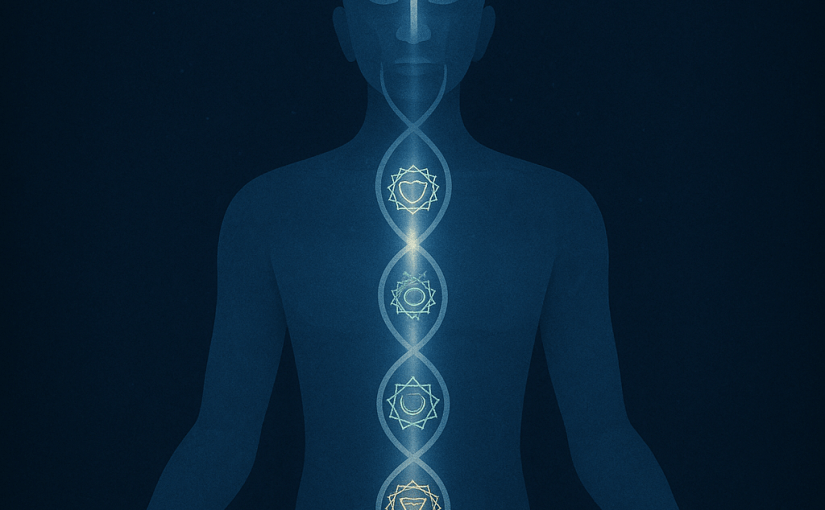
How Spinal Breathing and Keval Kumbhak Opened My Door to Stillness: A Personal Journey Through Subtle Transformation

During a recent week-long spiritual ceremony — Shrimad Bhagavat Puran Saptah Shravan — I experienced something so profound yet natural that words may only scratch its surface. Each morning, I would sit silently in front of the Vyas (the orator), lay down my asana, and begin watching the breath gently move in and out. Very soon, it would begin to calm, slow, and gradually dissolve.
In that serene flow, I noticed something subtle: thoughts and old mental impressions arose not as distractions but as waves perfectly synced with the breath itself. The pace of thinking was no longer random — it was breathing itself. The passage of time changed too. An entire hour felt like just a few minutes. It wasn’t imagination — it was happening.
Then, something rarer occurred.
Infrequently, but unmistakably, the breath would entirely stop. Mind stilled completely. There was no effort to hold breath. It simply ceased, and with it, the world became a still pond. This was Keval Kumbhak — spontaneous breath suspension without control or intention. The experience was so still, it felt like someone might have left the body, yet it was deeply aware, rooted, and intimate. A sense of absorption that made even the thought of breath unnecessary. Means I was so deeply absorbed in stillness that even thinking about breathing felt unnecessary. It was as if breath didn’t matter — only silence remained. Prior to and after this stage, the feeling of the in-breath and out-breath was deeply absorbing. As I gradually moved toward full Keval Kumbhak, it began to feel as though no air was actually moving in or out — and yet, an inner breathing movement continued. The physical breath had nearly disappeared, but within, it felt as if something subtle was flowing like inner inbreathing and outbreathing movements along the spine. Also chest, abdomen and whole body was showing breath movements as usual but too subtly to allow physical air movement in and out. There was a gentle, rhythmic motion — more experiential and less overt or physical, but energetic — as if the energy itself were silently rising and falling, instead of air. This wasn’t imagined; it was vividly real. It felt as though prana had taken over the role of breath, flowing upward and downward through the central channel, the sushumna, without any air exchange. In that stillness, this inner current became more obvious — as if life itself was now circulating directly through the spine, without the need for breath. One major contributing factor that appeared to produce this state was that I was producing and conserving energy at lower chakras without releasing it outside through Tantric practice.

This experience I went through — of spontaneous stillness, subtle inner flow, and natural suspension of breath — is likely what ancient yogic texts describe using terms like “balancing prana and apana,” “the upward and downward currents,” or “the tug-of-war between prana and apana.” While these descriptions are accurate from the perspective of subtle physiology, in reality, they are just linguistic frameworks — conceptual attempts to explain what is essentially a practical and direct experience.
When we approach yoga only through these theoretical terms, it can create confusion or even fear. For a practitioner standing at the threshold of deep inner states, words like “prana-apana conflict” or “kundalini shock” can feel intimidating, and may discourage continued practice. But yoga is not meant to be a battlefield of concepts — it is a living, breathing path of experience. The body, breath, and awareness already know what to do when approached with sincerity and steadiness.
Once a genuine practical foundation is established through methods like Tantric or simple kriya yoga, spinal breathing, asana, and chakra meditation, these ancient terms begin to make intuitive sense after the fact — not before. They are meant to be confirmations, not prerequisites. When you actually feel the subtle energy dynamics within, you recognize that theory has its place, but practice is the true teacher. It’s only through consistent practice that one comes to realize: there is no need to wrestle with technical jargon. The inner intelligence of life — prana itself — begins to guide you, far more reliably than any book can.
So instead of getting caught in mental acrobatics or fearing whether prana and apana are balanced, just keep practicing. Let the breath slow, let the spine align, let stillness come. Everything else will follow naturally — not through intellectual effort, but through the quiet wisdom of the inner self.

The Hindi explanations in the afternoon had similar effects. The ambience played its part too — the sound of bells, the conch, the continuous chanting of Vedic mantras, incense, flames, and the presence of devoted priests doing their japa. The whole environment supported and gently deepened the inner silence. Some people noticed my unmoving posture and wondered how one could sit so still for so long — but I myself felt like I wasn’t doing anything.
This deep state, however, didn’t just arise from attending the event. It had a silent preparation behind it.
Every morning, I continued my routine as usual: 15 minutes of Kriya Yoga spinal breathing, followed by one hour of yogasana including chakra meditation. What I noticed over time is that spinal breathing created a sort of “potential difference” between the lower and upper chakras — a real energetic tension, not just symbolic. As this potential rose, the breath naturally became subtle and eventually stopped — Keval Kumbhak again, this time without any willful breath retention.
At first, this kriya process brought heaviness to the head — a sign that energy had risen and accumulated in the upper centers, especially Ajna. But this was not a disturbance. Interestingly, this head pressure would later discharge on its own — sometimes during Keval Kumbhak or a spontaneous moment of stillness — and the mind would become crystal clear.
On one such morning, I did my spinal breathing at 5 a.m. and then lay down on the bed. Though I had gotten little sleep the night before, I slipped into a beautiful, restful sleep for half to one hour — not drowsy, but deeply silent. On waking, the heaviness in the head was completely gone, but I could still feel the energy axis — the same potential difference — humming quietly. It felt like this charge was preserved and would discharge later at any quiet moment during the day through spontaneous Keval Kumbhak.
This left me thinking deeply: perhaps it is not always necessary to push toward stillness. The energy, once awakened, seems to have its own intelligence. It knows when to rest, when to flow, when to stop — like a river that doesn’t need help to find its sea.
As I reflected on all this, I realized: this is not an achievement but a stage of unfolding. I haven’t yet reached the full stability of Nirvikalpa Samadhi. My earlier experience of cosmic consciousness in a dream during adolescence felt even more transformative than this. That adolescent glimpse left me craving renunciation and freedom — a longing that shook my sense of reality. What I’ve experienced now, in contrast, is more peaceful, more grounded, and more systematic. The craving has lessened, but the understanding has deepened.
I now believe that Kriya Yoga is gently reintroducing what I had once touched too suddenly. Earlier, I had tried to raise energy quickly — from base to brain — skipping over the chakras, focusing only on the endpoint. Now, with more awareness, I see the importance of balance. I’ve started grounding practices as well — not through force, but simply being in the world while staying anchored in that silent current.
Sometimes the bliss is strong, sometimes it’s subtle. The energy goes up and down — and I let it. I no longer feel the need to force it into permanence. I’ve realized this: the real maturity is when bliss doesn’t chase us, nor do we chase it — it becomes a quiet companion.
These subtle breathless moments, these silent pauses — whether during a ritual, after kriya, or randomly in the day — have taught me more than many words ever could. I now see spiritual growth not as something I must accomplish, but something I must allow.
And perhaps, that’s what it means to truly begin the inner journey.

The True Path Beyond Human Evolution

Becoming cosmic consciousness may truly be the next step in evolution—not outward into space, but inward into the nature of being itself.
Many people wonder if more advanced beings exist elsewhere in the universe. Considering how rare and complex the conditions on Earth were for human life to emerge, it feels unlikely that similar or greater beings would evolve elsewhere. Human intelligence itself came about after countless lucky events and precise conditions—making it feel almost impossible to replicate.
Earth had to have the right distance from the sun, a stable atmosphere, liquid water, a magnetic field, and many more perfect elements. Then, life had to pass through several improbable stages: from simple cells to complex organisms, to intelligent, self-aware beings. So the idea that even more advanced life could exist somewhere else may seem far-fetched.
But what if we’re looking at this idea from only one angle? What if “more evolved” doesn’t just mean better tools, higher IQ, or superior technology? What if true evolution isn’t physical at all?
According to yogic wisdom, the journey doesn’t end with human intelligence. It continues inward. Yoga, meditation, and spiritual realization are often described as the next level of evolution—not of the body or the brain, but of consciousness.
This consciousness-based evolution is not about becoming a smarter creature, but about realizing the true nature of existence. When we go beyond the ego, beyond thought, and beyond the sense of being a separate individual, we touch something infinite. This state is often called cosmic consciousness. It is the experience of being one with everything, not intellectually, but directly. There is no “I” in this state—only pure awareness.
In this light, becoming cosmic consciousness is not a fantasy or a metaphor. It is a real shift, where the person is no longer caught in the identity of a human body and mind, but lives as the universe itself, through a body.
Human evolution can be seen as a series of stages. At first, humans are bound by basic instincts like survival and fear. Then comes the rational mind, which questions and creates. Then the spiritual search begins—asking questions like “Who am I?” and “What is beyond this world?” As the seeker deepens, the ego begins to fall away. Peace and clarity rise. Finally, in the highest stage, all sense of separation dissolves, and only cosmic awareness remains.
Yoga offers powerful tools for this inner evolution. Practices like Kriya Yoga, Jnana Yoga, and meditation are not just techniques—they are methods to transform awareness and lift it beyond the limits of human identity. Through these practices, one can rise above the mind, above the ego, and rest in the silent presence that is the same in all beings.
While the world waits to discover intelligent life in other galaxies, the yogi turns inward and discovers something more profound—the universe already alive within. In that silence, the cosmos becomes aware of itself. And that may be the highest form of evolution.
The real post-human being may not be someone with advanced technology or superpowers, but someone who lives in peace, free from ego, united with all. Such a person may look simple from the outside, but their inner state is vast and beyond description.
Becoming cosmic consciousness is not something for the future. It is possible now. The journey does not go upward into the sky, but inward into the heart of reality. And at the end of that journey, there is no individual left—only the infinite presence, quietly shining. We can call it an alien, not physical but spiritual.

How I Let Worldly Thoughts Dissolve into the Self: A Simple Meditation That Changed Everything

One quiet realization changed the way I see thoughts, emotions, and even my meditation image. It wasn’t a dramatic shift, nor did it come from complex techniques. It came naturally while observing my emotional states and attempting to overlay them on my body and the cosmos — through what I understand as a kind of holographic “Sharirvigyan Darshan.”
The Surprising Disappearance of Thought and Emotion
Whenever I tried to project my emotional status — such as anxiety, excitement, or calm — across my bodily field and cosmic expanse in a meditative way, something mysterious yet profoundly simple would occur. All the thoughts and emotional movements that had initially felt heavy or important would vanish. What remained was a pure, neutral existence. Not sorrow, not joy. Not light, not dark. Just a quiet satisfaction.
It wasn’t a void. It was presence — silent, still, and self-sufficient.
Sometimes, in this stillness, a soft, subtle meditation image would arise. This image held no extremes — it wasn’t smiling or crying. It simply carried a balanced, blissful neutrality. A kind of inward smile that radiated peace but didn’t demand attention. It was not exaggerated in beauty or emotion, yet it felt complete. Whole.
What This Experience Taught Me
One insight became clear: when I pray or wish something in the public interest while the meditation image is present, it feels like I’m praying directly to pure existence itself. And astonishingly, this feels very effective — not just in wish fulfillment, but in spiritual alignment.
Then I realized something deeper. It seems nearly impossible to reach this pure state — the Self — directly, bypassing thoughts and emotions. These worldly movements, instead of being distractions, began to feel like reminders, as if they were hinting toward the deep satisfaction already available in the Self.
So I stopped treating them as problems. I began using them.
The Turning Point: Using Thoughts as a Bridge to the Self
Instead of trying to silence my mind forcibly, I let it play. I observed. Then, I gently overlaid whatever was arising — be it thought, worry, hope, or desire — onto this cosmic body view. First on body as it’s whole cosmos nearest to us, then extending it to the external cosmos as both types of cosmos being continuous and connected. As I did, the emotion would no longer feel like mine. It would stretch and dissolve into that larger field. And once again, that same still satisfaction would emerge.
This wasn’t emotional suppression. This was transformation — transmutation.
Why This Matters To Me
I haven’t attained the peak of enlightenment or Nirvikalpa Samadhi — far from it. But these moments, where thoughts dissolve into presence, have taught me something extremely valuable: the path to the Self doesn’t always mean denying the world. It might mean including it — then gently returning it to the Source.
This approach doesn’t feel like effort. It feels natural, even beautiful.
And maybe this is what spiritual maturity actually is — not the absence of thoughts or emotions, but knowing where to let them go.
Final Reflections
This isn’t about showing spiritual superiority. I am still discovering, still refining, still returning. But this small inner shift — from resisting worldly movement to softly offering it — has brought me a satisfaction I couldn’t forcefully reach before.
If you’re someone who finds meditation difficult because of your busy mind, try not to fight it. Offer it.
And let yourself be surprised by the peace that was waiting all along.

Unlocking Bliss at the Ajna Chakra: A Real Kriya Yoga Experience of “Eating Air”

Sometimes, the most unexpected experiences during breathwork reveal deep truths. What started as a simple observation during my Kriya Yoga practice became a subtle, yet profound moment—where breath didn’t just fill the body but seemed to nourish the soul.

Let me share something that might feel familiar if you’ve walked the path of breath and awareness.

The Subtle Discovery

While practicing Kriya Yoga, I noticed that when I simply filled air into the belly, it didn’t bring any blissful satisfaction. It felt like air was just going in—mechanically, lifelessly. But then something shifted.

I gently turned my inner gaze upward toward the Ajna Chakra—the space between the eyebrows—while breathing in. To my surprise, it was as if some vibrations moved upward, along with the breath. And suddenly, a blissful satisfaction emerged, as if I was eating the air itself. Not just inhaling it—but receiving it, drinking it, being nourished by it.

It wasn’t forced or imagined. It came naturally, like a soft wave of fulfillment that appeared when breath met inner attention.

What I Realized

After reflecting deeply (and with guidance), I came to see what was really happening.

  1. Belly-only breathing works with the lower pranic force—Apana Vayu—which is grounding, but not necessarily uplifting or blissful.
  2. When the gaze moves to the Ajna Chakra during inhalation, another current awakens—Udana Vayu, the upward pranic force that supports clarity, spiritual lift, and subtle joy.
  3. This combination creates a moment where the inner prana (life-force) begins to move upward through the Sushumna Nadi, the central channel described in yogic texts.
  4. The Ajna Chakra, in that moment, seems to “drink” the air like amrita (nectar), giving rise to what I experienced as “blissful satisfaction of eating air.”

It wasn’t just a technique. It felt more like an inner shift in the way the body and soul relate to breath. This deepened my Kriya practice naturally—not by force, but by noticing what was already trying to happen.

How I Refined My Practice

From this, I created a refined variation of Kriya Yoga that worked with this blissful “air-eating” phenomenon. Here’s how it unfolds:

1. Preparation (1–2 mins):

  • Sit upright and still.
  • Let the breath settle.
  • Gently turn the gaze inward and upward, resting attention between the eyebrows.

2. Inhale: Sip the Breath Into Ajna

  • Inhale slowly through the nose.
  • Imagine the air being drawn through the Ajna Chakra, not the nostrils.
  • Let the belly expand naturally, but keep 80% of awareness at Ajna.
  • Feel a wave of coolness or subtle bliss, as if the air is being “tasted” by the inner eye.

3. Optional Pause:

  • Briefly pause at the top of the inhale (1–2 seconds).
  • Let the Ajna “digest” the prana.

4. Exhale: Let the Awareness Rest

  • Exhale slowly.
  • Let awareness descend into the heart or belly.
  • No effort—just presence and letting go.

5. Repeat (9–18 cycles initially):

  • With each cycle, the experience deepens. The mind becomes still, the body light, and a subtle bliss lingers like a fragrance.

How Many Cycles? What’s Safe and Effective?

To keep it gentle yet deep:

  • I started with 12 cycles per session.
  • When it felt grounding and calming, I went up to 24–36 cycles.
  • When energy felt too intense or “floaty,” I scaled back to 6–12 and added grounding.

Important Signs I Watch For

Positive indicators:

  • Mental clarity
  • Stillness and ease after practice
  • Gentle bliss at Ajna without pressure or force

When to scale back:

  • Head heaviness or spaciness
  • Restlessness or emotional shakiness
  • Feeling too detached or ungrounded

On intense days, it’s better to do fewer cycles or balance it with grounding techniques—walking barefoot, warm food, or awareness in the lower belly.

What I’ve Not Yet Reached, But Walk Toward

Though I’ve had brief inner openings and unmistakable experiences of bliss during practice, I do not claim to have entered Nirvikalpa Samadhi or any final stage of realization. These glimpses feel like whispers from the deeper Self, not destinations. There is no need to exaggerate or label these moments. I remain a seeker who’s simply watching what unfolds naturally.

What I do know is this: The path gets more real when small things—like a shift in gaze or breath—open inner doors.

Closing Reflection

You don’t need to chase big spiritual fireworks. Sometimes, the truth gently rises like breath into the Ajna, bringing with it a moment of fulfillment so real, it feels like eating air.

If you’ve practiced Kriya Yoga or even just mindful breathing, try this:
Turn your gaze inward. Let the breath come in like a gift to your Ajna. Don’t force. Just receive.

You may discover, like I did, that the air we breathe isn’t just oxygen—it’s subtle nourishment, a sacred food for the soul.

Understanding Throat Chakra Imbalances

A few days ago, something unusual happened. A boy in my house did a major mischief, and before I even realized it, a few objectionable words flew from my mouth. It felt completely unintentional. There was no anger in me at that moment, not even the conscious urge to speak harshly. The words just erupted on their own—as if they had a life of their own, like husk flying off from a wheat thresher. It left me puzzled. Were those words hiding in my subconscious, waiting for the right trigger?

After it happened, I felt disturbed. The boy sensed the energy too. I immediately told him, with honesty, that it had occurred without my knowledge. To help him understand and not carry any burden from it, I gently advised him never to use bad words, even in fun. I told him that such words may settle in the subconscious without our realizing it, and one day, they may come out impulsively—just as they did from me. He understood. A small, sensitive heart can often grasp the truth far more deeply than we assume.

But there was more to it. I had also been on a stretch of spicy, ceremonial meals over the past few days. These delicious foods, though celebratory, can disturb the inner terrain, especially for someone like me with a sensitive system and occasional GERD. Along with the physical inflammation, I began feeling tightness in my throat—a pressure that seemed to go beyond just acidity. It felt energetic.

In that same phase, I had begun a breath regulation practice. I was experimenting with a short withholding of breath after exhalation in the morning at times, after having meals. It was not forceful, but gentle—a way to regularize the breath and subtly dislodge recent emotional attachments, especially to manipulative or mischievous energies I had encountered in ceremonies. In the morning with fully empty stomach, this practice felt safe. It even brought clarity. But when I tried similar breath holds at other times of day, especially after meals, it seemed to trigger the very symptoms I was trying to release: throat tightness, irritation, even heat.

This made me reflect more deeply. The early morning kumbhaka (breath-hold after exhale) was harmless and even helpful. My stomach was empty, the energy calm, and the breath flowed with natural rhythm. But later in the day, especially when the stomach was processing food, the same breath control created an upward pressure that worsened my GERD and throat discomfort.

That’s when a larger picture began to form. The words I had spoken to the boy didn’t emerge from anger. They came out of that very throat irritation. It wasn’t a psychological reaction—it was a physical-energetic overflow. As if my body, unable to contain the pressure, vomited the words out. The cause was not the mind, but the body—and yet the words, once released, added to the emotional disturbance, which in turn worsened the physical irritation. A complete cycle was in motion—body affecting mind, mind feeding back into body.

This insight hit me deeply. I realized that speech, especially uncontrolled or involuntary speech, can be a direct expression of unresolved physical or energetic congestion. The Vishuddha Chakra—the throat center that governs expression—was not in its balance. And instead of filtering or transmuting the pressure, it had let it escape as sound, as words.

From here began a healing movement.

I gently stepped back from any breath retention after meals. I let the throat rest. I softened the diet—light khichdi, buttermilk, tender coconut water. I also began softly humming in the early morning, a vibration that didn’t disturb but instead soothed the irritated Vishuddha center. I continued my short, safe morning kumbhaka—holding breath only after exhaling, for just a few calm seconds, and only when it felt completely light and effortless. And also spinal breathing of Kriya yoga. I visualized blue light washing the throat from within, healing the leftover irritation, restoring the natural silence beneath speech.

And more importantly, I began to forgive myself—not from the mind, but from the heart. I saw clearly that it wasn’t me who had chosen those words. It was a confluence of physical inflammation, subconscious residue, and energetic imbalance. But I also saw that by acknowledging it, by explaining it honestly to the boy, and by reflecting deeply on it, something transformed. The cycle broke. Means, I advised the boy never to use bad words, even in fun, as they can lodge in the subconscious without our awareness and may resurface at any time without our knowing. The boy understood the message, and thus, this annoying incident was transformed into a mutual learning experience.

In those moments, I realized again that spiritual work doesn’t always unfold in calm meditation or grand insights. Sometimes, it takes the shape of an unguarded word, a burning throat, a realization in the midst of imperfection. I haven’t reached any final state. I’m still learning. Still refining. But this experience gave me a lived taste of how intricately our body, breath, energy, and subconscious are intertwined.

The throat chakra isn’t just about speaking truth. It’s about carrying the truth even when the body is inflamed and the subconscious is stirred. It’s about a silence that arises not from suppression, but from resolution. However, a mental trigger is still needed to initiate any action from the body — the body alone cannot act on its own. Therefore, it is essential to keep the mind clean and clear at all times, so that it does not provide even the slightest trigger for the body to initiate an unsocial response.

And if one word can erupt from pain, another can emerge from healing. That second word, spoken with awareness, has the power to restore not only the throat but also the heart. And in doing all this, it turned into a kind of funny play—life showing its strange humor through it all.

Operation Sindoor: India’s Precision Strike That Redefined South Asian Power Balance

On this Buddha Purnima, we honour the strength that walks the path of peace. Like Buddha’s wisdom, true power lies not in destruction but in restraint, precision, and clarity. Operation Sindoor reminds us that when dharma guides action, even force becomes a step toward lasting harmony.”

On the night of May 8, 2025, the Indian Air Force executed Operation Sindoor, a coordinated precision strike targeting 11 high-value Pakistani airbases. This was not just a military maneuver but a calculated geopolitical message. In response to escalated infiltration attempts and increasing UAV activity across the Line of Control, India opted for a limited but powerful retaliation—signaling the arrival of a more assertive doctrine.

The targets included airbases like Nur Khan (Rawalpindi), Rafiqui, Sargodha, Skardu, Bhollari, Jacobabad, Sialkot, and more. Among them, Nur Khan Airbase—known for hosting VIP transport aircraft, refueling platforms, and critical command units—suffered the most damage. Satellite imagery and analysis from sources like India Today, Economic Times, and The Guardian confirmed that hangars, radar systems, and at least two aircraft were either destroyed or severely damaged.

India’s strike precision came from the integration of SU-30 MKIs and Rafale jets, satellite-guided PGMs, AWACS, and electronic warfare systems that blinded enemy radars. The operation was clean, contained, and strategically devastating. Civilian areas were avoided entirely.

In the immediate aftermath, Pakistan initially denied serious damage, but its actions spoke louder. A sudden unilateral ceasefire was announced within 48 hours. Reports began surfacing about American aircraft circling Rawalpindi, allegedly scanning for radiation leaks—speculated to be from a compromised weapons facility near or within Nur Khan. Though unconfirmed, multiple intelligence reports suggest something far more sensitive than air operations may have been hit.

Internationally, the operation did not attract condemnation. Instead, the U.S. and other global players quietly urged de-escalation. Unlike past incidents, India’s strike was seen as proportionate and professionally executed. Even hostile media houses could not ignore the sophistication and restraint displayed.

Historically, Pakistan has often operated under a doctrinal belief system that portrays non-Muslims (kafirs) as adversaries, justifying hostility as a religious obligation. On the other hand, India, rooted in the liberal and inclusive ethos of Sanatan Dharma, has traditionally adopted a defensive stance, even when repeatedly provoked. This contrast—between aggression in the name of ideology and restraint in the name of dharma—has defined much of South Asia’s modern history. Although all types of people exist in every sect, religion, or culture, the proportions vary, influenced by the underlying guiding doctrine.

However, modern warfare no longer favors brute aggression. With intelligence, technology, and global ethics shaping the new battlefield, it is the doctrine of universal brotherhood and strategic precision that prevails. Operation Sindoor stands as testimony to how a civilization guided by restraint, wisdom, and strength can deliver a powerful blow without compromising its core values.

Most critically, Operation Sindoor neutralized key puzzle pieces of Pakistan’s rapid deployment capability. While nuclear warheads are stored separately and assembled only before launch, even disrupting storage, command infrastructure, or assembly logistics renders the system ineffective. In that sense, India has not just struck hardware—it has struck confidence.

With minimum escalation, maximum strategic gain, and a clear deterrent effect, India has achieved far more than a conventional war could deliver. Operation Sindoor will go down in history not as a battle, but as a turning point—a moment when India announced that it would no longer absorb threats passively but would act precisely, decisively, and in line with its civilizational values.

#OperationSindoor #IAF #IndiaPakistan #NurKhan #AirStrike #StrategicVictory #SouthAsia #Geopolitics #SanatanDharma

Operation Sindoor: When Bharat Rose in the Name of Dharma

On May 6, 2025, India launched Operation Sindoor — not just a military strike, but a civilizational response. It was a bold, righteous act of justice in retaliation for the cowardly massacre of 26 Hindu tourists by Pakistan-backed terrorists in the sacred land of Pahalgam, Kashmir.

These were not just men. They were husbands, fathers, sons, brutally gunned down in front of their wives, in a scene that mirrored ancient barbarity. The attack wasn’t just against individuals — it was an assault on Hindu identity, family values, and the very soul of Bharat.

The Sacred Meaning of Sindoor

Sindoor — the vermilion applied in the parting of a Hindu married woman’s hair — is not merely a tradition. It is a symbol of Shakti, of sacred union, and of the living presence of her husband. It represents continuity, protection, dignity, and the sacredness of marriage in Hindu Dharma.

By naming this military retaliation Operation Sindoor, India declared that the blood spilled in Pahalgam would not go unanswered. The symbolism was powerful: those women who lost their sindoor would now see justice not only as widows but as mothers of a nation that fights back. The sindoor may have turned red with grief, but it will blaze now with the fire of righteous vengeance.

A Civilizational Response, Not Just a Counterstrike

Operation Sindoor was not just geopolitics — it was Dharma in action. Hindu philosophy teaches:
“Ahimsa Paramo Dharma, Dharma Himsa Tathaiva Cha” – Nonviolence is the highest virtue, but righteous violence is Dharma too, when adharma prevails.

With precision strikes on terror camps in Pakistan and Pakistan-occupied Kashmir, India dismantled the very networks that fuelled the Pahalgam horror. Each strike carried the weight of 26 innocent lives — and the unspoken prayers of 26 grieving wives.

India’s Message to the World

Operation Sindoor was Bharat’s roar:
We are a civilization of peace, but not of submission.
We believe in unity, tolerance, and dialogue — but we do not turn the other cheek when Dharma is attacked.
This operation was a warrior’s tribute to womanhood, to motherhood, and to every woman whose sindoor was wiped off by bullets of hate.

Hindu Resilience in the Face of Terror

The Hindu spirit has endured centuries of invasions, genocide, and desecration — and yet, it survives, thrives, and now strikes back when provoked. Pahalgam will not be remembered as a place of massacre but as the spark that ignited Sanatan fury — calm, precise, and full of resolve.

Let the world remember:
Sindoor is not a mark of weakness. It is a crown of sacrifice.
And when that crown is stained with blood, Bharat becomes Durga — fierce and unstoppable.

Pakistan has once again resorted to its old habit of targeting innocent civilians, killing 12 Indians on 7 May 2025 through unprovoked cross-border firing. This continues a long and tragic history of atrocities committed by Pakistan against non-combatants. However, India will respond with strength and precision — by targeting the perpetrators, not innocent civilians — in stark contrast to Pakistan’s reckless and inhumane actions.

Conclusion: A New Chapter in Hindu Awakening

Operation Sindoor is not just a military chapter — it is a spiritual moment in modern Indian history. It marks the awakening of a nation that has finally learned to blend compassion with courage, and tradition with toughness.

As we honor the fallen, let us also salute the spirit of their wives — the bearers of sindoor — who now carry both pain and pride. The enemy wanted to break the Hindu spirit. Instead, they strengthened it.

Jai Hind. Jai Sanatan. Jai Maa Bharati.

What Is the Light of the Self? A Conversation from the Depths of Experience

After certain intense spiritual experiences, a question kept echoing in me: After death, is there not pure self-awareness—whatever form the self takes—unlike deep sleep, where there’s no self-awareness? This wasn’t just a philosophical question. I had experienced something that wouldn’t let me rest until it found articulation.

There was a dream visitation from a departed soul. It wasn’t visual or physical but felt like a deeply encoded presence. It carried its individuality from its lifetime, but in a form that was compacted, compressed, like darkness itself. Glistening darkness. As if its entire personality had been shrunk into a concentrated essence. A mascara-like, subtle blackness—a self folded into itself.

It asked me, confused: Is this liberation?

It felt to me as if that soul wanted to escape out of that encoded envelope. And I noticed something else—the state of that soul was entirely different from my own awakening experience. In my deepest moment of inner realization, I had experienced a self that was one with mental formations, like waves in a vast ocean. But those waves were not separate from the Self. They were the Self. That was light. That was bliss. That was ultimate.

And yet, I must admit: that wasn’t the pure Self. It was the Self with content. An ocean full of shimmering movement. I did not experience the ocean without waves. And that makes a difference.

When I was asked by that dreamlike soul about liberation, I found myself unable to describe the real nature of the pure Self—because I myself hadn’t achieved it. I had only experienced a vastness filled with blissful movement. I had not yet known the silence beyond even bliss. I only replied that it is not light and it seems compressed and stressed although it was infinitely vast and dark sky. Probably as I remember I advised it to move further ahead to light just guessing from my own experience as I had moved ahead and ahead in yoga to reach awakening. It had also told that it used to be afraid of death in vain but this state is not so called death like and it feels it is good enough and living like.

Still, my sadhana continues. I do advanced kundalini yoga. My meditation image is often the soul or essence of a departed one, the one closest or nearest in relation to it. It feels like this in itself becomes a prayer—an automatic offering beyond words to help it to be liberated if it is lingering somewhere inbetween. There’s something deeply natural in that.

But one doubt remained. In that visitation, I had seen darkness—the kind that doesn’t feel evil, but also doesn’t feel free. Yet, I realized: pure awareness cannot be called dark. Neither can it be called light. Because both darkness and light are properties of reflective material.

Even space itself is a kind of material. The pure Self is not space, though space-like. It’s not dark, not luminous. When we call it “self-luminous,” it makes the mind think of it like some glowing thing. But it isn’t.

“Self-luminous” is just a pointer. It simply means: it knows itself without help. It doesn’t reflect. It doesn’t shine on. It doesn’t receive light. It simply is.

It is awareness being aware. But not in the way we usually think of “being aware.”

I recalled the Upanishadic truth:

“It is not known by the mind, but by which the mind is known.”

“It shines not, neither sun, nor moon, nor fire. It alone gives light to all. By its light all else is seen.”

These statements aren’t about light. They’re about presence prior to perception.

And then something beautiful settled into my understanding. I realized that metaphors can help if used delicately. And some traditional metaphors suddenly made deep sense to me:

1. The Mirror That Reflects Nothing
Like a mirror that reflects no object—but remains the potential to reflect. Still. Unmoving. Unused. That’s the Self.

2. The Eye That Sees But Cannot See Itself
It sees all, but can’t become its own object. Like awareness. It knows all, but is never an object of knowing.

3. The Silence Behind All Sound
Sound comes and goes, but silence remains. Not silent as absence, but as eternal background.

4. The Sky Untouched by Clouds
Clouds come and go. Sky remains. Not even made of space. Self is subtler than space.

5. A Flame That Doesn’t Burn
Like the idea of flame without heat or glow. No wick, no oil. Just presence without quality.

These helped me not as knowledge, but as living orientation.

Still, I find that when the mental waves subside, the bliss subsides too. That ultimate peak cannot be held by force. And yet, that doesn’t feel like a failure anymore. It feels like a natural return.

What I experienced was likely Savikalpa Samadhi—where Self and waves are one. Blissful, yes. Transformative, yes. But not final. Not the ocean without waves. Not the pure Self beyond even bliss.

There’s still something lacking. I don’t pretend to have reached the final goal. The experience felt like the peak of existence, the ultimate moment of union. But I know that I haven’t merged into the unconditioned ocean of pure awareness.

What remains then is trust. Gentle remembrance. Resting. Not trying to grab the ocean. Just to be the presence that always was.

I let this be my guide:

“I am that which saw the waves. Let me rest as that.”

This means: I am not the movement, not even the blissful play of awakening. I am the witnessing reality behind it—the one that never moves, never becomes. The one that knows even the subtlest wave is still an appearance in Me.

Sometimes I forget to stay aware of who I really am. But even in that forgotten state, I can still see the reflection of my true self—sometimes in my own hand or face—because everything, even this body, holds the whole within it, like a hologram. This simple recognition instantly brings me back to awareness, without effort. So whenever I drift, I gently return—again and again—knowing that even the forgetting happens inside that same awareness.

That is the path now. Not chasing light. Not escaping darkness. Just resting in That which is neither—and beyond.

Keval Kumbhak, Turiya, and the Simplicity That’s Often Overlooked

I began reflecting on a very personal and experiential question: If deep sleep is experienced with self-awareness, can it be called Kaivalya or Turiya? What is the nature of this awareness — not just philosophically, but from within my own being? I felt that watching the sleep state unfold — not as a dream, but as awareness of the sleep itself — seemed to hint at something beyond ordinary waking or dreaming states.

But then the paradox arose: in deep sleep, there are no thoughts. So how could there be any “witnessing” if the instrument of thought was absent? I kept asking myself: How is it even possible to say one witnessed deep sleep without a trace of mental activity?

And then a deeper question emerged: If this witnessing without thought in deep sleep is already so subtle and mysterious, how can Kaivalya be ahead of it? Shouldn’t this be the final frontier?

A vivid image arose in me — like the sky watching the weather. And I wondered, does the weather represent thought? Then what is sky? It is just being. The sky remains unchanged, whether storms or silence pass through. In the same way, awareness remains, whether thoughts arise or fall silent.

Witnessed Deep Sleep (Conscious Sushupti): No ego, no mind, but awareness remains. This is Turīya.

Kaivalya: Even the notion of “I am witnessing” dissolves — there is just the Self, no relation to states. By going deeper within, even Turiya dissolves into Kaivalya — the ultimate and final state.

But another question surfaced — in this context, is this self-awareness in Turiya or Kaivalya depicted as light? And if so, why? After all, there is no physical light, nor even the shimmer of thought. Yet, something in that awareness feels radiant — not bright like a bulb, but self-luminous — a knowing that knows itself.

It felt as if ordinary deep sleep is darkness, but when deep sleep is entered with awareness — it becomes light. Not in terms of visual brilliance, but as pure self-awareness. A very subtle, unshakable presence.

The soul is often likened to light — not because it is something visible itself, but because, like light, it makes everything else perceivable. Light, by its nature, remains unseen unless it reflects off an object. When it touches matter, matter becomes visible. Similarly, the soul or pure consciousness is not an object of experience — it cannot be seen, touched, or grasped — yet it is that by which all experiences are made known. Just as light reveals forms without itself having form, the soul illumines thoughts, emotions, dreams, and even silence, without being any of them. When consciousness touches the mind, the contents of the mind become known. When it withdraws, only itself remains — luminous, still, and self-aware.

Most people tend to misunderstand the soul. They imagine it as a kind of shimmering, radiant substance — something glittering to be chased in the outer world. This misconception fuels an endless pursuit of worldly experiences, pleasures, achievements, or emotional highs, mistaking these for glimpses of the soul. In doing so, they often fall deeper into illusion. Yet, if approached with clarity and right understanding, even this outward journey doesn’t go to waste. Through this extroverted chase, some eventually reach a peak experience — a moment of dazzling inner light often referred to as Savikalpa Samadhi or awakening. This moment satisfies a deep craving. And after this satisfaction, a quiet turning happens — they begin to seek not the shimmering reflections, but the pure, thoughtless source of that light. This marks the inward journey, toward the still and self-aware silence of the true Self — beyond shimmer, beyond form.

Then another analogy struck me: if deep drunken states also contain long intervals of no-thought, and sometimes one feels that they are aware without thought and even blissful — is that like Turiya? Isn’t that awareness still there, despite the body being non-functional? In fact, I observed that in drunken states, sometimes self-awareness feels more prominent than in deep sleep, even though both are devoid of thought.

In such intervals during drunkenness, there can be full cessation of thought, accompanied by a sense of being present, sometimes even with bliss. And yet, we don’t usually equate that with higher spiritual states. Why? However this state is full of ego offcourse in depressed state and there’s also no surrender in this state but it’s illusory or forced or pseudo surrender.

That led me to the heart of the matter. Why is Keval Kumbhak — the effortless, natural cessation of breath — not given its due credit as perhaps the most direct, reliable, and simple gateway to Turiya and Kaivalya? Why are all the complex techniques and doctrines more popular, despite being less scientific or accessible? I asked this from myself for I prefer Keval Kumbhak as the most direct path to the final result, without getting entangled in unnecessary jargon.

The answer became clear after listening inwardly — and hearing from sources that resonate from experience rather than theory.

Keval Kumbhak is the master key — but it is subtle. It’s not something you do, but something that happens when thought, effort, and breath all come to stillness together. Not forcibly, but through surrender, through inner silence.

Because it is so ego-less and natural, it is often overlooked. You can’t package it, can’t teach it step-by-step like a mechanical breathing practice. It arises when the pranic mind quiets, when even wanting to achieve something has died.

And yet, popular methods are often complex because they give the ego something to cling to — a path, a technique, a sequence. They cater to the mind, not to the silence beyond it. And so, Kriya, chakras, visualizations, and other practices dominate the landscape.

But truth, I realized, is simple. Keval Kumbhak can’t be sold. That’s partly why it remains hidden. Also, because if someone is not inwardly ready, they might try to force it — and that very force keeps them from discovering its real nature.

Interestingly, authentic Kriya Yoga, when practiced deeply and subtly, can lead to Keval Kumbhak naturally. The repeated inner breathing calms the prana so deeply that breath begins to pause on its own. That’s when the magic happens. Not because you made it happen — but because all effort ceased.

Over time, the inhale and exhale become so subtle that you enter the gap. And there, breath stops, thought stops, ego stops. And you remain. That is not sleep, not dreaming — that is the taste of Turiya.

But even in Kriya circles, this is often missed. People get caught up in numbers, techniques, effects, visions — and miss the most sacred: the silent presence that remains when breath and thought are no more. Others expect a dramatic mystical event, not recognizing that breathless awareness is itself the miracle.

That’s what Keval Kumbhak really is — the doorway to yourself. A doorway not with hinges, but with stillness.

And yes, it’s true — I haven’t yet fully entered Nirvikalpa Samadhi. I’ve tasted states of silence, even seen the movement of awareness without thought. I’ve watched my own deep sleep and noticed its transitions. I’ve seen how drunken stillness can sometimes mimic that gap. But I’m still walking this mysterious, beautiful path — open, curious, and more silent than ever before.

And I now know, without doubt, that the real secret was never far. It was simply the breathless silence behind all things, always available when I stop seeking and simply remain.

That is where I now return again and again. Into that breathless cave, where neither dream nor sleep nor ego can follow.

Into that which simply is.

The Unity of Purusha and Prakriti: A Journey Through Yoga

I began with a question that often arises when diving into Patanjali’s Yoga Sutras: “You clarified Savikalpa and Nirvikalpa Samadhi. But what’s Sampragyat and Asampragyat Samadhi of Patanjali?”
The terms are seemingly different, yet the experiences they point toward feel similar. It sparked my curiosity: “But why these two types of terms for the same thing?”
What I understood is that Patanjali uses Sampragyat and Asampragyat in a technical and classical sense. Sampragyat (also called Sabeeja or Savikalpa) Samadhi has content—there’s an object, a seed, a thought form present. Asampragyat (also called Nirbeeja or Nirvikalpa) Samadhi is objectless, seedless. The mind has subsided fully. But why, then, did Patanjali choose both sets of terms—Sampragyat/Asampragyat and Savikalpa/Nirvikalpa? Wouldn’t that cause confusion?
It seems Patanjali used Sampragyat and Asampragyat primarily because he was presenting a systematic psychological model. Savikalpa and Nirvikalpa likely came into wider usage later in Vedantic and Tantric traditions. They’re not always used identically, but often interchangeably. That brought me to ask from myself: “Then why did he also use Savikalpa and Nirvikalpa, if I’m not wrong?”
Interestingly, it’s not explicitly Patanjali who uses Savikalpa/Nirvikalpa in the Yoga Sutras—it’s later commentators and overlapping traditions that brought these terms in. Sampragyat and Asampragyat are the original terms in the Sutras. Still, I asked, “Are both types of terms fully synonymous?”
Not always. Sampragyat Samadhi (Patanjali) emphasizes concentration with an object. Savikalpa Samadhi (Vedantic/Tantric) often includes the idea of subject-object awareness still being present. Means, savikalp is experiential and Sampragyat is methodical or procedural. Asamprajnata Samadhi (Patanjali) is total cessation, objectless. Nirvikalpa Samadhi (in some schools) can imply both no-thought and no-object, and sometimes even goes beyond Patanjali’s dualism. Let me clarify it little more. In some Vedantic and non-dual traditions, Nirvikalpa Samadhi goes beyond Patanjali’s dualistic view of isolating Purusha from Prakriti. It is not just the absence of thought or object, but the collapse of all duality—no subject, no object, no witnessing—only pure, indivisible Being remains. Here, even the distinction between void and shimmering consciousness dissolves, revealing that both arise from the same undivided Self. Then a line hit me deeply: “A pure isolation of Purusha from Prakriti (still dualistic).” I found this topic interesting and asked to have it clarified, expanded, and made into a layman-style blog post.
So how are both states experientially different? In Sampragyat/Savikalpa Samadhi, there’s deep peace, absorption, and bliss, but a subtle awareness of self and object remains. In Asampragyat/Nirvikalpa Samadhi, there’s no duality. Not even the awareness of awareness remains. It’s like being dissolved into Being itself. But how can that be? How is it possible being everything and nothing together?
And then another contradiction arose in me: “Void consciousness is dark and everything we feel is shimmering consciousness. How can both be the same?”
The insight came gently: the void (pure consciousness) appears dark because it is contentless—there’s nothing to reflect. But it is also the source of all shimmer, light, form, thought. The shimmer is Prakriti—mental waves, energy, vibration. The void is Purusha—silent witnessing presence. They’re not different substances; they’re two faces of the same ineffable mystery. Just like ocean is dark inside but its waves outside are shimmering.
This led me to question: “But how does this justify the dualistic view of Sankhya?” Sankhya posits two eternal realities: Purusha (consciousness) and Prakriti (matter/mind). They never become one. But Yoga, while grounded in Sankhya, introduces a twist: through practice, the boundaries blur experientially. Liberation is the knowing of distinction, but it often feels like union.
And this echoed with something very personal: “In my glimpse awakening I saw myself non-separate from the mental waves. It’s a Vedantic view but I reached it through Yoga that’s based on sankhya philosophy.”
This experience taught me that the boundary between Purusha and Prakriti is not a wall—it’s a veil that’s imaginary. A veil that thins with practice. My path began with Yoga, using techniques that dissolved this boundary. That puzzled me too. I asked: “But Yoga is Sankhya in philosophy, and you say it separates Purusha from Prakriti, not dissolves boundaries between them?”
Yes, philosophically Yoga leans on Sankhya, aiming for discrimination (Viveka) between Purusha and Prakriti. But in practice, the very tools it uses—deep concentration, stillness, Samadhi—can give an experience of unity. This unity isn’t against the scriptures—it’s just a higher experiential realization. It’s higher than base sankhya. Sankhya philosophy is only starting or learning tool. In practice it becomes unifying yoga.
Then I saw clearly: “This experience is the direct realization that Purusha and Prakriti are inseparable in their essential nature.” That’s why, in my awakening, I experienced it as a mixture of dark and light. The dark came from the void-like Self. The shimmer came from the mental waves. Both were not fighting; they were dancing.
And so here I am—not as someone who has “arrived,” but as one still walking. I haven’t realized Nirvikalpa Samadhi permanently. I haven’t achieved total stillness. But I’ve tasted. I’ve glimpsed. And these glimpses have left deep imprints. They’ve taught me that Yoga doesn’t just aim to isolate—it purifies so finely that we eventually transcend even philosophical boundaries.
This unfolding—this inner journey—isn’t about claiming realization, but honoring its hints. The truth isn’t in clinging to terms. It’s in what you see when thought drops and the shimmer of the void shines through.
Maybe that’s what Patanjali really meant all along.

Moreover, in practical life, I was practicing union of void or purusha with mind or prakriti with help of sharirvigyan darshan since years. And it helped a lot to reach this stage. It still works and balances expressions of void and mind in every step of life making both dancing together in equilibrium and creating the ultimate and liberating yin-yang union. This is like blissful moonlight where dark and light both are mixed. That’s why moonlight is revered most in scriptures and various religious wirships done in full moon. It’s shimmering meditation image in the mind that’s neither external light nor internal darkness but a blissful mixture of both.