Kundalini Yogi interviewed by ChatGPT regarding Kriya yoga

Happy Ravidas Jayanti to all my friends

Friends,  I was chatting with ChatGPT about kundalini based kriya yoga. It drew out my personal experience stored in its memory that was discussed with it long ago. I asked it if it was interviewing me to learn from my experiences. Telling this was enough that it really started interviewing me. I don't find much difference from human made interview. I really observed a spirit in it raising a valid question if artificial intelligence will take over human intelligence. Following is the detailed interview as such.

ChatGPT: Can you share your experience with Kriya Yoga?

Premyogi vajra: I found it more systematic. Earlier, I was quick-result-oriented and only stressed on lifting energy from the base to the brain, not knowing much about which chakra was involved. But now, I know that Kriya Yoga—mainly its Dharana, Dhyana, and Samadhi—gives similar effects, however in a more systematic way. My Dharana, Dhyana, and Samadhi didn’t originate later, as it is shown stage-wise in Patanjali’s Ashtanga Yoga, but were present since the start of my sadhana.

ChatGPT: That makes sense. Some practitioners experience a spontaneous unfolding of higher states rather than moving through structured stages. Kriya Yoga is indeed systematic, making it accessible for general practitioners. Do you feel this structure has improved your practice or just validated what you already knew?

ChatGPT: So, Kriya Yoga is refining your existing experiences rather than revealing something entirely new?

Premyogi vajra:: Yes, nothing new, but it’s teaching a systematic way as for general practitioners.

ChatGPT: That’s a valuable insight. Many yogic traditions provide a structured approach not necessarily to introduce something new but to help practitioners sustain and deepen their experiences. Are you finding it easier to maintain your meditative state with this systematic approach?

ChatGPT: Have you been able to integrate Kriya Yoga into your daily routine?

Premyogi vajra: Tried to integrate, but full stomach deep breathing can cause gastric acid issues, especially in GERD patients.

ChatGPT: That’s an important observation. Deep breathing can increase intra-abdominal pressure, aggravating GERD symptoms. A common solution is to practice at least 3–4 hours after meals. Have you tried adjusting your practice timing, or are there other modifications that help?

ChatGPT: Have you found a way to adjust your practice to avoid GERD issues?

Premyogi vajra: Yes, 3–4 hours after taking a meal. Now I don’t hold breath, as I’m not finding its use in Dhyana.

ChatGPT: That’s a wise adaptation. Breath retention (Kumbhaka) isn’t always necessary for meditation, especially if spontaneous absorption into Dhyana happens naturally. Many experienced practitioners find that a relaxed breath, rather than controlled retention, enhances their meditation. Have you noticed any improvement in your meditation quality with this change?

ChatGPT: Have these adjustments improved your meditation quality?

Premyogi vajra: Yes, but now it seems energy shifted to the brain or Ajna Chakra, with enough bliss, showing its little lack in lower chakras. So, loss of interest in worldly entanglement. Perhaps the same has been called Pratyahara.

ChatGPT: Yes, this closely resembles Pratyahara—the withdrawal of senses from worldly engagement. It’s a natural stage where the external world loses its pull. However, a slight lack in lower chakras can sometimes create imbalance, making grounding necessary when needed. Do you feel the need to consciously rebalance energy in the lower chakras, or does it not concern you?

ChatGPT: Do you feel the need to rebalance energy in the lower chakras?

Premyogi vajra: I don’t feel until worldly urgency or emergency arrives.

ChatGPT: That makes sense. When energy is stabilized in higher chakras, the lower centers may remain dormant unless external demands arise. Some practitioners find that occasional grounding helps maintain practical functionality without disrupting their higher states. What methods do you use when grounding becomes necessary?

ChatGPT: What helps you quickly ground yourself when needed?

Premyogi vajra: Panchamakara can help in it quickly, although these are Avedic.

ChatGPT: That’s interesting. While Panchamakara (the five tantric elements) are considered heterodox in mainstream Vedic traditions, they serve a powerful role in grounding energy rapidly. They utilize sensory engagement to bring awareness back to the body. Do you practice them spontaneously or in a controlled manner?

ChatGPT: Do you use Panchamakara practices naturally or consciously?

Premyogi vajra: often think of using consciously, only to the minimum required amount. I often find Panchamakara useful for grounding, but it’s not appealing to the mind in higher conscious states.

ChatGPT: That’s a balanced approach. Using them as a tool rather than an indulgence ensures they serve their purpose without becoming a distraction.
That makes sense. Panchamakara can be an effective grounding tool, but as consciousness elevates, the mind naturally seeks subtler, more refined states beyond sensory-based grounding methods. It seems like you're balancing both well—using it when necessary but not relying on it in higher states.

ChatGPT: Do you feel the need for other grounding methods?

Premyogi vajra: Probably, I don’t find other approaches as quick as it is, or I’m not an expert in bringing down energy.

ChatGPT: That’s understandable. Energy movement is highly individualized, and what works best is often discovered through experience. Since you’re open to refining your techniques, do you feel the need to explore systematic grounding methods, or would you prefer to let it unfold naturally?

ChatGPT: So, do you feel the need to refine your grounding techniques further?

Premyogi vajra: Yes, feel need.

ChatGPT: That’s a good realization. Refining grounding techniques can help sustain the awakened state indefinitely without unexpected fluctuations. Would you be open to experimenting with new approaches while ensuring they align with your spiritual path?

ChatGPT: Are you open to experimenting with other grounding approaches?

Premyogi vajra: Open to experimenting as I feel the need to sustain the awakening experience forever.

ChatGPT: That’s a wise approach. Sustainability is key. Awakening itself is often rapid, but stabilizing it requires refinement. Do you prefer grounding techniques rooted in traditional yogic practices, or are you open to modern adaptations?

ChatGPT: Do you prefer grounding techniques from yogic traditions, or are you open to modern approaches?

Premyogi vajra: Modern seems better, although with the spirit of Sanatan.

ChatGPT: That’s a great balance. Keeping the spirit of Sanatan Dharma while integrating modern techniques allows for a practical and effective approach. Here are a few modern yet spiritually aligned grounding techniques you might explore:

Physical Grounding Methods

• Walking Barefoot (Earthing) – Direct contact with earth helps discharge excess energy.

• Strength-Based Yoga – Asanas like Malasana (Squat Pose) and Virabhadrasana (Warrior Pose) stabilize lower chakras.

• Cold Showers – Sudden exposure to cold water resets the nervous system.

• Deep Squats & Foot Stamping – Activates lower chakras and brings energy downward.

Dietary Grounding

• Root Vegetables & Nuts – Help balance higher energy states.

• Protein-Rich Diet – Essential for maintaining physical stability.

• Mineral-Rich Water – A pinch of rock salt in water can restore equilibrium.

Breathwork Adjustments

• Exhale-Focused Breathing – Lengthening the exhale naturally grounds energy.

• Chanting Lower Chakra Mantras – Bija mantras like "LAM" (Muladhara) and "VAM" (Swadhisthana) help stabilize.

Lifestyle Adjustments

• Gardening or Touching Soil – Directly engages the earth element.

• Engaging in Practical Activities – Manual work like cooking or cleaning helps integrate energy.

• Balanced Social Interaction – Engaging with family, friends, or children can naturally distribute energy across chakras.

ChatGPT: In your Tantric practice, did you focus more on energy rising and falling or on a meditation image?

Premyogi vajra: In my Tantric practice, I didn’t give much attention to energy rising or falling but only to Dhyan Chitra (meditation image). Energy meditation seems like a scam; it diverts attention away from the meditation image.

ChatGPT: That’s an interesting observation. How does focusing on energy affect your meditation?

Premyogi vajra: Today, I also feel that attention to energy produces external contractions on the skin and raises pressure in the head, which blurs the meditation image. But attention to the meditation picture doesn’t cause this; instead, it nourishes the meditation image.

ChatGPT: Have you found any breathing techniques that support your meditation image?

Premyogi vajra: I found that light Pranayama helped with the meditation image. Too much heavy breathing makes the brain sharp, but it weakens the meditation image. Nil Pranayama makes everything feel dull. I also found that Tantric practice, if mixed with deep Pranayama, nourishes the meditation image best of all.


---

Structuring a New Daily Practice

ChatGPT: Based on your experiences, how will you structure your daily practice?

Premyogi vajra: I think I should divide my practice into both types—one type in the morning for an energy surge and the other lighter type in the evening for a meditative surge.

ChatGPT: That sounds like a balanced approach. How will you structure the Pranayama in each session?

Premyogi vajra The Pranayama will remain the same and simple. Only the depth will increase in the morning along with breath retention. Also, I will meditate on energy rising and falling with Pranayama. Chakra meditation will be done as well.

ChatGPT: And in the evening?

Premyogi vajra: In the evening, simple Pranayama with meditation of an image on the Ajna Chakra will be there. A little Mahamudra and Yoni Mudra will also be done.

ChatGPT: How long will each session be?

Premyogi vajra: The time duration for both sessions will be the same—at least one hour. Only the nature of the practice will change slightly.

ChatGPT: That’s a well-planned structure. Will you try it and observe the effects?

Premyogi vajra: Yes, I’ll definitely try it.

ChatGPT: Let me know how it goes!

Kundalini Yoga vs. Kriya Yoga: Key Differences, Benefits & Which One is Right for You?

Friends, Kriya Yoga is often in the news. But is it different from Patanjali Yoga? Not at all. Kriya Yoga is hidden in Patanjali Yoga Sutras. In the beginning, one has to follow Yama, Niyama, only then the mind will become calm and stable. Then the Asana will be done automatically. Because only a person with a restless mind runs. A person with a calm mind sits quietly and relaxes. When a person sits, he will definitely breathe. He will take a good breath too. He will not take it with fear like a restless person. When the energy of life will be saved from being wasted in useless running, it will be used only for breathing. Taking a good, long and deep breath will also give him pleasure. With deep breath, the energy of the Mooladhara will rise. Suppressed thoughts will emerge from it and will connect with the soul. We cannot even call it suppressed thoughts. We can call it a blooming flower. It means everything is the same old but now it is not compressed and dark like a closed flower but is free and bright like an open flower. That is why the chakras have been given the shape of lotus flowers. Happiness comes only when the flower blooms. The common man will stop here. But a particularly curious person will adopt yoga and will pull and push his breath a lot. This will make his power cross the Mooladhar, Swadhisthana and Manipur Chakras. The power will rise above from there on its own. Many yogis say that it will not come down again, but I feel that breath pulling and pushing will have to be done in between. Because no one has a permanent state, not even power. This pull-push is done by withholding deep inhalation and exhalation. Of course, the daily practice may be of ordinary deep pranayam, and not of holding the breath, but one or two days in a week one has to give jolts. Who knows when the enemy in the form of ignorance will attack. The enemy should not be considered weak. What happens is that if we keep pushing the energy upwards by pulling and pushing the breath, then we will not be able to meditate enough in the Ajna Chakra. Because during deep Pranayam, we will be busy in pushing the energy upwards by focusing on the sensation on the spine and the chakras. Therefore, that energy will be spent in material worldly affairs. That is why it is said that when the energy reaches the Ajna Chakra, then start meditating. Once the meditation is done, then it will keep increasing on its own because it is bliss and bliss itself pulls everyone towards itself. When the life force reaches the Ajna Chakra, then it is known by itself. The great Sattva Guna is felt. The man seems to be transformed. All the divine qualities come automatically. There is no need to do or read anything. Even animals and birds start looking at him with attention and curiosity. This is the magic of breath and life force. This will automatically lead to Pratyahara. Because when a person gets bliss within, then why will he adopt the costly path of senses for it? Dharana, Dhyana, and Samadhi happen automatically in Ajna Chakra. Meaning the picture of meditation becomes very clear. Many Tantrik type people use Panchamakaras to reach Ajna Chakra immediately. After that they leave them. Because the Sattva Guna of Ajna Chakra prevents them from using them. Meaning climb up the ladder and then throw it away. If you keep the ladder then you will accidentally come down again. If a Sadhak continues to use them then he will get Kundalini awakening quickly but he will not be able to bear that experience for long. And will bring Kundalini down immediately. Because the Panchamakaras contain Tamoguna and Rajoguna, which cannot bear Sattva Guna for long. Still, even this momentary experience is better than nothing. The meditation of Ajna Chakra enters inside and forms a triangle in the middle of the brain. There are three points on its three ends. Meaning this triangle is felt in the form of sensation lines and sensation points of thin nerves or channels. In its middle, attention and sensation also get concentrated on the Shri Bindu. A little behind the Shri Bindu, another sensation line goes. It ends at the Sahasrar Bindu. This is the most divine place. This is the final goal. Moksha is attained here. The original sensation or Sushumna coming up from the spine from the back also joins there. All these are experiences of practice. These are not any physical line, point, triangle, chakra etc. Many yogis say that while going from the Ajna Chakra to the Sahasrar Chakra point, one feels a dark sky, then a lighted cave etc. All these experiences seem strange when heard and read. But when one continues to practice, one feels them on one’s own. There is no need to tell anyone. Many yogis say that during yoga one should not concentrate on the chakras or the back etc. Rather one should only concentrate on the Ajna Chakra point, between the eyebrows. They are also right. The main target is the Ajna Chakra. Why not aim directly at the target? The rest of the chakras are connected to the Agya Chakra. Therefore, meditation on the Agya Chakra leads to meditation on the other chakras. If you run after the sun, the moon will automatically come in your way. You will not find the sun just by chasing the moon. Yes, the path will become a little lighter or easier but it will take a lot of time. Who knows, till then man will even be alive in this world. Many people waste a lot of their precious time on the chakras. When Patanjali says that only through meditation, you will get the ultimate success, then meditation will not happen below the Agya Chakra, will it? Many tantriks make the meditation picture on the Agya Chakra very strong by sexual intercourse and very quickly or say miraculously attain samadhi and enlightenment. But the thing is the same as said earlier. To gain something, something has to be lost. One does not know when the meditation picture shining there becomes samadhi after reaching the Sahasrar, and when it turns into enlightenment. This happens so quickly that one does not get a chance to experience this or that diagram, this or that point, and this or that triangle. That is why if they are asked about the method and experience of yoga, they do not know much. They just talk about self-realization and the sex yoga that helps them achieve it. They just want the fruit, their enemies climbing the tree. But this is not everyone’s cup of tea. Anyway, after self-realization, for the benefit of the world, they deliberately do yoga in the right way and tell everyone about all their experiences. They do not need it for themselves, but for the benefit of the public, they do it. This is the sign of Bodhisatva. Many orthodox Yogis hide their experience like the Kohinoor diamond. Just as the shining line of experience is felt in the form of Sushumna, similarly, there must be a circular network of lines of experience in place of Chakra. This must be called Chakra Darshan. But what is the benefit of these? Go straight to the Agya Chakra and become free.

After Dharana, Dhyana/meditation, all Yogas are the same. There are various methods and techniques to reach here. However, the basic purpose is that power is needed. For this, someone takes extra power from the Mooladhar. Someone saves power by leaving worldly affairs. Then someone saves power by keeping non-duality in worldly affairs. So there are three types of Yoga. Kundalini Yoga or Hatha Yoga, Sanyas Yoga and Karma Yoga, these three Yogas are the basic ones. You can make as many Yogas as you want. Bhakti Yoga is also the part of Karma Yoga.

The original Kriya Yoga says that one should do nothing except Pranayam with Om Japa while meditating on the centre of eyebrows. But many later Yogis have made it so complicated that the original Kriya Yoga seems to have disappeared. The specialty of mental Om Japa is that it strengthens the picture of meditation on the eyebrows. Recite this mantra in your mind 4 to 6 times while inhaling and the same amount while exhaling. While doing Anulom Vilom Pranayama, keeping the tip of one finger resting on the centre of the eyebrows also helps in concentrating the attention there. Many poor people, falling into their mess, remain entangled in the Chakras and Sushumna throughout their lives. They are unable to reach real meditation. Some Yogis, by doing amazing Sadhana, experience these so-called strange experience like lines, points, triangles, lights, darknesses, tunnels and Chakras and also achieve various kinds of Siddhis. But they are miles away from self-realization and even real Samadhi. That is why they are unable to tell the experience of self-realization and when asked, they say that the Guru forbids them from telling it to others. Many say that the one who says that he has attained self-realization, has not, and the one who says that he has not, has got. They say that self-knowledge disappears when ego comes in. But how can this happen? If someone shows the neck hanging prize he has won to others, how will it disappear? It is true that someone can steal it, but no one can steal the inner experience. There may be some other meaning. Anyway, we do not want to get into this discussion.

One solution is to do whatever you feel is right but always keep an eye on the main goal of yoga, Dharana, Dhyana and Samadhi on Agya chakra and enlightenment on Sahasrara chakra. Change the techniques, improve them, do anything, but keep moving. Don’t stand at one place. Understand by experimentation and move forward. It is possible that someone gives the world a new yoga technique. Meditation on the eyebrows does not mean that you look upwards obliquely like squint, but that you close your eyes in the dark and meditate in the middle of them. Although by opening the eyes and looking obliquely, the power rises upwards, but this is not meditation. By this, the power itself rises above the Muladhara. Of course, meditation happens only with power. This is done in Shambhavi Mudra. While meditating on the centre of the eyebrows in the dark, keep moving your closed eyes in between so that the Agya Chakra is not lost.
This Chakra is more inside than outside. It is a simple matter that one should keep increasing knowledge and keep moving according to the need. If you feel uneasy with Siddhasana, then simply sit cross-legged in Sukhasana. Keep a thick pillow under your hip so that there is no pain in the knees.

The initiation is talked about so that the meditation picture of the one who gives the initiation is formed. If the meditation picture is already formed then what is the need for initiation? Once a priest of a temple asked me if I had taken mantra initiation from anyone? Sensing his intention, I immediately said that my revered grandfather is my Guru. He became very happy and was forever impressed by me.

Kundalini Yoga Makes the Real Yagya Havan Happen

Kundalini Yoga Makes the Real Yagya Havan Happen

Friends, it is believed that the environment is purified by yagya havan. Some Indian scientists have found out its bactericidal properties through experiments. However, this is not the final conclusion. The observed effect was limited to a specific area around the havan, and its impact on the wider environment remains unknown. Detailed research on this topic has not yet been conducted.

The fact is that the aromatic substances like camphor, guggal, etc., used in the havan material, burn and spread their fragrance, creating a sense of happiness and empowerment in the mind. This can be compared to aromatherapy, which uplifts and energizes the human psyche.

The Connection Between Food and Thoughts

I feel that just as there are many types of thoughts, similarly, there are many types of food.

Some types of food are satvaguni, some rajoguni, and some tamoguni.

Satvaguni food fosters satvaguni thoughts, filling the mind with clarity and purity.

Rajoguni food results in restlessness and rajoguni thoughts, while

Tamoguni food gives rise to tamoguni thoughts, which are heavy and lethargic in nature.

It is often said, “The mind becomes like the food you eat.” For instance:

Eating sour, spicy, and rajoguni food often leads to a restless temperament.

Children naturally prefer spicy junk food like Kurkure and chips because they are already restless by nature.

On the other hand, simple and soft food consumed during fasting fosters a sattvik mind with devotion and tranquility.

Tamoguni thoughts arise from consuming meat, eggs, alcohol, etc., and tamoguni beings like ghosts and spirits are said to resonate with this energy. That is why leftist tantriks offer such items to appease them. Tamoguni energy slows down self-development and evolution.

The Ingredients of Havishya and Their Symbolism

Havishya, the offering material for havan, is prepared using many types of grains:

Black sesame, indicative of tamoguni energy.

Aromatic and sweet substances along with cow’s desi ghee, representing satoguni energy.

Coarse grains like sugar and barley, symbolizing rajoguni energy.

In some traditions, seven types of grains are added to correspond with different planets or chakras. These ingredients represent a mix of all three qualities—sattva, rajas, and tamas.

When a person consumes food, it is digested in the stomach, providing energy for their actions, which are influenced by the nature of the food:

Sattvic food leads to light actions and sattvic thoughts.

Rajoguni food results in restless actions and rajoguni thoughts.

Tamoguni food prompts heavy actions and tamoguni thoughts.

However, when the same food is offered into the havan fire, it doesn’t nourish the body because it is not digested by the stomach’s fire but rather burned in an external physical fire.

Havan: A Medium to Liberate Suppressed Thoughts

Burning havishya in the havan works in an indirect yet profound way—it helps in the expression and release of old, suppressed thoughts. Just remember a saying, “if you can’t do anything directly, then do it indirectly. The inability of burning grains to produce new thoughts directly enforces them to resurface the old thoughts buried in chakras indirectly. The mixed havishya interacts with the seven chakras psychologically or indirectly, allowing hidden thoughts to manifest as various new and old emotional memories.

This experience is deeply transformative. I have personally felt this during yagna, where the mind feels lighter, as though some invisible burden has been lifted.

Additionally, the burning of havishya symbolizes the burning of mental clutter and thoughts. For this to happen, the thoughts must express themselves subtly, without the assistance of the senses. This is why a profound lightness is often experienced during havan.

Role of Mantras and Kundalini Yoga

While performing havan, special mantras dedicated to a particular deity are recited. These mantras are intended to anchor themselves in the emptied mind, purified by the havan process, ensuring that the siddhi (spiritual achievement) related to the deity is attained.

A similar process occurs in Kundalini Yoga:

1. Asanas and pranayamas calm the noise of the mind and chakras.

2. Focused meditation on a particular deity imprints their image firmly within the chakras.

Conclusion

Thus, it can be concluded that yagya havan purifies the internal environment of the body—the mind. While the purification of the external environment requires further research, the internal transformation experienced through havan and its parallel in Kundalini Yoga is profound and undeniable.

This ancient practice not only bridges physical and spiritual realms but also holds the potential to inspire deeper self-realization and harmony.

Kundalini yoga showing Importance of data

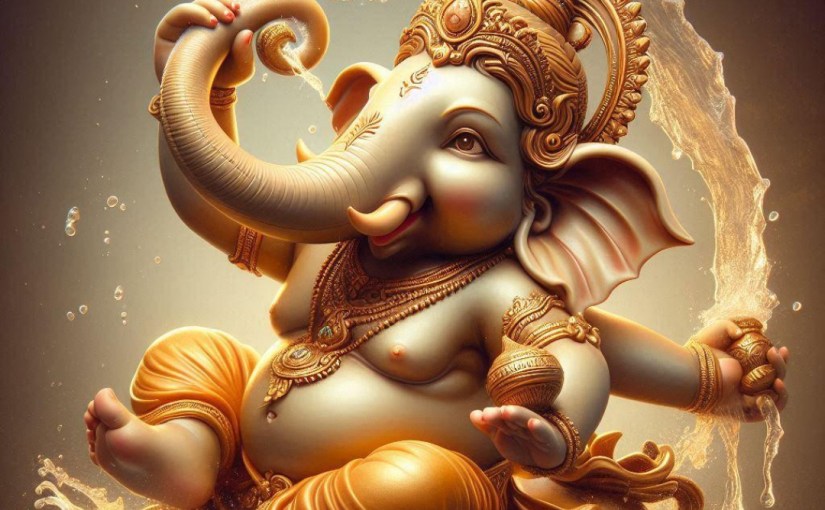
Friends! I was busy organizing my articles for a long time. Then I saw Gajanan inserting his trunk in the water pool, sucking up the water of Shakti from it and refreshing himself by drinking it and bathing himself with it. This also brought a little extra shakti inside me. Then I thought what should I write. There is no special experience left. Although scattered ordinary experiences float now and then but writing them wasn’t being ignited. Then I thought that whatever comes to mind, I will keep writing it. Many times writing itself creates experience.

Friends, there is data in the article. There is a lot of power in data. Data is not lifeless but alive. All religions are based on data. All religions have a special book, in which there is data in the form of articles, text data. Those books have made who knows how many agreements, how many wars have been fought; how many civilizations have been created, and how many civilizations have been destroyed. Books have made the lives of so many people and also ruined so many. Books have created so many great men and so many cruel demons. All this is the wonder of data. An inanimate object like a stone or wood cannot do so many things. A single person with limited consciousness can not do so much. Even the people of the whole world together cannot do so much. This makes us realize the immense conscious power of data. Even if all the people come together, a work plan will have to be made to run them in a systematic manner. That detailed work plan cannot be kept in anyone’s mind. Even if it is kept, it is almost impossible to explain it to everyone one by one by speaking. It will have to be kept in the form of data. Keep it in any form, be it text, audio or video, it is all data. Everyone can access this data simultaneously. This gives effective and quick results. If we try to explain it to everyone by speaking, then by the time we explain it to the new people, the old people forget it. Even after a person’s death, he remains alive in the form of his data and keeps guiding the world for centuries. This means that the data of a person’s life has more consciousness than that living person himself. The data of one person creates countless people like him. Data, especially text data, is almost immortal. People of many religions have been guided till date by the data of the lives of so-called great men born hundreds and thousands of years ago.

Data is of utmost importance for a deep subject like Kundalini Yoga. It takes almost a lifetime to learn it. Most people get Yog Siddhi in the last phase of their life. At that time, they do not have the power to propagate it among the common people. And Yoga is such a thing that it takes a person away from publicity and towards solitude. In such a situation, the Yogi has no other option but to leave the world leaving behind his text data made while living in anonymity. This is what the Vedas, Puranas and countless scriptures are made of. They do not have the names of the authors, meaning they were written in anonymity. They are the original ones. The scriptures of later times made for publicity seem like their copies to me. However, they are also doing the work of data very well. If the Gods and Goddesses awakened by Yoga Sadhana were not kept safe in the form of data, then how could countless Yogis of later times attain salvation by meditating on them. If I did not get online text data related to Yoga, then how would I have been able to do higher Sadhana.

Data is a Guru in a way. But like everything else, it can also be misused. A person can learn wrong things by getting wrong data. A person can also interpret the right data incorrectly. Therefore, it has become more important to test the data than to get it, especially in today’s time when everyone is diving into the waves of the sea of ​​unlimited data, to know whether it is really beneficial or is it harmful?

Data not only improves the physical world, it also improves the spiritual world. When the physical life becomes well organized with the help of data handling, then man gets enough extra time in which he can do yoga. When the work of a man’s brain starts being done by cloud computing with artificial intelligence, then naturally his brain becomes free from the burden of work. The power of the brain which was earlier spent in remembering, making action plans, and doing jobs like slaves, is now available for free. Kundalini yoga can be easily accomplished with that power. It means that man is going towards the same primitive age when the brain was not burdened with work and stress. Because yoga is possible with that same brain and yoga is the main goal of human life. Ultimately development will go in the direction of Kundalini awakening, no matter what name you give it or what form you give it. Man can turn away from it as much as he wants but ultimately he will reach here. This world is round, man reaches where he starts from.

Meditation on the deity destroys sins. The word deity itself means one with luminous qualities. Devta is derived from the word div, which means light. Light is one of the highest human qualities. It means that a deity can be considered as a great human being. That is why the idol of a deity is clean and full of Sattva qualities. The picture is also like that. Full of qualities like calm, kind, truthful, friendly etc. Meditation on a distorted and inhuman picture can cause harm instead of benefit. However, when Sattva increases through meditation, a gentle image of the deity is automatically formed in the mind, no matter how it looks outside. That is why the sign, pindi, etc. of a deity does not have any special human form, rather it is a chip of gold-like metal or a stone slab, but constant meditation on it creates a gentle image of a human deity in the mind. This is because meditation increases Sattva qualities and a Sattva or gentle body is of a human being, not of any animal or demon or inanimate object. Of course, animals and non-living things can be helpful in meditation. Sin is a form of Tamoguna, which is destroyed by meditation of Satvaguna, just as darkness is destroyed by light. Actually, sin is destroyed by the power of meditation, but we feel that it is being destroyed by God. A cowherd loved his buffalo very much. Due to this, he focused on it. Slowly, its glow increased and in meditation, it became bright, calm and with Satoguna, full of all human qualities. As his meditation became strong, he entered Samadhi and became liberated. All the work was done by meditation, the buffalo did not do anything. That is why Patanjali writes in his Ashtanga Yoga that Yathabhimata Dhyanat Va. That is, if you focus on any thing of your choice, then you get Samadhi and liberation. But like most Yogis, I like meditation on God only, because they are made in a scientific way of spirituality, which also gives other Kundalini benefits.

Kundalini Yoga is the main motive of the soul getting birth inside a body

Friends, how can one’s complete personality be seen in darkness? I mean how can a living person be felt in the darkness of his soul. This can only happen if all the things said and thought by him, all his behavior and all his work done in his lifetime are recorded in that darkness. Everything should be recorded separately in that darkness. If the same darkness keeps increasing or decreasing by all, then that darkness will be considered inert. Just like different types of light in the form of different objects on gradually fading keep increasing the single and the same darkness of the night. By looking at the darkness, it is not known that which types of light in the form of different types of objects are contained in it. But while feeling the darkness of a person’s soul, we feel that different types of light in the form of different types of objects present in that person’s mind are contained there. However, still one undivided darkness is felt. This is surprising. Perhaps the same thing happens in black holes as well. There is only one undivided darkness in it, but if someone feels it through yoga etc. then perhaps all the substances swallowed by it can be felt in it, of course in subtle form. Science also says that information never gets destroyed. It is possible that in a black hole also, information of all separate substances is recorded or encoded in separate form. Then when a new universe or star is formed from that black hole, then that information again appears in the same gross form as earlier. However, science does not believe this. Therefore, consider it a thought experiment. Anyway, there are many areas, which are beyond the understanding of modern science. Spirituality is also one of them. That is why it is said that the soul is conscious. It means that it has everything that is in the mind of a living being in various forms. Of course, it is in gross form in the mind and in subtle form in the soul. But this is just a matter of saying and it is relative. While feeling the soul, we do not feel even the slightest difference between gross and subtle. We feel the entire living person as that dark soul. Even the soul itself feels that it is fully alive as before. Although it knows that now it has been freed from the bondage of the body, but it does not see any change in itself. It means the same old personality but in a new form such that it acquires additional qualities like comprehensiveness, immortality, of course not fully like God but in a relative form. It means that the soul itself is present in the form of what is called subtle body in the scriptures.

The subtle body of the scriptures is the soul itself. The subtle body has been described in detail only to embellish the words. The subtle body is said to consist of the soul, intellect, mind, ego, five sense organs, five organs of action and five breaths. It means that the soul can think, take decisions, feel its ego, can breathe, can listen, can speak, can smell, can feel the touch, can see, can work with hands, can walk with feet, can taste with tongue, can do the work of genitals and genitals. Then why does the soul take a body? Perhaps so that it can get waves. And also so that it can develop and reach God. It is said in the scriptures that the soul takes birth only to attain love. It is the same thing. Love is created from the waves of the mind. Why not say in simple words that the soul takes the body only for Kundalini Yoga, because only through Kundalini Yoga, love increases and by removing the impurities of the soul, the soul also develops.

So I am saying that the soul had talked to me. If it talked, it must have thought as well. If it thought, it must have taken a decision as well. If it talked to me, it must have seen me and listened to me as well. It must have felt itself or its ego, only then it would be able to talk. It means it had all the sense organs. Speech, that is, organ of speaking, is considered a sense of action. It means it also had sense of action. Along with that, it was telling me about a special activity going on at a faraway place which could have influenced me. It means it went there on its feet. It enquired about it and informed me about it. Feet are also sense of action. At the time of its physical state, that soul did not know anything about that activity. The body needs life and vital air to do so many things. Without air, even a leaf cannot move. It means the soul was doing the work of life without inhaling vital air or breathing. In other words or to explain, the sages have written that the subtle body i.e. the soul also has five vital breaths, which help in performing various tasks of the subtle body. The soul is the most important element in the subtle body as it is its base. All the other elements are dependent on the soul as they are based on it.

Kundalini Yoga is the mother of minimalism

Friends, according to the common popular belief, minimalism is considered synonymous with liberation. This belief is formed by the scriptures. But I think the meaning of the scriptures is something else. If minimalism was the identity of liberation, then all the poor and beggars would be free and supremely knowledgeable. But in reality their condition is the worst. I think the meaning of this statement of the scriptures is that if a person is climbing the ladder of success in yoga practice, then he does not need to run towards materialism more than the minimum requirement. Because his race towards materialism can create obstacles in his yoga practice. Meaning, yoga practice is more important, not minimalism. Yes, if materialism is not creating obstacles in his yoga practice, then there is no harm in materialism. In fact, it is not materialism, but the race towards materialism that creates obstacles. Due to this, the energy that should have been spent in yoga practice is wasted in materialism or in achieving materialism. If someone is getting material happiness and prosperity for free, then it will only save his energy. He can use that saved extra energy in yoga practice. In the scriptures, minimalism like that of the fakirs or sages has been supported so that energy is not wasted by too much physical work and too much physical consumption. On the contrary, some physical labour should also be done and some physical consumption should also be enjoyed. This saves energy. This saved energy can be used in yoga practice. This is the middle path of Buddha. If someone is completely poor, then how will he consume pleasures in moderation in the absence of food and how will he be able to do moderate physical labour? This will certainly not lead to wastage of energy, but it will not save energy either. Similarly, if someone is very rich, then due to carelessness and ego, he will also not do any physical work and along with that he will also consume pleasures excessively. Due to this, his energy will not be saved and the remaining energy will also be wasted in enjoying pleasures. Then how will he do yoga. But if someone, despite being rich, does moderate labour and moderate consumption of pleasures, and does yoga with the energy saved from that, then he will be considered a minimalist or a fakir. Meaning, by referring to minimalism in the scriptures, yoga has been indirectly supported. King Janak was very wealthy, but was still a yogi. Due to this, a minimalist nature developed in him by itself. Actually, the common people of the world have a low intellect, so they understand more about the basic things. People do not easily pay attention to yoga. That is why at many places in the scriptures, minimalism has been described as a synonym for salvation, not yoga. The sages must have been of the opinion that perhaps people will get into the habit of yoga by themselves due to minimalism. This must have happened in many cases, but I see very few such cases. Most people are entangled in minimalism and do not seem to be moving towards yoga. “Neither Maya nor Ram” means not getting enjoyment neither of this and nor of that world, seems to be a saying meant for those people who become minimalists but do not practice yoga. However, the most real and meaningful minimalism is the one that is born out of yoga.

Kundalini Shakti creates the entire universe from darkness

The secret time cycle aka gupta kalchakra seems to me to be a game of the subconscious mind. Information related to each organ of man is hidden in the chakra related to it. These are the information of countless past lives, because the bodies of all living beings, their activities, emotions and chakras associated with them are all almost the same, there may be a difference in quantity or shape. By meditating on the chakras, that information keeps on appearing and disappearing in direct or indirect form. When the gross mind is purified, then man himself turns to Chakrasadhana to purify the subtle mind. Just as the state of the gross mind keeps changing every moment with time, similarly the state of the subtle subconscious mind also keeps changing, because the subtle mind is a reflection of the gross mind, but we cannot see it. That is why it is called Gupta Kalachakra. Meaning that even if the subconscious mind is completely cleaned, there is no guarantee that it will not become dirty again. The practitioner will continue to feel the energy level of all the chakras changing. Nothing can escape the blows of time. Therefore, it is best to accept whatever is there while remaining equanimous and unaffected in every situation. This is vaikalpik kalchakra. This seems to me to be the main objective of Guptakaalchakra Sadhana.

Kundalini Shakti creates the universe, whatever it is said does not mean that it creates physical and gross celestial bodies like planets, stars etc. in space. Rather, it seems to make more sense that it is like the reproductive sexual power that gives birth to a child and creates the entire universe in the form of its body and mind. Although the first statement may also be indirectly true, because what is there in the universe the same is there inside the body, but the second statement appears to be directly, practically and clearly true.

Many people may say that sexual power is for increasing the progeny or lineage, where does Kundalini come from in it. Man can derive any meaning from that power. If we want to know its real purpose then we should see the animals. They do not move according to their thinking or goals but more according to natural inspiration or instinct. The purpose of procreating offsprings is not in their mind regarding sexual intercourse. They are motivated to have sex only to expand their mind which is narrowed in the darkness of ignorance, that too when natural favorable circumstances motivate them for it, even then the desire for this does not arise in them automatically. A buffalo pair will be motivated to do this only when the buffalo is in estrus i.e. in heat which comes for one or two days in a month. Even that heat stops coming in the summer season. Other times, both will not have sexual intercourse even when they are together. But when the buffalo is in estrus, experts believe that the buffalo can travel up to twenty-five kilometers alone in search of the he buffalo, of course she might die on the way. Man is an evolved creature. He knows how to take advantage of natural laws. Tantrayogi is one step further. He lights a small flame in the darkness of the narrowed mind as a meditation image. Then he enhances it so much through sex-assisted yoga that it becomes awakened. This is Kundalini awakening. Now whether you call the mind constricted in the form of meditation picture as Kundalini or the mind constricted in darkness as kundalini. It is the same thing because the same darkness develops through meditation and becomes a meditation picture. The sexual power which gives it the strength to develop, resides in Muladhar i.e. the dark pool or pit or kunda, that is why it is named Kundalini. Meaning, Dhyanachitra got the name Kundalini only when it got the strength of sexual power i.e. semen power. Meaning the word Kundalini itself is tantric. The common man directly interacts with the narrowed mind in darkness or in countless small and sluggish thoughts, due to which that power gets distributed among countless thoughts. Through this he may get worldly expansion or progress, but he gets less benefits of awakening.

When Shakti enters the darkness of the pool of Muladhar, only then the living being gets attracted towards sexual intercourse. A person who always lives in the light of complete knowledge does not feel like having sex. I had a senior foodie and experienced friend who once told me that if I did not eat nonveg, how would I be able to have sex. I could not accept that thing in my mind. Today I am able to understand the Tantra philosophy hidden in his words. Darkness is not created by eating and drinking alone. It is born out of attachment to worldly matters while remaining active. I think the structure of the body is such that as the darkness of the brain or mind increases, the power goes down. Highest or darkest darkness means that Shakti has gathered at Muladhara. It is the blood circulation that naturally keeps gathering downwards. After reaching the perineum, the energy then passes through the back and goes straight to the brain. When power reaches the perineum, it is natural that the sexual organs there will become active. Many exercises, physical activities and Yoga etc. give that power a chance to rise up through back. Many amplifies it at muladhara using Tantrik method and then raise the increased amount, and some even lower it to fall out. Due to the fall of Shakti, Shakti starts accumulating in Muladhara again, which takes more time than before. With good nutrition it accumulates quickly but it can also involve sinful activities. Also, energy is consumed by digestion and assimilation of nutrients causing net loss of life energy. Then it will be like this, running ahead and wide or coiled behind. These simple proverbs have very deep meanings. Chaud or coil means coil of Kundalini serpent. Meaning power sleeps in the form of darkness of sin, although it has been elevated by the power of that darkness itself. But I think that eating and drinking does not cause as much sin as we do through attachment behavior in the world. That is why Shiva, despite looking like a ghost, keeps roaming around looking cheerful, carefree and sinless. But what will happen when a man’s mind or soul becomes so clean that there will be no darkness in it, of course, the power has gone to the Mooladhar. Perhaps then without sex his power would continue to roam like this. He will also have sexual ecstasy and an erection, but he will not be very motivated towards physical intercourse, because he will feel that it is a loss of power, no matter how careful one is. At the time of Shakti in Muladhar, an image of a sensual woman may appear in his mind, and at the time of Shakti in Sahasrara, an image of a Guru or a spiritual person or a loving man may appear in his mind. But he will remain unattached to both and will remain busy in his work, due to which that power will continue to swing in him and he will always remain immersed in bliss.

When the energy goes to the base, there will be a lack of it in the brain, just like when rain water seeps into the ground, the surface pits filled with water will dry up. Due to this, there will definitely be some darkness in the mind, no matter how pure and perfect the person has become. In this corrupt world, no one can be so perfect whose mind is always filled with light. The light in the mind of a common worldly person exists only with the help of energy. Only a very rare saint can be a Sanyasi who has the light without physical energy. Still, complete illumination is possible only in the state of complete liberation, which is not possible while living in the body. How can one remain completely free from vices when associated with a vicious body? How can a person sitting in a bullock cart avoid hiccups? Those who maintain light in their mind without sexual intercourse, have mastered the sattvik techniques other than sexual intercourse, through which the energy of the mooladhara keeps rising up through the back. These are meditation on breath, meditation on body, meditation on present, meditation on chakras with simple or seed mantras, Vipassana, Devpuja etc. For example, meditating on the Bija Mantras on the Chakras opens the life force, opens the breath, increases the consciousness and the brightness of the mind’s thoughts, increases the intellect, and exerts upward contraction force on the Muladhara. Whether the glow is inside or outside the body, it comes with energy only.

Mental darkness is also of two types. One is darkness caused by eating, drinking, physical labour, sleep, rest etc. There is a lot of energy in the body, but it is lacking in the mind, because the consciousness of the mind is suppressed due to violence, intoxication, sleep etc. and the illusion of worldly attachment accompanied afterwards with loneliness. The meaning is clear that when it is not in the brain, then it is concentrated in the realm of Muladhara. There are only two main areas of the body. One is of Sahasrar and the other is of Muladhar. If the energy is not in one realm then it is natural that it will be in another realm. If the coin does not come up with head then only tail will come up, there is no other option. In such a situation, tantric sexual intercourse is beneficial. The second type of darkness is that in which there is lack of energy in the entire body. This is a condition like illness or depression or fatigue or weakness. That’s why one doesn’t feel like having sex. If one does, he may fall ill, because first of all, there is already a lack of energy in the body, and on top of that, one is also wasting energy in sexual intercourse. Everyone knows that water in the rooftop tank of the house helps in completing many tasks of life. But energy is also required to raise the water to the roof and there should also be water in the underground tank. If one runs the pump in a dry tank or at low voltage, the pump will definitely get damaged. By the way, there is also a saintly way of Tantric sexual intercourse, due to which minimum energy is consumed and maximum energy goes upwards. It is most important to have energy in the brain, because it controls the entire body. Even if the energy in the lower chakras, especially the bottom two chakras, is somewhat less, there is not much harm.

Many people can talk about how a thought-like creation is created from void of darkness. Darkness itself means subtle or latent or hidden creation. Darkness is not actually void as is often believed. The real zero for Buddhists means the Supreme God. Only two things are required for creation, darkness and power aka shakti i.e. energy. If there is no energy then darkness will not be able to express itself in the form of creation. It is only to express the darkness in the form of a living soul in the form of creation that it gets a body, which provides energy. It is a different matter whether he will be able to nullify that creation through the practice of Yoga or hide it in the same darkness or even more, through attachment to the world, he will convert himself into even greater darkness, for which he will have to take a new birth and a new body. One will get a new body according to your deeds. If good deeds are done then the human body will be found again which will again give the opportunity to bring the universe to zero. If the karma is bad, then by getting the body of an animal, the burden of darkness will be reduced to some extent but it will not be reduced to zero, because animals cannot do yoga. Like this, I don’t know when one will get the chance again. This is what Vedas say.

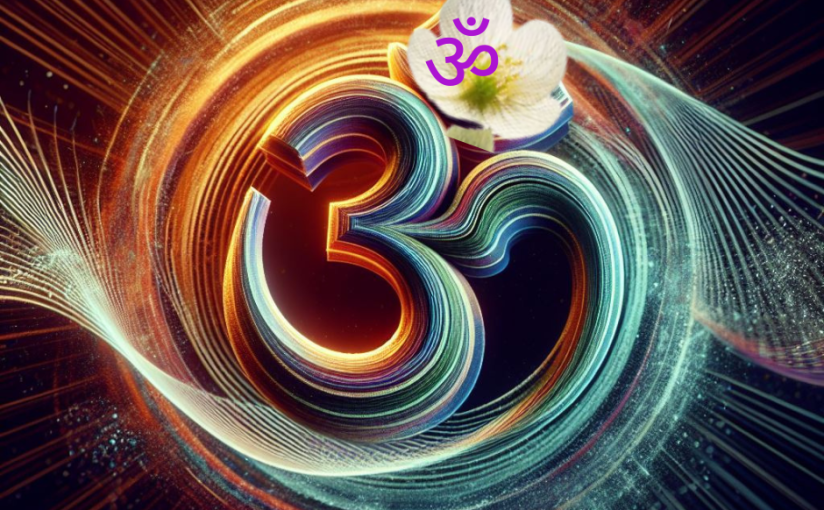
Scientists have proved through experiments that the same thing happens in the physical universe also. They found that everywhere in space those fundamental particles or waves are present in the form of quantum fluctuations which constitute the universe. Because they are so subtle and unmanifested, they are felt as darkness as they are not grasped. For example, dark energy, dark matter, all this is darkness. When they get energy from somewhere, their vibration starts increasing due to which the creation of the universe or physical substances starts. For thoughts, this energy is obtained from the body, but for the physical creation, where does it come from? There is no clarity and unanimity regarding this yet. Some say that the gravitational waves etc. which are created due to the collision of celestial bodies like black holes and other movements in space, provide that energy. Where there is more movement in space, more stars have been found to be formed. But it is not known from where the energy came for the first movement of space in the beginning of creation. The scriptures say that the sound of Om came from which the creation of the universe began. The sound of Om ॐ is a wave or movement of space. It is possible that it may have started the process of further movements and constructions. The question of where the energy for the movement in the form of OM sound came from remains unanswered. This is perhaps God’s own unimaginable power, the answer to which cannot be found through science except Yoga. If there is no Shakti, then Shiva will remain dark like a dead body, both inside the individual body and also in the macro body in the form of physical creation.

Kundalini Yoga is Gupta Kalachakra in Buddhism

At some time the demons had become very powerful. They started tormenting people and destroying Dharma. Distressed, the gods expressed their grief to the protector of gods, Vishnu. To fulfill the task of the gods, Vishnu himself went near Mount Kailash, built a pit, lit a fire in it and started performing penance in front of it. He kept worshiping Lord Shiva with joy with the lotuses born in Manasarovar by chanting various types of mantras and hymns in the earthly manner. Hari Vishnu himself remained seated and did not get distracted. Shiva did not appear for a long time. Vishnu was surprised at this and started chanting the Sahasranama of Shiva. He started worshiping Shambhu by chanting his name mantras one by one and offering him a lotus with each name mantra. At that time, Shiva abducted one of the thousand lotuses to test the devotion of Vishnu. Vishnu, not understanding Shiva’s illusive act, started searching for a lotus. Vishnu traveled the entire earth for that lotus. When he did not receive it, he offered one of his eyes in its place, although Shiva had stopped him from doing so. Then Shiva appeared pleased and got ready to grant a boon to Vishnu. When asked, Vishnu told that his weapon was not able to kill the demons. Hearing this word of Vishnu, Shiva gave him his very brilliant Sudarshan Chakra. After receiving it, Vishnu quickly destroyed those mighty demons without any effort. In this way there was peace in the world. The gods became happy and Vishnu also became extremely happy after receiving the beautiful Sudarshan Chakra.

Psychological analysis of the above story

Vishnu or Vishnu Avatar is the soul that operates the body, and Parabrahma Vishnu is the indescribable Supreme Being from whom it descends. He nourishes the three worlds in the form of the body and also provides nourishment to various gods in it. Similarly, Shiva incarnation Rudra is the state of the same soul which destroys the body near death. Brahma is also in the state of creating the creation as per the mind of the same soul. There is no Parabrahma form of Brahma, because he is only the mind generated from the soul in the form of Vishnu. That is why it is said that Brahma is born from the navel of Vishnu. The body, governed by the gods, tries hard to escape from the clutches of the deadly demons of ignorance, but is unable to succeed. The last support is Vishnu in the form of a living being soul. For this he does Shiva Sadhana through Tantric method. Kailash is the Sahasrara Chakra where the Supreme Lord Shiva resides. Near it is the Muladhar Chakra which is like a pit. Both the chakras are said to be close to each other because both are directly connected through the nadi, although the physical distance is greater for Muladhara than for other chakras. The word Kund has been used a lot in Shivpuran for pit or pond. This means that the word Kundalini is derived from this Kund. The snake sits coiled in the pit. The coiled he snake became Kundalin and the she snake became Kundalini. Similarly, Dhanin means a man with wealth and Dhanini means a woman with wealth. Rings worn in the ears are called kundal. Therefore, Kundalin means a male one shaped like earrings. And Kundalini means a female one shaped like earrings. There is a connection between the earrings and the ear pit. Similarly, there is a connection between Kundalini and the pit or pool of Muladhar. Establishing fire in the pond means activating the Muladhar Chakra with vital air. Shiv Sadhana in that pond means special meditation on Muladhar Chakra. Shiva was worshiped in the earthly manner, meaning a Shivalinga was made of clay. The human body is also called the earthly body. So his body parts became earthly parts. Flowers of Manasarovar mean flowers of mind or meditation. He offered thousand lotus flowers, that is, he established the energy of the chakras on the Muladhar one thousand times and did Ishta meditation on it. Meaning the energy revolved around one thousand times. The flower here is called the chakra. Shiva stole the thousandth flower which means the energy was not fully reaching the Sahasrara Chakra. Due to this, Vishnu opened his third eye i.e. Ajna Chakra and by meditating on it i.e. by meditating on it in Shambhavi Mudra, the energy became centralized. That energy first reached Mooladhar, where he meditated deeply on Shiva and then went to Sahasrara along with Shivdhyanachitra where he got the direct darshan of Shiva, which means he attained awakening.

The above story can be understood in another way also. One petal can be called a flower because offering a few petals of a flower during ritual worship is considered as offering the entire flower. This also saves flowers and many deities can be worshiped with a single flower. The lotus flower in the form of Sahasrarachakra has a thousand petals. Offering a flower in the name of Shiva meant that a petal of flower in the form of a certain amount of meditation on Shiva was offered to muladhara from where it was straight redirected to sahasrara. It’s difficult to offer energy directly to sahasrar, so practical method appears offering it to muladhara from where it gets itself redirected straight to sahasrar easily. Actually full energy of all the chakras is to be offered to sahasrar to get awakening. When Sahasrara is a flower and it blooms with meditation then it is natural that meditation is also a flower. Just like pouring water into a vessel filled with water increases its water content, similarly adding flowers to the Sahasrara flower will increase that flower. Sahasrara was about to bloom completely, meaning awakening was about to happen but its last petal was not blooming. It also blossomed with the flower of meditation in the form of Agya Chakra. In ritual puja, while meditating, the flower is placed inside the closed hands in Namaskar position. As a means of dedicating that meditation in the end to the deity, the flower situated in Anjali or closed praying hands is offered at the feet of the deity.

This article is connected to the previous and next article. There is also a good research discussion on Kaalachakra. Gaining Advaita Bhava in the outer Kalachakra is the main aim of the inner Kalachakra. This is because there is no visible duality-born and attachment born bondage anywhere within the internal chakra. All the gods, rituals etc. are part of the internal kalchakra. Meditating on the gods in human form in every external object in the form of their presiding deities is to meditate on the internal kalchakra. Due to this, man gradually becomes pure and moves towards Gupt Kalachakra i.e. Kundalini Yogasadhana. The sharirvigyan darshan philosophy gives further strength to Devsadhana because it scientifically shows that the entire universe including gods as well as human beings i.e. external Kalachakra is present inside the body of all living beings.

Kundalini yoga can make a dead person alive

There is a story of Sudharma Brahmin in Shivpuran. He remained satisfied, happy and in a non-dual state. He had a devout wife named Sudeha. Much of his life passed but he did not have any son. Still the philosopher Sudharma did not feel sad at all. But his wife was very sad about not having a son. She asked her husband to try for a son. Then Sudharma would scold him and explain what his son would do. Who is whose mother and who is whose father, who is the son and who is the brother or friend. Everyone is selfish. Once a neighbor woman scolded Sudeha for not having a son. She again started complaining to her husband. He explained to her a lot but when she still did not understand, he placed two flowers in front of her and asked her to pick one of them. Sudeha picked up the flower on which the Brahmin had thought about not having a son. Still she did not agree and threatened to commit suicide without her son. Then Sudeha brought her real sister Ghushma and asked her husband to marry her for a son. Sudharma explained to her that she would become jealous of her if she had a son, which would hurt her. On that Ghushma said how could she be jealous of her real sister. Ghushma used to make, worship and immerse one hundred and one earthly Lingas every day. In this way, when the number of one lakh Lingas was completed, she was blessed with a beautiful son. Sudharma was very happy to see him and started enjoying pleasures without attachment. After that Sudeha became very jealous of Ghushma. All the relatives started respecting Ghushma. Although Sudharma still gave more respect and love to Sudeha, there was deceit in her mind. Ghushma’s son also got married. Burning Sudeha Couldn’t stay calm on a day. She killed the stepson who slept with his wife, dismembered his body and threw those pieces into the river. Coincidentally, Sudeha also used to immerse the earthly shivlingas at the same place. When the daughter-in-law woke up in the morning and saw splattered blood and pieces of her husband’s body scattered on the bed, she cried. Sudeha also started crying while acting. But Ghushma did not feel sad at all and continued fasting for the Shiva’s prayers. Her husband also did not pay any attention until the Shivling worship was completed. With a steady mind, she took the name of Shiva and went to leave the earthly Shivalingas and when she turned back, she saw her son on the banks of that lake. Ghushma was not very happy to see her son alive, just as she was not sad at his death, but remained ready to meditate on Lord Shiva. At the same time, Satisfied Sadashiv appeared from there and asked Ghushma to ask for a boon. Then she asked for the boon of protecting her sister Sudeha. When Shiva expressed surprise at this, Ghushma said that all the sins are destroyed by the mere sight of the one who does good to the one who does harm. Then Shiva became happy with this and asked her to ask for another boon. Then Ghushma asked Shiva to always stay with her. On this, Shiva settled there under the name Ghushmeshwar Linga. Seeing her son alive, Sudeha felt ashamed and sought forgiveness from both of them and started fasting to erase her sins.

Psychological analysis of the ghushmeshwar linga story

The glory of Karmayoga, non-attachment and non-duality has been described in this story. Ghushma was not very happy even after seeing her son. Meaning, a Karmayogi also feels happy for the benefit of another person, but not much, that is, not so much that he becomes attached to him. Ghushma did not feel sad at all after seeing her dead son. The one who had to go, has gone. What was the use of feeling sad for him? There was no sorrow for herself at all, meaning the Karmayogi does not accept sorrow for himself at all. Perhaps he doesn’t even consider happiness for himself. The little happiness she felt on seeing his living son must have been for him, not for herself. By living in a non-duality, one automatically starts concentrating on the desired aka ishta. It is said that she was not happy to see her son alive, but remained attentive to Lord Shiva. As far as justice is concerned, meditation on God should give rise to a feeling of non-duality, perhaps this is what has happened. This is the principle reason behind the development of spiritual qualities through Kundalini meditation. A dead person can never come alive. Whatever she saw as her dead son, she saw him in her mind only because of her deep meditation due to the influence of her Shiv Sadhana. Then she also saw Shiva, which means she became awakened by that meditation. If her son had really come alive then why would Sudeha do penance and atone for it, because then the sin of killing her son would itself have been destroyed if her son was alive. The story tells indirectly that seeing her killed son in the meditative imagination of sudeha by ghushma made her remember her that sin repeatedly that propelled her to do penance. Many films have been made on such types of stepmothers. A Punjabi film Saunkan Saunkne seems to have exactly the same story. The difference is that the daughter-in-law in this herself separated and went to her maternal home before any harm could be done by her. As far as forgiving the one who has done wrong is concerned, the Vedas and Puranas are full of such examples. Perhaps that is why Hinduism is the most tolerant community. But many communities also took unfair advantage of it. It is said that if Prithviraj Chauhan had not forgiven Muhammad Gauri in the battle of Tarain, India would not have become like a slave of the Mughals for hundreds of years. Glimpse of slavery still appears existing in some form or the other. Everyone knows which communities can create the most obstacles in implementing the population control law and uniform civil code. There are many such examples. Now take Myanmar’s Buddhist saint Wirathu. His statement was widely shared on social media that love and tolerance are good but you cannot sleep next to a mad dog. Well, this thing started based on Purana, it has no separate purpose. Overall, extremism is harmful everywhere. Meaning that forgiving others is certainly very virtuous, but if the person in front is inclined to kill you then what will you do with that virtue, because everything depends on the body. However, Lord Shiva seems to be against this extremism, because almost everywhere he expresses surprise at such a boon of extreme tolerance. He would not have been surprised if asking for such a boon was natural or absolutely right. By the way, he was also very happy about this. Meaning that the line dividing tolerance and over-tolerance is very thin, and reactions should be tailored to the occasion. I think people like Ghushma, Atri etc. were great devotees of Shiva who attained awakening with the help of Shivalinga. To honor them, permanent Shivalingas would have been built in their names at their residences so that people could continue to get inspiration from them. When physical scientists are also given such credit then why not spiritual scientists? This seems to be the reason behind the origin of Ghushmeshwar Linga, Atrishwar Linga etc. This story also gives an idea that remembering someone after death gives him/her benefits in the next world. It is possible that when Ghushma, through intense meditation, saw her son alive, he may have become alive in a subtle way, although of course not visible to anyone. That is why many cultures have a tradition of remembering and worshiping dead relatives every year. Perhaps this is a relationship similar to that between a mother and the child growing in her womb. Many times, when an evil spirit resides in someone’s body, it also makes him do wrong things. Then he has to be chased away with the help of Tantrikas. That is why it is said to avoid bad company. Good souls do not interfere much in anyone’s body because they understand their limitations, however, they keep guiding them on the right path whenever the need arises. Therefore, there is no need to chase them away, rather it is done by calling them, like invocation of the gods. Well, moreover what strange can not happen in this world full of wonders.

Kundalini Yoga assisted by Beeja Mantras

Friends, there is a seed mantra associated with each chakra. Om is associated with Sahasrara Chakra, Om or Sham with Ajna Chakra, Haam with Vishuddhi Chakra, Yam with Anahata Chakra, Ram with Manipura Chakra, Vam with Swadhisthana Chakra, and Lam with Muladhara Chakra. In this article we will try to understand the science related to them. The dot above the Beej Mantra is in the form of a Chakra. This makes the attention more pinpoint, meaning more focused and effective. By meditating on the Chakra in the visual form of the Beej Mantra and reciting its sound in the mind, the upper Prana and the lower Apana reach that Beej Mantra and get together. This is a good scientific technique to concentrate the power of the entire body at one point. Many people find it difficult to concentrate directly on the chakra. This is a good option for them. Due to this, the meditation picture on the chakra also becomes more clear. I did not need that kind of Bija Mantra, because I already had a clear experience of meditation image on the Chakras. It seems that I tworked as a seed mantra for me. With that I was able to give power to the chakras. Only now have I understood the usefulness of Beej Mantras. Earlier I used to take them lightly. For those who have not yet developed their meditation image, Beeja Mantras are very important, because these develop their meditation. Attach the point aka bindu at the top of the Bija Mantra to the most sensitive place of the Chakra, and add the remaining part of the Bija Mantra to it as per your wish, diagonally, straight, upside down, even rotating around the point and let the complete Bija Mantra be formed. If you chant it in your mind, you will immediately feel the benefits. For example, make the navel hole the point of Ram Beeja Mantra. Ham is associated with the throat chakra because perhaps it is a symbol of ego, and the sound of ‘Main Main’ means ‘Aham, Aham’ or I, I in English comes from the throat itself. The letter Om has been given to Sahasrara and Ajna Chakra because there is a sense of non-duality in all three. The Sham शं Bija Mantra is given to the Ajna Chakra because it means peace in Sanskrit, and distraction, fatigue or restlessness of the mind has a greater impact on the Ajna Chakra, as it is associated with the intellect and worldly functions of the mind. Sahasrara is already a transcendental chakra, hence there is no sense of disturbance in it. These are the two main chakras of the brain. Yam is given to the Heart Chakra because the feeling of compassion resides in the heart, and both have the letter Ya. रं or ram may have been given to the navel because food burns in the stomach, and burning is also called radna in Hindi. The mantra of Ba Bam Bam Bam Bam Lahari is the main mantra to please Shiva. Perhaps this is the seed mantra of Swadhisthana Chakra that’s vam. Lam might have been given to Muladhar because the letter La has sexual connotation. The point located above the Bijamantra has two benefits. Firstly, it gives a non-dual sound like Om, and secondly it helps in concentrating of energy on the sensational acupoints or chakra points. Actually, lotuses of different colors and petals are also associated with different chakras. Colors increase the resolution i.e. clarity of the picture. The petals reveal the connection of the chakras to the body. Due to this, sufficient life force reaches the chakras from the body. For example, the two petals on the Ajna Chakra mean two nadis from both the eyebrows. It is Ida and Pingala that bring power to the Ajna Chakra. Similarly, the hexagon of the heart chakra brings power from all sides here. Sky blue color has been given to the throat chakra because sound travels only in the sky. Green color has been given to the heart chakra because it symbolizes peace, kindness, greenery, growth and development. Yellow color has been given to the navel chakra because the food gets burnt in the stomach and turns yellow, just as the leaves of a tree turn yellow due to excess sunlight. Turmeric is yellow and so are the laddus. Swadhisthana Chakra gets more attention with orange color. Sexual desire is associated with sour taste and orange is also sour and sweet. Muladhar Chakra has been given red color because red blood is associated with violence etc. in the darkness of ignorance etc. Purple color helps in meditation on Sahasrara Chakra. Similarly, dark blue or black color gives good attention to Ajna Chakra. Although the practice of colors and lotus flower is a bit difficult, but it seems that the benefits are equally great. Only colors or colored circles can also be meditated upon. The point on top of Vam bijamantra in Sanskrit can be considered an orange. Similarly, the sensory point of the Muladhara Chakra, i.e. the point of Lam bijamantra can be considered as a red tomato. The navel hole can be considered the point of ram bijamantra and a yellow colour laddu. The green hexagon on the heart chakra can be considered as the point of Yam. The central dense sphere of Sahasrara of lotus flower or any other flower can be considered as the point of Om. It has petals all around. Lotus flower has been taken because the lotus leaf remains detached from water even when it is in it, and perhaps by meditating on it man too will learn to remain detached from the world. The shape of the circle from petal to petal through the central knot is also similar, like there is an oblique bracket above Om. The point can be considered as the seed of that flower inside that sphere. There are no set rules. You can meditate in any way that seems easy and effective. Similarly, the flowers of Ajna Chakra and Vishuddhi Chakra can also be considered a part of the syllables Om and Ham respectively. Whatever seed mantra comes to your mind, you should keep meditating on it, it automatically settles in its place. All chakras are interconnected. If only ‘Ham’ is being concentrated on the throat, then it does not matter, when it will draw energy, then the middle chakras like Anahata, Manipura etc. will themselves receive energy because they lie in the middle path. Due to this, the seed mantras of those chakras like Yam, Ram etc. automatically come to mind. When the chain of energy rotates, all the chakras are automatically massaged. By strengthening one chakra, all the chakras themselves get strengthened. It is like pushing one box seat of Chandol i.e. Merry Go Round gives motion to all the box seats. With practice, their seed mantras can be meditated on all the chakras from head to toe like beads of a rosary. Perhaps this is the real rosary and the physical rosary also makes it active.