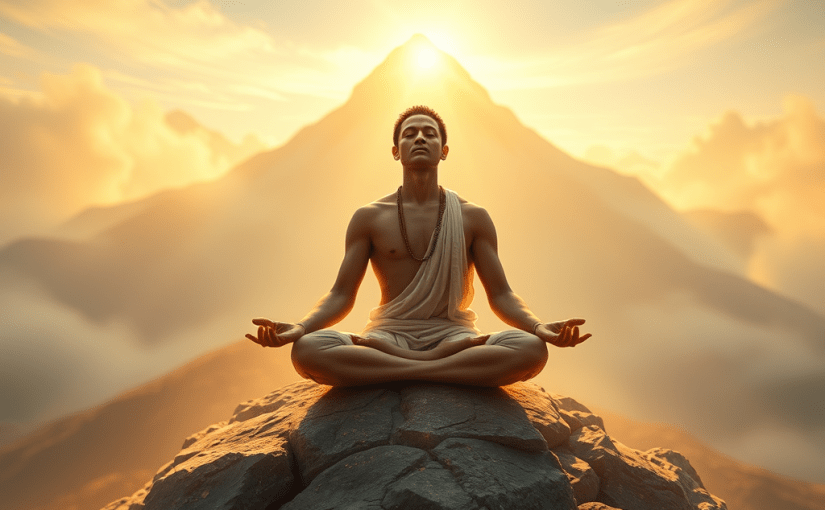
Diwali Week: A Yogi’s Practical Insights Through Temple Experiences

This Diwali week, after a long journey, I visited my ancestral home and stayed there for several days. It was a joyful time — being again with family, relatives, and friends, celebrating the festival of lights in full enthusiasm. Yet along with the outer joy, many new practical yogic experiences unfolded naturally.

I was so involved in the living flow of the festival — meeting people, travelling, helping family, and feeling the spirit of Diwali — that I could not write them down then. But within those days, in between the busy movements, I received sharp insights that no book or teaching could give. These experiences came in the most natural settings — especially when I got moments of solitude inside the city temples while my family was shopping nearby.

Day 1 – Durga–Bhairav Temple: The Dual Anchor of Meditation

On the first day, after dropping my family at a city shopping complex, I went straight to a Durga temple.
There, in front of the large and powerful idol of Maa Durga, I sat in padmāsana. The moment I closed my eyes, deep stillness descended. Soon, the breath became effortless — almost absent — and I entered Kevala Kumbhak, the natural breathless dhyāna.

At intervals, I opened my eyes and looked at the idol. Every single glance into the serene face of Durga instantly deepened the state again, as if the outer image was helping the inner form stabilize. The image remained alive even after closing the eyes, glowing vividly in the mental screen — not as imagination, but as a living vibration.

In front of Durga’s idol was a smaller statue of Bhairav. When the attention slightly tired or mind became neutral, I gazed at Bhairav’s image instead. Strangely, his gaze and energy acted as another anchor, rekindling the stillness from a different polarity — sharp, grounding, and stabilizing.

Thus, I discovered a beautiful rhythm: when Durga’s compassionate presence began to feel saturated, I turned to Bhairav’s fierce calmness; when that too reached a plateau, I returned to Durga.
It was like alternating currents of Shakti and Shiva, feminine and masculine energy, balancing and sustaining each other — a living demonstration of Ardhanārīśvara tattva.

Perhaps this is the deeper reason why Durga and Bhairav idols are placed together in many temples. For ordinary devotees, it represents protection and blessing. But for a yogi, it becomes a direct energetic mechanism — allowing both polarities of consciousness to support dhyāna.
The ordinary mind may see the idol as an object, but the yogic mind perceives it as a mirror of consciousness.

I realized that idols (pratimā) are not merely symbolic or devotional aids — they are scientific instruments of meditation. For a sincere meditator, the benefit is immediate and measurable: the mind falls into stillness the very moment one connects with the living image. That is direct proof, not belief.

Others, who approach idols only through tradition or emotion, also receive benefits, though subtler and delayed. But to a real yogi, the result is instant — the statue becomes alive, the mind becomes no-mind.

Evening – Shulini Sister Temple: The Silent Pindi and the Deep Breathless Stillness

In the evening of the same day, when my family again went for shopping, I visited Shulini Mata’s sister temple.
The environment was deeply sattvic like earlier temple: gentle movement of people, occasional ringing of the temple bell, mantra chants from distant devotees, the fragrance of burning incense, oil lamps glowing in rows, and from time to time, the conch sound from the priest echoing through the hall.
Each element seemed perfectly tuned to draw the consciousness inward.

The main deity was not a fully personified idol but a stone pindi — a simple mound of stone representing the goddess. Silver eyes were fixed on it, with tiny black dots marking the pupils, and a nose faintly carved in the middle. Despite this simplicity, or perhaps because of it, the image radiated immense power.

As I sat before it, the same Kevala Kumbhak arose again naturally — effortless, spontaneous, and prolonged. The experience was even deeper than in the morning. I remained in vajrāsana for forty-five minutes to an hour. My legs went numb, yet the body felt weightless, pain absent. Awareness remained centered, breath minimal, mind absorbed in the living vibration of the pindi.

That evening, I learned that personification is not necessary for divine connection. Even a symbolic form — if approached in stillness — can become a complete doorway to samādhi.
What matters is the state of mind, not the complexity of the idol.

Day 2 – Shani Temple and Saraswati Painting: The Spontaneous Prāṇāyāma Emerges

The next day, while on the way to relatives’ home, my family again stopped for shopping. I dropped them out of the car, parked it safely, and started searching for a new temple — a change that could help me enter deeper dhyāna again without feeling bored. It made me realize that the more temples there are, the better it is for a seeker; one can keep visiting different temples daily and repeat the cycle once all have been covered. This means it is good, both socially and economically, to build as many temples as possible. That is exactly why we see countless temples in pilgrimage towns. Some people may ask, “Why so many? Why not just one?” But human likings differ — just as there are many kinds of sweets, not only one. The same principle applies here. I found a Shani temple nearby and decided to sit there for a while. The main sanctum was closed, but on the outer wall was a small painting of Goddess Saraswati. I sat on the cool marble floor and used that painting as my dhyāna anchor. As concentration deepened, something remarkable happened: effortless rhythmic breaths began — not forced, not practiced, but arising on their own. Each inbreath was imperceptible; each outbreath carried a subtle sound — like a soft, continuous “gharr” vibration, resembling bhrāmarī prāṇāyāma but much subtler and self-born.

The awareness stayed steady, and the breath pattern continued automatically — a clear reminder that real prāṇāyāma is spontaneous, not mechanical.

Scriptures mention countless types of prāṇāyāma and their benefits, but the essence is often misunderstood. The yogi who practices Kundalinī Yoga eventually discovers that these classical prāṇāyāmas are natural by-products of inner awakening — not techniques to be imitated but symptoms of true meditative absorption.

When energy begins to move naturally through the channels (nāḍīs), prāṇa itself reshapes the breathing pattern according to the need of inner transformation. Trying to imitate these states from scriptures — without the foundation of dhyāna — may give some outer sensations, but they are superficial.
Such imitation can even give illusion of attainment — a feeling that one has mastered all prāṇāyāma — while in truth, the deeper awakening remains untouched.

Therefore, one must understand that the real prāṇāyāma of the scriptures refers to the spontaneous phenomenon arising during deep kundalinī sādhanā, not the deliberate breathing exercises often mistaken for it. I don’t know, but perhaps these superficial forms of prāṇāyāma gradually lead to deeper dhyāna, either in a worldly or spiritual way. One may also become accustomed to them, so that when spontaneous prāṇāyāma arises naturally, it doesn’t come as a shock. Therefore, even these external practices should be taken positively.

Summary Insight

Across all these temple experiences, one truth became clearer:

  • Idols, images, and symbols are not only external aids but also living focal points for consciousness.
  • The feminine and masculine energies (Durga–Bhairav) act alternately to balance the mind.
  • The form of deity — whether human-like or abstract — is secondary; the stillness it invokes is the real prāṇa.
  • True prāṇāyāma, like true samādhi, happens naturally in the state of inner silence.

These few days of Diwali brought me both family joy and spiritual refinement. I returned back with a deep gratitude — for the divine presence that works through simple images, through silence, through breathless stillness, and even through the seemingly ordinary circumstances of daily life.

In this way, the festival of light truly became a festival of inner illumination.
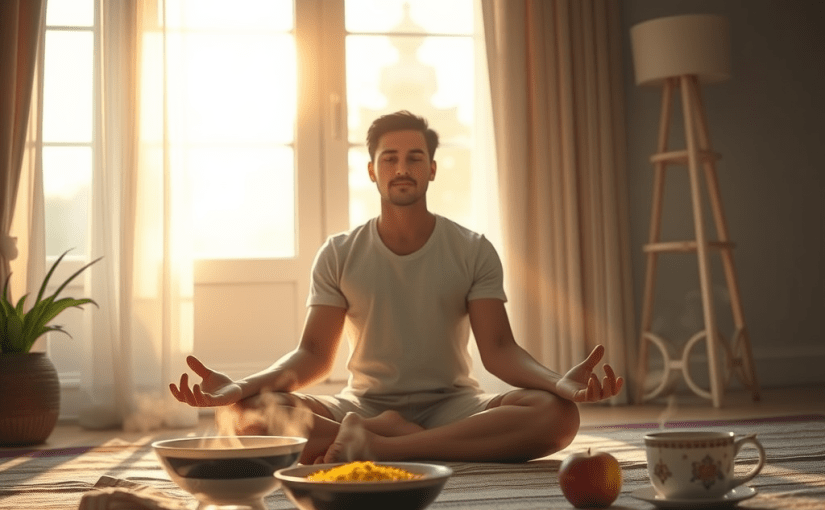
Riding Over Sleep

The very next day, my sleep broke at 2:30 a.m. I left the bed and sat on the ground in asana. The breath was agitated but not as rocket-like as the previous day. After trying for an hour, I did yogasana for the next half hour, followed by spinal breathing. Then I again tried dhyana for an hour — no success, though the witnessing of buried thoughts continued with a sense of bliss. But how can the mind be satisfied with that once it has tasted the deep breathless dhyana?

Afterwards, I ate a bowl of khichari, a ripe apple, and some herbal tea. However, the herbal tea, being strong, caused a little acidity, so I decided not to use it in a strong ratio in the future. Then I sat again for half an hour, but there was not much improvement. The morning light has grown outside. After that, I did chakra meditation on each chakra. A blissful yogic pressure arose, and I felt dhyana ripening. There was some throat obstruction, so I did jala neti. At various moments during the entire sitting since beginning, pranic energy was rushing upward.

Then deep dhyana launched — the breath became very shallow, and there was a partial entry into pure awareness. For a moment or two, the breath stopped completely, with total merging into pure awareness, but it was too transient. Suddenly, the face of a man seemingly practicing distorted tantra appeared with a strange, cursing expression—though silent, it felt as if he were speaking ill behind my back. This vision dislodged me from that dhyana despite my attempt to remain unaffected.

A new understanding emerged — Dictatorial control, even if positive in intent, should not be held in mind toward such selfstyle people. The amazing thing is that it becomes little bit difficult to reopen the pranic channels and flow energy inside them even after just a few days of yogic inactivity or worldly involvement, or both. Moreover, sexual energy had also been drained away to clean and freshly refill the reservoir. This, too, had slightly slowed the upward movement of energy. Truly, successful yoga depends on many positive contributing factors, not just one. Each factor adds gradually, culminating in a unified whole. Like bricks coming together to build a sturdy home, all these elements combine to create the full structure of yoga practice. Let us now pick up the formal yoga blog next.

Riding Over Sleep

There’s something I keep noticing — sleep and yoga feel almost the same sometimes. When I sit quietly, some people around me say I’m not meditating, just sitting and pretending while actually dozing off. They don’t know how thin that line really is.

In a jagrata, during an all-night bhajan or kirtan for Mata or Shiva, something similar happens. You ride on the wave of sleep instead of letting it swallow you. The body is tired, but you don’t collapse. You stay alert through music, rhythm, and devotion. Slowly the boundary between waking and sleep melts. If you manage to stay aware at that edge, you touch a state that feels like Nirvikalpa — awareness without thought, just stillness watching itself. However if one is highly tired, he may sleep too while sitting in meditation pose. Moreover, it is better to meditate at a sufficient distance from such kirtans; otherwise, the loudspeaker’s sound can be disturbing. However, it should still be faintly audible so that its sattvic vibrations can have an uplifting and purifying influence.

Spiritually it makes sense. The repetition of divine names and surrender quiets the usual noise of the mind. Consciousness stays bright though the body is dull. You hover right between wake and sleep — the thin doorway the scriptures call Turiya, the state behind waking, dream, and deep sleep.

Even physiologically it fits. Chanting soothes the nerves, slows the breath, and keeps you relaxed but awake. Sleep pressure builds, yet rhythm and emotion don’t let you slip into full sleep. The brain rests while awareness stands guard — a soft, glowing balance that scientists call a hypnagogic state, and yogis call bliss.

So yes, jagrata can really open that doorway if the inner condition is right. Not everyone reaches Nirvikalpa through it, but the path runs that way.

The Mandukya Upanishad describes this beautifully. It speaks of four states — waking (jagrat), dream (svapna), deep sleep (sushupti), and the fourth one, Turiya. The first three come and go, but Turiya stays untouched. When you are at that sleepy edge during bhajan yet remain aware, you are already brushing Turiya.

Yoga Vasistha echoes the same truth. Sage Vasistha tells Rama that a wise person “sleeps even while awake and is awake even while asleep.” It means a yogi’s awareness doesn’t blink, no matter what the body does. What ordinary people call rest becomes conscious rest for the yogi. The body may be half asleep, yet awareness shines quietly. This is Yoga Nidra or Jagrat Sushupti — wakeful deep sleep, the art of riding over sleep instead of sinking into it.

Now, look at it through the Kundalini–Tantra eye. The state between waking and sleep — jagrat sushupti sandhi — is where prana turns inward. Usually energy flows outward through senses. In sleep it withdraws, but awareness also fades. If, by mantra or kirtan or still meditation, awareness stays awake while energy turns inward, you catch the serpent of sleep consciously — that’s Kundalini entering Sushumna, the central channel. This edge is the real turiya-dwara, the doorway to the fourth state.

During long chanting or meditation, breath evens out, emotions settle, Ida and Pingala — the left and right flows — come into balance, and Sushumna opens. Energy that once fed thoughts now rises upward. When awareness is pure and surrendered, it merges into silent consciousness — Nirvikalpa-like stillness. When awareness wavers, it still brings a wave of bliss or devotion, though not full samadhi.

Tantra says nothing is to be rejected, not even sleep. “Whatever binds you can liberate you, when seen rightly.” Even sleepiness can help if you meet it consciously. At that edge, Muladhara energy melts upward, the Ajna and Sahasrara light up. A tired body with wakeful awareness is fertile ground for spontaneous samadhi. That’s why many saints reached awakening through music, love, and surrender rather than severe austerity — their prana rose gently, effortlessly.

If you learn to watch yourself at the point where waking becomes sleep and stay aware with devotion or mantra, that small passage turns royal — it takes you straight toward Turiya. Nothing to force, nothing to do, just don’t fall unconscious.

The same energy that pulls you into sleep can, when met with awareness, lift you into samadhi.

It all began from a simple feeling that yoga and sleep seem alike. Yet behind that simple resemblance hides a deep secret — both touch the same doorway. In jagrata or devotional wakefulness, sleep stops being an enemy. It becomes a wave to ride — one that can carry you beyond waking and dream into that luminous stillness where only awareness itself remains.

When Sleepiness Became Dhyana

After a few days of worldly indulgence—caught up in the sense of heightened ambition for a minor physical property, working tirelessly for it—I noticed my yoga routine faltered. The rhythm that once carried me into calm depth grew shaky. My sittings reduced, and the familiar breathless stillness in dhyana did not appear.

When the worldly deal finally finished, I spent two or three days trying to regain the lost acceleration. As soon as I opened my eyes in the morning—whatever the time—I would rise from bed and first sit for dhyana, then yoga, alternating both. Today I rose around three-thirty in the morning. I went through everything including both types of neti and also dhouti, yet the breathless dhyana eluded me.

Later, after lunch, while sitting in vajrasana, I caught a small glimpse of that breathless state. In the evening I sat long—from four-thirty to five-thirty. The breathing was like a rocket, fast and fierce, and it wouldn’t calm down despite simple watching and the mental recitation of Soham. Then a kind of drowsiness appeared, an urge to lie down. I resisted it, and soon the body grew tired enough that it couldn’t keep pace with the breath. The breathing itself began to subside and finally became breathless, although not fully as earlier. I couldn’t hold it beyond an hour, but something new dawned on me: perhaps deep dhyana is like sleep—but with awareness.

It felt like a discovery. If I keep trying while sitting, and tiredness and sleepiness develop, deep dhyana comes of its own accord. There seems to be a lot of similarity between sleep and yoga, so much so that many people say I’m just sitting and pretending to do yoga while actually sleeping.

That realization opened an inner understanding. What I had stumbled upon matched what the old yogic insights describe. After intense worldly activity, the rajas in the system—the restless energy of ambition—agitated the prana and made the mind outward-bent. That’s why my yoga was disturbed. Yoga thrives on sattva, on balance. The disturbance wasn’t a fall; it was simply the pendulum of prana swinging outward before returning inward.

When I sat again, the period of “rocket-speed” breathing was the body’s way of clearing that outward energy. The prana was neutralizing the residue of worldly intensity. Such rapid breathing often comes when sadhana resumes after heavy worldly engagement.

Then the fatigue came. The body wanted rest. I understood that this sleepiness wasn’t an obstacle—it was a doorway. When the body tires, egoic control relaxes. Effort softens. The automatic patterns of breath and thought lose momentum. If awareness remains present, if I do not slip into ordinary sleep, what unfolds is wakeful stillness—a state like sleep, yet suffused with consciousness.

In yogic terms, this is the threshold where the transition from waking (jagrat) toward turiya begins, passing through a “sleep-like” quiet where only awareness remains and the body and breath rest deeply. Breathless samadhi doesn’t come through effort but through the total exhaustion of effort.

It became clear that when striving ends and awareness simply watches, the body may fall into sleep-like repose, breath may stop, and consciousness alone remains. That is the path leading into Yoga Nidra, Dhyana, and Turiya alike.

Yoga Nidra, Breathless Dhyana, and Turiya—One Thread

I saw that all three—Yoga Nidra, Turiya, and breathless Dhyana—are reached through the very process I experienced. The difference lies only in depth and continuity.

Yoga Nidra happens when body and senses withdraw, mind slows, thoughts fade, and a gentle sleepiness comes while awareness stays faintly awake. Breath grows light or pauses briefly. I realized that the tiredness and sleepiness bringing deep dhyana are the same threshold where Yoga Nidra begins.

Deep Dhyana or Kevala Kumbhaka unfolds when mind and effort both stop. Awareness is steady and bright. Because the mind’s vibration ceases, breath naturally ceases too. The breathless state comes not from control but from silence itself. Here time and body vanish; only luminous stillness remains.

And Turiya—the “fourth state”—is that awareness of awareness itself. It’s the substratum beneath waking, dream, and sleep. When I stay aware through the Yoga-Nidra-like stillness, without slipping into sleep, consciousness recognizes itself. Breathlessness is incidental; the real mark is unbroken awareness through all states.

Yoga Nidra quiets the mind; Dhyana stills both mind and breath; Turiya shines as the background of all. They don’t come strictly one after another in time but unfold in depth. Breathless dhyana uncovers Turiya; Turiya is what remains when even the sense of meditating dissolves.

So, the relationship is simple:
Yoga Nidra is mental slowing with calm breath,
Breathless Dhyana is total stillness of mind and breath,
Turiya is the foundation discovered when stillness itself is seen to be one’s own nature. Means it is like samadhi. Actually turiya is background state and samadhi is process of achieving it. When with repeated practice of samadhi the background awareness starts remaining always then this is turiya.

When Turiya Is Seen

Once Turiya is truly seen, something irreversible happens. It is not a passing state but the ever-present background consciousness of every state—waking, dream, or deep sleep. The first recognition feels like an experience, yet soon it’s clear it was never gained or lost—only revealed.

Even when worldly activity resumes, a quiet background of awareness remains beneath all movement. At first it flickers—noticed at times, forgotten at others—but it never disappears completely, because the illusion of separateness has been pierced.

Then the role of meditation changes. Before this recognition, meditation is a practice, an effort to reach stillness. Afterward, meditation becomes resting in what already is. Earlier, one did dhyana; now dhyana happens. Effort stops; awareness pervades everything—thoughts, actions, and breath.

This is why saints describe Sahaja Samadhi—the spontaneous abiding in Turiya during all activities. Meditation doesn’t end; it becomes continuous. Some still sit each day, not to attain, but because the body finds harmony in that posture and prana refines itself further. It’s simply joy—like a musician who still plays, not to learn but because sound itself is blissful.

The essence is this:
Meditation ends as effort, not as awareness.
Turiya is not practiced; it is noticed.
The only “practice” afterward is non-forgetfulness—remembering that all movements of life rise and fall within the same unmoving awareness.

When Turiya is clearly recognized, peace no longer depends on meditation. One may sit in silence simply because it is natural. Awareness rests in its own delight, unaffected by whether the breath is still or moving.

The Understanding Now

Looking back, I can see the full sequence in my own journey:

  • The worldly ambition disturbed the balance of prana.
  • Sitting again, the high-speed breathing purified that outward rush.
  • Fatigue drew the ego into surrender.
  • Sleepiness appeared, but staying aware within it opened the gate to stillness.
  • The breath stopped, revealing a silence beyond effort.
  • From that silence, the recognition dawned—this unmoving awareness was there before, during, and after every experience. Although it remains a fleeting and unstable experience, that is why the effort to achieve it continues.

And that awareness, once seen, never completely leaves.

Enhancing Dhyana through Yogic Cleansing Techniques

Recently, I noticed that after performing rubber neti, a distinct sensation persisted along my left nostril passage. When I sat down for dhyana and focused on this sensation, my breath felt partially suspended, and I could observe subtle internal responses. I had also done vastra dhauti, and together these practices led me into a wonderful state of kevala kumbhaka during dhyana. This shows that such cleansing techniques truly support meditation. This heightened sensitivity is likely connected to the internal awareness cultivated through yoga and pranayama practices.

Later, during Vastra Dhauti, I ingested a full-length gauze bandage of about one and a half feet, though I captured its end carefully with my hand to ensure safety. Unlike earlier experiences where I felt resistance from the lower esophageal sphincter, this time it came out easily when I pulled it. I reflected on why the sphincter’s grip was different this time. Physiologically, sphincter tone naturally varies due to factors like relaxation, digestion, hydration, and nervous system state. From a yogic perspective, classical texts describe the resistance as the body’s natural “gate” holding impurities, which can reduce as the body becomes cleansed and the channels more open.

I also considered recent influences on my internal state. About fifteen hours earlier, I had consumed a beverage containing a small percentage of green tea along with herbal components. That night, I experienced strong GERD with momentary suffocation during sleep. The combination of caffeine, catechins, and acidic foods like sour lassi and curry likely contributed to LES relaxation, increased stomach acid, and heightened sensitivity to reflux. Even sleeping with my head elevated 20–25% did not fully prevent the episode, highlighting that LES tone, residual acid, and heightened internal awareness can overpower positional benefits.

This experience reinforced my observation that prana-raising yoga can heighten sensitivity to GERD. Pranayama, Kundalini, and other prana-focused practices modulate the autonomic nervous system — often increasing vagal tone and at times sympathetic activity. These shifts can contribute to transient relaxations of the lower esophageal sphincter and, combined with heightened interoceptive awareness from yoga, may make sensations such as reflux more noticeable. Even a standard wait period of three to three and a half hours after meals does not always prevent reflux for someone with heightened sensitivity. That is why, in Yoga, cleansing techniques such as Vaman and Dhauti are prescribed — they help purify the digestive tract and may indirectly support functions like those of the LES.

I have clearly found that Keval Kumbhak Dhyana helps reduce GERD and gastritis. When I lie down to sleep in a bad mood, feeling bored or stressfully tired, acid often rises, burning my esophagus and throat, and even eroding my teeth. But when I sit for Keval Kumbhak Dhyana, I become cool and refreshed. After such practice, I notice that during subsequent evening or night sleep, acid reflux does not occur. This clearly proves that deep dhyana reduces stress and promotes healthy forward gut motility. I also feel an increase in appetite after dhyana. It means that easy and calm yoga, without strenuous or rapid energy shifts, is better in this condition.

GERD is primarily caused by transient lower esophageal sphincter relaxations (TLESRs), which are neurogenic reflexes mediated through the vagus nerve in the parasympathetic system. Excess vagal activation, often triggered by gastric distension or autonomic shifts, is what induces these relaxations. Constant sympathetic dominance by itself does not usually cause GERD, but it can impair esophageal clearance, slow digestion, and heighten stress-related sensitivity to symptoms, making reflux episodes feel worse. Thus, it is the dynamic shifts and imbalances between parasympathetic and sympathetic activity—rather than a single constant state—that underlie both the occurrence of reflux and the way it is perceived. So, it’s really over-activation or imbalance (too much of either, or rapid shifts between the two) that creates the problem — not their normal physiological levels. In yoga, however, the deliberate play of the sympathetic and parasympathetic nervous systems may often cause surges in either and rapid shifts between both states, which explains why heightened awareness of reflux can occur during intense prana-raising practices. However in yoga, both mechanisms can play a role — sometimes it’s just heightened awareness of normal reflux, and sometimes the practice itself can physiologically trigger reflux through vagal reflexes, abdominal pressure, or autonomic shifts.

I also explored alternatives to reduce such effects while retaining benefits. Non-caffeinated or decaffeinated green tea provides the antioxidants and catechins of green tea without stimulating the nervous system or relaxing the sphincter excessively. Choosing decaf blends or herbal infusions allows for the health benefits without aggravating GERD, making them more compatible with yogic cleansing practices.

Finally, I considered a safety protocol for Vastra Dhauti after reflux-prone days: waiting 24 hours after acidic or caffeinated foods, checking stomach comfort, ensuring well-lubricated gauze, maintaining upright posture, breathing calmly, observing LES response, and monitoring for soreness or burning afterward. This cautious approach, combined with attention to diet, posture, and timing of prana-raising practices, helps sustain the benefits of yogic cleansing while minimizing discomfort or risk.

My Experience with Dhauti, GERD, and Food Sensitivity

The other day when I practiced vastra dhauti, I noticed something very interesting. As I started to draw out the cloth, it felt like it was being gripped from inside. When I kept a constant, light pull, it didn’t slide out smoothly. Instead, it came out in small pulses, as if something inside was releasing it little by little.

The Haṭha Yoga Pradīpikā (2.24) and Gheraṇḍa Saṁhitā (1.16–18) describe Vastra Dhauti as a practice where a moist, clean strip of cloth is swallowed and later withdrawn, purifying the stomach. The texts say the stomach “grasps and pulls it in”, which should not be taken literally; rather, once throat resistance is overcome, the natural peristaltic movement of the esophagus and stomach muscles carries the cloth inward, giving the yogi the feeling that the stomach itself is drawing it inside. It purifies the stomach, removes excess bile and phlegm, and prepares the yogi for subtler practices.

That made me wonder: was the cloth stuck in my stomach? Or was some sphincter muscle holding it?

After thinking over it, I realized the esophagus has two main sphincters. One is the cardiac (lower esophageal) sphincter, which sits just above the stomach, and the other is the pyloric sphincter, which sits at the stomach’s exit into the intestine. The pulsative grip I felt was most likely from the cardiac sphincter. This sphincter naturally prevents food or foreign objects from falling freely into the stomach, so the entire cloth cannot simply slip down and get trapped.

That discovery was a relief. It meant that if one end of the vastra is held in the hand, even a beginner should be able to withdraw it safely, though slowly and with patience. The pulsating contractions and the irritation from the cloth itself help in gradually pushing it upward.

Then another thought struck me: if my cardiac sphincter can grip the vastra this strongly, does it mean my sphincter is not weak? I’ve been dealing with GERD (acid reflux), and one common explanation is that the lower esophageal sphincter gets weak. But maybe in my case, that isn’t the whole story. Perhaps there are other reasons for my reflux.

This is where the question of food sensitivity came up. I wondered if gluten sensitivity might be a hidden factor, mainly in ankylosing spondyloarthritis like me. Gluten can irritate the gut lining in some people and worsen reflux or bloating, even when the sphincter itself is working fine.

But then I noticed something else: even when I ate jwar (sorghum) roti, which is gluten-free, it felt hard to digest. Although I found relief with it when well cooked, thin and in small to moderate quantity. This made me realize that digestion is not just about gluten. Foods like jwar, bajra, and chana are heavy, high in fiber, and too much can sit in the stomach longer, which can sometimes worsens reflux.

I considered mixing grains: jwar + bajra + chana multigrain roti. This could balance heaviness with variety, but it may still feel dense if digestion is already weak. On the other hand, lighter options like oats + kutki (little millet) seem easier on the system.

Yet, I have a deep habit of eating roti every day. It’s cultural, emotional, and satisfying. So the challenge is not to quit roti, but to find the grain combination that gives me both digestibility and comfort.

From this whole journey, my learnings are:

  • The body has natural safety mechanisms (like the sphincter grip in dhauti).
  • GERD is not always about a weak sphincter; food type and sensitivity matter a lot.
  • Heavy gluten-free grains can also be tough, so light mixes may be better.
  • Habits like roti can be kept, but with smart substitutions.

In the end, the practice of dhauti not only helped me cleanse but also gave me a direct insight into how my sphincter works. That, combined with my experiments with roti and grains, is slowly teaching me the personal balance I need for both yoga practice and digestive health.

I got help in meditative Dhyana, relief from GERD, and an improvement in personality through it. I felt I had come to know enough of the interior of my body. Dhouti Vastra was like a narrow clinical gauze bandage, about 1.5 feet in length. The throat resists it and propels it out with coughing; it only enters the stomach if enough normal saline water is drunk along with it. The outer end should never be swallowed, otherwise it may be lost inside and surgery could be required to remove it. Therefore, this is a serious practice and should be done cautiously, under the guidance of an expert.

Chapter 9 – Healing from the Inside Out

Human life is not just a chain of days and events. It is a flow of patterns, shaped by awareness, taking form as the body and mind we live in. In the last chapter, we saw how consciousness links experiences together and turns possibilities into reality. Now, we look deeper—into the body’s power to heal itself from the inside out.

Most of us are taught to think of illness as something that “attacks” us from outside—a virus, a germ, an injury. But seen more deeply, illness is often a disturbance in the body’s natural balance. It is like a musical note going slightly out of tune. The instrument is still there; it just needs the right vibration to return to harmony.

The human body is not just flesh and bone. On a finer level, it is a field of information. Every cell and atom follows a kind of invisible blueprint. That invisible blueprint can be understood as the subconscious mind, because the subconscious stores the deep patterns, memories, and beliefs that quietly shape how the body functions, heals, and responds to life—often without our conscious awareness—acting like the hidden master plan the body follows. When this blueprint is clear, the body is healthy. When it is disturbed—by stress, shock, or unprocessed emotions—the body’s image of health becomes blurred. Real healing happens when that inner pattern is restored. Then, the body’s physical parts follow naturally. The inner pattern or blueprint means the subconscious mind’s pattern becomes clearer through meditation and spiritual practices like dana (charity), tapa (discipline), and vrata (sacred vows), which purify hidden impressions and restore the mind-body field to its natural harmony, allowing the body to heal more easily.

Modern medicine sees disease as a chemical imbalance or physical damage. That is true, but these are often the surface effects of a deeper cause—the disturbance in the body’s energy or information field. I refer to the subconscious mind as the body’s energy or information field because it silently stores and transmits the mental-emotional patterns as information and energy that influence the body’s chemistry, cell behavior, and overall balance—acting like an invisible control network that links mind, energy, and physical form. Quantum physics tells us that many possible states exist at once. In the body, this means every cell can “choose” between states of health or illness. The choice depends on the signals it receives from the surrounding field.

From this point of view, the work of a healer is not only to fight the disease, but also to guide the body back into its natural rhythm. A certain threshold of subconscious clarity is needed for the body’s natural rhythm to hold; when clarity drops below that point, distortions build up in the mind-body field, and disease begins to appear. This is why some therapies—sound, light, gentle touch, meditation—can help. They are not magic; they are ways of sending the “right song” back into the body so it remembers how to be well.

Even the so-called placebo effect is proof of this. When someone truly believes they will heal, the belief itself changes the body’s energy blueprint. “Blueprint” is just a metaphor to make the idea visual, but it directly means the body’s energy field or subconscious pattern that belief can influence and change. It is not the pill but the mind’s certainty that triggers the body to repair itself. Far from being “just imagination,” it is one of the clearest examples of the mind’s healing power.

Deep spiritual states also create a powerful healing field. For example, Nirvikalpa Samadhi is often misunderstood as withdrawing from life and sitting in emptiness. But it is really about living and acting with the understanding that the doer, the action, and the result are one. When the sense of doer, action, and result being one is realized, stress and inner conflict drop sharply, which prevents new subconscious disturbances from forming—helping the body stay in its natural state of health. Simply saying, nirvikalp samadhi clears the subconscious mind. A person in this state naturally radiates balance and calm. Just being around them can help others’ patterns return to harmony.

In yoga, practices like Yam and Niyam are not strict rules but ways to keep the body’s field clear and steady. They prevent disturbances before they appear. A karmayogi—someone who works in the world with selfless awareness—may look fully engaged in life, but inside they are in deep alignment, already healing themselves and influencing others.

Healing and self-realization meet in the quiet space between thoughts. When we pause and rest in awareness, the mind’s noise settles, and distortions fade. This is not emptiness in the dull sense, but a full and alive silence where the body remembers its original state of balance. It means that in moments of pure awareness—when thoughts pause like in keval kumbhak—the mind becomes still, the subconscious clears, and the body naturally returns to its healthy, balanced state; this silence feels vibrant and alive, not blank or lifeless.

The brain adds another mystery. Neurons send electrical signals in two-dimensional patterns, yet we experience a rich, three-dimensional world. This shows that depth and reality are not purely in the brain’s matter, but in how consciousness shapes information. In a hologram, if the source plate is clear, the image is clear. Healing works the same way—clarify the blueprint, and the whole picture changes. It means that just as a hologram’s image depends entirely on the clarity of its original recording plate, the body’s health depends on the clarity of its inner pattern or subconscious; when that inner “source” is clear, the outer physical condition naturally improves.

Life also gives us natural phases of alignment. In youth, energy flows strongly, and engaging fully with life strengthens harmony. Later, as the body slows, deeper stillness and states like Nirvikalpa come more easily, keeping the field aligned with less outward action. It means we have a better opportunity in youth to experience energy-awakening–based Savikalpa Samadhi, while in later life, silent Savikalpa Samadhi and even Nirvikalpa Samadhi can naturally arise as a result of the earlier energetic awakening.

In physics, the wavefunction holds all possible realities. What becomes real is chosen by the conditions at the moment. Healing is about tuning the conditions so the healthiest possibility becomes the natural choice. It means that, just as physics says all outcomes exist until conditions decide which one appears, the body also holds many possible health states, and by creating the right mental, emotional, and physical conditions, the body naturally “chooses” the healthiest state to manifest.

To heal from the inside out is to remember that the body is not a machine needing only external repair, but a living hologram in constant contact with infinite intelligence. At any moment, the song of the field can change—and when it does, the atoms follow. Whether through belief, sound, selfless work, or deep silence, we can invite the body back into its natural rhythm.

True healing is not about escaping the world or clinging to it. It is about walking through life as both healer and healed, knowing that the blueprint of wholeness is always present. Every mindful step strengthens the song of health. Every breath taken in awareness is a gentle return to balance. In this way, healing becomes not a struggle, but a natural expression of living in tune with who we really are—a spark of consciousness, shaping itself into the form of a healthy, living human being.

Living Samadhi in All Seasons of the Day

I have come to realize that Samadhi is not something to be locked inside a meditation room or reserved only for those rare moments when the world is quiet. For me, it has become a rhythm — like breathing in and out — flowing through the morning, afternoon, evening, and even into the busiest parts of the day. It’s not just about the cushion; it’s about carrying that awareness like a fragrance that lingers wherever I go.

My mornings begin with yoga, the body stretching and opening like the petals of a flower at dawn. The energy starts to hum in the spine, and before it dissipates, I let it settle in meditation for a full hour. This is not a forced concentration, but more like stepping into a quiet lake and letting the ripples fade on their own. The body is still, the mind settles, and the space between thoughts becomes more vivid than the thoughts themselves. I can feel the energy in the Ajna Chakra — steady, blissful — and this alone is enough to keep the mind detached from the usual noise of the day. Morning energy work creates a potential that lasts throughout the day, making it easier to enter deep dhyana during later meditation sittings, and sometimes even bringing brief, samadhi-like naps at intervals throughout the day.

Afternoons are different. Just after lunch, I sit in Vajrasana for about 30 minutes. This is a calmer, grounding period — digestion for both the body and the soul. Vajrasana itself is steadying, and I find that meditating right after a meal in this posture helps the body stay relaxed while the mind quietly tunes itself. It’s not as intense as morning practice, but it carries a deep, homely stillness, almost like a midday nap for the inner being — except you stay fully awake. I feel the downward spinal breath is more prominent during eating dhyana due to the downward movement of life force aiding digestion. However in early morning when belly is empty, the upward movement of breath seems more prominent.

Evenings are my favorite. About three hours after dinner, just before sleep, I give myself another hour. Here, there is no need to prepare the mind — the day has already done its work of tiring the body and mind. I simply sit, and the awareness slips into its place like a familiar old friend returning home. Often, this is the deepest session of the day because the body has nothing left to demand, and the mind knows there’s no more work to be done. The transition into sleep from this state feels like slipping from the banks of a quiet river into the open sea. When you fall asleep directly, the mind may stay restless, leading to light sleep and vivid dreams, which prevents full mental rest. But if you first slip into dhyana and then let sleep come naturally, the mind is already calm and inwardly settled. This allows sleep to be deeper, more blissful, refreshing, and satisfying.

But it doesn’t end with these sitting periods. My way of Karma Yoga — through Sharirvigyan Darshan — has become the thread that keeps it all stitched together. While working, I remain aware of the body as if it were an atom: the brain as the nucleus, the electrons as shifting personalities, thoughts as orbiting patterns that I don’t need to catch or control. The body works, the mind thinks, but I stand a little apart, like the witness. In this way, the practice is not interrupted by activity; it is activity that becomes part of the practice.

There is a sweetness in this rhythm. Morning freshness, afternoon grounding, evening melting into stillness — and in between, the flowing stream of Karma Yoga. Each session is like cleaning a window so that the view stays clear. Over time, I have learned that Samadhi is not only found in long stretches of sitting but also in these shorter, daily touchpoints that keep the awareness polished and alive. When combined, they become a continuous current, humming quietly beneath the surface of everything I do.

It is important to understand that while dhyana or samadhi itself is not dependent on the mind, the mind is still required to prepare the ground for it. In the early stages, mental focus and clarity are essential to enter the state. This is why being fresh, alert, and well-rested allows dhyana to establish more quickly and with greater depth. Once true samadhi is reached, it becomes self-sustaining — the mind in that state neither tires nor drifts into drowsiness or sleep over time. By contrast, if one attempts meditation in a dull or drowsy condition, the practice is likely to slide into yoganidra or ordinary sleep rather than samadhi.

Public demonstrations such as being buried underground for days cannot be equated with samadhi. These feats are often the result of advanced pranayama skills such as keval kumbhak (effortless breath retention) or other survival-oriented techniques. While impressive, they do not necessarily reflect inner absorption, and the ego investment in performing such displays can become a subtle obstacle to genuine spiritual advancement. True samadhi, as described in the yogic tradition, is free of exhibition and rooted in inner stillness.

Harnessing Neti Neti for Deeper Meditation

Sometimes during dhyana (meditation), things don’t unfold as smoothly as we’d like. The breath may remain restless, the body refuses to settle, and the mind continues its habitual wandering. In such moments, the subtle movements of prana—the life force—seem to keep the system agitated. It’s as though the very thing that carries life within us also prevents us from fully resting in that silent space beyond all activity.

This is where the practice of mental chanting, especially neti neti, reveals its quiet power. “Not this, not this”—a simple phrase, yet profound in its effect. Mentally repeating it, not with strain but with sincerity, helps cut through the unnecessary. Every thought that arises, every feeling that pulls attention, every story or identity that surfaces—neti neti gently negates them. Not with violence, but with wisdom. Not this… not this…

I have come to see neti neti as a bridge—especially when keval kumbhak, the spontaneous suspension of breath, has not yet taken over. In those rare and beautiful moments when prana itself becomes still and the breath ceases naturally, no effort is needed. There is no gap to fill. The Self reveals itself effortlessly. Silence becomes solid. Awareness shines by itself, needing no reminder, no pointer.

But this depth is not always available. The body and mind often carry momentum. In such cases, neti neti becomes more than just a mantra—it becomes a companion. A whisper in the background reminding me of what I truly am not, so that what I truly am can gradually become clearer. When breath is not restful, when energy is still moving, the mind tends to seek content, to latch onto something—anything. This is where neti neti becomes a gentle replacement, a redirection away from identification, toward detachment, and eventually toward presence.

What’s unique about this practice is that it doesn’t demand that you believe anything. It doesn’t create a new identity. Instead, it un-builds. It dissolves. It peels away. It respects the structure of your being and only asks you to negate what is not permanent, not peaceful, not you.

Over time, I’ve noticed that chanting neti neti during dhyana not only helps quiet the mind, but also creates a subtle sense of inner space—like the difference between a cluttered room and one with just a mat and silence. This space doesn’t arrive by force. It unfolds gradually, like dawn. And when the space is finally there, awareness can relax into itself. Breath may still be moving, prana may still dance, but the grip of it weakens.

Of course, neti neti is not a mechanical technique. It is alive. It responds to sincerity, not repetition. When practiced with mindfulness and simplicity, it becomes a living pointer to the reality that is always here, just beneath the noise.

Whether prana is dancing or resting, whether the breath is moving or suspended—neti neti remains a quiet, humble companion on the path to the Self.

Calm Your Mind with Water: A Simple Meditation Technique

Sometimes, ancient wisdom meets inner intuition, and something powerful yet simple emerges. That’s exactly what I experienced with a small but deeply calming practice I stumbled upon—holding a sip of water in the mouth while meditating. Over time, I noticed that this little act had a profound ability to pull my rising energy down, especially during moments when I felt heavy pressure in the head, stuck in thoughts, or uncomfortable upper body energy that wouldn’t settle.

The idea is extremely simple. Sit calmly with a glass of clean, room-temperature water beside you. Take a small sip—not a mouthful, just enough to comfortably rest in your mouth. Then, gently close your eyes and simply meditate on the presence of water inside your mouth. No breath control, no visualization, no technique—just awareness of the water. Let the breath be fully natural and free.

After a while, you may notice something amazing. Without any force, the body starts responding. Soft, involuntary pulses begin around the lower abdomen. It feels like a gentle version of Kapalbhati Pranayama, but it happens naturally. It’s not a forced kriya, just a downward pull, like the body wants to balance itself. The overcharged head space begins to lighten, the throat relaxes, and you can actually feel energy shifting down toward the navel and below.

One of the best parts is that you don’t have to hold the same sip of water for ten minutes. That would be uncomfortable. Just when the sip feels enough, either swallow or spit it out and take another fresh sip. Keep the cycle going for 5 to 15 minutes, depending on what feels good. It’s totally body-led and effortless. There’s no stress on the mind, no pressure on the stomach, and no disturbance to the breath. The water seems to anchor the mind and body together.

For someone like me, who has experienced occasional GERD or acid-related discomfort, this method came as a relief. Unlike deep breathing techniques or aggressive kriyas, this is safe, cool, and calming. There’s no strain on the diaphragm, no holding of breath, and no reflux triggered. The coolness of the water balances the heat inside, and the grounded awareness pulls prana down from the chest and head. It’s also useful for spiritual practitioners who often experience excess energy in the head after meditation or pranayama. It gently rebalances without any intense effort.

This simple water-holding meditation can be used before sleep, after meals (with a 1–2 hour gap), or anytime when you feel too much mental chatter, pressure in the forehead, or a rising kind of energy that needs settling. But best time is empty stomach immidiately after morning yoga when brain pressure is high, then it lowers excess energy very effectively. It’s safe, soothing, and so intuitive that you might wonder why this hasn’t been talked about more.

A word of caution—use only clean drinking water. Don’t overdo it or hold water too long if you feel uncomfortable. Avoid doing this with a sore throat or if you’re feeling cold. But generally, it’s a harmless, soothing practice that works like a charm when done with quiet awareness.

What began as a random experiment became one of the most grounding techniques in my personal toolkit. It’s not from a book, nor taught in any formal yoga class, but it’s one of the most peaceful meditative hacks I’ve found. Water, attention, and a little bit of stillness — that’s all it takes to reconnect with the body and feel balanced again.

Understanding Ayurvedic Basti: A Gentle Detox Method

Many people hear the word basti and think of it as something complicated or mysterious. Some even think it means sitting in a tub of water and sucking it up through the anus. Others think of it as a type of Ayurvedic enema. The truth is, both ideas are partially correct. But to really understand what basti means, and how it can help you, it’s important to know that there are actually two systems where this word is used — one is Ayurvedic basti and the other is yogic vasti.

In Ayurveda, basti is one of the five main detox methods called Panchakarma. It focuses on cleansing the colon, which Ayurveda considers the home of Vata — the dosha responsible for all kinds of movement in the body and mind. When Vata is out of balance, people can feel anxious, constipated, dry, weak, or restless. Basti helps bring Vata back into balance. There are two types: Niruha basti, which uses a water-based herbal mixture, and Anuvasana basti, which uses warm medicated oil. When done in a small daily dose, the oil-based version is called Matra Basti, and that’s the one most suitable for home use.

Matra Basti is very simple. You warm about 30 to 60 ml of special Ayurvedic oil and insert it into the rectum using a syringe or soft enema bulb. You lie on your left side, bend your right knee, gently insert the nozzle and squeeze. Then you just relax and allow the oil to be absorbed. It doesn’t create an urge to go to the toilet. The oil gets absorbed by the colon and nourishes your nerves, calms your mind, and even improves digestion and sleep. This is a safe, gentle way to maintain health, especially for those who often suffer from constipation, gas, low energy, or stress.

However, it’s important to use clean and safe methods. If the syringe or nozzle is dirty, or if the oil is contaminated or expired, there is a small risk of infection. This is rare, but possible. Infection can also happen if you try basti while having bleeding piles, cuts near the anus, or active infections. To stay safe, always wash your syringe or enema bulb thoroughly with hot water before and after each use. If it’s a reusable one, you can even boil it occasionally. Use oil that is fresh, sealed, and from a reliable brand. Store it in a clean, dry place. Never try basti when you’re running a fever or feeling too weak. And avoid using basti if you have diarrhea or bleeding from the rectum, unless a doctor guides you. Your hands, towel, and the space where you lie down should all be clean. And never share your basti tools with anyone else.

Some people ask if they can use modern disposable enema kits from a medical store for Ayurvedic basti. The answer is yes, you can. Just throw away the chemical solution inside, wash the bottle and nozzle, and fill it with warm Ayurvedic oil. It becomes a perfect tool for doing Matra Basti at home. This is very useful for those who want to avoid full Panchakarma sessions or can’t visit an Ayurvedic clinic often.

Now, here’s where the confusion starts. Some people hear about basti in yoga traditions and think it means sitting in water and sucking it into the anus. That’s actually a different practice called yogic vasti. In this ancient technique, a trained yogi sits in a tub or river and uses abdominal control to suck water into the colon through the rectum. This requires mastery of Nauli, a technique that churns the belly muscles. The water is then expelled after a short time. It’s a deep cleansing kriya and not meant for beginners. It’s rarely practiced today except by highly trained yogis. But since both involve cleansing the colon, the names basti and vasti sometimes get mixed up.

In truth, both Ayurvedic basti and yogic vasti aim to purify the colon and help the body and mind. But their methods are very different. Yogic vasti needs special body control, no tools, and lots of training. Ayurvedic basti uses oils and syringes or enema tools, and is much easier to do regularly at home under some basic guidance. You could say yogic vasti is more like a natural suction method for cleansing, while Ayurvedic basti is more like a healing and nourishing method that also removes toxins.

In fact, it’s surprising that Ayurvedic basti isn’t already sold like allopathic enema kits. There should be a product where you get a bottle of basti oil and a soft reusable syringe in a box. That would make basti simple and accessible for everyone. It would be useful for elders, office workers, women after delivery, people with stress or poor sleep, or anyone feeling dried out and exhausted. Such a product would also save people from relying too much on chemical laxatives or stool softeners.

Some Ayurvedic brands do sell basti oils like Kshirabala or Balashwagandhadi Taila, but you usually have to buy the syringe separately. Still, this is a great way to start. You don’t need to be a yogi or a doctor. Just learn the basics, use clean tools, and follow a gentle approach. The benefits are deeper than just clearing your bowels. People feel grounded, less anxious, and more mentally peaceful after regular Matra Basti.

Another safety point to remember is that basti should not be done immediately after eating. Wait at least two to three hours after a meal. Also, avoid it during your menstrual period or if you’re already weak from illness. Always test the oil’s temperature before use — it should feel warm but not hot. If you ever feel pain, burning, or swelling after basti, stop immediately. And if fever or rectal discomfort appears, consult a doctor. Though such cases are rare, it’s better to be cautious. Basti is very safe when done properly, but as with any healing practice, a little care goes a long way.

To sum it up, basti in Ayurveda and vasti in yoga both have ancient roots and powerful health effects. But for most people today, Matra Basti using warm oil and a syringe is the safest, easiest, and most beneficial version. It can be done at home, especially in the evening, and it supports the nervous system, gut, and mind. If done correctly, it’s deeply healing. Yogic vasti, on the other hand, is more of a rare skill that belongs to advanced spiritual training.

If you’ve ever wondered about basti, or felt confused about the methods, now you know the full picture. With the right oil, a clean syringe, gentle technique, and some care, you can bring this timeless wisdom into your daily life — and experience the calm, clarity, and strength it offers.