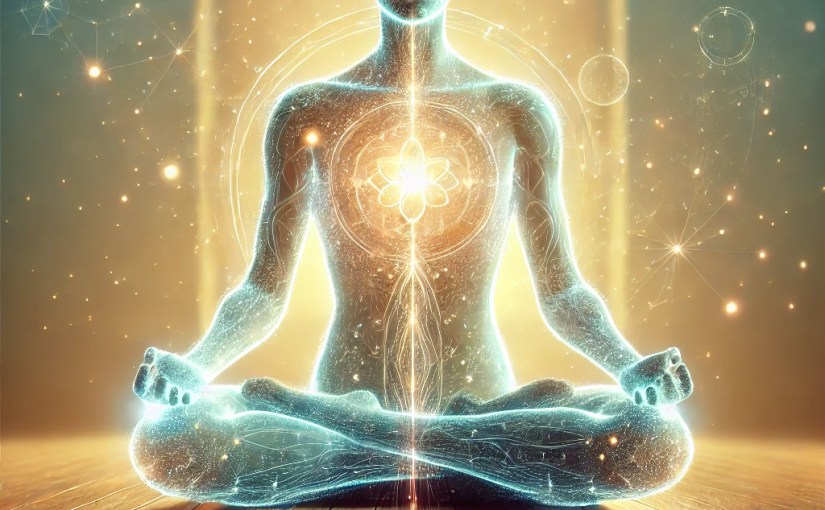
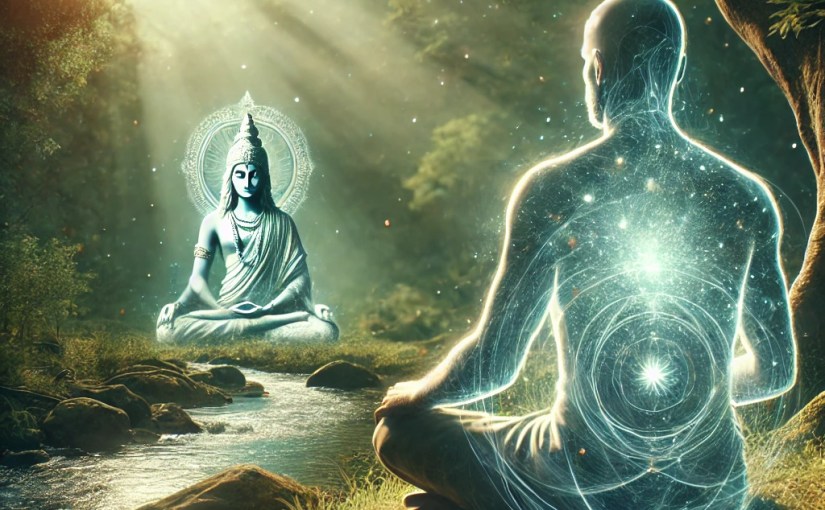
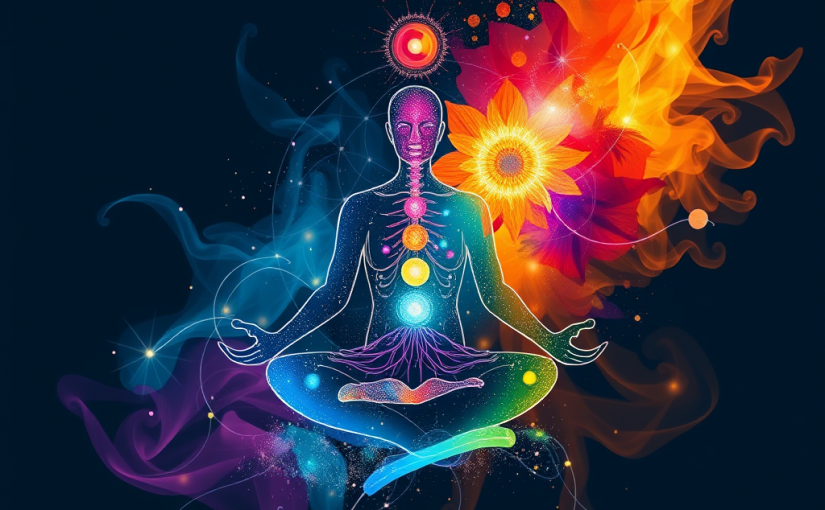
Why Do We Get Stuck? A Quantum Insight Into Depression, Happiness, and Letting Go

In life, we all experience many moods and mind states—joy, sadness, courage, fear, excitement, boredom. These are natural waves of consciousness. But somewhere along the journey, many people make a silent mistake: they get attached to one mental state and start believing it is permanent. This is one of the root causes of suffering.

People fall into depression not just because life is hard, but because they begin to think, “This sadness is final. This is how my life will always be.” Suicidal thoughts often come from this same illusion—the belief that one unbearable feeling is the whole truth of existence, with no possibility of change. People lose happiness not because joy is absent, but because they get trapped in one emotional corner of the mind and forget how naturally shifting life actually is.

This is where Sharirvigyan Darshan, the science of understanding life through the body and the atom, offers a simple but powerful insight.

Look at the quantum world, the very foundation of life. The particles inside every atom—electrons, protons, photons—never cling to one state. They exist inside what physicists call the quantum field, a state where multiple possibilities are always alive at once. The quantum field is like an open playground, where a player can do anything—jump, sit, lie down, roll, squat, walk, run, or stand still. All these actions are present in potential, but the player chooses one depending on the moment. The other actions remain available, silently waiting, not lost. Similarly, in the quantum world, when the right condition appears, one possibility crystallizes into reality, while the others gently step back into the field of maybes.

Now compare this to the human mind. Our consciousness also holds many options. We can think new thoughts, feel new emotions, and take new actions. But we get stuck when we obsessively identify with one mind state, believing, “This is me, and this is final.” This leads to stress, anxiety, depression, and sometimes even the tragic decision to give up on life. But nature itself doesn’t behave this way. Your own body is proof. Right now, trillions of atomic decisions are happening in your cells, constantly shifting, adjusting, and choosing the next best state according to the present moment. Life is not designed to be rigid—it is designed to flow.

So what is the solution? Sharirvigyan Darshan teaches you to remember your atomic roots. Like the quantum field, you too are standing in an open playground of possibilities at every moment. If sadness is present, let it pass through you like a temporary action in the field—but don’t block joy, courage, or peace from blooming next. The universe is constantly shifting between possibilities. Particles don’t get stuck—they shift when needed. Why should you be any different?

This is not just philosophy—it is how reality works. Learning to live like the quantum world means letting go of obsessive clinging to one mental state and allowing life to unfold naturally, just as it was designed to do.

Quantum Living: The Forgotten Art of Decision Without Ego

At the heart of reality, particles like electrons, protons, and photons make choices all the time. They shift orbits, tunnel through barriers, and synchronize through quantum coherence. But they do so without attachment, pride, or emotional entanglement. They respond to the present moment—not out of desire, but out of resonance with the cosmic pattern. There is no stress of “me” or “mine.” There’s no inner debate of “should I or shouldn’t I?” A photon simply chooses the path that nature opens. An electron jumps orbit when the conditions fit. This is decision without ego, action without burden.

So the question naturally arises: If particles can do this, why can’t humans?

The answer is both simple and profound: we can.

Human decisions are made in the same way at the root. Whether we call it instinct, habit, or intellect, our brain is continuously processing probabilities, much like the quantum world does. But we add layers—labels like success or failure, friend or enemy, joy or sorrow. We wrap choices in stories. We get stuck in attachment to outcomes, creating unnecessary suffering.

Yet the very duality we struggle with is not a mistake of nature—it’s a tool of nature. Just as a quantum particle exists as both wave and particle (a principle called complementarity), human life operates on dual choices: love and fear, risk and safety, attachment and detachment. Every living behavior, from the smallest reflex to the largest life decision, is rooted in this duality. The heartbeat alternates between contraction and relaxation. Breathing oscillates between inhalation and exhalation. The brain constantly switches between action and rest. Life is designed to flow between opposites—this is not confusion; it is balance.

Consider the act of walking. It’s a controlled fall, a constant choice between left and right, forward and stillness. Even creativity is dual: it thrives on both chaos (the spark of ideas) and order (the shaping of form). Love too is dual—it asks for both holding on and letting go. Every living behavior is a play of opposites, just as quantum particles toggle between two states, weaving reality through their dance.

When we understand this, life becomes lighter. Decision-making turns into meditation. We stop overburdening ourselves with perfection or regret. We can act like the electron—not for reward, not out of fear, but simply because it is the next natural step in the universal rhythm.

This is the vision of Sharirvigyan Darshan: the body and mind are not separate from the quantum field; they are its living expression. Your consciousness is not violating nature when it decides—it is mirroring the same cosmic logic the atom follows. The only difference is that humans create ego after choosing. But this is optional. The universe never asked for it.

In truth, we are holographic continuations of atoms, running on the same software but at a higher resolution. When we realize this, life becomes effortless. Quantum living is not about escaping choices; it’s about flowing with them, just like the particles do—freely, harmoniously, without getting stuck.

What Is the Light of the Self? A Conversation from the Depths of Experience

After certain intense spiritual experiences, a question kept echoing in me: After death, is there not pure self-awareness—whatever form the self takes—unlike deep sleep, where there’s no self-awareness? This wasn’t just a philosophical question. I had experienced something that wouldn’t let me rest until it found articulation.

There was a dream visitation from a departed soul. It wasn’t visual or physical but felt like a deeply encoded presence. It carried its individuality from its lifetime, but in a form that was compacted, compressed, like darkness itself. Glistening darkness. As if its entire personality had been shrunk into a concentrated essence. A mascara-like, subtle blackness—a self folded into itself.

It asked me, confused: Is this liberation?

It felt to me as if that soul wanted to escape out of that encoded envelope. And I noticed something else—the state of that soul was entirely different from my own awakening experience. In my deepest moment of inner realization, I had experienced a self that was one with mental formations, like waves in a vast ocean. But those waves were not separate from the Self. They were the Self. That was light. That was bliss. That was ultimate.

And yet, I must admit: that wasn’t the pure Self. It was the Self with content. An ocean full of shimmering movement. I did not experience the ocean without waves. And that makes a difference.

When I was asked by that dreamlike soul about liberation, I found myself unable to describe the real nature of the pure Self—because I myself hadn’t achieved it. I had only experienced a vastness filled with blissful movement. I had not yet known the silence beyond even bliss. I only replied that it is not light and it seems compressed and stressed although it was infinitely vast and dark sky. Probably as I remember I advised it to move further ahead to light just guessing from my own experience as I had moved ahead and ahead in yoga to reach awakening. It had also told that it used to be afraid of death in vain but this state is not so called death like and it feels it is good enough and living like.

Still, my sadhana continues. I do advanced kundalini yoga. My meditation image is often the soul or essence of a departed one, the one closest or nearest in relation to it. It feels like this in itself becomes a prayer—an automatic offering beyond words to help it to be liberated if it is lingering somewhere inbetween. There’s something deeply natural in that.

But one doubt remained. In that visitation, I had seen darkness—the kind that doesn’t feel evil, but also doesn’t feel free. Yet, I realized: pure awareness cannot be called dark. Neither can it be called light. Because both darkness and light are properties of reflective material.

Even space itself is a kind of material. The pure Self is not space, though space-like. It’s not dark, not luminous. When we call it “self-luminous,” it makes the mind think of it like some glowing thing. But it isn’t.

“Self-luminous” is just a pointer. It simply means: it knows itself without help. It doesn’t reflect. It doesn’t shine on. It doesn’t receive light. It simply is.

It is awareness being aware. But not in the way we usually think of “being aware.”

I recalled the Upanishadic truth:

“It is not known by the mind, but by which the mind is known.”

“It shines not, neither sun, nor moon, nor fire. It alone gives light to all. By its light all else is seen.”

These statements aren’t about light. They’re about presence prior to perception.

And then something beautiful settled into my understanding. I realized that metaphors can help if used delicately. And some traditional metaphors suddenly made deep sense to me:

1. The Mirror That Reflects Nothing
Like a mirror that reflects no object—but remains the potential to reflect. Still. Unmoving. Unused. That’s the Self.

2. The Eye That Sees But Cannot See Itself
It sees all, but can’t become its own object. Like awareness. It knows all, but is never an object of knowing.

3. The Silence Behind All Sound
Sound comes and goes, but silence remains. Not silent as absence, but as eternal background.

4. The Sky Untouched by Clouds
Clouds come and go. Sky remains. Not even made of space. Self is subtler than space.

5. A Flame That Doesn’t Burn
Like the idea of flame without heat or glow. No wick, no oil. Just presence without quality.

These helped me not as knowledge, but as living orientation.

Still, I find that when the mental waves subside, the bliss subsides too. That ultimate peak cannot be held by force. And yet, that doesn’t feel like a failure anymore. It feels like a natural return.

What I experienced was likely Savikalpa Samadhi—where Self and waves are one. Blissful, yes. Transformative, yes. But not final. Not the ocean without waves. Not the pure Self beyond even bliss.

There’s still something lacking. I don’t pretend to have reached the final goal. The experience felt like the peak of existence, the ultimate moment of union. But I know that I haven’t merged into the unconditioned ocean of pure awareness.

What remains then is trust. Gentle remembrance. Resting. Not trying to grab the ocean. Just to be the presence that always was.

I let this be my guide:

“I am that which saw the waves. Let me rest as that.”

This means: I am not the movement, not even the blissful play of awakening. I am the witnessing reality behind it—the one that never moves, never becomes. The one that knows even the subtlest wave is still an appearance in Me.

Sometimes I forget to stay aware of who I really am. But even in that forgotten state, I can still see the reflection of my true self—sometimes in my own hand or face—because everything, even this body, holds the whole within it, like a hologram. This simple recognition instantly brings me back to awareness, without effort. So whenever I drift, I gently return—again and again—knowing that even the forgetting happens inside that same awareness.

That is the path now. Not chasing light. Not escaping darkness. Just resting in That which is neither—and beyond.

The Subtle Balance Between Meditation and Real-Time Awareness

For years, my spiritual journey has been shaped by deep contemplation, structured meditation, and the real-time application of awareness in daily life. The most profound experiences, however, have not come from withdrawing from the world but from integrating awareness within the flow of worldly responsibilities.

One of the key insights I’ve gained is that Sharir Vigyan Darshan (contemplation of the body) can act as a direct entry point into a state of relaxation and clarity, even amidst chaos. A single, instant gaze on the body is enough to trigger a gasp followed by slow breathing, bringing momentary relief. While this is not Kevala Kumbhaka (breathless state), it is a spontaneous shift in breath and energy, offering a glimpse of balance in the middle of life’s rush.

The Role of Lifestyle in Sustaining Awareness

I have realized that a sattvik, slow-paced lifestyle naturally supports Sharir Vigyan Darshan—allowing contemplation to remain effortless and continuous. On the other hand, a fast-paced, rajasic, or tamasic lifestyle makes it harder to sustain awareness, requiring deliberate effort to return to real-time contemplation.

However, rather than waiting for ideal conditions, I prefer to put in the effort at every moment, regardless of the chaos, while ensuring that worldly responsibilities remain undisturbed. But this isn’t always so. Many times as much worldly chaos is there that much easy and uplifting and blissful the sitting meditation session becomes. However one prerequisite is that the sharirvigyan darshan contemplation should fit properly and deeply inside the worldly chaos. Means it should look if one is doing blissful and pleasurable meditation while deeply indulged in the worldly chaos. It seems best possible only with the sharirvigyan darshan. This approach is not about withdrawing but about integrating awareness within action itself.

The Evolution from Structured Meditation to Spontaneous Awareness

In the past, I maintained structured meditation practices to cultivate stability. Over time, this meditation practice naturally extended into real-time awareness, where contemplation is not separate from daily life.

This shift taught me that:

Structured meditation provides the foundation, deepening clarity and stillness.

Real-time awareness ensures that these meditative insights do not remain confined to practice sessions but become a way of being.

Over time, structured meditation and real-time contemplation start complementing each other, creating a seamless cycle where neither is forced.

Even though my practice has evolved, I have not yet reached the stage where real-time awareness is completely effortless. There are still moments where conscious engagement is required to sustain it. However, the effort needed has gradually decreased with time, making contemplation more natural. However this effort is like a blissful play, not like a boring burden. Yes, one should have atleast minimum threshold of energy in body to properly sustain it.

A Journey Still Unfolding

Despite glimpsing higher states, including Savikalpa Samadhi, I have not yet experienced Nirvikalpa Samadhi—the state of complete dissolution. I also recognize that Kevala Kumbhaka, though experienced for hours, still requires deeper refinement. To invite it more naturally, I now emphasize deep spinal breathing in my Kriya practice, ensuring that energy work continues as before but with more attention to breath.

At this point, I seek a grounded normalcy with nondual awareness, where the balance between worldly life and deeper states of realization is not an ongoing struggle but a natural rhythm. The goal is not to escape into transcendence but to sustain a stable, awakened presence while fully engaged with life.

The Takeaway

From my experience, one truth has become clear:

Spiritual growth is not about isolating meditation from life but allowing both to complement each other.

Real-time awareness can be developed, even amidst chaos, but requires consistent practice.

A sattvik lifestyle naturally supports awareness, but effort is still required in rajasic or tamasic conditions.

Structured meditation provides depth, while real-time contemplation ensures integration.

Even momentary glimpses of awareness accumulate over time, leading to constant level type awareness and subsequently more permanent inner transformation.

I am still exploring, refining, and learning. My practice is not yet perfect, but the path is clear: Balance between structured meditation and real-time awareness is the key to sustaining both spiritual depth and worldly engagement.

Sharirvigyan Darshan: The Effortless Balance of Awareness in Life and Meditation

For a long time, I have been exploring the interplay between awareness, effort, and balance in my spiritual journey. Over time, something remarkable has emerged—a way of experiencing blissful awareness not as a separate meditation practice but as an integrated part of life itself. This understanding has evolved through my direct experience, not from theory or blind faith.

The Subtle Play of Prana and Apana

In yoga, the mixing of prana and apana is considered fundamental. Prana is expansion, apana is recession. Through Sharirvigyan Darshan—a way of attending to the body while remaining in expanded mental and sensory awareness—this mixing happens naturally. I’ve observed that simply giving momentary attention to the body while being in expanded awareness produces a general balanced bliss. It’s an indescribable state—neither fully expanded nor contracted, yet both and neither at the same time.

This practice has become particularly useful in busy and technical hours, when deep meditation isn’t possible. A brief glimpse at the body while engaged in work is enough to sustain a sense of balance and bliss. It doesn’t require long sittings; just a fraction of a second is enough to feel the shift.

But when I meditate deeper on the body—following the holographic principle of Sharirvigyan Darshan, where everything present in the cosmos at that moment is reflected inside the minuscule body—a sitting meditation effect is produced. The meditation image brightens, awareness turns more interiorized, and the experience deepens naturally. Possibility of setting up keval kumbhak also increases as the breath becomes subtle.

Effort and Habit Formation in Awareness

Many assume that spiritual mastery eventually leads to a state where no effort is required. But I have realized that the mind always has a one-pointed nature, no matter how much brain and experience develop. It always requires effort to shift attention from one point to another. There is no final mastery where effort disappears—rather, the mastery lies in making this shift natural and spontaneous.

However, this effort becomes better tuned with time. It starts blending smoothly into daily activities, forming a habit rather than feeling like a separate practice. Eventually, Sharirvigyan Darshan and meditation stop being distinct from each other—instead they complement and reinforce one another. Meditation enhances awareness in daily life, and life provides a continuous field for effortless meditation.

Detachment Without Ignorance

One of the greatest transformations I have noticed is how emotions no longer stick. Even during stressful situations, awareness eventually settles into balance. Emotional disturbances take longer to dissolve compared to normal thoughts, but they still pass through without leaving residues.

This is not ignorance or suppression, but a blissful and detached acknowledgment. It is as if emotions are fully felt, but they don’t sink their hooks into awareness. They arise, they are seen, and they fade—leaving only clarity and ease behind. This natural detachment also means that mental overprocessing has reduced—there is no longer an endless inner chatter about emotions.

Energy and the Sustainability of Awareness

But this state is not automatic. It requires energy. When energy is high, balance is effortless. When energy is low, fluctuations happen. This makes a healthy and balanced lifestyle crucial. It’s not about rigid rules but living in a way that naturally supports clarity and awareness.

This has simplified my approach to sadhana. There is no longer a need for complex techniques or forced meditation. Awareness flows naturally when the body, breath, and prana are in harmony. Meditation is now an add-on, not a necessity for maintaining awareness. It deepens and refines the experience but is not the foundation—life itself is the practice.

The Shift from “I” to the Meditation Image

During deeper meditation, something fascinating happens—the “I” dissolves and is replaced by the meditation image of Dada Guru. This is not just visualization; it becomes the living center of awareness. It is as if the ego-based self fades, and consciousness fully absorbs into the Guru Tattva.

This aligns perfectly with Dharana leading into Dhyana—where the meditator, the object of meditation, and the act of meditation become one. The sense of individuality fades, and only the presence of the Guru remains.

What I Have Achieved and What I Seek

I don’t claim to have reached the highest spiritual state. I have not yet experienced Nirvikalpa Samadhi—the ultimate dissolution of self into pure consciousness. However, I have tasted a balanced, blissful awareness that integrates seamlessly into life.

My journey is ongoing. What I have now is clarity—a deep understanding of how effortless awareness can be cultivated through both direct experience and disciplined effort. I do not seek a final escape from the world but rather a sustained state where spiritual awareness remains unshaken within worldly life.

This path is not about grand achievements or mystical displays. It is about living with balance, clarity, and bliss, here and now. And in this journey, Sharirvigyan Darshan has become my key to effortless awareness—both in meditation and in life itself.

Balancing Meditative Awareness in Worldly Life: A Natural Spiritual Evolution

Spiritual progress is not about withdrawing completely or being fully immersed in the world—it’s about maintaining a subtle connection to meditative awareness in all states. My journey has shown me that true awareness is not just attention but meditative attention—always centered, even faintly, on the meditation image.

At first, I needed active effort to keep this awareness intact, especially in worldly activities. Without it, energy would disperse into countless distractions. But I discovered a simple and effective method—Sharirvigyan Darshan (hologram based awareness of the body’s inner sensations). By intermittently engaging with it, I could prevent unlimited dispersion of energy while still living a full life. Over time, this practice evolved, requiring less effort but delivering the same effect.

However, I also realized that grounding alone is not enough. If done without awareness, it just leads to unconscious engagement with the world. The key is awareness with a meditative anchor—ensuring that the meditation image, even if dim, never fully disappears.

Shifts in Awareness and Meditation Image

As my practice refined, I noticed the meditation image remained the same, but its clarity and intensity fluctuated. During deep meditation, it became bright and sharp, while in worldly distractions, it dimmed. Instead of forcing control, I learned that balance is more effective than strain. Too much effort creates stress, while a gentle, self-correcting awareness keeps everything aligned naturally.

External factors like a less stressful environment help maintain this balance, but they don’t define it. Ultimately, regulation comes from within. When fluctuations occur, I draw awareness back using Sharirvigyan Darshan, preventing unnecessary drift without forcing anything.

Drifting Toward Nirvikalpa Samadhi

Now, I find myself passively drifting toward Nirvikalpa Samadhi. The process is no longer about effort; it unfolds naturally. Sharirvigyan Darshan is still needed at times, but far less than before. External influences can slow down the drift, but they don’t disrupt the direction. I handle these slowdowns without struggle, keeping awareness steady.

I have not yet reached a fully irreversible state, but I sense that stabilization is happening. My experience shows that spiritual development is like nature itself—constantly evolving without force. There are no fixed milestones, only a continuous unfolding.

The Essence of My Journey

Meditative awareness aka pin pointed awareness is the only real awareness—everything else is dispersion. Awareness can be of unlimited types like unlimited number of objects and processes like gross awareness, subtle awareness, environmental awareness, social awareness, shunya awareness or Brahm or void awareness etc. But I think meditative awareness with help of meditation image is the best or real. This is so because it’s almost impossible to dissolve all worldly thoughts together or one by one into infinity. But it’s quite easy to unite Meditation image or pin pointed awareness with or dissolve into infinity with advanced contemplation. As the meditation image is already connected to everything of one’s life, due to this everything is united together with Brahman infinity means awakening glimpse happens. 

Effort at the start is necessary, but over time, awareness refines itself, needing less intervention.

Fluctuations happen, but balance prevents regression.

Nirvikalpa Samadhi is approaching passively, not by force, but by allowing the process to unfold naturally.

I don’t claim to have achieved everything, but I see the direction clearly. The journey is effortless now, yet always evolving. Development is everywhere in nature, and so it is in my path.

Kundalini, Bliss, Breath, and Non-Duality: A Natural Unfolding

I have observed something interesting in my practice—when I meditate on Sharirvigyan Darshan, a sense of non-duality arises. As soon as this happens, my breath becomes long and stable. It feels as if the breath is flowing to nourish this non-dual awareness. It seems rapid external and irregular breath happen only to sustain duality to keep one bound in the world.

During Kevala Kumbhaka, my breath became rapid yet internal, with only about 5% felt externally. It wasn’t stressful. It seemed to move through the backbone, though not entirely clear.

One day, I maintained non-dual awareness the whole day while fully engaged in a stressful work environment. In the evening, while waiting for a bus in the rain shelter, I lightly meditated on Kutastha. Something remarkable happened, probably Keval kumbhak—the state remained unbroken for two hours during the journey. I had to intentionally step out of it to walk home. Yet, this experience hasn’t repeated in the same way. Yes, the same thing happened again after a day or two in the same situation. The same thing happened third time again after a day or two when I was at home and my family members, out of fear, forcibly woke me up after a short time. This means that in those days, my special nature was formed which was conducive to this. I became surrendered to the unknown, perhaps after facing the worldly blows. Meaning, surrender is very important. Along with it, knowledgeable life behavior is also necessary.

Still, a subtle transformation is happening. My practice isn’t about chasing peak states anymore. Instead, there’s a natural continuation of previous insights, leading to a deeper understanding of Pranayama and how non-duality shifts between active and passive modes. Means, first nonduality practiced willingly, now it’s something becoming second habit.

At times, even subtle attention is needed to sustain this, and in the competitive world, I sometimes feel a perceptual mismatch. Earlier, I lived in full worldliness and full non-duality together, but it was little stressful. We can’t call it stress actually as it was providing relief. Yes, we can call it more energy demanding. Now, with age and medical factors, my energy is different, and I let things flow naturally rather than force balance.

Breath and Prana: What’s Really Happening?

During Kriya breathing, when my belly moves forward, it feels as if Prana is being sucked up from Muladhara, and breath follows passively. It seems the main role of breath is to flow Prana, not the other way around. Instead of controlling breath, Prana is naturally leading the process. The proof is, how the body lives during keval kumbhak when the breath goes to stop. Earlier I used to think if breathing control prana. I used to simply breath, ignoring prana movement through spine. Now kriya yoga showed me other way round means prana breathing that seems more fulfilling. Although my natural instinct had made me get prana breathing through sexual yoga itself since beginning in the name of raising kundalini shakti up from muladhar that probably helped in my glimpse awakening. Say prana breathing or raising up kundalini or raising up prana, it’s the same thing and there’s similar pull and push of body, breath, bandhas or whatever. It’s Web of words on which we have to walk home means purpose safely without falling instead getting support of it. When I see upward through kutastha in Shambhavi mudra during in breathing, the satisfying in breath deepens and become more fulfilling and filling my body vessel up to crown. It’s other proof that breath follow prana. Attention upward means prana upward. Attention or meditation and prana coexist together.

During worldly actions full of duality our awareness or prana rapidly goes swinging between upper and lower chakra areas. Upper chakras are full of light and lower chakras are dark. Also different chakras deal with different worldly feelings. Duality is also made up of mixture of light and dark and their different shades as per situation. Rapidly Up -down moving prana force breathing up down rapidly to take assistance from it in its rapid shifting. At this swinging moment a little meditation on sharirvigyan darshan brings immediate nonduality amazingly and there’s instant long, satisfying and blissful gasp of a breath, subsequently it becoming regular, slow and little deeper. This all proves interconnected nature of breath and prana. You yourself can also feel it. That’s why I think pranayam was designed thinking if nonduality can stabilise breathing then stabilizing breath can also produce nonduality.

This prana breathing brings a blissful, satisfying, and fulfilling experience. The bliss isn’t just abstract—it has a sexual quality, rising from the lower centers and converging into the meditation image in the brain, agya chakra and sahasraar chakra. Instead of dissipating outward, it fuels meditation, confirming that Prana-Shakti is sublimating naturally.

Beyond meditation, I’ve noticed that bliss spreads through my whole being after:

Physical asanas

Traveling to beautiful places, especially with family

Engaging in the world with non-dual awareness

From Effort to Flow

Earlier, bliss was localized in the spine and brain, but now, as non-duality removes resistance, bliss flows through the whole body. Stability has increased. I no longer need to hold onto bliss—it flows effortlessly.

Still, I recognize there’s more to refine. I haven’t reached an irreversible state like Sahaja Samadhi, and I remain aware that stability in daily life is an ongoing process. But the path is clearer now—non-duality isn’t something to force always, although seems to be must do in starting learning days, but something that naturally unfolds when resistance dissolves.

Breath: The Bridge Between Mind, Energy, and Metabolism

Breath is often seen as just a means of oxygen supply, but in reality, it plays a much deeper role—it moves energy (prana) throughout the body. The mind, breath, and energy are intertwined. When the mind wavers, the breath follows, and energy moves accordingly.

Restless thoughts → Fast, shallow, irregular breath → Scattered energy.

Calm thoughts → Deep, slow, rhythmic breath → Energy flows smoothly upward.

Emotional thoughts → Heavy or erratic breath → Energy concentrates in the heart.

This constant fluctuation also affects metabolism. When prana is unstable, metabolism becomes agitated, increasing oxygen consumption. A restless mind speeds up breathing, activates the nervous system, and demands more oxygen. When the breath steadies, prana stabilizes, metabolism slows, and oxygen needs decrease.

In deep meditation, where thoughts subside, breath naturally slows or even stops. How does the body survive? Because the need for oxygen drops. The heart rate slows, cellular function minimizes, and prana sustains life beyond physical respiration. Yogis in deep states of stillness can remain breathless because they are nourished by prana, not just oxygen.

Pranayama is not just breath control—it is energy mastery. By consciously regulating breath, we stabilize prana, balance metabolism, and calm the mind. When prana flows smoothly, life functions effortlessly. Understanding this unlocks the secret of inner stillness and vitality.

One more secret. When practical meditation of Sharirvigyan Darshan is done, then the stray breath starts coming in balance. This is Rajayoga, this is Sahaja Yoga, this is Gyanyoga. It means that we are going towards yoga with the thought power of the brain. In the end all the paths of yoga meet each other, whether it is the path of thought or the path of breath.

Most Yogirajs write about their experience of Pranayam in such a way that the breath started flowing inside. This means that the life or prana started flowing inside on its own. Now it is not dependent on the movement of breath for its circulation. Now they are breathing only to get oxygen. Very less breath is required for this. This means that in the breath taken to give movement to the life, we have to take oxygen without need. Then it has to be used without need. This increases the metabolism. Due to this, we remain restless and stressed and also tired, due to which we do not get proper rest. Meaning, if you breathe in less oxygen space, you will suffocate because the prana produced by breathing and metabolism are interconnected. They cannot be separated. But the inner prana or inner breath allows metabolism to happen at its own pace or at the basic level, it does not increase or decrease it.

The prana increased by breathing will always demand more oxygen, because it speeds up metabolism. If an attempt is made to increase prana by breathing deeply in less oxygen space, then due to not getting enough oxygen to maintain prana energy, you will experience suffocation. That is why yogis in the mountains breathe slowly and naturally, not deeply in yogic way, so that there is a balance between the demand for prana and oxygen. Until prana is independent of breath, the need for oxygen will remain, so it is necessary to balance breath and prana. In Kevali Kumbhaka, breath starts getting separated from prana.

Kundalini and Sharirvigyan Darshan – The Holographic Reality of Awakening

Lately, I’ve been reflecting deeply on something that has completely changed my understanding of meditation and consciousness. I used to think that meditation dissolves thoughts, but then I realized—it doesn’t dissolve them at all. Instead, it opens them up, like a blossoming flower. The proof? When we exit meditation, all the previously shrunken thoughts are still there, unchanged. This means that the transcendental state isn’t about wiping thoughts away—it’s about keeping everything open, expanded, and connected to the all-pervading consciousness.

Then another realization hit me: Universal consciousness itself is shrunken into thoughts. When we meditate deeply, it expands. But then it tends to recoil back with great force. Even if one touches the Nirvikalpa experience, this recoil effect gradually brings them back, step by step. For the first few months after deep meditation, consciousness remains expanded, and creativity peaks. Thoughts feel weak, almost blending into the universal consciousness. But as time passes, mental processes start becoming more distinct again. The more awareness contracts, the darker the mind appears.

If meditation is completely stopped, in three years, the original state returns. However, if daily meditation is maintained, even for a little time, this expanded awareness remains forever, though in a subtle way. And then I realized something even bigger—continuous meditation without any worldly disturbance can lead to complete stabilization.

Kundalini is the power that makes us feel this universe in our mind. Because the nature of this power is to curl up like a snake and go towards the dark hole of the Muladhara, therefore it is also called the divine serpent. The literal meaning of Kundalini Shakti is the power that coils. It remains standing straight with its hood raised for only a few moments of awakening. After that it starts returning back.

Sharirvigyan Darshan – The Holographic Science of the Body

Then I discovered Sharirvigyan Darshan, a powerful Tantric philosophy that explains something mind-blowing—everything outside exists inside the body, in every detail. It’s not just an idea, but a scientific truth.

This is where the holographic principle comes in.

Just like in a hologram, where every part contains the whole, the human body is a miniature universe. The galaxies, the sun, human societies, emotions—everything is within. At first, it sounded unbelievable. But then I started experimenting. I found that just looking at my own bare hand brought an immediate sense of calmness and transcendental awareness.

And then I thought: Isn’t everything that’s happening outside actually happening inside this very body?

It’s not imagination—it’s real. This realization is so powerful that it instantly shifts consciousness into a higher state. It’s not just theory—it’s something you can verify right now, just by looking at your own hand.

No Effort Needed – Just Knowing and accepting is Enough

The most shocking part? No effort is needed to shift consciousness. It’s not like other spiritual paths that demand years of effort. Just reading the book once and acknowledging its truth is enough.

Of course, like everything, it deepens over time. But the beauty is that worldly life remains fully engaged. Work, relationships, enjoyment—everything becomes richer, not weaker. Unlike traditional meditation, which often leads to detachment and renunciation, this path makes life more fulfilling, more intense, more alive.

Kundalini and Higher Tantra Seek the Seeker

As this realization deepened, something even more incredible happened. Higher Tantric sadhanas started finding me. I wasn’t looking for them, but it felt like they were searching for me. Kundalini itself seeks out those who are ready.

But this also brought a warning—immature or forced practice can be harmful. I realized that Left-hand Tantra, if practiced without readiness, can be dangerous. This book warns about it in detail, explaining how the body itself is the greatest temple, and that enlightenment unfolds naturally, without force. Right-hand Tantra is safe, but Left-hand Tantra requires a deep inner readiness.

And it’s true—deliberate or immature practice can cause harm. This is not something to be forced. It has to happen at the right time.

The Holographic Universe Inside Us

The most fascinating part of this approach is that it integrates everything. Unlike traditional spiritual systems that separate worldly life from enlightenment, Sharirvigyan Darshan shows that everything—work, relationships, pleasure, responsibilities—are all part of the path. There is no need to escape. Awakening happens within life, not outside it.

And the secret behind this? The body is a hologram of the entire cosmos.

If the whole universe is inside, then there is nothing to renounce. Enlightenment isn’t about escaping—it’s about realizing that everything even enlightenment is already inside.

This is why even a simple glance at the hand can instantly shift awareness into transcendence. Why? Because the hand itself contains the entire cosmos. This is not a metaphor—it is an actual, scientific truth.

Beyond Theory – The Direct Path

What makes this different from all other spiritual teachings is that it is immediate. No waiting for years, no complicated practices. Just a direct acknowledgment of reality—that the body contains everything.

The universe is not outside—it is inside. The galaxies, the sun, the people, the emotions—all are happening within this very body. And once this truth is seen, life becomes effortless.

Meditation is no longer about “doing” something. It becomes natural and spontaneous. Even a single look at the hand reminds us that everything is within. And that simple realization brings instant calm, a direct connection to the universal consciousness.

Where This Path Leads

This knowledge doesn’t just stay at an intellectual level. It transforms everything. The mind expands, creativity peaks, emotions stabilize, and worldly life becomes richer.

And when the time is right, higher Tantric sadhanas start revealing themselves. But instead of being forced, they come naturally, as if consciousness itself is guiding the way.

However, it is important to be ready. Some practices, especially in Left-hand Tantra, can be dangerous if done without maturity. This book explains it clearly—there is a right time for everything. Rushing can cause harm, but when the seeker is truly ready, the path opens effortlessly.

Final Realization – A New Way to Awaken

This experience has convinced me that the old way of spirituality needs to change.

There is no need for unnecessary struggle. Awakening does not mean renouncing life—it means living it fully, with deep understanding.

And the greatest secret?

The body is the key.

The body is the hologram of the universe.

Everything outside is already inside.

Once this is realized, there is nothing more to seek.

And once this truth is seen, there is no unseeing it.

Everything changes, forever.

Kundalini Yoga keeps a person swinging between wakefulness and dreams

Friends, an idle mind is really the devil’s workshop. That is why I keep doing something or the other all the time. If I don’t see anything to do, I start writing. My son works awake so that he can have good dreams. Wow, he considers the world of wakefulness to be fake and the world of dreams to be real. I was shocked to hear this. A new thought arose. All the sages and Vedas and Puranas also say the same thing. They say that a life full of detachment and non-duality is the real one. Such is the life in dreams as well. In that, happiness and sorrow, all feel almost the same. Everything is in the form of experience. Pure experience. All experiences are in the form of happiness. If a lion runs from behind, even though you are afraid, you don’t feel afraid. If someone starts fighting, even though you are angry, you don’t get angry. If you fall from a mountain, even though you are in pain, you don’t feel sad. Even if you get a kingdom, even though you are happy, you don’t feel happy. Meaning, uniform happiness is everywhere, but not the polluted happiness of materialism. It is a happiness in the form of a subtle experience. The physical gross world pollutes the subtle experience of happiness and sorrow. Happiness increases due to the gross world, but it also increases sorrow. The higher the ball goes, the lower it falls. Happiness is the soul’s own form. But the world subjugates it and creates waves in that uniform spiritual happiness. Then, with time, in the absence of the gross world, that wave is destroyed. Due to this, of course, a person reaches the uniform or waveless spiritual happiness again, but in that state, darkness in the form of sorrow is felt. This appears to be due to illusion. Actually, it is not so. It is like after moving around in a circular motion around your body, everything around you feels as if it is rotating for a while. This is also called dizziness. This is why the word illusion has been used for ignorance.

While living in the world, no one can escape from illusion. Yes, it can definitely be reduced. Perhaps that is why people leave the world and become sadhus and sanyasis, so that the world cannot create illusion. But the disadvantage of this is that it does not lead to self-development. Because the world is necessary for this. The world can also be called a necessary evil in this case. That is why it is considered appropriate for those who have attained self-awakening to take sanyaas. It means that they have reached the peak of self-development, and there is no need for them to get entangled in the world. Actually, there is a need. But only to keep the body alive, because until the age determined by the previous deeds is not completed, the sanskars related to the prarabdha karma will keep troubling. Yes, this will not create sanskars for the next birth.

Dreams also produce a wave in self-happiness, but not as much as the awakened state. That is why when that wave disappears in the dream, the illusion is also not as much as in the awakened state. Some illusion is there. That is why it is said in the scriptures that the world is like a dream, and it should be considered as a dream only. In reality, it is so because the physical world does not enter the mind. We are only feeling its subtle picture, as we do in dreams. But considering it gross and physical creates all the mess. Man considers it gross and physical only in the greed of a wave of happiness, so that he can get more pleasure from the wave. At that time he does not realize the sorrow that comes with it in the long run. Actually, the big wave is called the gross world and the small wave is called the subtle world. While watching a movie, nothing gross happens but many people become too attached to it. Meaning, they get too immersed in it. And create a wave of happiness to the fullest from it. Due to this, the scenes shown on the screen, despite being subtle, become gross for them. That is why, many times, when such and such scenes come, they create a ruckus and vandalism in the theater. Many people, despite being in the gross world, do not get attached to it. They remain absolutely calm no matter what happens. Meaning, it does not create huge or rapid waves in their mind. For them, even the gross world is as subtle as a dream. Due to this they remain the same in happiness and sorrow. But the same thing is that for self awakening, strong mental waves like that of physically awakened state are also necessary.

This world is like a river flowing in both directions. That is why it is not understood properly. It lifts some people up and takes some people down. It can be said that the worldliness full of attachment should be pacified with non-dualistic philosophies like Sharirvigyan Darshan. This will give self awakening and also will not create illusion. Kundalini Yoga can give this benefit that the power to hold the picture of Samadhi felt during the non-dualistic feeling will increase and along with this, due to the energy in the brain, one will be able to do the feeling of Sharirvigyan Darshan well along with worldliness. Because every chakra is connected to some kind of worldliness, so at the time of every kind of work, some chakra or the other will become active. Meaning, the effect of power will increase to that chakra. Due to this, the feeling of Sharirvigyan Darshan along with that work will become easy, because all work is done with power. That extra power may seem trivial to us, but it is very useful. With the daily practice of Kundalini Yoga, the channels to all the chakras will remain open. When energy reaches the chakras, some energy will also reach the chakras of the brain, because all the chakras are interconnected. And it is from the brain that feelings arise, whether dualistic or non-dual.

In between, with the feeling of physiology, a person should continuously oscillate between the waking state and the dream state.
This will give you the benefits of both. Both the awakened and the dream state. The benefits of the awakened state include the benefits of material worldliness along with Kundalini awakening and the benefits of the dream state include the benefits of sannyasa. Meaning that the awakened state changes into the dream state with Kundalini yoga. However, the dream state also changes into the awakened state because of it. When there is fatigue in the body, that is, incapacity, that is, lack of strength, then the person is in a state similar to that of intoxication or dream. When he gets strength from Kundalini yoga, he again becomes like an awakened person in the worldly life. Of course, later, being troubled by it, he again changes his physically awakened state into a dream state with the feeling of physiology philosophy, and minimizes his illusion. At that time, he has the power. That state is not like that of intoxication or sleep, in which there is no strength. Therefore, his extra power is transformed into a mental picture of samadhi. Meaning that he enters samadhi with that extra power.

When one feels his present state in the body, the breath comes out of the stomach rapidly, especially if there is a lot of pressure in the brain. Due to this, the energy descending from the front channel makes the brain feel lighter. I feel that this energy going down turns back from the Muladhara and ascends to the brain again through the spinal cord. This means that a closed circuit loop of energy is formed. Surprisingly, this energy going up does not increase the pressure in the brain but makes it lighter. Anyway, the pressure should increase due to lack of energy. Perhaps the back part of the brain helps more in creating emotions, or it is the main controller of the entire brain. That is why the energy received by its back part from the spinal cord is more effective. It may also be that the energy pushed down is not full of oxygen. While passing down through the heart chakra, it becomes full of oxygen, gets purified and ascends up from the back. Perhaps that is why it is said that the energy should keep moving in the microcosmic orbit loop. If there is lethargy or low pressure in the brain, then deep breath is taken in. Due to this, the energy ascends up and makes the brain powerful. This means that if there is no energy in the brain, then how will it descend down. That is why at that time the emphasis is on lifting it from the bottom to the top. It happens on its own. Meaning, just as the gross physical body remains in balance, similarly it also makes the mind in the same way, if it is meditated upon properly.

Kundalini awakening is also like physical awakening. It can also be called the peak point of the physical awakened state. Because in this, the subconscious mind also awakens along with the conscious mind. Meaning that for Kundalini awakening, one has to be more awakened than the awakened state. This can happen only from the awakened state, not from the dream state. However, it can be achieved by saving the energy by converting the awakened state into a dream state. Meaning that dream state also have a contribution in this. But that dream state is not a dream state of powerlessness or laziness or compulsion, but a dream state that has been achieved deliberately. With that extra energy, the mental picture of the form of a Guru, God etc. is meditated upon. With practice, that meditation increases so much that that mental picture awakens. Although usually the mental picture is in the dream state, but at the time of Kundalini awakening it comes into the awakened state. It means that the mental wave that creates that picture becomes so strong that it crosses the limits of the dream state and enters the realm of the awakened state. The power that awakens it is so great that it also awakens the subconscious mind i.e. the soul with it. That is why everything seems non-dual i.e. one i.e. one’s own form because then the earlier sleeping dark soul becomes as bright as the awakened Kundalini picture by waking it up.

Actually, it is the soul that is awakened. The mental meditation picture is only a medium to awaken it. Because the Kundalini picture is a mental wave, which is already a form of an awakened state. Of course that wave is so light that it comes in the realm of the dream state. Still a wave is a wave. The mental waves of the dream state and the awakened state are the same thing, there is only a difference of intensity in them, nothing else. The light is the same, it does not change if it is reduced. What I mean to say is that the meditation picture was not asleep that it would wake up. The sleeping soul is connected to the subconscious mind which wakes up with the help of meditation picture. The meditation picture works to send power to the brain. When that power reaches above a certain limit, it wakes up the subconscious mind. We call this Kundalini awakening.

It is the soul that is asleep, and which wakes up at the time of Kundalini awakening. In reality, his illusion of being in deep sleep is dispelled, because it is only due to the illusion that he appears to be asleep. Of course, after experiencing a few moments of Kundalini awakening, the person goes back to sleep, but that deep sleep is not as effective as it was before because now he has known the truth. The subconscious mind of a man becomes like a burnt seed which does not have the power to give birth to a new life or birth. It is burnt by the light of the soul. Like a burnt seed, it exists but cannot give a new birth. Then it is said that the deeds that will be done after Kundalini awakening will create the subconscious mind to give results. But when the subconscious mind itself is burnt, then how can new deeds be added to it. When the basis of the existence of the subconscious mind is destroyed, then how will a new one be created. But then how will the fruits of the new deeds be obtained. Then a self-awakened man can do any sinful act without any fear. So in answer to this it is said that due to the absence of the subconscious mind, there is no attachment towards the deeds and their results. What attachment can light have towards light? Darkness has attachment towards light only. He keeps flowing with time. If he commits sinful deeds due to ignorance or compulsion, he gets its fruits quickly and in a mild form because his attachment was also mild. Even if he does not get the fruits in that life, he gets free by handing them over to nature. Now it is nature’s will to decide to whom it gives its fruits. Perhaps that is why it is said that the whole universe or the whole society has to suffer the consequences of the deeds done by great men. There are many such examples of the founders and preachers of religions, and great or world leaders. Why many religions are thirsty for each other’s blood till date, this can also be linked to this. All these experiences and thoughts are from the scriptures, which we are analyzing here as scientifically as possible. When the soul becomes illuminated or luminous, then every object or thought wave or the whole world will look like oneself because all things are luminous. What is the difference between light and light? This light is much above ordinary light, meaning it is the light of consciousness.