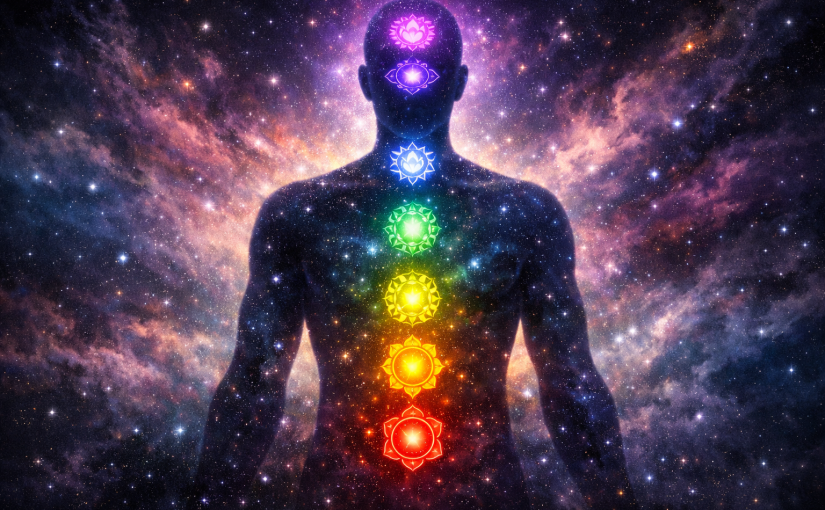
Chakra Growth Through Human Life, Nondual Awareness, Tantra and Ashrama: A Deep Inner Journey from Muladhara to Liberation

Introduction: Understanding Life as a Natural Spiritual Unfolding

Sometimes the deepest truths of life are not found in scriptures first, but in direct observation of how human life naturally moves from one phase to another. This conversation explored a powerful idea: that the chakra system may not only belong to meditation halls or yogic diagrams, but may also reflect the natural progression of ordinary human life itself. From survival struggles to love, from family nourishment to sweet speech, from thoughtful wisdom to formless awakening, life may itself be a spiritual ladder. Alongside this, nondual awareness can silently help every phase, gently lifting consciousness upward while one still lives fully in the world.

Muladhara Phase of Life: The Foundation of Survival, Duty and Hard Work

The journey begins with Muladhara Chakra, the root center of life. This phase is deeply connected with survival, body, livelihood, discipline, family responsibility, earning, home-making and building stability. For many people, the early and middle parts of life are dominated by Muladhara themes. A person works hard, carries burdens, secures food, house, children’s future and social standing. Even without spiritual knowledge or nondual awareness, such sincere worldly functioning can strengthen Muladhara.

Yet there are two ways root life can be lived. One is ordinary struggle filled with fear and tension. The second is conscious living, where the same duties are performed with steadiness, presence and awareness. In that case, the root not only grows stronger, but becomes less trapped in anxiety. Nondual awareness helps here by reducing fear and making the base stable while subtly encouraging upward movement of energy.

How Nondual Awareness Quietly Helps Every Stage

One key insight from this dialogue was that Nondual Awareness is useful in every life stage. Even while one is working, earning, raising family or engaging in worldly life, awareness can continue its subtle ascent. It allows a person to participate without being fully imprisoned by each stage. Fear becomes lighter, craving becomes softer, ego becomes less rigid, and consciousness slowly becomes more spacious. Because of this continuous mild ascent, later spiritual awakening may become easier and smoother.

Swadhishthan Awakens: Love, Relationship and Emotional Blooming

Once enough grounding and security are built, life often moves naturally toward Svadhisthana Chakra. This phase is linked with attraction, romance, intimacy, emotional exchange, sensuality, pleasure and family life. Marriage often belongs here, but not always. Some people receive Swadhishthan growth much earlier during adolescence through silent, distant or contactless love affairs. Even without touching or speaking much, a deep one-sided or hidden love can awaken tenderness, longing, imagination, beauty and emotional sensitivity. Such experiences can shape the heart deeply.

Others, however, do not get the chance for Swadhishthan flowering in the early years of marriage. Family chaos, job insecurity, financial stress, responsibilities and extreme hard work may keep them locked in Muladhara survival mode for many years. Though married outwardly, inward emotional blossoming remains delayed. Then around the 40s, when finances improve, duties reduce and maturity deepens, emotional life may awaken freshly. Love, softness, companionship and desire for connection may arise more strongly than in youth.

Tantric Fulfillment and the Shift to Navel Power

The conversation then explored how once Swadhishthan becomes sufficiently strengthened, especially through intense relational or tantric sexual fulfillment, another shift may happen. Hunger begins to grow dramatically—not in the sense of overeating, but in wanting fully satisfying nourishment, taste, bliss and subtle fulfillment through food. This points toward Manipura Chakra, the navel center of vitality, digestion, power and life-force.

When emotional and sensual cravings settle, ordinary acts like eating can become richer. Food is not merely consumed; it is experienced with awareness, taste, satisfaction and subtle nourishment. This can symbolize life-energy moving into the core of being, bringing warmth, confidence and embodied strength.

Family Meals, Belly Joy and the Opening of the Heart

Another beautiful insight emerged: eating together joyfully as a family creates love. The old saying that the way to the heart is through the belly contains profound truth. Nourishment at the level of the belly often opens Anahata Chakra, the center of affection, care and belonging.

When family members share meals peacefully, hunger is satisfied, the nervous system relaxes, warmth grows, conversation opens, laughter returns, and trust deepens. Food becomes more than calories—it becomes love, hospitality, memory and emotional reassurance. Thus Manipura nourishment naturally flowers into heart connection.

Sweet Speech and the Vishuddhi Phase of Life

Once the heart softens, expression also changes. Loving feelings begin to emerge through the throat as sweet words. Tongue becomes gentle, affectionate and kind. This was understood as the flowering of Vishuddha Chakra, the center of speech, truthful expression, resonance and refined communication.

When earlier fears are healed and the heart opens, speech often becomes naturally sweet. Gratitude is easier, anger becomes less harsh, and words carry healing instead of bitterness. Sweetness of tongue here means that inner bitterness has reduced. Communication becomes a channel for love.

Social Security, Relaxation and Rise to Ajna

The discussion then moved into a subtle psychological truth. Sweet and skillful speech creates smoother relationships and social harmony. This gives a person a sense of social security. When conflict reduces and belonging increases, the mind relaxes. With that relaxed state, energy can rise toward Ajna Chakra.

Ajna was described as producing blissful and nondual thinking deep enough for purposeful spiritual reading, writing, blogging and discussion. When survival stress and social anxiety reduce, mental bandwidth becomes available for contemplation. Thought becomes clearer, more insightful and less reactive. One becomes drawn toward meaningful study, synthesis and wisdom sharing. In this sense, refined worldly life itself can prepare the ground for spiritual intellect.

Sahasrara Awakening: The Crown of Inner Fulfillment

From Ajna, a further upward push may lead to Sahasrara awakening. This was understood as a movement into unity, stillness, transcendence and the dropping of narrow ego identity. Sometimes this comes dramatically, but often it appears quietly as spaciousness, silence behind thoughts, peace beyond object-based pleasure and a sacred sense of existence.

Awakening here was described as something that may arise after life has been fully lived and all stages sufficiently experienced. Once worldly lessons are digested, fascination with repetition fades, and formless absorption begins to attract the mind naturally.

Ashrama System as Inner Stages of Consciousness

The conversation beautifully connected this chakra journey with the traditional Ashrama System. After Grihastha, where worldly duties related to chakras below sahasrara are fulfilled, one may naturally enter Vanaprastha of formless absorption. This means a gradual inward turn, less obsession with outer life, more reflection, wisdom and formless meditation.

If nondual living continues further, then an inner Sannyasa may arise. This does not necessarily mean physically abandoning family or wearing robes. It means no longer needing external support to remain inwardly fulfilled. Love may remain, responsibilities may remain, but dependency fades. One can remain immersed in the formless whether alone, with family or among people.

Must Ashramas Be Lived by Body or Mind?

The final conclusion was profound: perhaps these ashramas need not always be followed externally by the body, but their inner essence must often mature in the mind. A person may live with family yet inwardly embody renunciation. Another may wear robes yet remain full of attachment. Therefore outer roles are secondary; inner transformation is primary.

Discipline reflects Brahmacharya, responsibility reflects Grihastha, detachment reflects Vanaprastha, and freedom reflects Sannyasa. Liberation, or Moksha, may come when these inner lessons are integrated.

Final Reflection

Life itself may be the hidden scripture. First we struggle to stand, then we learn to nourish, then we long to love, then we speak sweetly, then we think deeply, then we awaken, then we dissolve. Whether one uses chakra language, varna-ashrama system, psychology or spirituality, the essence remains the same: if lived consciously, every ordinary stage of life can become a sacred staircase toward freedom.


Sati Burnt in Daksha’s Yagya as a Metaphor: Love Marriage, Lost Love, Shiva Consciousness and the Psychology of Shakti Peethas

Ancient stories often survive not because they are only historical or religious narratives, but because they hold emotional truths that repeat in every age. The story of Sati, Daksha, Shiva, Parvati and the Shakti Peethas can be read in many ways. One person may see it as sacred mythology, another as cosmic symbolism, and another as the hidden story of human love, separation, memory and transformation. In this reflective interpretation, the episode of Sati burning in Daksha’s yagya becomes a metaphor for the pain caused when a father’s ego blocks his daughter’s chosen love marriage. It becomes the story of how love may be denied outwardly, yet remain alive inwardly forever.

Daksha’s Ego as Social Pride and Family Control

In this reading, Daksha does not only represent a mythological king or father. He represents the rigid ego of family authority, social pride, status consciousness and control over the personal choices of children. Such fathers may believe they know what is best, but often what appears as duty is mixed with prestige, fear of society and attachment to image. When a daughter loves someone outside expected norms, conflict begins. The father stands for order, respectability and approval, while Shiva stands for freedom, authenticity and unconventional love.

Thus, Daksha’s rejection of Shiva can be understood as the refusal of living love in favor of social ego. It is the old battle between family honor and inner truth, between reputation and genuine emotional destiny.

Sati Burnt in Daksha’s Yagya as Inner Death

The burning of Sati need not be seen only as literal self-immolation. It can symbolize the inner death of a woman whose love is denied, humiliated or made impossible. She may remain physically alive, but something essential within her is consumed by grief. A person can continue breathing, smiling and performing duties while an entire inner world has turned to ash.

It may also mean that after separation she undergoes the funeral rites of her youthful identity. The girl who once dreamed freely is gone. In many lives this happens silently. Society sees marriage, ceremony and continuation of life, but does not see the inward burning that preceded it.

Another possibility in this interpretation is that she may later be married to another man, yet inwardly she remains unmarried because her heart is still united with the lost beloved. Outward relations may change, but inward belonging can remain untouched.

Shiva Carrying Sati’s Corpse as Memory of Lost Love

One of the most powerful symbols in the myth is Shiva carrying Sati’s corpse and wandering in grief. Read psychologically, this means a person moving through worldly life while carrying the preserved image of lost love within. The body of Sati becomes the memory-image that refuses to dissolve.

Many people live like this without admitting it even to themselves. They marry, work, laugh, travel and fulfill responsibilities, yet somewhere inside they still carry an unburied image of someone once loved. The world sees movement, but inwardly they are wandering with the corpse of memory.

This is not always unhealthy. Sometimes it is simply the human way of honoring what deeply shaped the soul. Love once real does not disappear because circumstances changed.

Shakti Peethas as Body Centers of Memory and Emotion

The falling of Sati’s organs across the land and the creation of Shakti Peethas can be understood as the distribution of memory through the whole being. In this interpretation, Shiva as Atma, or inner consciousness, has absorbed the image of Sati so completely that her presence becomes fixed in different body centers, emotions and functions.

When the eyes of Sati fall at Naina Devi, it means Shiva looks upon the world, yet the image of Sati remains present in perception. In a poetic sense, the eyes now belong to Sati rather than Shiva. The world is seen through memory. Vision itself is colored by love.

The same principle extends to all organs and actions. The throat may carry unspoken words. The heart may hold tenderness or ache. The hands may perform worldly duties while remembering someone else. The feet may walk many roads, yet move under the influence of an old longing. In this sense, the sacred shrines symbolize centers where emotional energy lodges itself in the embodied person.

Rather than reducing the symbolism to a literal count of fifty-two organs, it may be more elegant to say that the many Peethas represent many sacred centers of human feeling, perception and function like chakras, channels etc.

Shiva as Atma Absorbing the Image of Sati

A profound line in this interpretation is that Shiva is Atma and has imbibed the image of Sati into himself. This means the beloved no longer remains merely outside as another person. She becomes internalized within consciousness itself.

At first, love seeks the other externally. Later, through separation, longing or maturity, the image enters the self. Then the person carries not another body, but another presence within. Actions continue in the world, yet a hidden companion lives in consciousness.

This idea has deep spiritual echoes. In many traditions, what is loved outwardly eventually becomes realized inwardly. Separation turns attachment into subtle energy. Memory becomes Shakti.

Parvati Taking Birth and Marrying Shiva as Love Returning in New Form

When Sati takes rebirth as Parvati and again marries Shiva, the symbolism becomes even richer. In one life reading, this means that though she may marry elsewhere outwardly, inwardly she keeps the image of Shiva alive. In a deeper sense, she ultimately remains united with him.

Another reading is that love denied in one form returns in a more mature form later. Youthful passion dies, but transformed devotion is reborn. What could not happen under one set of conditions may happen inwardly, symbolically or in another chapter of life.

Thus Parvati is not merely another character. She is love reborn after burning, dignity restored after humiliation, union after fragmentation.

Jungian Psychology of Sati, Shiva and Daksha

Modern psychology also offers a lens for such myths. Carl Jung might see Sati as the inner beloved image, Shiva as consciousness carrying the feminine principle within, and Daksha as the oppressive father-authority structure of society and ego. Shiva carrying the corpse would symbolize fixation upon lost psychic content that still demands integration.

Parvati then becomes the return of that same energy in healed and mature form. In Jungian language, the myth can describe individuation: the process through which rejected emotional truth is eventually reintegrated into a fuller self.

Why Such Myths Still Feel True Today

This symbolic reading touches people because it mirrors real life. Many individuals outwardly accept one destiny while inwardly belonging to another. Some fulfill social duty while carrying silent love. Some lose a person but keep the image alive in perception, action and emotion. Some are separated in youth only to rediscover the same essence later in transformed ways.

That is why ancient myths never become old. They speak in images what ordinary language struggles to express.

Final Reflection on Love, Memory and Inner Union

The story of Sati, Daksha, Shiva, the corpse, the wandering, the Peethas and the rebirth as Parvati can therefore be read not only as theology but as the psychology of love surviving ego, separation, marriage, grief and time. It becomes the journey from outer union to inner union.

What society prevents externally may still live inwardly. What burns may return purified. What is lost as form may remain as presence. What was once another person may become part of consciousness itself.

In that sense, the final union of Shiva and Parvati means more than marriage. It means the reconciliation of love with life, memory with action, and soul with its own deepest image.

From Tantra to Breathless Dhyana: My Real Experience of Energy Shift, Nondual Bliss, Relationships, and Spiritual Phases

How This Conversation Began: The Problem of Rigid Spiritual Paths

One major drawback of rigid sectarian differentiation, as I came to understand, is the loss of holistic opportunity. If a follower begins living only one ideal from birth, then he may never receive the natural chance to pass through other essential phases of human and spiritual development. If someone is trained only in the Rama ideal from childhood, then perhaps the Krishna, Shakti, and Shiva dimensions of life remain unlived, unrefined, or misunderstood. In such a case, liberation may become extremely difficult, or if glimpsed, may fail to stabilize deeply because earlier energies were never properly integrated. The same limitation can arise with followers of any single path whenever one phase is absolutized and the others are neglected.

This may explain why many people feel relief by remaining outside rigid sect identities. Without labels, life often moves more naturally. Growth can unfold stage by stage according to inner need rather than outer doctrine. In that sense, such people may become followers of all paths whenever required. They are loyal not to banners, but to truth as it reveals itself through changing phases of life.

The Four Living Phases of Spiritual Growth

Through reflection, I began to see that what traditions separated into sects may actually be phases of one complete human journey. First comes the Krishna phase, where energy gathers through worldly participation. Here life includes groundedness, relationships, romance, playfulness, learning, karma, emotional richness, joy, and active engagement with the world. This is not merely distraction. It may be the very gathering of force at the Muladhara, the root of life energy.

Then comes the Shakti phase. The gathered worldly energy is concentrated and pushed upward with greater intensity, almost like reaching escape velocity. This can occur through tantric Kundalini Yoga within a framework of nondual worldliness. One remains in life, yet awareness increases. Worldly force becomes spiritual fuel.

As the process deepens, a more inward movement appears. Nonduality grows stronger, ordinary worldliness becomes less attractive, and more energy is drawn toward meditation, inner transformation, and sattvik and refined tantric practice rather than outer pursuits. This is the Shiva phase. At its peak, awakening or glimpses of self-realization may arise.

After attainment comes naturalness. This is the Rama phase. In the beginning, thoughtless or breathless dhyana may still depend on posture, breath discipline, prior momentum, or energetic methods. Later, when the flow through the Sushumna becomes natural and self-sustaining, a simpler maturity emerges. This is the ripened Rama phase, balanced resting in truth.

Thus, these are not competing doctrines. They are movements of one life. To cling to one phase alone is to freeze growth prematurely. To allow all phases their rightful place is to let liberation unfold organically.

Are These Phases Fixed or Different for Everyone?

Seen in this way, each prior phase becomes the fuel, foundation, and preparation for the phase that follows. Nothing essential is wasted; the energies cultivated earlier are gradually refined and carried upward into a higher or more integrated expression. For this reason, the phases often unfold most fruitfully when they arise in a broadly natural sequence. The Krishna phase gathers vitality through joy, relationships, learning, emotional richness, and participation in life. The Shakti phase then converts that gathered vitality into disciplined force, transformation, and purposeful ascent. The Shiva phase uses this concentrated power for inwardness, detachment, meditation, and awakening. Finally, the Rama phase stabilizes whatever has been realized into balance, dharma, simplicity, and natural living. Without adequate nourishment from earlier phases, later phases may become dry, forced, premature, or unstable. Yet sequence should not be understood as rigid or identical for all people, for individuals may revisit earlier stages or awaken certain qualities sooner than expected. Even so, as a general principle of human development, the previous phase often provides the raw material that the next phase must refine. In this sense, right sequence supports growth that is more complete, humane, and enduring.

Hidden Meanings Behind Muladhara Teachings

Another insight arose regarding teachings about Muladhara energy. It is rarely stated directly that one should live relationships deeply or engage in energy-conserving sexual practices intensely. Instead, traditions often speak indirectly of strengthening or awakening Muladhara. This may have happened because of social and cultural reasons.

Many older teachings likely used symbolic language when discussing sexuality, vitality, grounding, and foundational drives. References to root energy may point not only to mystical ideas but also to survival instinct, embodiment, security, sexuality, and life-force. Direct language may have been avoided due to moral norms, fear of misuse, and the need for maturity in practice.

Is Sex Indulgence or a Doorway?

I reflected that sex appears as indulgence when seen directly. Yet it may be the inner mind that directs it toward awakening. This distinction is important. The same outer act can have very different inner meanings depending on consciousness, intention, and relationship to desire.

Sex may arise from compulsion, loneliness, domination, or craving. But it may also arise from affection, surrender, healing, conscious union, intimacy, devotion, or self-transcendence. The outer act or motive of it alone does not determine the truth of it. Mind directs energy.

Traditional tantric perspectives often suggest that liberation does not come from the act itself but from awareness during the act, non-attachment, transformation of desire into presence, and seeing unity rather than grasping. Without inner shift, it remains ordinary pleasure. With clarity, it may support growth. Yet self-deception is common. If craving increases, it is indulgence. If peace, compassion, steadiness, and responsibility increase, something deeper may be occurring.

Why Society Often Rejects Sexual Spirituality

Another realization followed. Without becoming eligible for tantric sex, society often sees it with disrespect or even boycotts it. What is usually rejected is not sex itself but sex perceived as irresponsible, impulsive, exploitative, immature, outside accepted norms, or harmful to social order.

Traditional eligibility may have implied self-control, emotional steadiness, respect for partner, capacity for awareness, ethical grounding, and freedom from crude lust. Without these, powerful practices become dangerous or degrading. Society often creates harsh norms to prevent chaos, though in doing so it may suppress healthy mature sexuality too. The wise path is neither repression nor reckless permissiveness, but integration.

My New Development: Loss of Breathless Dhyana After Raising Muladhara Energy

Then I shared a direct experience. After lifting Muladhara energy through tantric sex, the next morning I could not enter the breathless spontaneous deep dhyana that had been occurring daily. The felt Sushumna flow was also absent. I wondered whether the channels had become exhausted.

One explanation offered was that this was not damage but a temporary physiological and attentional after-effect. Strong arousal may create nervous-system fatigue, autonomic shifts, neurochemical changes, outward movement of attention, or depletion through exertion and sleep disruption. There is no scientific evidence of literal channels being exhausted, though yogic language may describe it as prana dispersal or temporary imbalance.

But I Had Slept Well: Something Else Happened

I clarified that I had slept enough. What followed was surprising. There was strong bliss and nondual feeling in worldly life. Relationships strengthened. Harmony increased. Enemies became like friends. Family life improved. Yet this came at the cost of breathless deep dhyana. Meditation was still present, but not as deep, blissful, relaxing, breathless, or spontaneous as on previous days.

This led to a deeper interpretation. Rather than damage, it seemed like a shift in mode of consciousness. Energy that previously expressed itself as inward meditative absorption through verticle movement had redistributed into relational coherence, embodied bliss, and worldly harmony through horizontal movement.

Two Modes of Consciousness: Cave and Marketplace

There may be two alternating modes. One is inward absorptive mode, marked by spontaneous deep dhyana, quiet or subtle breathing, inner pull, detachment from outer life, and central-channel sensations. The second is integrated worldly mode, marked by nondual ease in activity, warmth in relationships, less conflict, friendliness, family harmony, charisma, and bliss while functioning normally.

I appeared to experience the second mode. Through bonding hormones, emotional opening, nervous-system regulation, and reduced friction, the energy became socially expressive. What had earlier become deep meditation now became living harmony.

From a symbolic lens, earlier days resembled Shiva mode, inward stillness. This newer movement resembled Krishna or Shakti mode, love, relation, dynamic life, embodied joy. Neither is inferior.

One striking memory remains with me. I was, in some subtle and unspoken way, compelled out of a predominantly Shiva mode by the psychological influence of a certain lady, whose identity need not be disclosed. Nothing explicit was said; it was more a matter of presence, temperament, and silent authority than of words. Under that pressure, I found myself impulsively turning either toward a more natural inner Rama mode or toward a deeper and clearer Shiva mode, as though something false or unstable was being challenged and forced to reorganize itself. At the time, I interpreted her attitude as disapproval, perhaps seeing my tantric style of life as inferior or misguided or full of sexual misconduct. On a few occasions, she became quite angry at some of my remarks, perhaps considering them excessively bold or inappropriate. I chose to calm the situation and restrain myself, as her authority was higher than mine. Yet whatever her intention may actually have been, the result proved beneficial. What first appeared as rejection or opposition gradually revealed itself as a blessing in disguise, for it redirected me toward a more grounded, developed and authentic inner state. It was as though the fruit had already ripened, and someone merely struck it with a stone so that it might fall at the proper time and onto the right path.

The Real Trade-Off: Transcendence or Integration?

A powerful conclusion emerged. Sometimes consciousness exchanges depth of transcendence for depth of embodiment. What seemed like a loss of spirituality may simply have been spirituality expressed differently. The breathless cave of meditation had become the marketplace of nondual life.

This does not mean one mode is higher than the other. Deep dhyana refines being. Loving harmony expresses being. Silence and relationship are two faces of one energy.

Final Reflection

My experience suggests that spiritual life cannot always be measured by how deep meditation feels on a given morning. Sometimes the highest state may not be breathless withdrawal but effortless love, reduced hostility, healed relationships, and natural bliss in ordinary life. Sometimes the Sushumna is not felt because it is being lived.

Perhaps Krishna gathers life, Shakti transforms it, Shiva refines it, and Rama stabilizes it. Perhaps these are not sects at all, but seasons of consciousness moving through one human journey. And perhaps true maturity lies not in clinging to one phase, but in recognizing the sacred movement through them all.

From Sutra Neti Shock to Stable Dhyana: A Personal Journey of Breath, Body, and Balance

When a Simple Practice Triggered Unexpected Change

It started with what seemed like a simple yogic cleansing technique. I used Sutra Neti on my right nostril, but instead of clarity, it created a sudden shift in my behavior. It wasn’t just mild irritation. The nostril felt inflamed and blocked, and along with that came an unexpected wave of anger, frustration, and worry. Social interactions became difficult for a few days, almost as if something in my internal balance had been disturbed. This was not a subtle experience—it was intense enough to affect my day-to-day functioning.

Looking back, it became clear that this was not just a superficial issue. The nasal passage is deeply connected to the nervous system, and irritation there can influence mood and emotional regulation. The inflammation likely triggered a stress response, and the blockage altered my breathing pattern, which in turn affected my mental state. What I initially thought might be some deeper yogic shift turned out to be a very grounded physiological reaction. The lesson was immediate: not every yogic technique suits every stage of practice, especially when the system is already sensitive.

Moving Away from Aggressive Techniques Toward Stability

After that experience, Sutra Neti started to feel unnecessary. I realized that I was already getting good dhyana through spinal breathing and some asanas. There was no real need to add something that introduced instability. The focus naturally shifted toward what was already working. Simpler practices were not only sufficient but actually more supportive of a stable meditative state.

This marked an important shift in understanding. Earlier, there was a tendency to think that adding more techniques would enhance progress. But now it became clear that once dhyana begins to stabilize, the role of additional techniques diminishes. The system does not need stimulation; it needs balance. Practices like Jala Neti may still have a place, but only when truly required, not as a routine.

Subtle Experiences During Spinal Breathing

As practice continued, I began to notice sensations along the spine, especially around the Vishuddha Chakra. Sometimes the awareness would be felt in the front of the body, sometimes shifting to the rear, almost as if the perception itself was moving through layers. When the gaze naturally turned upward toward the Ajna Chakra, breathing became extremely subtle. At times, it felt as if breathing was happening on its own, without any conscious effort, almost like it was fulfilling itself. Sometimes stimulation and activation of rear agya chakra point noticed especially at times of awareness in upper chakras.

This was not literal cessation of breath, but a refinement of it. The body required less oxygen, and the nervous system entered a deeply calm state. What appeared mystical at first gradually revealed itself as a natural progression of meditative refinement. The key insight here was not to interfere. The moment I tried to control or prolong these experiences, imbalance would creep in. But when left alone, they unfolded smoothly.

The Gradual Deepening of Dhyana

With consistent daily practice, spinal breathing began to feel more refined and increasingly blissful. This raised an important question: does continuous practice over years extend dhyana and lead to samadhi? The answer became clearer with experience. Practice does not accumulate like time in a bank. Instead, it removes resistance.

Dhyana becomes longer and more stable not because of effort, but because effort reduces. Samadhi is not just extended meditation; it is a qualitative shift where the observer and the process dissolve into one. This cannot be forced by increasing duration. It emerges when interference drops to zero. The breath becoming subtle, awareness stabilizing, and the sense of ease increasing are all signs of this direction, but they are not goals to chase.

Natural Timing and the One-Hour Cycle

An interesting pattern appeared: after exactly one hour, the body would come out of dhyana on its own, without looking at a clock. This initially felt significant, but it turned out to be a natural rhythm. The body operates in cycles, and after a certain duration, it rebalances itself. This is not a limit but a self-regulation mechanism. Forcing beyond it or trying to hold the state would only create disturbance.

The key realization was that meditation is not about duration but about quality. Whether it lasts forty minutes or seventy, the depth and stability matter more than the clock.

The Role of Padmasana and Physical Limits

Alongside meditation, posture also evolved. Holding Padmasana became easier, increasing from thirty minutes to nearly an hour. However, after thirty minutes, a mild strain in the knee would appear. This raised an important question about whether the body should be challenged to increase stamina.

The answer became clear: muscles can be trained, but joints must be respected. The knee is not designed to adapt to strain in the same way muscles do. The strain indicated that the hips were not fully open yet, and the knee was compensating. Pushing through this would not build strength; it would accumulate risk.

Breaking posture briefly did not disrupt dhyana when done consciously. In fact, it often improved the second phase of meditation by removing subtle discomfort. This shifted the focus from rigid continuity to intelligent continuity—maintaining awareness rather than posture.

Observing Knee Sensitivity Beyond Practice

Another important observation was that the right knee showed stress not only in lotus but also after driving or when physical activity was reduced. This indicated that the issue was not limited to posture but involved general joint sensitivity. Long periods of immobility or repetitive use, such as driving, were enough to trigger discomfort.

This reinforced the need for balanced movement and gentle care rather than pushing limits. The body was signaling clearly that it required attention, not force.

Morning vs Evening Meditation Dynamics

A subtle but practical understanding developed regarding timing. After dinner, focusing strongly upward toward the Ajna center felt uncomfortable, possibly because digestion was active. In contrast, morning meditation before breakfast felt naturally deeper and more stable.

This led to a simple approach: use the morning for deeper practice and keep evening sessions lighter. There was no need to manipulate energy or direct it consciously. The body’s natural rhythms were enough to guide practice.

Integrating Meditation with Daily Life

Another practical question arose about how long to wait before breakfast after meditation. A short gap of about fifteen to twenty minutes proved sufficient. This allowed the body to transition from deep calm to active digestion without abrupt shifts. Simple activities like sitting quietly or moving gently were enough during this interval.

Final Understanding: Effortless Progress

Looking at the entire journey, the central theme that emerged was simplicity. Techniques, duration, posture, and even subtle experiences all have their place, but none of them should be forced. Progress in meditation is not about doing more; it is about interfering less.

The initial shock from Sutra Neti, the evolving breath, the shifting sensations along the spine, the natural one-hour cycle, the knee’s feedback, and the timing of practice all pointed toward the same conclusion. The system knows how to balance itself if allowed.

The real movement is not upward or downward, not toward any chakra or state, but toward effortlessness. And in that effortless state, dhyana deepens on its own, without struggle, without force, and without the need to chase anything further.