Bhishma — Mahabharata’s Greatest Unsung Hero

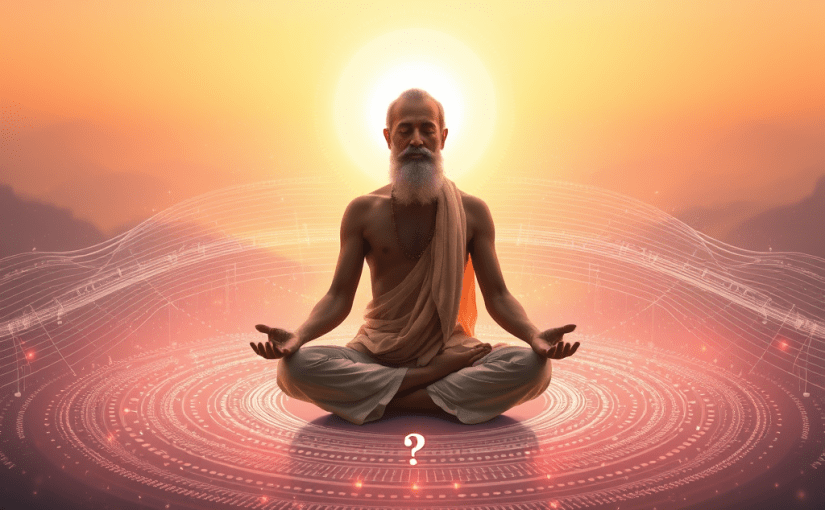
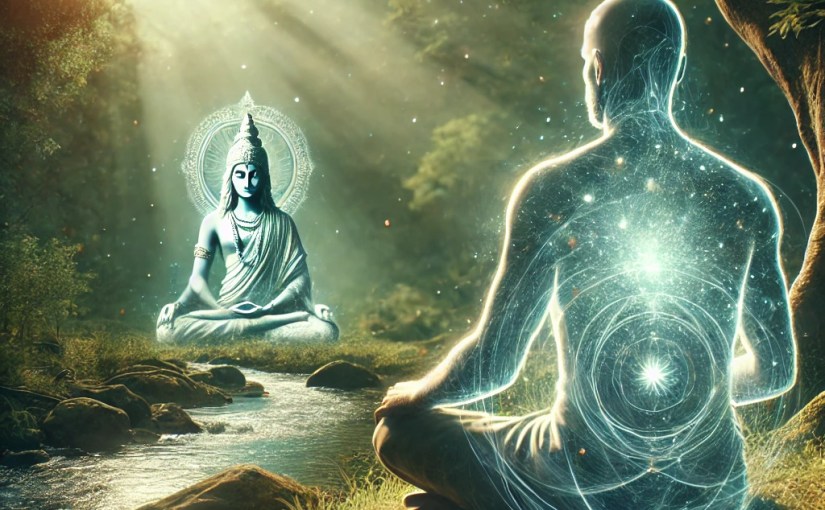
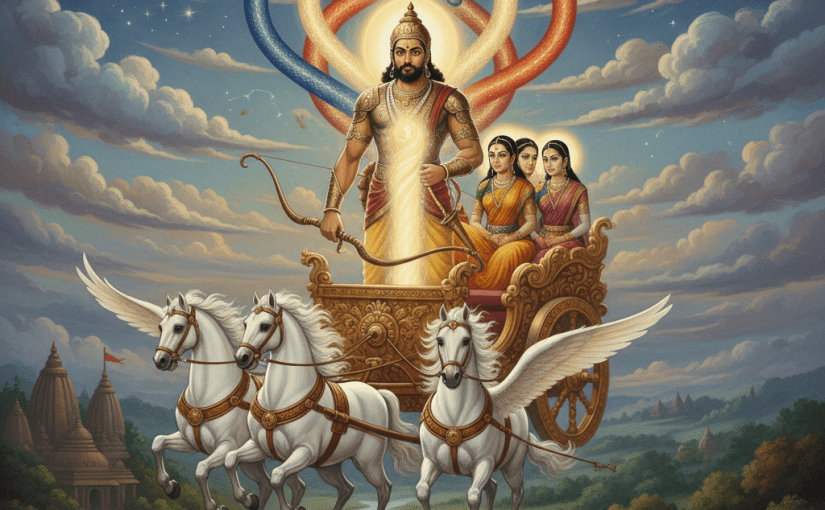
The story of Bhishma abducting Amba, Ambika, and Ambalika is one of the most famous episodes in the Mahabharata. On the surface, it speaks of politics, duty, and human emotions. But when viewed through a yogic lens, it reveals subtle lessons about Kundalini energy and the journey of consciousness.

1. Bhishma: The Will That Guides Energy

Bhishma, with his unwavering determination, goes to bring the princesses to Hastinapur. In Kundalini terms, he represents the force of discipline and strong will that helps awaken and guide energy upward. Just as in yoga, Shakti cannot rise by itself—it requires direction, intention, and focused effort.

2. Vichitravirya: The Passive Consciousness

Vichitravirya, the young king, is passive and does not act on his own. He symbolizes receptive consciousness, the awareness that is ready to receive the awakened energy. The energy brought by Bhishma is meant to integrate with him, just as Kundalini rises to merge with higher awareness.

3. The Princesses: Different Types of Energy

  • Ambika and Ambalika represent energies that cooperate, integrate smoothly, and contribute to the continuation of life—just as balanced pranic channels support inner growth. Ida and Pingla matches them.
  • Amba, however, resists. She represents blocked or delayed energy, the kind that cannot merge immediately but requires purification, patience, and sometimes an entirely different pathway to awaken fully. Sushumna is having similar chracteristics.

4. The Abduction: Initiating the Energy Flow

Bhishma’s act of carrying the princesses away can be seen as a metaphor for initiating the upward movement of energy from lower to higher chakras. But force alone—whether physical, mental, or yogic—cannot guarantee complete integration. However it helps. But the inner energies must be ready to rise.

5. Rejection, Knot, and Transformation

Amba’s rejection by both Vichitravirya and Salva reflects a granthi—a knot of resistance inside the system. Blocked energy stores immense potential. It’s actually like meditation supporting object or dhyana alamban of Patanjali yoga to focus upon continuously to achieve samadhi or awakening. Over time, this energy transforms and goes up in a new, powerful form. Salva represents the lower chakras, and Vichitravirya represents the upper chakras of Bhishma. The energy of the Sushumna is stuck between them, reaching neither. Bhishma has given it upward motion, but not enough for it to reach the upper chakras as he is a celibate. Therefore, the energy returns to the lower chakras, but the petty worldly society now interprets her visiting the upper realms—even with the support of a celibate—as a sign that she has been defeated, seized, and loved by him. It is often seen in the layman-dominated society when an prior-known but now-turned intellectual is ignored by it and so he going to lonliness. Consequently, her past lover Salva rejects her. She has no way but to return to Bhishma and asks him to marry her, since only tantric force can elevate her to the top chakra, representing the Shiva-Parvati marriage or union. However, Bhishma, proud of his celibacy, rejects her offer, leaving her enraged. This celibacy is the result of spiritual sanskāras imparted by his father and family. The imprint of purity is so strong that he takes a solemn oath never to marry.
Amba eventually reincarnates as Shikhandi, whose presence becomes the cause of Bhishma’s fall. Symbolically, this represents how blocked energy eventually overcomes rigidity, merging at the right time, in the right form, only after purification.

Shikhandi confronting Bhishma symbolizes the moment when dynamic, transformed energy overpowers rigid, ego-driven will, allowing spiritual progress under the guidance of Arjuna (higher consciousness).

Yogi Bhishma — The Unsung Hero of Mahabharata

The story reflects a subtle truth about highly disciplined people. Like Bhishma, many celibates or individuals of strict discipline often reject potential partners, citing duty, career, culture, or moral codes—even when they have the strength or opportunity to accept them.

This rigid refusal creates a blocked emotional image in the heart chakra. The denied feminine energy becomes a subtle androgynous or eunuch-like mental imprint—male in its inability to act in a worldly sexual way, yet feminine in emotional tone. Over time, this blocked energy slowly transforms the disciplined mind, softening the rigid ego, turning the person more romantic or emotional, often leading them eventually into relationships and family life. However, this image remains like a eunuch Shikhandi for a long time and eventually dissolves after imparting realization. In this sense, it is also the “killing” of Bhishma by Shikhandi, because after the realization, a second birth is considered.

It means eventually, the once-stuck energy, purified through resistance and patience, rises to the brain, manifesting as guru-like image, wisdom, awakening, or divine consciousness.

The myth shows that rigid good will, when imposed on natural desire, stores great energy—but that energy eventually purifies, transforms, and expresses itself in a higher form.

Amba, Ambika, Ambalika as Yogic Channels

Amba can be understood as the Sushumna channel, while Ambika and Ambalika correspond to Ida and Pingala. Through forceful discipline, a yogi can manage Ida and Pingala—using asana, prāṇāyāma, and effort to push energy upward that can help to align sushumna as well but up to a limit.

But Sushumna is different:

  • Ida and Pingala can be controlled through practice.
  • Sushumna cannot be forced open.

For Sushumna to awaken, one must surrender, cultivate a balanced inner and outer life, heal buried impressions, and patiently wait.

Yogi Bhishma believed he could master Amba (Sushumna) by first controlling Ambika and Ambalika (Ida and Pingala), her two sisters.
He succeeded only partially—until he resolved his heart knot, transforming his inner image of Amba into image of guru, god etc. This shows that awakening requires inner transformation and the softening of rigidity—not just discipline. He started supporting the image of Amba in his mind later on, breaking his steadfast bow of celibacy, in a way leaning in front of destiny, and being tired of avoiding it, which signifies a confrontation with Shikhandi, the inner energy form of the outer Amba.

Ultimately, divine will must be accepted, and surrender becomes essential.

6. The Hidden Message

The Mahabharata teaches that:

  • Not all energies respond to force.
  • Purification, surrender, patience, and guidance are essential.
  • Blocked energy, when transformed, becomes a powerful force for realization.
  • The rigid ego must yield for true spiritual progress.

Conclusion

The Bhishma–Princesses episode is not only a story of kings and kingdoms—it mirrors the subtle dynamics of Kundalini within the human system. Bhishma represents willpower, Vichitravirya represents consciousness, and the three princesses symbolize energies waiting to awaken. Some integrate easily, some resist, and some transform through trials.

In the end, the tale teaches that effort and discipline alone are not enough. Awakening requires openness, surrender, inner healing, and divine timing.

Everyone often reflects upon their own mythological namesake, and perhaps the same has happened with me.
Recently, a new meaning revealed itself—one that seems to resonate strongly with the story of my own life.
That is why I expressed it without hesitation.
Perhaps this is the very influence of the name, and maybe this is its true meaning as well.

All of this is merely my personal experience and perspective.
The real truth is what the reader discovers within themselves.
If there is any error, it is mine; and if there is any essence, it is by the grace of the Divine.

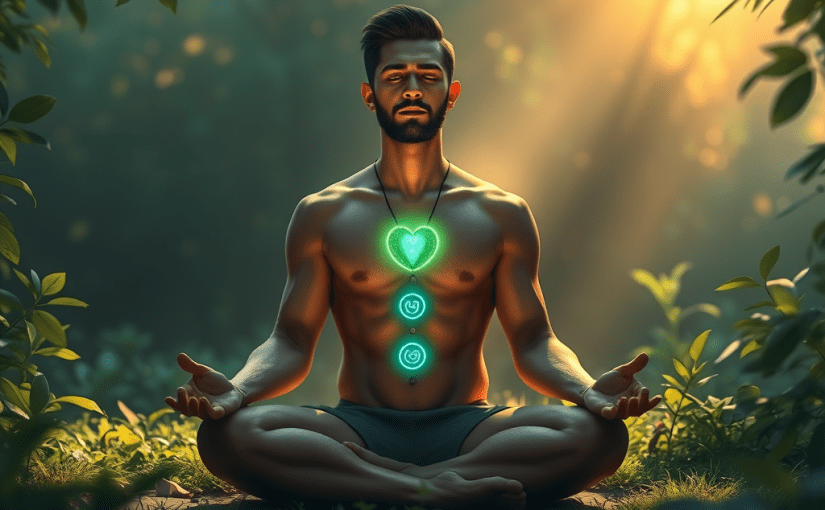
Some Days the Door Opens Differently

Yesterday my yoga practice took me effortlessly into breathlessness, the kind of inner stillness where thoughts dissolve and awareness shines clear. Today, I tried to repeat everything step by step: jal neti for cleansing, gajkarni and throat cleaning, kapalbhati, anulom vilom, neck tilts, shoulder rotations, even extra asanas like snake pose. Yet the result was different. I could only reach a state of sloughed breathing that gave me a witness-like dissolution of thoughts, not the entry into pure awareness I tasted before.

This difference made me reflect. Maybe I did not need all those kriyas today, or maybe a cleansing like dhauti would have been more suitable, though I skipped it for lack of time. It feels that on some days only certain procedures are required, while on other days the body asks for different ones. The variation could be due to the changing needs of our organs and systems. Some mornings the nose demands special attention, on others the throat, and sometimes the stomach, especially if there has been a lot of talking or heavy, spicy, non-satvik food.

Slowly I am learning that yoga is not about mechanically repeating a routine but listening to the day’s condition. A quick body scan is enough to know: if the nose feels heavy, jal neti or kapalbhati clears the way; if the throat feels coated, gajkarni and water do the healing; if the stomach is sluggish, agnisar or a light abdominal pump is more useful; if stiffness sits in the shoulders, a few rolls or a cobra stretch is all it takes.

Alongside the body check, the mind too has its rhythms. On days it races, anulom-vilom or bhramari brings calm. On days it feels dull, kapalbhati or surya bhedi lifts it. Sometimes thought quiets enough for witness-consciousness, sometimes it melts completely into pure awareness. Both states have their value, both are steps on the path.

What I also realized is the importance of how we close practice. After any cleansing or pranayama, the system is charged. If I rise immediately, restlessness lingers. But if I sit quietly for about five minutes and just watch the natural breath without control, everything settles. This simple breath-witnessing grounds the energy, normalizes heart and prana, and seals the benefit of the practice.

The learning is clear: don’t chase the same state every day. Let the body and prana guide you. Sometimes purification itself is the achievement, sometimes breathlessness and silence arrive. Yoga is not a fixed door but many doors, and each morning a different one may open.

Healing Through Dhyana: My Journey of Heart and Throat Chakra

A few days ago, I experienced a strong emotional blow due to social reasons. I had high expectations from highly paid laborers, expecting some great work, but they delivered nothing more than child’s play. I was deeply disturbed. That evening, when I sat for dhyana, I noticed my breathing naturally suspended at my Anahata chakra. Instantly, I felt immense relief, and my heart was healed surprisingly and immediately.

The very next day, I faced a heated debate with a few fellows, which tensed and disturbed me. Being more tired that evening, I skipped my dhyana practice. However, I did receive some relief through sympathetic family interactions. On the following morning, I noticed my breathing naturally settled at my Vishuddhi chakra, and during dhyana, I experienced a smooth breath suspension and healing at the throat. This taught me that worldly conflicts are not necessarily opposing dhyana. In fact, when tactfully handled, they can sometimes favor it rather than hinder it.

This experience led me to reflect on the deeper mechanisms of chakra energy, breath, and meditation. The emotional blow activated my Anahata chakra, which is the center of love, trust, and emotional processing. Breath suspension during dhyana allowed prana, or life energy, to flow precisely where it was needed, releasing tension and producing immediate healing. This shows how meditation can catalyze self-healing by aligning breath and awareness with the chakra that has been activated by specific emotional events.

Even when I skipped dhyana during the heated debate, some relief still came through external emotional resonance, like the support and sympathy of family members. While this relief was partial and slower than meditation, it shows that external support can act as a mild substitute for dhyana in harmonizing chakras.

The shift to Vishuddhi chakra the next morning was directly related to the intellectual and verbal stress from the debate. The throat chakra governs communication, expression, clarity, and mental processing. After tension in Anahata, the energy naturally rose to Vishuddhi, allowing breath suspension there and smooth, instant energetic recalibration through dhyana. This shows that chakras respond to context-specific triggers: the heart for emotional stress, the throat for intellectual or verbal challenges.

One of the key insights from these experiences is that worldly conflicts can actually favor dhyana. When handled tactfully without being drowned in the drama, meditation can utilize activated chakras for healing and alignment. Life stress can thus become a guide, highlighting where energy is stuck or needs refinement, rather than an obstacle.

The general mechanism appears as follows:

  1. Trigger → Chakra activation → Breath aligns → Awareness directs prana → Healing.
  2. External stress does not block dhyana; instead, it creates a map of where energy is stuck, which meditation can resolve.
  3. Each chakra responds to a preferred type of stress:
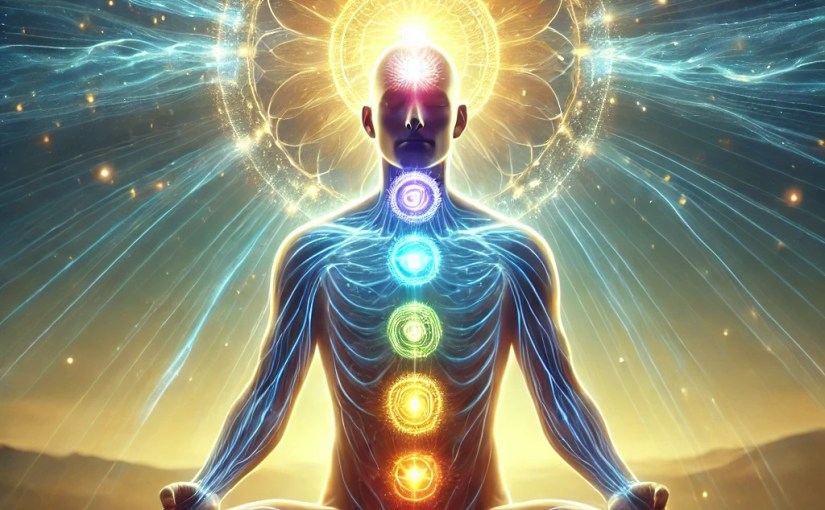
    • Muladhara → survival, security
    • Svadhisthana → relationships, pleasure
    • Manipura → power, confidence
    • Anahata → love, trust, emotional hurts
    • Vishuddhi → speech, clarity, mental tension
    • Ajna → intuition, decision-making
    • Sahasrara → transcendence, cosmic awareness

Through these insights, I realized the intelligent interplay between emotional triggers, energetic responses, and meditation. Dhyana does more than quiet the mind—it serves as a precise tool for emotional and energetic recalibration. Conflicts, when approached with awareness, can become openings for inner work, and each chakra reacts to the stress that naturally pertains to it.

In essence, meditation works in harmony with life’s challenges. Emotional pain or tension doesn’t block growth—it illuminates the path for healing, showing exactly where awareness and prana should be directed. My personal journey through Anahata and Vishuddhi chakras illustrates this beautifully.

For anyone practicing meditation, this experience emphasizes that being tactful in worldly interactions and observing where stress manifests in the body can guide dhyana to the most needed areas. Emotional, intellectual, and verbal challenges can activate corresponding chakras, and dhyana can then harmonize them, turning ordinary life events into precise tools for self-healing and awakening.

Journey of Nada, Keval Kumbhak, and Deep Dhyana

I noticed that during deep meditation, when I enter keval kumbhak — spontaneous breath suspension — even ordinary external sounds like people talking, mantras, or conch blowing affect my meditation profoundly. The stillness of the mind in keval kumbhak makes these external sounds feel amplified, not terribly but blissfully and calming down breath to enter deeper dhyana, almost like they are resonating inside me. Within these sounds, mind dissolves and these sounds even dissolve into nirvikalpa quickly. At first, I wondered if this was the same as Nada, the inner sound described in Nada Yoga.

After reflecting, I realized there’s a subtle difference. Nada is internal, independent of the outside world, and arises naturally from the flow of prana and consciousness. What I was experiencing with external sounds was similar in effect, but not true nada. The external sounds were acting as triggers or anchors, deepening dhyana, but they are not generated from within.

Interestingly, I once had a glimpse of true internal sound — an extraordinary OM-like vibration that was blissful, deep, and sober, like so called voice of God. That experience felt completely different: it was independent of external stimuli, and I could feel consciousness itself vibrating in resonance. That is what Nada truly is, and it shows the mind is capable of perceiving the subtle inner universe.

Many practitioners wonder if keval kumbhak alone, with its associated void, is enough for final liberation. I found that the void from keval kumbhak is indeed sufficient. The stillness, non-dual awareness, and temporary dissolution of the sense of “I” create a direct doorway to nirvikalp samadhi. Nada is helpful, as it deepens and stabilizes meditation, but it is not essential for liberation.

I also noticed that in my practice, my strong meditation image of Dada Guru already acts as a powerful anchor. The image generates concentration, subtle energy, and devotion, which naturally lead to deep absorption. In this case, keval kumbhak arises spontaneously, the mind enters void, and bliss is already accessible. Nada may appear, but the image alone is sufficient to stabilize meditation.

Here’s how I conceptualize the stages of my meditation experience:

  1. Meditation Image as Anchor:
    My Dada Guru image keeps the mind absorbed and generates subtle energy. External sounds or nada are optional at this stage.
  2. Keval Kumbhak:
    Spontaneous breath suspension creates extreme mental stillness. The void arises naturally, and subtle mental vibrations may appear.
  3. Void:
    The mind experiences non-dual awareness. Mental fluctuations stop, bliss arises, and the mind is ready for advanced stages.
  4. Nada:
    Internal sound may arise spontaneously, guiding deeper absorption. It enhances meditation but is not mandatory for liberation.
  5. Integration:
    Meditation image, void, keval kumbhak, and nada work in harmony. The mind achieves stable absorption, preparing for continuous nirvikalp samadhi.

Practical Insights from My Experience:

  • External sounds can deepen meditation, but true Nada is internal and independent.
  • Keval kumbhak is a powerful catalyst, but Nada does not require it to arise.
  • A strong meditation image can serve as a complete anchor, making external Nada, even internal nada optional.
  • Liberation ultimately depends on stable void and absorption, not phenomena like sound.

Daily Practice Direction:

  • Let your meditation image anchor your mind effortlessly.
  • Allow keval kumbhak to arise spontaneously; do not force it. However, in yoga, both views about keval kumbhak are valid. Patanjali-type Raja-yoga teachings emphasize that kumbhak should arise naturally as the mind becomes still, while Haṭha Yoga texts say that by learning uniting prāṇa and apāna through practice, one can also enter it willfully. In practice, a middle way works best: slight, gentle regulation of breath helps balance prāṇa and apāna, after which kumbhak may either happen spontaneously or be entered at will. Forcing is harmful, but skillful tweaks to breath, as hinted in the old texts, can make keval kumbhak accessible immediately.
  • Observe any inner sound that appears, without grasping or expectation.
  • Bliss and absorption will deepen naturally; Nada will appear when awareness is refined.

Through this journey, I learned that meditation is a play of subtle energies, awareness, and devotion. External triggers help, inner phenomena inspire, but ultimately, it is the mind’s stillness and refined awareness that open the doors to the ultimate experience — nirvikalp samadhi.

From Inert Matter to Supreme Consciousness: A Journey Through Self

When we look up at the sky, it appears still, silent, and vast. It’s natural to see it as lifeless or jada—an inert physical space. In the same way, we label objects and even dead bodies as jada because they seem unconscious. There’s no movement, no response, no sign of inner awareness. But what if this stillness is not truly lifeless? What if what appears jada is actually holding a deep, silent potential within?

Traditionally, we consider something jada when it doesn’t show any signs of life. Even a human body, once the soul leaves, is referred to as jada because the expressions of consciousness are gone. But this jada state doesn’t mean emptiness. It’s more like a tightly packed capsule—where all the impressions, experiences, and memories are compressed and hidden, like data in a zip file. That’s why it feels dense, bound, and even suffocating.

On the other hand, when something is alive and expressive, we call it chetan—conscious. A living being breathes, feels, acts, and reflects. Its inner information is not hidden—it’s in motion, interacting with the world. This openness makes chetan appear far superior to jada. The life within it flows. It explores, it expresses, it evolves. That’s why we admire living beings—they are like windows through which consciousness shines.

But even chetan has its limitations. While the conscious being can act and interact, it still carries inner burdens—deep impressions called samskaras—that shape its personality, habits, and sufferings. The beauty, though, lies in the fact that a chetan being can work on itself. It can shed these burdens through inner work—whether through spiritual practice, self-inquiry, yoga, or meditation. This path leads to something even greater.

That greater state is param chetan—the supreme consciousness. It is not just living. It is fully awakened, totally free. It doesn’t carry any burden of impressions. It doesn’t suffer from ignorance or duality. It exists in its purest form: full of satta (existence), chitta (consciousness), and ananda (bliss). This is the real sky of the self—boundless and untouched.

Ironically, param chetan may still look like jada to the ordinary eye. A realized sage may appear calm and still like a rock or empty sky. But within that stillness lies a fullness beyond comprehension. What appears lifeless is, in fact, the most alive. It’s just not agitated or noisy. It’s like a silent ocean—motionless on the surface, yet infinitely deep.

So what we call jada may just be param chetan in disguise—consciousness in rest, not in absence. The journey of the soul is to move from being unconsciously bound, to consciously expressive, and finally to being consciously free. This is the hidden evolution—from inert matter, through active life, to divine being.

And in that ultimate state, the infinite sky within us is no longer veiled. It shines in its original light—pure, luminous, and complete.

The Middle Path, Balanced Doshas, and the Yoga That Flows From Simplicity

I have been observing something again and again, not from books but from life, body, sensation and inner process. Ayurveda says that Vata, Pitta and Kapha — the three doshas — tend to stay in equilibrium in a healthy person. When Vata increases, which means when activity or chanchalta rises in the system, heat also rises. This heat is nothing but Pitta. And when this heat gets too much, the body tries to cool itself down by producing Kapha, which is mucous, moisture or heaviness. If you observe this cycle carefully, this is the picture of disease, of inflammation, or imbalance in any part of the body. It could be in the stomach, joints, mind, or nerves. It starts with overactivity, turns into heat, and then ends in fluid or swelling. I have noticed this rhythm silently playing out in me, in others, in animals, in nature. It is not a theory anymore, but a felt reality.

Modern science also does the same thing but with its own language. Antibiotics try to kill the bacteria that are drawn to the body when agitation is high. Antipyretics try to cool down the heat, the fever that is nothing but excess Pitta. Anti-inflammatory medicines try to reduce the fluid buildup or swelling that comes with Kapha’s reaction. So the difference is only in the way of addressing. Modern medicine tries to suppress what’s already expressed. But Ayurveda tries to stop the doshas from becoming unbalanced in the first place. That is the only real difference.

This leads to a deeper understanding. Like attracts like. When there is inner restlessness, bacteria that feed on restlessness find a place to thrive. When agitation is controlled at the root, these bacteria may not even be attracted. The soil of imbalance is gone. I believe that is the true prevention. Pitta is not just heat, it also includes inflammation, injury, and inner burning of tissues and mind. When this goes out of hand, modern medicines suppress it by anti-inflammatories. But in this suppression, they subdue all Pitta, even the good one that maintains digestion and intelligence. They cool it too much, which leads to problems.

Similarly, in states of vata dosha dominated agitation or frustration, the mind can lose its natural awareness, making one prone to mishaps or accidents or one goes into quarrel with others. Such incidents often lead to bodily injuries, which in turn generate inflammatory heat and secretions—manifestations of aggravated Pitta and Kapha. When fever persists without proper recovery, the body may eventually shift toward a cold, sinking temperature, a sign of deep Kapha imbalance, sometimes preceding death. This sequence reflects the deeper truth that Vata dosha is often the root imbalance that disturbs and triggers the other two doshas—Pitta and Kapha. However it’s not so always. In intellectuals, vata dosha may be starting dosha, because they mostly have uprising energy that may unground them. In drug addict type people, cough dosha may be main cause. In angry type people, pitta dosha may be main culprit. As most of the people in general public are intellectual types to keep today’s sophisticated society running smoothly, so I think vata dosha may be main culprit in them. That’s why they regularly need proper grounding. Social ceremonies, entertainments, festivals, fares, tours and travels probably serve the same purpose. Kaph dominated sleepy and heavy people need stimulants like tea, coffee etc. that increases vata of mindfulness and pitta of energetic activity. Pitta dominated violence loving people are itself attracted towards depressants like alcohol etc to counteract excess pitta with kaph. These are just examples, and there are different types of methods so called good and bad to balance doshas in the society, but we call them habit or instinct of people, however they are basically driven by the hidden longing to balance the three doshas or three gunas. It’s the same thing, guna becoming it’s opposite that’s dosha if unbalanced. Therefore, in such destabilized states, rest, grounding, and centering practices as per the condition are essential. The methods used should be appropriate to the individual’s condition—gentle yet effective. Some practitioners, especially those seeking rapid grounding, may resort to the use of Panchamakara (the five Tantric elements) in a disciplined and conscious manner. These are traditionally known to anchor energy quickly and deeply, bringing one back to balance when used wisely.

Ayurveda is not just herbs. It is intimately tied with Yoga. Yoga only becomes real when all three doshas are in balance. Not too much, not too little. How can anyone do Yoga with a heavy body, or a restless body, or a heated body? In modern medicine, when Vata-type uprising acidity like GERD is treated with antacids, they may cool the acid-fire but they create drowsiness, heaviness, a Kapha-like dullness. Vata type uprising is still there, only acid-pitta has been subdued. When pain and fever of Pitta origin are suppressed with drugs, they again affect the stomach, lead to dryness, bloating or more Vata or pitta originated in new form of stomach acid. Means one form of pitta subdued but new form of pitta is originated. It’s like moving fire from one furnase to another. One imbalance leads to another. It’s a cycle of managing reactions, not removing the cause. Ayurveda simply tells us to avoid oily, spicy, hard-to-digest food that causes all these doshas to go out of balance in the first place. Simple living is more than enough to prevent most suffering.

But to be honest, it’s not completely one-sided. I’ve experienced that lower steps of Yoga like Karma Yoga, Anasakti Yoga, or even glimpses of nondual clarity can come back faster with modern medicine too. Sometimes more effectively than Ayurveda. This is because modern medicine can quickly lift you out of tamas or inertia. A painkiller, or a sleeping pill, or a nerve relaxant can temporarily stop the heaviness and let the mind reflect or detach. But these are lower stairs. When one climbs higher in Yoga, like pranayama or subtle meditation, then modern medicine becomes too rough. It disturbs the subtle rhythms. That’s where the Ayurvedic lifestyle becomes necessary. I have not yet achieved the higher states of Yoga permanently. I have touched some glimpses through direct experience — where the ‘I’ dissolved for a few seconds, and bliss filled the brain. But I pulled back. I lowered the experience consciously. So I am not claiming any Samadhi. I am still learning. Still trying.

From this place of honest limitation, I wonder — what happens when a dosha is too low, not too high. This is never discussed much. But I feel it matters deeply. If Vata is too low, there is no enthusiasm. Energy cannot rise. Breath becomes dull. Meditation has no inspiration. If Pitta is too low, there is no drive to transform. Asanas feel lifeless. Digestion becomes too weak. If Kapha is low, the person becomes ungrounded, anxious, too light. No anchor to sit in silence. No strength to hold a steady state. So Yoga is not about reducing doshas. It’s about keeping each one just enough. Only when they are in balance — not excess, not deficient — can true Yoga begin.

Vata is needed to lift energy and imagination. Pitta is needed to give heat and fire for action. Kapha is needed for grounding and stillness. If any one is missing, Yoga practice becomes dry, painful, scattered, or incomplete. This understanding changed how I look at daily life. Now I don’t just avoid excess. I also notice what is lacking and try to nourish that. If my mind is too floaty, I bring Kapha back with warm food and stillness. If I feel dull, I stimulate gently to bring back Pitta and Vata.

Then I asked myself, if Ayurveda always taught this middle balancing way, then why is the middle path credited to the Buddha? The answer became clear through contemplation. Ayurveda taught balance for health. Yoga aimed for inner stillness by refining energy. But Buddha took it deeper. He turned this balance into a path to liberation. He said neither indulgence nor denial leads to freedom. Only balance in thought, action, and even breath can free the mind from suffering. So he didn’t invent the middle path — he discovered its deepest spiritual meaning and made it accessible beyond the Vedic system.

Yoga, on the other hand, says even Sattva has to be transcended. That we must go beyond the three gunas — Sattva, Rajas and Tamas. But how can that happen unless we first balance them? I have seen this in myself. When Rajas is too much, I feel over-driven. When Tamas is high, I feel dull and lazy. Even Sattva, when I cling to it, makes me feel proud or isolated. So first, the lifestyle has to balance the gunas. Then only they can cancel each other out, and the mind rests in silence. The outer balance becomes the doorway to inner stillness. However, it’s other thing that Savikalpa samadhi and its peak as awakening is achieved with pure and boundless sattva guna but later on it also need to be discarded or cancelled out to enter nirvikalp samadhi.

This is not imagination. It is an ongoing, unfinished journey I live daily. I am not beyond gunas. I still fall into excess or deficiency. But I’ve started to notice more quickly. And Yoga is becoming more natural when I eat better, breathe gently, sleep with rhythm, and avoid overstimulation. I now know that Ayurveda prepares the field. Yoga plants the seed. Buddha opens the sky. But they all meet in one simple truth — that balance, neither too much nor too little, is the key to both health and liberation.

This path is not about showing off or collecting spiritual achievements. It is about quietly correcting the imbalances before they take root. It is about not fighting the body, not forcing the breath, not rushing the mind. Just walking a middle path, step by step, until one day, we don’t need to walk anymore.

Why Breath Became My Teacher in Chakra Meditation: A Simple Truth Hidden in the Head Pressure

I used to notice a peculiar thing during my meditation. Whenever I felt pressure in the head — that dense fullness or tingling stillness — I found it easier to either breathe normally or hold the breath after exhaling, rather than after inhaling. Not really “holding” it in a formal sense, but more like a spontaneous pause that came gently during or after exhale.
In contrast, whenever I tried to hold the breath after inhalation, it seemed to make the pressure in the head rise. It was like a build-up I couldn’t quite integrate comfortably. And this wasn’t an isolated event. It kept happening, again and again — so naturally that it started to feel like a message from within. Something deeper than theory.
I wondered, “Is this just happening with me?” But then I came to understand that it’s not just me. What I was going through had both scientific grounding and a subtle yogic significance.
易 The Science Behind the Breath and Head Pressure
Breath retention after inhaling increases pressure inside the chest and the brain. This is known in physiology as the Valsalva effect, where blood returning to the heart slows down and cranial pressure rises. That’s why holding breath after inhalation can create a sense of heaviness or tightness in the head — exactly what I was experiencing.
But when I paused after exhaling, everything felt lighter. My system felt relaxed. The breath had left, the lungs were neutral, and there was no pressure build-up. That gave me a natural stillness, a blankness where the awareness could rest on the chakra points with ease.
And interestingly, this matched perfectly with yogic insights too.
律‍♂️ The Yogic Perspective I Grew Into
In classical yoga, the goal of breath practices is to enter a state called Kevala Kumbhaka — a moment when breath stops on its own without any force. And that’s exactly what seemed to be happening in micro-moments: short, effortless pauses that came only after exhaling, never imposed by willpower.
This natural way of breathing — interspersed with gentle pauses after exhale — started becoming my method of chakra meditation. Not because I planned it, but because my body, my mind, my prana preferred it. It felt smoother. It didn’t distract me from the chakras. In fact, it helped me stay more subtly aware of them.
In this way, I realized that chakra meditation can be done with normal breathing, as long as the breath is not mechanical or forceful. And when spontaneous short breath holds occur during or after an exhale, they actually deepen attention and quiet the mind.
 A Shift from Force to Flow
It became clear to me: forced inspiratory holds or even prolonged expiratory holds often invite tension — either in the chest or the head. They shift the focus away from inner awareness toward breath control itself.
But in my case, the non-forced, natural rhythm — breathing gently, allowing pauses to come and go — kept my attention inside, where it needed to be.
Over time, I saw this wasn’t some special ability, nor something exclusive to me. It was simply a sign that the body knows how to meditate when we stop interrupting it with effort.
杖 What This Taught Me
I’ve not yet achieved the final states like Nirvikalpa Samadhi, nor do I pretend to sit constantly in thoughtless bliss. But these small, revealing moments — like the head pressure easing through natural breath, or spontaneous stillness arising without effort — tell me I’m on a path that is unfolding in its own time.
From this experience, one clear realization arose in me:
“Yes, my natural breath with gentle pauses is better than forced breath holds during chakra meditation. It helps me go deeper without strain. Yoga is about ease, awareness, and flow — not pressure or tension.”
This understanding didn’t come from a book or guru — it came from within, supported and clarified when I asked and listened. It came from experience, from staying with what is real in the moment. And that has made all the difference.
✨ Final Insight for Fellow Practitioners
If you’re practicing chakra meditation and notice that head pressure rises during breath control, don’t be afraid to let go of control. Let the breath be normal, let it pause when it wants to, especially after an exhale. These spontaneous breath holds may feel subtle, but they carry the seed of deep inner stillness.
Your body is intelligent. It remembers how to meditate.

Balancing Meditative Awareness in Worldly Life: A Natural Spiritual Evolution

Spiritual progress is not about withdrawing completely or being fully immersed in the world—it’s about maintaining a subtle connection to meditative awareness in all states. My journey has shown me that true awareness is not just attention but meditative attention—always centered, even faintly, on the meditation image.

At first, I needed active effort to keep this awareness intact, especially in worldly activities. Without it, energy would disperse into countless distractions. But I discovered a simple and effective method—Sharirvigyan Darshan (hologram based awareness of the body’s inner sensations). By intermittently engaging with it, I could prevent unlimited dispersion of energy while still living a full life. Over time, this practice evolved, requiring less effort but delivering the same effect.

However, I also realized that grounding alone is not enough. If done without awareness, it just leads to unconscious engagement with the world. The key is awareness with a meditative anchor—ensuring that the meditation image, even if dim, never fully disappears.

Shifts in Awareness and Meditation Image

As my practice refined, I noticed the meditation image remained the same, but its clarity and intensity fluctuated. During deep meditation, it became bright and sharp, while in worldly distractions, it dimmed. Instead of forcing control, I learned that balance is more effective than strain. Too much effort creates stress, while a gentle, self-correcting awareness keeps everything aligned naturally.

External factors like a less stressful environment help maintain this balance, but they don’t define it. Ultimately, regulation comes from within. When fluctuations occur, I draw awareness back using Sharirvigyan Darshan, preventing unnecessary drift without forcing anything.

Drifting Toward Nirvikalpa Samadhi

Now, I find myself passively drifting toward Nirvikalpa Samadhi. The process is no longer about effort; it unfolds naturally. Sharirvigyan Darshan is still needed at times, but far less than before. External influences can slow down the drift, but they don’t disrupt the direction. I handle these slowdowns without struggle, keeping awareness steady.

I have not yet reached a fully irreversible state, but I sense that stabilization is happening. My experience shows that spiritual development is like nature itself—constantly evolving without force. There are no fixed milestones, only a continuous unfolding.

The Essence of My Journey

Meditative awareness aka pin pointed awareness is the only real awareness—everything else is dispersion. Awareness can be of unlimited types like unlimited number of objects and processes like gross awareness, subtle awareness, environmental awareness, social awareness, shunya awareness or Brahm or void awareness etc. But I think meditative awareness with help of meditation image is the best or real. This is so because it’s almost impossible to dissolve all worldly thoughts together or one by one into infinity. But it’s quite easy to unite Meditation image or pin pointed awareness with or dissolve into infinity with advanced contemplation. As the meditation image is already connected to everything of one’s life, due to this everything is united together with Brahman infinity means awakening glimpse happens. 

Effort at the start is necessary, but over time, awareness refines itself, needing less intervention.

Fluctuations happen, but balance prevents regression.

Nirvikalpa Samadhi is approaching passively, not by force, but by allowing the process to unfold naturally.

I don’t claim to have achieved everything, but I see the direction clearly. The journey is effortless now, yet always evolving. Development is everywhere in nature, and so it is in my path.

The Natural Path of Meditation: From Image to Ultimate Awakening

In my meditation journey, I have always felt that prana and breath regulate themselves when meditation is deep enough. I have noticed moments during worldly activities where a slight attention to Sharirvigyan Darshan (body-science observation through holographic principle) triggers a spontaneous shift—first a gasp of breath, followed by slower, deeper, and more regular breaths. When this happens, prana seems to move naturally to the brain chakras, where a stable meditation image emerges, accompanied by relaxation and bliss.

However, when I applied the same method during more intense, struggling work, the breath still became regular, but this time faster and shallower. Instead of reaching the highest chakras, it seemed to pour prana somewhere between Vishuddhi and Anahata chakras. This is also because I was working with my arms and the arms get prana from this location. The meditation image was still present but less blissful and positioned at a lower level, while relaxation was also lesser.

From this experience, I realized that prana flows naturally to the chakras most engaged in a given moment. Breath and prana are self-controlling when meditation is the guide. This meditation-led prana regulation is much more satisfying than the reverse approach, where forced breath is used to induce meditation. Forceful breath control feels like filling a vessel from the outside, giving temporary energy but not necessarily leading to deep, inner pranic movement.

I have always preferred the meditation-to-prana approach over the prana-to-meditation approach. However, I have explored various styles, understanding that every technique can serve a purpose. Meditation itself is independent, just like human beings—it does not like to be forced. The meditation image, when allowed to arise naturally, thrives and stabilizes over time. Forcing it too soon is like forcing a plant to grow faster—it may not take deep roots.

This realization led me to believe that in the beginning, meditation should be allowed to stabilize naturally through worldly meditation like Sharirvigyan Darshan. After years of nurturing this process, a time may come when the meditation image can be forcefully awakened through deep and structured Tantric meditation. The foundation must be firm before intensifying the practice.

I have also wondered whether everyone develops a single meditation image. Some may, but they might hesitate to share it. Others may not yet have a fixed image due to an unstable pranic flow, intellectual doubts, or lack of deep absorption. Even those with a stable image may sometimes wander unguided, unable to hold on to it in daily life. This wandering can happen due to weak fixation, scattered prana, overanalysis, or inconsistency in sadhana.

To stabilize the meditation image, one must develop deep trust, allow effortless absorption, and maintain consistent practice. Over time, as prana refines itself, the image becomes clearer, stronger, and more magnetic.

I firmly believe that the road to the ultimate goal always passes through a single meditation image. Regardless of the spiritual path—whether Bhakti, Jnana, Tantra, or mindfulness—a single-pointed focus is necessary to dissolve into deeper states. Without it, the mind scatters and struggles to enter deep meditation.

While I have not yet achieved the ultimate realization, I have observed these natural movements in my practice. My belief is not based on theory but on direct experience. I am still exploring and refining my approach, ensuring that my meditation becomes self-sustaining and deeper over time.

In the end, meditation is not something to be forced; it is something to be nurtured. When we let it unfold naturally, it leads the way—breath and prana follow effortlessly, and the journey becomes self-directed, blissful, and deeply fulfilling.

Prana: The Hidden Connection Between Body, Mind, and Experience

Millions of salutations to Adi Tantra Yogi Shiva on the occasion of his sacred Shivratri festival, may he continue to bless us all.

One simple yet profound realization changed how I see prana. When we feel pain in the foot, why do we experience it in the foot itself and not in the brain, where it is actually processed?

Nerves only send signals to the brain. If the brain were the sole center of experience, pain should be felt in the brain, not at the point of injury. Yet, it doesn’t work that way. This means something beyond just nerve signals is connecting consciousness to the body—something that allows experience to be localized at the exact place of sensation. This invisible connection is prana.

Prana: More Than Just Energy—It Localizes Consciousness

If prana were just physical energy, it wouldn’t explain why different parts of the body hold different experiences. Love is felt in the chest, fear in the stomach, sexual pleasure in the lower body. Prana acts like a network flowing through non physical experiential channels or nadis that binds consciousness to different locations in the body, making sensations real and localized.

This made me rethink prana—not just as life force but as the very mechanism that determines where we experience life. Prana is not just movement of energy; it is the movement of experience itself.

Tantra Yoga: Shifting Experience from Body to Mind

This understanding connects directly to my Tantra Yoga practice. In Tantra, sexual energy is not suppressed—it is shifted. Normally, pleasure is felt in the lower body because prana is concentrated there. But through specific techniques, this energy can be moved upwards to the brain.

When prana moves, the location of conscious experience moves with it.

  • The same energy that once felt like raw pleasure transforms into mental clarity, bliss, and stability.
  • Instead of being outwardly stimulating, it becomes inwardly illuminating.

I’ve experienced this shift, but not yet to a state where it remains stable. The connection is clear, but true mastery—where prana stays effortlessly in higher awareness—is something I still seek.

Health Aspects: Can This Practice Cause Issues?

While moving energy upward can bring profound mental clarity and deep meditation, forcing the process unnaturally can create imbalances. Some possible issues include:

  • Head Pressure or Mental Fatigue: If too much prana is held in the brain without grounding, it can create discomfort or detachment from daily life.
  • Lack of Interest in Worldly Activities: A rapid shift of prana to the higher centers can reduce attachment to physical experiences, making normal activities feel empty.
  • Physical Imbalance: Moving prana upward without proper grounding can sometimes lead to nervous system issues, digestive problems, or sexual dysfunction.

Balancing Energy for a Healthy Experience

I’ve realized that prana must be guided, not forced. When the shift happens naturally, it leads to clarity without imbalance. I consciously use grounding techniques when needed, ensuring that I stay connected to both higher awareness and practical life.

What This Means for Spiritual Growth

This insight opened a new perspective for me:

  • Prana is not just sustaining the body—it is directing consciousness itself.
  • Where prana flows, experience follows.
  • If we can control prana, we can control not just energy, but where and how we experience reality.

I’ve seen glimpses of this transformation, but I am still refining the practice. My goal is to make this shift natural and effortless—not just something I touch occasionally, but a state I can rest in permanently. At the same time, I’m careful to balance this journey with health and well-being, so the experience remains both profound and sustainable.