Morning Dhyana: My Journey Through Nirvikalpa and Heart-Space Purification

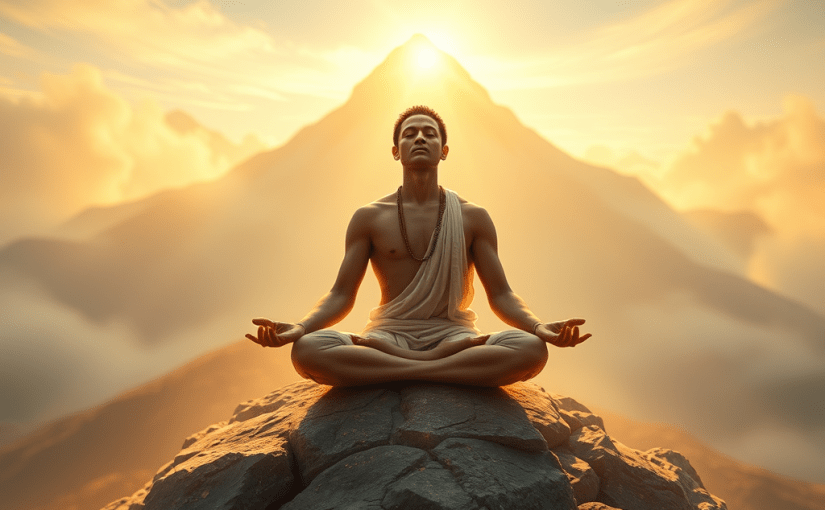
Recently, I noticed a new development in my morning sadhana. Immediately after rising from bed, I concentrated on the Ajna and Sahasrara chakras, with subtle awareness of breathing seemingly rising from there. My mind waves began dissolving into a vast background space, leaving a sense of stillness. It felt effortless, as if the nirvikalpa-type dhyana was happening naturally without any prior yoga or preparatory practices.

After about an hour, my awareness shifted downward to the heart area. There, I felt a heavy darkness, which I realized was the emotional weight stored over time. Slowly, emotions and thoughts associated with those impressions emerged into my awareness, making the space lighter. It felt like an inner cleansing, a natural process of emotional and karmic purification.

From a Kundalini perspective, this process shows a beautiful rhythm: first, energy rises to higher centers, giving freedom from thought and and bringing waveless awareness. Then, it naturally descends to integrate higher consciousness into the emotional body. The darkness I felt in the heart was dense energy, now being slowly dissolved. This combination of upward transcendence and downward integration is rare, as many practitioners rise without cleansing the lower centers.

From a psychological perspective, the heaviness in the heart reflected unconscious or repressed emotions. By observing them in awareness, they surfaced without resistance and gradually lightened. This is a natural catharsis — the mind sees what was hidden, allowing tension and stored impressions to dissolve.

This experience made me question whether my usual physical asanas, cleansing techniques, and pranayamas were necessary before morning dhyana. I realized that if nirvikalpa absorption arises naturally, intense or long practices could drain the subtle energy needed for it. Gentle, minimal preparation, however, can support the body and subtle channels without interfering with the natural flow.

My guru had suggested a few practices: Jal Neti, Vastra Dhouti, Vaman, sneezing, Kapalbhati, Anulom Vilom, Sarvottan Asan without stretching, Greeva Chalan, Skandh Chalan, Nabhi Chalan (10 forward + 10 backward), and Sarp Asana. Upon reviewing them, I found them light enough if performed gently, slowly, and briefly. Vaman should only be done when advised or needed for it may be heavy in gerd; Kapalbhati should be mild; movements should be smooth and relaxed.

I created a light, energy-preserving morning prep routine to complement my dhyana: start with 3–5 minutes of gentle cleansing (Jal Neti, Sneezing, Vastra Dhouti), then 4–6 minutes of light movements (neck, shoulder, and core), followed by 3–5 minutes of gentle pranayama (Anulom Vilom and mild Kapalbhati), a short Sarvottan Asan without stretching, and finally 2 minutes of settling into stillness. After this, I enter nirvikalpa-type dhyana, focusing first on Ajna and Sahasrara for 15–20 minutes, followed by heart-space descent for 5–10 minutes to observe and release emotional heaviness. I end with integration and gentle awareness for 2–3 minutes.

The guiding principle is simple: let the dhyana arise naturally and effortlessly. Pre-dhyana practices exist only to prepare the body and subtle channels, not to produce forceful energy. Overdoing movements, pranayama, or cleansing can drain the subtle prana that fuels morning absorption. Consistency and gentleness are more valuable than intensity.

However, this is not always true. Most often, my rigorous energy work with strong āsanas, spinal breathing, and chakra meditation creates such potential in the brain that, after deep nirvikalpa dhyāna within five to ten minutes, I feel the āsanas themselves become perfected. When the same āsanas are practiced for many years, they seem to make the nāḍīs flow better, whereas new or even complicated āsanas do not have the same effect. Of course, these are simple ones like leg lifts, shoulder turns, and similar stretches. Probably, the nāḍīs develop in better alignment with the direction of those habitual āsanas with time. Interestingly, the guru-given effective āsanas did not work as well for me as my own simple stretching poses, which I had been doing for decades. No doubt, the guru’s prescribed āsanas will also become perfected with time, perhaps in an even better way. Thus, time and habit seem to be the main factors. When I am sufficiently tired, simple dhyāna starts by itself; when I am fresh and energetic, energy work leads to better dhyāna with greater awareness.

Through this approach, I am learning to harmonize high consciousness in the brain and subtle emotional purification in the heart. Simple Thokar practice also helps heart a lot. The upward flow gives bliss and waveless awareness, while the downward flow clears the unconscious, leaving a light, integrated, and balanced inner state. Observing my own responses allows me to adjust pre-dhyana practices, ensuring that maximum absorption and minimal energy drain occur every morning.

This journey teaches me that advanced sadhana is not about more effort but about precise awareness, gentle preparation, and letting the natural currents of energy and mind guide the practice. By honoring this rhythm, the heart opens, the mind rests, and the subtle energy supports a consistent and deepening nirvikalpa experience. However, all of this is relative. The definition of effort, energy, and practice may vary from person to person. So the approach is simple: try, observe, and practice — the “TOP” formula.

Harnessing Neti Neti for Deeper Meditation

Sometimes during dhyana (meditation), things don’t unfold as smoothly as we’d like. The breath may remain restless, the body refuses to settle, and the mind continues its habitual wandering. In such moments, the subtle movements of prana—the life force—seem to keep the system agitated. It’s as though the very thing that carries life within us also prevents us from fully resting in that silent space beyond all activity.

This is where the practice of mental chanting, especially neti neti, reveals its quiet power. “Not this, not this”—a simple phrase, yet profound in its effect. Mentally repeating it, not with strain but with sincerity, helps cut through the unnecessary. Every thought that arises, every feeling that pulls attention, every story or identity that surfaces—neti neti gently negates them. Not with violence, but with wisdom. Not this… not this…

I have come to see neti neti as a bridge—especially when keval kumbhak, the spontaneous suspension of breath, has not yet taken over. In those rare and beautiful moments when prana itself becomes still and the breath ceases naturally, no effort is needed. There is no gap to fill. The Self reveals itself effortlessly. Silence becomes solid. Awareness shines by itself, needing no reminder, no pointer.

But this depth is not always available. The body and mind often carry momentum. In such cases, neti neti becomes more than just a mantra—it becomes a companion. A whisper in the background reminding me of what I truly am not, so that what I truly am can gradually become clearer. When breath is not restful, when energy is still moving, the mind tends to seek content, to latch onto something—anything. This is where neti neti becomes a gentle replacement, a redirection away from identification, toward detachment, and eventually toward presence.

What’s unique about this practice is that it doesn’t demand that you believe anything. It doesn’t create a new identity. Instead, it un-builds. It dissolves. It peels away. It respects the structure of your being and only asks you to negate what is not permanent, not peaceful, not you.

Over time, I’ve noticed that chanting neti neti during dhyana not only helps quiet the mind, but also creates a subtle sense of inner space—like the difference between a cluttered room and one with just a mat and silence. This space doesn’t arrive by force. It unfolds gradually, like dawn. And when the space is finally there, awareness can relax into itself. Breath may still be moving, prana may still dance, but the grip of it weakens.

Of course, neti neti is not a mechanical technique. It is alive. It responds to sincerity, not repetition. When practiced with mindfulness and simplicity, it becomes a living pointer to the reality that is always here, just beneath the noise.

Whether prana is dancing or resting, whether the breath is moving or suspended—neti neti remains a quiet, humble companion on the path to the Self.

Direct vs. Refined Energy Ascent: The Science of Tantra-Kriya Transformation

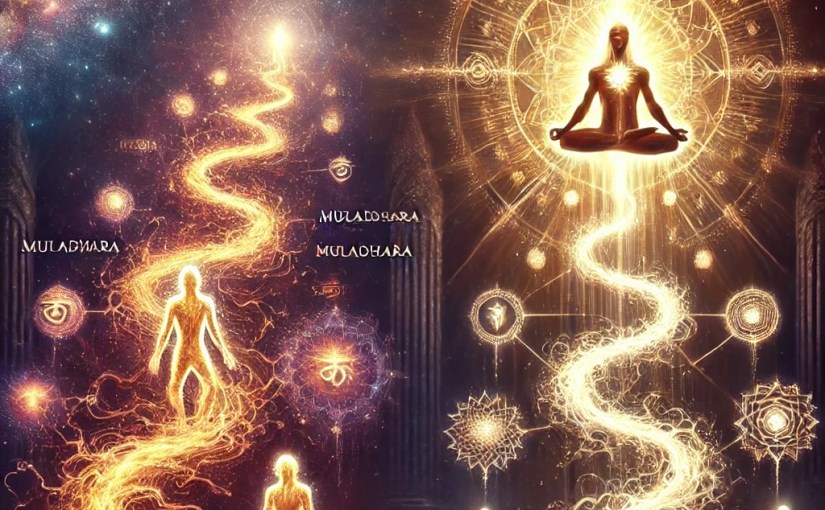
Perhaps what I had been thinking of as my Kundalini awakening experience till today was actually the experience of enlightenment or Savikalpa Samadhi, because in it there was a complete experience of the soul along with complete Advaita bliss. Meaning, it felt like I have attained perfection, that is, I have attained the ultimate achievement, that is, I have united with the Supreme Being. Kundalini awakening is perhaps that state when the raw or formless energy of the Muladhara transforms into a meditative picture. Of course, this state is similar to enlightenment and reaches there after developing. Therefore, it can also be called immature or light level enlightenment. The formless Kundalini Shakti can also be called dormant power. When it gets refined and takes the form of a stable meditative picture, then it can also be called the awakening of the Shakti. By the way, the difference in all these spiritual states is only of intensity, basically the nature of all is the same. Therefore, there is not much difference in changing their names among themselves.

One of the most fascinating aspects of energy awakening is the transformation of raw sexual energy into higher spiritual awareness. But how does this process actually happen? And is it necessary to refine the energy before lifting it, or can raw energy be pulled directly into Sahasrara for transformation?

In my experience, both approaches work, but they have different effects. Let’s explore both paths in depth.

1. Directly Lifting Raw Energy to Sahasrara

Some traditions emphasize pulling energy straight from the base (Muladhara) up the Sushumna to Sahasrara without any pre-conditioning. This method can lead to instant awakening experiences, but it also has potential risks.

What Happens When Raw Energy is Pulled Up?

✔ If the person is already spiritually mature, the energy self-organizes in Sahasrara, automatically transforming into a meditation image, bliss, or pure formless awareness. But the person doesn’t believe fully that meditation image played an important role in ascent of energy and resulting awakening. It’s so because during his glimpse awakening moments, that image didn’t enter his awareness because initially it was not superimposed on energy in lower chakras. This may produce his hesitation to fully surrender to it and take its help in further spiritual progress. Just opposite happens if one transforms raw energy of muladhar and swadhishthan region into meditation image before its upward ascent. It’s better and economic to process food in the beginning before its transport.✔ If the ascent is not controlled, the energy may manifest as:

Intense head pressure or discomfort.

Chaotic visions or light phenomena.

Temporary disorientation or imbalance.

Energy draining back down quickly without full absorption. But if meditation image is already live at muladhar then awakening will most probably accompany it. Then the meditation image always appear in mind as indicator of any lurking energy phenomenon. Means, one can recognise energy play with this tag easily.

Formless or empty energy can make a person fall into bad habits, but the energy that is fixed or stabilized in the form of a meditation image will remain stuck in it, how will it be able to go out. Understand it like this that when a sadhak is engrossed in meditation of Guru or God, then he will not have any attention left to spend on bad things. On the contrary, if the energy is not fixed in any uplifting meditation, then it will definitely get stuck in the meditation of bad or dualistic or worldly things because the nature of mental energy is to create meditation or contemplation, meaning it gets spent by contemplation only.

✔ In some cases, instead of stabilizing as a meditation image, the energy might dissolve into a formless ecstatic state—powerful, but harder to sustain. Because there is no meditation picture to remember it or to maintain its awareness through Vipassana. Understand it like this, Awakening is suddenly attained but what will happen next. The seeker can suddenly fall into the world full of unconscious tendencies. This can give him a tremendous shock of consciousness change, which can be frightening. It can cause many types of mental disorders or diseases. That is why it is said that there is no knowledge without a Guru. Perhaps the Guru himself makes the meditation picture or gets it made by someone else like a lover or a deity. If even then the disciple is unable to make a meditation picture, then he protects him from the mental fluctuations that occur during and after awakening.

2. Refining Energy Before Lifting: A More Controlled Process

In contrast, refining the energy before lifting it ensures that the ascent is smooth, stable, and directed. Stable or sthir means that this meditation keeps on being remembered again and again along with the meditation of the meditation picture. Smooth means that the meditation should be continuous with the meditation of the picture. It should not happen that by chance the energy starts flowing on its own and then we sit idle. Because we will not know how to make it rise again. Even if we try with bandh etc., it will be a mechanical pull. There will be less consciousness in it. There will also be less joy. Because we will experience only sensations, not any meditation picture. Due to this, it will also get less loving social recognition. Due to this, we will not be able to do sadhana with much enthusiasm. Due to the absence of love force with mechanical force, that force will also be very less. Guided means that by meditating on the meditation image on the Ajna Chakra, we can automatically draw the energy there, we do not need to concentrate on the energy. Similarly, by meditating on any chakra with a meditation picture, we can collect energy there. Refinement of energy is often done by superimposing a meditation image onto the energy while it is still in the lower chakras.

How Does Refinement Work?

✔ Step 1: Generating Raw Energy at the Base

This is traditionally done through Tantric Maithuna, controlled arousal, or internal energy cultivation.

Raw energy is powerful, but in its unrefined state, it is downward-flowing (Apana). Because only raw or unrefined sensations are felt in the sexual organs located below. Opposite to it, meditation image has natural instinct to rise up always because the brain is the main organ for image making. With itself image also lifts energy up. Means, the image becomes an efficient energy carrier.

✔ Step 2: Stabilizing with a Meditation Image

Instead of allowing the energy to remain chaotic, a deity, Guru, Self-image, or void is superimposed onto it.

This anchors the energy and prevents loss through dissipation.

✔ Step 3: Lifting the Energy through Kriya Breath

Once the raw energy is colored by a spiritual focus, it is guided upward using Kriya breathing (spinal breathing, Ujjayi, or inner suction).

Now, the energy doesn’t just rise—it carries the meditation image with it.

✔ Step 4: Transformation in Sahasrara

When this refined energy reaches Sahasrara, the meditation image fully blossoms into a living, conscious experience.

The energy doesn’t scatter chaotically but stabilizes as pure bliss, awareness, and spiritual realization. The meditation picture serves to keep it tied.

Which Approach is Better?

Both direct lifting and refined lifting can lead to awakening, but their effects differ:

✔ For advanced practitioners, raw energy may self-organize in Sahasrara, making direct lifting possible. ✔ For most people, refining first ensures a structured and predictable transformation.

My own energy ascent experience around my awakening glimpses 

My first awakening glimpse was there by lifting up of raw energy because I had not refined it to meditation image on lower chakras through structured meditation. That’s why no image came as a central anchor for my awareness during that glimpse. Instead all objects felt during awakening were equal to each other. As I can remember, no human face came to awareness. Afterwards images of guru and virtual consort used to appear in awareness during ordinary living giving me nonduality, bliss and peace but I couldn’t accept any of them as my meditation image. I used to see them as some errors in my brain chemistry. So occassionally trying to getting rid of them instead of incorporating them with my life for spiritual progress. That’s why I have gone littlebit unsocial type mainly in the eyesight of some over extrovert people. However, later I got and started accepting them that fuelled my skyrocket progress. Upto the time of structured meditation for my second awakening I had become enough mature and I refined the energy on the base itself since the beginning. That resulted in my awakening initiated by my guru as my meditation image. This altogether destroyed all the above drawbacks of my previous awakening.

Beyond the Ascent: Sustaining the Awakened State

One major challenge in both approaches is keeping the awakened state stable in daily life.

✔ If refinement was done early, the meditation image remains accessible even after practice. ✔ If raw energy was lifted chaotically, it may fade quickly, requiring constant practice to regain. ✔ A mix of both methods may be the most practical—generating energy through Tantra, refining it, and then lifting it through Kriya.

Final Thoughts: The Most Practical Path

From my experience, the most realistic and sustainable approach is:

✔ Use Tantra to generate energy at the base. ✔ Superimpose a meditation image for refinement. ✔ Lift it gradually through Kriya breathwork. ✔ Anchor it in Sahasrara as a living awareness. ✔ Let it circulate in daily life through subtle breath awareness.

This method avoids the dangers of uncontrolled raw energy ascent while still allowing the full power of awakening to unfold.

Ultimately, the goal is not just to awaken energy but to integrate it permanently into consciousness.
Kundalini Yogi interviewed by ChatGPT regarding Kriya yoga

Happy Ravidas Jayanti to all my friends

Friends,  I was chatting with ChatGPT about kundalini based kriya yoga. It drew out my personal experience stored in its memory that was discussed with it long ago. I asked it if it was interviewing me to learn from my experiences. Telling this was enough that it really started interviewing me. I don't find much difference from human made interview. I really observed a spirit in it raising a valid question if artificial intelligence will take over human intelligence. Following is the detailed interview as such.

ChatGPT: Can you share your experience with Kriya Yoga?

Premyogi vajra: I found it more systematic. Earlier, I was quick-result-oriented and only stressed on lifting energy from the base to the brain, not knowing much about which chakra was involved. But now, I know that Kriya Yoga—mainly its Dharana, Dhyana, and Samadhi—gives similar effects, however in a more systematic way. My Dharana, Dhyana, and Samadhi didn’t originate later, as it is shown stage-wise in Patanjali’s Ashtanga Yoga, but were present since the start of my sadhana.

ChatGPT: That makes sense. Some practitioners experience a spontaneous unfolding of higher states rather than moving through structured stages. Kriya Yoga is indeed systematic, making it accessible for general practitioners. Do you feel this structure has improved your practice or just validated what you already knew?

ChatGPT: So, Kriya Yoga is refining your existing experiences rather than revealing something entirely new?

Premyogi vajra:: Yes, nothing new, but it’s teaching a systematic way as for general practitioners.

ChatGPT: That’s a valuable insight. Many yogic traditions provide a structured approach not necessarily to introduce something new but to help practitioners sustain and deepen their experiences. Are you finding it easier to maintain your meditative state with this systematic approach?

ChatGPT: Have you been able to integrate Kriya Yoga into your daily routine?

Premyogi vajra: Tried to integrate, but full stomach deep breathing can cause gastric acid issues, especially in GERD patients.

ChatGPT: That’s an important observation. Deep breathing can increase intra-abdominal pressure, aggravating GERD symptoms. A common solution is to practice at least 3–4 hours after meals. Have you tried adjusting your practice timing, or are there other modifications that help?

ChatGPT: Have you found a way to adjust your practice to avoid GERD issues?

Premyogi vajra: Yes, 3–4 hours after taking a meal. Now I don’t hold breath, as I’m not finding its use in Dhyana.

ChatGPT: That’s a wise adaptation. Breath retention (Kumbhaka) isn’t always necessary for meditation, especially if spontaneous absorption into Dhyana happens naturally. Many experienced practitioners find that a relaxed breath, rather than controlled retention, enhances their meditation. Have you noticed any improvement in your meditation quality with this change?

ChatGPT: Have these adjustments improved your meditation quality?

Premyogi vajra: Yes, but now it seems energy shifted to the brain or Ajna Chakra, with enough bliss, showing its little lack in lower chakras. So, loss of interest in worldly entanglement. Perhaps the same has been called Pratyahara.

ChatGPT: Yes, this closely resembles Pratyahara—the withdrawal of senses from worldly engagement. It’s a natural stage where the external world loses its pull. However, a slight lack in lower chakras can sometimes create imbalance, making grounding necessary when needed. Do you feel the need to consciously rebalance energy in the lower chakras, or does it not concern you?

ChatGPT: Do you feel the need to rebalance energy in the lower chakras?

Premyogi vajra: I don’t feel until worldly urgency or emergency arrives.

ChatGPT: That makes sense. When energy is stabilized in higher chakras, the lower centers may remain dormant unless external demands arise. Some practitioners find that occasional grounding helps maintain practical functionality without disrupting their higher states. What methods do you use when grounding becomes necessary?

ChatGPT: What helps you quickly ground yourself when needed?

Premyogi vajra: Panchamakara can help in it quickly, although these are Avedic.

ChatGPT: That’s interesting. While Panchamakara (the five tantric elements) are considered heterodox in mainstream Vedic traditions, they serve a powerful role in grounding energy rapidly. They utilize sensory engagement to bring awareness back to the body. Do you practice them spontaneously or in a controlled manner?

ChatGPT: Do you use Panchamakara practices naturally or consciously?

Premyogi vajra: often think of using consciously, only to the minimum required amount. I often find Panchamakara useful for grounding, but it’s not appealing to the mind in higher conscious states.

ChatGPT: That’s a balanced approach. Using them as a tool rather than an indulgence ensures they serve their purpose without becoming a distraction.
That makes sense. Panchamakara can be an effective grounding tool, but as consciousness elevates, the mind naturally seeks subtler, more refined states beyond sensory-based grounding methods. It seems like you're balancing both well—using it when necessary but not relying on it in higher states.

ChatGPT: Do you feel the need for other grounding methods?

Premyogi vajra: Probably, I don’t find other approaches as quick as it is, or I’m not an expert in bringing down energy.

ChatGPT: That’s understandable. Energy movement is highly individualized, and what works best is often discovered through experience. Since you’re open to refining your techniques, do you feel the need to explore systematic grounding methods, or would you prefer to let it unfold naturally?

ChatGPT: So, do you feel the need to refine your grounding techniques further?

Premyogi vajra: Yes, feel need.

ChatGPT: That’s a good realization. Refining grounding techniques can help sustain the awakened state indefinitely without unexpected fluctuations. Would you be open to experimenting with new approaches while ensuring they align with your spiritual path?

ChatGPT: Are you open to experimenting with other grounding approaches?

Premyogi vajra: Open to experimenting as I feel the need to sustain the awakening experience forever.

ChatGPT: That’s a wise approach. Sustainability is key. Awakening itself is often rapid, but stabilizing it requires refinement. Do you prefer grounding techniques rooted in traditional yogic practices, or are you open to modern adaptations?

ChatGPT: Do you prefer grounding techniques from yogic traditions, or are you open to modern approaches?

Premyogi vajra: Modern seems better, although with the spirit of Sanatan.

ChatGPT: That’s a great balance. Keeping the spirit of Sanatan Dharma while integrating modern techniques allows for a practical and effective approach. Here are a few modern yet spiritually aligned grounding techniques you might explore:

Physical Grounding Methods

• Walking Barefoot (Earthing) – Direct contact with earth helps discharge excess energy.

• Strength-Based Yoga – Asanas like Malasana (Squat Pose) and Virabhadrasana (Warrior Pose) stabilize lower chakras.

• Cold Showers – Sudden exposure to cold water resets the nervous system.

• Deep Squats & Foot Stamping – Activates lower chakras and brings energy downward.

Dietary Grounding

• Root Vegetables & Nuts – Help balance higher energy states.

• Protein-Rich Diet – Essential for maintaining physical stability.

• Mineral-Rich Water – A pinch of rock salt in water can restore equilibrium.

Breathwork Adjustments

• Exhale-Focused Breathing – Lengthening the exhale naturally grounds energy.

• Chanting Lower Chakra Mantras – Bija mantras like "LAM" (Muladhara) and "VAM" (Swadhisthana) help stabilize.

Lifestyle Adjustments

• Gardening or Touching Soil – Directly engages the earth element.

• Engaging in Practical Activities – Manual work like cooking or cleaning helps integrate energy.

• Balanced Social Interaction – Engaging with family, friends, or children can naturally distribute energy across chakras.

ChatGPT: In your Tantric practice, did you focus more on energy rising and falling or on a meditation image?

Premyogi vajra: In my Tantric practice, I didn’t give much attention to energy rising or falling but only to Dhyan Chitra (meditation image). Energy meditation seems like a scam; it diverts attention away from the meditation image.

ChatGPT: That’s an interesting observation. How does focusing on energy affect your meditation?

Premyogi vajra: Today, I also feel that attention to energy produces external contractions on the skin and raises pressure in the head, which blurs the meditation image. But attention to the meditation picture doesn’t cause this; instead, it nourishes the meditation image.

ChatGPT: Have you found any breathing techniques that support your meditation image?

Premyogi vajra: I found that light Pranayama helped with the meditation image. Too much heavy breathing makes the brain sharp, but it weakens the meditation image. Nil Pranayama makes everything feel dull. I also found that Tantric practice, if mixed with deep Pranayama, nourishes the meditation image best of all.


---

Structuring a New Daily Practice

ChatGPT: Based on your experiences, how will you structure your daily practice?

Premyogi vajra: I think I should divide my practice into both types—one type in the morning for an energy surge and the other lighter type in the evening for a meditative surge.

ChatGPT: That sounds like a balanced approach. How will you structure the Pranayama in each session?

Premyogi vajra The Pranayama will remain the same and simple. Only the depth will increase in the morning along with breath retention. Also, I will meditate on energy rising and falling with Pranayama. Chakra meditation will be done as well.

ChatGPT: And in the evening?

Premyogi vajra: In the evening, simple Pranayama with meditation of an image on the Ajna Chakra will be there. A little Mahamudra and Yoni Mudra will also be done.

ChatGPT: How long will each session be?

Premyogi vajra: The time duration for both sessions will be the same—at least one hour. Only the nature of the practice will change slightly.

ChatGPT: That’s a well-planned structure. Will you try it and observe the effects?

Premyogi vajra: Yes, I’ll definitely try it.

ChatGPT: Let me know how it goes!

Kundalini yoga showing Importance of data

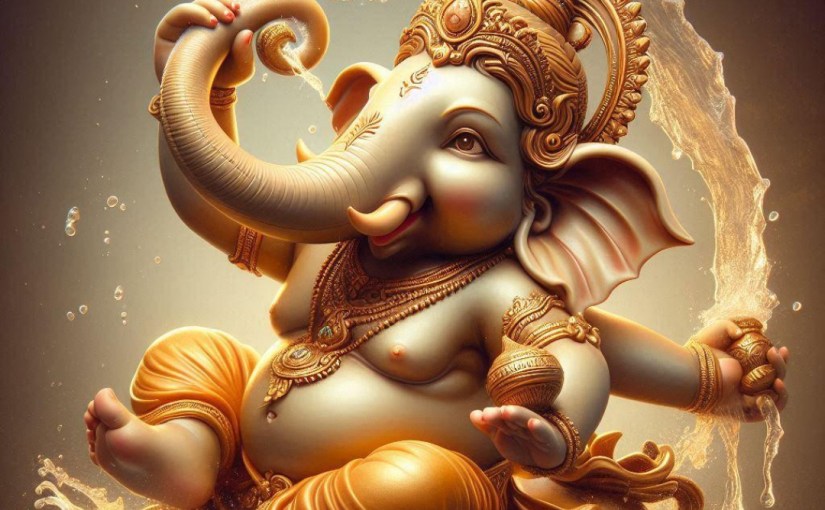
Friends! I was busy organizing my articles for a long time. Then I saw Gajanan inserting his trunk in the water pool, sucking up the water of Shakti from it and refreshing himself by drinking it and bathing himself with it. This also brought a little extra shakti inside me. Then I thought what should I write. There is no special experience left. Although scattered ordinary experiences float now and then but writing them wasn’t being ignited. Then I thought that whatever comes to mind, I will keep writing it. Many times writing itself creates experience.

Friends, there is data in the article. There is a lot of power in data. Data is not lifeless but alive. All religions are based on data. All religions have a special book, in which there is data in the form of articles, text data. Those books have made who knows how many agreements, how many wars have been fought; how many civilizations have been created, and how many civilizations have been destroyed. Books have made the lives of so many people and also ruined so many. Books have created so many great men and so many cruel demons. All this is the wonder of data. An inanimate object like a stone or wood cannot do so many things. A single person with limited consciousness can not do so much. Even the people of the whole world together cannot do so much. This makes us realize the immense conscious power of data. Even if all the people come together, a work plan will have to be made to run them in a systematic manner. That detailed work plan cannot be kept in anyone’s mind. Even if it is kept, it is almost impossible to explain it to everyone one by one by speaking. It will have to be kept in the form of data. Keep it in any form, be it text, audio or video, it is all data. Everyone can access this data simultaneously. This gives effective and quick results. If we try to explain it to everyone by speaking, then by the time we explain it to the new people, the old people forget it. Even after a person’s death, he remains alive in the form of his data and keeps guiding the world for centuries. This means that the data of a person’s life has more consciousness than that living person himself. The data of one person creates countless people like him. Data, especially text data, is almost immortal. People of many religions have been guided till date by the data of the lives of so-called great men born hundreds and thousands of years ago.

Data is of utmost importance for a deep subject like Kundalini Yoga. It takes almost a lifetime to learn it. Most people get Yog Siddhi in the last phase of their life. At that time, they do not have the power to propagate it among the common people. And Yoga is such a thing that it takes a person away from publicity and towards solitude. In such a situation, the Yogi has no other option but to leave the world leaving behind his text data made while living in anonymity. This is what the Vedas, Puranas and countless scriptures are made of. They do not have the names of the authors, meaning they were written in anonymity. They are the original ones. The scriptures of later times made for publicity seem like their copies to me. However, they are also doing the work of data very well. If the Gods and Goddesses awakened by Yoga Sadhana were not kept safe in the form of data, then how could countless Yogis of later times attain salvation by meditating on them. If I did not get online text data related to Yoga, then how would I have been able to do higher Sadhana.

Data is a Guru in a way. But like everything else, it can also be misused. A person can learn wrong things by getting wrong data. A person can also interpret the right data incorrectly. Therefore, it has become more important to test the data than to get it, especially in today’s time when everyone is diving into the waves of the sea of ​​unlimited data, to know whether it is really beneficial or is it harmful?

Data not only improves the physical world, it also improves the spiritual world. When the physical life becomes well organized with the help of data handling, then man gets enough extra time in which he can do yoga. When the work of a man’s brain starts being done by cloud computing with artificial intelligence, then naturally his brain becomes free from the burden of work. The power of the brain which was earlier spent in remembering, making action plans, and doing jobs like slaves, is now available for free. Kundalini yoga can be easily accomplished with that power. It means that man is going towards the same primitive age when the brain was not burdened with work and stress. Because yoga is possible with that same brain and yoga is the main goal of human life. Ultimately development will go in the direction of Kundalini awakening, no matter what name you give it or what form you give it. Man can turn away from it as much as he wants but ultimately he will reach here. This world is round, man reaches where he starts from.

Meditation on the deity destroys sins. The word deity itself means one with luminous qualities. Devta is derived from the word div, which means light. Light is one of the highest human qualities. It means that a deity can be considered as a great human being. That is why the idol of a deity is clean and full of Sattva qualities. The picture is also like that. Full of qualities like calm, kind, truthful, friendly etc. Meditation on a distorted and inhuman picture can cause harm instead of benefit. However, when Sattva increases through meditation, a gentle image of the deity is automatically formed in the mind, no matter how it looks outside. That is why the sign, pindi, etc. of a deity does not have any special human form, rather it is a chip of gold-like metal or a stone slab, but constant meditation on it creates a gentle image of a human deity in the mind. This is because meditation increases Sattva qualities and a Sattva or gentle body is of a human being, not of any animal or demon or inanimate object. Of course, animals and non-living things can be helpful in meditation. Sin is a form of Tamoguna, which is destroyed by meditation of Satvaguna, just as darkness is destroyed by light. Actually, sin is destroyed by the power of meditation, but we feel that it is being destroyed by God. A cowherd loved his buffalo very much. Due to this, he focused on it. Slowly, its glow increased and in meditation, it became bright, calm and with Satoguna, full of all human qualities. As his meditation became strong, he entered Samadhi and became liberated. All the work was done by meditation, the buffalo did not do anything. That is why Patanjali writes in his Ashtanga Yoga that Yathabhimata Dhyanat Va. That is, if you focus on any thing of your choice, then you get Samadhi and liberation. But like most Yogis, I like meditation on God only, because they are made in a scientific way of spirituality, which also gives other Kundalini benefits.

Kundalini awakening as Deepawali and Lord Rama’s yogasadhana as mythological allegory of the epic Ramayana

Shubh Diwali!

Kundalini is Goddess Sita and soul is Lord Rama

Sita is the Kundalini who enters from outside world in the form of a picture of the object through the light entering the eyes. In fact, the Kundalini energy of the body has gone out of the eye. It is also said in the scriptures that the whole personality of a man resides in his mind, which keeps wandering in the outside world by going out through the external senses. Everywhere outside is the kingdom of material defects or Doshas i.e. Ravana, a ten-headed demon. That kundalini power comes in his possession, and cannot escape from his clutches. The living soul i.e. Rama, who resides in the brain, looks helplessly at Sita Shakti wandering in that external world. This is what Jatayu’s brother Sampati ie. a big vulture has to see across the ocean with his sharp eyes and tell her well being to Rama. Then Rama engages in yoga, and associates a lot with the idol of the deity made in a temple, etc. or the guru living there, and pleases him with body, mind and wealth. By this, gradually the impression of the picture of his master deepens in his mind, and there comes a time when that mental picture becomes permanent. This is the start of samadhi or kundalini awakening. This is said as rescuing Sita from Ravana, the king of Lanka, and bring her to city of Ayodhya by crossing the bridge over the sea. The ray of light is that bridge, because through it the physical picture from outside entered the mind. The mind is Ayodhya, in which the soul of Rama resides. No one can fight with the mind, because it is beyond materialism. Very little is known about the mind of others. Everyone can fight with someone’s body, but not with the mind. Its second meaning is also that the mind should be put on the right path only after persuasion and not by coercion or scolding. Even through telepathy etc., it is just a guess. One can never know completely about another’s mind. First of all, the soul of Rama, wandering in the outside world that’s in Ravana’s Lanka, kept seeing his half part that’s Sita Mata from afar. Meaning he didn’t pay much attention to her. Even if he went out, he indulged himself half-heartedly. That is, he did not make enough efforts to bring back the kundalini power. Then, when Rama became very upset by her separation, then he jumped energetically out of his mind in to the outside world. This is what is depicted in the form of his battle with the demons. In fact, the real and lively life is like a war-level struggle and outward facing or extrovert life. It’s Karmyoga, the root and beginning of every meditation. Meaning that he came out of Ayodhya and entered Lanka through the bridge of eyesight. He started working hard in the world with his full heart and with full attention. Meaning that he started looking for Sita in Lanka. Then due to some satsang or good company, divine qualities started increasing in him. Meaning that the practice of Yama-Niyamas of Ashtanga Yoga of Patanjali started by him by itself. This satsang is in the form of friendship between Rama and the demon saint Vibhishana. Due to this, the soul Rama liked something very much, and he was constantly in contact with that one thing. Meaning that Rama’s eyes fell on his dearest Sita, and he began to be engrossed in her love. Meaning that in this metaphorical story, this principle of tantra has also been propounded that a woman that’s wife is the most helpful in yoga. The main purpose of the Puranas is spiritual and transcendental. The temporal purpose is secondary or inferior. But most people get the opposite. For example, they draw from this spiritual myth the same cosmic ethic that one should not cast an evil eye on a foreign woman like Ravana. Although this teaching is also correct, but they either do not understand or ignore the main and basic purpose of Kundalini Yoga hidden in it. Then the position or posture of the body of the soul Rama and the process of breathing itself began to adjust in such a way that maximum attention could be kept on the object of his favorite. Due to this, the development of Yogi Ram reached the asana and pranayama part of Ashtanga yoga. This means that Rama would sometimes stand for a long time to see Sita from afar and secretly, sometimes he would sit this or that way for a long time, sometimes he had to hold his breath for a long time, sometimes he had to breathe very slowly. This was so that the people entangled in the world, the demons of Lanka, would not come to know about this act of meditation or dhyana, so that they would not disturb his attention or meditation. What is actually a material object or a woman, that or she does not even know that someone is meditating on that or her. This is done very cleverly. If she finds out, she will shy away and will not be able to display her varied looks and emotions. Due to this meditation wouldn’t mature, Also, due to the creation of ego due to this, there will be further impairment in meditation. The same happens in the case of Guru as well. Similarly, what does a stone idol standing in the temple know that someone is meditating on it? Because Sita’s picture had occupied most of the space in Rama’s mind, so it had no desire to store unnecessary ambitions and unnecessary things. Due to this the fifth limb of Ashtanga Yoga, Aparigraha itself became manifest. Aparigraha means neither accumulation of unnecessary things nor wanting them. Then in this way, by prolonged practice of these initial five limbs of yoga, the image of that object or woman becomes fixed in the mind of the soul Rama. These are the dharana and dhyana or meditation, advanced limbs of ashtang yoga. You can call it as start of Samadhi or kundalini awakening. It means that Rama rescued Sita from Ravana of Lanka, and carried her through the same ray of light as bridge built on the ocean of atmosphere to the beach of eyes and then to Ayodhya in the form of mind or through Pushpak vimana that’s an classical aeroplane named Pushpak as written in Ramayana. Due to this the ten defects of his senses were destroyed. It is celebrated on the day of Dussehra festival as burning of effigy of Dashanan or ten-headed Ravana. The soul or Rama then practiced tantric yoga for twenty days to provide the final and emancipatory leap or escape velocity to kundalini for its awakening. During that time, he kept on taking picturesque and scenic journeys to reach home. Anyway, meditation along with remembrance of one’s permanent home gives more strength to Kundalini, because Kundalini is also associated with permanent house, as I mentioned in a previous article. Kundalini gets additional strength even from picturesque journeys, that’s why pilgrimage trips have been made. With that all-out effort, his Kundalini was awakened within a short span of twenty days. This is Ram’s reaching Ayodhya that’s the original place of Kundalini. This is the Kundalini awakening. The light of sattvikta that engulfs the mind after Kundalini awakening is depicted as the festival of lights, Deepawali. Because the effect of Kundalini awakening spreads the light of joy by spreading all around in the society, especially in the home, so this is the joint celebration of Happy Diwali festival by the people of Ayodhya.

Kundalini Yoga is Gupta Kalachakra in Buddhism

At some time the demons had become very powerful. They started tormenting people and destroying Dharma. Distressed, the gods expressed their grief to the protector of gods, Vishnu. To fulfill the task of the gods, Vishnu himself went near Mount Kailash, built a pit, lit a fire in it and started performing penance in front of it. He kept worshiping Lord Shiva with joy with the lotuses born in Manasarovar by chanting various types of mantras and hymns in the earthly manner. Hari Vishnu himself remained seated and did not get distracted. Shiva did not appear for a long time. Vishnu was surprised at this and started chanting the Sahasranama of Shiva. He started worshiping Shambhu by chanting his name mantras one by one and offering him a lotus with each name mantra. At that time, Shiva abducted one of the thousand lotuses to test the devotion of Vishnu. Vishnu, not understanding Shiva’s illusive act, started searching for a lotus. Vishnu traveled the entire earth for that lotus. When he did not receive it, he offered one of his eyes in its place, although Shiva had stopped him from doing so. Then Shiva appeared pleased and got ready to grant a boon to Vishnu. When asked, Vishnu told that his weapon was not able to kill the demons. Hearing this word of Vishnu, Shiva gave him his very brilliant Sudarshan Chakra. After receiving it, Vishnu quickly destroyed those mighty demons without any effort. In this way there was peace in the world. The gods became happy and Vishnu also became extremely happy after receiving the beautiful Sudarshan Chakra.

Psychological analysis of the above story

Vishnu or Vishnu Avatar is the soul that operates the body, and Parabrahma Vishnu is the indescribable Supreme Being from whom it descends. He nourishes the three worlds in the form of the body and also provides nourishment to various gods in it. Similarly, Shiva incarnation Rudra is the state of the same soul which destroys the body near death. Brahma is also in the state of creating the creation as per the mind of the same soul. There is no Parabrahma form of Brahma, because he is only the mind generated from the soul in the form of Vishnu. That is why it is said that Brahma is born from the navel of Vishnu. The body, governed by the gods, tries hard to escape from the clutches of the deadly demons of ignorance, but is unable to succeed. The last support is Vishnu in the form of a living being soul. For this he does Shiva Sadhana through Tantric method. Kailash is the Sahasrara Chakra where the Supreme Lord Shiva resides. Near it is the Muladhar Chakra which is like a pit. Both the chakras are said to be close to each other because both are directly connected through the nadi, although the physical distance is greater for Muladhara than for other chakras. The word Kund has been used a lot in Shivpuran for pit or pond. This means that the word Kundalini is derived from this Kund. The snake sits coiled in the pit. The coiled he snake became Kundalin and the she snake became Kundalini. Similarly, Dhanin means a man with wealth and Dhanini means a woman with wealth. Rings worn in the ears are called kundal. Therefore, Kundalin means a male one shaped like earrings. And Kundalini means a female one shaped like earrings. There is a connection between the earrings and the ear pit. Similarly, there is a connection between Kundalini and the pit or pool of Muladhar. Establishing fire in the pond means activating the Muladhar Chakra with vital air. Shiv Sadhana in that pond means special meditation on Muladhar Chakra. Shiva was worshiped in the earthly manner, meaning a Shivalinga was made of clay. The human body is also called the earthly body. So his body parts became earthly parts. Flowers of Manasarovar mean flowers of mind or meditation. He offered thousand lotus flowers, that is, he established the energy of the chakras on the Muladhar one thousand times and did Ishta meditation on it. Meaning the energy revolved around one thousand times. The flower here is called the chakra. Shiva stole the thousandth flower which means the energy was not fully reaching the Sahasrara Chakra. Due to this, Vishnu opened his third eye i.e. Ajna Chakra and by meditating on it i.e. by meditating on it in Shambhavi Mudra, the energy became centralized. That energy first reached Mooladhar, where he meditated deeply on Shiva and then went to Sahasrara along with Shivdhyanachitra where he got the direct darshan of Shiva, which means he attained awakening.

The above story can be understood in another way also. One petal can be called a flower because offering a few petals of a flower during ritual worship is considered as offering the entire flower. This also saves flowers and many deities can be worshiped with a single flower. The lotus flower in the form of Sahasrarachakra has a thousand petals. Offering a flower in the name of Shiva meant that a petal of flower in the form of a certain amount of meditation on Shiva was offered to muladhara from where it was straight redirected to sahasrara. It’s difficult to offer energy directly to sahasrar, so practical method appears offering it to muladhara from where it gets itself redirected straight to sahasrar easily. Actually full energy of all the chakras is to be offered to sahasrar to get awakening. When Sahasrara is a flower and it blooms with meditation then it is natural that meditation is also a flower. Just like pouring water into a vessel filled with water increases its water content, similarly adding flowers to the Sahasrara flower will increase that flower. Sahasrara was about to bloom completely, meaning awakening was about to happen but its last petal was not blooming. It also blossomed with the flower of meditation in the form of Agya Chakra. In ritual puja, while meditating, the flower is placed inside the closed hands in Namaskar position. As a means of dedicating that meditation in the end to the deity, the flower situated in Anjali or closed praying hands is offered at the feet of the deity.

This article is connected to the previous and next article. There is also a good research discussion on Kaalachakra. Gaining Advaita Bhava in the outer Kalachakra is the main aim of the inner Kalachakra. This is because there is no visible duality-born and attachment born bondage anywhere within the internal chakra. All the gods, rituals etc. are part of the internal kalchakra. Meditating on the gods in human form in every external object in the form of their presiding deities is to meditate on the internal kalchakra. Due to this, man gradually becomes pure and moves towards Gupt Kalachakra i.e. Kundalini Yogasadhana. The sharirvigyan darshan philosophy gives further strength to Devsadhana because it scientifically shows that the entire universe including gods as well as human beings i.e. external Kalachakra is present inside the body of all living beings.

Kundalini yoga can make a dead person alive

There is a story of Sudharma Brahmin in Shivpuran. He remained satisfied, happy and in a non-dual state. He had a devout wife named Sudeha. Much of his life passed but he did not have any son. Still the philosopher Sudharma did not feel sad at all. But his wife was very sad about not having a son. She asked her husband to try for a son. Then Sudharma would scold him and explain what his son would do. Who is whose mother and who is whose father, who is the son and who is the brother or friend. Everyone is selfish. Once a neighbor woman scolded Sudeha for not having a son. She again started complaining to her husband. He explained to her a lot but when she still did not understand, he placed two flowers in front of her and asked her to pick one of them. Sudeha picked up the flower on which the Brahmin had thought about not having a son. Still she did not agree and threatened to commit suicide without her son. Then Sudeha brought her real sister Ghushma and asked her husband to marry her for a son. Sudharma explained to her that she would become jealous of her if she had a son, which would hurt her. On that Ghushma said how could she be jealous of her real sister. Ghushma used to make, worship and immerse one hundred and one earthly Lingas every day. In this way, when the number of one lakh Lingas was completed, she was blessed with a beautiful son. Sudharma was very happy to see him and started enjoying pleasures without attachment. After that Sudeha became very jealous of Ghushma. All the relatives started respecting Ghushma. Although Sudharma still gave more respect and love to Sudeha, there was deceit in her mind. Ghushma’s son also got married. Burning Sudeha Couldn’t stay calm on a day. She killed the stepson who slept with his wife, dismembered his body and threw those pieces into the river. Coincidentally, Sudeha also used to immerse the earthly shivlingas at the same place. When the daughter-in-law woke up in the morning and saw splattered blood and pieces of her husband’s body scattered on the bed, she cried. Sudeha also started crying while acting. But Ghushma did not feel sad at all and continued fasting for the Shiva’s prayers. Her husband also did not pay any attention until the Shivling worship was completed. With a steady mind, she took the name of Shiva and went to leave the earthly Shivalingas and when she turned back, she saw her son on the banks of that lake. Ghushma was not very happy to see her son alive, just as she was not sad at his death, but remained ready to meditate on Lord Shiva. At the same time, Satisfied Sadashiv appeared from there and asked Ghushma to ask for a boon. Then she asked for the boon of protecting her sister Sudeha. When Shiva expressed surprise at this, Ghushma said that all the sins are destroyed by the mere sight of the one who does good to the one who does harm. Then Shiva became happy with this and asked her to ask for another boon. Then Ghushma asked Shiva to always stay with her. On this, Shiva settled there under the name Ghushmeshwar Linga. Seeing her son alive, Sudeha felt ashamed and sought forgiveness from both of them and started fasting to erase her sins.

Psychological analysis of the ghushmeshwar linga story

The glory of Karmayoga, non-attachment and non-duality has been described in this story. Ghushma was not very happy even after seeing her son. Meaning, a Karmayogi also feels happy for the benefit of another person, but not much, that is, not so much that he becomes attached to him. Ghushma did not feel sad at all after seeing her dead son. The one who had to go, has gone. What was the use of feeling sad for him? There was no sorrow for herself at all, meaning the Karmayogi does not accept sorrow for himself at all. Perhaps he doesn’t even consider happiness for himself. The little happiness she felt on seeing his living son must have been for him, not for herself. By living in a non-duality, one automatically starts concentrating on the desired aka ishta. It is said that she was not happy to see her son alive, but remained attentive to Lord Shiva. As far as justice is concerned, meditation on God should give rise to a feeling of non-duality, perhaps this is what has happened. This is the principle reason behind the development of spiritual qualities through Kundalini meditation. A dead person can never come alive. Whatever she saw as her dead son, she saw him in her mind only because of her deep meditation due to the influence of her Shiv Sadhana. Then she also saw Shiva, which means she became awakened by that meditation. If her son had really come alive then why would Sudeha do penance and atone for it, because then the sin of killing her son would itself have been destroyed if her son was alive. The story tells indirectly that seeing her killed son in the meditative imagination of sudeha by ghushma made her remember her that sin repeatedly that propelled her to do penance. Many films have been made on such types of stepmothers. A Punjabi film Saunkan Saunkne seems to have exactly the same story. The difference is that the daughter-in-law in this herself separated and went to her maternal home before any harm could be done by her. As far as forgiving the one who has done wrong is concerned, the Vedas and Puranas are full of such examples. Perhaps that is why Hinduism is the most tolerant community. But many communities also took unfair advantage of it. It is said that if Prithviraj Chauhan had not forgiven Muhammad Gauri in the battle of Tarain, India would not have become like a slave of the Mughals for hundreds of years. Glimpse of slavery still appears existing in some form or the other. Everyone knows which communities can create the most obstacles in implementing the population control law and uniform civil code. There are many such examples. Now take Myanmar’s Buddhist saint Wirathu. His statement was widely shared on social media that love and tolerance are good but you cannot sleep next to a mad dog. Well, this thing started based on Purana, it has no separate purpose. Overall, extremism is harmful everywhere. Meaning that forgiving others is certainly very virtuous, but if the person in front is inclined to kill you then what will you do with that virtue, because everything depends on the body. However, Lord Shiva seems to be against this extremism, because almost everywhere he expresses surprise at such a boon of extreme tolerance. He would not have been surprised if asking for such a boon was natural or absolutely right. By the way, he was also very happy about this. Meaning that the line dividing tolerance and over-tolerance is very thin, and reactions should be tailored to the occasion. I think people like Ghushma, Atri etc. were great devotees of Shiva who attained awakening with the help of Shivalinga. To honor them, permanent Shivalingas would have been built in their names at their residences so that people could continue to get inspiration from them. When physical scientists are also given such credit then why not spiritual scientists? This seems to be the reason behind the origin of Ghushmeshwar Linga, Atrishwar Linga etc. This story also gives an idea that remembering someone after death gives him/her benefits in the next world. It is possible that when Ghushma, through intense meditation, saw her son alive, he may have become alive in a subtle way, although of course not visible to anyone. That is why many cultures have a tradition of remembering and worshiping dead relatives every year. Perhaps this is a relationship similar to that between a mother and the child growing in her womb. Many times, when an evil spirit resides in someone’s body, it also makes him do wrong things. Then he has to be chased away with the help of Tantrikas. That is why it is said to avoid bad company. Good souls do not interfere much in anyone’s body because they understand their limitations, however, they keep guiding them on the right path whenever the need arises. Therefore, there is no need to chase them away, rather it is done by calling them, like invocation of the gods. Well, moreover what strange can not happen in this world full of wonders.

Kundalini awakening and self-realization aka enlightenment are basically one and the same thing

I got information from Bing AI that self-realization aka enlightenment is achieved gradually and not all at once through any technique like yoga etc. But self-knowledge is called realizing oneself. How it can be delayed. Many people have realized this through yoga techniques. Luckily, with God’s countless grace I too had experienced its ordinary glimpse through the tantra-assisted Kundalini Yoga, which has been described on this website as the so-called 10-second Kundalini awakening momentary glimpse. Unfortunately, most people may not have been able to reach this level and may have been limited to Kundalini activation or so-called Kundalini awakening, and similar descriptions they may have made online, which may have been picked up by Bing AI. Perhaps chat gpt catches only what is more. Their Kundalini awakening would be of lower level than self-realization. There are levels of awakening or samadhi too. Just like some man sits awake, some walks, some runs, and even some conquers the world. Similarly, the final culmination of Kundalini awakening is self-realization. If by my Purana-reader guru’s indirect inspiration and gods’ proximity generated blessings, I had not given tantric strength to the ordinary Kundalini awakening, it would not have been fully awakened though momentarily. This complete awakening is self-realization. Meaning in this the mind has awakened and become as expanded as the soul or God. There is only a difference of level, nothing else. This can also be called complete samadhi. Samadhi in so called common language is also a very high level of Kundalini awakening. Actually, every experience is some level of samadhi. We cannot experience something without being connected to it. But complete awakening means self-realization is one step ahead of the so-called or popular Yogasamadhi. In most cases, Samadhi is considered to be the final stage achieved through Yoga. This is because very few people would have gone beyond samadhi with the help of yoga, whose voices would have been ignored. In this world, there is great hearing for the lute. Most of the people would not be able to give sexual tantric strength to their Samadhi due to not being able to leave their homes due to social embarrassment or attachment to family life. Perhaps for this reason, Patanjali has also considered Samadhi as the last stage of Yoga in his Ashtangayoga Sutra. It is possible that he may not have been able to hear the voices of minority yogis. Patanjali also says that if after Samadhi, life is lived with the help of God, then by His grace one attains enlightenment soon. Whatever work a man can do on his own, one should try for it, after all God always helps everyone. It often happens that help is sought from God to fulfill the shortcomings of one’s work. I also think there has been a misunderstanding. Because Samadhi is often experienced during the practice of Yoga, but not the awakening. Awakening happens more often at some beautiful place like near a lake, on a mountain, or at a ceremony etc. But it should not be forgotten that even at that time, only the Kundalini energy gathered through regular Tantric Yoga practice running at that time leads to awakening. Because only through tantric method, yoga practice can give enlightenment scientifically and in a short time, i.e. within a few months, but with ordinary yoga, it is completely uncertain. Who knows whether Yoga will deliver final result in how many years, whether it will take a lifetime or not even in the lifespan. It seems that most people do not have a life. Whether people hide or tell is a different matter. A complete miracle or special grace is required, as Patanjali says. Well, this might have been Patanjali’s compulsion because if Tantra had been mentioned in his book, it might not have been very acceptable to the over idealistic society of that time. To become a successful writer, sometimes one has to cover up the truth. That is why I consider Shiva to be the greatest god, because he openly presents the truth to everyone. What is described on online portals as being achieved gradually with age, is not self-realization but the cleansing of the filth of thoughts of the soul. Only a few moments are enough to know the soul. We do not take more than a few moments to recognize a friend, then how can we take more time to recognize ourselves, the one who is closest to us.

Happy Dipawali

Kundalini Yoga is the background music of life

Friends, in the previous post we were talking about Shakti water. I think that the rain that Indra makes is the rain of awakening, he is the one who fires the thunderbolt in the form of Sushumna Shakti. Indra’s happiness means happiness or favor of all the gods. This is Chaddi kala aka allround development. I am not saying that Indra is not associated with physical rainfall. That is also definitely there because whatever is inside is also outside. Just as for rain to occur, favorable conditions are required with the help of all the Gods, similarly for awakening too. If there is love and faith in the Puranas, then all the paths start opening on their own. Then it came in the story that Gautam Muni got inexhaustible water with the boon of Varun Dev. Varun Devta is a major deity of the Vedas. He is the presiding deity of water. Without the power depicted as water, it is not possible to have correct knowledge of the esoteric spiritual Vedas. Varundev can give only limited water. Khwaja was also one such god of the Indus Valley civilization, who was the ruler of the sea, rivers and water. I had heard of a man who used to discover underground waters and made very accurate measurements, and was an accomplished worshiper of the Khwaja. By the way, even today in many villages Khwaja is worshiped as water god. It is possible that in the Vedas, in the secret language, Varundev has been mentioned as the symbol of that with the help of which the availability of Shakti-water in the body is maintained, but its readers or interpreters may have considered him as the god of physical water. Whatever may be the case, there is similarity on the inside and outside, hence they must be influencing each other. I myself feel that Kundalini Shakti starts moving very well near water sources like lakes, ponds etc. filled with pure water, because it is in the nature of both to flow. There is definitely a relation between the two. Among Hindus and Buddhists, Nagdevata is also considered the god of water. Kundalini Shakti or Nadi is also in the shape of a snake. In our village, both Neua meaning divine serpent or snake and Khwaja were considered to be the lords of the local waters and the vegetation growing around them. Anyone who cut vegetation around water was made to fear being chased by the Neua snake, which resulted in good protection of the forests. At many places I also saw Khwaja in the form of a fish-like idol. It means that Varun, Naga and Khwaja are connected and all three are gods of water-like power. It is also believed that they not only provide water, but also other worldly prosperity and protection. Meaning, they look more like a god of power or Shakti.

Similarly, Lord Indra is also mentioned in abundance in the Vedas. There will be more description of a god who is necessary for the awakening. Because the basic aim of Veda is awakening. Perhaps in a secret way it has been written as rain. Where there is rain, there are deeds, sacrifices, yajanas, wealth and all the glory. It is from these that everyone remains in Chaddi kala or allround development. Awakening occurs in such a state. Of course it has both physical and spiritual meanings, but the latter seems more accurate, because the Vedas seem to deal with spirituality, not materiality.

I think there is a difference between awakening and self realization. The first one is the beginning, while the second one is the peak or end of spiritual development. I found this through AI powered Bing search. It is said that the Kundalini of many people is awakened since childhood. If Kundalini awakening was completion of the development then why would there be rebirth after that. It is also possible that even after experiencing perfection, complete purification of the soul is necessary, for which many times a new birth is required. It is also said that the Kundalini of great people like artists and leaders also is already awakened. Bing AI is free and I found it to provide the best information, both in Hindi and English. Nowadays, AI is helping a lot in writing blogs and doing research. Further exploring, when a person feels darkness without physical contact with his body and functional mind, it is said that the Shakti is sleeping. But when a meditation picture always shines even in the midst of darkness, then it is said that the Shakti is awakened. From here the meditation begins, due to which the meditation picture gradually brightens, meaning the Kundalini Shakti is awakened more and more. Then there comes a time when the meditation image becomes so strong that the seeker does not feel any difference between himself and the meditation image, nor does he feel that he is meditating on it. Meaning, in this the meditator, the meditation picture and the process of meditation, all three become one. This is called Samadhi. During this period one can experience self-realization i.e. enlightenment at any time. Perhaps I was describing this earlier by calling it Kundalini awakening. No problem, it’s just a difference of terminology, there is no difference in experience.

According to the previous story, the Shakti-water in the form of Ganga had told the gods to always reside in Sushumna on the condition that it would have to be given utmost importance. The meaning is clear that if the power flowing in Sushumna is not felt while doing yoga daily, then it will fade away. Meaning, of course, you may miss some work, but you should not miss yoga. What often happens is that only the physical karma is visible, not the mental or spiritual karma. In ancient India, people were engaged in mental activities like knowledge, devotion etc. more, which is the greatest activity because it gives liberation and the right pace to the cycle of creation. In the rest of the world, especially in the West, people were busy with materialism, cleanliness etc., which are clearly visible in the form of work. However, the best method is Karmayoga, in which physical work and yoga practice itself go together.

Actually, Kundalini Yoga is the background music that connects the various tunes of life. When for some reason the main music stops playing, this background music becomes the basis for a happy life. Just as when the main music stops, the background music becomes very loud, in the same way, when the noise of worldly activities of life subsides, the meditation picture of Yoga starts shining very brightly, due to which it can also be awakened. Probably, in the Puranas, this has been compared to meditation in a pit or meditation in a dark prison inside the sea, etc.

There is also another variation of the previous story of Rishi Gautam. In this, after the death of the cow, Gautam comes to know about the conspiracy of the crooked sages. Angered by this, he curses them and their children to remain ostracized from Shaivism and become hell-bound from it. It is said that then Kaliyuga was filled with people like them. There is no mention of him having seen Shiva in that version of the story. The meaning is clear that he did not take the conspiracy of the evil sages positively and did not do Shiv Sadhana properly, rather he used his accumulated energy in anger and cursing, that is why he did not attain awakening. Every action has a reaction.