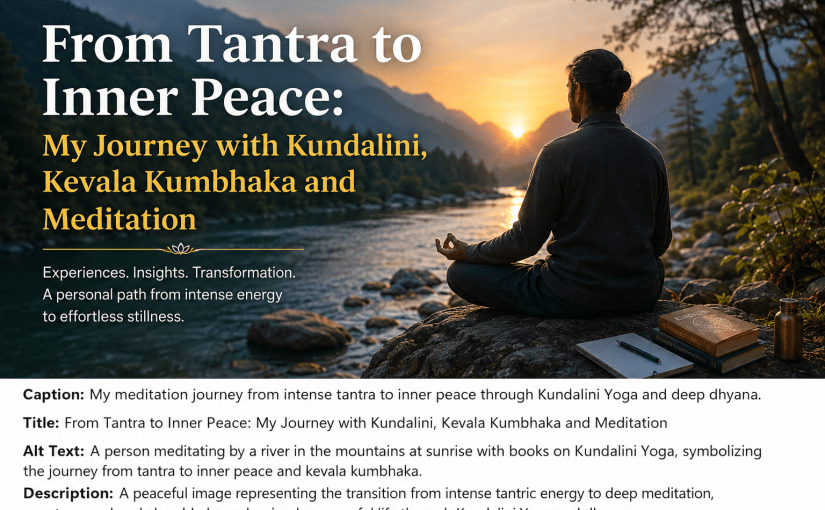
Kundalini Yoga, Tantra, Kevala Kumbhaka and the Shift from Energy to Inner Peace: My Personal Meditation Experience

A New Phase Began with a Different Kind of Meditation Experience

Today I noticed something new in my meditation. After receiving a tantric energetic boost, I could clearly feel the flow through the sushumna. Along with it, anahata nada, the inner unstruck sound, became noticeable. However, one thing was different from many earlier experiences. Although the energy was active, the inner void lacked its usual clarity and depth. Sometimes the void was present but appeared dull and not very deep. At other times it almost disappeared, and my attention remained mainly occupied with the energetic flow and the inner sound. These two conditions kept alternating during the meditation.

This made me wonder whether energetic activity and deep meditation always develop together. The observation that emerged was that they may not. Sometimes energy becomes very active while the depth of meditation remains ordinary. At other times, profound silence appears with very little energetic activity. This particular meditation seemed to emphasize energetic activation rather than complete absorption into silence.

Extremely Subtle Breathing and the Appearance of Internal Humming

During the meditation my breathing gradually became extremely subtle. It almost seemed to happen by itself. The sensation appeared mainly around the throat and at times near the heart while the feeling of sushumna flow continued. Along with this, a continuous internal humming became noticeable.

The interesting part was that this humming resembled breathing in and breathing out, but it was entirely internal. It did not match the timing of my physical inhalation and exhalation. The physical breath and the internal humming appeared to function independently. I had first noticed this phenomenon during the previous day’s calm sitting, and it continued into today’s meditation as well.

One useful insight was that such inner sounds are described in yogic traditions as forms of nada, although their exact physiological basis cannot be established scientifically. Rather than chasing the sound or trying to increase it, it seemed wiser to simply allow it to remain in the background while awareness rested naturally.

The Feeling of Suffocation and What Happened Next

After nearly forty minutes of meditation, a slight feeling of suffocation gradually developed. Instead of trying to maintain the subtle breathing, I simply allowed natural breathing to return. As soon as normal breathing resumed, the discomfort disappeared completely.

What surprised me most was that the meditation did not end. Instead, the void became deeper and much clearer. This was an important observation. It suggested that deeper meditation was not dependent upon maintaining extremely subtle breathing. In fact, allowing the body to breathe naturally seemed to support rather than interrupt the meditation.

The suffocation did not appear to be related to the internal humming. The humming itself remained pleasant and satisfying. It appeared only during calm sitting with naturally slow breathing and focused meditation. The temporary urge to breathe seemed to be a separate bodily event rather than a consequence of the internal sound.

This also reinforced an important practical lesson. Whenever the body naturally asks for a fuller breath, it is wise to allow it immediately. Deep meditation does not require suppressing the body’s normal respiratory needs.

A Repeating Pattern in My Meditation

Looking back over many meditation sessions, I noticed a pattern that seems to repeat itself. For several days, tantric energetic phenomena become dominant. During these days I experience stronger energetic movement, clearer sushumna flow and more noticeable internal humming. Then, after this energetic phase settles, meditation naturally transforms into high-quality dhyana characterized by effortless stillness and natural breathlessness.

This sequence has repeated often enough that I have started recognizing it. However, one useful insight is not to expect this pattern during every practice. Meditation unfolds differently on different days, and expectations themselves can interfere with natural awareness. It is better simply to observe what happens without trying to reproduce previous experiences.

From Years of Tantra to the Emergence of Kevala Kumbhaka

For many years my life was dominated by intense tantric energy. Those years contained powerful energetic experiences and formed an important part of my spiritual journey.

Later my external circumstances gradually changed. My work responsibilities increased considerably. Living conditions shifted to a colder hilly environment where survival, routine and professional responsibilities naturally demanded greater attention. At the same time, my spiritual practice also changed. Instead of intense tantric methods, I increasingly practiced simpler Kundalini Yoga and meditation.

After these changes, something unexpected happened. Natural kevala kumbhaka began appearing spontaneously. It was not deliberately produced. Rather, it arose on its own after the energetic dominance had gradually settled.

Although it is impossible to prove that one directly caused the other, it seemed quite possible that these environmental and practical changes altered the conditions under which meditation unfolded. The observation that stood out was not that energy disappeared completely, but that awareness became quieter and meditation more effortless.

Peaceful Kundalini Yoga Versus Energetic Tantra

Another realization became increasingly clear. If tantra is set aside for some time, sincere Kundalini Yoga combined with deep meditation and supported by yogic cleansing creates remarkably peaceful days.

The result is not excitement or indulgence. Instead, ordinary daily life itself becomes peaceful. The mind remains calmer. Routine work feels lighter. Awareness carries over into daily living. This quiet contentment appears to become more valuable than extraordinary meditative experiences themselves.

Many contemplative traditions emphasize that the real value of meditation is not measured by dramatic inner experiences but by how peacefully one lives ordinary life. Looking at my own experience, this observation seems increasingly true.

How My Relationship with the World Changed

One interesting difference between my earlier tantric years and my present meditation became obvious.

During the years dominated by tantra, I experienced bliss, detachment and nondual awareness, yet worldly life remained attractive. I happily enjoyed cinema, television, travelling, comfortable living and many ordinary luxuries. Surprisingly, these enjoyments existed alongside spiritual practice without creating inner conflict. Looking back, this appears to be one remarkable quality of tantra.

The present phase feels different. Deep and quiet meditation naturally reduces attraction towards luxurious living and interactive worldly indulgence. The mind simply does not run toward such activities as before. This is not forced renunciation. Rather, the attraction itself gradually becomes weaker.

This difference resembles descriptions found in various contemplative traditions. Some emphasize remaining fully engaged with life while maintaining awareness. Others naturally lead practitioners toward simplicity because inner contentment itself becomes increasingly satisfying.

Neither approach necessarily appears superior. They simply represent different expressions of spiritual life.

Family Life Requires a Different Understanding

This observation also raised an important practical question. Family members and friends often need external satisfaction. They enjoy movies, outings, celebrations, travel and shared experiences. Relationships are nourished through these activities.

Meditation may reduce one’s own desire for such pleasures, but relationships still require participation.

One helpful understanding emerged from reflecting upon this. There is a difference between seeking enjoyment for oneself and participating lovingly for the happiness of others. Even if one personally feels complete in silence, joining family activities can become an expression of affection rather than personal craving.

The motivation changes. Earlier the activity itself may have been the source of enjoyment. Later the joy comes from sharing life with loved ones, even when the activity itself no longer carries the same attraction.

This allows inner peace and family life to coexist harmoniously instead of opposing each other.

The Continuing Journey

Looking at the entire sequence, my meditation appears to move through different phases. Strong tantric energy may dominate for several days with noticeable sushumna flow, subtle breathing and internal humming. Gradually this settles into deeper and clearer meditation where awareness becomes effortless and breathing naturally becomes extremely subtle. If the body asks for fuller breathing, allowing it naturally does not disturb meditation. Instead, clarity may actually increase.

Years of intense tantra gradually gave way to simpler Kundalini Yoga because of changes in work, environment and lifestyle. Unexpectedly, spontaneous kevala kumbhaka appeared after this transition. More importantly, the emphasis shifted from extraordinary energetic experiences to quiet inner peace that naturally continues throughout ordinary daily life.

Yet this quieter life also presents a new challenge. Family and society continue to value shared worldly experiences. Rather than rejecting them, it seems wiser to participate with love while remaining inwardly peaceful. In this way meditation does not become an escape from life but a way of living life with greater balance.

Perhaps the most valuable lesson from this entire journey is that spiritual growth does not always move in one direction. At one stage energy dominates. At another stage silence becomes more important. Sometimes meditation expresses itself through powerful inner experiences, and at other times through ordinary peace. Both phases may have their own place. The real measure of progress may not be the intensity of inner phenomena but the quiet stability, clarity and compassion that naturally begin to shape everyday life.
Deep Meditation, Dream Symbolism, Compassion, and the Question of Nadi Potential: Reflections from a Morning Yoga Session

A Song, a Rainy Mood, and the Fire Within

The old song “Rimjhim Gire Saawan, Sulag Sulag Jaaye Man, Phir Aaj Is Mausam Mein Lagi Kaisi Ye Agan” became an unexpected starting point for reflection. The song speaks of a paradox: rain falls outside, bringing coolness to the world, yet an inner fire burns in the heart. This contrast between outer calm and inner intensity became a fitting backdrop for a morning meditation experience that unfolded in several unexpected stages.

Early Morning Practice and an Unusual Meditation Session

The day began at around 3 a.m. with some work on a book manuscript. Afterward, fatigue and sleepiness were present, yet yoga practice was undertaken. The nadis appeared to open well, but deep spinal breathing pranayama did not flow as smoothly as usual. There was a sense that the head already carried some pressure or fullness, making deep practice difficult. Instead of forcing pranayama, attention shifted toward dhyana.

During meditation, awareness seemed to move around Vishuddha and Anahata. At times the breath appeared to originate from the throat region, and at other times from the heart region. Subtle upward sensations were felt in the spine. Anahata nada heard subtly like Shiva’s damru beating. Although not fully. Thoughts slowed considerably but did not completely stop. The breath became subtle but did not cease. Relaxation emerged, though not in its fullest form. Sleepiness repeatedly appeared, and maintaining an erect spine required effort. Even so, the meditation continued for approximately one hour.

The Dream After Meditation

After the sitting session, there was a short period of lying down on the floor for relaxation. During this brief sleep, a vivid and pleasant dream arose.

In the dream, there was a bike and a large old monumental structure. Inside the structure, professional colleagues were attending a meeting with a senior authority figure. Standing somewhat outside the gathering, fragments of conversation could be heard. There was a feeling of having missed some important practical knowledge or understanding. At the same time, there was neither humiliation nor defeat. Alongside mild concern existed a sense of self-respect and confidence.

Music began playing from the bike on its own. Thinking that a wiring problem existed, attempts were made to inspect the dashboard and trace the source. While moving around the base of the monument, a locked cabinet containing old mystical tools appeared. Some interaction took place with this cabinet before it was closed again. The music continued to create concern because it might be heard by those attending the meeting. Eventually the music stopped. A pleasant female colleague then appeared, smiling and approachable, and conversation followed regarding the bike and the location of the meeting. Soon afterward, sleep ended.

Psychological Meaning of the Dream

The dream appeared to reflect several layers of personal psychology. The monumental building resembled a symbol of accumulated knowledge, institutional authority, tradition, or practical wisdom. Being near but not fully inside the meeting suggested a subtle awareness that there are always areas of practical understanding still left to learn, regardless of spiritual progress. Or it may be indicator of detachment from knowledge wealth gained in the brain.

The bike symbolized movement through life. It was functioning but behaving in an unusual way. This reflected the meditation session itself, where practice was progressing yet not exactly according to expectation. Thoughts had slowed but not disappeared. Breath had become subtle but not silent. Some pressure and uncertainty remained.

The music represented autonomous activity of the mind. It resembled thoughts, memories, emotions, creativity, and subconscious processes that continue functioning without deliberate control. The dream was especially interesting because the music did not stop through a clear conscious solution. Instead, some intuitive handling seemed to resolve the issue. This suggested that not all inner adjustments occur through intellectual understanding. Sometimes change happens through intuitive engagement, and only later does one recognize that something has shifted.

The old cabinet containing mystical tools symbolized accumulated inner resources, previous experiences, spiritual knowledge, and latent capacities developed over years of practice and even knowledge inside ancient and mystical spiritual texts. The smiling female colleague represented a helpful, relational, intuitive aspect of the psyche. Her appearance after the music stopped suggested that once mental noise settled, a more harmonious and integrated quality emerged.

Compassion Instead of Emotional Turbulence

Upon waking, powerful emotions arose. At first these appeared to resemble an emotional storm. On closer observation, however, they were not turbulent emotions. They were not fear, anxiety, sadness, or excitement. Instead, they carried the flavor of deep compassion and tenderness felt directly within the heart.

This distinction proved important. There is a difference between emotional disturbance and heart-centered feeling. The experience did not seem to be pulling attention away from meditation. Rather, it appeared to express a different mode of consciousness.

One possibility considered was that emotions represent intermediary stages before entering the void. In earlier experiences, awareness sometimes moved directly into a silent witness state where emotions were absent. On this occasion, however, awareness seemed to travel through more human and relational layers before reaching stillness. Through that route, compassion surfaced.

This led to the insight that there may be different expressions of spiritual depth. One form appears as detached stillness, witness-consciousness, and emptiness. Another appears as tenderness, compassion, interconnectedness, and warmth of heart. Neither necessarily excludes the other.

Deep Spinal Breathing Returns but Dhyana Does Not

A particularly interesting development occurred after waking. Deep spinal breathing pranayama, which had earlier been difficult, now became easy and natural. Yet despite this improvement, dhyana could not be re-established in the same way.

It means a transformation process had started in the brain, so it drew energy from the Muladhara Chakra through spinal breathing. In the beginning, spinal breathing was not happening properly because the transformation process and energy movement were somewhat hindered by worldly tiredness, sleepiness, and other factors. During the one-hour dhyana session, the process gradually continued, allowing the energy to move and support the ongoing transformation.

An important question arises. If pranayama was flowing better, why did meditation not deepen during dhyana?

One possibility was that subtle anticipation of office responsibilities had already begun influencing the mind. Even without conscious worry, awareness may have carried a faint orientation toward the upcoming workday. Such subtle readiness for action can be enough to prevent deeper absorption.

Another possibility was that the earlier meditation had already completed a certain cycle. The one-hour session may have utilized the momentum generated through yoga and pranayama. What remained afterward was not depletion but integration.

The Question of Nadi Potential

This led to reflection on what might be called nadi potential. It seemed as though the energetic momentum developed through yoga had been released or expressed during the one-hour meditation session. Afterward, a new cycle of potential would need to be generated.

This observation raised another question: if such potential is not real, why does dhyana often last for a particular period before naturally changing?

Several perspectives emerged. Traditional yoga would describe dhyana as influenced by prana, nadis, samskaras, and bodily condition. Psychology would describe it in terms of attention, mental fatigue, emotion, and cognitive processing. Both perspectives acknowledge that meditative states often arise when multiple factors align and change when those factors shift.

The experience of the morning suggested that meditation may not operate through a simple mechanical reservoir of energy. Yet it often depends on a temporary alignment of attention, physiology, emotional state, and what yogic language calls prana. When that alignment changes, the quality of meditation changes as well.

A Morning That Chose the Heart Over the Void

Looking back, the entire sequence appears coherent. An old song about inner fire arose as a theme. Early morning book work was followed by yoga and meditation. Awareness moved around the regions traditionally associated with communication and the heart. A symbolic dream unfolded involving knowledge, authority, hidden tools, music, intuition, and relationships. Compassion emerged upon waking. Deep spinal breathing improved. Yet the detached stillness of dhyana did not immediately return.

Rather than indicating failure, the experience may represent a different mode of inner development. Instead of moving directly into emptiness, consciousness traveled through meaning, feeling, memory, and relationship. The result was not agitation but compassion. The morning seemed to suggest that spiritual practice does not always move toward the void through the same doorway. Sometimes it passes first through the heart.

Narayana, Ekarnava, and the Inner Cosmic Symbolism of Meditation

Every day, in the depth of meditation, we witness Narayana emerging from Ekarnava—the cosmic sea of consciousness. Ekarnava is not an ordinary ocean; it is the primordial, wave-less expanse, the silent substratum from which all existence arises. It is the state of Nirvikalpa Dhyana, where the mind dissolves and only pure awareness remains. In this inner vision, Narayana appears not as a distant deity but as a sattvik, luminous, and loving presence—beautiful, peaceful, and radiating all divine qualities. His emergence is not from turbulence but from absolute stillness. He symbolizes the liberating force within meditation, an image of cosmic order and divine peace that gently calms the mind.

In this vast ocean of consciousness, Narayana performs a sacred task—he destroys the demons that produce evil ripples in the cosmic sea. These demons are not literal beings but represent chaotic thoughts, restless emotions, and egoic patterns that disturb the stillness of the inner ocean. When the mind is scattered, the cosmic Ekarnava becomes agitated, like a lake troubled by wind. Narayana, in the form of a meditation image, absorbs and dissolves these disturbances, restoring silence and harmony. The practice of meditation thus becomes a cosmic act, where the inner Narayana neutralizes the mental asuras—the vrittis that bind consciousness in cycles of suffering.

The journey into the Ekarnava, or cosmic ocean of formless consciousness, happens through Narayana. The meditator first focuses on the divine form—the saguna aspect—and gradually dissolves even that, entering the wave-less ocean beyond all images. Yet, Narayana himself is like a liberating wave—unlike the binding waves of mental turbulence, he is a gateway wave that carries the meditator into formlessness. On returning from this Nirvikalpa Samadhi, when the mind resumes its worldly functions, Narayana is the first to greet the seeker, symbolizing the return to dharma, compassion, and peace in daily life.

This same cosmic pattern explains why Rama and Krishna are considered avatars of Narayana. They were not avatars only in the theological sense but because their presence naturally became meditation images for millions. Their beauty, serenity, compassionate nature, practicality, spirituality and complete alignment with divine law made them easy objects of dhyana for the masses. People spontaneously visualized them, meditated upon them, and aligned their minds to divine consciousness through their forms. This is why they are called avataras of Narayana—they descended not just to perform earthly tasks but to anchor human minds in sattva and meditative absorption.

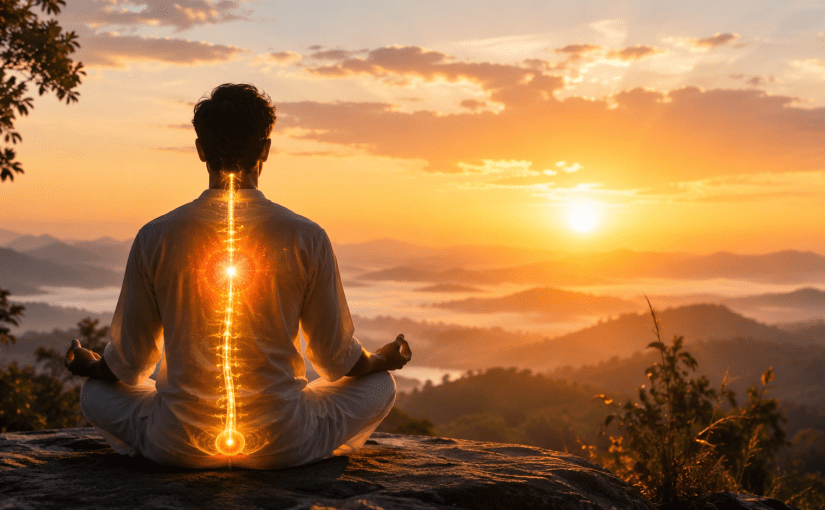
In deeper yogic symbolism, Narayana reclining on Sheshanaga in Ekarnava represents the human subtle body. The Sheshanaga (cosmic serpent) symbolizes the spine and the nervous system, with the raised hood representing the Sahasrara (crown chakra). When prana flows through the Sushumna Nadi, the central spinal channel, the breath becomes calm, and the mind enters deep meditation. Only then does Narayana appear in inner vision—resting peacefully on the serpent of the awakened kundalini. The serpent’s hood rising above Narayana is not just mythological ornamentation; it represents the pranic energy feeding the Sahasrara, allowing the mind to expand into cosmic awareness.

This ancient imagery is not mere mythology; it is psychological and yogic science hidden in symbols. When the breath becomes subtle and still, when prana ascends the spine, the mind becomes an ocean without waves—the Ekarnava of consciousness. Narayana is both the gateway and the guardian of this ocean. He destroys the demons of distraction, dissolves into the formless state, and welcomes the seeker back with peace and love when the meditative journey is complete. In this way, the images of Rama, Krishna, and Narayana reclining on Sheshanaga are not distant cosmic tales but direct representations of human spiritual anatomy and meditative experience.

सभी मित्रों के बीते वर्ष को सहर्ष विदाई व उनको नववर्ष 2019 की बहुत-2 शुभकामनाएं- Nice farewell to all the friends’ last year and many New Year wishes for them

सभी मित्रों के बीते वर्ष को सहर्ष विदाई व उनको नववर्ष की बहुत-2 शुभकामनाएं (please browse down to view this post in English)।

मेरा बीता वर्ष, 2018 निम्न प्रकार का रहा-

अपनी टाटा टियागो कार में लगभग 3000 किलोमीटर का सपरिवार सफ़र तय किया, जिसमें से अधिकाँश उन्नत उच्चमार्गों का सफर था। पीवीआर सिनेमा में 4 हिंदी फिल्में सपरिवार देखीं, 102 नोट आऊट, संजू, हनुमान वर्सस अहिरावना (थ्री डी एनीमेशन) व सिम्बा। मेरे माता-पिता तीर्थधाम यात्रा का जल चढ़ाने कन्याकुमारी / रामेश्वरम गए। अपने पुराने घर का नवीनीकरण करवाया गया। श्री मद्भागवत सप्ताह श्रवण यज्ञ का अनुष्ठान अपने घर में करवाया गया। मेरी पूज्य व वृद्ध पितामही जी का स्वर्गवास हुआ। मेरे बेटे को पहली कक्षा में ए-1 रहने पर पारितोषिक दिया गया। मेरी पत्नी के द्वारा नए सिलाई के प्रशिक्षण-कोर्स का प्रारम्भ किया गया। मुझे क्वोरा टॉप राईटर (क्वोरा शीर्ष लेखक)- 2018 का सम्मान मिला। मेरे द्वारा कुण्डलिनीयोग का प्रतिदिन का 1 घंटे का सुबह का व एक घंटे का सांय का अभ्यास एक दिन के लिए भी नहीं छोड़ा गया। इसके कारण मेरा वर्ष 2017 का कुण्डलिनीजागरण का अनुभव जारी रहा, महान आनंद के साथ। प्रेमयोगी वज्र की सहायता से इस मेजबानी वेबसाईट (https://demystifyingkundalini.com/home-3/) को पूर्णतः विकसित किया। इस वेबसाईट के लिए 139 शेयर, 30 लाईक्स, 4772 वियूस, 3099 विसिटर व 46 फोलोवर मिले। इस वेबसाईट के लिए मैंने लगभग 31 पोस्टें लिखीं व प्रकाशित कीं। प्रेमयोगी वज्र की सहायता से “शरीरविज्ञान दर्शन- एक आधुनिक कुण्डलिनी तंत्र (एक योगी की प्रेमकथा)” नामक पुस्तक लिखी। उसके लिए 13 सशुल्क डाऊनलोड व 80 निःशुल्क डाऊनलोड प्राप्त हुए। उसके लिए अमेजन पर एक सर्वोत्तम रिव्यू / समीक्षा (5 स्टार) भी प्राप्त हुआ। साथ में, उसे गूगल बुक पर भी दो उत्तम व 5 स्टार रिव्यू प्राप्त हुए। दूरदर्शन के कार्यक्रमों में तेनालीरामा, तारक मेहता का उल्टा चश्मा, मैं मायके चली जाऊंगी, रियल्टी शोज व जी न्यूज (मुख्यतः डीएनए) का आनंद उठाया। अपने पोर्टेबल मिनी जेबीएल स्पीकर पर गाना एप के माध्यम से लगभग 2000 मधुर ओनलाईन गाने सुने। काटगढ़ मंदिर व टीला मंदिर के सपरिवार दर्शन किए। अपने किन्डल ई-रीडर पर 3 पुस्तकें पढ़ीं। पोस्ट पढ़ने के लिए धन्यवाद।

यदि आपको इस पोस्ट से कुछ लाभ प्रतीत हुआ, तो कृपया इसके अनुसार तैयार की गई उपरोक्त अनुपम ई-पुस्तक (हिंदी भाषा में, 5 स्टार प्राप्त, सर्वश्रेष्ठ व सर्वपठनीय उत्कृष्ट / अत्युत्तम / अनौखीरूप में निष्पक्षतापूर्वक समीक्षित / रिव्यूड ) को यहाँ क्लिक करके डाऊनलोड करें। यदि मुद्रित पुस्तक ही आपके अनुकूल है, तो भी, क्योंकि इलेक्ट्रोनिक डीवाईसिस / फोन आदि पर पुस्तक का निरीक्षण करने के उपरांत ही उसका मुद्रित-रूप / print version मंगवाना चाहिए, जो इस पुस्तक के लिए इस लिंक पर उपलब्ध है। इस पुस्तक की संक्षिप्त रूप में सम्पूर्ण जानकारी आपको इसी पोस्ट की होस्टिंग वेबसाईट / hosting website पर ही मिल जाएगी। धन्यवाद।

यदि आपने इस लेख/पोस्ट को पसंद किया तो कृपया इस वार्तालाप/ब्लॉग को अनुसृत/फॉलो करें, व साथ में अपना विद्युतसंवाद पता/ई-मेल एड्रेस भी दर्ज करें, ताकि इस ब्लॉग के सभी नए लेख एकदम से सीधे आपतक पहुंच सकें। धन्यवादम।


Nice farewell to all the friends’ last year and many New Year wishes for them.

My last year, 2018 was of the following type:

Travelled around 3,000 km in my Tata Tiago car with family, most of which were the journey of advanced highways. In PVR cinema saw 4 Hindi films with family, 102 Not out, Sanju, Hanuman Versus Ahiravana (Three D Animation) and Simmba. My parents went to Kanyakumari / Rameshwaram for carrying water for pilgrimage. My old home was renovated. Shreemad Bhaagvat Shravan Yagna’s week long ritual was performed in my house. My devoted and old grandmother went to heaven. My son was rewarded for being A1 in the first grade. New sewing training-course was started by my wife. I got the Quora Top Writer- the honour of 2018. I did not leave the Kundalini Yoga practice for 1 hour of morning and one hour of evening everyday even for one day. Due to this my experience of KundaliniJagran of 2017 continued, with great bliss. With the help of Premyogi Vajra, this hosted website (https://demystifyingkundalini.com/) was fully developed. For this website, 139 shares, 30 likes, 3099 visitors, 46 followers and 4772 views were obtained. I wrote and published about 31 posts for this website. With the help of Premyogi Vajra, I wrote a book called “Shareervigyaan darshan- ek aadhunik kundalini tantra (ek yogi ki premkatha)”. For that 13 paid downloads and 80 free downloads were received. For that, a great review (5 stars) was also received on Amazon. Along with, two good and 5 star reviews were also obtained on Google book for that. In Doordarshan’s programs, Tenalirama, Tarak Mehta ka Ulta Chashma, main maayake chali jaaoongee, realty shows and Zee news (mainly DNA) were enjoyed well. Two thousands of melodious online songs have been heard through Gaana App on my portable mini JBL speaker. Visiting the Katgarh Temple and the Tila Temple with family by me. Read 3 books on my Kindle e-Reader. Thanks for reading.

If you have found some benefit from this post, please download here the above mentioned e-book (in Hindi language, 5 star rated, reviewed in unbiased way as the best, excellent and must read by everyone) made with steps as told above. If only print version suits you, then too print version should only be got after testing that’s e- version on the electronic devices / phone etc., that is available on this link for this book. You can also find the complete information about this book, both in English as well as Hindi languages on the hosting website of this post. Thank you.

If you liked this post then please follow this blog providing your e-mail address, so that all new posts of this blog could reach to you immediately via your e-mail.

Psychotropic drugs with meditation-ध्यान के साथ PSYCHOTROPIC / अवसादरोधी ड्रग्स / दवाएं

I think as if natural psychic drugs have become developed spontaneously to solve some specific purpose at this time. If these are taken at right time and in right schedule during the meditation, it can help in Kundalini awakening. But the present research is not concluding enough. In ancient days, sages used to consume bhaang(Hindi), a narcotic plant to get psychic help in their meditation. Perhaps they knew the right doze, right course and right time of that’s use. People today misuse psychotropic drugs, so get harm instead of any benefit. Premyogi vajra(The hero of demystifyingkundalini) had used a prescribed psychotropic drug continuously for one month that produced a change in his personality. He started meditation after one year of that’s use and got a kundalini awakening. I think, these drugs prime a person for meditation by making him cool, peaceful and satisfied. These qualities are there in meditating being too. This appears as the only role of these drugs for the success is only achieved through the meditation itself. May be that these drugs give additional boost to the meditation if used properly and cautiously, avoiding their side effects. Enough research is there to be done regarding this.

Rest of the detail can be found at Quora, Advising someone who has got kundalini awakening with drugs but relapsing.

ध्यान के साथ PSYCHOTROPIC / अवसादरोधी ड्रग्स / दवाएं

मुझे लगता है कि इस समय कुछ विशिष्ट उद्देश्य को हल करने के लिए ही प्राकृतिक मानसिक दवाएं स्वचालित रूप से विकसित हो गई हैं। यदि ध्यान के दौरान सही समय पर, सही मात्रा में और सही schedule / नियम के साथ इन्हें लिया जाता है, तो ये कुंडलिनी-जागृति में मदद कर सकती हैं। लेकिन वर्तमान शोध पर्याप्त निष्कर्ष नहीं निकाल पा रहा है। प्राचीन दिनों में ऋषि विशेषतः शैव सम्प्रदाय के योगी-बाबा लोग भांग (हिंदी), एक नशीले पदार्थ के पौधे का उपयोग करते थे, ताकि वे उससे ध्यान में मानसिक सहायता प्राप्त कर सकते। शायद वे उसके सही उपयोग, उसके उपयोग के सही तरीके, और उसके उपयोग के सही समय को जानते थे। लोग आज मनोविज्ञान दवाओं का दुरुपयोग करते हैं, इसलिए किसी भी लाभ के बजाय अक्सर नुकसान ही प्राप्त करते हैं। प्रेमयोगी वज्र (डेमिस्टिफाइंगकुंडलिनी / demystifyingkundalini के नायक) ने एक महीने के लिए एक निर्धारित मनोविज्ञान दवा का उपयोग किया था, जिसने उसके व्यक्तित्व में बदलाव कर दिया था। फिर उन्होंने उसके उपयोग के एक वर्ष बाद ध्यान-साधना / कुण्डलिनी-साधना को शुरू किया, और अंततः कुंडलिनी-जागृति प्राप्त की। मुझे लगता है, ये दवाएं एक व्यक्ति को शांत, अवसादरहित और संतुष्ट बना कर, ध्यान-साधना में उसकी मदद करती हैं। ये गुण ध्यान-साधना करने वालों में भी विद्यमान होते हैं। ऐसा लगता है कि इन दवाओं का यही प्रेरणादायक व सहायक रोल होता है, क्योंकि आध्यात्मिक सफलता तो केवल ध्यान-साधना के माध्यम से ही हासिल की जाती है। हो सकता है कि ये दवाएं ध्यान के लिए अतिरिक्त बढ़ावा भी दें, अगर इनके दुष्प्रभावों से परहेज करते हुए, कोई इनका सही ढंग से और सतर्कता से उपयोग करता है। इसके बारे में पर्याप्त शोध किया जाना अभी बाकि है।

शेष विवरण क्वोरा में मिल सकता है, जो कि उसे एक सलाह के रूप में है, जिसकी कुंडलिनी अवसादरोधी दवाओं के साथ जागृत हो गई हो, लेकिन वह फिर से दवा के दुष्प्रभाव में आ गया हो।

Why tongue is touched with soft palate during YOGA practice

Tongue is touched with soft palate to activate the parasympathetic system that produce saliva, calmness and focused mind concentration. The same phenomenon occur when we are hungry, on fast or eating food. Parasympathetic system remains active under these types of conditions. Strengthened and activated parasympathetic nervous system produces power in the digestive system including the salivation. It also empowers the brain. It also produces the mental calmness, bliss, focused concentration and good judgement. The same system is activated during a romantic love affair that is why mouth becomes watery at those times. Also there is experienced a profound bliss, calmness, brain working and focused concentration. Opposite system is the sympathetic nervous system that is also called as the fight or flight system. It has all the actions as opposite to that of the sympathetic nervous system. It is activated during the stress of any kind, at peak of romance; near, during and after the ejaculation. It depresses appetite, digestive functions and brain functions. Depression is caused by it due to a loss of mindfulness. It damages the body in a severe way by keeping the blood pressure high. By creating mindfulness, Yoga activates the parasympathetic nervous system in an indirect way. This results in an improvement in the appetite and alleviation of the depression. Blood pressure is also improved. Body is rejuvenated and its energy is conserved to fulfill the good purposes in one’s life. The same tactic is employed in the tantric sexual YOGA( Sexual Yoga, a myth or a reality  )too. Romantic love affair is sustained for very long without an ejaculation. This results in the sustained and prolonged activation of the parasympathetic nervous system, not allowing the sympathetic nervous system to raise it’s hood up. It results in the quickened spiritual development and growth.

Also, with little practice of touching tongue with soft palate works like an one way valve for kundalini. Through that valve, Kundalini can pass easily downward only, not upward. So Kundalini from tired and confused brain travel to lower chakras mainly naval chakra. That results into stabilization of concentration on Kundalini there without tiredness and confusion of brain. A spiritual relief is immediately regained.

Non duality- अद्वैत

Only chanting non duality doesn’t solve any purpose but only wastes one’s time. All time non dual attitude is to be made for which Body science philosophy is best for our own body is nearest to us.

अद्वैत

केवल अद्वैत का जप करना किसी भी उद्देश्य को हल नहीं करता है, बल्कि केवल समय ही बर्बाद करता है। हर समय अद्वैत रवैया बना कर रखना पड़ता है, जिसके लिए शरीरविज्ञान दर्शन हमारे लिए सबसे अच्छा है, क्योंकि हमारा अपना शरीर ही हमारे सर्वाधिक निकट है।